This Wayanad nature guide is built from three days in May 2023: rain, cloud, 4:30 AM alarm calls, and a homestay run by a man named Bibin who arranged meals from a nearby restaurant because that was what the property required.
Wayanad is where the Western Ghats become Kerala.
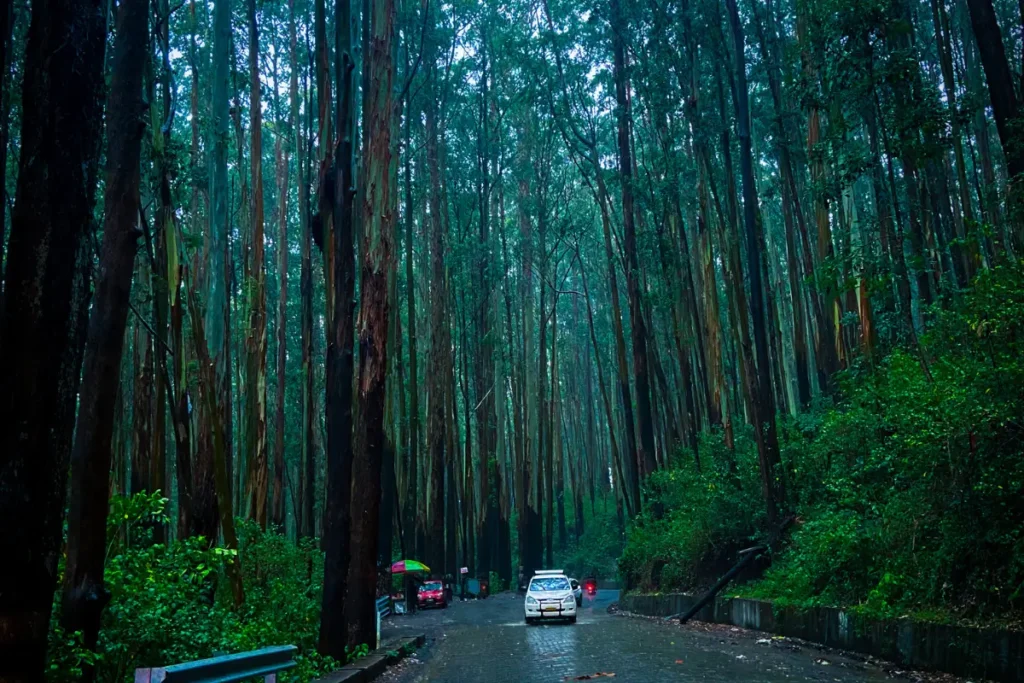
The drive from Kotagiri to Wayanad crosses the state boundary between Tamil Nadu and Kerala through the Ghats. The road climbs into increasingly dense forest. The temperature drops. The light changes quality as the canopy closes overhead. When the rain arrives… and in May, it arrives with conviction… the forest absorbs it, and the road runs with water, and the teak trees and bamboo groves press against the car from both sides.
We drove this on May 22nd, 2023. It had started raining heavily before we left Kotagiri. The Ooty traffic added two hours to a drive that should have taken less. We arrived at Bibin’s homestay near Andoor at 6 PM, our third day of the road trip, with Sumana’s father in the back seat and the specific patience that long drives with family require fully depleted.
Bibin was waiting. The property was genuinely unlike any other accommodation on the trip: a nature homestay with forest around it, the rooms simple and well-maintained, the evening air carrying the smell of the Western Ghats after rain. We had lunch earlier that day at Hotel Grand View… the best restaurant on this route, recommended without qualification. The evening in Wayanad: rest, exploring the homestay grounds in the fading light, the forest going quiet. Good food that Bibin arranged from nearby. Early sleep before the 4:30 AM alarm we had already set for the third morning.
“There is a moment when the chaos of hill-station traffic gives way to the deep, silent green of the Western Ghats… and in that stillness, you realise the journey has finally begun.”
- What Wayanad Is
- The Wildlife on the Drive
- Day 2: Edakkal Caves and the 8,000-Year-Old Wall Carvings
- 900 Kandi: The Glass Bridge Above the Valley
- Nellarachal Viewpoint: Sunset Over the Ghats
- Day 3: Sunrise Inside a Cloud
- The Jain Temple That Tipu Sultan Used as an Ammunition Store
- What Wayanad Looks Like Across the Seasons
- What It Costs
- Before You Go
- Frequently Asked Questions
What Wayanad Is
Wayanad is a highland district in the northeastern corner of Kerala, sitting between 700 and 2,100 metres above sea level in the Western Ghats. The district is almost entirely forested: approximately 70 percent of Wayanad’s area falls under forest cover, wildlife sanctuary, or protected reserve. The Wayanad Wildlife Sanctuary, part of the Nilgiri Biosphere Reserve (a UNESCO designation), protects elephants, tigers, leopards, gaur (Indian bison), deer, and the specific understory community of the tropical montane forest.
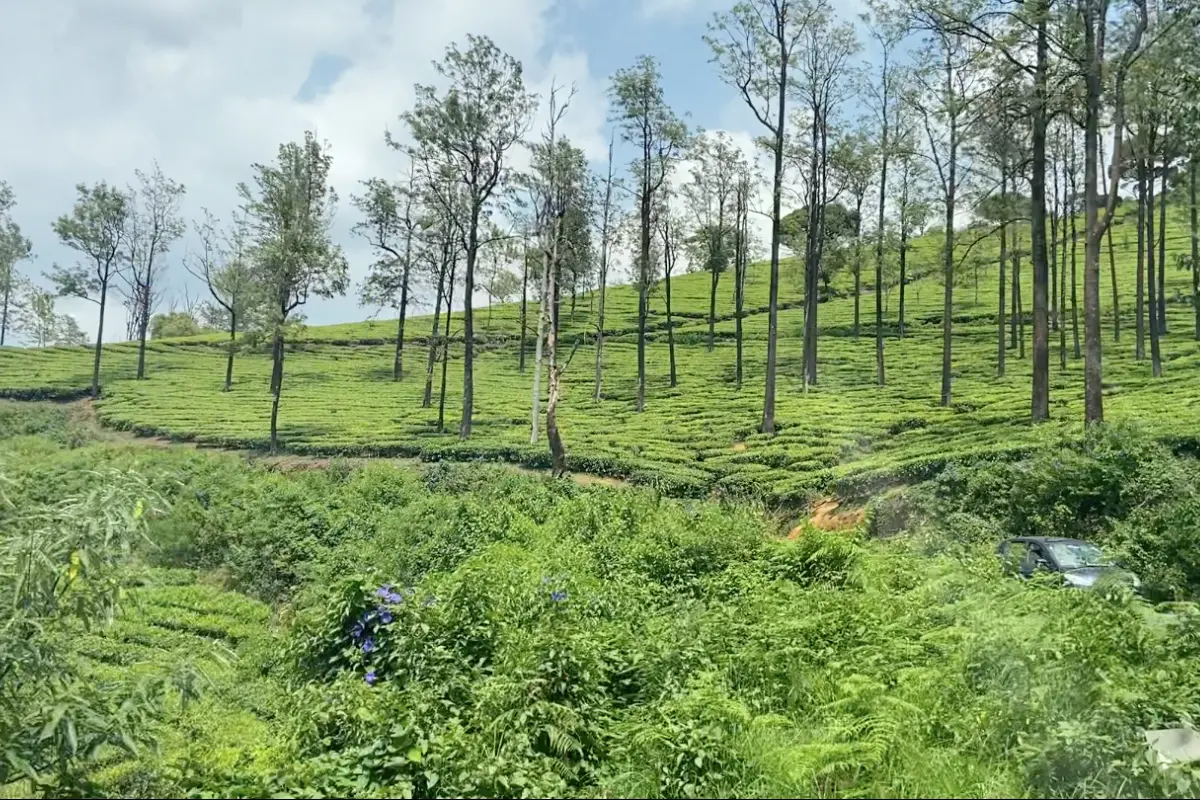
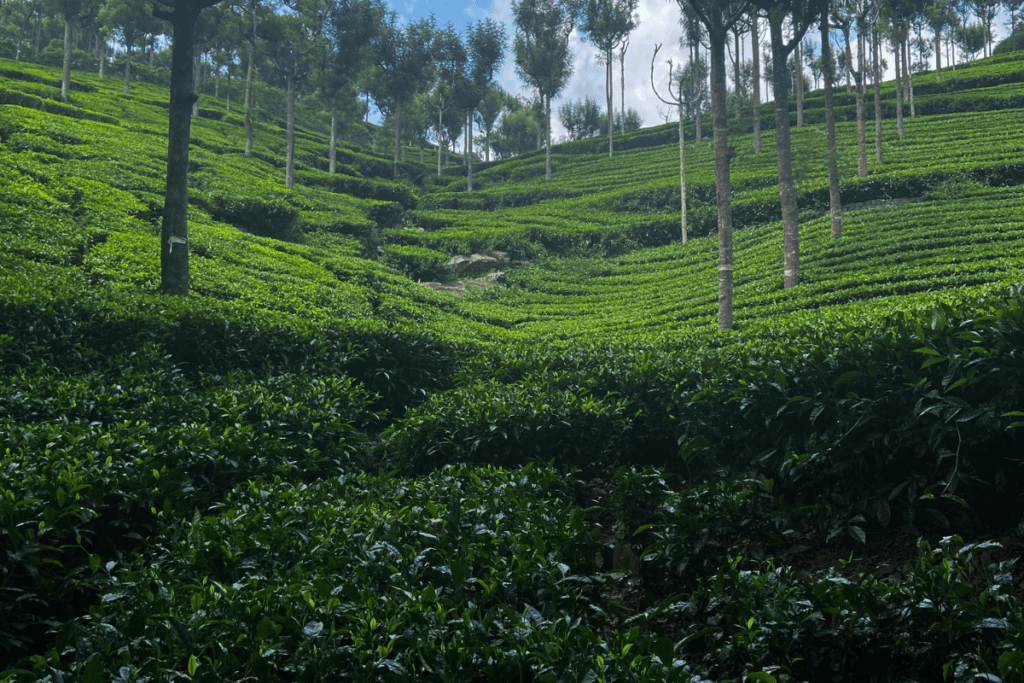
The name Wayanad comes from ‘vayal naad’ in the local language: land of paddy fields. The cultivated areas of Wayanad grow paddy, coffee, tea, pepper, cardamom, and vanilla alongside the forest reserves. The agricultural landscape and the forest landscape exist in close proximity, producing the visual quality that defines the drive through Wayanad: alternating green densities, from the orderly rows of a coffee plantation to the unmanaged profusion of the forest reserve a few hundred metres further.
Wayanad sits at the intersection of three state boundaries: Kerala, Karnataka, and Tamil Nadu. The terrain is continuous across the boundaries. The road that brought us from Kotagiri through Tamil Nadu into Wayanad was also the road through the Nilgiris, Bandipur, and the broader Western Ghats ecosystem that we had been driving through for three days. The biodiversity does not acknowledge the state lines. The forest continues.
The Wildlife on the Drive
Before we reach Wayanad specifically, the wildlife of the route deserves its own section. The drive from Bengaluru to Kotagiri, and then from Kotagiri to Wayanad, passes through the Bandipur Tiger Reserve and the Mudumalai Wildlife Sanctuary: two of the most significant protected forests in South India.
We saw deer, monkeys, and an elephant on the inbound drive. The elephant crossed the road at its own pace, with the specific unhurried quality of an animal that knows it has priority. Sumana’s father photographed it through the windshield. The car was stationary. The elephant was not concerned. This is the correct Bandipur experience: engine off, windows up, camera ready, no horn under any circumstances.
Speed limits inside the reserve are enforced. No stopping for extended periods. No feeding. No noise. The rules exist because the road cuts through a working wildlife corridor and the animals use it. Compliance protects both the animals and the visitors. We followed everything and were rewarded with the elephant. We would follow it again.
On the Kotagiri-to-Wayanad stretch through the monsoon rain, the wildlife was less visible but the forest was at its most vivid. The monsoon saturates the Western Ghats green in a specific way: every shade from yellow-green to dark emerald, all simultaneously present, all rain-washed. The forest in dry season has the same trees. The forest in the monsoon has the same trees and also the quality of being alive in a way that requires the rain to express.
“A wild elephant crossing your path demands complete reverence. No horns, no rushing—just quiet witness to a creature moving through its ancient home.”
Day 2: Edakkal Caves and the 8,000-Year-Old Wall Carvings
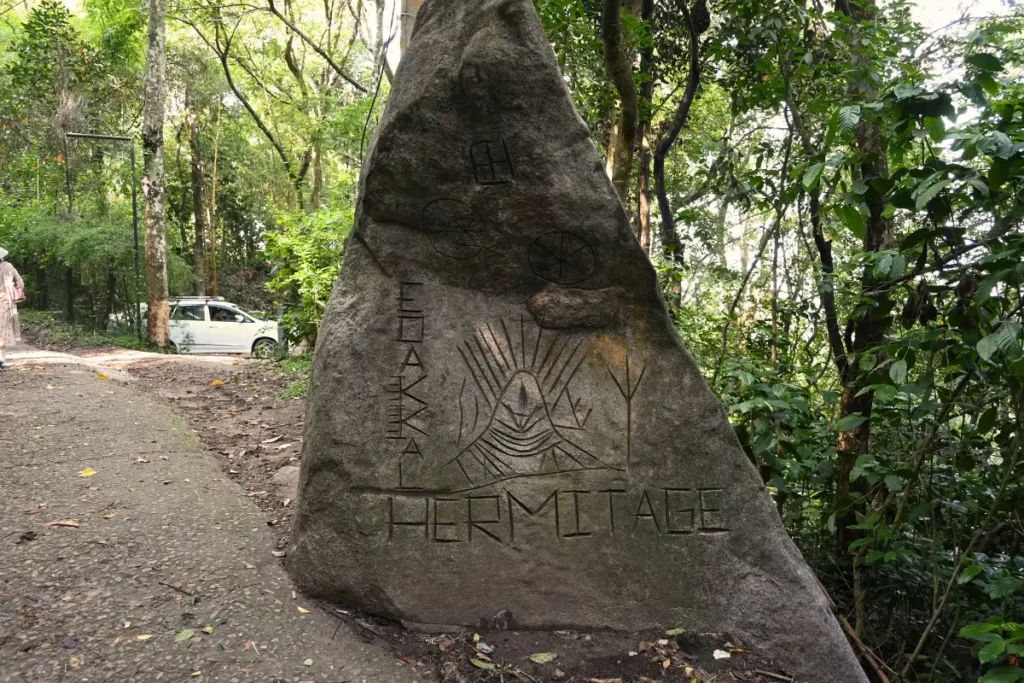
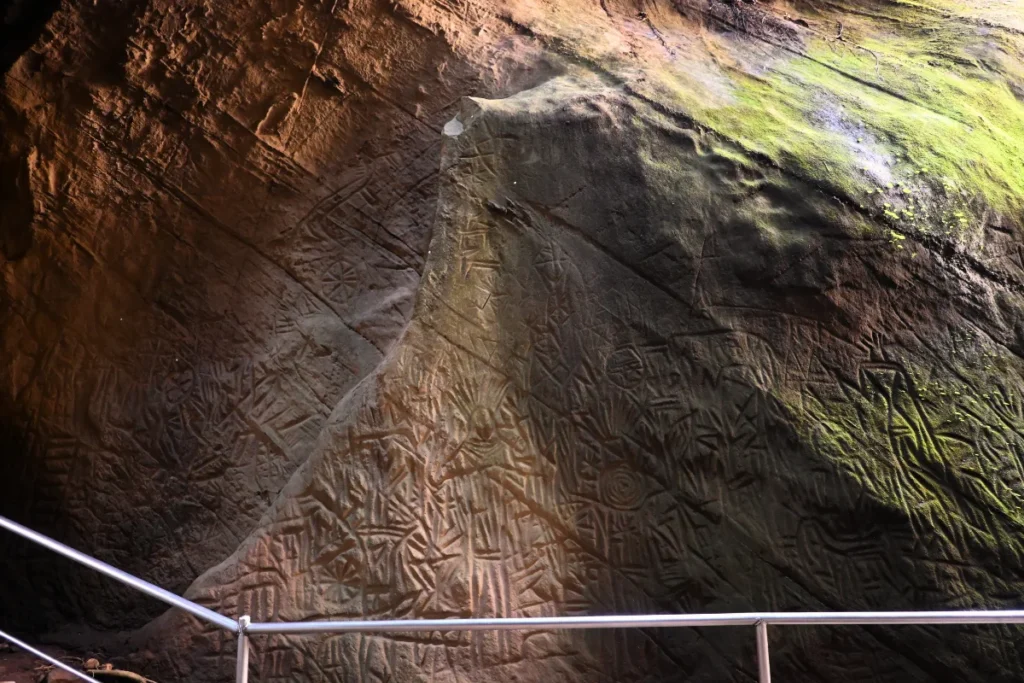
We left for Edakkal Caves at 8:30 AM, which is opening time and the correct departure hour.
What Edakkal Is
The Edakkal Caves are not actually caves in the geological sense. They are a natural rock formation on Ambukutty Mala, at approximately 1,200 metres above sea level, where a massive boulder has split and the gap between the two sections forms a sheltered passage. Inside this passage, on the rock walls, are petroglyphs: incised drawings and markings that archaeologists date to at least 6,000 BCE, from the Neolithic period.
The carvings are among the oldest surviving examples of rock art in South India, and possibly the only known Neolithic petroglyphs from this region. They depict human figures, animals, geometric patterns, and what appear to be early symbolic writing systems. Some of the carvings may be from later periods, including what researchers identify as ancient Tamil script. The layering of different eras of carving on the same wall surface makes the Edakkal Caves a compressed archaeological record: Neolithic, Bronze Age, early historic, all on the same rock face.
The site lies near an ancient trade route that once connected the highland plateau of Mysore with the ports of the Malabar Coast. People moved through this landscape for millennia before anyone thought to document their movement. The carvings are the documentation.
The Hike
The access to the caves requires a one-hour hike from the base. The path climbs through forest on uneven rock and mud. Sumana’s father sat this one out: the hike is genuinely demanding for anyone with mobility limitations, and the wisdom of his decision was confirmed by the conditions underway. The path is not difficult for fit adults but it is uneven, has sections with no railing, and requires sure footing on wet rock.
We left at 8:30 AM specifically to beat the crowd and the heat. Both strategies worked. The caves at 9:30 AM were quiet enough to stand in front of the carvings without other visitors obscuring the view. By the time we descended, the crowd was building and the temperature had risen noticeably. If you visit Edakkal in any season, the morning opening is the correct time.
Tips confirmed from our visit: carry no plastic bottle (the ticket window collects a refundable deposit on bottles to prevent waste on the trail). There is a separate staircase for descent, which the wardens point out at the top. Food stalls operate near the base. Entry fee: INR 50 per person.
Standing inside the rock gap at Edakkal, looking at a drawing made by a Neolithic person at least 8,000 years ago, in a forest in Kerala, on a morning in May when the Ghats are green from the rain: the specific feeling this produces is not grandeur. It is intimacy. The person who made this mark was standing in approximately the same position. The rock has not moved. The forest has regrown, but the species are the same. The morning light enters the gap from the same angle. What has changed is everything that happened after.
900 Kandi: The Glass Bridge Above the Valley
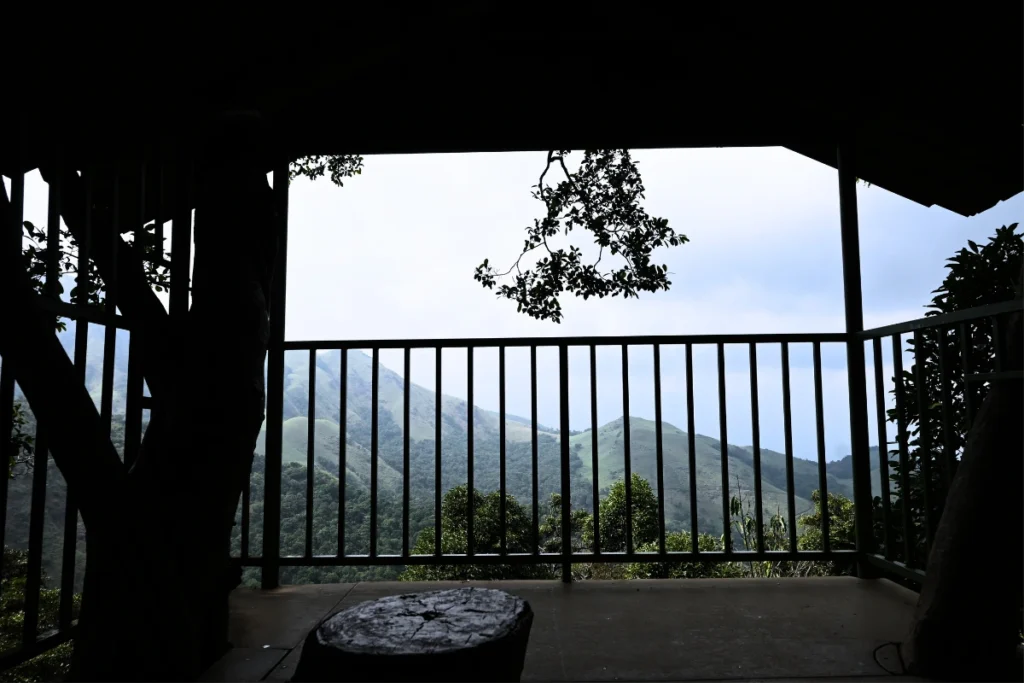
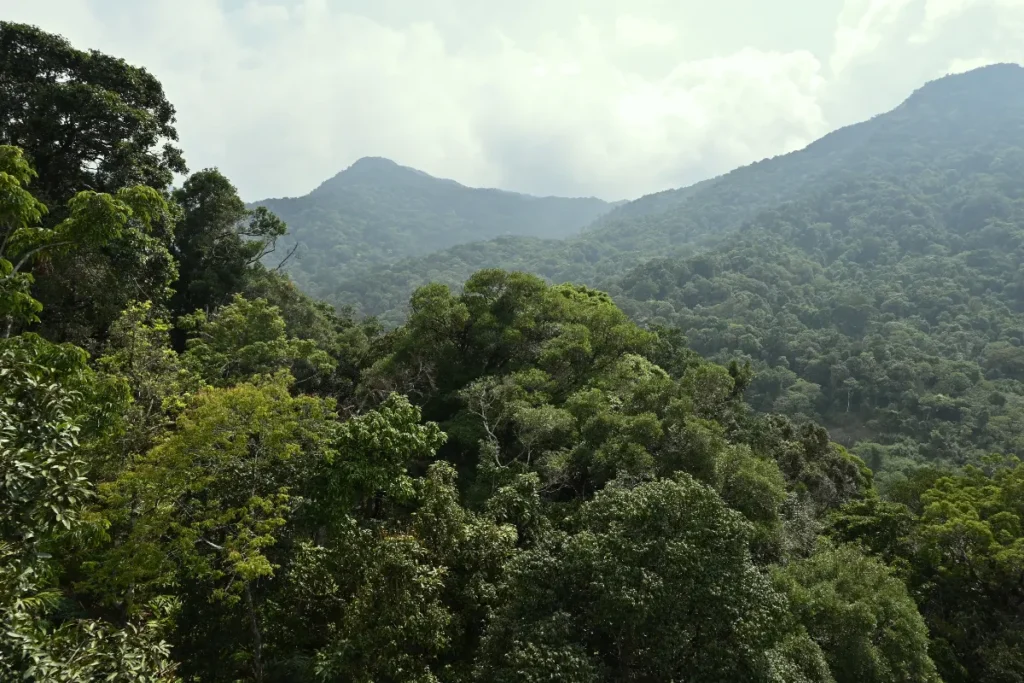
After breakfast at the homestay, we drove to 900 Kandi in the afternoon. The name refers to the elevation: 900 kandi is a local land measurement that approximates the height above sea level at which this viewpoint sits.
The attraction at 900 Kandi is the glass bridge: a suspended glass-floored walkway extended over the valley, giving the impression of standing in mid-air above the forest canopy below. The glass bridge genre of tourist attraction has proliferated across India over the last decade, but the specific quality of this one… the Western Ghats forest spreading in every direction below, the Wayanad landscape visible to the horizon, the sound of the forest reaching upward… justifies the trip.
Practical notes from our visit: there is a 2-km walk from the car park to the viewpoint. The road beyond the car park is very rough and was under improvement when we visited, with jeep transport available for the approach. Entry fee: INR 200 per person. If the jeep is running, use it rather than the road on foot. The walk from the car park is manageable, but the road surface was the roughest of the Wayanad day.
We visited in mid-afternoon. The light was flat. The better timing for 900 Kandi is either the morning, when the light comes from the east and illuminates the valley below the bridge, or the late afternoon when the sun descends toward the valley and the forest takes on golden light. We got the functional version. The view was still the right view.
Nellarachal Viewpoint: Sunset Over the Ghats
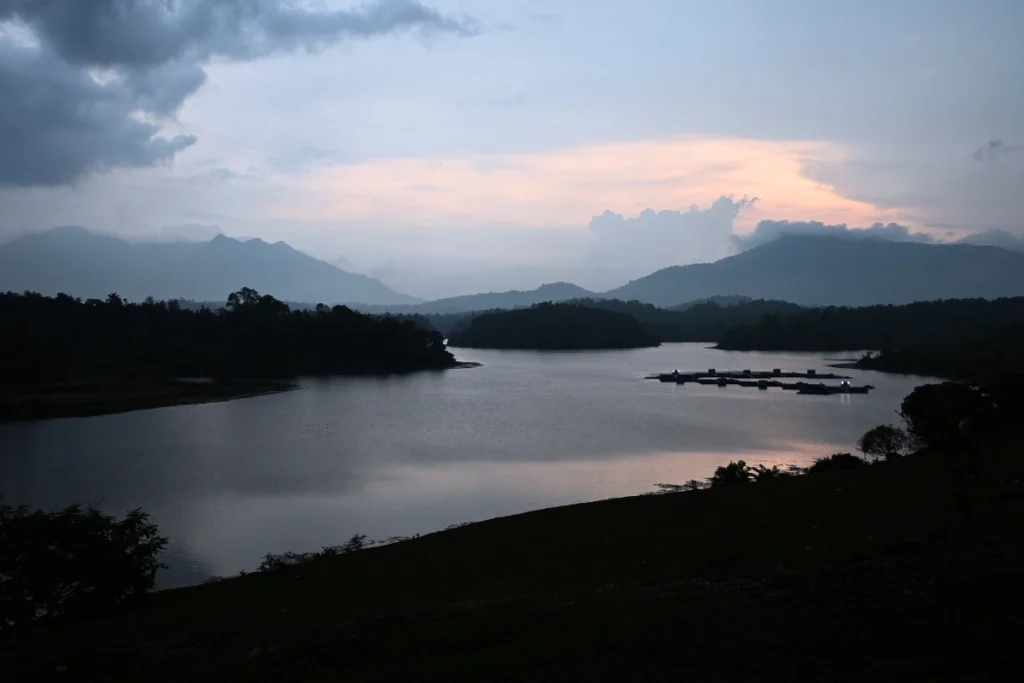
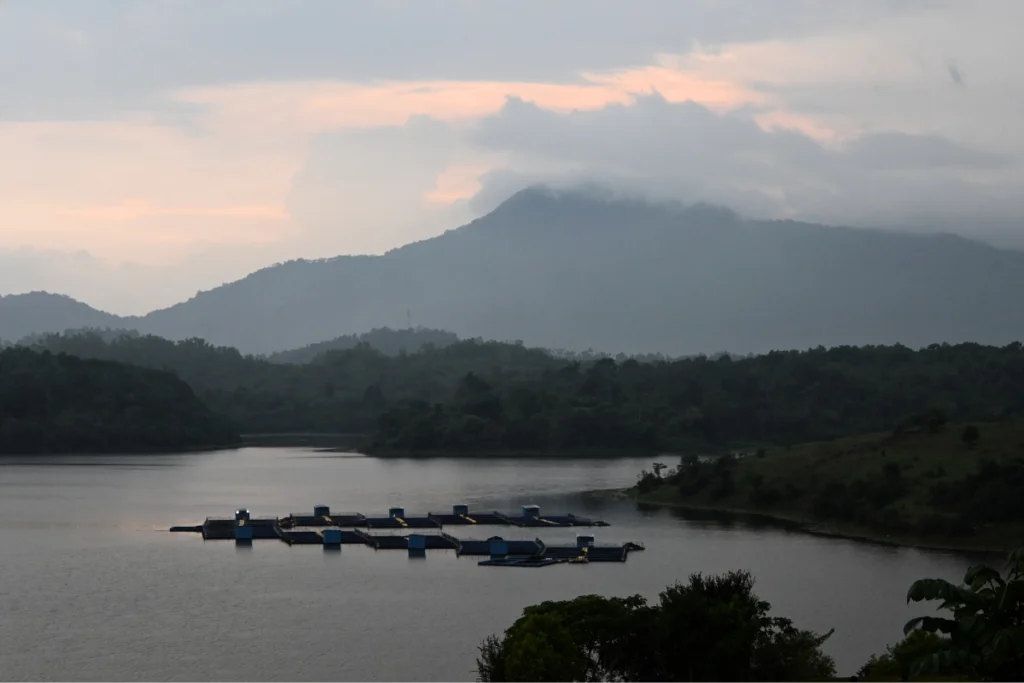
On the drive back from 900 Kandi, as the sun was approaching the horizon, we stopped at the Nellarachal Quarry viewpoint. Entry is nominal or free. The viewpoint faces west over a wide Wayanad valley.
The sunset at Nellarachal is the natural end of a Wayanad day. The valley fills with shadow as the light drops. The hills beyond hold the last gold. The specific quality of Western Ghats sunset light in the monsoon pre-season… when there is enough humidity in the air to scatter the light into visible layers but not enough cloud to block the sun entirely… produces a warmth and depth that dry-season sunsets from the same viewpoint do not offer.
We sat for a while, on the rock above the valley, and watched the light change. When we come to such peaceful, green places, it feels like a completely different kind of peace arrives in the mind. And the open air of this empty place soothes the soul completely. Sometimes we think: just for a little peace or relaxation, how far we run from the city. But then we have to return to normal life amid the city buildings, and wait again for when we will take such a breath of relief.’
This is the Wayanad experience stated as plainly as it can be stated. You come for this breath of relief. You go back. You wait to come again.
Day 3: Sunrise Inside a Cloud
The alarm was set for 4:30 AM.
Sumana’s father stayed at the homestay. We are explicit about this in the trip notes: the morning trek to Manjappara Quarry viewpoint was for the two of us. The pre-dawn walk to a viewpoint 10 to 15 minutes from the homestay, while the forest is still dark and the birds are audible before they are visible, is not suitable for everyone, and the specific pleasure of that morning is partly the specificity: two people, still half-asleep, walking toward a viewpoint they hope will reward them.
Manjappara Quarry Viewpoint
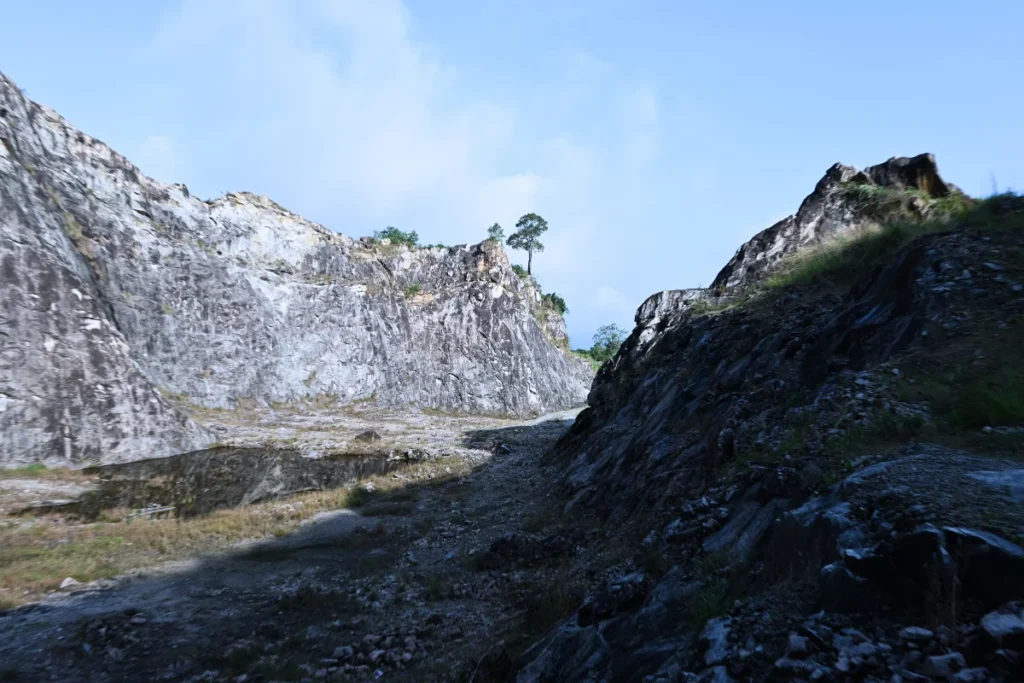
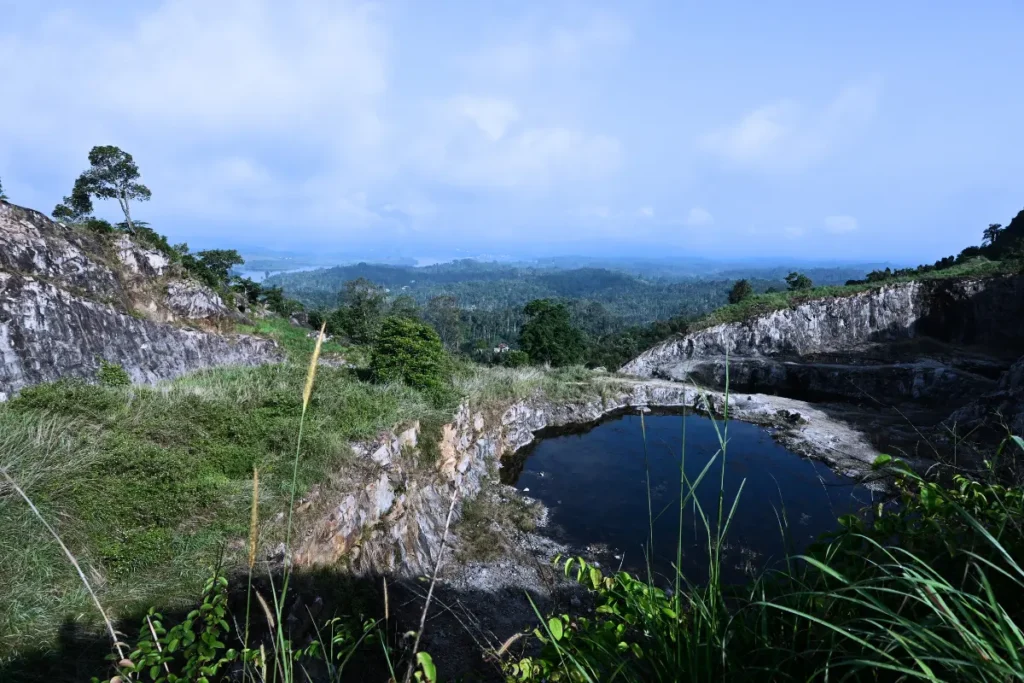
Manjappara Quarry viewpoint is reached in 10 to 15 minutes from the Bibin homestay area, via a trail that climbs through the forest to an elevated rock outcrop above the treeline.
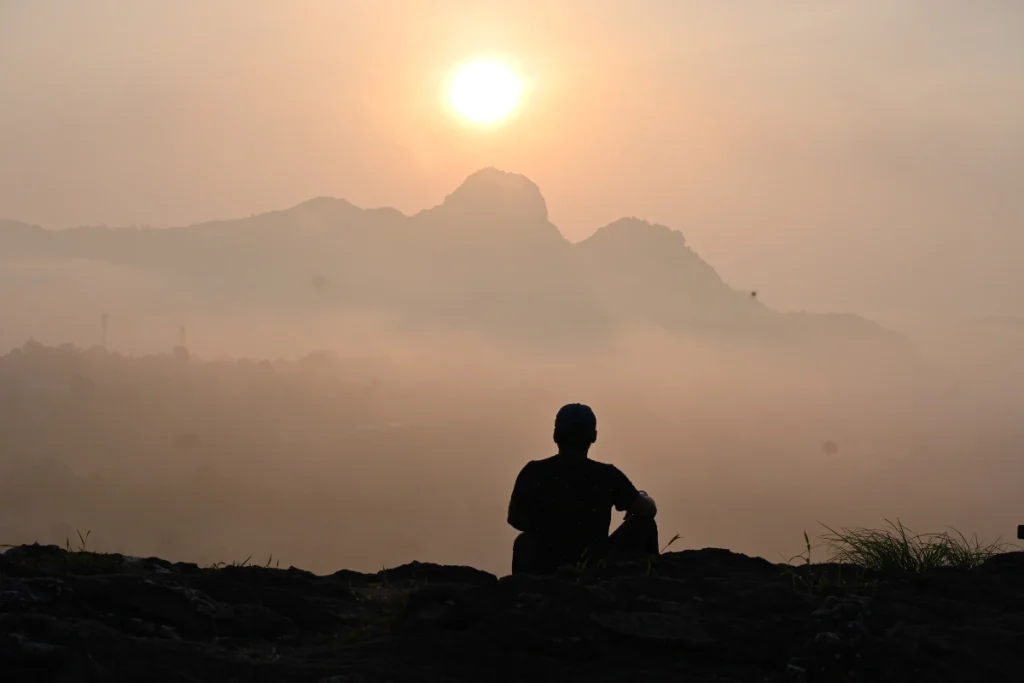
The sunrise was there. For approximately ten minutes, as the sky lightened, the valley below and the forest ridgelines to the east were visible in the specific gold-pink light of the first sun. Then the fog arrived. Not gradually. Completely. The entire hill was covered in thick white cloud in a matter of minutes, until the visibility around us was approximately five to ten metres.
We stood inside the cloud. The ground beneath us was visible. The sky above us was visible, faintly. Everything between the ground and the sky was white. The forest sounds continued. Birds calling in the mist. The temperature dropped further. The cloud moved past us with a physical presence, the specific texture of very fine water droplets moving at walking pace in the morning air.
The sunrise we had woken at 4:30 AM to see had lasted ten minutes. What replaced it was its own experience: standing inside a cloud on a hilltop in Wayanad, with nothing visible and the forest audible and the day beginning in white. This is what the trip notes describe as ‘awsm experience inside cloud.’ The Bengali video transcript: ‘The sunrise was stunning, but soon after, the entire hill was covered in thick fog. It was surreal, like being in a white wonderland.’
“Sometimes the mountain gives you a golden horizon, and sometimes it wraps you in mist—in the high woods of Wayanad, both are equal gifts.”
The Jain Temple That Tipu Sultan Used as an Ammunition Store
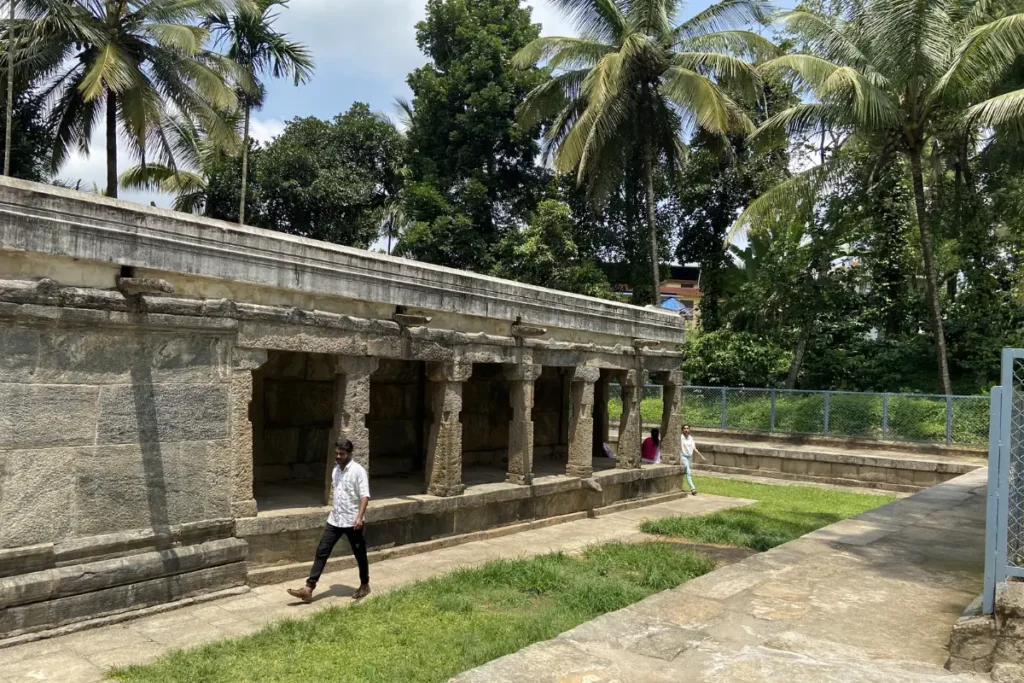
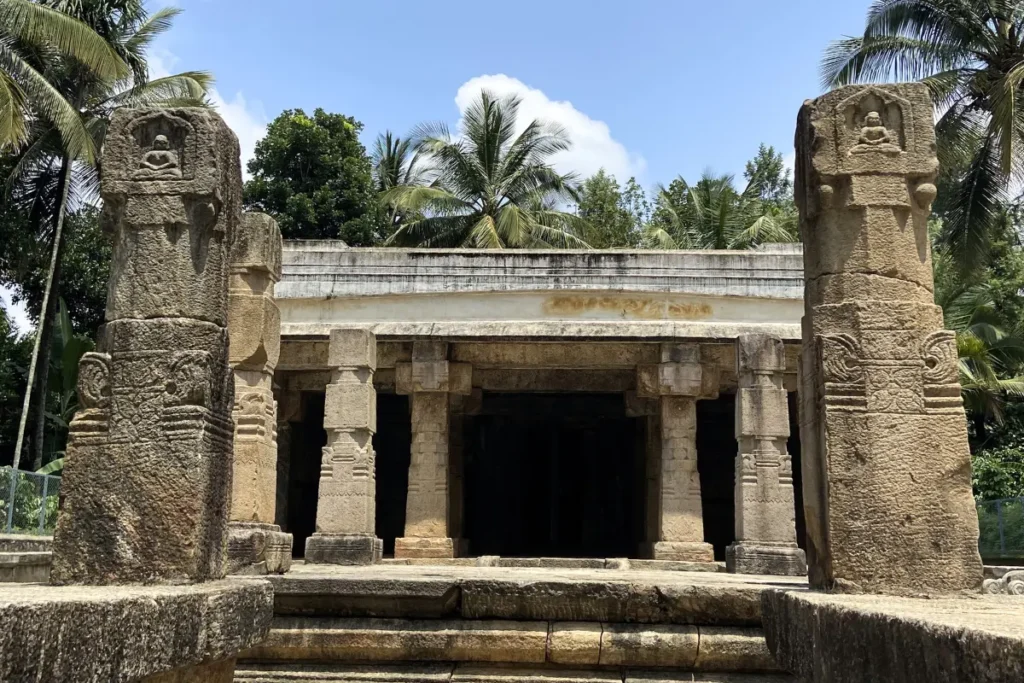
On the drive back to Bengaluru, we stopped at the ancient Jain Temple in Sulthan Bathery, located roughly 25 km from Kalpetta along the Kozhikode–Bengaluru highway.
Built in the 14th century during the Vijayanagara Empire, the granite structure served as a major centre of Jain worship. Over centuries, its sacred role evolved as Shaivite and Vaishnavite traditions took root. In the late 18th century, Tipu Sultan used the temple as an arms depot and military battery during his Malabar campaign… an act that gave the town its modern name, Sulthan Bathery (Sultan’s Battery).
A 13th-century Jain temple that became a Shaivite-Vaishnavite shrine that became an 18th-century military weapons depot. Three religious traditions and one military purpose across five centuries, all in the same walls. The temple is not large but the carved stone work on the exterior is intricate, and the history it has absorbed across eight centuries makes the building more interesting than its scale suggests.
Sumana’s father stayed in the car. He had walked and climbed and waited through three days of the trip and his desire to sit in the shade of the car and rest rather than inspect another historical structure was entirely correct and completely respected.
We saw the temple and drove on. Bengaluru by 8 PM. The three days of Wayanad concluded at the front door of the apartment, carrying the smell of the Western Ghats in our clothes and the specific post-trip silence that means the trip was good.
What Wayanad Looks Like Across the Seasons
| Season | Months | What to Expect |
| Pre-Monsoon | March to May | Forest green but dry. Wildfire risk in April. Wildlife visible near water sources. We visited in May: rain began, forest vivid, roads manageable. |
| Monsoon | June to September | Peak forest intensity. Everything intensely green. Waterfalls active. Roads can flood. Edakkal Caves closed sometimes. The forest at its most alive. |
| Post-Monsoon | October to November | Forest still vivid, roads drying. Best of both: the green without the road risk. Good for wildlife and waterfalls. |
| Winter | December to February | Cool, dry, clear. Best visibility from viewpoints. Less dramatic green. Peak season for Edakkal and Glass Bridge. More crowded. |
We visited in late May, at the cusp of the monsoon. The rain had started but was not yet consistent. The forest was at the vivid green of pre-monsoon saturation. The viewpoints were clear enough to use but misted over quickly after sunrise. This is the version of Wayanad where the landscape is working hardest.
What It Costs
| Item | Cost (May 2023) |
| Bibin’s nature homestay, near Andoor (per night) | INR 3500 / 36.77 USD |
| Edakkal Caves entry (per person) | INR 50 / 0.53 USD |
| 900 Kandi Glass Bridge (per person) | INR 200 / 2.10 USD |
| Jeep transport at 900 Kandi (road not walkable) | Nominal, verify locally |
| Nellarachal Viewpoint | Free |
| Manjappara Quarry Viewpoint | Free |
| Jain Temple (return route) | Free |
Wayanad is not an expensive destination. The homestay is affordable. The entry fees are nominal by any standard. Hotel Grand View was the significant meal expenditure of the three days. The fuel for the Bengaluru-Kotagiri-Wayanad circuit and the return drive is the dominant cost.
Before You Go
- The drive from Bengaluru takes 7 to 8 hours to the Kalpetta area depending on traffic. Leave by 6 AM to avoid peak-hour Bengaluru and to clear the Bandipur forest before the midday temperature builds.
- Bandipur forest crossing: follow the rules. No horn. No stopping for extended periods. No feeding. Speed limits enforced. You may see elephants, deer, and bison. The experience is significantly better when the car is quiet.
- Beat the Edakkal Crowds: Start your hike right at the 8:30 AM opening. Remember that plastic bottles require a deposit at the entry gate, and take the dedicated separate path on your way down.
- 900 Kandi Access: The 2 km approach from the parking area is extremely rough… opt for the local jeep transport if you want to skip the uneven uphill walk.
- Set a 4:30 AM alarm for Manjappara Quarry viewpoint if you want the sunrise. The viewpoint is 10 to 15 minutes from the Bibin homestay area. Go in the dark. Carry a torch. The sunrise lasts a few minutes before the cloud arrives. The cloud is worth staying for.
- Hotel Grand View on the Kotagiri-to-Wayanad route: the best restaurant on this stretch. Stop for lunch on the way in.
- Sulthan Bathery Stop: Spend 20 minutes visiting the 14th-century Jain Temple on your return drive to appreciate its unique history as Tipu Sultan’s former arms depot.
- Bibin the homestay host: book in advance and arrange meals in advance. The food is arranged from a nearby restaurant and is genuinely good. Do not assume food is automatically available without prior arrangement.
“In the misty silence of the Western Ghats… between 8,000-year-old stone carvings, rain-washed forest roads, and mornings where clouds roll beneath your feet… Wayanad gives you the one thing the city constantly takes away: room to breathe.”