This India Travel Guide is built from years of road trips, overnight drives, monsoon caves, and heritage sites across a country that rarely gives you the trip you planned.
We left Bengaluru at midnight.
That is how most of our road trips begin. Not at sunrise, not after a good breakfast, but at midnight…when the highways shed the day’s weight and the trucks have found their quiet rhythm. The logic is straightforward: Indian highways between midnight and 5 AM are a different country. Fewer vehicles, cooler air, honest progress. By the time the sky starts to lighten, you have already covered the ground that daytime traffic would stretch into an all-day argument with your schedule.
The Kotagiri trip was supposed to take six and a half hours. Twelve hours later, we were sitting inside the Bandipur forest watching an elephant cross the road with such complete indifference to our plans that the three of us went quiet…Sumana’s father was in the back seat, phone raised, recording something he had wanted to see for years. The GPS had not accounted for the Ooty traffic, which turned a routine hill bypass into a standstill that outlasted our patience. Or the fact that after 3 PM in rural Tamil Nadu, finding an open restaurant becomes its own expedition. We found a place with no name, no menu, and three options: dal, rice, omelette. We ordered all three and were grateful for every bite.
By the time we reached the homestay at 6 PM, the rooftop view of the tea gardens had already made us forget the twelve hours it took to get there.
We are Akash and Sumana…originally from Kolkata, currently based in Bengaluru, working in IT, traveling on weekends and holidays and whatever leave we can negotiate from people who do not understand why we need it. Between us, we have been moving across India since childhood. Many of those earlier trips happened before camera phones existed. What remains from them is not documentation. It is instinct: the weight of certain places, the way some mornings felt, the food that became the benchmark for everything after.
This guide is built from all of it. Not from a single trip but from years of our own car on midnight highways, domestic flights to Maharashtra, homestays that looked nothing like their listings, caves explored in monsoon rain, and the particular quality of silence India occasionally allows between all its noise.
Every dot on this map is a story waiting to be uncovered. Consider this your compass. Choose a coordinate and start exploring.
“India rarely gives you the trip you planned. It almost always gives you a better story.”
What India Does to a Traveler
Most India travel guides sell India as spectacle. That is accurate, but it is incomplete.
India introduces friction into every well-made plan. It places a two-hour traffic jam between you and the viewpoint you woke at 4 AM to reach. It gives you a homestay room that bears no resemblance to its listing photographs. It closes the restaurant you drove three hours toward. It puts an elephant in the middle of your highway at the exact moment you were making good time.
What that friction does is reveal the quality of your attention.
We have navigated a monsoon downpour at Ajanta with no cash, no signal, and a bus queue that stretched for an hour. Sat in Ooty traffic for ninety minutes debating whether to turn back or push through. Made decisions at Hampi at 38 degrees with no shade and no water. These are not the moments travel brochures describe. They are the ones we still talk about years later, with the kind of fondness that only shared difficulty produces.
India does not test your ability to have a good time. It tests your ability to stay curious when everything is working against your curiosity. For solo travelers, for families, for friends on a long trip together…that is either the worst pitch imaginable or the best possible argument for going. There is no middle ground.
Understanding India by Region
The most important planning decision you will make is regional focus.
India is not one country in the way the word usually implies. Food changes every two hundred kilometres. Languages shift at state borders. Architecture, climate, spiritual tradition…all of it transforms as you move. The Nilgiris can be cold and misting on a morning when Hampi, six hours south, is bone-dry and forty degrees.
Travelers who try to cover both North and South India in a single trip come home exhausted and remember airports more clearly than temples. Pick one region. Go deep rather than wide.
What follows is the India we know from direct experience…the roads we have driven in our own car, the stones we have stood in front of, the silences we have found between the noise.
South India
If someone asked where to begin, we would send them south without hesitation. Hills, heritage sites, coffee country, and the western coast…all within compact geography, most reachable from Bengaluru by car or a short domestic flight.
The Nilgiris: Where the Road Lies to You
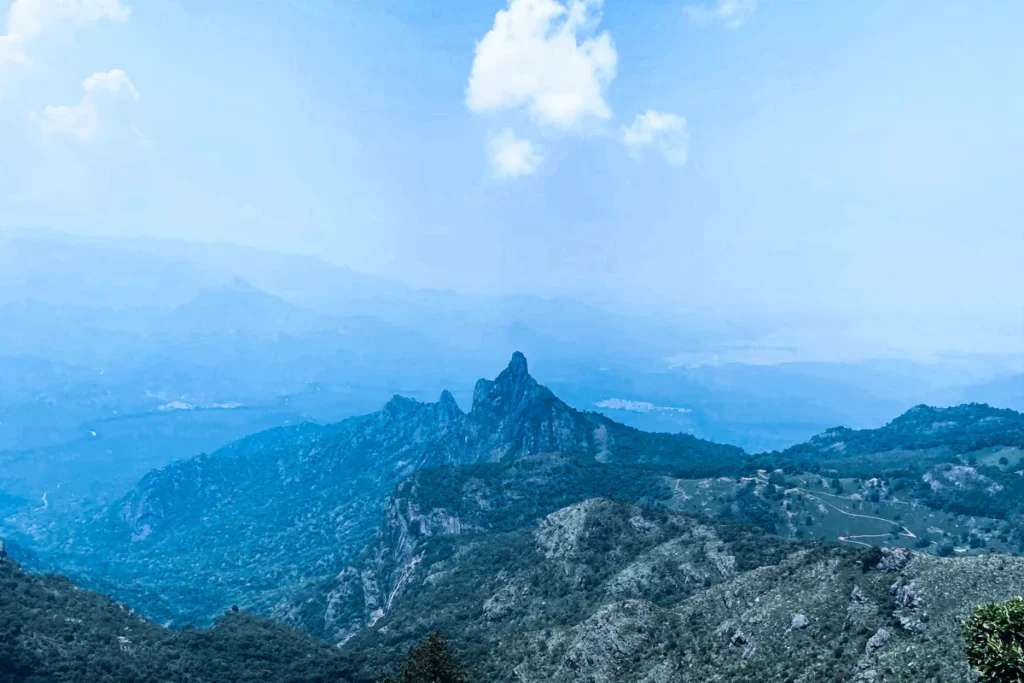
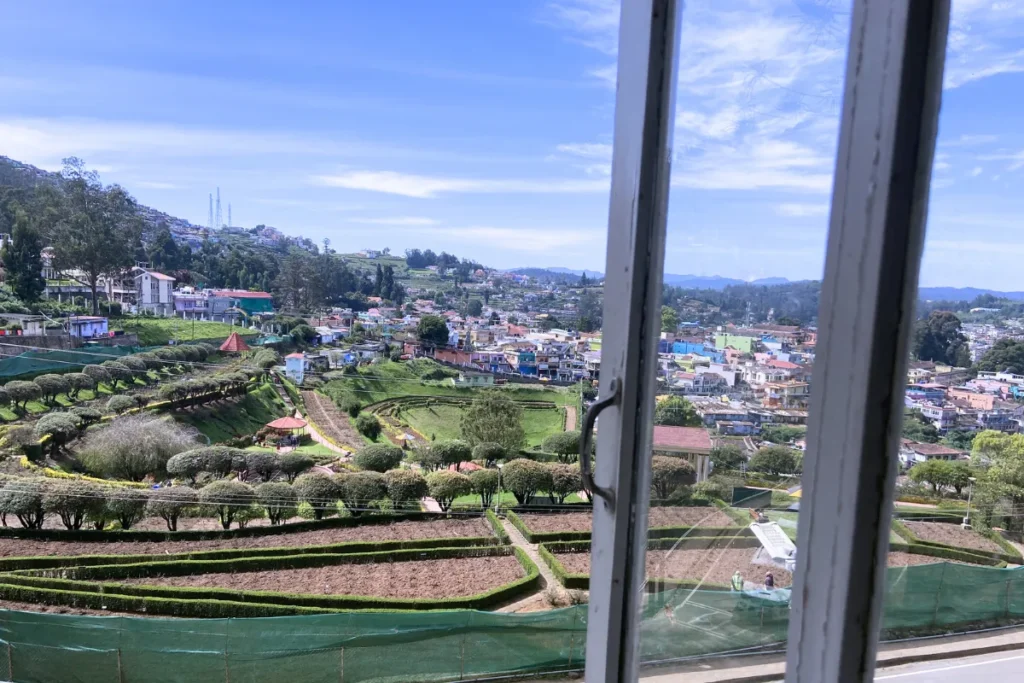
The hill stations of Ooty, Coonoor, and Kotagiri sit between 1,800 and 2,200 metres. Tea gardens, eucalyptus, pine, and a quality of air that makes you realise what you had been breathing in the city was not properly air.
We thought Ooty would be the highlight of that first road trip. It was not. Ooty’s internal roads carry a congestion disproportionate to its size. Kotagiri, the smallest of the three, was where the stillness was. The Toda people, one of the oldest indigenous communities in the Nilgiris, have inhabited these hills for thousands of years. Their barrel-shaped stone temples exist alongside the tourist infrastructure as if both worlds agreed long ago not to disturb each other.
Our full Nilgiris guide…covering Ooty, Coonoor, Kotagiri, and Wayanad…is coming.
Wayanad: Where the Walls Remember
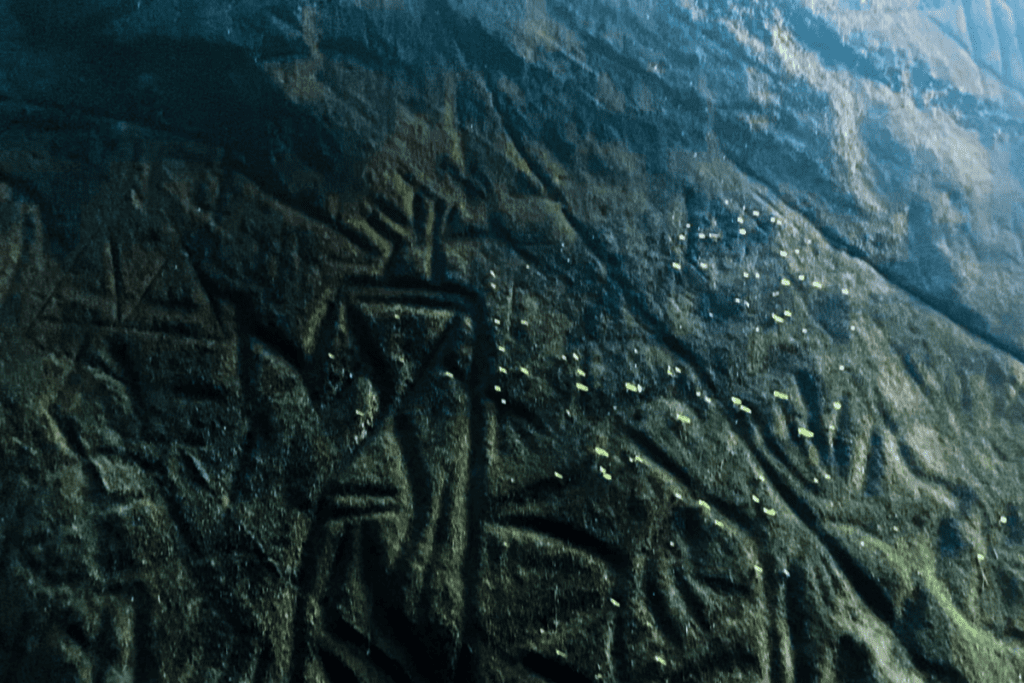
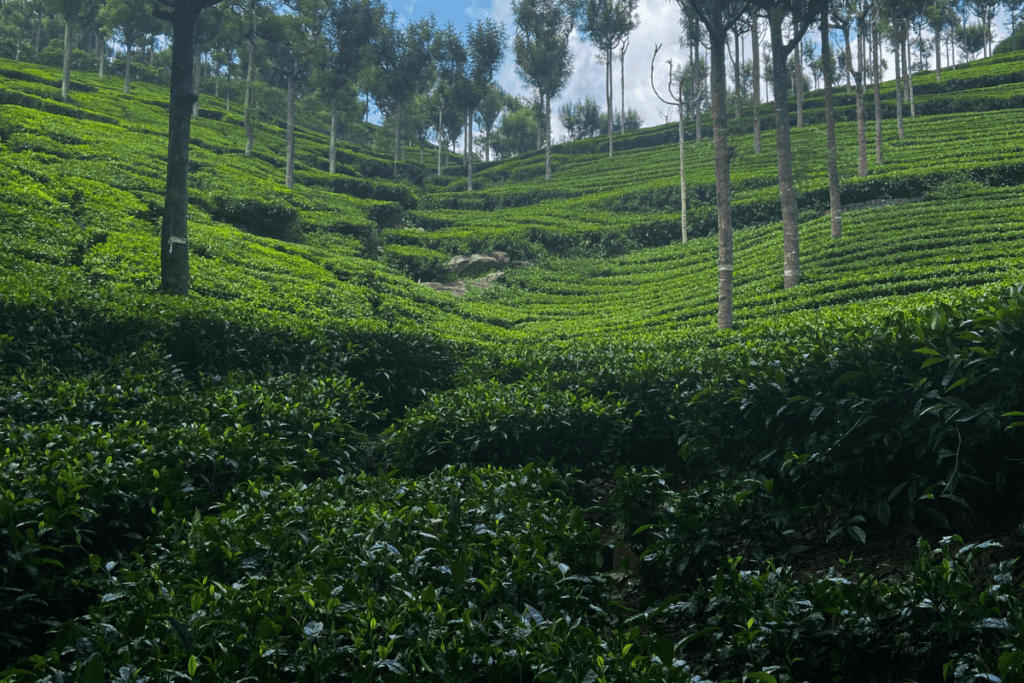
Wayanad, across the Kerala border, carries a different texture: darker green, wetter soil, more wildlife. The place that genuinely stopped us was the Edakkal Caves.
Carvings dated to approximately 6,000 BCE. Stone Age communities climbed to this exact spot, eight thousand years ago, and made marks on the rock face. Some scholars believe these include the earliest known writing in the Indian subcontinent; others have noted similarities between certain Edakkal symbols and patterns found in Indus Valley and Mesopotamian writing systems. The debate about whether those connections are meaningful or coincidental remains open.
Standing inside that cave at 8:30 AM with almost no other visitors, looking at marks made by a hand eight thousand years before ours, produced a feeling that was very difficult to name. Not awe exactly. Something closer to recognition…as though a very old conversation had just included us.
On the last morning, we drove to the Manjappara viewpoint at 4:30 AM for sunrise. The sun appeared briefly. Within minutes, the entire hillside was swallowed by cloud…we could not see three metres in any direction and could not safely go back down. We stood in white silence on a mountaintop and felt, for a while, as though nature had decided to keep us there.
On the way home, we stopped at a 13th-century Jain temple that the Vijayanagara Empire built, that Shaivism and Vaishnavism later adopted, and that Tipu Sultan eventually used as an ammunition store. Three religions and a military purpose, all in one building. The stone carries the evidence of every hand that touched it.
Kodaikanal: Where Noticing Replaced Seeing
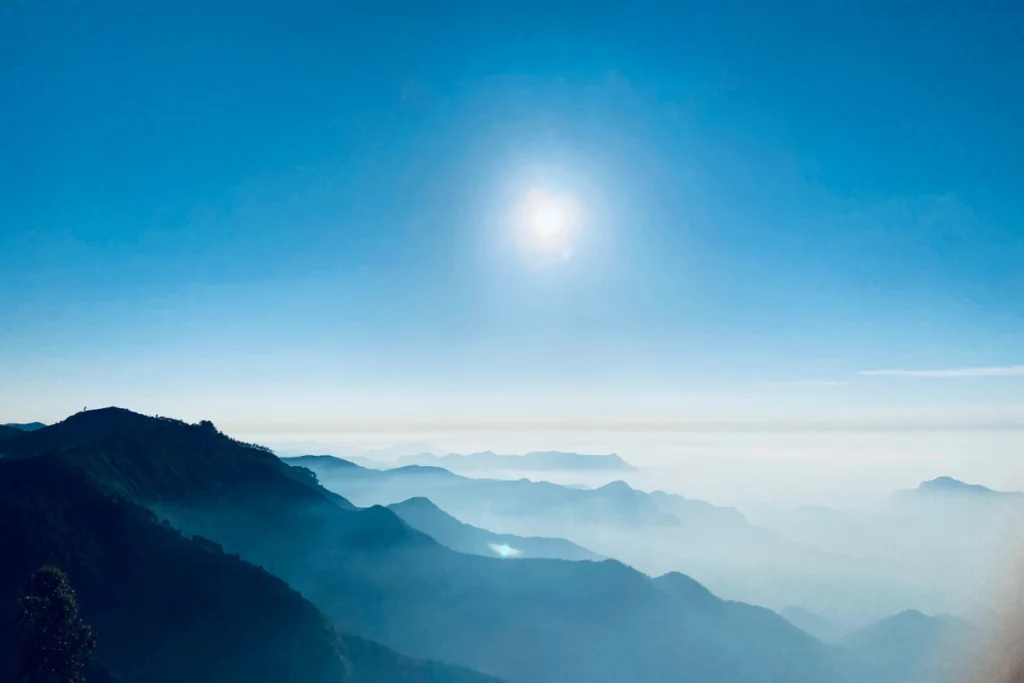
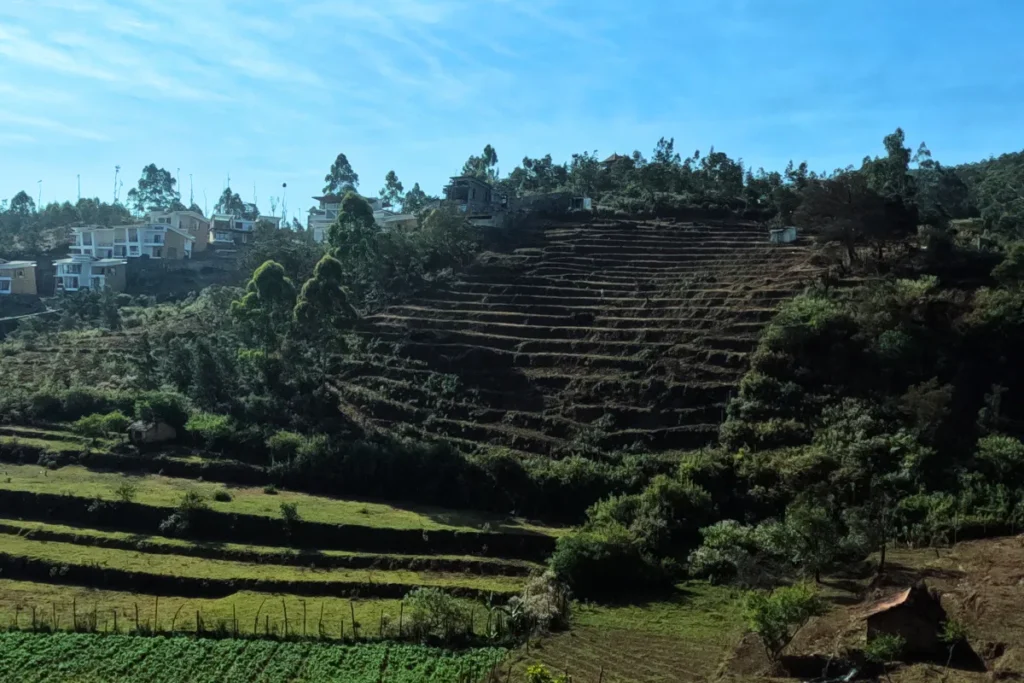
Kodaikanal was the first place in India where we stopped trying to see things and started noticing them.
April 2024. We drove from Bengaluru at midnight. Three days of almost nothing: sunrise at 6:15 AM, Liril Waterfalls at 6:30, Dolphin Nose by 7:17…and then the rest of each day given to pine forests, mist, and the view from the room. Poombarai village and its rice terraces appeared around a curve with the valley still in morning haze. Munnavanur Lake was completely still. The food the homestay owner cooked became a reference point that has not been replaced.
If Ooty is India’s hill station postcard, Kodaikanal is its journal entry.
The Malnad Belt: Coffee Country
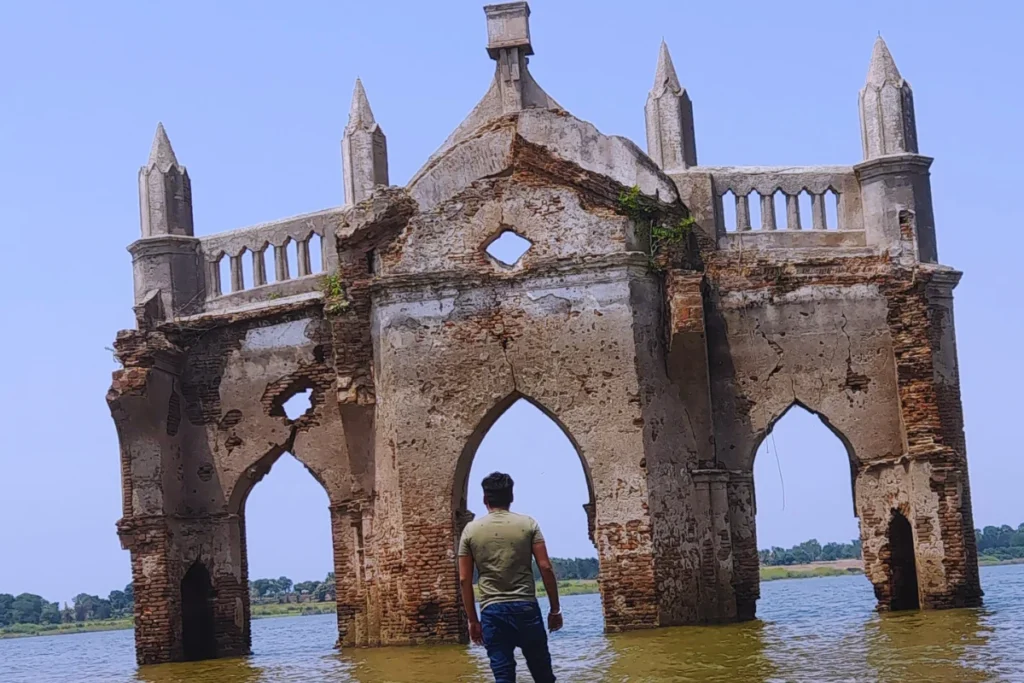
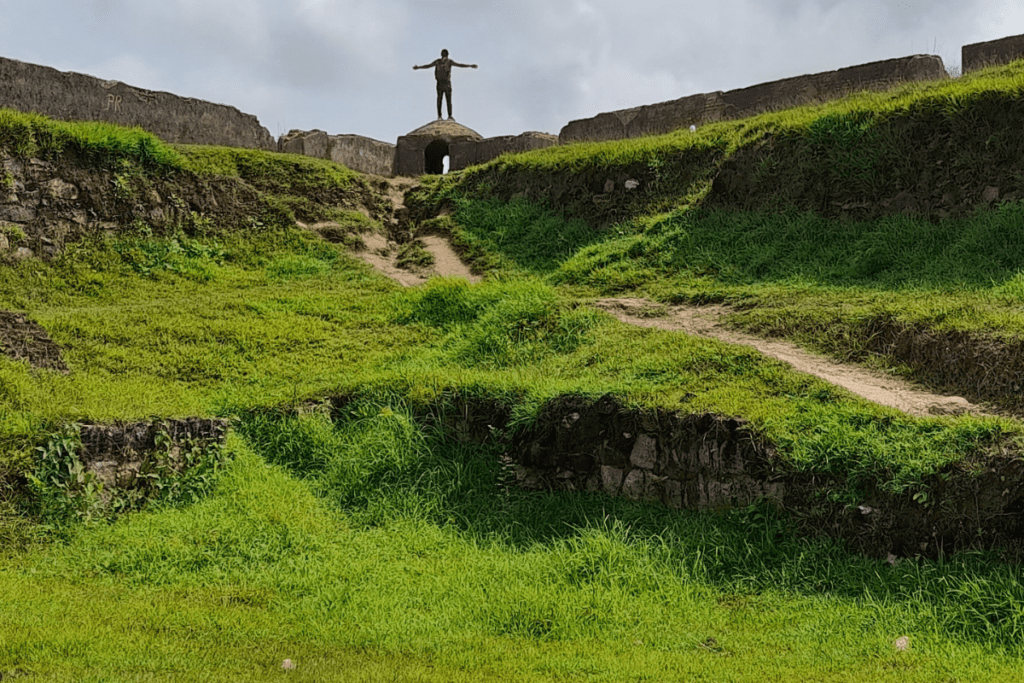
Chikmagalur and Sakleshpura, about four and a half hours from Bengaluru, are where South India grows its coffee. Manjarabad Fort, built in 1792 under Tipu Sultan with star-shaped walls designed to resist artillery fire, looks almost too geometric from above…the kind of deliberate engineering that stops you mid-sentence. The view from the ramparts does the same.
Heritage India
Hampi: The Kingdom the Ramayana Named First
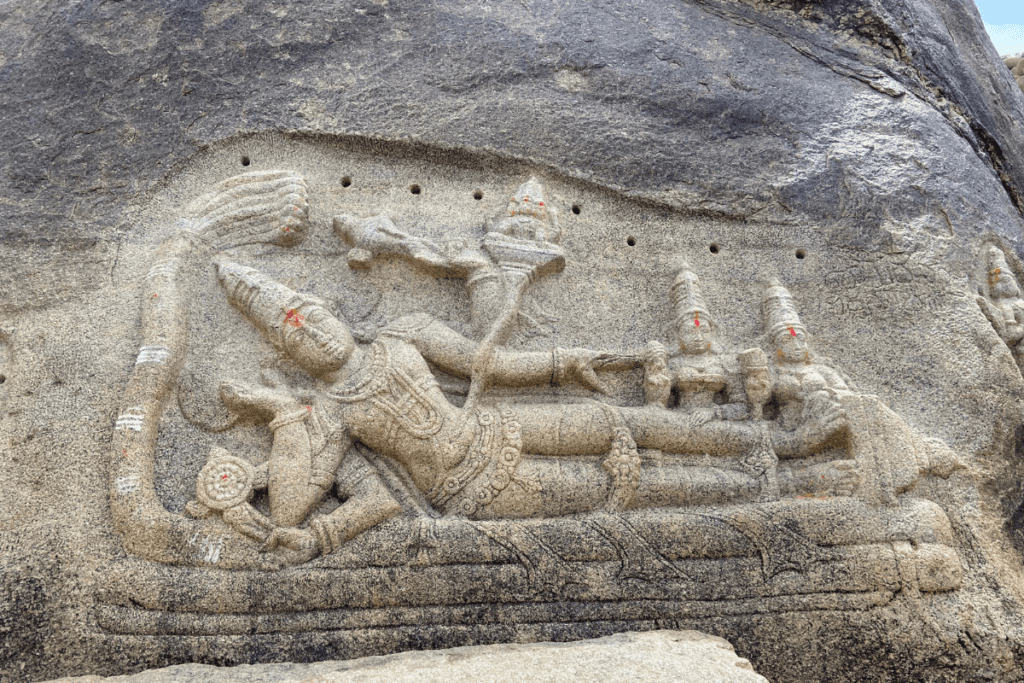
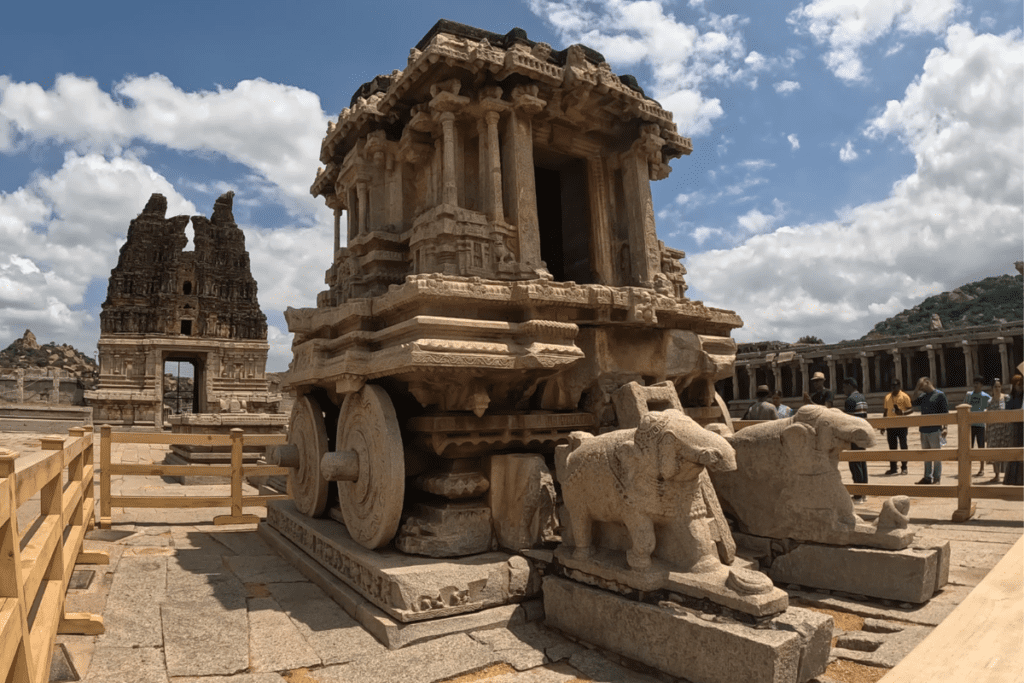
There is a question Hampi keeps asking, quietly, across every boulder field and crumbling gate: how does an empire disappear while the stones remain?
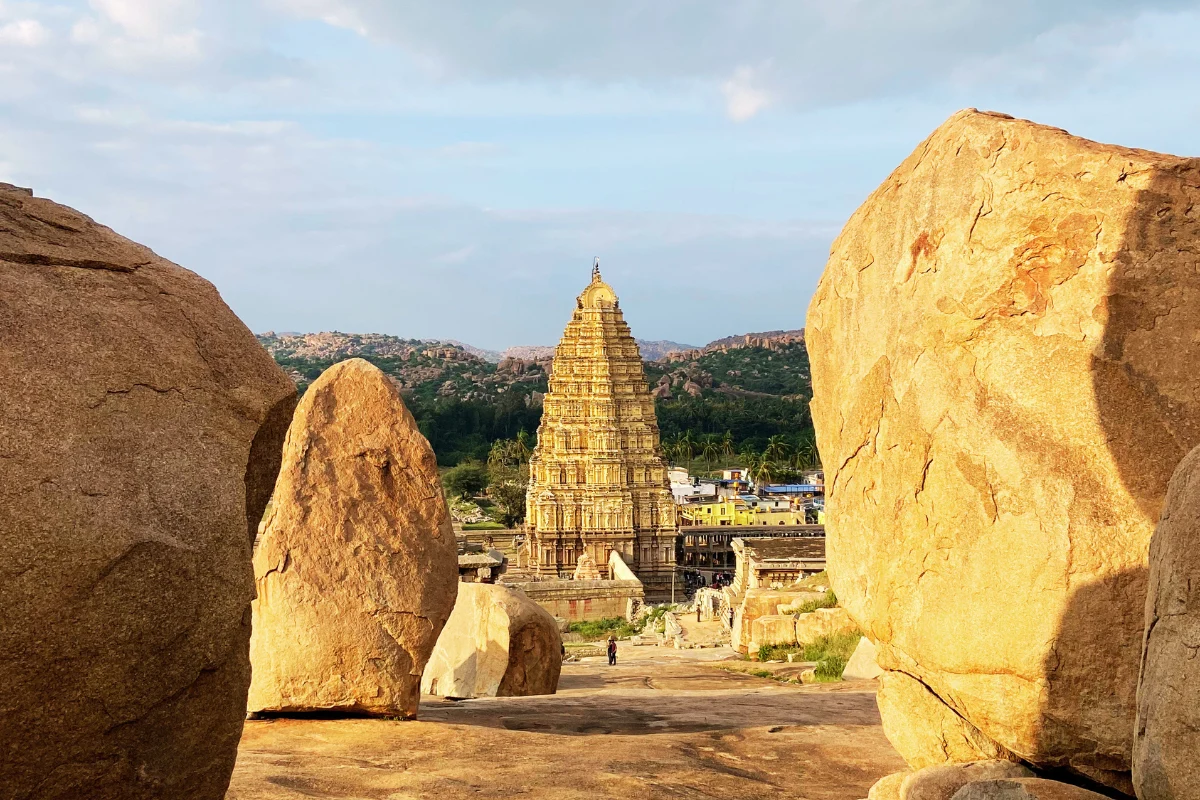
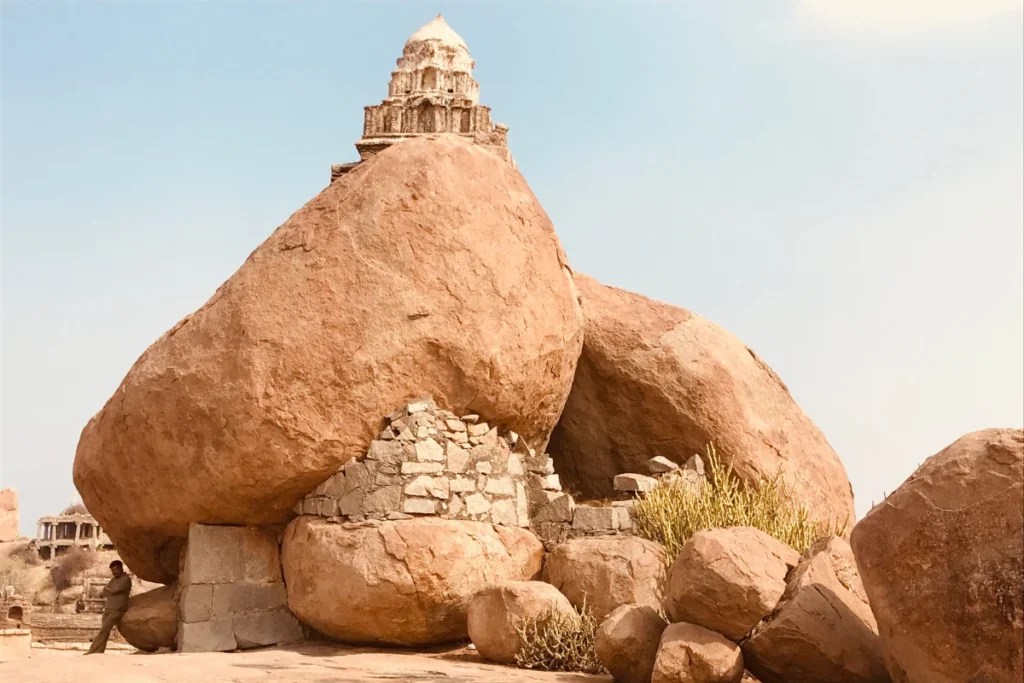
The Vijayanagara Empire at its peak in the 15th and 16th centuries was one of the wealthiest kingdoms in the world. Persian ambassadors described a city where precious stones were sold by weight in open markets. The Vittala Temple complex contains 56 musical pillars….each carved from a single stone to produce a distinct note when struck. Acoustic engineers have studied these pillars for decades. The explanation for how ancient craftsmen achieved that precision remains incomplete.
In 1565, at the Battle of Talikota, a coalition defeated the Vijayanagara army. The city was sacked over six months. Two centuries of construction, destroyed in one.
But Hampi’s story begins long before any empire. This landscape, according to the Ramayana, is Kishkindha…the monkey kingdom. Rama met Hanuman here. Sugriva reclaimed his throne on these boulders. Local belief holds that Brahma stored his creative energy in these stones, which is why they have survived every invasion, every century, without moving.
We spent five days here. Drove through the night from Bengaluru. By the end of the first day, already exhausted from the heat and the overnight drive, we knew five days would not be enough.
The underground Prasanna Virupaksha Temple…dark, filled with bats…has a Nandi statue that from a certain angle appears to look straight through you. The Hazara Rama Temple carries a thousand small carvings of Rama across its walls. When rain caught us unexpectedly at the Queen’s Bathhouse on a 38-degree afternoon, the heat broke, the light changed, and for a few minutes the entire complex felt alive again.
By the third morning, we had stopped setting alarms. By the fifth, we understood why people come back.
“Five days in Hampi. By the third morning, we had stopped setting alarms. By the fifth, we understood why people come back.”
Badami: The Fort, the Lake, and the Question Nobody Answers
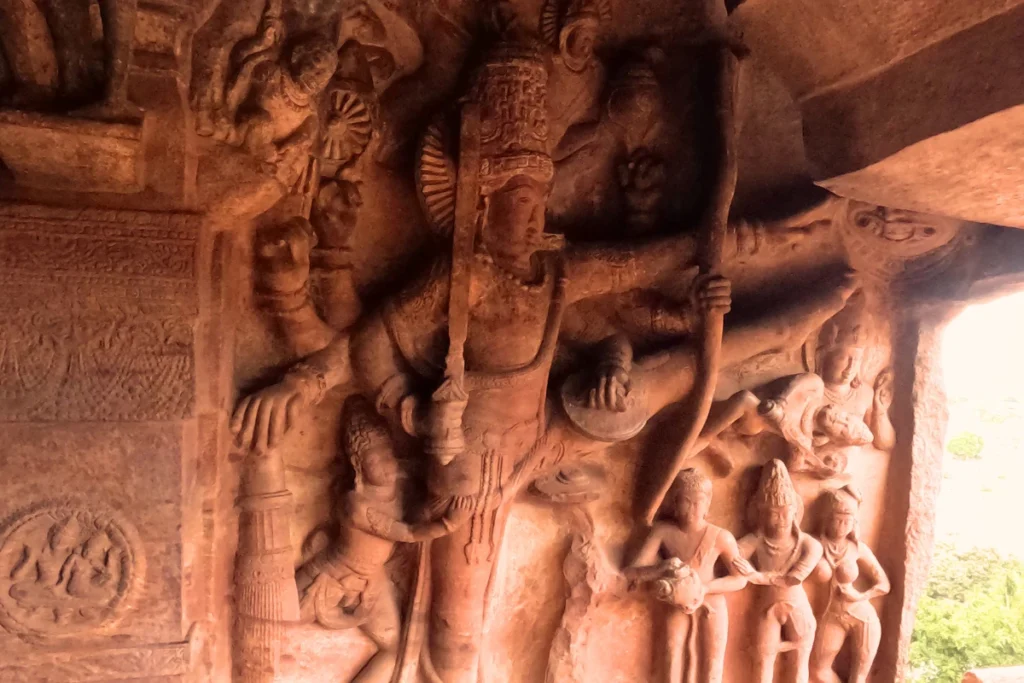
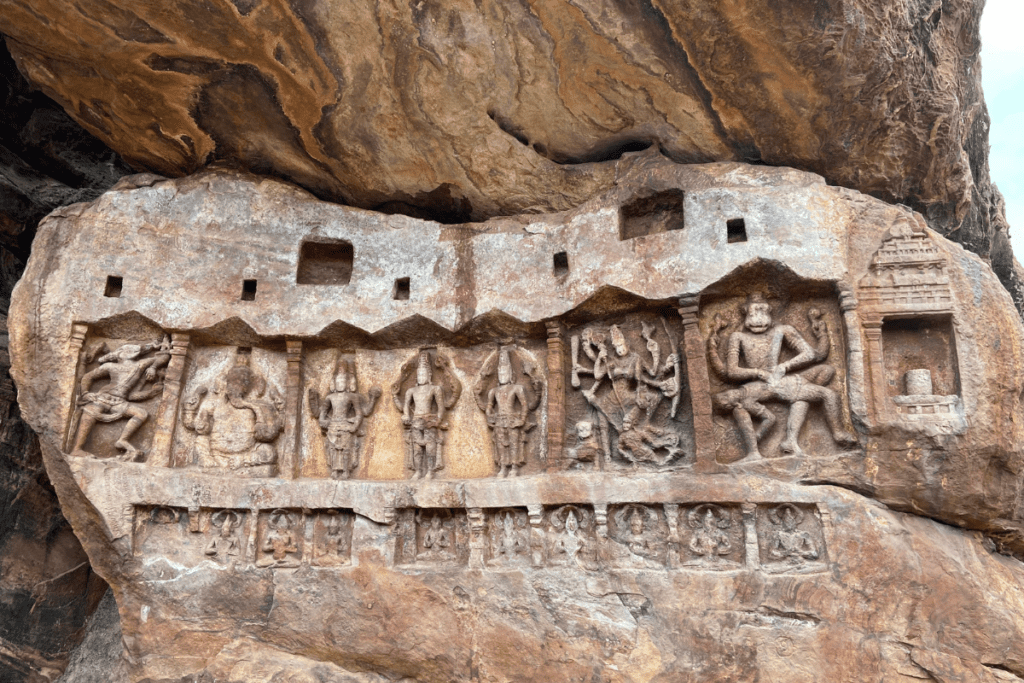
Nobody tells you about the sunflower field on the way to Badami. Three hours from Hampi through village roads shared with bullock carts and tractors, it appeared around a curve: a field in full bloom, every flower facing the same direction. We had never seen one before. We stayed longer than made sense.
The Badami cave temples, carved into red sandstone cliffs in the 6th and 7th centuries, hold four distinct caves. The first contains an 18-armed Nataraja caught mid-dance in stone. Our auto driver mentioned, entirely without drama, that every ruler who had tried to remove stone from these cliffs had eventually abandoned the attempt. He said it as though telling us the time.
Below the caves, Agastya Lake sits still and dark. The Bhootanatha Temple beside it is dedicated to Shiva as lord of spirits. The geography feels like it was arranged to communicate something…in a language that requires more than a single visit to read.
Hoysaleshwara: 20,000 Carvings and One Hidden Face
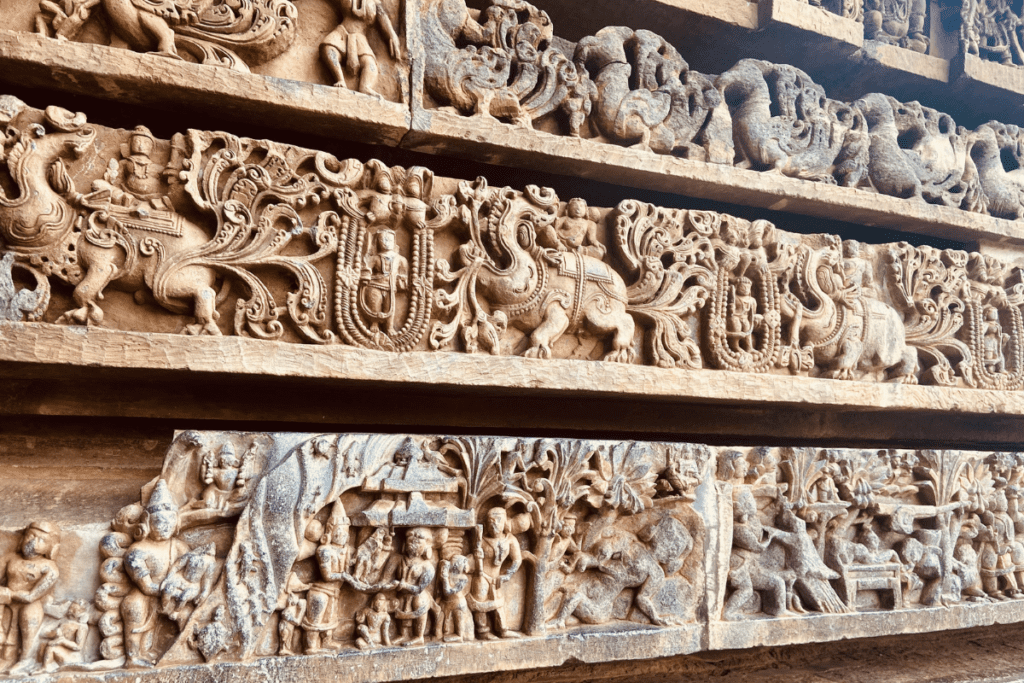
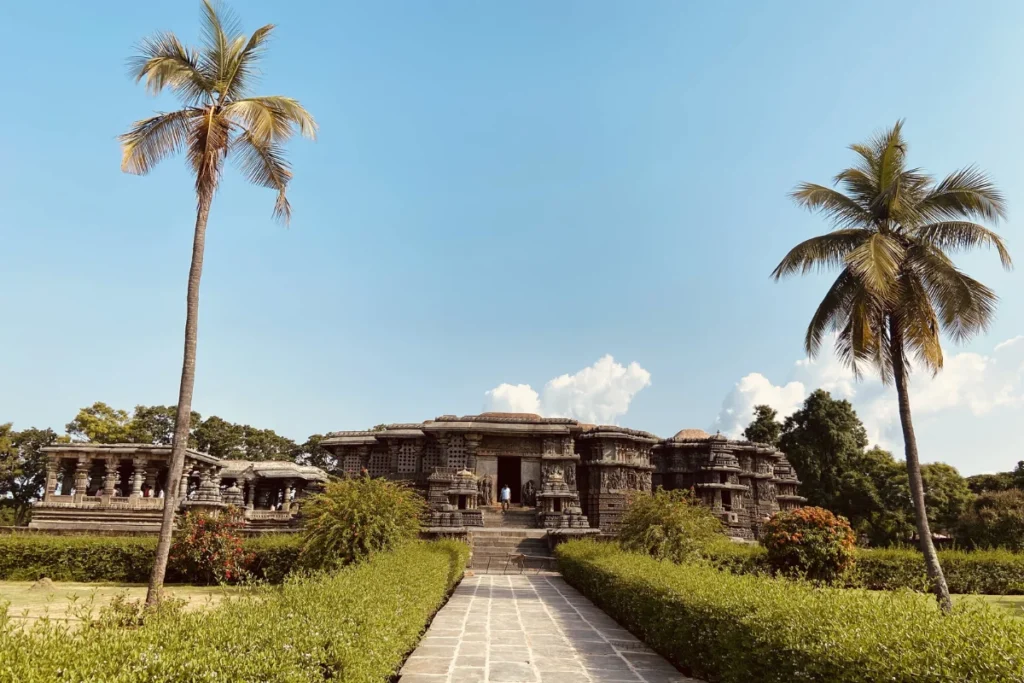
The Hoysaleshwara Temple near Hassan carries over 20,000 individual carvings. Without a guide, it is one overwhelming surface. With one, it becomes a narrative. Our guide pointed to a panel where a sculptor had hidden his own face in the border of a frieze. Twelve centuries later, that face is still there, looking at anyone who knows where to look.
The question worth sitting with: what else in these walls is hidden in plain sight?
Aurangabad: The Caves That Required Rain and Faith
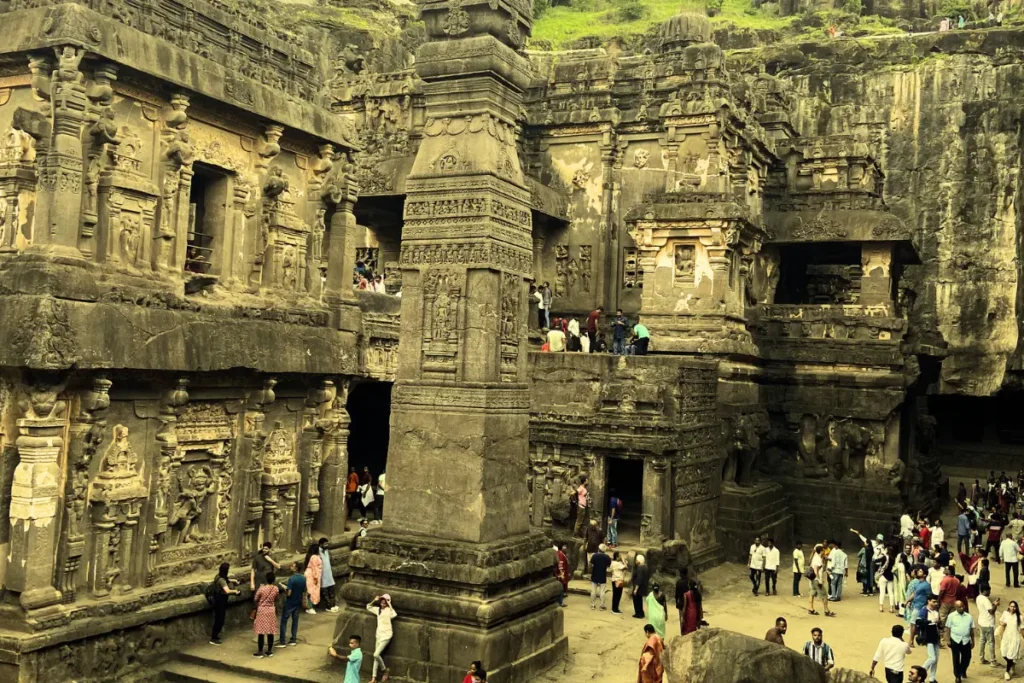
The Kailash Temple at Ellora is carved top-down from a single basalt cliff. Approximately 200,000 tonnes of rock removed. The structural question that has never been satisfactorily answered: how was proportionality maintained as the carving moved simultaneously downward and outward, with no room for course correction? It made us cry…not from sadness, but from a kind of overwhelm that does not have a cleaner name.
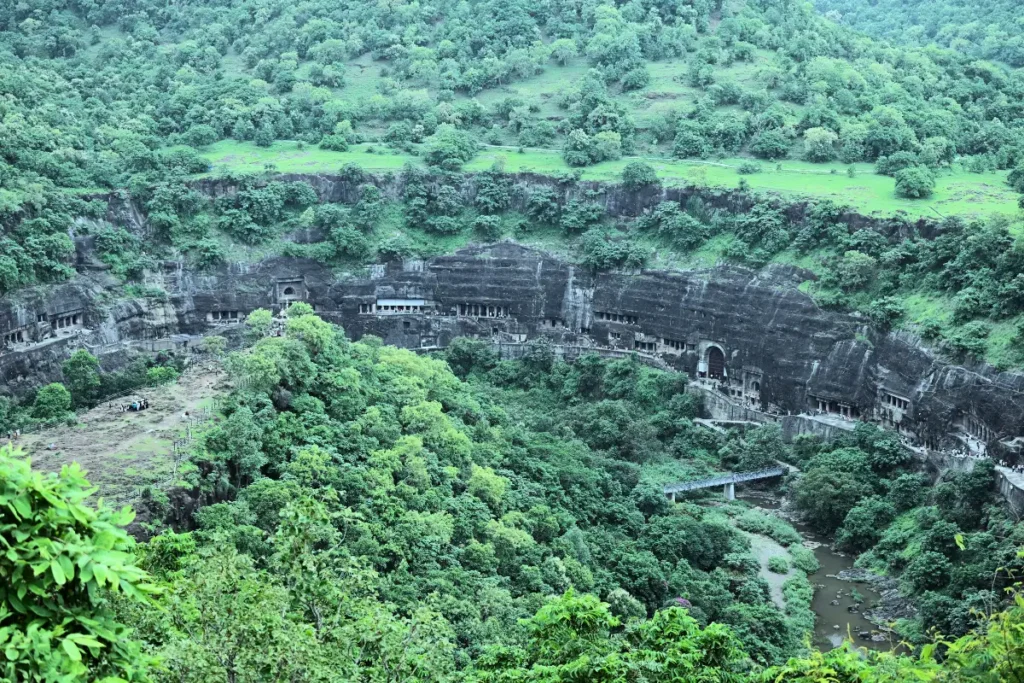
The Ajanta Caves, visited in monsoon rain, hold a different kind of story. Not about the 26 caves or the 2,000-year-old Buddhist paintings inside them, though both are extraordinary. About a man who appeared when we had no cash, no signal, no food, and no way to catch the last bus. He took our last INR 50 and walked us onto the next departure. We felt, that afternoon, as though the place itself had sent someone.
Why do the best stories from Indian travel almost always involve the moments that went wrong?
Coastal India
Goa: Two Versions of the Same Place
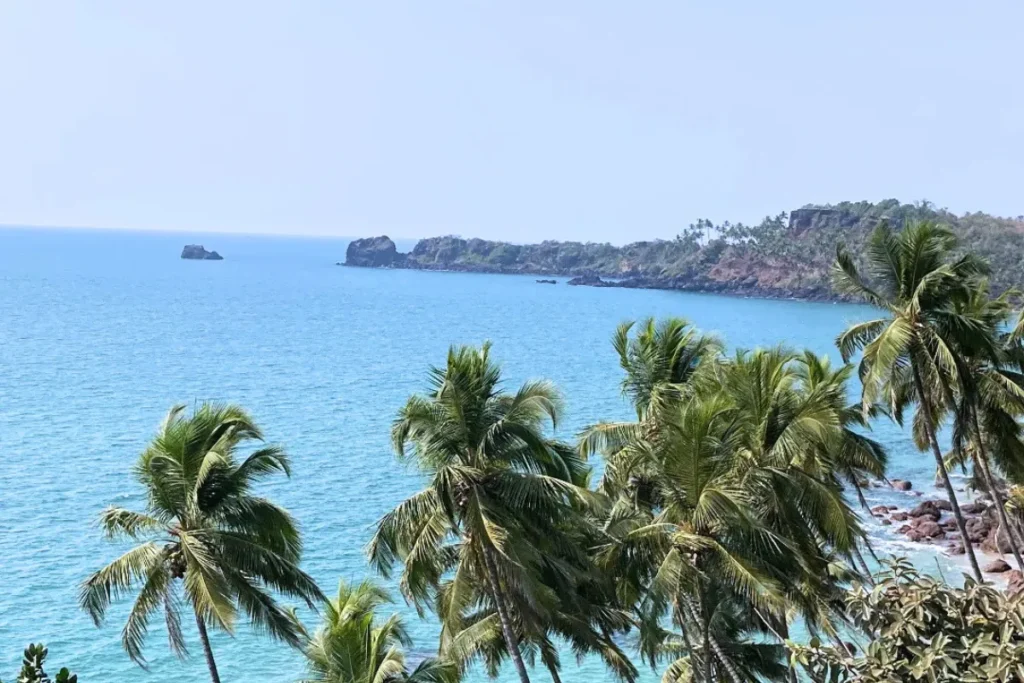
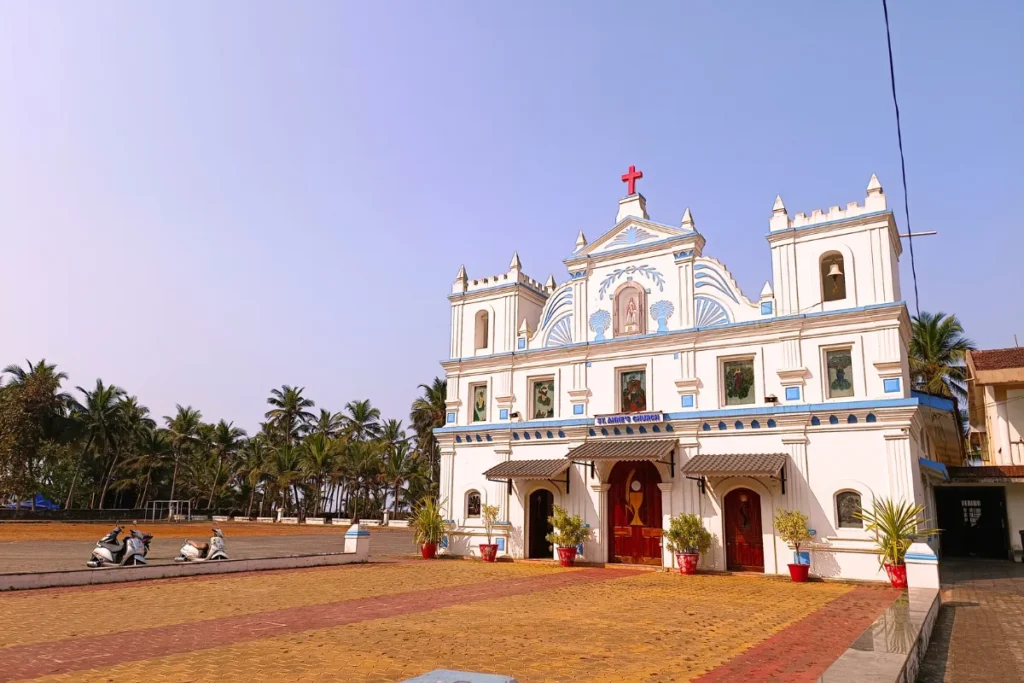
South Goa, deliberately. Cola Beach required walking down a red-soil slope with no cemented path. The Netravali Wildlife Sanctuary holds the Budbudyanche Taley…the bubbling lake…where natural springs cause the surface to appear as though the water is boiling. Local tradition connects this to Shiva. The geological explanation has never displaced the mythological one.
Cabo De Rama Fort carries a name the Ramayana gave it. Why was a fort on the Goan coast named after Rama? What does local tradition say happened here during the exile? The answers are worth a full article…one we are writing.
Puri and the Eastern Coast
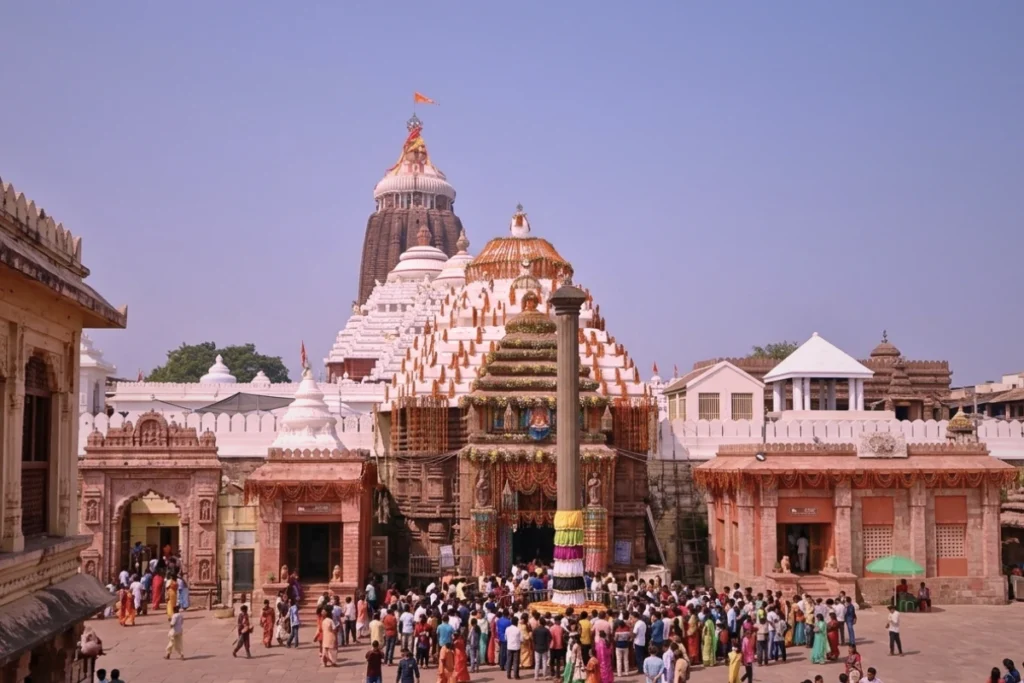
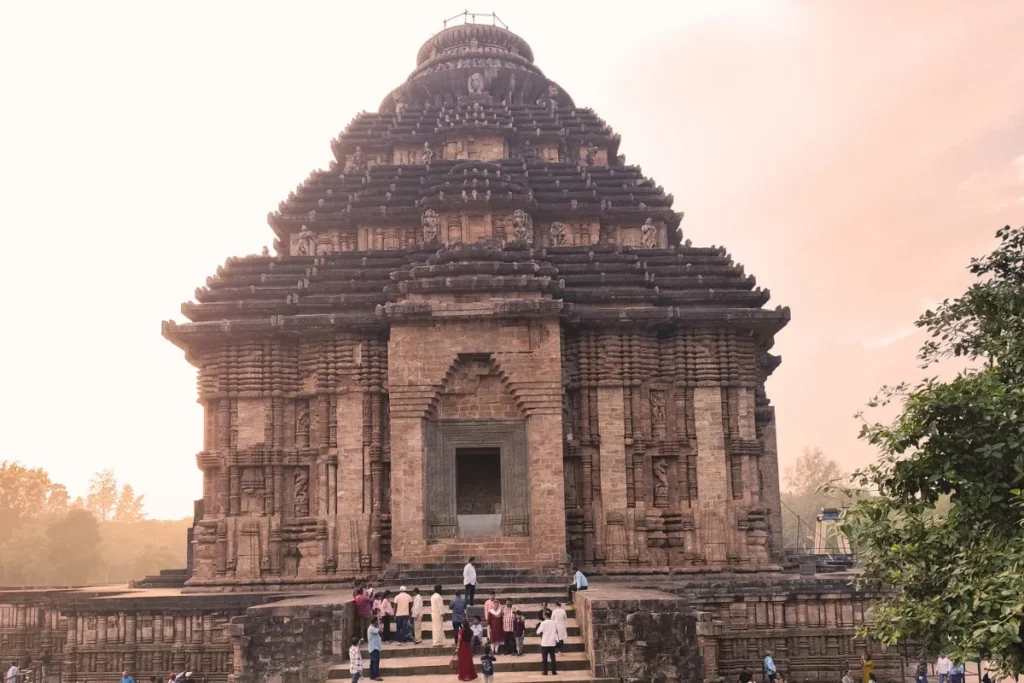
Puri is a place both of us have known since childhood. Our first trip there together came in October 2025, during a six-day east coast road trip from Bengaluru to Kolkata in our own car.
The Jagannath Temple darshan required a 4 AM start. The Konark Sun Temple, 35 kilometres away, holds a mystery that does not resolve cleanly. The 24 carved stone wheels function as precise sundials, verified by modern engineers. Historical accounts describe a massive magnetic lodestone at the temple’s apex that disrupted compass needles on passing ships. Whether the lodestone existed is debated. Whether it was removed by Portuguese sailors, as some accounts suggest, is debated further. What stands now is a ruin that seems larger than any single explanation can contain.
Mandarmani and Digha, in West Bengal, are where we go when the point is not to go anywhere at all…when the coastline is the destination and the days are meant to be quiet.
Eastern and Himalayan India
Kolkata is not a destination for us. It is origin. Both of us grew up there. It shaped our palates, our sense of what food is supposed to taste like, and our instinct for what travel should feel like before we knew we were forming opinions. We will write about it eventually, but only when we can do it honestly.
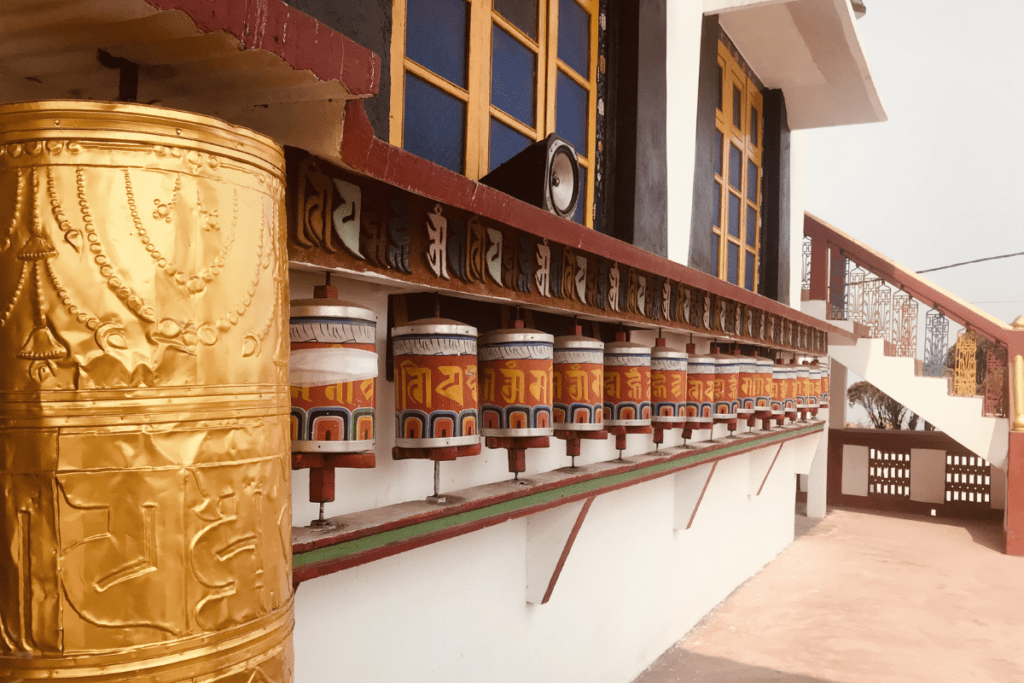
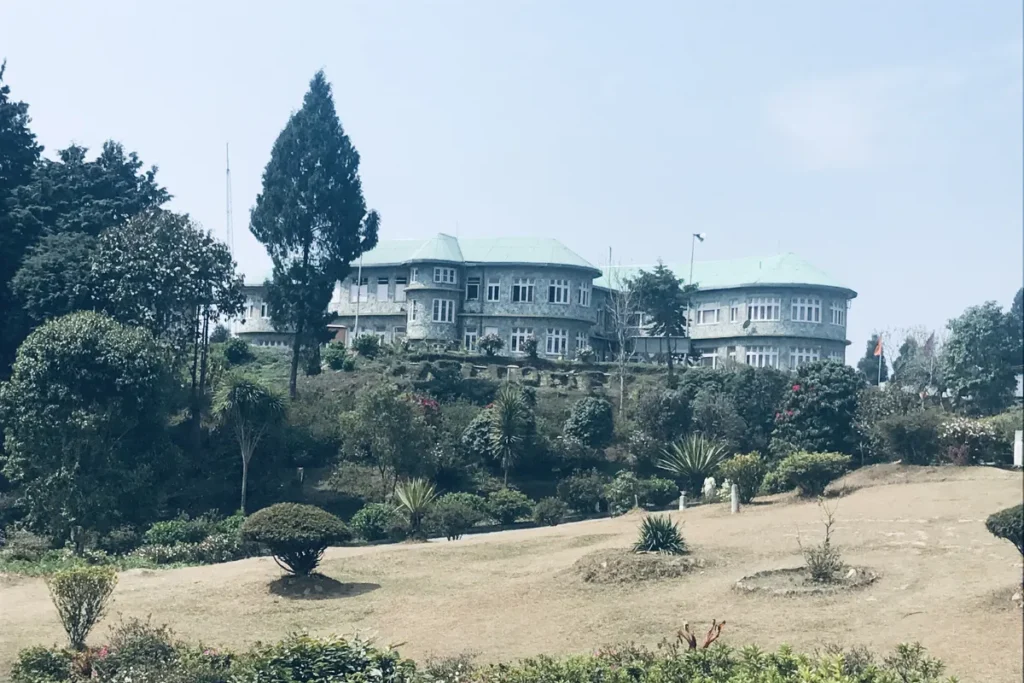
Darjeeling and Gangtok exist, for now, as memory rather than documentation. The tea estate roads, the monastery approaches, the first clear sight of Kangchenjunga on a morning when the weather agrees with you. We will return with the attention these places deserve.
Purulia, in western West Bengal, is not in guidebooks. The dry forest, the Chhau dance tradition, the winter light on the Ajodhya hills. When we write about it, it will be worth the wait.
When to Visit India
India does not have a single travel season. Each region follows its own calendar. The table below covers the destinations in this guide.
| Region | Best Window |
| South India — plains and coast | October to March |
| Nilgiri hill stations | April to June; September to November |
| Hampi and the Deccan plateau | October to February |
| Goa | November to February |
| East India and the coast | October to March |
| Northeast and Himalayan regions | March to May; October to November |
September and October often offer the best balance for working travelers: lower crowds, post-monsoon green, and accommodation rates that have not climbed to peak season pricing.
How We Travel India
Our own car. Starting at midnight, almost always.
In Goa we rented a self-drive car. In Aurangabad we hired a car with a driver. These are the only exceptions across every trip in this guide.
Road trips are where India makes the most sense to us. The sunflower field between Hampi and Badami was not in any itinerary. The Bandipur elephant crossing was not in any itinerary. Three hours of highway silence at 4 AM between Vizag and Puri was not in any itinerary. These are not accidents. They are what the trip actually is. We wrote about this more honestly in our slow travel philosophy, why we drive instead of fly, why we cook in hotel rooms, and what the wrong turns have given us.
The best experiences we have had in India were found in the gaps between the planned ones.
What India Costs
India can be traveled on a wide range of budgets. What you spend depends almost entirely on your accommodation choices, how often you eat at restaurants versus local dhabas, and how many paid heritage sites you visit. Prices also shift with seasons, with demand, and year on year…so treat anything you read online, including this, as a rough reference, not a current quote. Always do your own research before you travel.
From our own experience across multiple trips: budget guesthouses and homestays in places like Hampi, Kotagiri, or Mandarmani can be found in a range that makes India genuinely accessible. Mid-range options with better facilities and location are available in most destinations for a reasonable step up. The spread is wide, and booking based on the last ten reviews rather than the headline price gives a more accurate picture than any number we could put here.
| Category | Rough Range (INR) | Approx. USD |
| Budget accommodation (per night) | INR 1,500 – 4,000 | ~USD 18 – 48 |
| Mid-range accommodation (per night) | INR 3,500 – 8,000 | ~USD 42 – 96 |
| Local meals (per meal, per person) | INR 100 – 400 | ~USD 1.20 – 5 |
| Heritage site entry fees (major sites) | INR 40 – 600 per person | ~USD 0.50 – 7 |
| Fuel (self-drive, per 100 km approx.) | INR 600 – 900 (varies with petrol price, car, mileage, etc) | ~USD 7 – 11 |
All ranges above are broad and will shift with season, location, and how far off the main tourist circuit you go. Use them as a sense-check, not a plan. Check current prices on booking platforms before you travel. One thing no price range accounts for: carry cash. Ajanta taught us that lesson once. It has not needed repeating.
Practical Lessons
These are the things we know from getting them wrong first.
- Leave at midnight. Not because the roads are safer, but because they are emptier. You gain hours before the day has started.
- Limit yourself to two or three sites per day. India’s heritage sites reward attention, not volume.
- Download offline maps before entering any forest corridor. Signal disappears without warning.
- Expect wildlife on forest roads. An elephant crossing is not a delay…it is the trip happening.
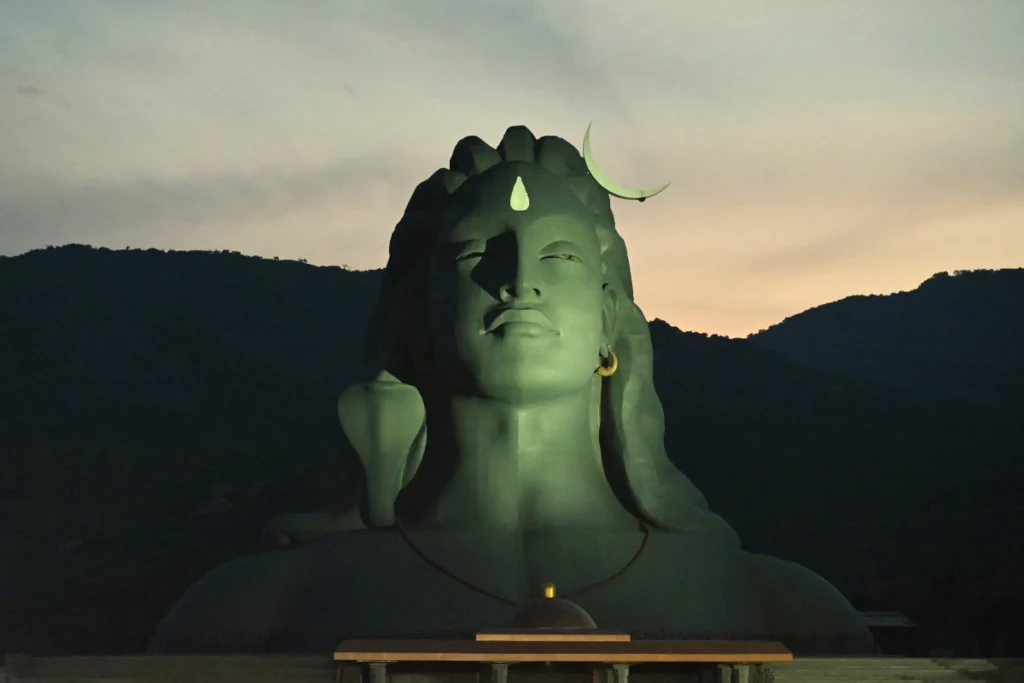
- At Adiyogi near Chikkaballapur, the light show is worth the drive. Budget ninety minutes for parking on exit.
- At Nandi Hills, the monkeys are faster than they look.
- Book accommodation based on the last ten reviews, not the overall rating. Recent experience matters more than historical average.
- At complex heritage sites…Hoysaleshwara, Hampi, Ajanta, Ellora…hire a guide. You will spend the same time but see four times as much.
If a piece of travel advice could appear on five hundred other websites without changing a word, it is not worth writing. The lessons that matter are the ones learned by getting things wrong first.
India is the trip that started everything for us. Every destination we write about here…Hampi, Vizag, Puri, Konark, the Nilgiris…has its own page in this guide. If you have an Indian road trip on your mind and don’t know where to begin, this is the page to begin with.“