This Nilgiris travel guide covers all three hill towns from one trip: May 2023, three people, our own car, twelve hours on the road.
Sumana’s father had wanted to visit Ooty for years.
He had mentioned it multiple times. Come to Bengaluru, he would say. We will go to Ooty. The plan had a parental weight to it, the kind that grows heavier with each mention. When he finally came to visit in May 2023, the trip was decided before he unpacked.
Except we did not go to Ooty. We went to Kotagiri instead.
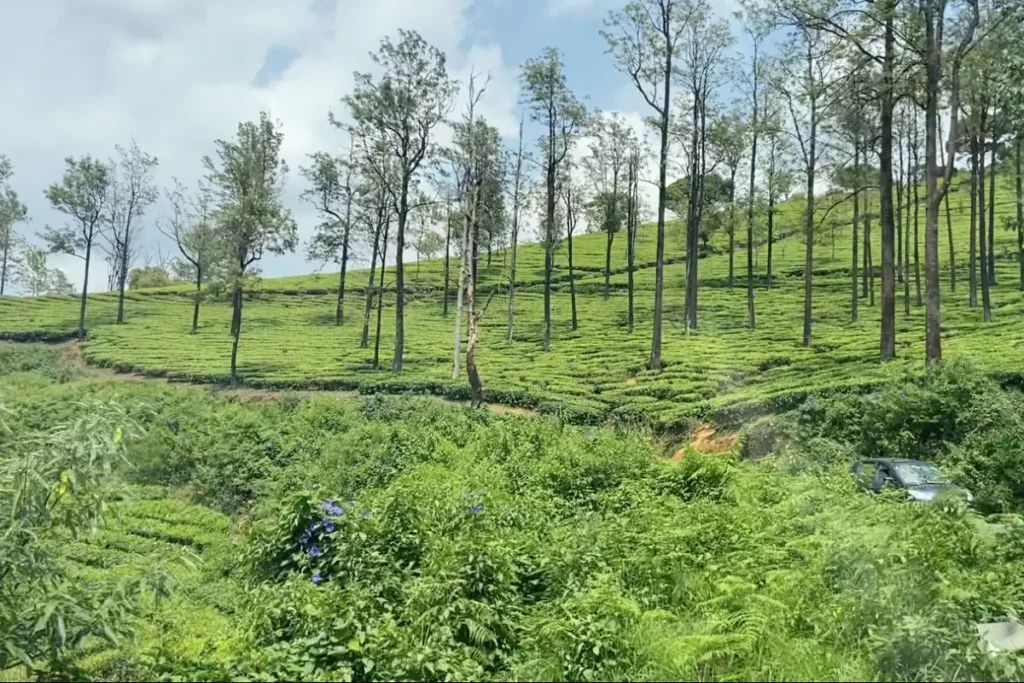
The reasoning was straightforward. Ooty receives more visitors than its infrastructure can absorb. The approach roads queue for kilometres. The town centre, which should feel like a hill station, feels like a traffic jam that happens to be at 2,240 metres. Kotagiri is one hour from Ooty, in the same Nilgiris district, at a similar elevation, surrounded by the same tea gardens and eucalyptus forests. The population of visitors on any given day is a fraction of Ooty’s. The silence, which was what we had driven twelve hours to find, was available immediately upon arrival.
This guide covers all three Nilgiri hill towns. Ooty for completeness. Coonoor for the middle ground. Kotagiri is the version of the Nilgiris that most people drive past on their way to the wrong destination.
“He had wanted Ooty for years. We took him to Kotagiri instead. The mountains were the same. The crowd was not. The silence was the gift we had not planned to give him.”
- What Are the Nilgiris?
- The Drive from Bengaluru: Twelve Hours When It Should Be Six
- Ooty: Why Everyone Goes and Why We Drove Through
- Coonoor and the Day We Threw Away the Sightseeing List
- Kotagiri: The One We Chose
- The Toda: The Nilgiris’ Oldest Inhabitants
- The Nilgiri Mountain Railway
- What It Costs
- Frequently Asked Questions
What Are the Nilgiris?
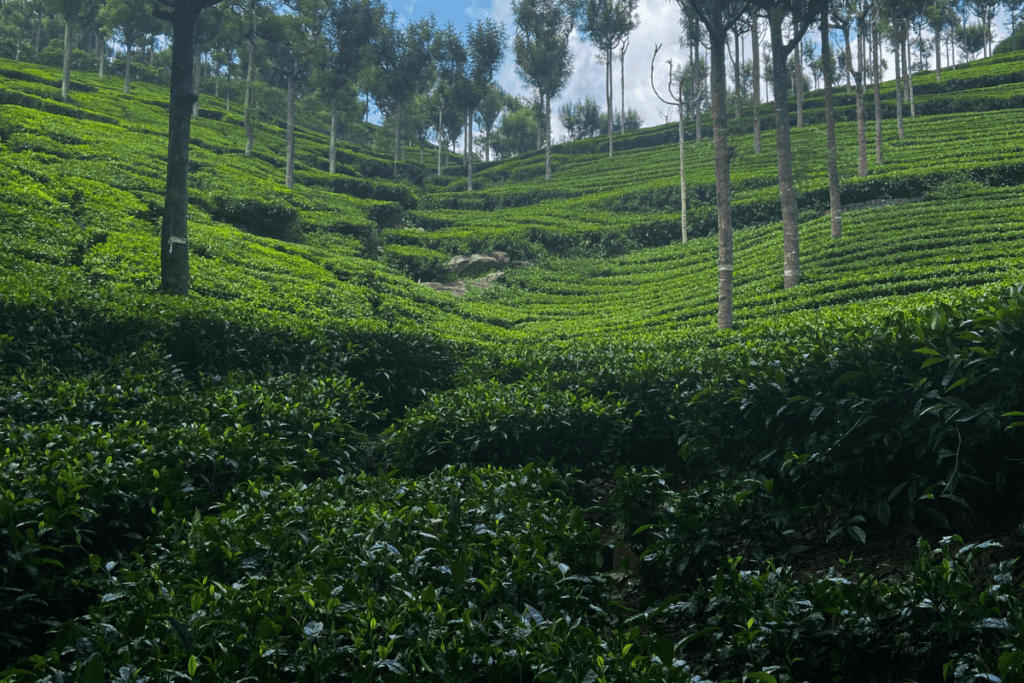
The Nilgiris (Blue Mountains) are a massif in the Western Ghats at the junction of Tamil Nadu, Kerala, and Karnataka. The plateau sits between 1,800 and 2,600 metres, making it one of the highest inhabited regions in southern India. The ecosystem is classified as a tropical montane forest, rich with endemic species, tea plantations introduced during British colonial administration, and eucalyptus forests planted over the native shola grasslands.
Three hill towns share the plateau: Ooty (Udhagamandalam) at the centre, Coonoor to the southeast, and Kotagiri to the east. All three are connected by winding mountain roads that pass through tea estates, pine forests, and views that repeat without repeating.
The Nilgiris are also home to the Toda people, one of the oldest indigenous communities in South India, whose presence on this plateau predates every colonial and post-colonial structure that now occupies it. Their barrel-shaped temples and buffalo-dairy rituals are part of the landscape’s identity in a way that the tea gardens and the toy train are not. The tea and the train arrived. The Toda were already here.
The Drive from Bengaluru: Twelve Hours When It Should Be Six
We left home at 6 AM on May 20th, 2023. With the two of us in the front and Sumana’s father in the back, the maps predicted a six-and-a-half-hour trip. The drive took twelve.
The first stretch was straightforward. NH275 through Karnataka is smooth. Good road, cool early morning air, the specific pleasure of a long drive before the heat arrives. Somewhere along the route before Bandipur, we pulled over for breakfast: idli, dosa, and vadai at a roadside South Indian restaurant. Sumana’s father wanted coconut water soon after. We found a stall. He and Akash got out. Sumana stayed in the car. The three-person rhythm of the trip established itself in small moments like that one.
The Bandipur segment was slow, beautiful, and worth every minute of both. Speed limits apply inside the reserve. No horn. No stopping. No feeding the animals. We followed all of it and were rewarded: deer, monkeys, and the elephant that crossed the road at the pace of something that knows it has right of way. Sumana’s father raised his phone through the windshield and took a photograph that is still one of the most valued from that trip. The elephant did not acknowledge us. The schedule stopped mattering.
Then we entered Tamil Nadu, and Ooty’s approach roads took the hours the highway had given us and returned them as traffic queues. Hairpin bends backed up for kilometres. The town centre, briefly visible through car windows that were not moving, confirmed everything we had suspected and sidestepped. We continued through Ooty toward Kotagiri. Arrival: 6 PM.
“The elephant crossed the road at the pace of something that knows it has the right of way. Sumana’s father raised his phone through the windshield. The schedule stopped mattering. The elephant did not acknowledge us. This was fine.”
Ooty: Why Everyone Goes and Why We Drove Through
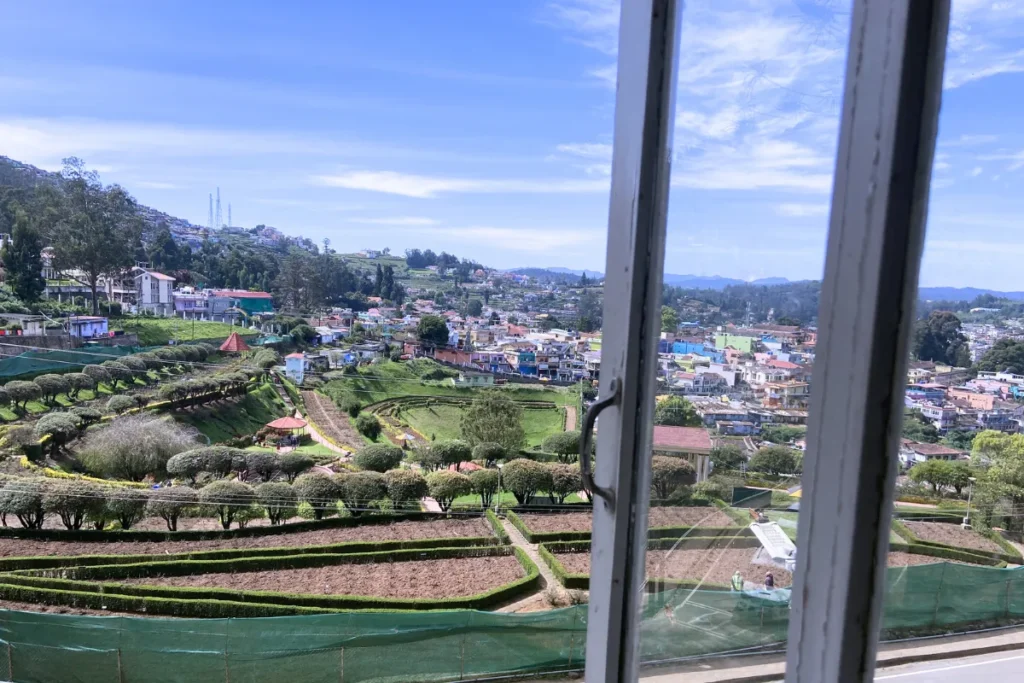
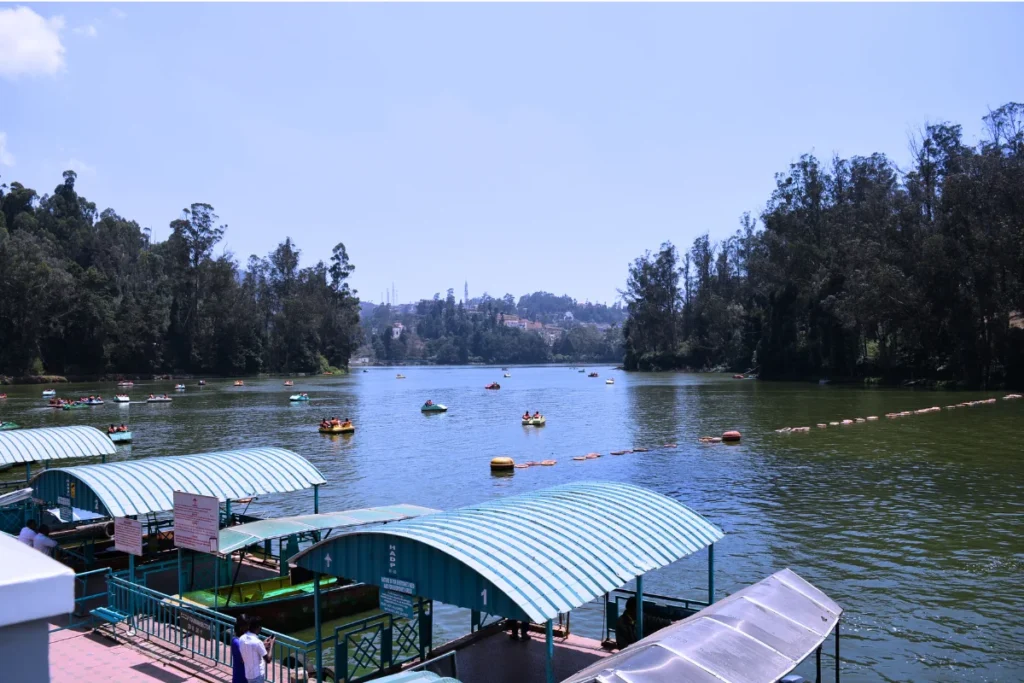
Ooty is the most famous hill station in South India. The Botanical Gardens, the Government Rose Garden, Ooty Lake, the heritage buildings left behind by British administrators who used the town as a summer capital: these are the reasons the name appears in every South Indian travel itinerary.
The problem with Ooty is not Ooty. It is the number of people who have had the same idea at the same time.
We drove through. Two hours were added to our journey. The town centre was dense with vehicles, pedestrians, and the specific noise that a popular destination generates when it has exceeded its comfortable capacity. The pine forests and tea gardens were visible through car windows that were not moving.
Ooty is worth visiting on a weekday outside peak season. Avoid May holidays, October public holidays, and December-January entirely. On quieter days, the Botanical Gardens have space to walk, the lake is calm, and the Rose Garden functions as a garden rather than a queue. On a weekend or holiday, you will encounter traffic wearing Ooty’s name.
Our recommendation, confirmed by two hours of stationary approach: stay in Kotagiri or Coonoor and visit Ooty as a day trip rather than a base. The experience is significantly better when you arrive from somewhere quieter.
Coonoor and the Day We Threw Away the Sightseeing List
On our second morning, over a breakfast of bread, butter, and omelette at the homestay, we made a quiet decision. No map-following that day. No sightseeing list. We would drive through Kotagiri and Coonoor and stop wherever the view asked us to stop.
It was the right decision. It produced the best day.
Kodanad Viewpoint
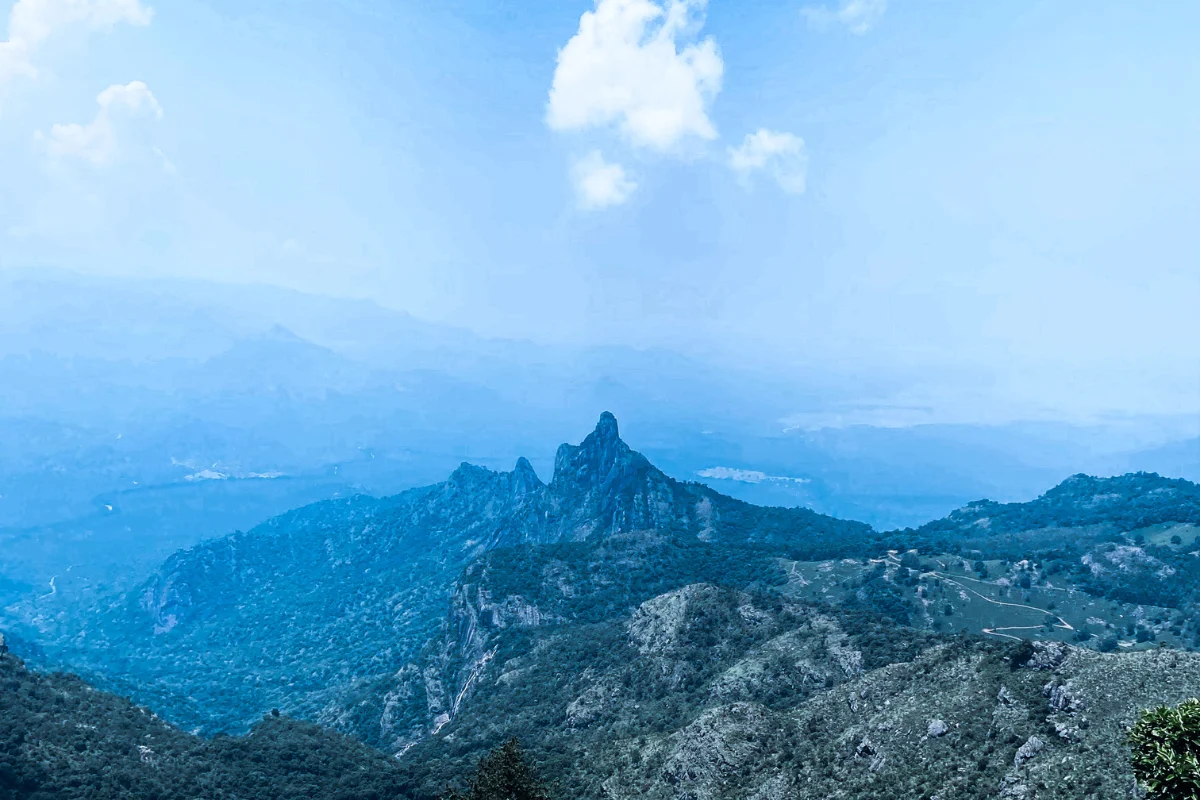
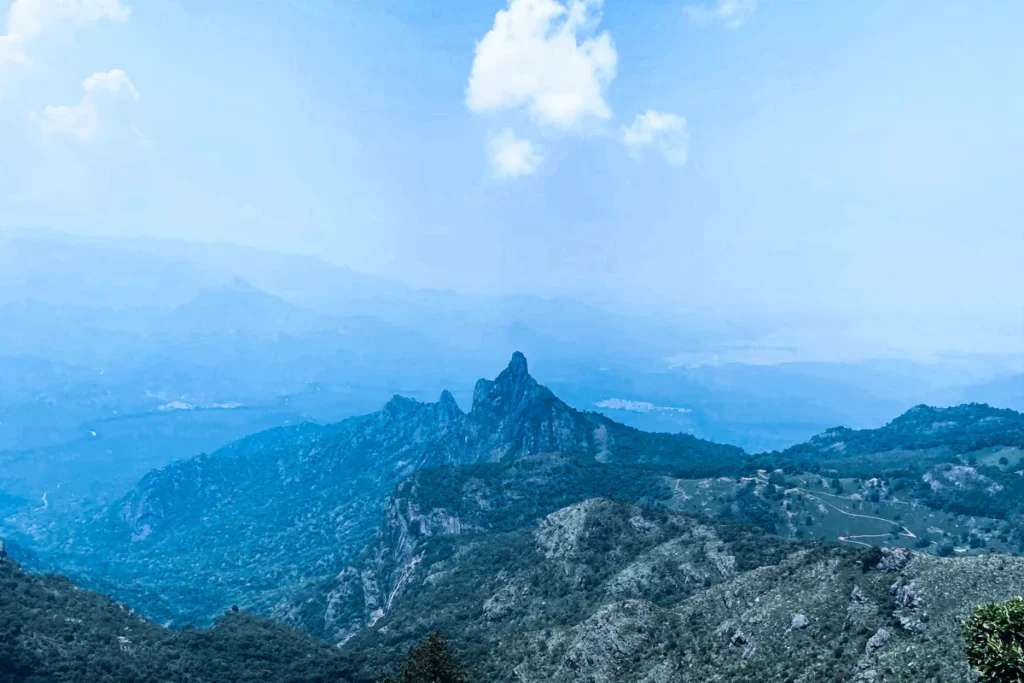
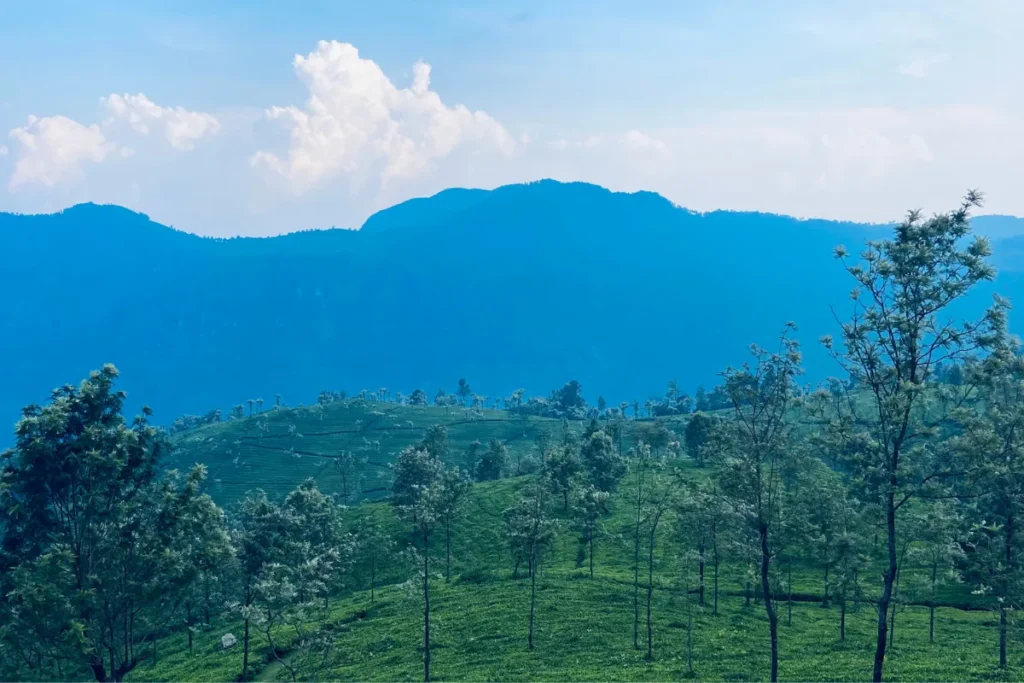
The first stop was Kodanad viewpoint, on the eastern edge of the Nilgiris, overlooking the Moyar River gorge and the vast plains of Coimbatore far below. The elevation drop is vertiginous. The green is layered: tea gardens in the foreground, dense forest in the middle distance, the hazy flatlands at the bottom. On a clear morning, the view extends further than any single photograph can contain.
Sumana’s father stood at Kodanad taking photographs and videos with the contentment of someone who has been promised mountains and received them. He had wanted Ooty. Kotagiri and Coonoor had given him something Ooty could not: the mountains without the crowd.
The Tea Estate Roads
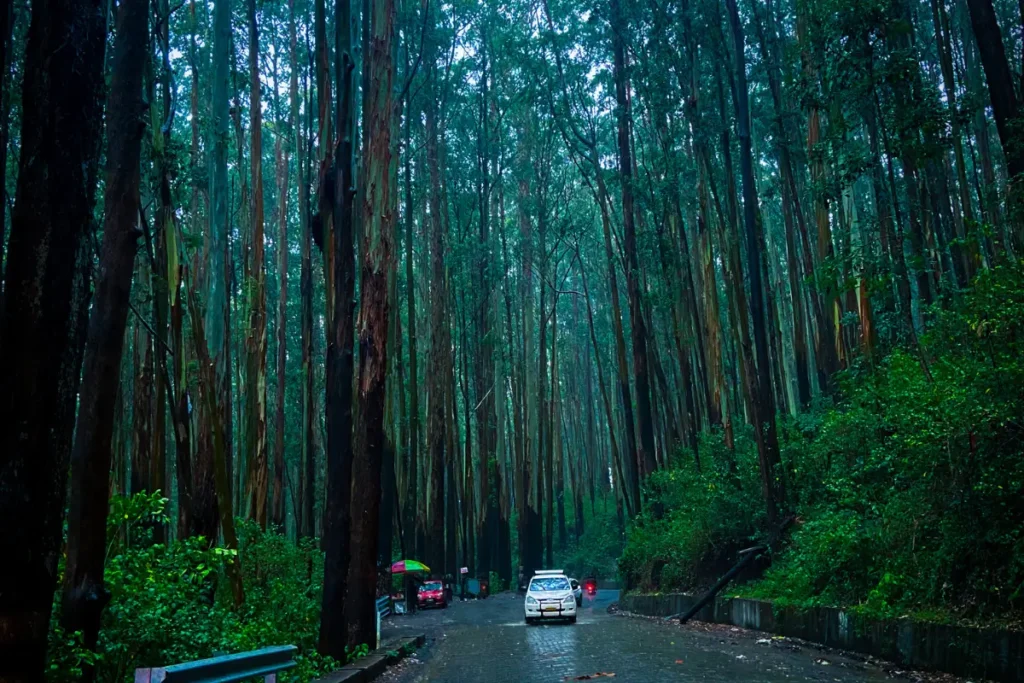
From Kodanad, we drove without a plan. Through small villages. Along tea estate roads where the bushes pressed against both sides of the car. Past clearings where the view opened without warning and then closed again as the road entered the next bend. We stopped when something caught our attention. We continued when nothing did.
The villages between Kotagiri and Coonoor are not on any tourist map. They are residential. The tea workers live here. The roads are narrow and well-maintained. The air smells of eucalyptus and damp earth. These roads were the best part of the day…not a viewpoint, not a garden, not a ticketed attraction, but the space between the listed destinations, where the Nilgiris exist for themselves rather than for visitors.
Kotagiri: The One We Chose
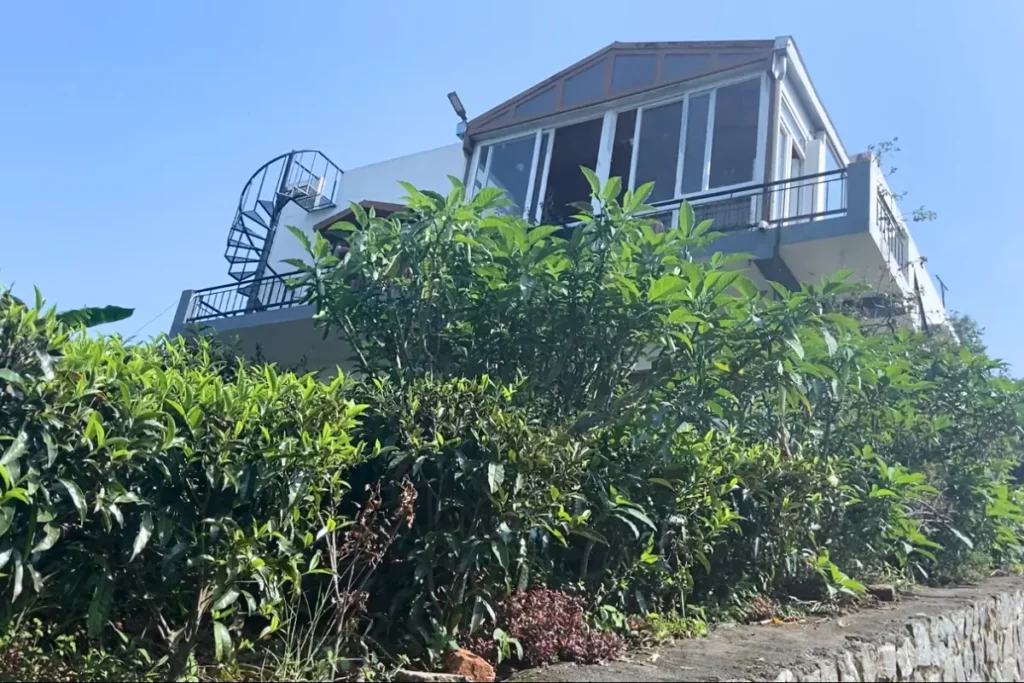
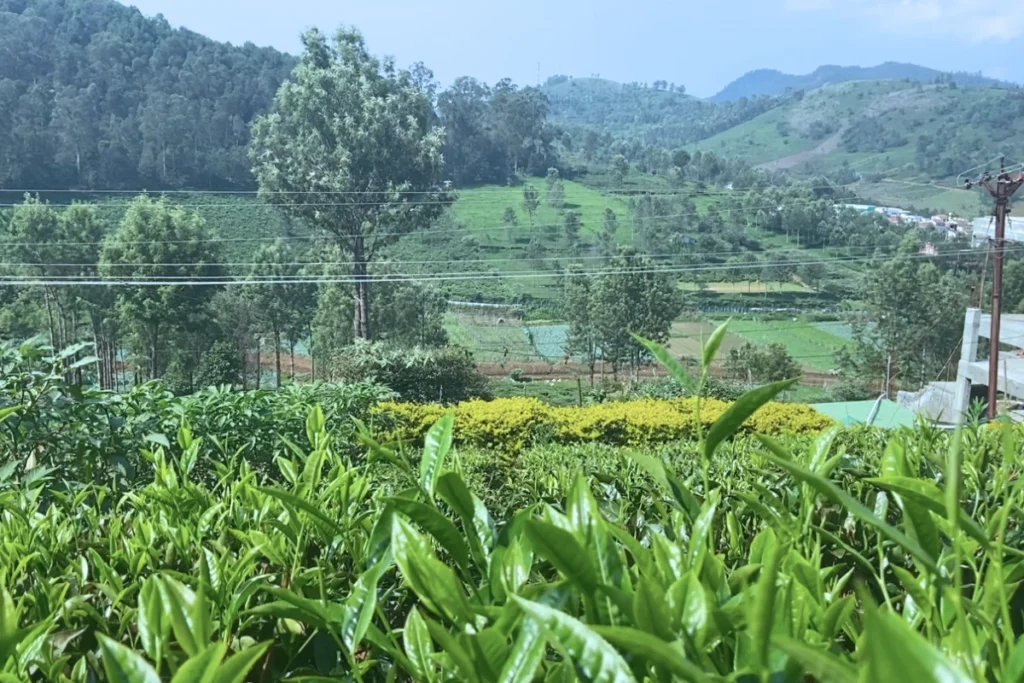
Kotagiri is the third Nilgiri hill town and the least visited. Elevation approximately 1,800 metres. Visitors on any given day: a small fraction of Ooty’s. Infrastructure: proportionally basic. Reward: proportionally enormous.
We arrived at 6 PM after twelve hours on the road. The homestay, Rosetti Villa (INR 3,300 per night), was disappointing in every measurable way. The listing had shown the upper-floor rooms with the tea garden view. We were given ground-floor rooms at the back side that were damp, dark, and did not match what we had seen when booking. The bed covers were not clean. The first floor was occupied by the owner’s family; the ground floor was what remained. The food options were limited to whatever the nearby restaurant would deliver: rice, sambar, rasam. A single fried papad arrived as if by mercy.
We ate. We climbed to the rooftop using the spiral staircase that Sumana noted was perfectly manageable going up and considerably more interesting coming down in the dark.
The rooftop redeemed everything. Tea gardens falling away on both sides. Hills rolling toward the horizon. The sunset turning the sky amber, gold, and then deep blue. After dark, Sumana’s father went to rest and the two of us climbed back up to look at stars. Complete darkness. No streetlights. No ambient glow from a nearby town. The specific quality of being high enough that the air feels thin and clean.
We had driven twelve hours for that rooftop. For the silence of a place that has not yet learned to perform for visitors. For the darkness that a popular hill station cannot provide because popularity requires lights.
Kotagiri is not comfortable. The accommodation is basic. The food is functional. What it has is the Nilgiris as they exist when nobody is watching. Whether that is worth twelve hours of driving is a question the rooftop answered for us.
“After dinner, the two of us climbed back to the rooftop in the dark. Complete darkness. No streetlights. No ambient glow. The kind of silence that a popular hill station cannot provide because popularity requires lights.“
The Toda: The Nilgiris’ Oldest Inhabitants
The Nilgiris are the home of the Toda, one of India’s oldest indigenous communities. Their presence on this plateau predates the tea plantations by millennia and the British colonial project by centuries. They are not a tourist attraction. They are a civilisation.
The Toda live in barrel-shaped structures called munds, built from bamboo and thatch, curved like inverted boats. The entrance is a narrow opening that requires you to bow to enter. Their economy and spiritual life are centred on the water buffalo. Sacred herds are maintained by designated priests. Dairy rituals carry religious significance. The embroidery produced by Toda women, characterised by red and black geometric patterns on white fabric, is considered one of the most distinctive textile traditions in India.
We did not visit a Toda settlement on this trip. The information above comes from research and from what local residents in the Kotagiri area shared with us. We include it because the Nilgiris cannot be honestly described without acknowledging the people for whom these mountains are not a holiday but a homeland.
If you visit the Nilgiris and have the opportunity to learn about the Toda through a respectful, community-organised programme, do so. The mountains are beautiful. The fact that someone has lived in them, with them, for millennia makes them significant in a way that the tea gardens…however lovely…cannot.
The Nilgiri Mountain Railway
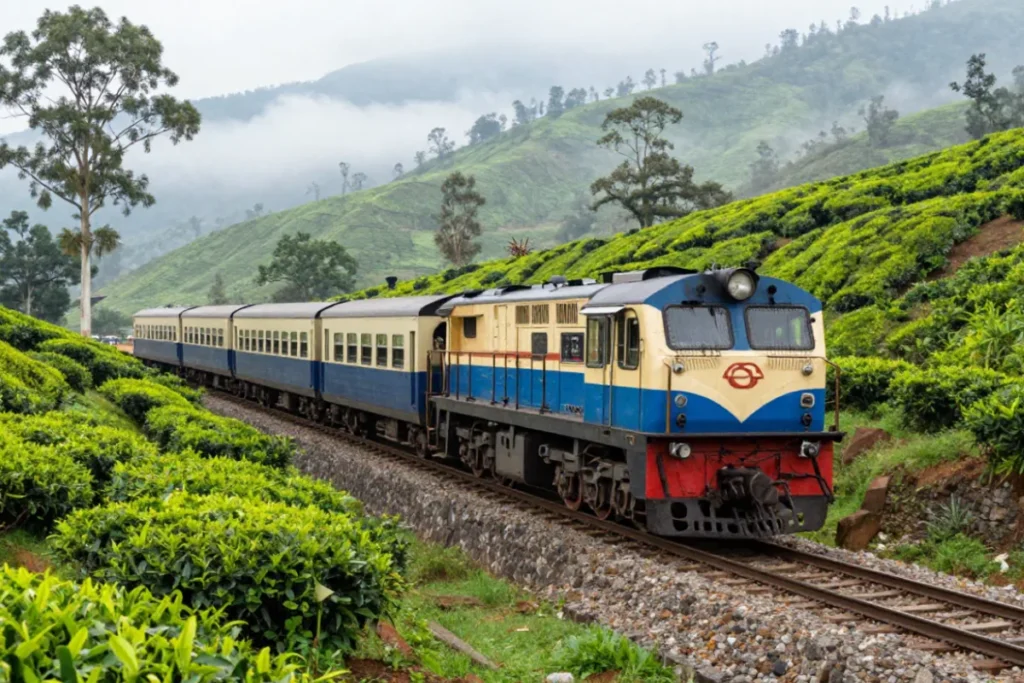
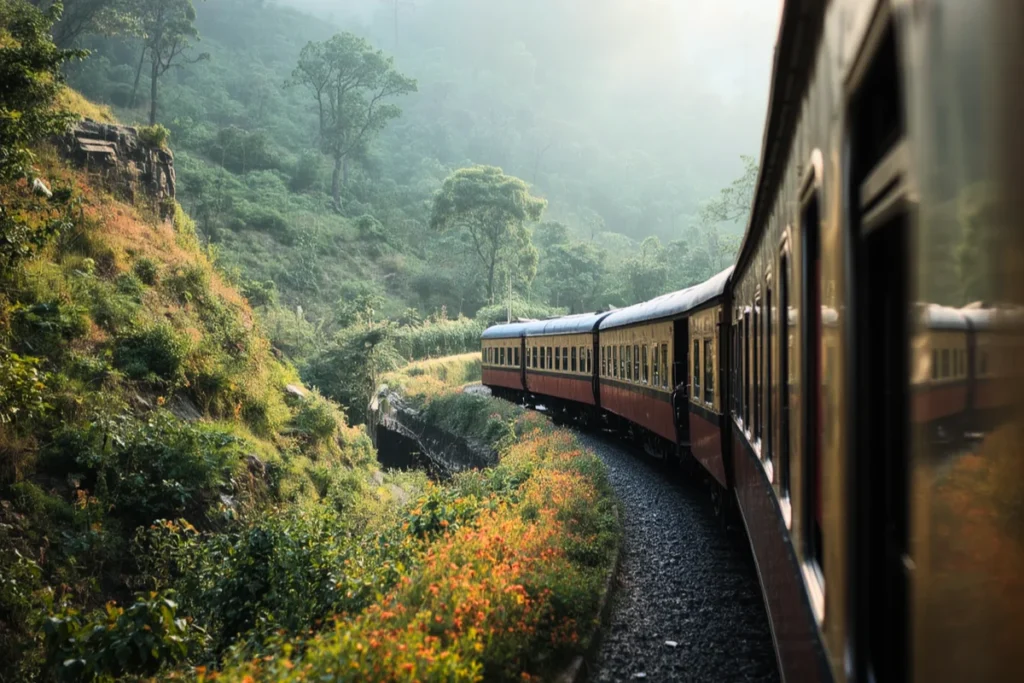
The toy train connecting Mettupalayam at the base of the hills to Ooty via Coonoor is a UNESCO World Heritage Site. Built in 1908 and still running on a rack-and-pinion system to climb gradients that conventional rail cannot manage, it covers 46 kilometres through 16 tunnels and 250 bridges in approximately five hours.
We did not ride the train on this trip. But we heard it from the tea estate roads between Kotagiri and Coonoor: a whistle, distant and clear in the mountain air, carrying through the eucalyptus. The sound alone told us the train belongs to the Nilgiris’ atmosphere. Its presence is audible before it is visible.
If the train is on your list, book through the IRCTC portal at least two to four weeks in advance. The Coonoor-to-Ooty segment is the shortest option for visitors who do not want to commit to the full five-hour journey. Heritage first-class carriages sell out first.
What It Costs
All figures from May 2023. Accommodation and entry fees change over time; verify before booking.
| Item | Cost (May 2023) |
| Fuel, Bengaluru to Kotagiri, round trip | ~INR 3,000 to 4,000 |
| Rosetti Villa homestay, per night | INR 3,300 |
| Dinner (delivered from nearby restaurant) | ~INR 300 to 500 for three |
| Roadside breakfast (idli, dosa, vadai, three people) | ~INR 200 to 300 |
| Kodanad viewpoint | Free |
The total cost of our trip…covering fuel, two nights of accommodation, and hearty mountain meals for three people…wrapped up at just under INR 12,000. To put that in perspective, that is roughly what a group of friends would easily spend on a single high-end dinner and drinks in downtown Bengaluru. The Nilgiris don’t demand a massive holiday budget; they just require a midnight departure, a full tank of fuel, and a love for the open road.
“The instinct to chase the most famous destination will always give you the anxiety of a tourist crowd. But choosing the quieter corners instead? That’s how you leave the Nilgiris with a memory instead of just a traffic jam.”