
When planning a weekend trip, choosing Ooty vs Kodaikanal often triggers a familiar debate between iconic sightseeing and quiet seclusion. Before packing the car, understanding how the two hill stations compare in driving time, atmosphere, and charm will save you from making the wrong choice halfway down the highway.
Every couple in South India has this conversation. It happens on a Thursday evening. A long weekend is approaching. Someone opens Google Maps. The two blue dots appear: Ooty to the south, Kodaikanal further south. Both promise cool air and the temporary illusion that you do not live in a city where an auto-rickshaw driver’s negotiation skills exceed the GDP of some small nations.
Google Maps claims both drives take around six to seven hours from Bengaluru. Google Maps is lying. In reality, Ooty (or Kotagiri) is a grueling 12-hour ordeal through weekend traffic queues and forest checkpoints, while Kodaikanal takes a far more manageable 8 hours.
The conversation follows a predictable arc. One person wants Ooty because everyone goes to Ooty. The other person wants Kodaikanal because everyone goes to Ooty. The argument circles for ten minutes. Someone pulls up reviews. Someone else pulls up Instagram. A decision is made. The car is packed at midnight. Three hours into the drive, someone says “we should have gone to the other one.”
We have been to both. We are still married. Here is the comparison.
“Ooty is the hill station you visit when you want an itinerary; Kodaikanal is the one you choose when you want to forget you ever had one.”
The Side-by-Side
| Ooty | Kodaikanal | |
| Elevation | 2,240 metres | 2,133 metres |
| Drive from Bengaluru | ~6 hrs (theory). ~9–12 hrs (practice, with traffic) | ~7 hrs (theory). ~8–9 hrs (practice, less traffic) |
| Crowd level | High to unbearable on weekends and holidays | Moderate. Busy at the lake, quiet everywhere else |
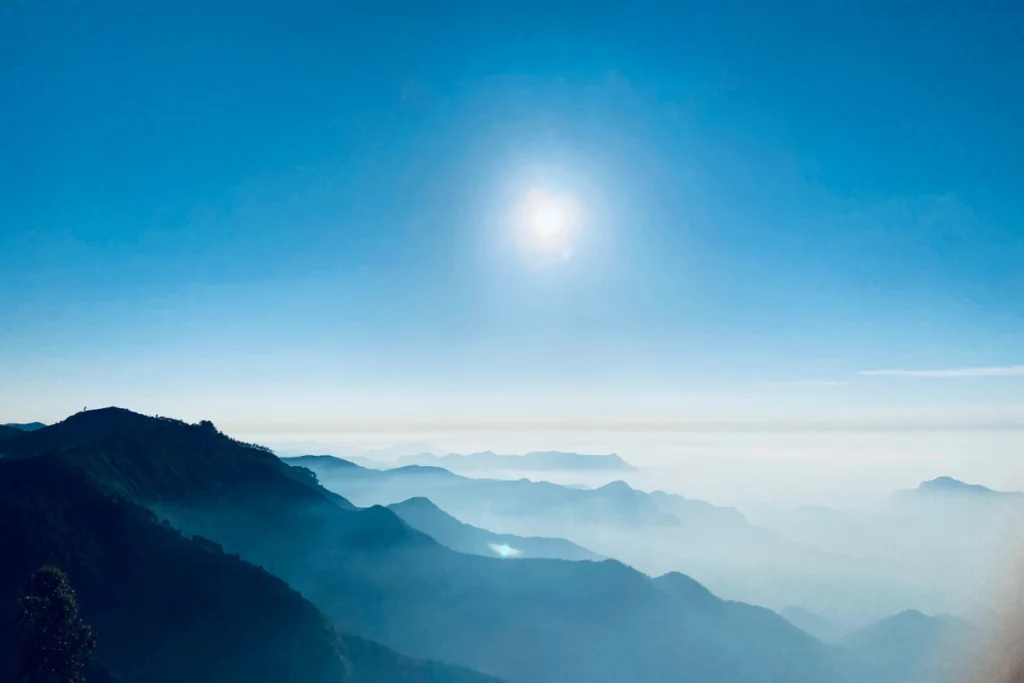
| Landscape | Tea gardens, eucalyptus forests, open valleys | Pine forests, rocky outcrops, mist-filled valleys |
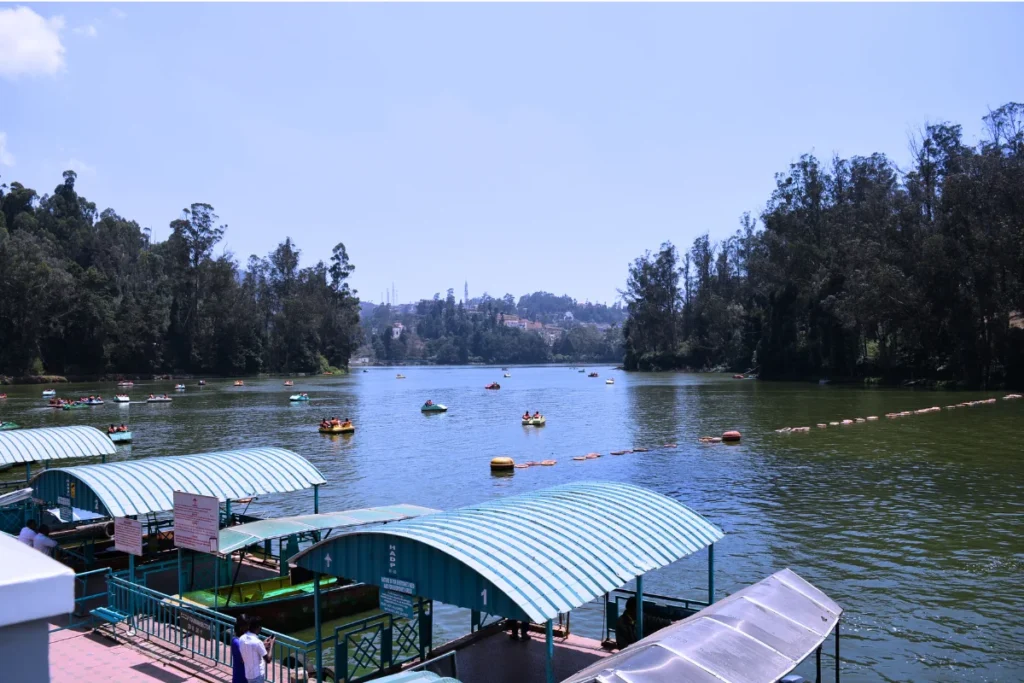
| Lake | Ooty Lake: large, commercial, pedal boats, crowds | Kodaikanal Lake: star-shaped, quieter, cycling path, morning mist |
| Signature experience | The Nilgiri Mountain Railway (toy train) | The morning when you stop checking the itinerary |
| Food | Tourist restaurants and local joints. Functional | Homestay cooking. Some of the most memorable meals we have eaten |
| Best for | Families, first-timers, train enthusiasts | Couples wanting stillness, repeat visitors, people who need to decompress |
| Worst feature | The traffic. The traffic. And the traffic | The steep roads your car’s clutch will have opinions about |
| How it makes you feel | Like you visited a hill station | Like the hill station visited you |
The Case for Ooty
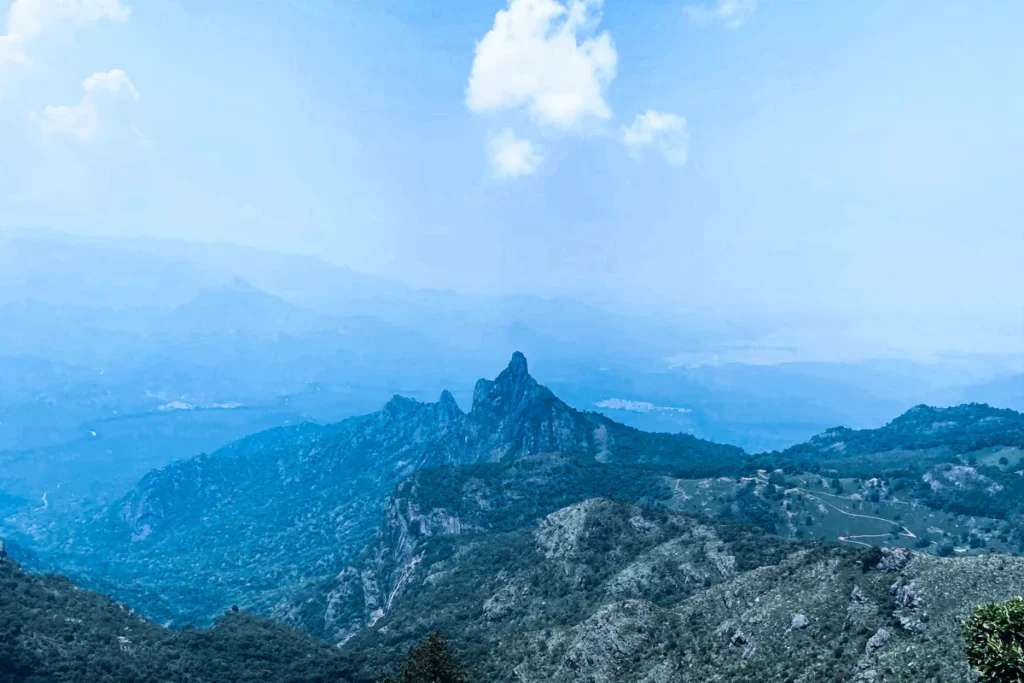
Ooty has infrastructure. This sounds unromantic, and it is, but infrastructure is what allows a hill station to absorb large numbers of visitors without collapsing into a mountain of parking violations. Hotels, restaurants, shops, fuel stations, medical facilities, toy train stations, and botanical gardens are all present and functional.
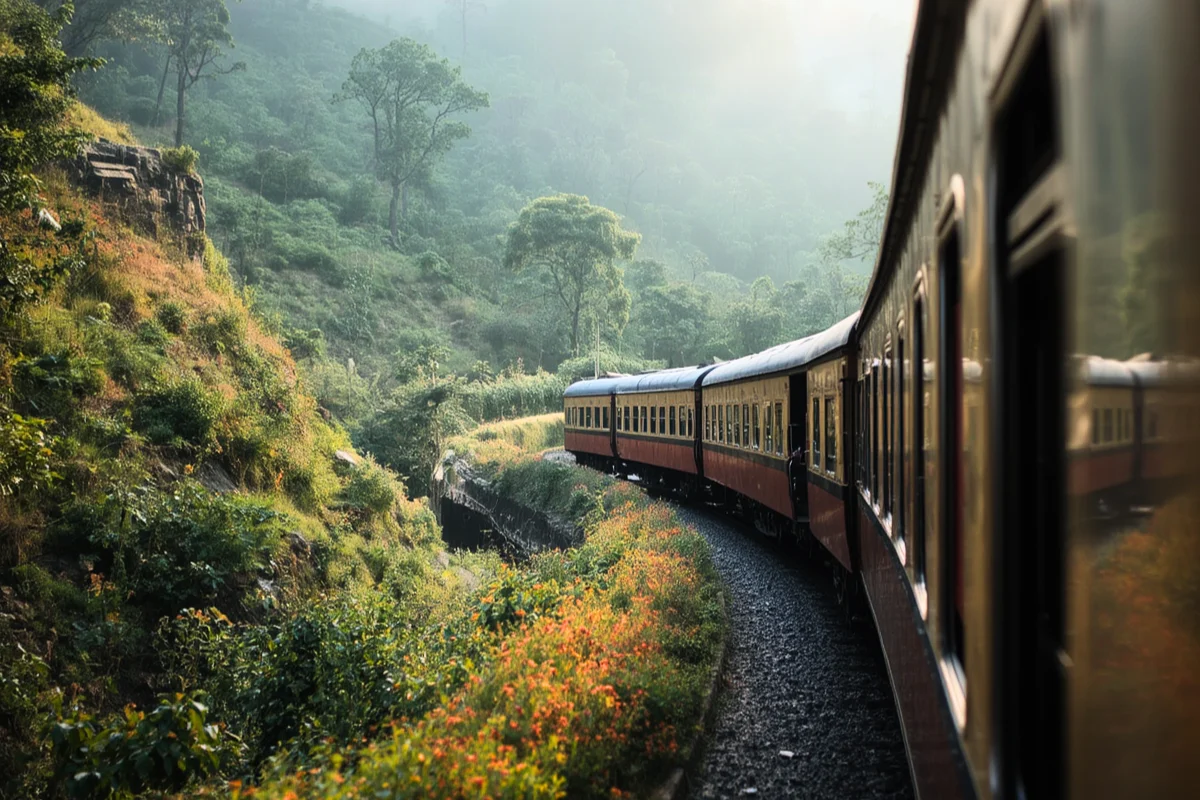
The Botanical Gardens are genuinely beautiful. The toy train, a UNESCO World Heritage railway, is a unique experience that Kodaikanal cannot offer: a slow journey through tea estates on a rack-and-pinion track that was built in 1908 and still operates with the specific charm of a transport system that could be outrun by a determined cyclist.
Ooty works for couples who want activities. Boating, horse riding, the Rose Garden, the Tea Factory tours, the drive to Pykara Falls. The town provides a sequence of things to do, which for some couples is the definition of a good trip. If your relationship thrives on shared activities and the satisfaction of ticking off a list, Ooty delivers the list.
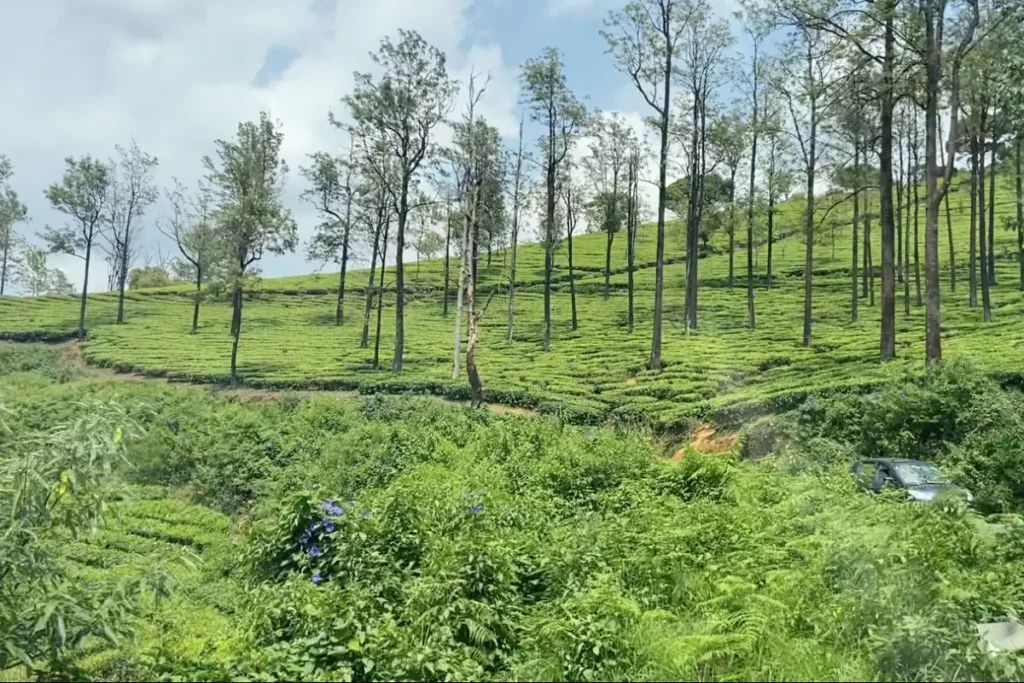
The tea gardens surrounding Ooty are among the most photogenic landscapes in South India. Driving through them, with the rows of green bushes curving over the hillsides and the mist sitting in the valleys between, produces the specific visual that hill station marketing was invented to sell.
“The specific quality that makes a hill station work, the feeling of having left the city behind, is difficult to access when the city has followed you up the mountain.”
The catch: Ooty’s popularity has exceeded its carrying capacity. On weekends and holidays, the approach roads queue for kilometres. The town centre moves at pedestrian speed even if you are in a car. The viewpoints have more people taking photographs than looking at the view.
The Case for Kodaikanal
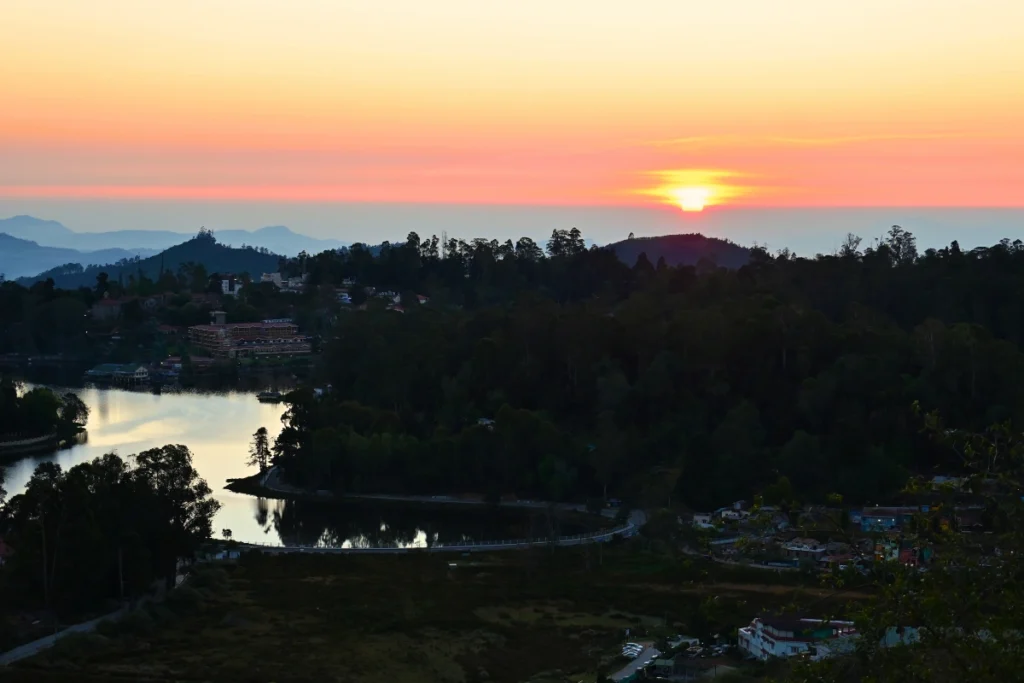
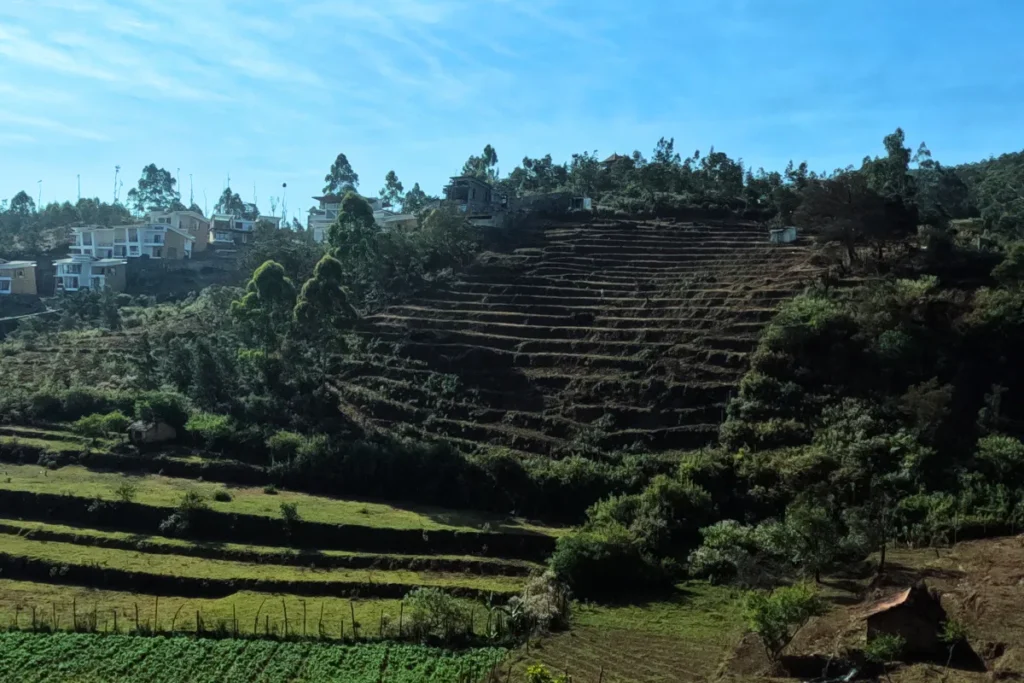
Kodaikanal does not have a toy train. It does not have a botanical garden of Ooty’s scale. It does not have the infrastructure or the brand recognition. What it has is the thing that infrastructure and brand recognition tend to displace: quiet.
The pine forests around Kodaikanal absorb sound the way the fairy chimneys in Cappadocia absorb sound: physically, measurably, in a way that changes the texture of the air. Walking through a Kodaikanal pine forest at 7 AM, with mist between the trees and no other person in sight, is not an activity. It is an atmosphere. The atmosphere is the activity.
Kodaikanal Lake is star-shaped, smaller than Ooty Lake, and framed by trees rather than by commercial establishments. In the early morning, mist sits on the surface. The reflection of the trees in the still water produces the kind of scene that romantic films spend their entire budget trying to manufacture. Here it happens for free, every morning, to whoever wakes up early enough to see it.
The viewpoints (Dolphin Nose, Pillar Rocks, Green Valley) require drives on roads that are steep, narrow, and occasionally convince your car that it would prefer to be a stationary object. The reward at each one is a view that the effort filters for: the people who reach these viewpoints have earned them, which means the crowds are smaller and the atmosphere is quieter.
The food at Kodaikanal, particularly if you stay at a homestay, operates on a different register from hotel restaurant food. Our homestay owner cooked South Indian meals with a care that became the reference point for every meal afterward. Kodaikanal’s food scene is intimate. Ooty’s is commercial. For couples who consider a shared meal part of the romantic experience, the difference matters.
The catch: Kodaikanal has less to “do.” If your definition of a successful trip requires a checklist of attractions visited and activities completed, Kodaikanal will feel slow. Quiet. Possibly boring. For some couples, this is paradise. For others, it is Tuesday.
The Decision Framework
Go to Ooty if:
- It is your first South Indian hill station trip
- You want the toy train (and it is worth wanting; book in advance)
- You are traveling with family or a group (Ooty’s infrastructure handles groups better)
- You enjoy structured activities and planned itineraries
- You are visiting on a weekday outside peak season
Go to Kodaikanal if:
- You have been to a hill station before and want something different
- Your relationship recharges through quiet rather than through activity
- You are willing to wake at 6 AM to see the lake in mist
- You value food as part of the experience and are willing to stay at a homestay
- You need the trip to actually feel like an escape, not like the city at a different altitude
Go to Kotagiri if:
- You want the Nilgiris without Ooty’s crowds
- Nobody told you this option existed (most people have not heard of it)
- You value silence above all other hill station features
What We Chose
We went to the Nilgiris and chose Kotagiri over Ooty because the traffic made the decision for us before we did. We went to Kodaikanal separately, and it changed how we approach every trip since.
If someone held us at viewpoint-level altitude and demanded a single answer, we would say Kodaikanal. For couples specifically. On a weekend specifically. When what you need is not a list of things to see but the permission to stop seeing things and start sitting inside a place that is cool and green and quiet and does not care whether you photograph it.
“Ooty is the hill station that South India shows you. Kodaikanal is the hill station that South India keeps for couples who know what they are looking for.”