Understanding the actual Nile cruise cost for two people requires looking far beyond the initial booking confirmation screen. Floating down the Nile from Aswan to Luxor offers extraordinary value, but standard booking platforms only tell half the story. To budget accurately, you need to account for out-of-pocket expenses, from monument entrance fees and pre-dawn desert excursions to tipping protocols and extra amenities, that define the true price of the journey.
The number on the Agoda confirmation was EGP 10,850 / INR 52,000 / USD 690. Two people. Three nights. Four days. Aswan to Luxor. King Tuti cruise. All meals included.
The number we spent, by the time we disembarked at Luxor and took stock of four days of temple entries, a pre-dawn bus to the Sudanese border, a hot air balloon at sunrise, tips for the crew, and a dessert that ruined our relationship with all other desserts, was approximately EGP 17,350 / INR 65,000 / USD 862.
The gap between the booking price and the actual cost usually spans between INR 12,000 to 15,000 (USD 125 to 156).
Not because the cruise was overpriced. It was extraordinary value for what it provided. But because the gap is invisible until you are standing at the Abu Simbel ticket counter at 6 AM, reaching for your wallet, and discovering that “all-inclusive” included everything except the things that cost money.
“The booking confirmation covers the river, the room, and the food. Everything that actually drew you to Egypt happens on dry land, and every step onto dry land carries a separate cost.”
What It Buys You
The cruise package, booked through Agoda, covered:
| Included | Details |
| Cabin | Nile-facing window, double bed, private bathroom, air conditioning |
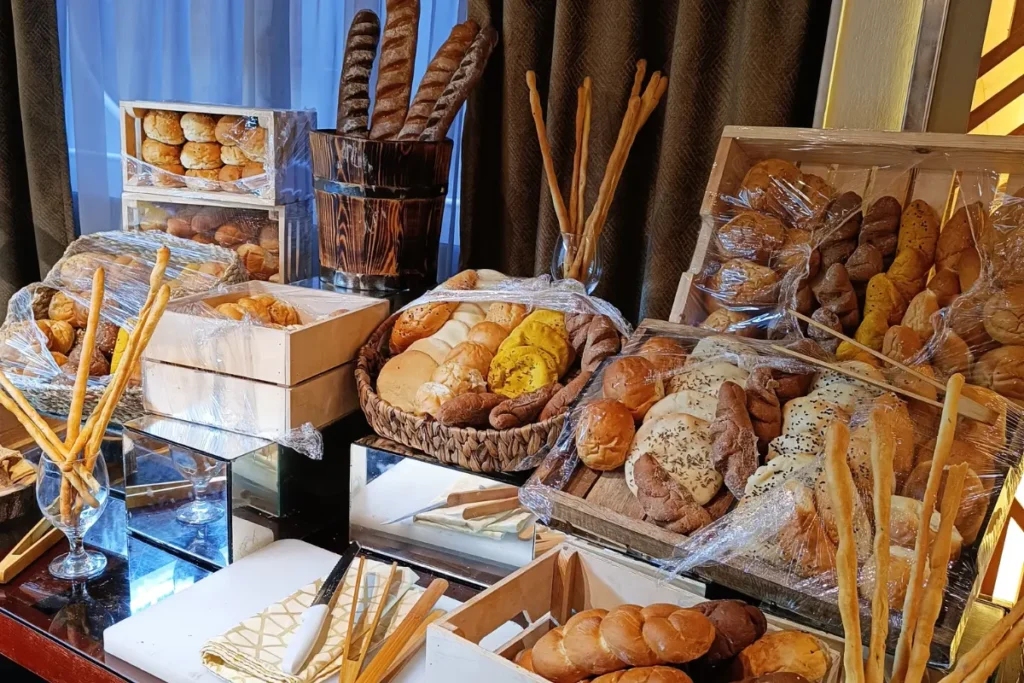
| Meals | Buffet breakfast, lunch, and dinner daily (all four days) |
| Ship facilities | Upper deck, sun deck, dining room, lounge |
| Transport between temple stops | The ship moves along the Nile overnight, docking at each temple site |
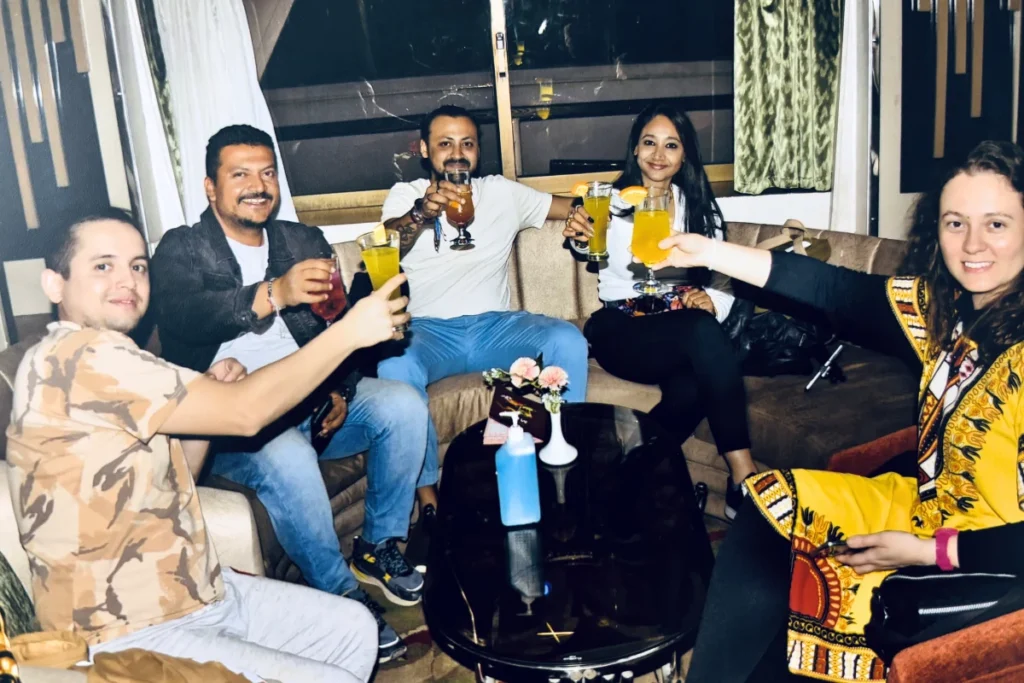
| Basic onboard entertainment | One evening included a belly dance performance on the upper deck with mocktails |
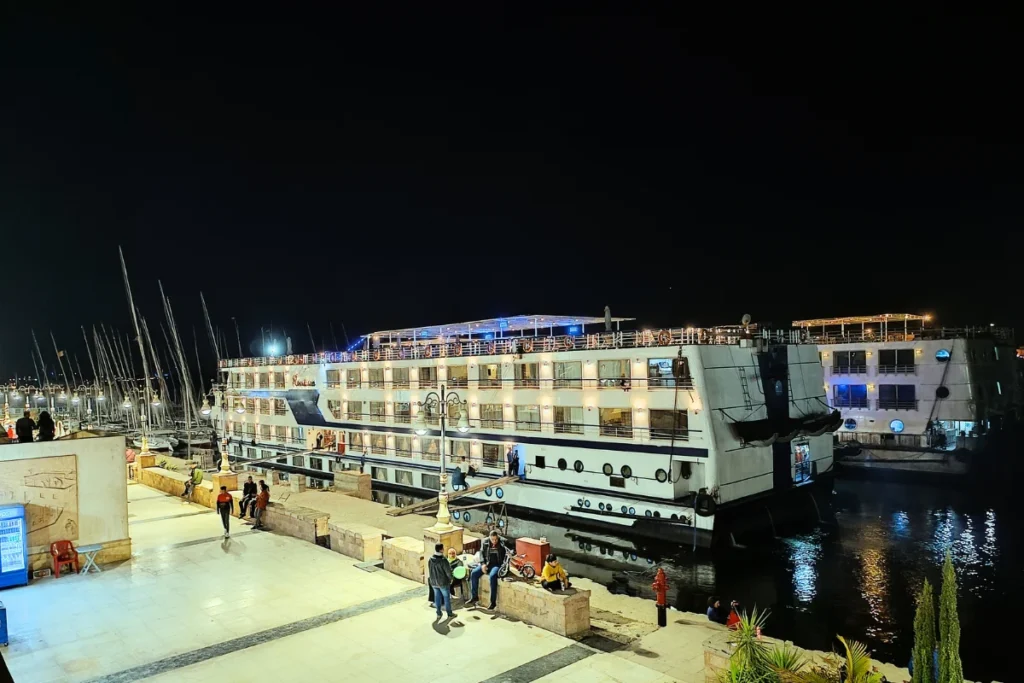
That EGP 10,850 / INR 52,000 / USD 690 (February 2022 rates) covered the floating hotel, the food, and the Nile. For two people. Three nights. The per-person-per-night cost was approximately INR 8,667 / USD 115. For a cabin with a Nile-facing window, three meals a day, and the specific surrealism of eating buffet pasta while a 3,000-year-old temple slides past the dining room glass, this is difficult to argue against. What it did not cover was everything you actually came to see.
The Gap, Line by Line
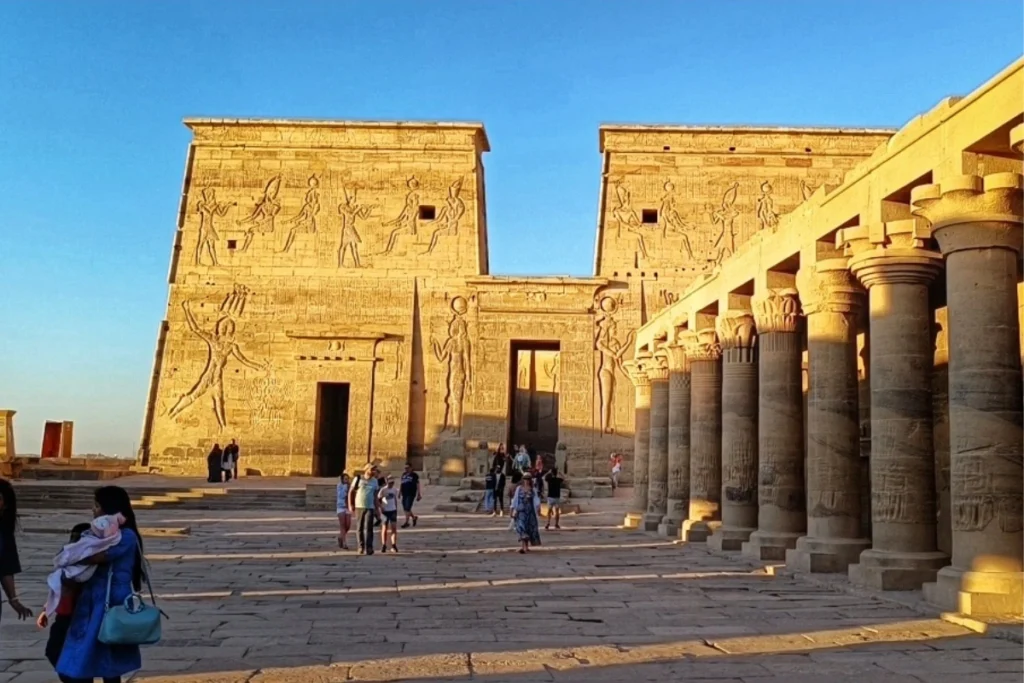
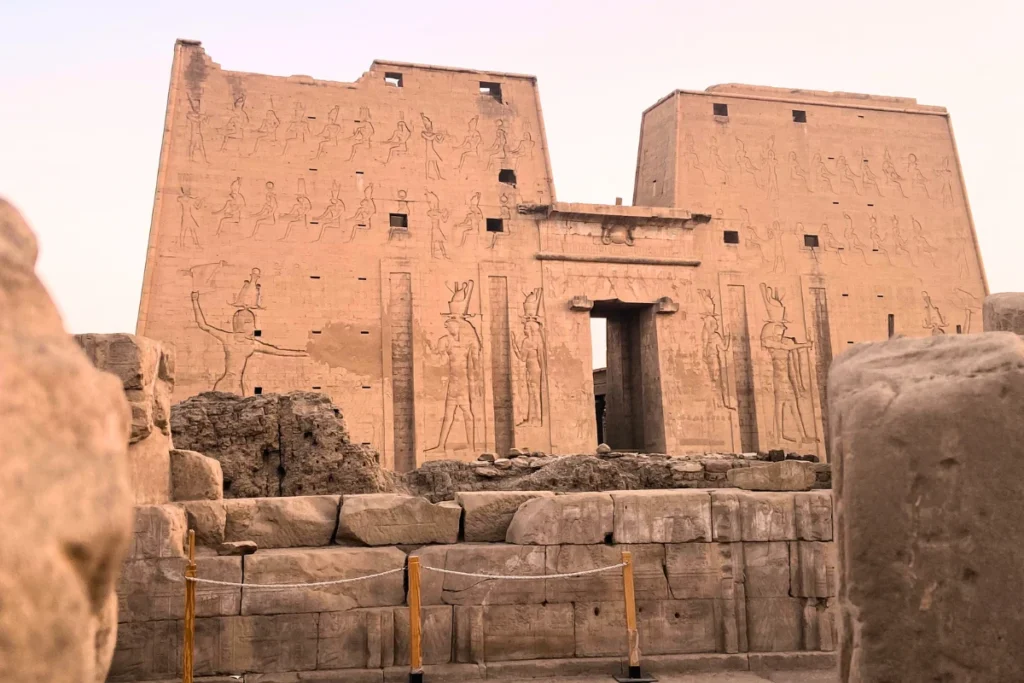
Temple Entry Fees
Every temple on the Nile cruise route charges an entry fee. None of these fees are included in any cruise package we found. They are paid in cash at each site, per person.
| Temple / Site | Cost for Two (EGP) | Cost for Two (INR / USD) |
| Philae Temple (incl. boat) | EGP 400 | INR 800 / USD 11 |
| Aswan High Dam | EGP 200 | INR 400 / USD 5 |
| Abu Simbel (separate excursion) | EGP 1,200 | INR 2,400 / USD 32 |
| Kom Ombo | EGP 160 | INR 320 / USD 4 |
| Edfu | EGP 360 | INR 720 / USD 10 |
| Luxor Temple | EGP 320 | INR 640 / USD 8 |
| Valley of the Kings (3 tombs) | EGP 480 | INR 960 / USD 13 |
| Extra tomb (Ramesses V & VI) | EGP 200 | INR 400 / USD 5 |
| Hatshepsut Temple | EGP 280 | INR 560 / USD 7 |
| Karnak Temple | EGP 400 | INR 800 / USD 11 |
| Total temple fees | EGP 4,000 | INR 8,000 / USD 106 |
Eight thousand rupees. For two people. In temple entry fees alone. This number was not on the booking confirmation, was not mentioned by Agoda, and was not visible until we were standing at each site entrance with Egyptian pounds.
Critical Ticket & Payment Note: While these figures reflect our February 2022 baseline costs, Egyptian monument ticket fees have since increased. Furthermore, Egyptian Ministry ticket counters at major sites now strictly require credit/debit cards for ticket purchases (cash is no longer accepted at official ticket windows). Keep local cash on hand for tips, local drivers, and felucca rides, but carry a credit/debit card for all temple counter transactions.
Abu Simbel Excursion
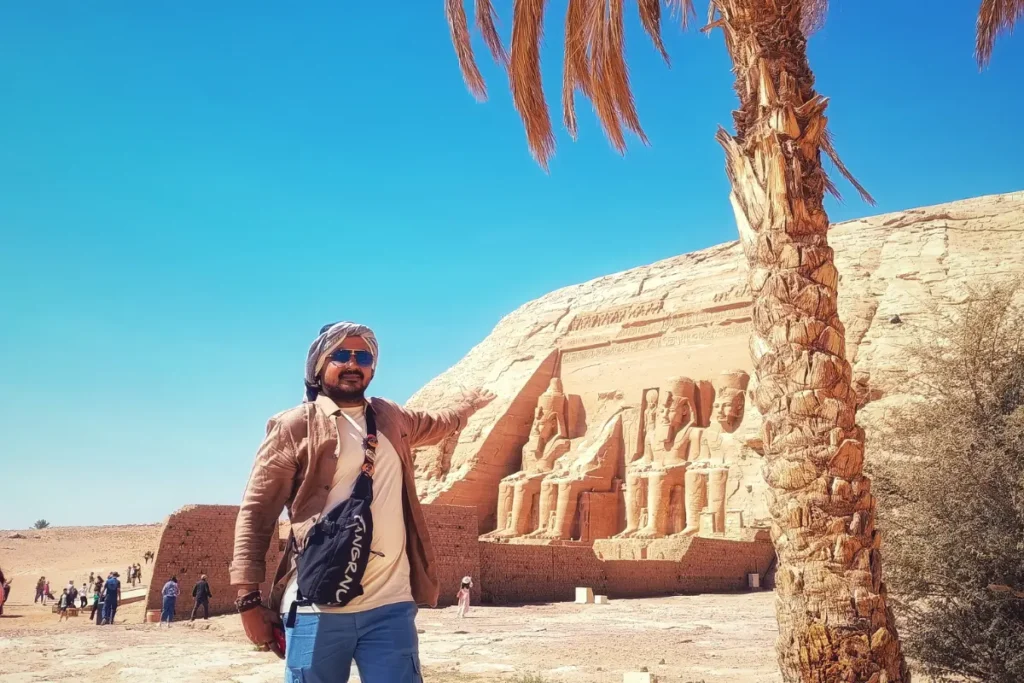
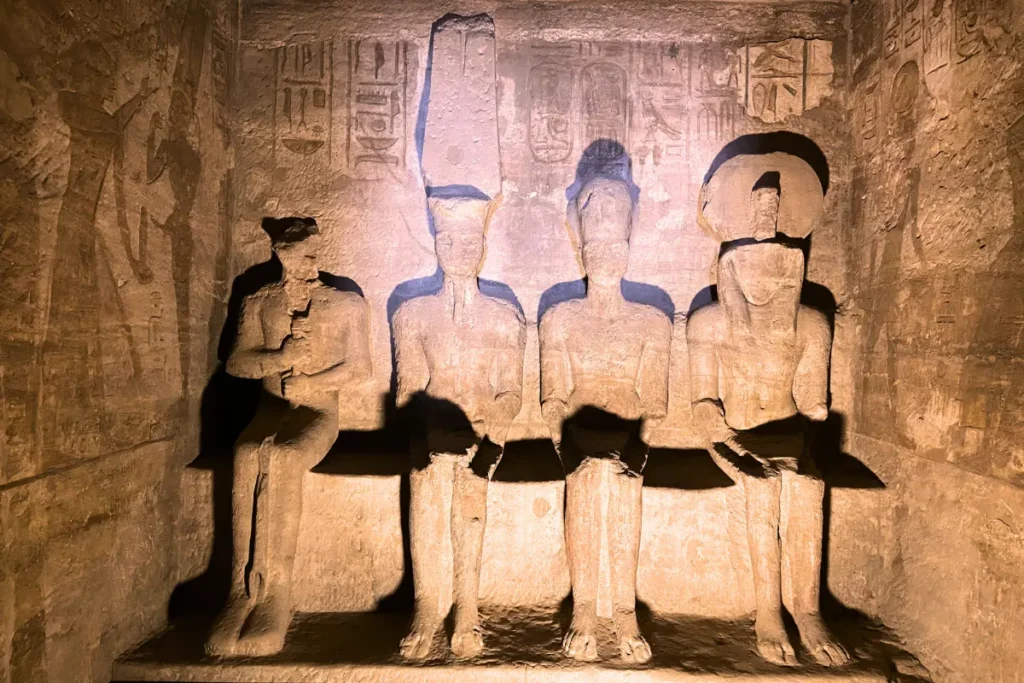
Abu Simbel is not on the Nile. It requires a separate excursion: a 3.5-hour bus ride south toward the Sudanese border, departing at approximately 4:30 AM. The cruise organises this as a group trip.
| Item | Cost for Two |
| Abu Simbel bus excursion (organised through cruise) | EGP 1,000 to 1,500 / INR 2,000 to 3,000 / USD 26 to 40 |
| Abu Simbel entry fee (from table above) | EGP 1,200 / INR 2,400 / USD 32 |
| Subtotal | EGP 2,200 to 2,700 / INR 4,400 to 5,400 / USD 58 to 72 |
The bus cost varies by cruise operator. Some include it. Most charge separately. Ours charged separately. We paid because Abu Simbel is not optional for anyone with functioning curiosity and a heartbeat.
Hot Air Balloon
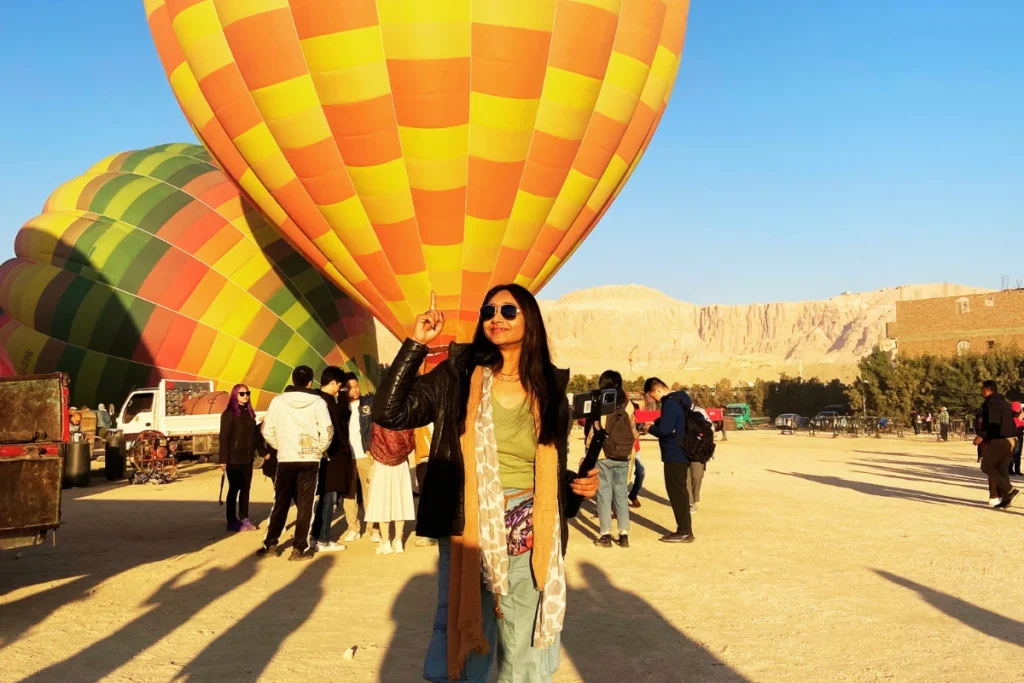
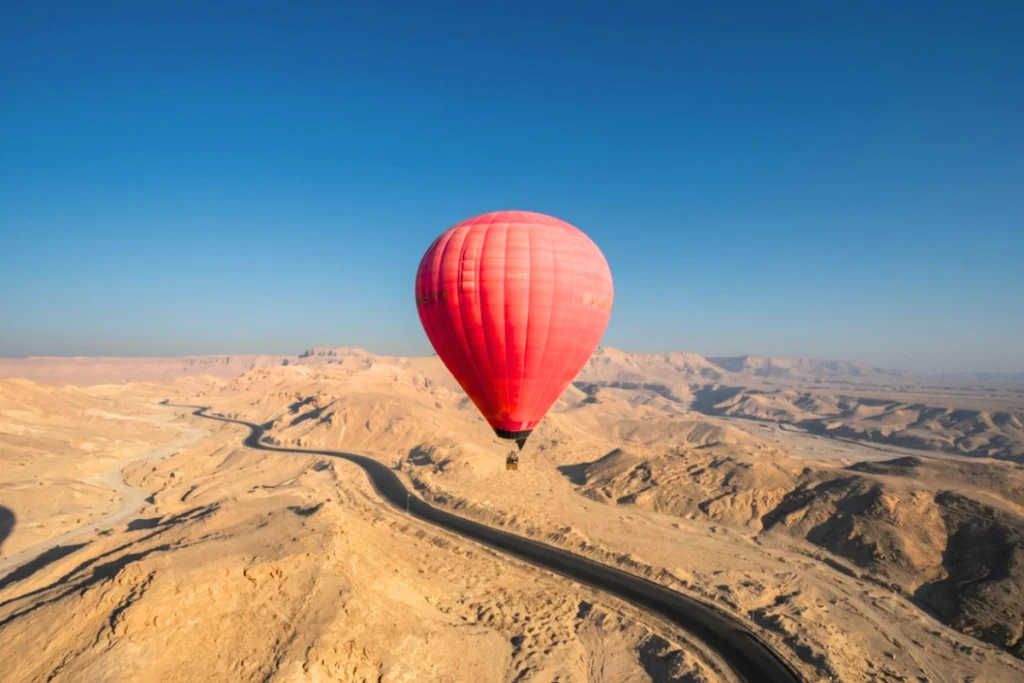
While many standard Nile cruises treat the sunrise balloon ride over the Valley of the Kings as an optional add-on, our hot air balloon excursion was included in our package. Floating above the West Bank at dawn as the Valley of the Kings turns gold beneath you is an absolute highlight… having it baked into our initial package saved us from negotiating an out-of-pocket upgrade in Luxor.
Tips
The cruise staff asked for tips at checkout. This was not a demand. It was an ask. The amount was our choice.
| Item | Cost |
| Crew tip at checkout | EGP 150 / INR 300 / USD 4 |
| Miscellaneous tips (guides, drivers) | EGP 250 to 500 / INR 500 to 1,000 / USD 7 to 13 |
We gave EGP 150 to the collective crew fund. Individual tips to guides and drivers across the four days added approximately INR 500 to 1,000 / USD 7 to 13 total.
Drinks and Extras
The cruise buffet included water, juice, and tea/coffee with meals. Anything beyond that, soft drinks at the bar, snacks between meals, any premium beverages, was additional.
| Item | Cost for Two (estimated) |
| Extra drinks across four days | EGP 500 / INR 1,000 / USD 13 |
We spent minimally here. The included beverages covered our needs. Travelers who enjoy an evening drink on the upper deck will spend more.
“None of the additional costs are frivolous. You didn’t fly across the world to sit in a cabin while 3,000-year-old history passes by your window. The budget exists to fund the experience, not to restrict it.”
The Real Total
| Category | Cost for Two (Feb 2022) |
| Cruise package (Agoda, King Tuti, 3N4D) | EGP 10,850 / INR 52,000 / USD 690 |
| Temple entry fees (all sites) | EGP 4,000 / INR 8,000 / USD 106 |
| Abu Simbel bus excursion | EGP 1,250 / INR 2,500 / USD 33 |
| Hot air balloon (Included in package) | EGP 0 / INR 0 / USD 0 |
| Tips (crew + guides) | EGP 750 / INR 1,500 / USD 20 |
| Extra drinks and miscellaneous | EGP 500 / INR 1,000 / USD 13 |
| Actual total | EGP 17,350 / INR 65,000 / USD 862 |
The booking said INR 52,000 / USD 690. The reality was INR 73,000 to 82,000 / USD 967 to 1,086 depending on balloon pricing and drink habits.
This is not a complaint. Every additional cost purchased something worth purchasing. The temples are the reason you are on the Nile. The balloon is the memory you carry home. The tips are the acknowledgement that the staff who served three meals a day and made the beds and answered the call button deserved recognition. None of these are frivolous. All of them are invisible at booking.
Where to Save (If You Need To)
Skip the Aswan High Dam. We have said this in multiple articles. It is a dam. The EGP 200 / INR 400 / USD 5 for two is better allocated to the premium tomb in the Valley of the Kings, which costs the same and provides an astronomical ceiling that has survived 3,000 years in vivid colour.
Look for packages that include the hot air balloon upfront. Since our balloon ride was bundled directly into our main booking, we avoided paying out-of-pocket prices on-site in Luxor (which typically range from EGP 3,000 to 5,000 / INR 6,000 to 10,000 / USD 79 to 132 for two).
Carry water from the dining room. The buffet includes water. Refill a bottle at meals rather than purchasing water on excursions. Small saving, repeated daily, compounding across four days.
Do not skip temples to save money. This deserves its own line because budget pressure can create this temptation. You are on the Nile. The temples are why you are on the Nile. Skipping Karnak to save EGP 200 / INR 400 / USD 5 per person is like skipping the main course to save room for a dessert you are also planning to skip. The entry fees are the cost of the experience. The experience is the reason for the trip. The budget exists to fund the experience, not the other way around.
What We Would Spend Differently
We would keep the balloon. The sunrise over the Valley of the Kings from 300 metres is an irreplaceable experience. No saving justifies removing it.
We would skip the Aswan High Dam. Saving: EGP 200 / INR 400 / USD 5. Reinvested into: the Ramesses V & VI tomb, which we did pay for and which was worth significantly more.
We would carry a reliable credit/debit card alongside local cash. Egyptian monument ticket counters have moved to a cashless card system, while local tipping and markets remain strictly cash-based. Splitting your payment methods prevents unexpected stalls at the ticket window.
We would still book the window cabin. Not a cost saving. A cost allocation. The window is the difference between a cruise and a hotel that moves. Every sunrise, every sunset, every temple approach is visible from the bed. The window is not a luxury upgrade. It is the reason the cabin exists.
“The true cost of a Nile cruise isn’t a surprise if you know where to look. Once the hidden numbers are accounted for, it remains one of the greatest travel values on Earth.”