
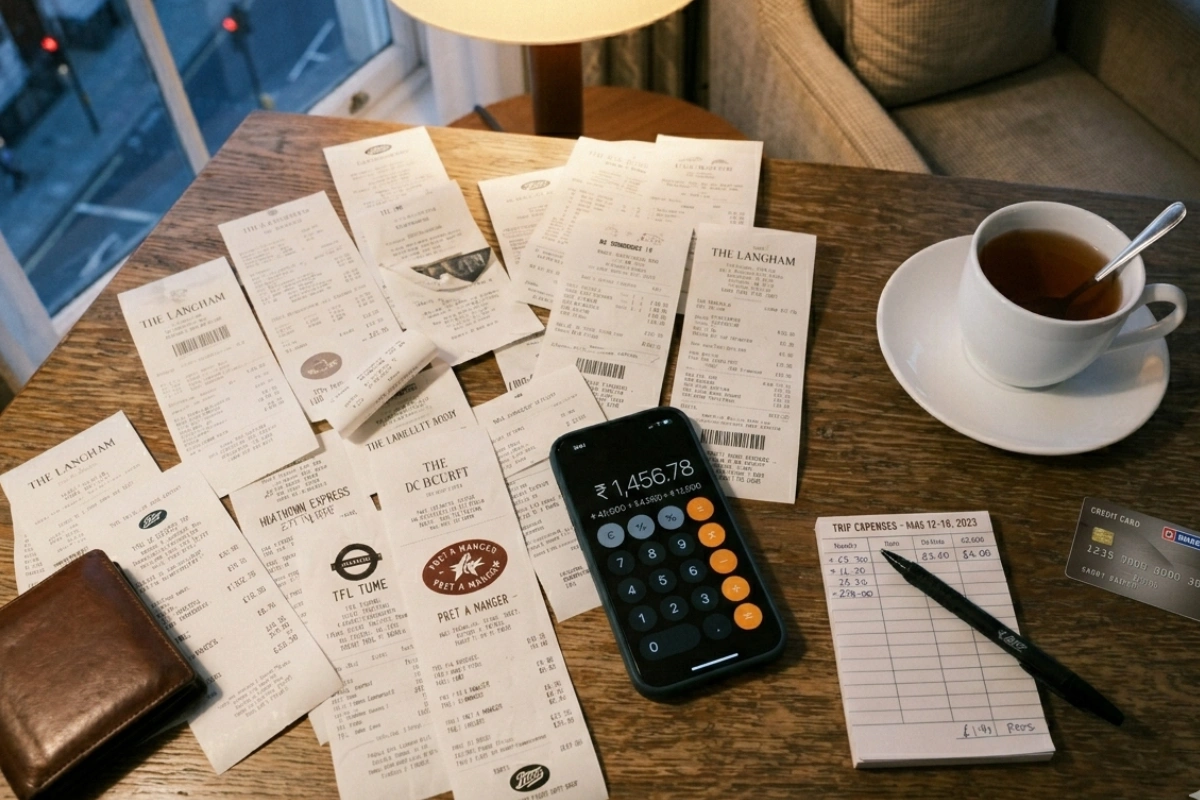
This couple travel budget system is built from numerous trips, four countries, and a habit of photographing every receipt before it gets lost in a pocket… plus the underlying tax thresholds and banking infrastructure that most mainstream travel articles completely ignore.
Every number in this article comes from a concrete receipt, a verified bank statement, an official government tax regulation, or a direct ledger transaction. We don’t deal in vague estimations; this is the exact blueprint we use to maximize every single rupee on the road.
We are two IT professionals based in Bengaluru. Standard corporate salaries. No family money. No sponsorships. No passive income stream. The trips we write about on this site…across India, Egypt, Dubai, and Turkey…were funded by the same salaries that pay our rent and our groceries. The question people ask most often, after reading what we did across those trips, is: how did you afford it?
The answer is not a secret. It is arithmetic, and increasingly, it is also tax law and card selection.
“The biggest leak in a travel budget is never the thing you forgot to pack. It’s the thing you forgot to ask a bank about.”
- The Three Trips, Side by Side
- The Tax Nobody Talks About: TCS (Tax Collected at Source)
- The Cards That Save 3.5% to 5% on Every Transaction
- The Payment Portfolio
- Flights: The Math of Booking Early and Mixing Carriers
- Accommodation: The Neighbourhood Calculation
- Food: The Meal-by-Meal Proof
- Transport: Taxi vs Metro, Proven
- The IDP That Almost Ended Our Trip
- The Overnight Transport Equation
- Experiences: The One Category We Refuse to Optimise
- How We Actually Accumulate the Fund
- How We Track
- The Sequence That Works
- What We Would Tell Our Past Selves
- Frequently Asked Questions


The Three Trips, Side by Side
Before any strategy discussion, here are the verified totals.
Note: All figures listed below represent the core costs of the trip for two people. They are strictly exclusive of our personal expenses, such as shopping, individual souvenirs, or personal indulgences.
| Category | Egypt (9 days, Feb 2022) | Dubai (5 days, Feb 2024) | Turkey (17 days, Apr 2025) |
| Flights (two people) | ~INR 1,20,000 | INR 60,511 | INR 1,02,090 |
| Accommodation (total) | ~INR 15,000 | INR 27,311 | ~INR 70,000 |
| Transport (in-country) | ~INR 15,000 | ~INR 20,000 | INR 66,207 |
| Major packages | INR 90,000 | INR 35,000 | N/A |
| Entry fees + experiences | ~INR 12,000 | INR 28,000 | ~INR 32,000 |
| Food (total) | ~INR 8,000 | ~INR 8,000 | ~INR 22,000 |
| Miscellaneous | ~INR 5,000 | ~INR 3,000 | ~INR 8,000 |
| Total (two people) | ~INR 2,65,000 | ~INR 1,81,800 | ~INR 3,00,300 |
| Cost per person per day | ~INR 14,700 | ~INR 18,200 | ~INR 8,800 |
The per-person-per-day number tells you something the totals do not. Turkey, the most expensive trip in absolute terms, was the cheapest per day. The reason is duration. Fixed costs (flights, car rental, insurance) are spread across 17 days instead of 5 or 9. Dubai, the shortest trip, was the most expensive per day because the fixed costs had fewer days to distribute across.
This is the first calculation most travellers skip. A longer trip at the same destination often costs less per day than a shorter one. None of these totals crossed the income tax threshold that triggers advance tax on foreign spending, which is the next thing worth understanding before you book anything.
The Tax Nobody Talks About: TCS (Tax Collected at Source)
If you are an Indian resident spending money on international travel, the government takes a cut before you leave. It is called Tax Collected at Source, and most travellers discover it only when it suddenly appears on their forex card or tour package receipt.
Here is how it works under the updated LRS (Liberalised Remittance Scheme) rules:
- If you book a tour package: If you purchase flights bundled with hotels, transfers, and activities through a registered tour operator, a flat 5% TCS applies on the first INR 7 Lakh. A package costing INR 3,00,000 incurs a swift INR 15,000 in TCS right out of your pocket.
- If you book independently: If you book flights, hotels, and experiences separately…which is exactly what we do…the transaction falls under general LRS rules. The first INR 7 Lakh per PAN per financial year incurs 0% TCS. Anything above INR 7 Lakh triggers 20% TCS on the excess.
The couple calculation that matters: the INR 7 Lakh threshold applies per individual PAN, not per household. A couple with two separate PANs can each spend up to INR 7 Lakh in independent international transactions at 0% TCS. Combined, that is INR 14 Lakh at zero tax.
Our Turkey trip cost approximately INR 3,00,300 and our Egypt trip cost approximately INR 2,65,000. Neither trip came close to crossing the INR 7 Lakh individual threshold, resulting in 0% TCS on both.
If we had booked that same Turkey trip as a bundled tour package instead, the 5% flat rate would have applied from the first rupee, locking up INR 15,015 of our capital. While TCS is entirely recoverable as an advance tax credit against your Income Tax Return (ITR), that money sits with the government rather than in your bank account until you file your returns.
The PAN-Aadhaar Warning: Ensure your government ID linkages are fully compliant and active. If your PAN becomes inoperative, the automated system penalizes you by doubling the TCS rates automatically…turning 5% into 10% on packages, and 20% into a massive 40% on excess LRS spending.
The practical takeaway for couples is straightforward: book independently, split the booking transactions across two separate PAN cards, keep each person’s annual international spend below INR 7 Lakh, and your upfront TCS will be zero. Most couples travelling at the budget levels described in this article will never have to worry about crossing this threshold.
The Cards That Save 3.5% to 5% on Every Transaction
Why a Regular Credit Card Leaks Money Abroad
Standard Indian debit and credit cards charge a foreign transaction markup of 3.5% to 5%, plus 18% GST on that markup. On a INR 3,00,000 Turkey trip where approximately INR 1,50,000 is spent on-card (hotels, fuel, entry fees, and restaurants), a 4% markup means losing over INR 7,000 straight to the bank.
That is money that could easily buy multiple archaeological site entry fees combined. The fix is simple: zero-forex markup credit and debit cards. Several Indian banks now offer cards that charge a true 0% on international transactions.
| Card | Annual Fee | Forex Markup | Why It Matters |
| BookMyForex Multi-Currency Card | Free (loaded as needed) | Near-0% (rate locked at loading) | The prepaid multi-currency card we have actually carried on our Dubai and Turkey trips. Load it before departure in the destination currency; the rate is locked at the time of loading instead of fluctuating with daily card-network rates |
| Federal Bank Scapia | Lifetime free | 0% | Travel cashback via the Scapia app. Unlimited domestic lounge access on INR 10,000 monthly spend |
| Ixigo AU Small Finance Bank | Lifetime free | 0% | 10% discounts on Ixigo flight and hotel bookings |
| IDFC First Wow | Lifetime free (secured against FD) | 0% | Good for couples building credit. No income proof needed |
| Niyo Global (DCB Debit) | INR 499/yr (waived on INR 5,000 monthly balance) | 0% | Converts INR directly at real-time Visa rate. Interest-bearing savings account |
What we used at the time: For all of our advance bookings made from India (like flights and major hotels), we used a standard HDFC credit card. Once on the ground in Dubai and Turkey, we handled our local transactions…from card swipes at restaurants to pulling out cash at local ATMs…using our BookMyForex Multi-Currency Card.
The Lesson: While the BookMyForex card protected us from currency fluctuations on card swipes, relying on a standard credit card for upfront bookings and paying flat ATM cash withdrawal fees still caused a major leak. In hindsight, maximizing a dedicated zero-forex credit card for all direct online and machine transactions would have saved us an additional INR 5,000 to 7,000.
We always recommend carrying some cash for small street vendors who don’t accept cards, but swipe a zero-forex card for everything else. We are sharing this because the mistake is completely provable and the fix is entirely free.
Applied across our international trips combined, switching to zero-forex cards saves well over INR 15,000. A lifetime-free card costs nothing to hold. The only investment is the ten minutes it takes to apply…ideally four to six weeks before your flight to allow plenty of time for delivery and activation.
The Payment Portfolio
Why One Card Is Not Enough
We have been in a situation where a card terminal rejected our transaction. Not because of insufficient funds, but because of a random technical failure between the Indian bank and the foreign acquiring system. In Turkey, this happened at a remote highway fuel station when we needed to pay for the petrol to get us further along our route.
The fix is not searching for a single perfect card. It is building a portfolio. Here is how we now structure payments on international trips:
- 70% through a Forex or Zero-Forex Debit Card: This is the daily workhorse for fuel, restaurants, markets, entry fees, and supermarket purchases. Loading a multi-currency card locks the exchange rate at the time of loading, protecting you against sudden daily market fluctuations.
- 20% through a Zero-Forex Credit Card: Reserved specifically for hotel check-ins and car rental deposits. When a hotel places a pre-authorisation hold on a debit card, the funds are physically deducted from your available balance and can take up to 30 days to revert. The same hold on a credit card simply freezes a part of your limit without reducing your liquid cash.
- 10% in Physical Cash: Kept for street food, tips, local bazaars, and places where no card terminal exists. Always exchange your currency at city-centre money changers, never at airports. Airport exchange booths embed margins of 8% to 13%, whereas city bazzars consistently give near-interbank rates.
The resilience principle is simple: if one card fails, the second covers you. If both electronic systems crash, cash covers you. Across three international trips, we have needed our backup exactly twice. Both times, it completely prevented a logistical nightmare.
Flights: The Math of Booking Early and Mixing Carriers
Flight cost is the single largest variable you can control. Here is what mixing carriers and booking early produced for us:
- Turkey Flights: Outbound on Air Arabia (Bengaluru to Istanbul via Sharjah) cost INR 44,606 for two. The return on IndiGo (Istanbul to Bengaluru, rerouted via Mumbai at the last moment due to unexpected regional airspace closures) cost INR 57,484 for two. Total: INR 1,02,090. If we had booked a single full-service direct carrier like Turkish Airlines at the time, the price was ticking between INR 1,60,000 and 1,80,000 for two. That choice saved us up to INR 78,000…which covered our entire Turkey food budget three times over.
- Dubai Flights: Outbound via IndiGo direct, return on Emirates direct. Total: INR 60,511. This was booked completely spontaneously during a 3 AM conversation just days before departure. A flight booked four weeks earlier on the same route would have cost roughly INR 42,000. The spontaneity added a premium of nearly INR 18,000, which we accepted knowingly as the cost of last-minute flexibility.
The strategy is straightforward: booking four to six weeks ahead and willingly splitting carriers for your outbound and return legs consistently yields the lowest total.
Accommodation: The Neighbourhood Calculation
We stayed in Bur Dubai for our entire Dubai trip. Here is the math that backed that decision:
- Our Hotel Cost: Orchid Vue Hotel, Bur Dubai came out to AED 1,208 for four nights (INR 27,311).
- The Tourist Hub Comparison: An equivalent, comparable quality hotel room in Dubai Marina or Downtown Dubai was averaging AED 2,000 to 3,000 for the exact same dates. Choosing Bur Dubai saved us up to INR 40,000 on accommodation alone.
But location choice dictates your food costs too. Based directly on our card receipts, an authentic South Indian dinner at Ushas Restaurant in Bur Dubai cost us AED 25.75 for two. Another local diner cost AED 30. Our average dinner price was AED 28 (~INR 640) for two.
Conversely, menu prices we observed for similar casual meals near Dubai Mall or the Marina sat firmly between AED 80 and 120. Choosing a traditional neighborhood saved us roughly AED 55 (INR 1,240) per dinner. Over four nights, that’s an easy INR 4,960 saved. Combined, selecting the right postcode kept an extra INR 23,000 to 45,000 in our pockets across just five days.
Food: The Meal-by-Meal Proof


The cooking-in-rooms strategy is our most questioned habit. Here is the math from Turkey, built entirely from documented restaurant receipts.
| Meal | Cost (TRY) | Cost (INR) |
| Grilled chicken + rice, Istanbul (local) | 200 | 460 |
| Gözleme + chai, outside Kaymaklı | 160 | 368 |
| Fried chicken + pita, Cappadocia café | 440 | 1,012 |
| Lamb kebabs + bread, Gaziantep | 350 | 805 |
| Beyran soup, Gaziantep | 250 | 575 |
| Bread + kebabs + rice + Coke, Konya | 500 | 1,150 |
| Chicken soup + döner, Pergamon | 390 | 897 |
| Street döner, Taksim | 210 | 483 |
| Chicken soup + bread + rice, Istanbul (final day) | 200 | 460 |
Our average restaurant meal for two across these documented spots was TRY 300 (INR 690).
In comparison, a self-cooked meal using fresh bread from a Turkish market (TRY 20), half a dozen local eggs (TRY 50), and dry travel staples like Maggi, poha, or oats brought from India, cost us roughly TRY 55 (INR 125) total.
That is a direct savings of over INR 550 per meal. Over our 17-day trip, we had 51 total meal times. Subtracting 4 complimentary hotel breakfasts and 16 restaurant meals leaves 31 self-cooked or snacked meals.
31 meals × INR 550 savings = INR 17,050 total savings
It wasn’t the vague INR 30,000 savings we once casually estimated, but it is a hard, receipt-backed fact. INR 17,000 pays for the steep entry tickets to two world-class archaeological sites with cash left over.
Transport: Taxi vs Metro, Proven
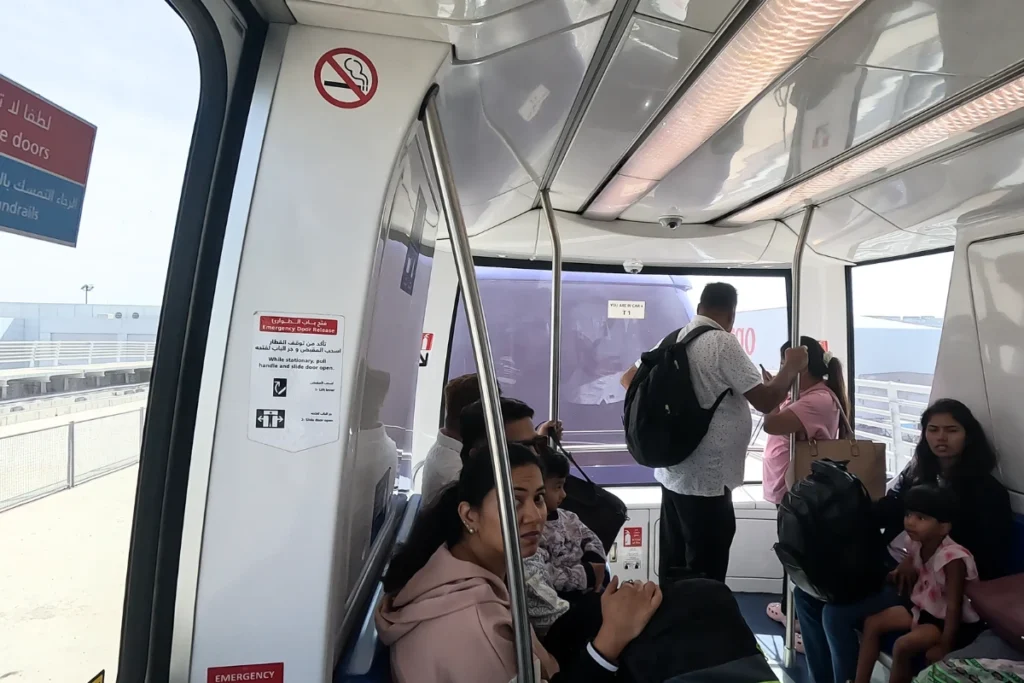
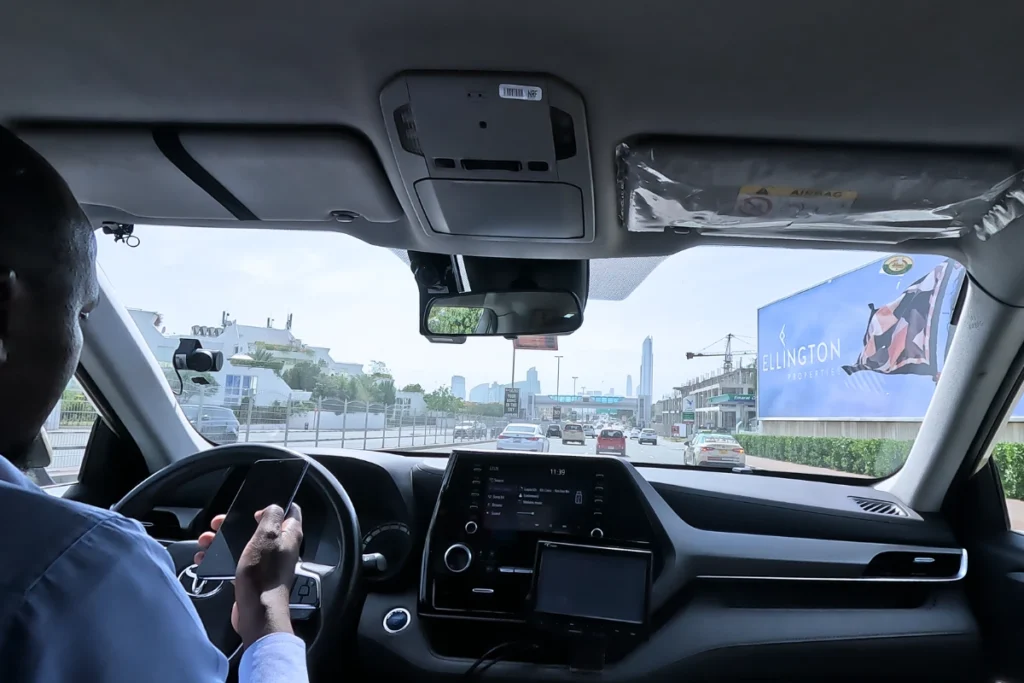
Our Dubai taxi costs, reconstructed entirely from our evening transaction checks, totalled AED 807 (INR 18,240) across five days.
Had we used the Dubai Metro, a 5-day day-pass for two people would cost AED 220. Factoring in an estimated AED 150 for last-mile taxi supplements on tricky routes brings a metro-first total to AED 370 (INR 8,360). By using taxis, we paid a convenience premium of INR 9,880. Because our trip was only five days long, we consciously chose to trade money to save time. However, if you are visiting for six days or more, utilizing the metro system will save you a provable INR 10,000.
Turkey transport requires a different calculation. Our car rental booked directly via Cizgi’s official site (including base insurance) cost INR 36,753. Paired with fuel (TRY 11,460) and highway tolls, we paid INR 66,207 for 14 driving days, covering 4,150 km. Had we relied on organized daily group tours instead, the going rate across our twelve destinations averages INR 6,500 per person per tour. For two people, that scales to a massive INR 1,56,000…more than double our self-drive cost, without any of the freedom to pull over whenever a scenic route caught our eye.
The IDP That Almost Ended Our Trip
At a car rental counter inside the Istanbul airport, an agent stared silently at our International Driving Permit (IDP) for twenty minutes. It was twenty minutes of pure anxiety, knowing that if he rejected the document, our entire 17-day road trip itinerary would instantly collapse. It was ultimately approved, but it taught us how thin the margin for error is.
To secure your IDP legally in India, you must apply through the Ministry of Road Transport and Highways online Parivahan Sarathi portal, or directly via the local RTO that issued your domestic license.
Important Note: An IDP is valid for exactly one year from the date of issue (or until your domestic license expires, whichever comes first) and cannot be renewed. You must file a fresh application for every subsequent year you travel.
The Ultimate Lesson: An IDP alone isn’t a guarantee. Always send a quick email to your specific foreign car rental company before booking, asking explicitly if they accept Indian-issued IDPs. It takes two minutes and completely eliminates a potential standoff at the counter.
| Requirement | Detail |
| Form | Form 4A, completed |
| Domestic licence | Valid for at least 6 months from date of IDP application |
| Passport | Valid original |
| Visa | For the destination country |
| Photographs | 3 to 5 passport-sized, white background |
| Medical certificate | Form 1A, from a registered government doctor |
| Fee | INR 1,000 official, plus admin costs. Total: INR 1,400 to 3,000 |
The Overnight Transport Equation
Every overnight bus or train that replaces a hotel night produces a double saving: transport paid, accommodation eliminated.
| Overnight Transport | Transport Cost (Two) | Hotel Night Eliminated | Net Saving |
| Watania sleeper train, Cairo to Aswan | INR 13,000 | ~INR 3,000–5,000 | INR 2,000–4,000 vs flight + hotel |
| GoBus overnight, Luxor to Cairo | INR 1700 | ~INR 3,000–5,000 | INR 2,100–4,100 |
The sleeper train cost roughly the same as a domestic flight, but the flight requires a hotel night on arrival, since flights land in the afternoon and connecting transport often checks in the next day at noon. The train arrives early morning, connecting directly to the next leg. The hotel night is eliminated entirely.
The overnight bus option for the same kind of leg, at a fraction of the flight cost, delivered us to the next city by morning in business-class comfort.
Experiences: The One Category We Refuse to Optimise
Every single calculation listed above exists solely to fund this category.
We do not negotiate on entry fees. We do not skip historic sites to save a buck. We will never choose a cheaper tomb entry when the more expensive option holds a beautifully preserved, 3,000-year-old astronomical ceiling.
Instead, we ruthlessly redirect our structural savings into these bucket-list experiences. In Turkey alone, cooking saved us INR 17,000. Self-driving instead of tour packages saved us over INR 55,000. Correcting our financial card layers saved us another INR 15,000 across our travels. That is nearly INR 90,000 redirected straight into experiencing twelve magnificent destinations to their absolute fullest.
The room-cooking funded the temples. The self-driving bought our independence. The tax and card discipline funded the financial breathing room that made our adventures comfortable rather than constrained.
How We Actually Accumulate the Fund
The Saving Mechanism
The principle is save first, research second. The mechanism is what turns the principle into money.
What we do: a joint recurring deposit linked to our savings account. A fixed amount is automatically debited each month. The money earns interest, currently in the range of 6.5% to 7.5% per annum at most banks, and is untouchable until maturity. We set the RD tenure to match the trip timeline: 6 months for a short trip, 12 months for a major one.
The Turkey calculation: we needed approximately INR 3,00,000 for the 17-day trip. Over 10 months of saving, that required approximately INR 30,000 per month from combined income, deposited into the RD. The interest over 10 months added approximately INR 8,000 to 10,000, depending on the rate. Not transformative on its own. But the discipline of the automatic debit is what matters. The money leaves the account before it can be spent on something else.
For trips planned further ahead, 12 to 24 months out, a systematic investment plan into a low-risk liquid or arbitrage mutual fund can provide better inflation-adjusted returns than a savings account or RD, while maintaining high liquidity. We have not used this for travel specifically, but the instrument exists and is worth mentioning for couples planning a larger, more distant trip well in advance.
What we do not do: we do not take loans for travel. We do not use credit card EMIs to finance trips. The trip is paid for before it begins. If the fund does not reach the target by the departure date, the trip is adjusted or postponed. This has not happened yet, because the RD discipline and the monthly debit prevent the kind of slow leakage that quietly kills most travel savings plans.
How We Track
One of us photographs every receipt. The other checks card transactions through the banking app each evening. At the end of the trip, we reconcile.
The numbers published across this site…every hotel cost, every entry fee, every meal price…come from that reconciliation. We do not use a dedicated budgeting app. We do not categorise in real time. We record, and we reconcile afterward.
For couples who want a more structured system than ours, two free apps are worth knowing. Tricount is designed for shared budgets: log expenses in any local currency and the app converts to your home currency automatically, and it works offline, which matters in a desert with no signal or on a mountain road where connectivity drops. TravelSpend sets a daily budget target and alerts you when spending exceeds it, with visual breakdowns by category and day, which suits couples who want real-time awareness rather than end-of-trip reconciliation.
Both are free. Both work offline. Either one would have made our own end-of-trip reconciliation faster. We mention them because the system we use, photographs and manual bank app checks, works but is not elegant. These tools are the upgrade we have not yet made but probably should.
The Sequence That Works
The order of financial decisions, based on what the numbers across three trips have taught us.
1. Save first, research second. The Turkey fund existed for three months before we finalised the itinerary. Research without savings produces longing. Savings without research produces options.
2. Automate the saving before anything else. Set up the joint recurring deposit the day you decide on a trip, not the month before. The automatic debit is the discipline. The interest is a bonus.
3. Fix the payment infrastructure early. Apply for a zero-forex card four to six weeks before departure if you do not already have one. The application costs nothing and the saving is provable.
4. Book flights before anything else. The flight determines whether the trip is financially viable. Everything else adjusts around it.
5. Choose the neighbourhood before choosing the hotel. The neighbourhood determines the food budget as much as the room rate. In Bur Dubai, this single decision saved a provable INR 23,000 to 45,000 across five days.
6. Calculate the cooking-vs-restaurant ratio. Not every meal needs to be self-cooked. But on a 17-day trip, cooking roughly 60 percent of meals saves a provable INR 17,000 or more.
7. Spend the savings on experiences, not comfort. The premium tomb. The harder-to-reach site. The cabin with the window. These are the purchases that everything above exists to fund.
What We Would Tell Our Past Selves
- Get a zero-forex card before the trip, not after. We paid standard forex markup across three international trips. The provable cost of not having a zero-forex card: approximately INR 15,000 to 20,000. The cost of getting one: zero, since lifetime-free options exist. Apply at least four to six weeks before travel to allow for delivery and activation.
- Confirm your IDP will be accepted before you book the car. One email to the rental company. One confirmation reply. It eliminates the risk of a twenty-minute verification standoff at the counter that could end a road trip before it begins.
“The savings are not the point. They are how the temples get paid for. Every rupee saved cooking breakfast in a cave hotel, and every rupee a zero-forex card did not hand to a bank, is a rupee spent standing inside a 3,000-year-old tomb instead of looking at it from outside.”