This 4-day itinerary is the ultimate guide to experiencing Cappadocia without a balloon ride, built entirely from our time on the ground from April 20th to 24th, 2025 (Days 4 to 8 of our 14-day Turkey road trip).
We did not take the balloon ride.
This requires explanation, because the balloon is what Cappadocia is famous for. The photograph of a hundred colourful balloons drifting over fairy chimneys at dawn is the image that sells the destination, fills the feeds, and convinces people that Cappadocia is worth the journey to central Turkey.
We had already done a hot air balloon ride in Egypt, over the Valley of the Kings at sunrise, and it was the calmest moment of that entire trip. A second version of the same experience did not seem necessary. At approximately TRY 5,000 to 8,000 per person, it would also have consumed a significant portion of a budget we were managing carefully across 14 driving days.
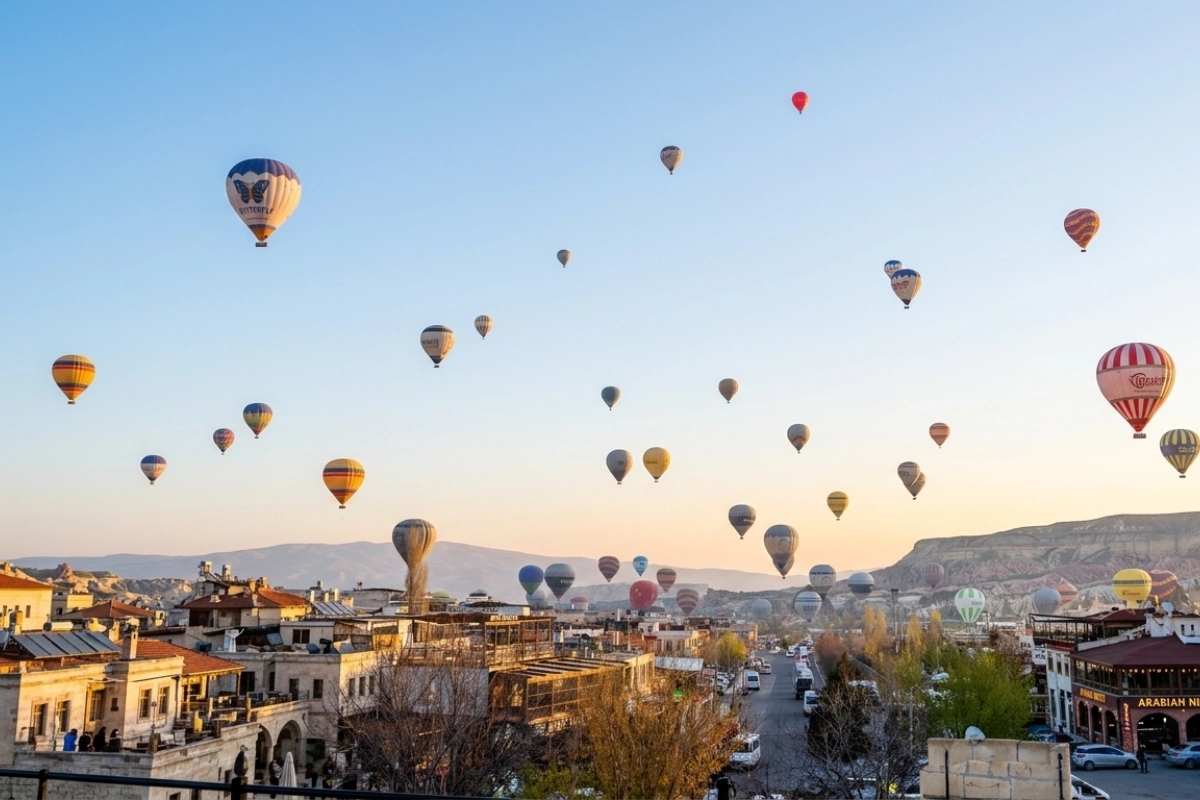
So we chose to experience Cappadocia without a balloon flight and watched from our hotel rooftop instead. For free. And what we saw…dozens of balloons lifting into a pale morning sky while we stood in our pyjamas on the roof of a cave hotel with cups of tea in our hands…was an experience the balloon passengers could not have. They were inside the picture. We were looking at it.
This article is your blueprint for exploring Cappadocia without a balloon. It reveals what exists below the baskets: the valleys, the caves, the underground cities, the churches, the legends, the sunset point where the fairy chimneys light up after dark, and the four days we spent walking through a landscape that is not fully explained by any photograph taken from above.
“A hundred balloons lifting silently over fairy chimneys at dawn. We were standing on a rooftop in our pyjamas with tea in our hands. Nobody who was inside a basket that morning could see what we were seeing.”
- What Is Cappadocia?
- Rooftop Magic: The Best Way to See Cappadocia Without a Balloon
- Göreme Open Air Museum: The Cave Churches
- Why Zelve Is the Museum Most People Miss
- What Is Inside an Underground City
- Selime Monastery and the Star Wars Landscape
- Uçhisar Castle: The Highest Point in Cappadocia
- Love Valley, Çavuşin, and What the Final Day Reveals
- What Happens at the Sunset Point After Dark
- An Honest Note
- How to Visit Cappadocia
- What It Costs
- Before You Go: What Actually Matters
- Frequently Asked Questions
What Is Cappadocia?
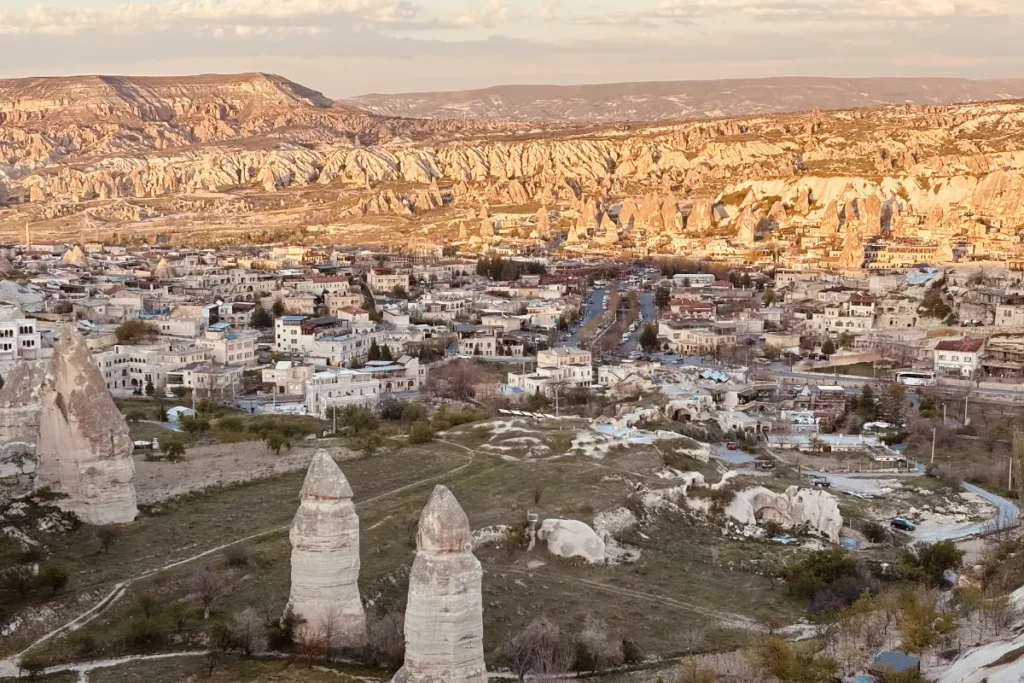
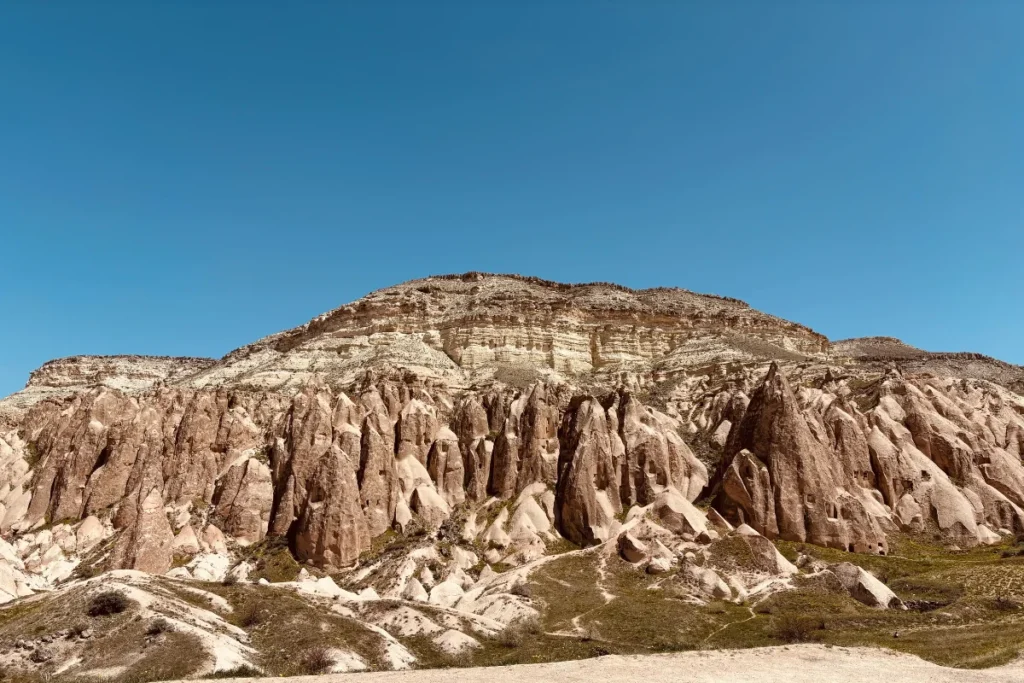
Cappadocia is a region in central Turkey, centred around the town of Göreme, where millions of years of volcanic eruptions deposited layers of soft tuff stone that erosion subsequently carved into towers, cones, mushrooms, and the formations locals call fairy chimneys. Human communities then carved homes, churches, monasteries, and entire underground cities into this same soft rock, beginning in the early Christian era and continuing for centuries. The landscape is a collaboration between geology and human will, both working with the same material, both producing results that look improbable.
We arrived on Day 4 of our Turkey road trip, driving 197 km from Hattusa in three hours, reaching the Göreme Panorama Viewpoint at 5 PM. The sunset that evening, gold and orange pouring across the chimney formations, was the first sign that four days here would not be enough.
We stayed at Nomads Cave Hotel and Rooftop, INR 23,047 for four nights (April 20th to 24th). The room was carved from rock. The rooftop had the balloon view. The local supermarket two minutes’ walk away had the bread and eggs that would become most of our meals.
Rooftop Magic: The Best Way to See Cappadocia Without a Balloon
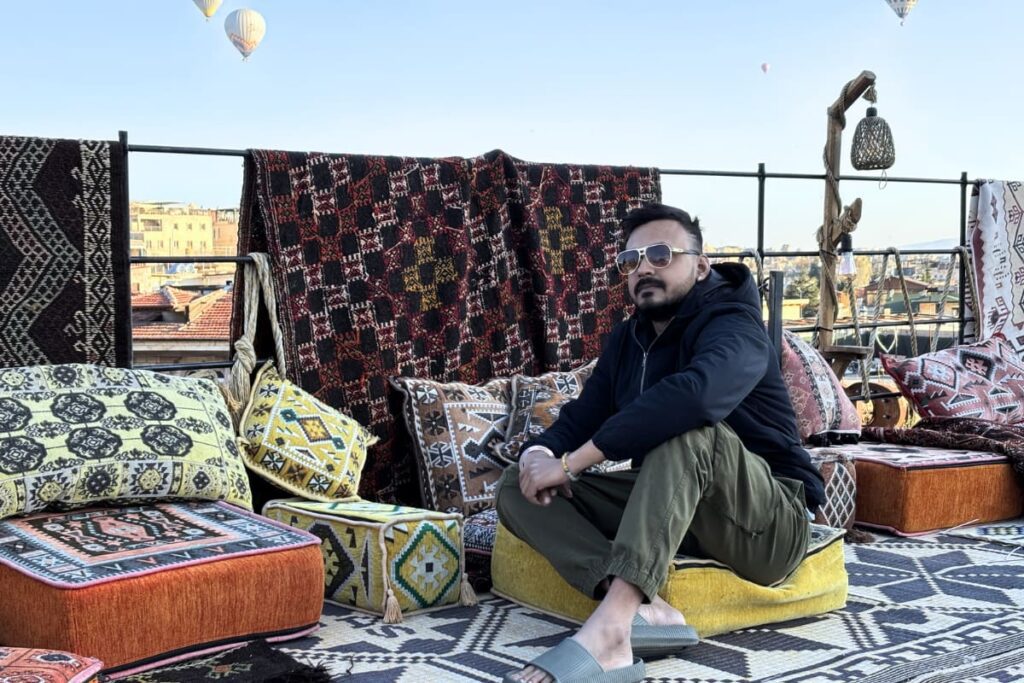
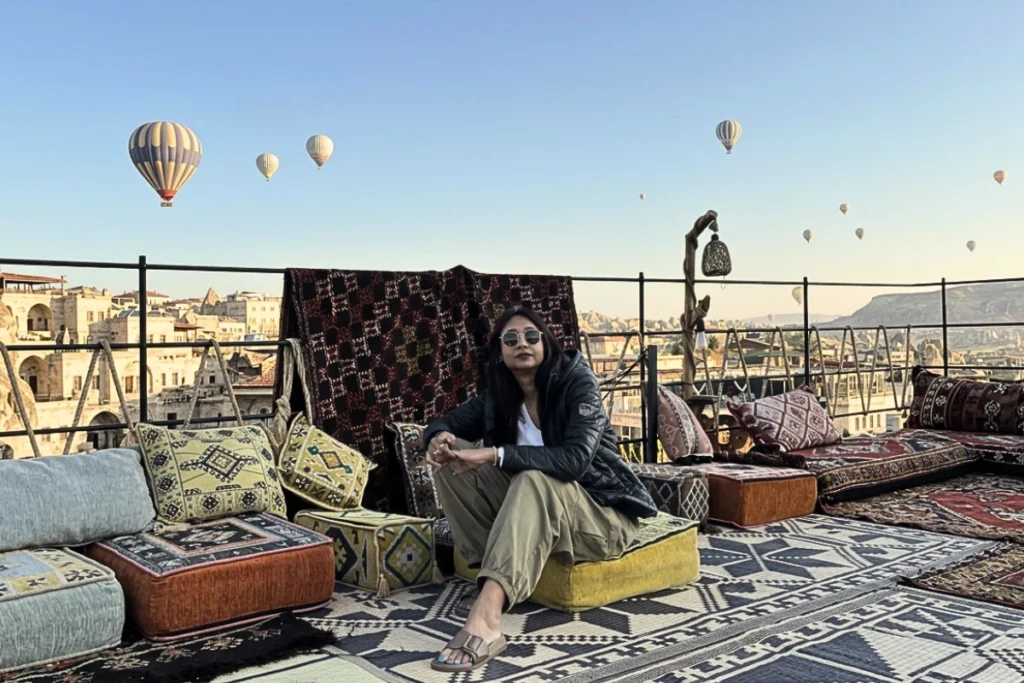
Akash had been hoping to see the balloons from the moment we arrived. The next morning, before sunrise, Akash quietly checked the window. First attempt. They were there.
Dozens of them. Lifting silently from launch sites across the valley. Red, yellow, blue, green, white. Drifting upward in the pale light, spreading across the sky above the chimneys, turning the entire landscape into the photograph that everyone who has never been to Cappadocia recognises instantly.
We ran to the rooftop without freshening up. Tea in hand. The air was cold. The light was soft. Below us, the chimneys and the valley and the cave houses and the vineyards. Above, the balloons, soundless, moving with a slowness that made the morning feel longer than it was.
This is the experience that costs nothing. The balloon ride gives you the view from inside. The rooftop gives you the balloons against the landscape. Both are extraordinary. We chose the free version and have not regretted it.
Göreme Open Air Museum: The Cave Churches
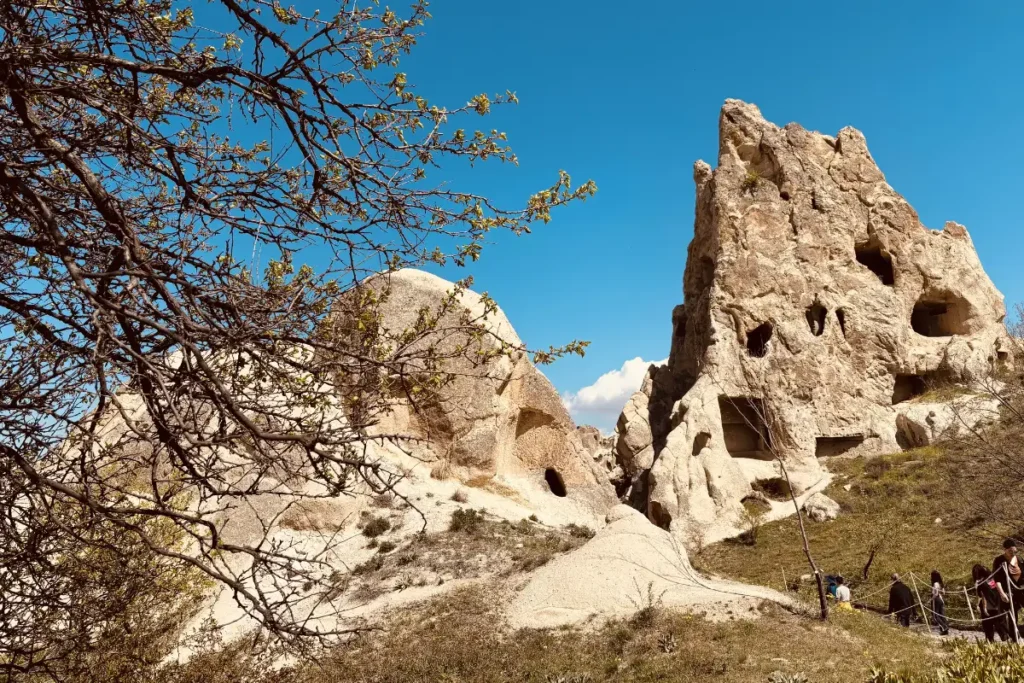
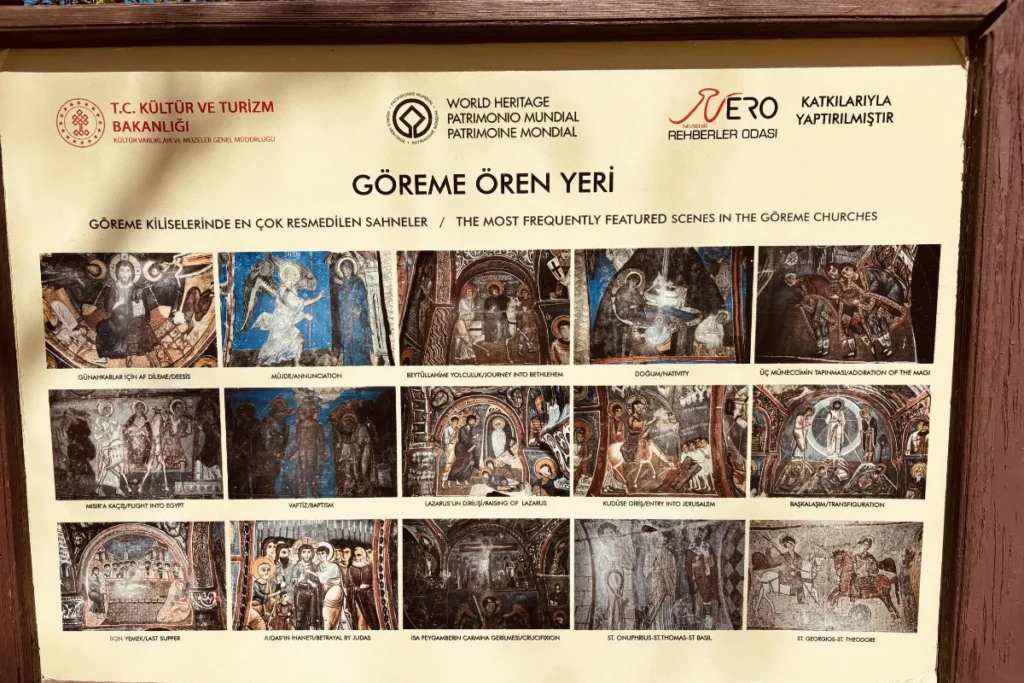
The Göreme Open Air Museum (TRY 1,740 for two / INR 4,000 / USD 42) is a complex of rock-cut churches, chapels, monasteries, and communal spaces carved into the volcanic tuff between the 10th and 13th centuries.
The churches are the draw. Cut into the rock, their interiors are covered with Byzantine frescoes painted directly onto the stone. Some have survived a thousand years in near-perfect condition because the darkness and cool temperature inside the rock acted as natural preservation chambers.
The Apple Church holds vivid 11th-century frescoes. The Snake Church depicts saints battling a dragon. St. Barbara Chapel mixes geometric patterns with figurative art. The Tokalı Church, outside the main gate but included with the ticket, is the largest and most impressive in the complex, its deep-blue frescoes covering almost every surface.
The Dark Church requires a separate ticket and earns its reputation. Limited natural light entering the chamber is the reason the frescoes survived with such intensity. The colours are vivid after a millennium. If you pay for one extra ticket anywhere in Cappadocia, pay for this one.
Photography is prohibited inside most of the cave churches. This is a preservation measure, not a tourist inconvenience. The frescoes are fragile. Respect the rule.
The museum is crowded. Tour groups arrive in waves. We took our time, waited for gaps, and explored every church. The experience rewards patience more than speed.
Why Zelve Is the Museum Most People Miss
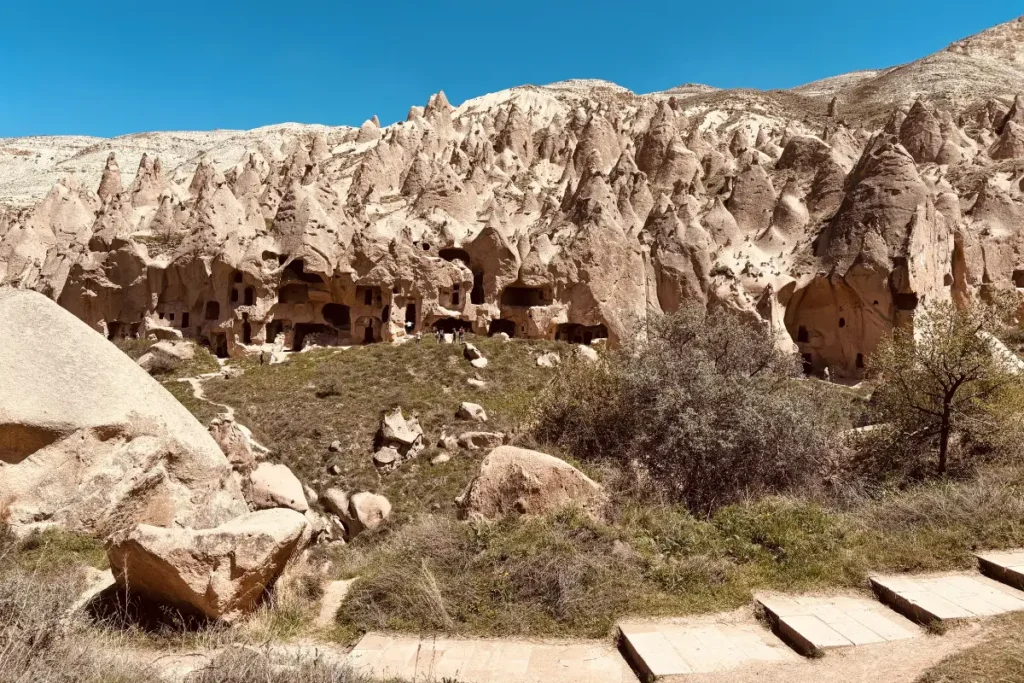
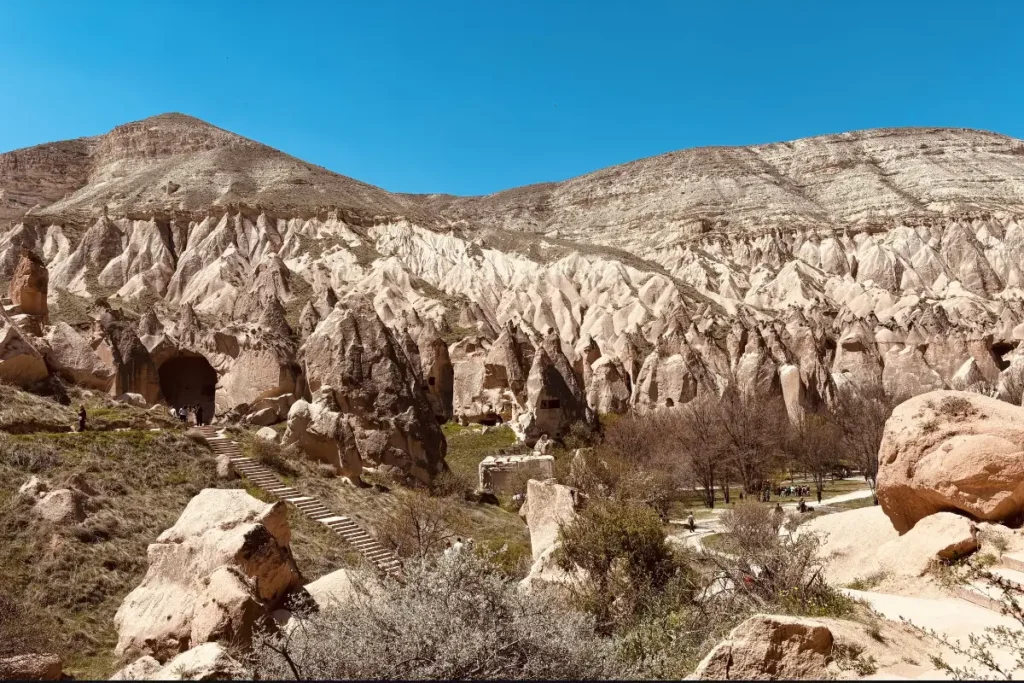
Zelve Open Air Museum and Paşabağ Valley combined ticket: TRY 1,040 for two / INR 2,390 / USD 25.
Göreme is a collection of churches. Zelve is a collection of lives.
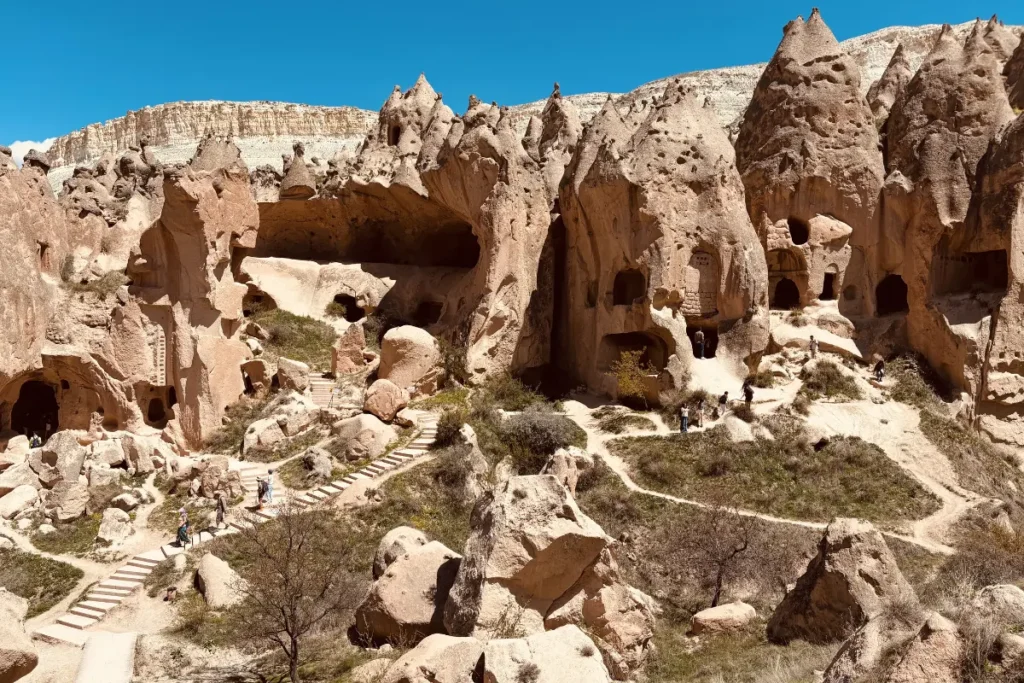
It is an abandoned cave village spread across three connected valleys. Not a curated museum with roped paths and information boards. A place where communities actually lived, worshipped, made wine, ground grain, cooked meals, and carved their existence into rock until the village was evacuated in the 1950s due to erosion risk.
We wandered through ancient monasteries. Entered churches where the rock ceilings are still blackened by centuries of cooking smoke. Crawled through a tunnel connecting Valley 2 and Valley 3. Found a rock-cut mosque with a mihrab carved directly from the stone, a rare Islamic structure inside a predominantly Christian archaeological site. Explored wineries, grain stores, and pigeon lofts where guano was collected for fertiliser.
The afternoon heat was intense. The cave interiors were cool. We moved between heat and cold, between sunlight and rock-shadow, for nearly three hours. A tour group that arrived while we were there left within sixty minutes. They walked the main path. We walked the side trails, the upper levels, the rear viewpoints. The things Zelve reveals in the third hour are not visible in the first.
Afterwards, we found a shaded spot and ate dry snacks for lunch…the only option on a driving day between sites. Then on to Paşabağ.
Paşabağ, also known as Monks Valley, is a short drive from Zelve. It holds the famous triple-headed fairy chimneys and St. Simeon’s hermit cell carved high inside a chimney. Smaller and faster than Zelve. More photogenic. We spent about an hour there, walking the main loop and the side trails, climbing into accessible chimneys to examine the sleeping rooms and carved niches inside.
If Göreme is Cappadocia’s exhibition, Zelve is its journal. Both deserve time.
“The tour group left Zelve in sixty minutes. We stayed three hours. What Zelve reveals in the third hour does not exist for the visitor who arrives, photographs, and moves on.”
What Is Inside an Underground City
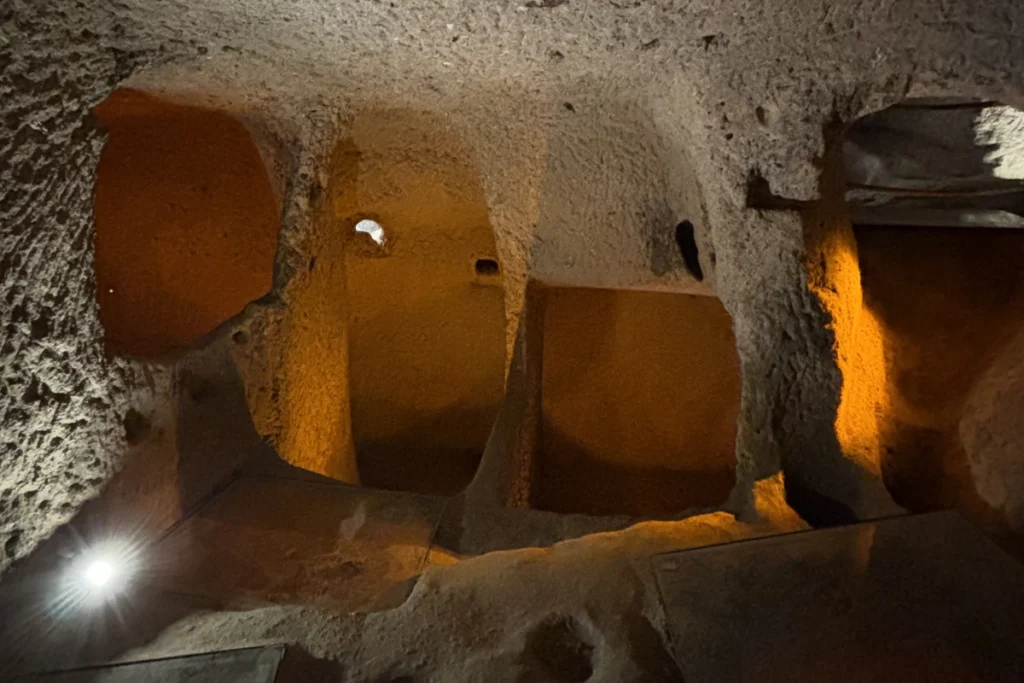
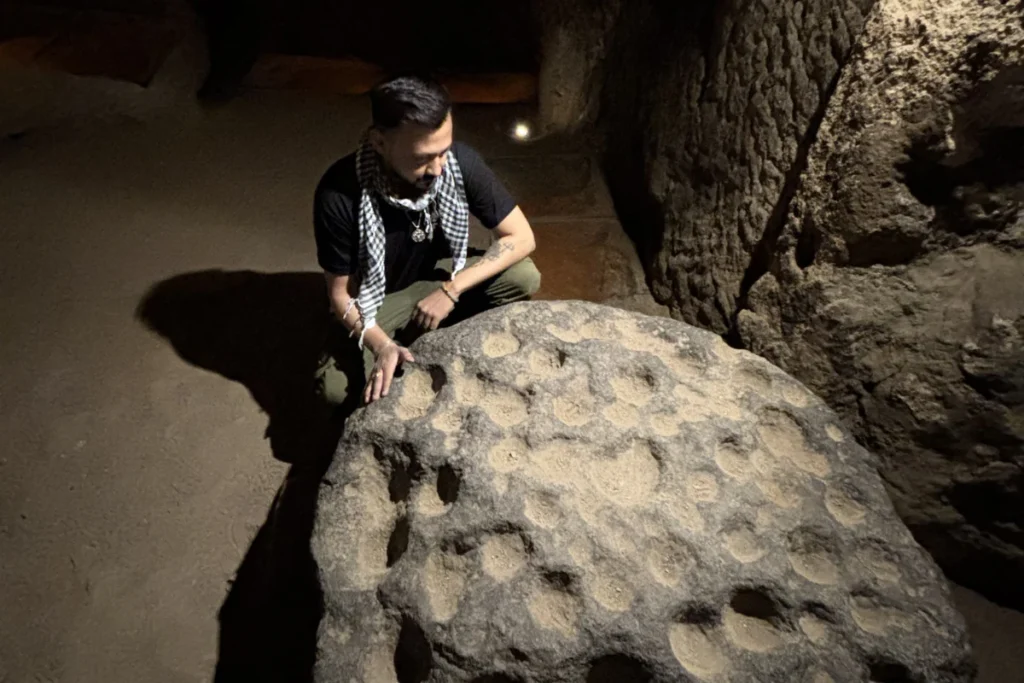
Kaymaklı Underground City: INR 1,140 / USD 15 for two, parking TRY 50.
Everything above ground in Cappadocia is about light, colour, and open space. Kaymaklı is about darkness, confinement, and the engineering required to sustain thousands of people beneath the earth during enemy sieges.
We descended through narrow, low-ceilinged tunnels into a multi-level subterranean labyrinth. Living quarters with stone beds. Communal kitchens with smoke-blackened ceilings. Ventilation shafts extending through multiple levels, providing fresh air to chambers deep underground. Wine presses. Food storage. A church with a rock-cut altar. Water wells. And the circular stone defence doors: massive, one-ton stone wheels that could be rolled across passages from the inside to seal sections of the city, with small observation holes for monitoring the sealed corridor.
The three most impressive features: the defence doors (the engineering of a single stone that seals a passage and cannot be opened from the outside), the deep ventilation shaft (look down it with a flashlight and the depth is startling), and the wine production area, which is proof that even during a siege, the residents maintained the production of something that was not strictly necessary for survival but was apparently necessary for morale.
We explored without a guide, following the marked route through the tunnel system. One of us struggles with claustrophobia. This is why we chose Kaymaklı over Derinkuyu. Derinkuyu is deeper, steeper, and significantly more oppressive. Kaymaklı provides the same historical experience in a layout that is marginally more manageable for people who do not enjoy low ceilings and tight turns in the dark.
“The circular stone defence doors weigh approximately one ton each. They roll from the inside, seal the passage completely, and cannot be opened from the outside. Someone designed this, cut it from rock, and rolled it into position over a thousand years ago.”
Selime Monastery and the Star Wars Landscape
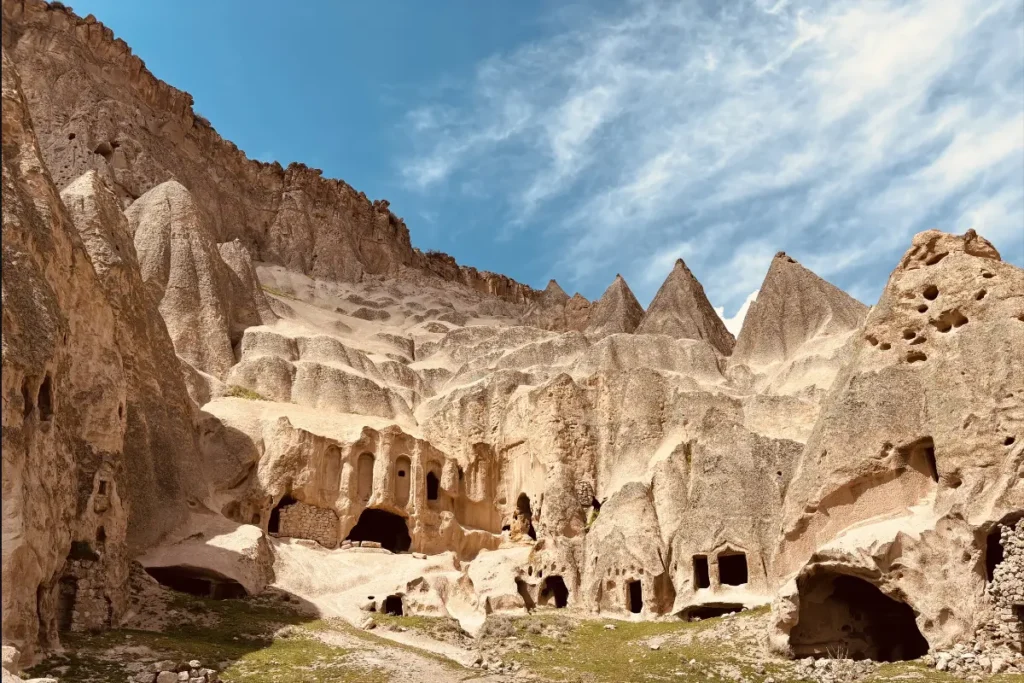
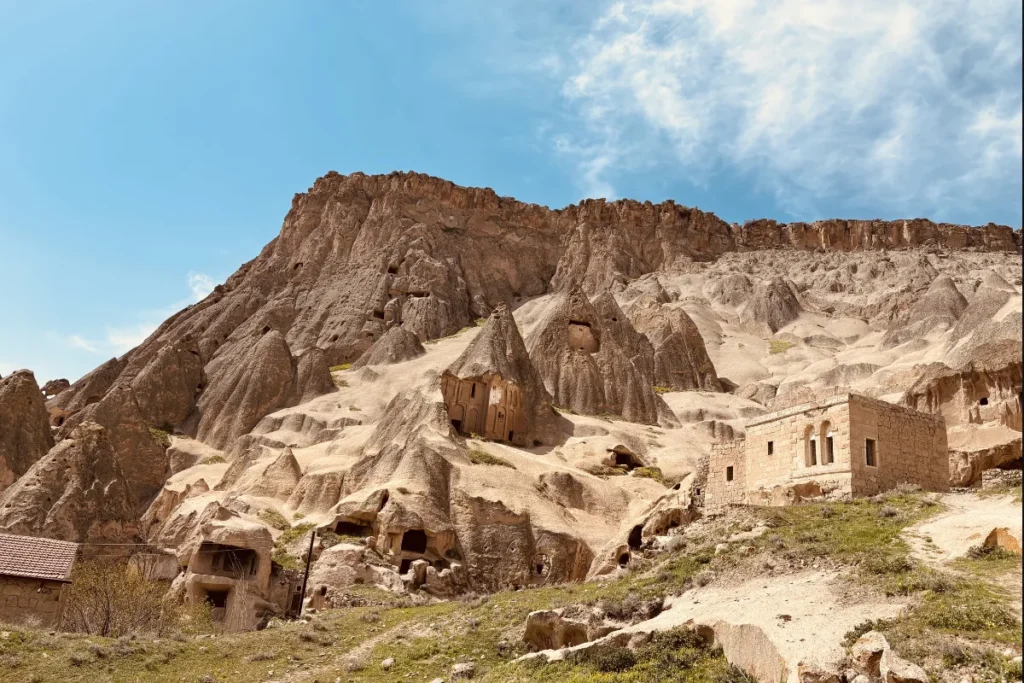
From Kaymaklı, we drove toward the Ihlara Valley. The canyon views from above were extraordinary…massive walls dropping away to a distant river…but we made a strategic decision not to hike down. With our own car, hiking into the valley meant climbing all the way back up to the same parking lot in scorching heat. Tour groups avoid this problem by being dropped at one entrance and collected at the other. Self-drivers do not have that option.
Instead, we drove to Selime Monastery. At the entrance, a local villager offered to show us a hidden route for TRY 700 / INR 1,610 / USD 17. It was the best spontaneous decision of our four days in Cappadocia.
He led us through a steep, rugged trek around the back of the monastery, through ancient cave dwellings and hidden churches, to the surreal rock landscape where scenes from Star Wars were filmed. The terrain was tough. The reward was standing in a landscape that George Lucas chose for its alien quality, understanding immediately and completely why he chose it.
The guided detour took about an hour. The standard tourist approach, walking the front path and photographing the main façade, takes fifteen minutes. The difference is the difference between seeing a place and being inside it.
After Selime, we made a short detour to Narlıgöl Crater Lake for a few quiet minutes by the water. We also attempted to drive toward Acıgöl Mountain in search of snow. The GPS took us into the middle of a sleeping rural farming village instead. No snow, no mountain view. But the village roads, the quiet, the entirely unplanned encounter with a place no tour bus would ever reach…that became its own small experience. Getting lost in the right direction is one of the reasons we drive ourselves.
Uçhisar Castle: The Highest Point in Cappadocia
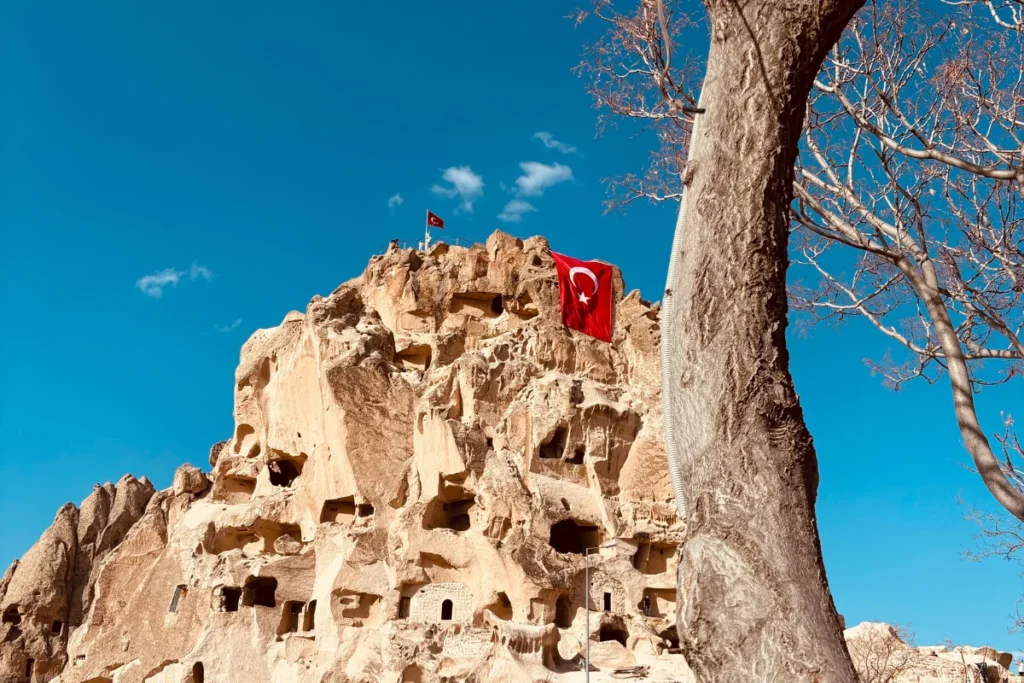
From the farming village, we drove back toward the heart of the region and headed for Uçhisar Castle (TRY 640 / INR 1,472 / USD 15 for two), arriving in time for sunset.
Uçhisar is the highest natural point in Cappadocia: a massive rock formation that has been carved, tunnelled, and fortified since at least the Byzantine era. The interior is a honeycomb of passages, rooms, storage chambers, and stairways cut directly from the soft tuff stone. We climbed through all of it, every passage, every chamber, every staircase that was accessible, working our way upward through the rock toward the summit.
The view from the top stopped the day. The entire Cappadocia landscape spread out below: Göreme, the fairy chimney valleys, Paşabağ, the distant Ihlara canyon, the volcanic peaks on the horizon. The evening before, we had admired Uçhisar’s jagged silhouette from the Göreme sunset point, a dark shape against shifting colours. Standing on top of it now, inside the shape we had admired from a distance, the perspective reversed completely. We were no longer looking at Cappadocia. We were looking from its highest point, and everything was below us.
For Bollywood fans, this will register: Uçhisar is where Salman Khan and Katrina Kaif filmed the song “Leke Prabhu Ka Naam” from Tiger 3. Love Valley and Paşabağ Valley also appear in the film. Walking through the locations we had watched on a screen back home, standing on the exact stones where the camera had been, produced a particular flavour of recognition. Not the recognition of archaeology or mythology, which is what the rest of the Turkey trip ran on, but the simpler recognition of a place you first encountered through a movie and then inhabited in person.
The sunset from the castle was the day’s reward after the underground city, the canyon, the monastery, the crater lake, and the village detour. Six distinct experiences in a single day. None of them planned in this sequence. All of them connected by the fact that we had a car and no schedule that could not be rewritten.
Love Valley, Çavuşin, and What the Final Day Reveals
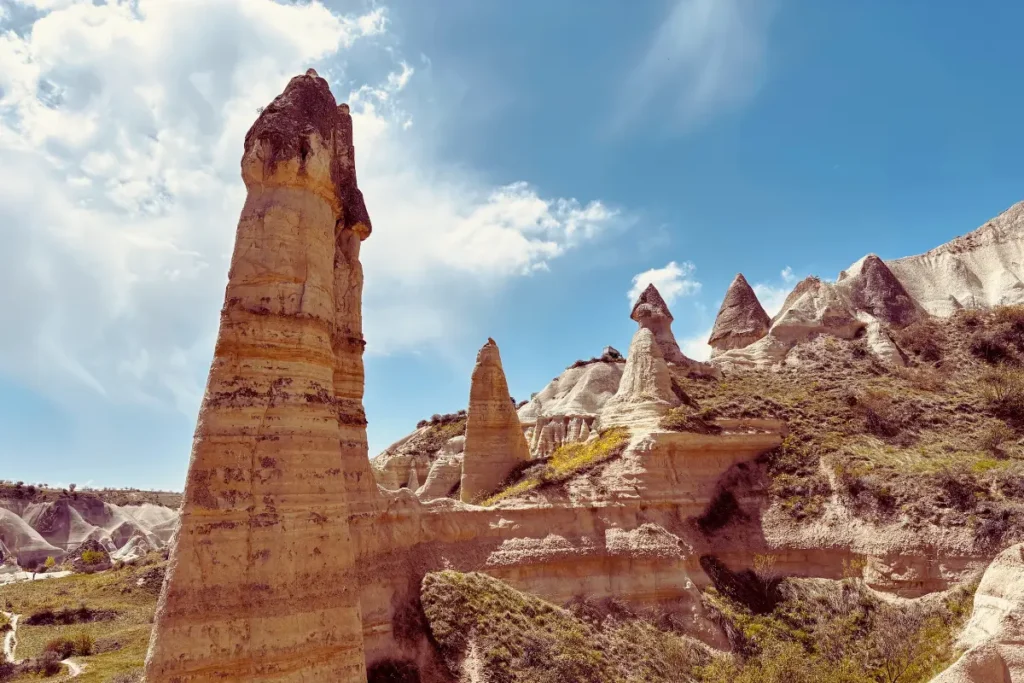
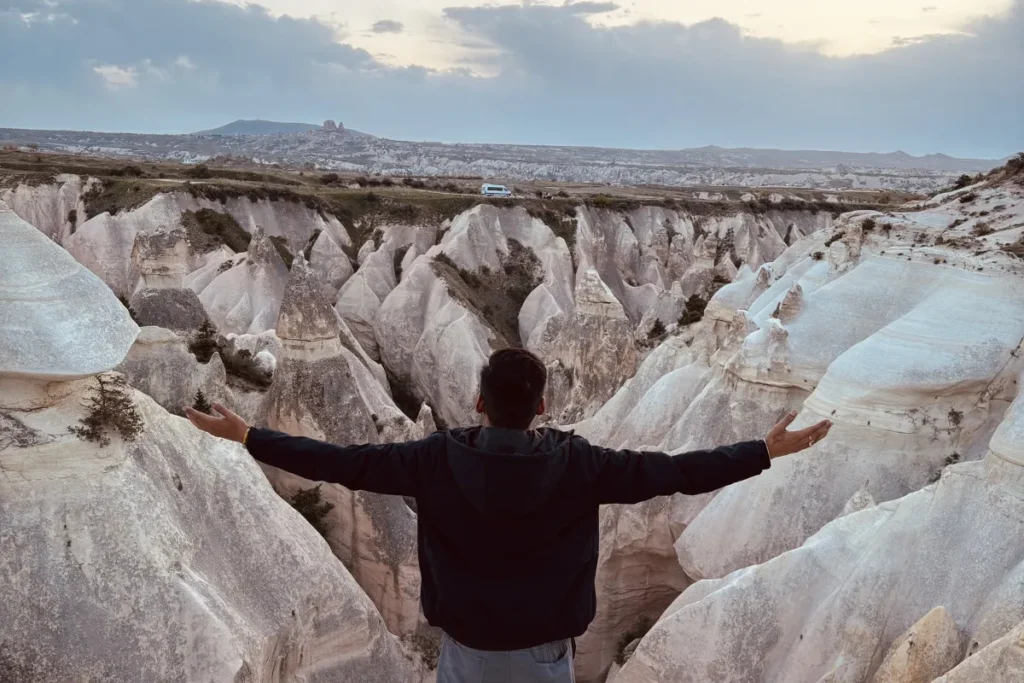
On the fourth morning, we drove to Love Valley.
Most visitors see it from the overlook. We found the routes that led both to the top and down to the valley floor, and explored among the towering rock pillars from below. Standing between formations that reach 30 metres high, looking up, the scale shifts from scenic to immersive.
Local folklore offers a story for the valley’s distinctive formations. Two young people from feuding village families who fell in love, married, had a child. An assassination. A suicide from grief. A god so angered by the cruelty that he rained stones from the sky as punishment. Those stones froze into the pillars that stand today: a monument to love, a warning against hatred. Science says volcanic tuff and erosion. The legend says divine anger. Both explanations are present simultaneously, and both are worth carrying through the valley.
From Love Valley, we drove to Çavuşin Village. An ancient rock-cut monastery and church built directly into the cliffs. Free entry. A steep climb rewarded by a view of the old, honeycombed cave village below. Along the rural road, we passed public taps with clean, ice-cold running water…a small infrastructure detail that felt generous on a hot afternoon. We stopped for fresh fruit juice and ice cream in Çavuşin: TRY 80 total. The food and souvenir prices here were noticeably cheaper than in central Göreme.
Red Valley at sunset was the final act. The iron-rich sandstone turned crimson, then pink, then gold as the sun dropped. Every Cappadocia sunset is good. Red Valley at golden hour is specifically, particularly good.
What Happens at the Sunset Point After Dark
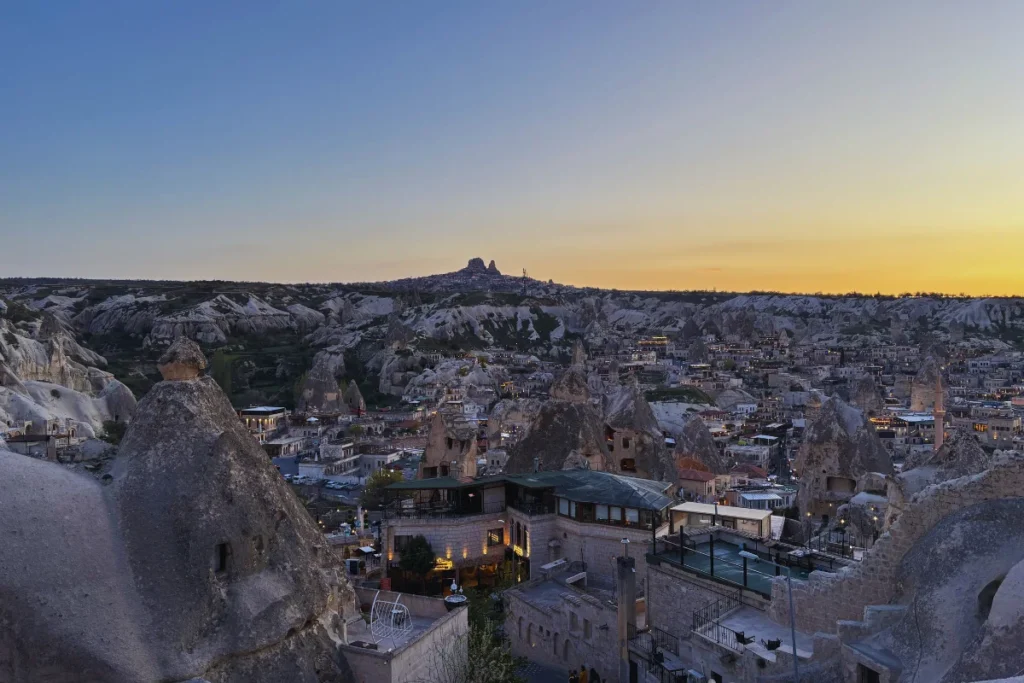
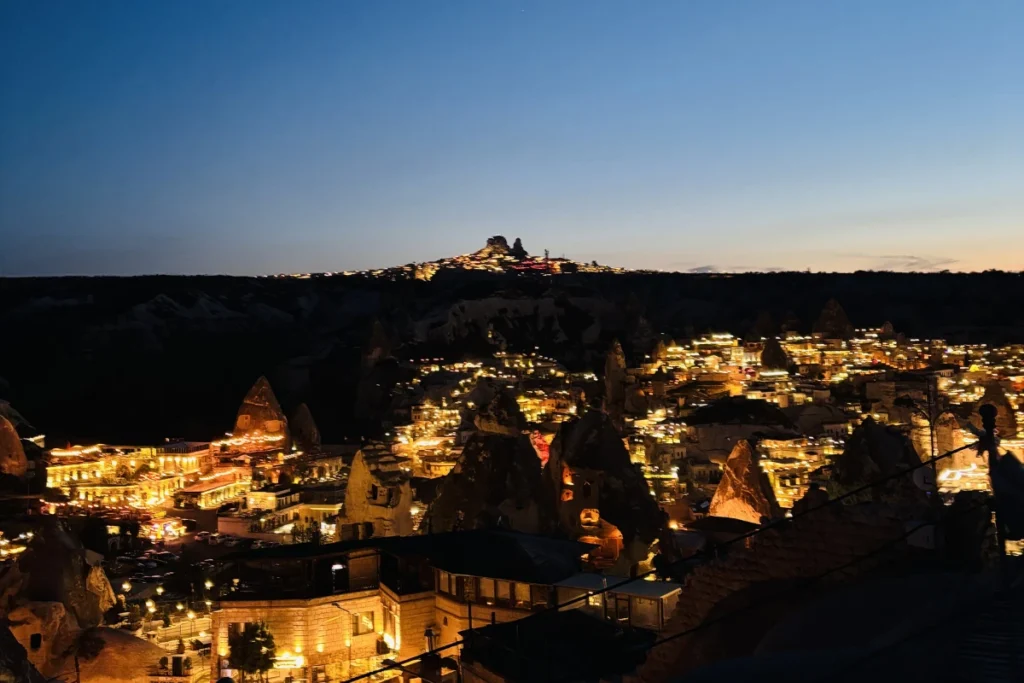
The Göreme sunset point is a hillside viewpoint with narrow access roads that fill well before the sun touches the horizon. We parked the car on our first visit and hiked the final stretch. From the summit, Uçhisar Castle stands against the shifting sky. The chimneys across the valley catch the last light and hold it while the sky changes colour.
But the part nobody mentions is what happens after the sun goes down.
As twilight faded, the artificial lights across the valley switched on one by one. The cave hotels, the restaurants, the pathways. The fairy chimneys, which had been amber silhouettes against the sunset, became glowing forms against a deep blue sky. The shadows they cast were long and warm.
The valley looked like a fairy tale. We do not use that phrase often. It applies here without exaggeration. The transition from sunset to illuminated night, visible from that viewpoint, is an experience that the daytime tourists miss because they leave when the sun disappears.
Stay. The best part is after.
An Honest Note
On our final evening, we ate at a small café in Göreme: a plate of fried chicken and warm pita bread for TRY 440.
The meal came with something we did not expect. There was a distinct shift in the staff’s attitude toward us. The welcome extended to Western tourists was warm. The service toward us, and toward another Indian pair…a father and son at the nearby table…was cold and dismissive. We watched it happen to both parties at the same time.
It dampened the evening. We mention it because honest travel writing requires including the moments that are not beautiful alongside the ones that are. Cappadocia is extraordinary. That dinner was not. Both things are true.
How to Visit Cappadocia
From Istanbul: domestic flights to Kayseri (ASR) or Nevşehir (NAV) airports, approximately one to one and a half hours. Shuttle buses connect both airports to Göreme.
By car, as we did: we drove from Hattusa, 197 km, three hours. From Ankara, approximately 300 km, four hours. Self-driving gives complete independence over timing, detours, and the decision to stay at a sunset point until after dark.
Getting around Cappadocia: a car is strongly recommended. The distances between sites…Göreme to Kaymaklı is 20 km, Göreme to Zelve is 10 km, Göreme to Selime via Ihlara is roughly 60 km…make walking impractical for a full itinerary. We drove to every site and parked at dedicated lots.
Where to stay: Göreme is the centre. Cave hotels are the distinctive option. Nomads Cave Hotel and Rooftop was centrally located, clean, warm in atmosphere, and had the rooftop that gave us the balloon view. Uçhisar and Ürgüp offer alternatives with slightly different characters.
What It Costs
All costs from our April 2025 visit. Turkey’s monument fees are revised periodically. Verify before travel.
| Site / Item | Cost, Two People (April 2025) |
| Göreme Open Air Museum | TRY 1,740 / INR 4,000 / USD 42 |
| Zelve + Paşabağ (combined ticket) | TRY 1,040 / INR 2,390 / USD 25 |
| Kaymaklı Underground City | INR 1,140 / USD 15 (parking TRY 50 extra) |
| Uçhisar Castle | TRY 640 / INR 1,472 / USD 15 |
| Selime Monastery local guide (hidden route) | TRY 700 / INR 1,610 / USD 17 |
| Nomads Cave Hotel, 4 nights (Apr 20–24) | INR 23,047 / USD 243 |
| Restaurant meal, two people (Göreme café) | TRY 440 / INR 1,012 / USD 11 |
| Juice and ice cream, Çavuşin | TRY 80 / INR 184 / USD 2 |
| Balloon ride (not taken) | TRY 5,000–8,000 per person |
| Balloon view from hotel rooftop | Free |
Cappadocia restaurant prices are the highest we encountered in Turkey outside Istanbul. We cooked most meals from market supplies and food brought from India…bread, eggs, Maggi, oats. The savings across four days were significant. The budget article covers that calculation in detail.
A note on the Museum Pass Turkey: Turkey offers a Museum Pass (Müze Kart) that bundles entry to state-run museums and archaeological sites across the country for a fixed price, valid for a set number of days. We looked into it and chose not to buy one. The pass covers a specific list of sites, and our road trip itinerary did not align neatly with that list. Several places we visited were not included in the pass, and several sites included in the pass were not on our route. More importantly, we did not want the pass dictating our decisions. A fixed-validity pass creates a subtle pressure to visit included sites within the window, which works against the flexibility that self-driving and slow travel are built on. We wanted to stop where we wanted, skip what did not interest us, and spend three hours at Zelve without calculating whether the pass was earning its value. If your itinerary closely matches the pass’s site list, the maths may work in your favour. Check the current pricing, validity, and included sites through the official Turkish Ministry of Culture portal before your trip. For us, paying individually at each counter preserved the freedom that the entire trip was designed around.
Before You Go: What Actually Matters
- Four days is the minimum for depth. Most visitors allocate one or two. The balloon, the Göreme museum, and a sunset viewpoint fill that. The underground city, Zelve, Selime, Love Valley, Çavuşin, Red Valley, and the after-dark illumination require two more. We used all four days and still did not visit Derinkuyu, Pigeon Valley, Rose Valley, or Devrent Valley.
- Drive yourself. The distances between sites, the freedom to stay at a sunset point until dark, the ability to follow a wrong GPS turn into a farming village…all of this requires a car. We rented ours for the 14-day Turkey road trip, and it was most valuable in Cappadocia.
- The Göreme sunset point access roads are narrow and packed. Arrive before 5 PM for parking near the viewpoint, or park lower and hike up, which is what we did and what we recommend.
- Bring layers for the rooftop at dawn. April mornings in Cappadocia are cold. The balloon view from the rooftop is best enjoyed with a jacket and a hot drink.
- Photography is prohibited inside most cave churches. The frescoes survived a thousand years by being protected from light and contact. Respect the rule.
- The Dark Church inside the Göreme museum requires a separate ticket. Pay for it. The colours inside have survived a millennium because almost no light has reached them. Your photographs from outside will not capture what being inside that room actually feels like, but go anyway.
- Public roadside taps in rural Cappadocia provide clean, cold drinking water. Fill your bottles whenever you see one. In summer heat, this infrastructure is worth knowing about.
“Ultimately, exploring Cappadocia without a balloon isn’t just a budget-friendly compromise…it’s the best way to truly connect with the history and magic of this incredible region.”