This Turkey Travel Guide is built from a 17-day, 4,150 km self-drive road trip through the ancient heart of Anatolia…from Istanbul’s layered streets to the world’s oldest temple, a god-king’s unbreakable tomb, and the Serpent Queen’s city on the edge of Mesopotamia.
It started with a Netflix show.
One ordinary evening at home in Bengaluru, we stumbled onto a Turkish series called The Gift. Neither of us had expected anything beyond a few hours of entertainment. What we got instead was something closer to a door opening…one we had not known existed, to rooms we had not known we wanted to enter.
The landscapes on screen were unlike anything we had seen before. Göbekli Tepe, a sanctuary built 11,500 years ago by people who had not yet invented farming. Mount Nemrut, where a king who believed himself equal to the gods built his tomb among the clouds. The valleys of Cappadocia, carved by volcanic eruptions into shapes that have no satisfying geological name. The show explored human existence across dimensions, and it reached something in both of us that we had been carrying quietly for years: a fascination with ancient civilisations, with spirituality, and with the places where human history touches the edges of what we think we understand.
What followed was months of late-night research, one discovery pulling the next. Göbekli Tepe led to Karahan Tepe…an older site with a subterranean chamber that archaeologists describe as a shamanic womb of spiritual rebirth. Hattusa led to a 3,400-year-old clay tablet that names Indra, Varuna, and Mitra…Vedic gods from our own Hindu tradition…as cosmic witnesses to a Bronze Age peace treaty. A massive green stone in the same ruins pointed toward a possible connection with ancient Egypt. Each thread pulled us deeper.
This was no longer a holiday. It was a calling.
We made a deliberate choice: skip the tourist coast entirely. No Antalya, no Bodrum. We had 17 days, and we would spend every one of them in the ancient heart of Anatolia.
We rented a Citroën C3 from Istanbul and drove 4,150 kilometres through the interior of Turkey. The car broke down in the first kilometre. A Turkish road worker crossed the highway on foot to help us, refused every lira we offered, and went back to his truck. That moment set the tone for the entire country.
We are two IT professionals from Bengaluru, originally from Kolkata. We left our apartment at midnight. We did not tell anyone where we were going until we were already at the airport.
This Turkey travel guide is the map. Every destination here will have its own dedicated article. Start with whatever calls to you. That is, in the end, how this trip started.
“Turkey started with a screen. It ended with us understanding that some places are not just old. They are the reason the word ‘old’ means something.”
- Why Turkey Is the Most Historically Layered Place We Have Traveled
- Two Turkeys: Choose Your Depth
- Istanbul: Where the Noise Prepares You for the Silence
- The Hittite Connection: Where Turkey Met India 3,400 Years Ago
- Cappadocia: The Landscape That Does Not Obey Geology
- Eastern Turkey: Where the World's Oldest Stories Are Still Being Told
- The Western Return: Gaziantep, Konya, Pamukkale, Pergamon
- How We Traveled Turkey
- What Turkey Costs for Two
- When to Visit Turkey
- Suggested Route
- Safety and Practical Tips
- Frequently Asked Questions About Traveling Turkey
Why Turkey Is the Most Historically Layered Place We Have Traveled
Every destination we have visited has history. Turkey has all of it…not a portion, the full unbroken sequence of human civilisation from its literal beginning to its most complex modern expression, compressed into a single country’s geography.
Göbekli Tepe, in southeastern Turkey, is the oldest known monumental structure built by human hands. It predates Stonehenge by 6,000 years and the Egyptian pyramids by 7,000 years. It was built before agriculture, before pottery, before the wheel, before writing. The question it asks…how did hunter-gatherers who had not yet learned to farm possess the engineering knowledge and organisational will to quarry, transport, and erect 10-ton limestone pillars in precise geometric formations…has no complete answer.
From there, the timeline continues without a gap. Çatalhöyük, the world’s first proto-city. Hattusa, capital of the Hittite Empire that negotiated the world’s first recorded peace treaty with Egypt. The Greeks. The Romans. The Byzantines. The Seljuks. The Ottomans. Each left temples, tombs, mosaics, underground cities, and layers of story in the stone.
What makes Turkey different from Egypt or India is not the depth alone. It is the fact that the connections between these civilisations are physically visible. You can drive from an 11,500-year-old sanctuary to a Roman theatre to an Ottoman mosque in a single day. The timeline does not exist only in books. It exists on the road.
Two Turkeys: Choose Your Depth
Turkey contains two completely different travel experiences, and most visitors only see one.
Western Turkey is the version that fills social media: Istanbul’s skyline, the balloons of Cappadocia, the white terraces of Pamukkale, the turquoise coast. It is beautiful, busy, and well-documented.
Eastern Turkey is the version almost nobody visits: the stone streets of Mardin looking over the Syrian plains, the sacred pools of Şanlıurfa, the underground cisterns of Dara carved into Mesopotamian bedrock, the silent summit of Mount Nemrut where fallen stone heads of gods stare at a sky permanently interrupted by cloud. It is quiet, affordable, and so historically dense that every hour on the road brings something that rearranges the questions you were asking.
We chose both. We started in Istanbul, drove east through the archaeological heart, reached the Syrian and Iraqi borders, then looped back west through Gaziantep, Konya, and Pamukkale to return the car in Istanbul. The eastern half was where the trip became something we had not expected.
At Mount Nemrut, the guesthouse family told us they had not seen an Indian traveller in at least five years. At Göbekli Tepe, the guides confirmed that Indian tourists venturing this far east were extremely rare. We believe we may be among the first from our part of India to have driven this route independently.
Istanbul: Where the Noise Prepares You for the Silence
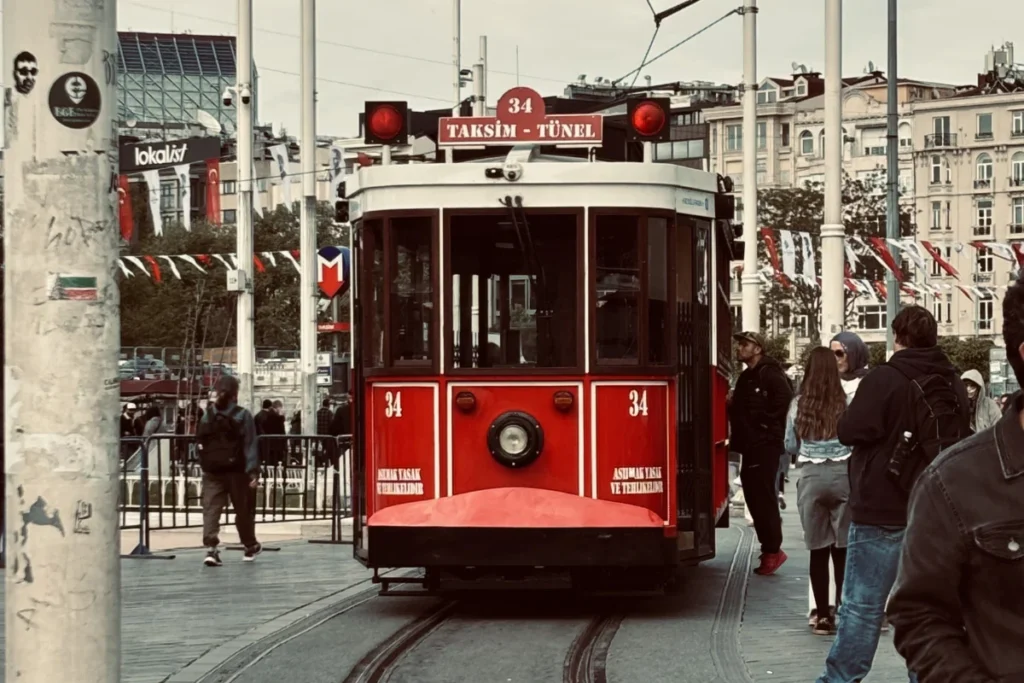
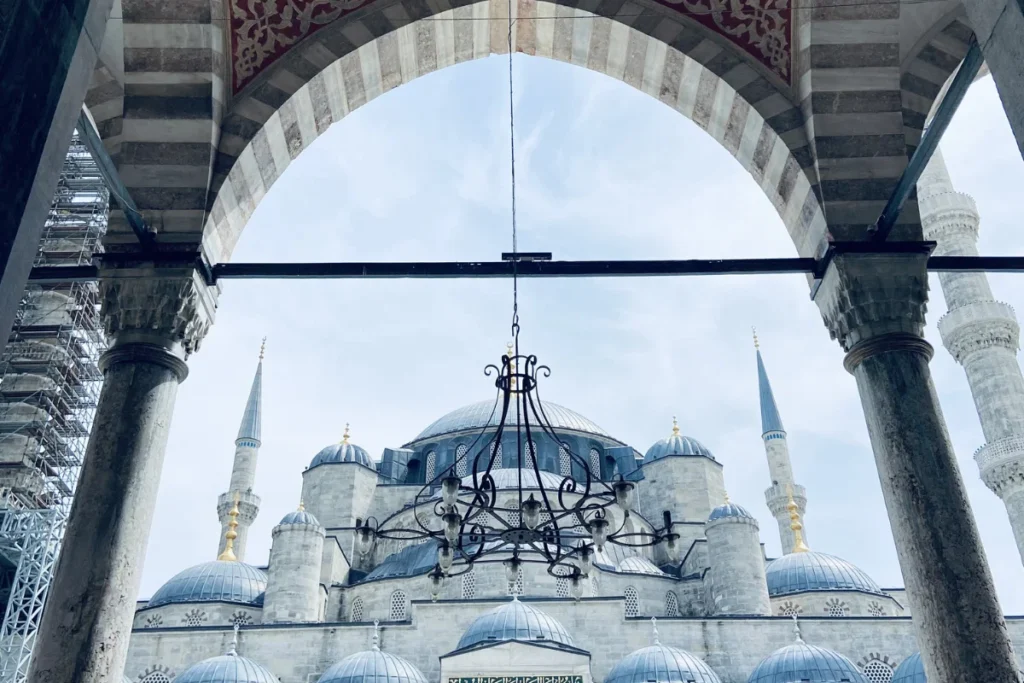
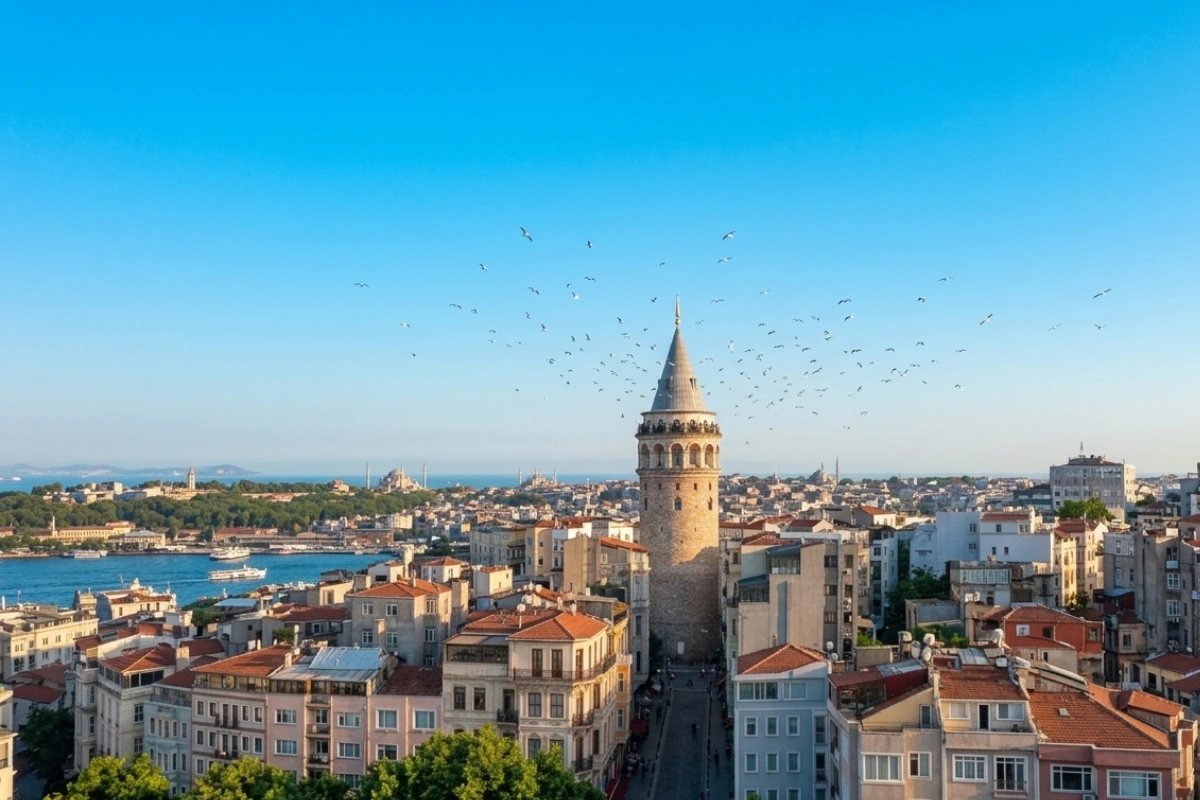
Two days in Istanbul before picking up the car. The Süleymaniye Mosque at midday, where the weight of centuries is physically present in the stone and the light through the windows moves across the floor in a way that looks deliberate. The Grand Bazaar…the best place in Turkey to exchange currency, a fact that became clear only after we had already paid tourist rates elsewhere.
Balat in the early morning, before the tourist groups arrive, when the colourful houses are lit by the kind of light that only empty streets allow. The neighbourhood exists in a category of its own: Ottoman, Jewish, Greek, Armenian layers visible simultaneously in the same alley.
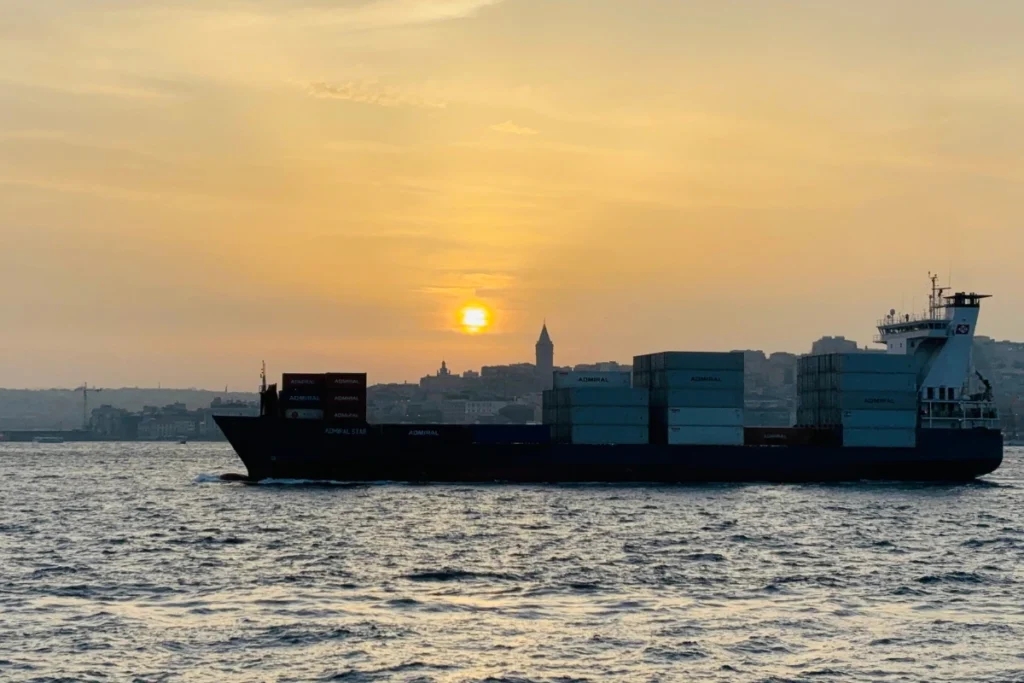
A sunset cruise on the Bosphorus…booked through Klook, including drinks…while the wind turned biting and every other passenger retreated inside the warm cabin. We stayed on deck. Ottoman palaces on both sides. The bridge connecting two continents. The sky going into the water. None of that was worth seeing through a window.
Istanbul has its own dedicated guide coming. What matters for this pillar is what Istanbul gave us before the road: the sense that everything we were about to drive through was real, not imagined.
The Hittite Connection: Where Turkey Met India 3,400 Years Ago
We drove 406 km from Istanbul’s Sabiha Gökçen Airport to Ankara in the rented Citroën C3. Within the first kilometre, the car ran out of fuel…the rental agency had apparently not filled the tank. We pulled over on a busy highway with our hazard lights on and no plan.
A Turkish road worker in an orange cleaning truck noticed us, crossed the highway on foot, helped push the car to the shoulder, drove 2 km to the nearest petrol station, returned with fuel in a container, poured it into the tank, and refused to accept a single lira. We did not share a language. We communicated entirely in gestures. This man, whose name we never learned, saved the entire trip.
That moment repeated itself in different forms at every stop across 17 days. Turkey’s people are extraordinarily kind. This is not a generalisation arrived at lazily. It is a pattern that held without exception.
Museum of Anatolian Civilizations, Ankara
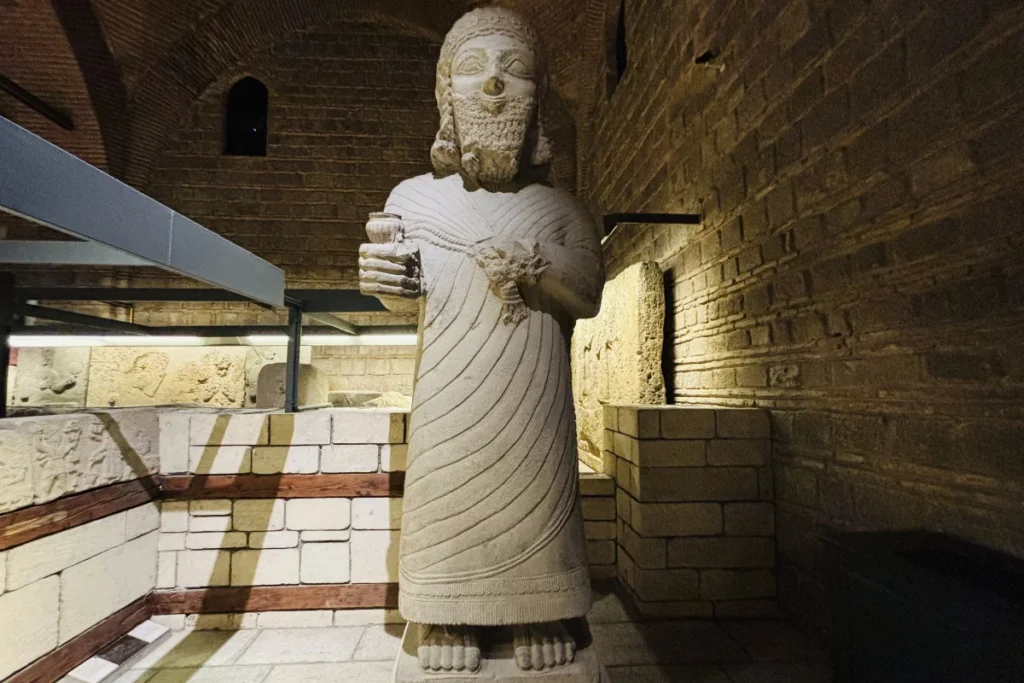
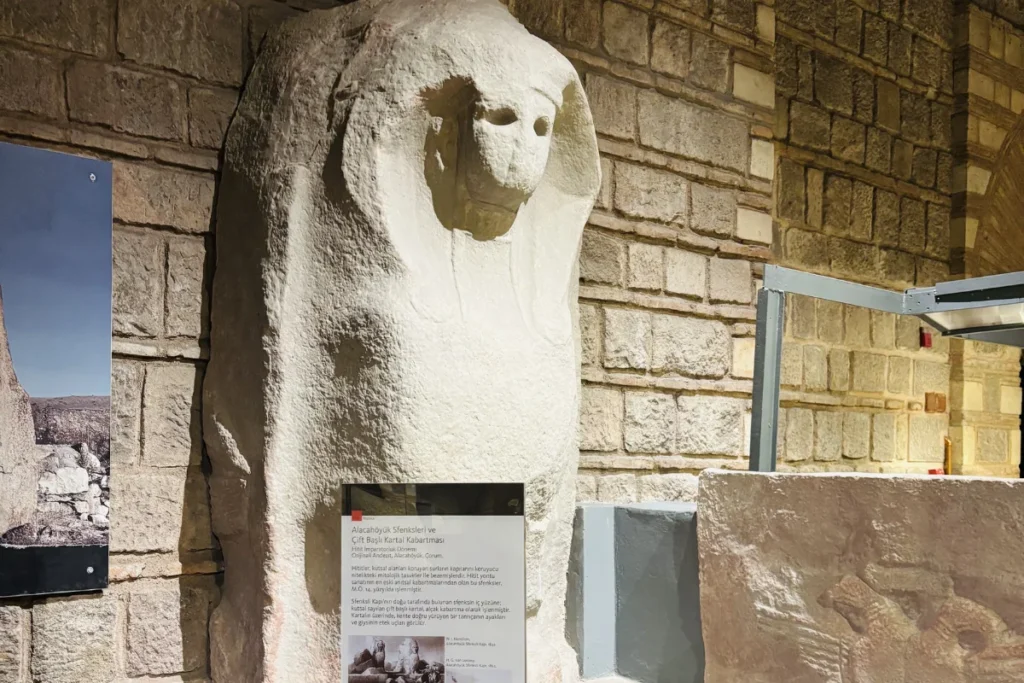
We arrived at 4:45 PM convinced the museum closed at 5:00, having sprinted uphill through Ankara’s steep streets after a long drive. It closed at 7:00 PM. We walked out at closing time having seen every gallery. The collection holds the Stone Age and Hittite artefacts we had spent months reading about at home…the originals, in cases, under proper light. That evening we cooked instant vermicelli noodles in the hotel room while rain tapped against the window, and it felt like exactly the right dinner.
Hattusa and Yazılıkaya: Where Three Civilisations Converge
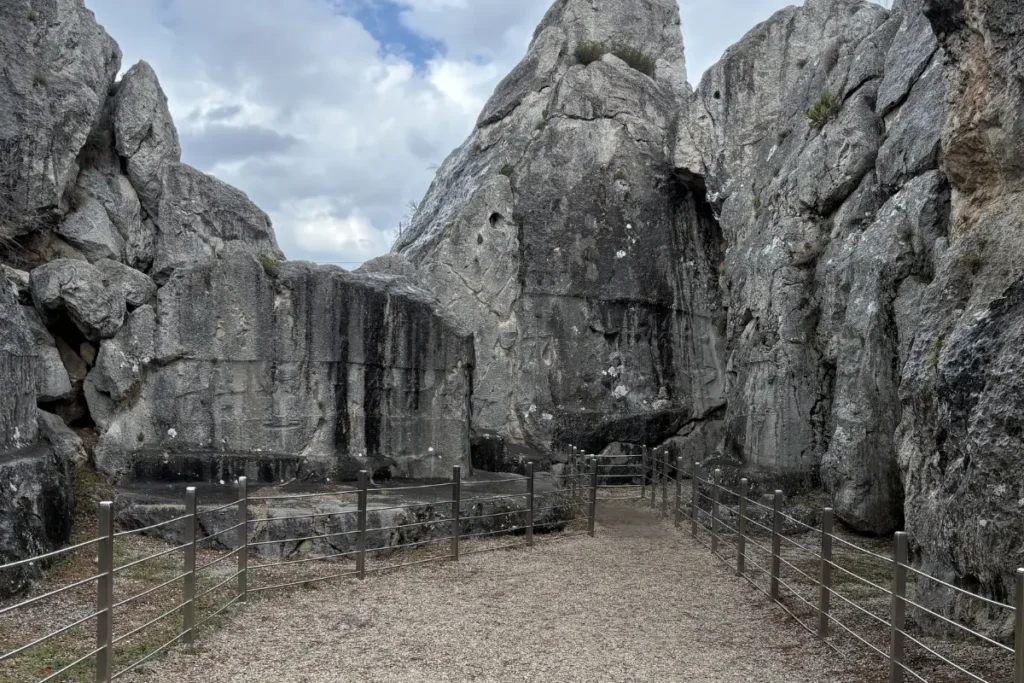
Boğazkale village, sitting on top of one of the most significant archaeological sites in the world, looks like a place time moved through slowly. Crisp morning air. A quiet that was different from the quiet of empty places…older, more deliberate.
The Boğazkale Museum held the artefacts of the Hittite Empire. As Indians, walking through it was disorienting in the best way. The Sanskrit roots were visible in the language. Our word for elephant…’Hathi’…echoes in the city name ‘Hattusa’. Then we reached the display case that stopped us completely.
A 3,400-year-old clay tablet found in these ruins names Indra, Varuna, and Mitra as divine witnesses to a political treaty between the Hittite king and the Mitanni kingdom. The Kikkuli Horse Manual from the same archive uses literal Sanskrit numerals. Mitanni kings bore Sanskrit-derived names. The storm god reliefs at Yazılıkaya depict deities mounted on animals…the exact Vahana concept of our own tradition.
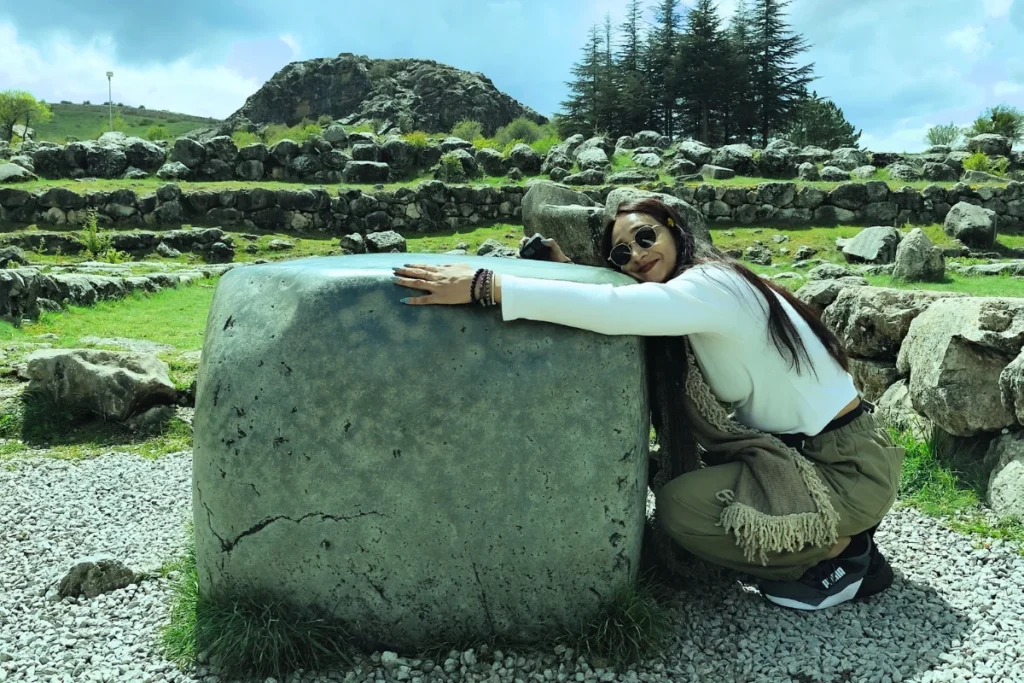
In the ruins of the Great Temple, we placed our hands on the Green Wish Stone: a 1,000 kg block of polished nephrite that is a geological impossibility in a city built from limestone and basalt. Archaeologists speculate it was a diplomatic gift from Pharaoh Ramesses II to seal the Treaty of Kadesh…the oldest surviving peace treaty in world history. It connects Turkey to Egypt. The Vedic tablet connects Turkey to India.
One site. Three civilisations. Three continents. We had not expected that. We are still processing it.
“A 3,400-year-old clay tablet in Turkey names our Vedic gods. A green stone may connect the same ruins to ancient Egypt. One site. Three civilisations. Three continents.”
Cappadocia: The Landscape That Does Not Obey Geology
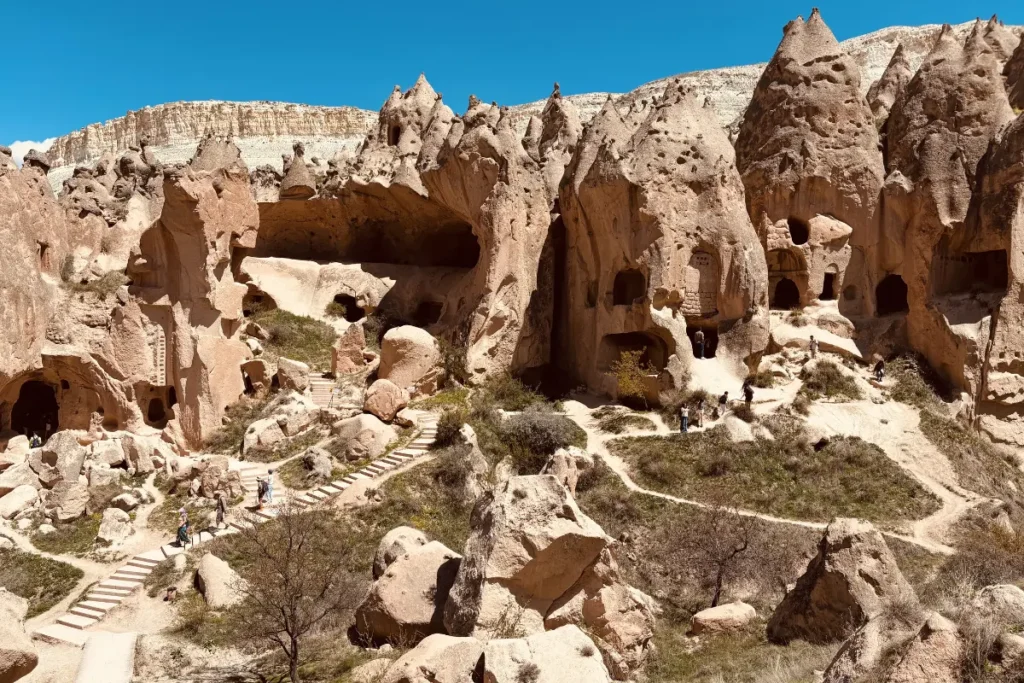
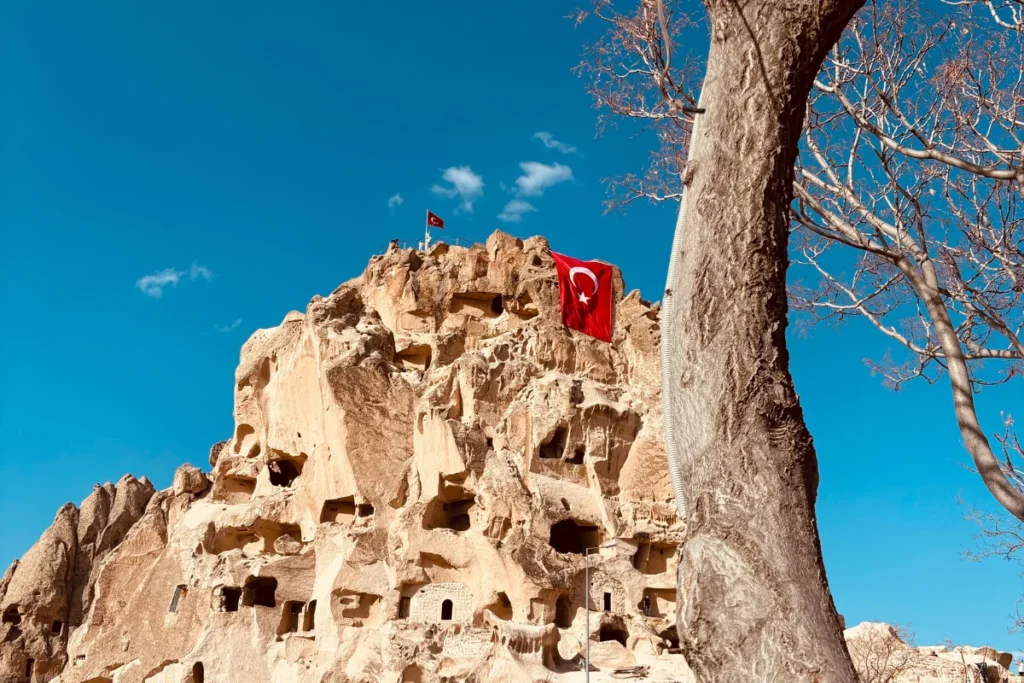
We drove 197 km from Hattusa and arrived at the Göreme Panorama viewpoint just as the sun was setting. The fairy chimneys, lit gold and orange against a deepening sky, looked like something placed there by someone who wanted to test whether nature could get away with being that unlikely. It can.
Four days. The Göreme Open Air Museum with its Byzantine cave churches carved into tuff columns. The abandoned troglodyte village of Zelve…larger, quieter, and more rewarding than Göreme if you are willing to walk beyond the first section. Paşabağ and its triple-headed fairy chimneys. Kaymaklı Underground City, where entire communities lived, worshipped, made wine, and defended themselves beneath the surface. Uçhisar Castle at sunset. Love Valley explored from both the rim and the floor. Red Valley, Pigeon Valley, Rose Valley in the late afternoon.
The Selime Monastery…a Star Wars filming location that nobody in the group tours lingers in long enough… was where we hired a local guide spontaneously. He led us through passages the group tours never enter. That hour was worth the entire detour.
We watched the hot air balloons at dawn from the hotel rooftop at Nomads Cave Hotel. We had already done the balloon ride in Egypt, over the Valley of the Kings. The view from the ground in Cappadocia…dozens of balloons rising into a pink sky above the fairy chimneys…was its own kind of extraordinary, and it cost nothing.
We cooked most of our meals from supplies bought at local markets. Cappadocia’s restaurant prices are calibrated for a tourist economy we were not participating in. Maggi at a cave hotel, eaten while looking at an illuminated valley below, was genuinely one of the best meals of the trip.
The Cappadocia guide is coming. What we can say here: go, and do not let a group tour decide how long you spend at each site.
Eastern Turkey: Where the World’s Oldest Stories Are Still Being Told
Mount Nemrut: The God-King’s Unbreakable Tomb
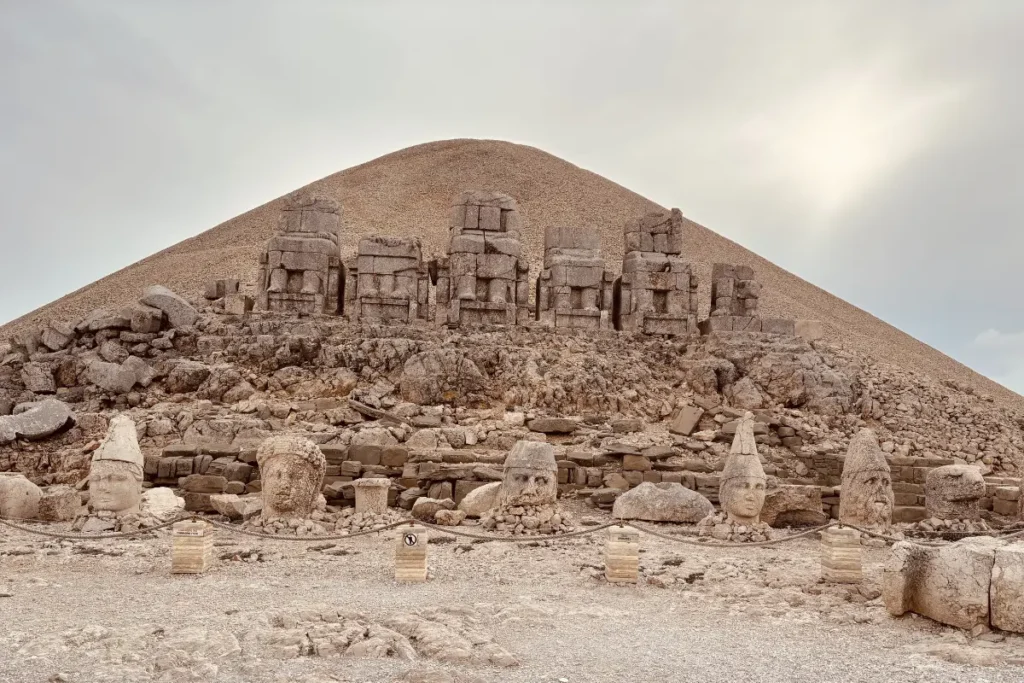
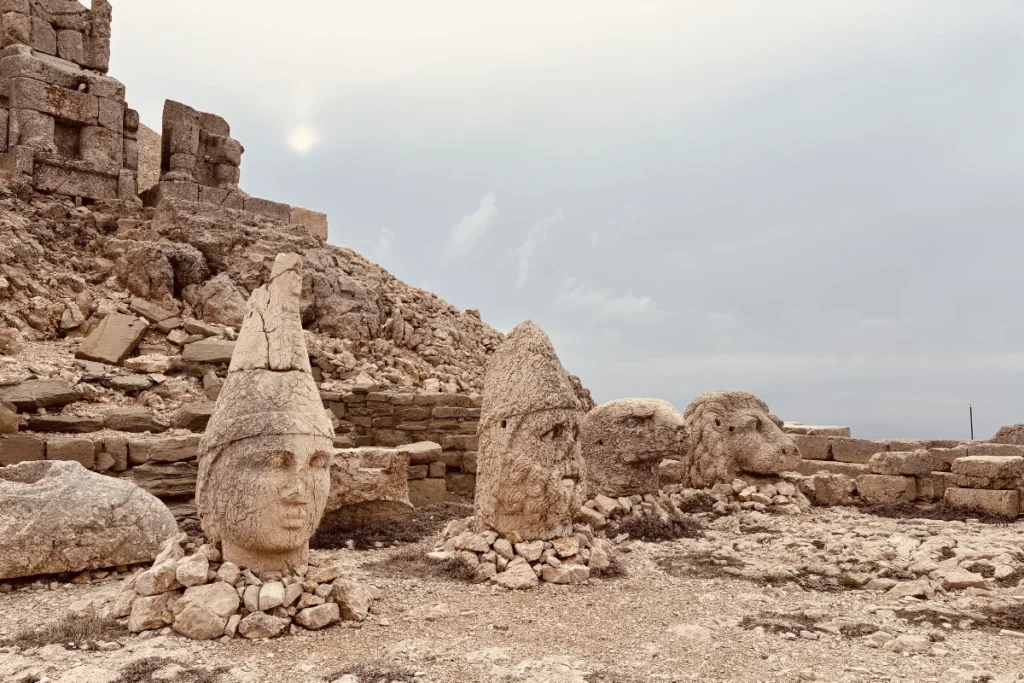
A 509 km drive from Cappadocia. The roads deteriorated progressively…highway, then village road, then gravel, then something that made the rental car’s tyres lose traction on the final ascent. Loose stones fell from the cliffs above. No other vehicles. The landscape shifting from plains to peaks disappearing into cloud.
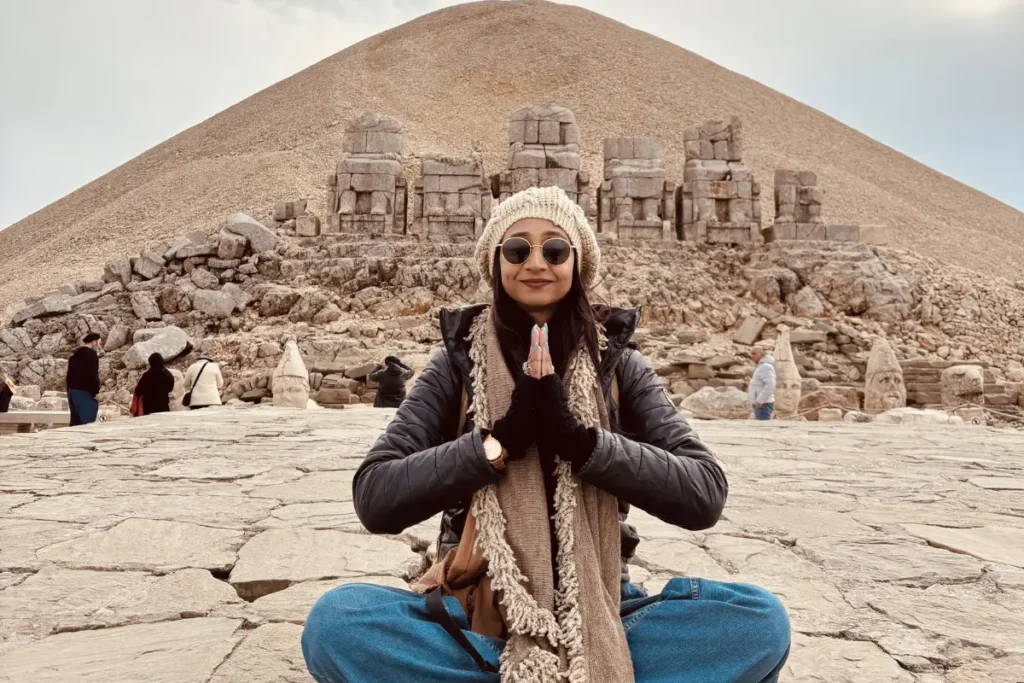
Mount Nemrut was built in the 1st century BCE by King Antiochus I, who believed he was a living god equal to Zeus and Apollo. The 50-metre burial mound at the summit is engineered from millions of loose limestone pieces designed to be self-healing: any tunnel dug into the mound immediately collapses, filling itself back in. Archaeologists have tried for decades. Nobody has found the tomb.
The fallen stone heads of his giant statues…each originally 9 metres tall, sit scattered on the east and west terraces facing opposite directions. At the base, tunnels descend 150 metres into the mountain at 45-degree angles, ending in flooded chambers that local tradition associates with the cult of Mithras. A stone relief maps a precise astronomical alignment from 62 BCE. The summit carries a particular quality of vibration that local guides mention without drama, as a fact.
When we stood on that mountaintop, surrounded by cloud, looking at the scattered heads of gods, it felt like the single most significant moment of the entire trip. Not because of what it was, exactly, but because of what standing there required us to accept about how old human ambition actually is.
We stayed the night at Karadut Pension, run by a family who treated us like relatives. Mountain wind against the windows. We slept well.
Mardin: The Serpent Queen’s City
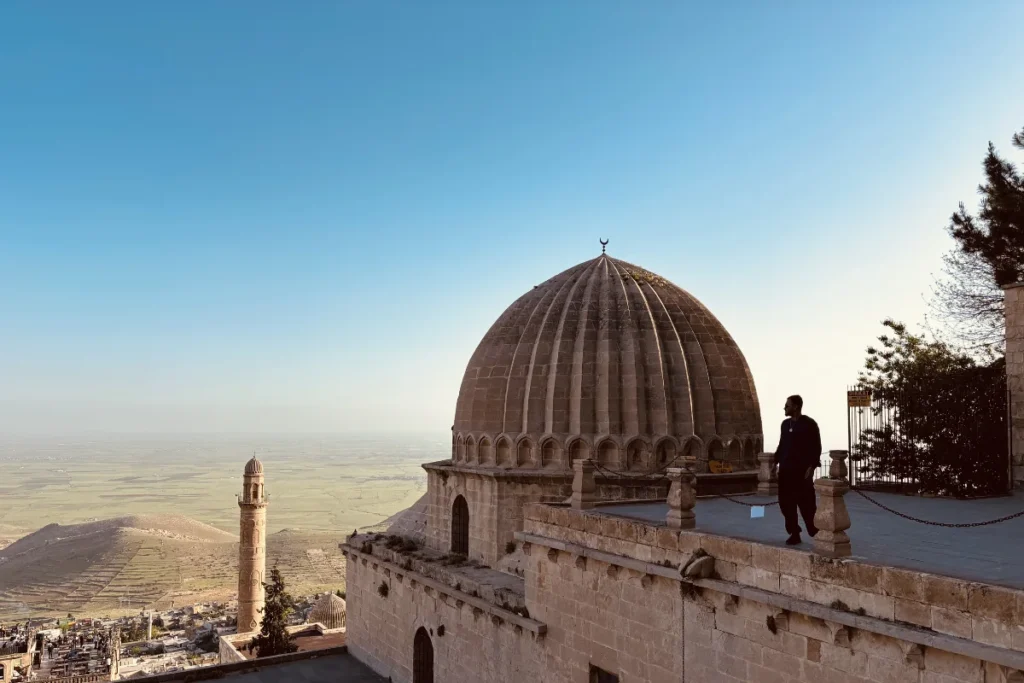
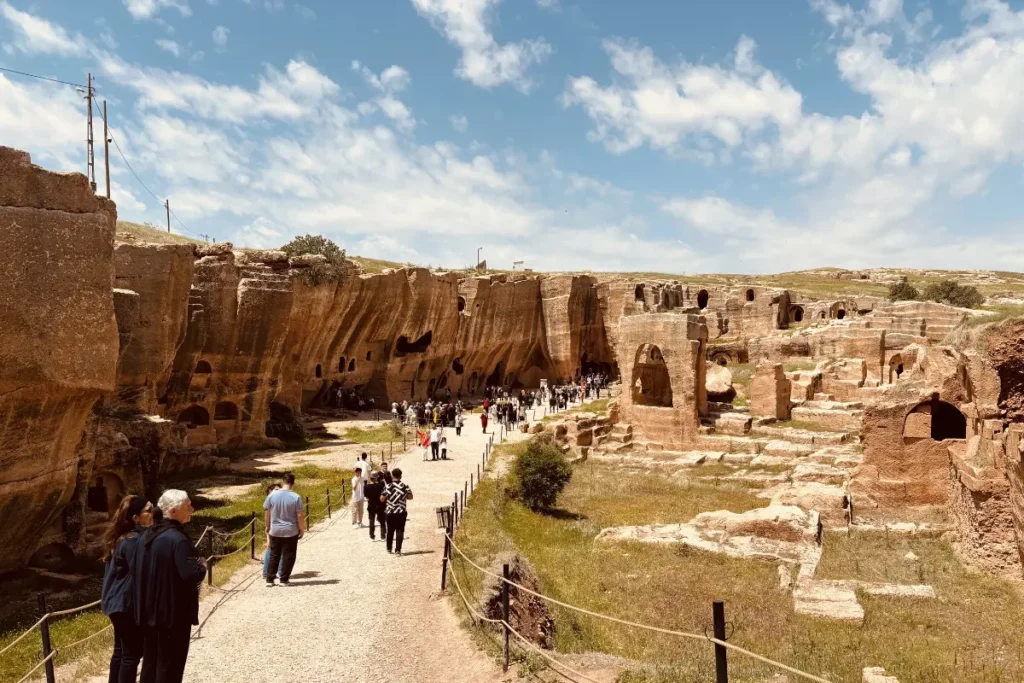
Mardin is a convergence of Kurdish, Arabic, Syriac Christian, and Turkish cultures stacked along golden limestone terraces above the Mesopotamian plains. The Syrian border is visible from the upper streets. The city’s mythology is dominated by Shahmaran, the Serpent Queen.
Shahmaran was half woman, half serpent — a being who held all the lost wisdom of the cosmos and lived in an underground kingdom beneath the city. A young man discovered her world, lived in it for years, and eventually, under torture, revealed her location to those who wanted her flesh for a dying king’s cure. Before her capture, she whispered her final instructions. The grand vizier drank the wrong portion and died. The man who betrayed her drank her wisdom and became Lokman Hekim, the legendary father of herbal medicine. Local belief holds that the snakes beneath the earth still do not know their queen is dead. If they discover the truth, they will rise.
Her image is everywhere: hammered into copper plates, woven into silver filigree jewellery, painted on the walls of doorways and cave hotels. Our room at Edo Evleri had Shahmaran portraits on the walls and an ancient kitchen with utensils still in place.
We visited Dara, the ancient garrison city carved from bedrock 30 km south near the Syrian border. The cisterns, the Roman tombs, the rock-cut streets. We climbed to the Zinciriye Madrasa at sunset and looked out over what felt genuinely like the edge of the world — the entire terraced city dropping away into flat Mesopotamian plain that continued until it became haze.
Kasımiye Madrasa, where classroom doors are built one metre high to force every entering student to bow, and the central fountain is engineered as a Sufi metaphor for human life. Architecture as philosophy, made in stone.
Karahan Tepe and Göbekli Tepe: The Dawn of Everything
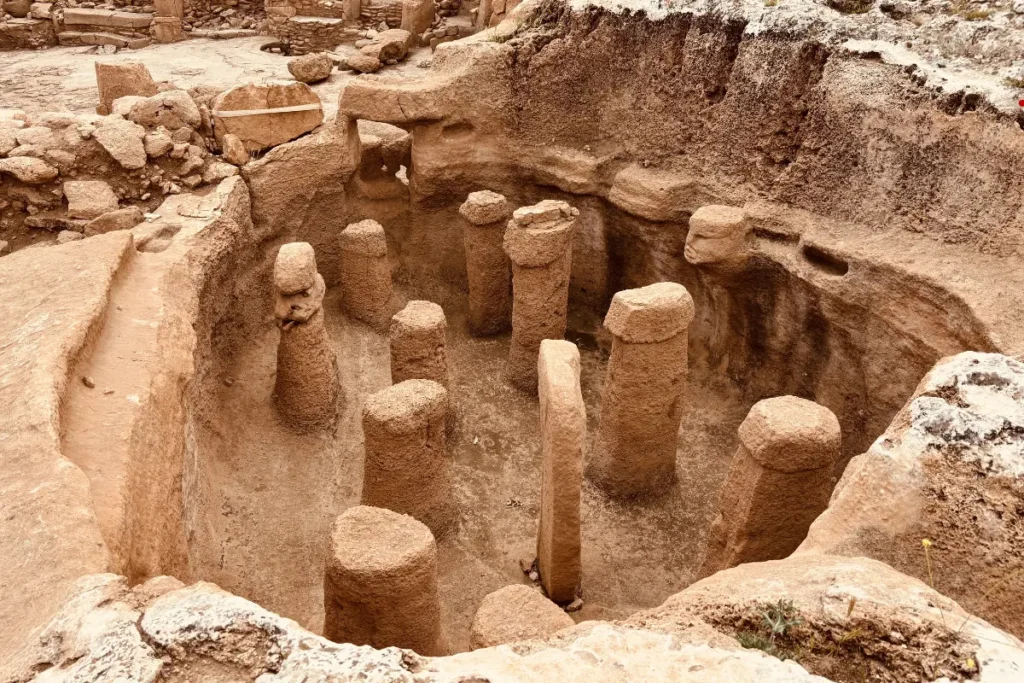
Karahan Tepe, free to enter, older than Göbekli Tepe. A subterranean chamber carved directly into the limestone bedrock holds 11 upright phallic pillars, and from the rock wall a human face emerges at neck level, as though an entity is rising from the earth. Archaeologists describe this as a shamanic womb: initiates entered through one passage, underwent a ritual of spiritual death, and crawled out through a narrow opening to symbolise rebirth. We stood at the rim looking down and were quiet for a long time.
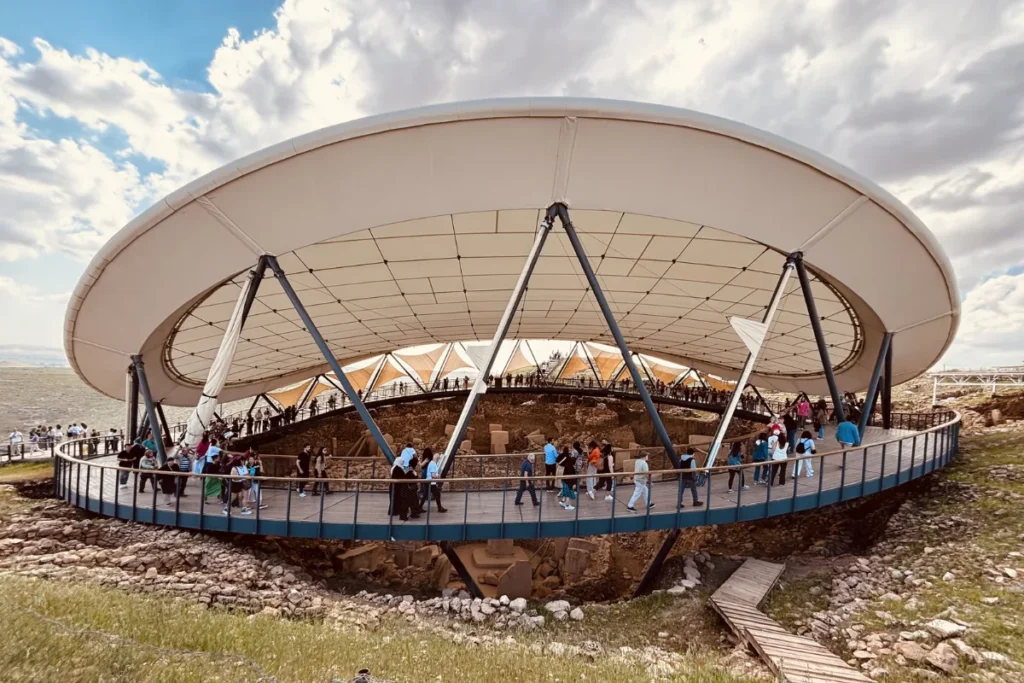
Göbekli Tepe. Standing on the wooden observation boardwalk, looking down into excavated circular pits that hold the oldest monumental architecture ever built by human hands.
The T-shaped limestone pillars…some weighing over 10 tons…are abstract representations of faceless beings with folded arms and decorated belts. The surfaces carry snarling leopards, scorpions, snakes, foxes, vultures. The floors are polished to a watertight finish. The entire complex was intentionally buried by its builders after centuries of use, as though they were sealing something. A message, perhaps. Left for whoever came looking thousands of years later.
The Vulture Stone’s imagery has been compared to the Vedic solar bird Garuda. A stone head from the sister site of Nevalı Çori…shaved skull with a single braided tuft…mirrors the Sikha worn by Vedic priests. At another site, pillar-in-circle arrangements echo early Shiva Lingam forms. Mainstream archaeology attributes these similarities to universal human symbolic psychology rather than direct cultural connection. The question remains open, unresolved, worth sitting with.
Şanlıurfa: The City of Prophets
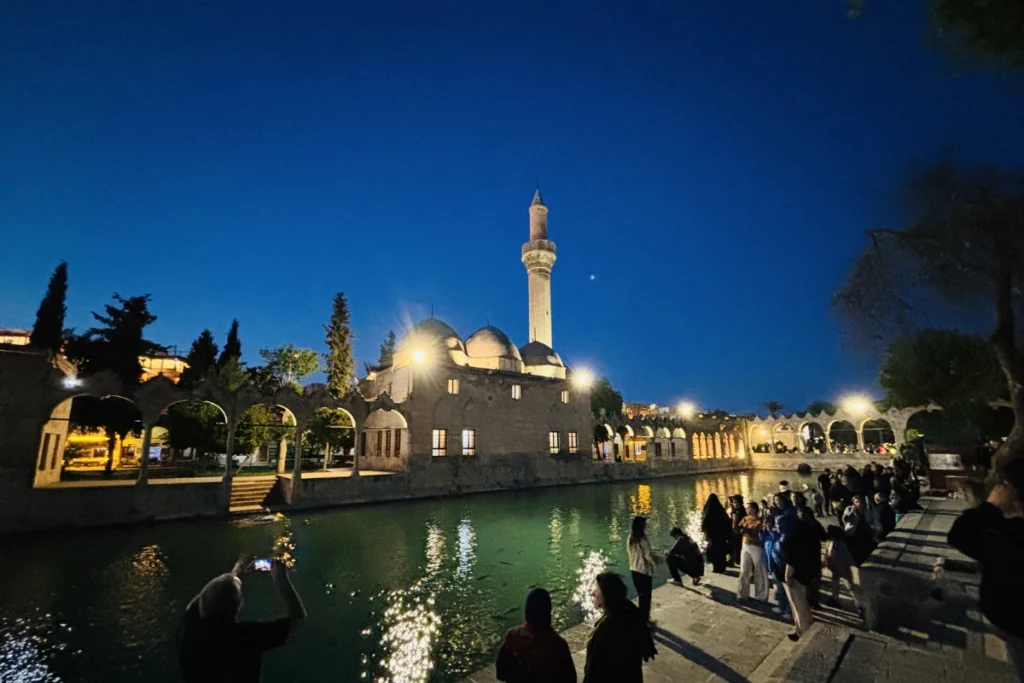
The Balıklıgöl pools, where Islamic tradition holds that God turned Nimrod’s fire into water and burning logs into fish to save Prophet Ibrahim. The practice of feeding sacred carp in a temple pool reminded us immediately of the tank shrines back in India…the same instinct, expressed in different faiths, across thousands of years.
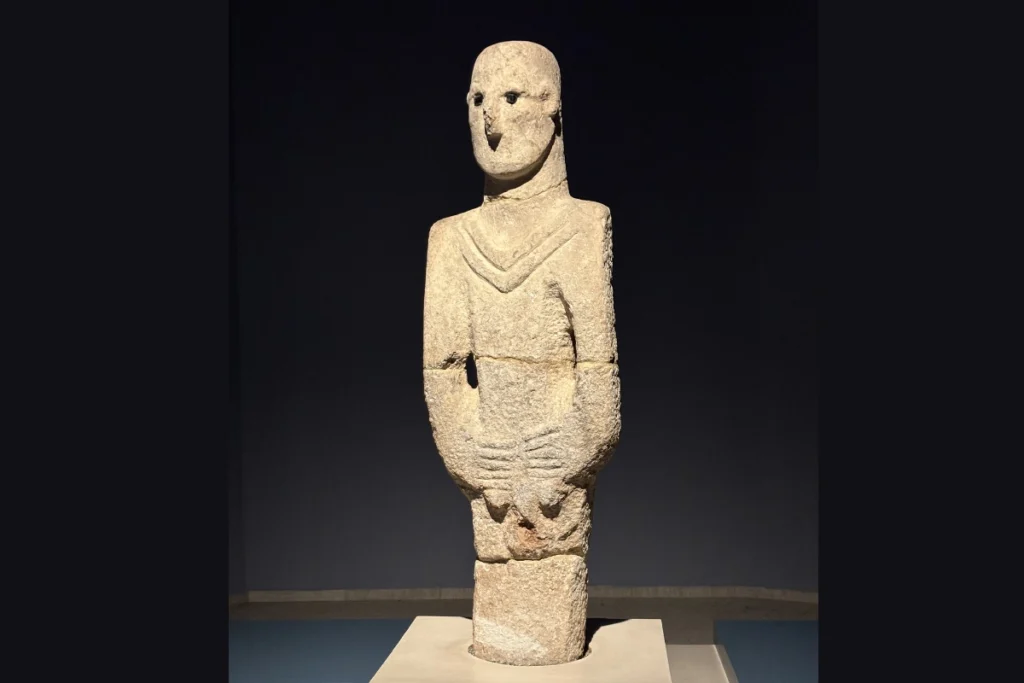
The Şanlıurfa Archaeology Museum is the largest in Turkey. The Urfa Man…a 6-foot-tall human statue from approximately 9,000 BCE, with inlaid obsidian eyes…is the oldest life-sized human sculpture ever found. He looked at us from behind the display case and we looked back and neither party seemed to fully understand the other.
The Kızılkoyun Necropolis: 70 Roman tombs discovered when a modern housing demolition broke through the rock and workers found the tombs beneath living room floors. At night, the cave mouths glow amber against the cliff face in a way that makes the word ‘ancient’ feel inadequate.
“The Urfa Man is 9,000 years old. He looked at us from behind his display case. Neither of us seemed to fully understand the other.”
The Western Return: Gaziantep, Konya, Pamukkale, Pergamon
The drive back west compressed the human timeline into a few days. Each stop was its own civilisation.
Halfeti: A City Under the River
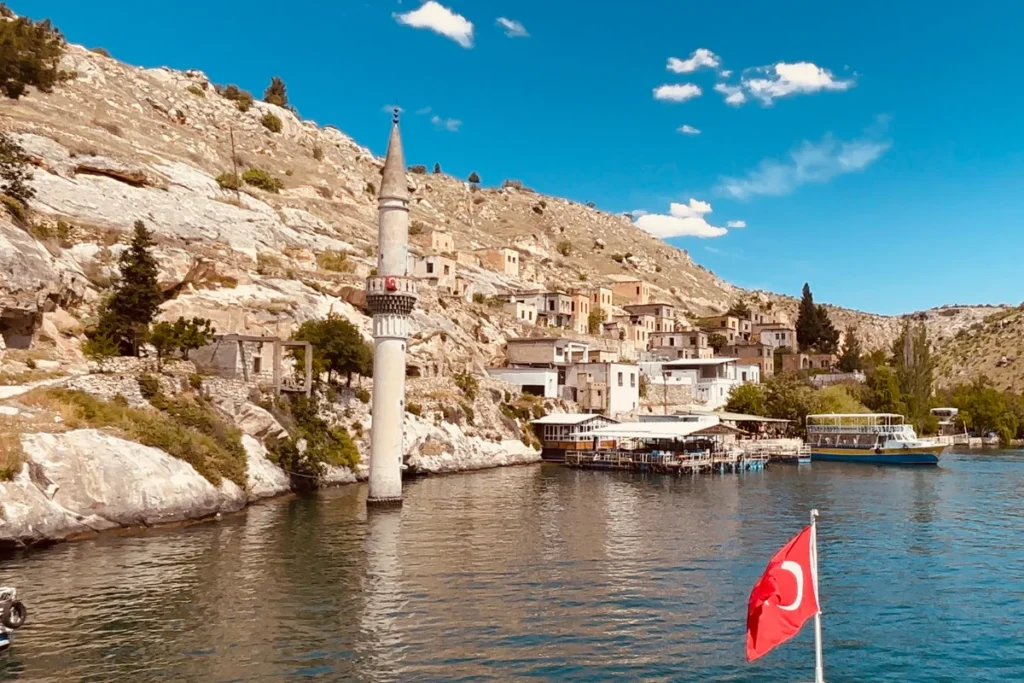
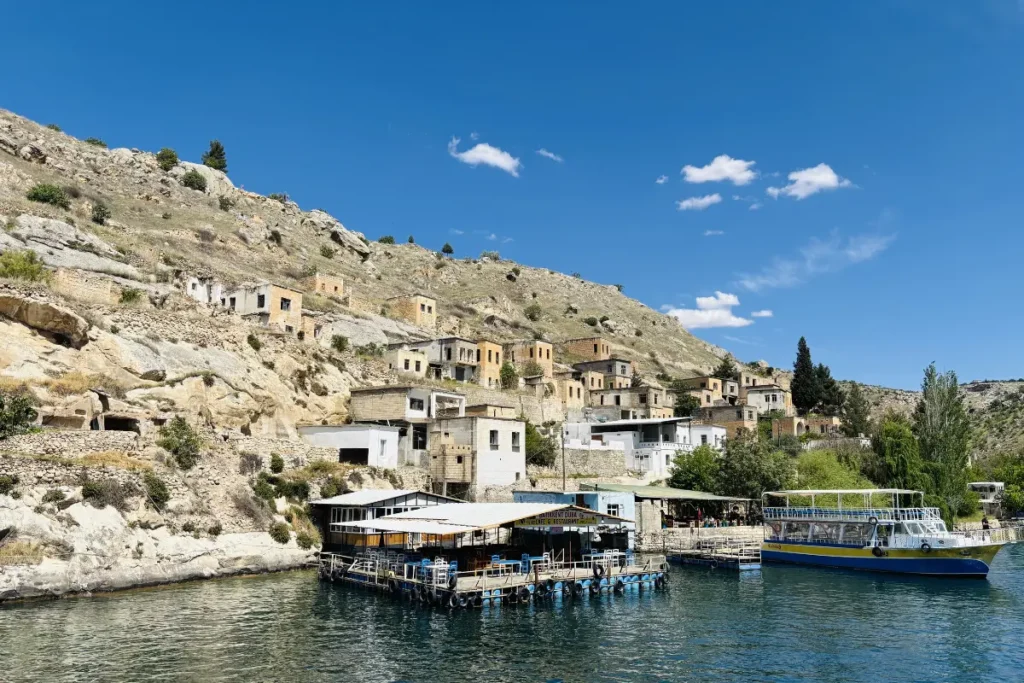
A boat ride on the Euphrates past villages deliberately flooded by a modern dam. The stone minaret of a submerged mosque rises from the green water. Halfeti is the only place on Earth where black roses grow naturally…a deep, near-black crimson produced by the specific mineral composition of the local soil and water. The roses were not in season when we visited. The flooded minaret was.
Gaziantep: The UNESCO Culinary Capital
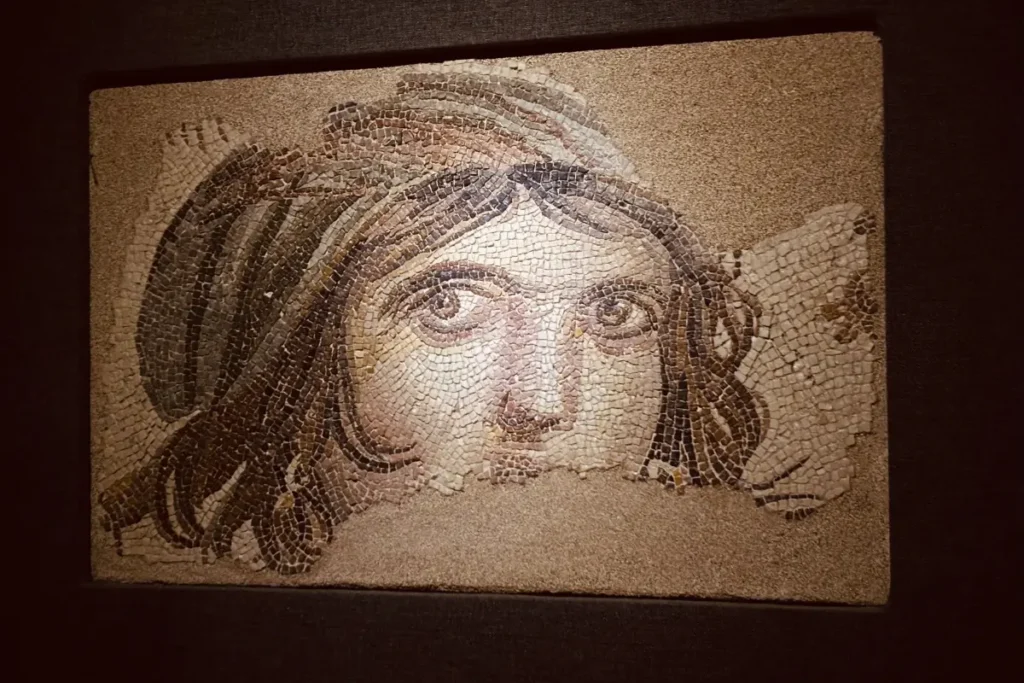
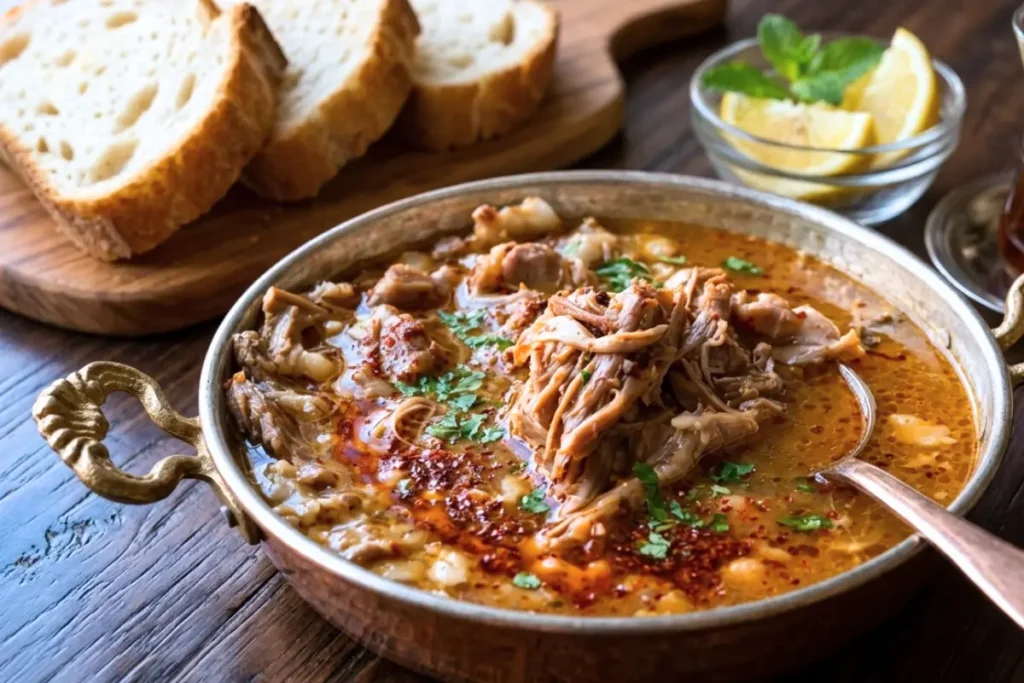
The lamb kebabs and the Beyran soup…a fiery, early-morning broth of lamb, rice, and garlic…were the two best meals of the trip. The Zeugma Mosaic Museum holds the Gypsy Girl: a Roman mosaic whose eyes follow you across the room through an ancient optical illusion. She has been doing this for two thousand years. The effect is still complete.
Çatalhöyük: The World’s First City
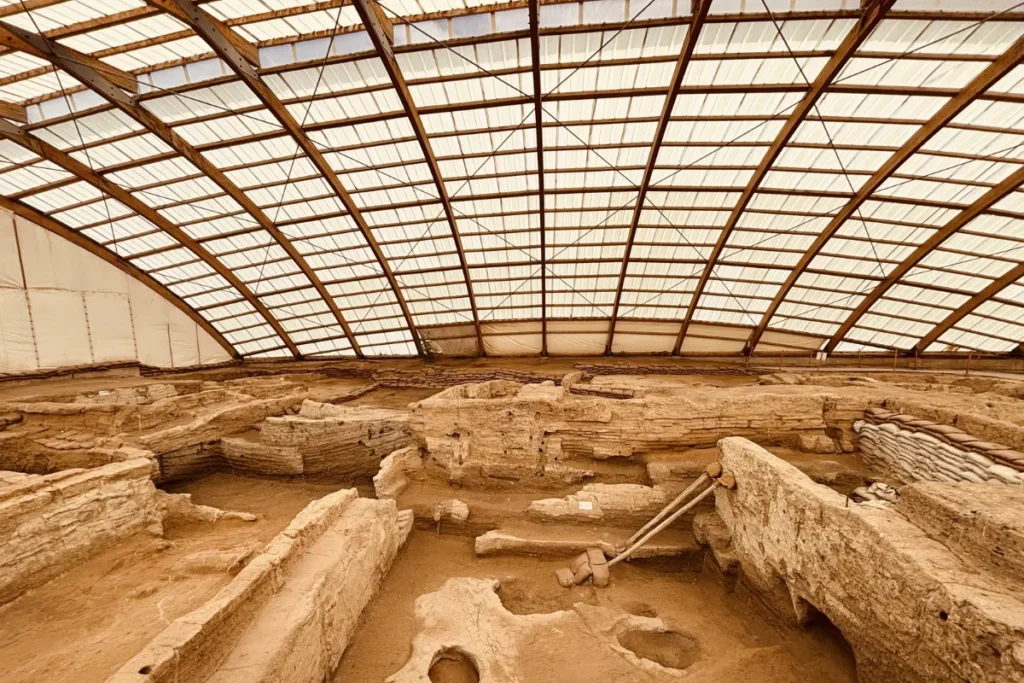
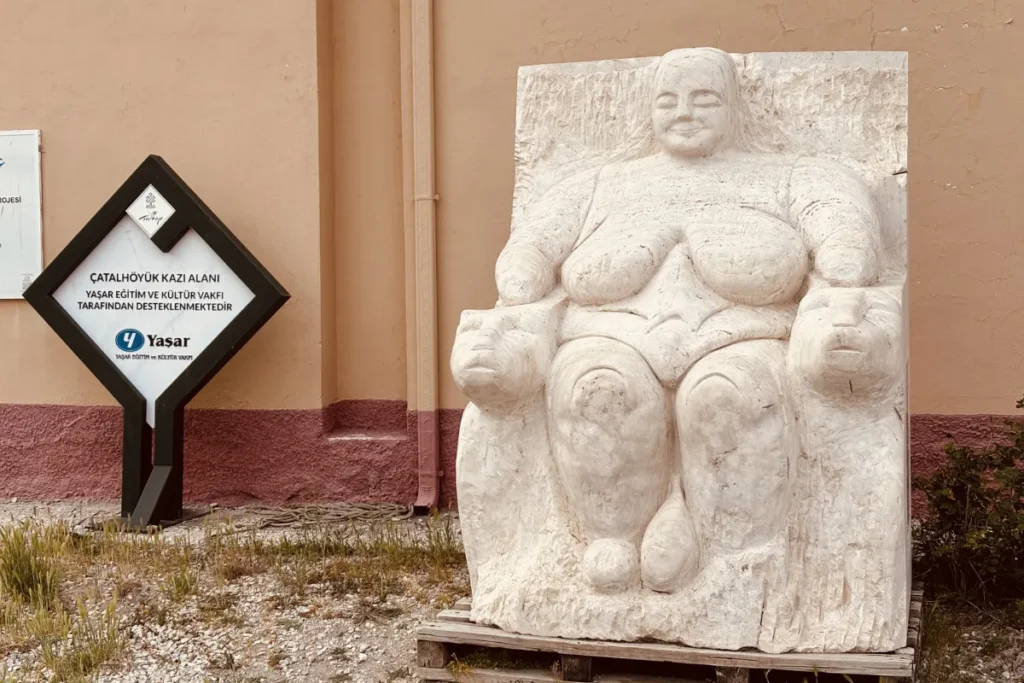
Nine thousand years old. No streets. No doors on ground level. People entered their homes through roof hatches and walked across their neighbours’ rooftops. Every house architecturally identical. No weapons found. No palaces, no evidence of hierarchy in the physical space. The dead were buried beneath the living room floor, directly under where the family slept. The relationship between the living and the dead, in Çatalhöyük, was not metaphorical.
Laodicea
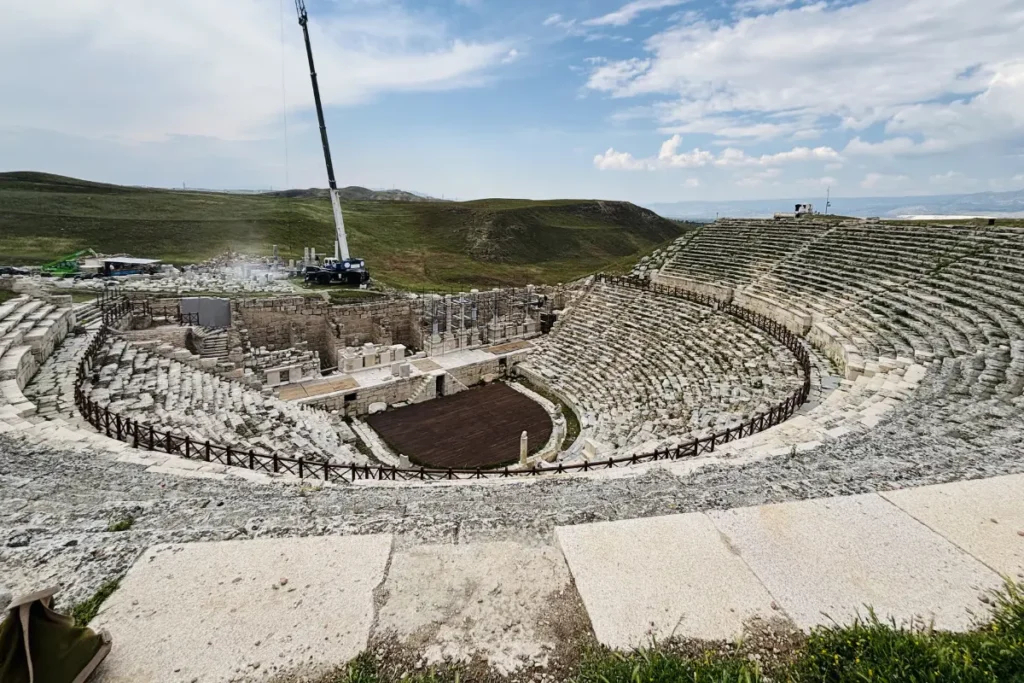
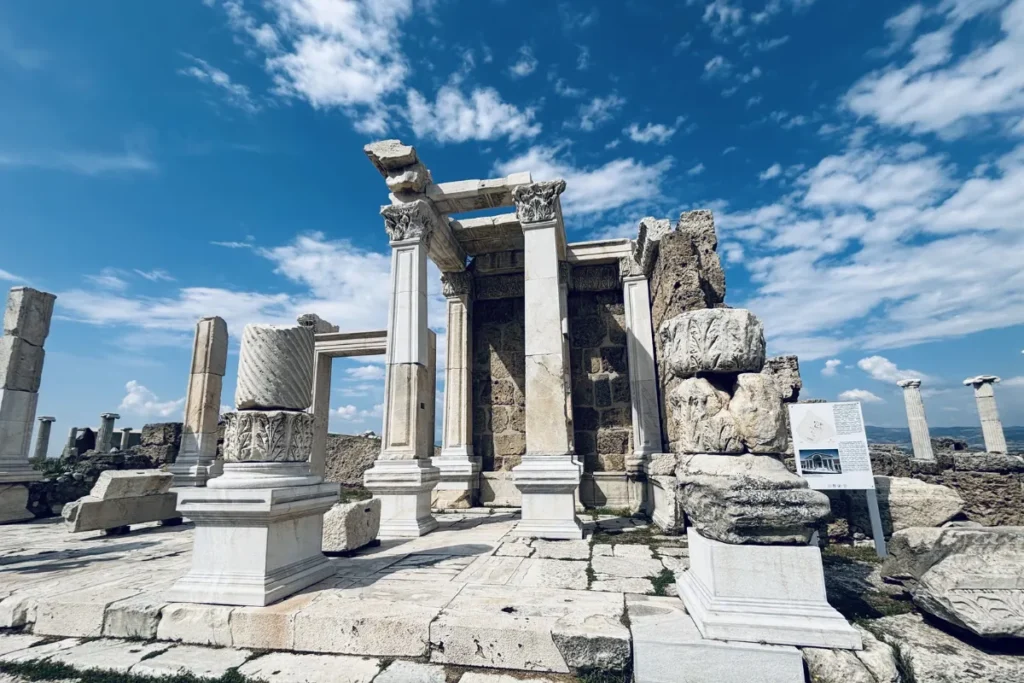
One of the Seven Churches addressed in the Bible’s Book of Revelation, and the wealthiest ancient city most travelers have never heard of. We walked down marble avenues where Roman chariot wheels had worn grooves into the stone two thousand years ago. Archaeologists have laid glass floors over the excavated 4th-century church, so you walk suspended above ancient mosaics and early Christian symbols.
The Temple of Athena uses the same technique: thick glass panels over open foundations, and you are standing in mid-air above fallen altars. But the detail that stayed with us was the Trajan Water Tower. Look inside the exposed ancient pipes and you will see them choked with thick white calcium deposits, the exact same mineral that formed the terraces of Pamukkale a few kilometres away.
That calcified, lukewarm water is the precise reason why the biblical texts criticised this city’s faith as “neither hot nor cold.” The geology explains the theology. Laodicea had twin theaters, no natural water source, and a fortune built on black wool and eye salves. It is less crowded than Ephesus and, in our opinion, more rewarding.
Pamukkale and the Gates of Hades
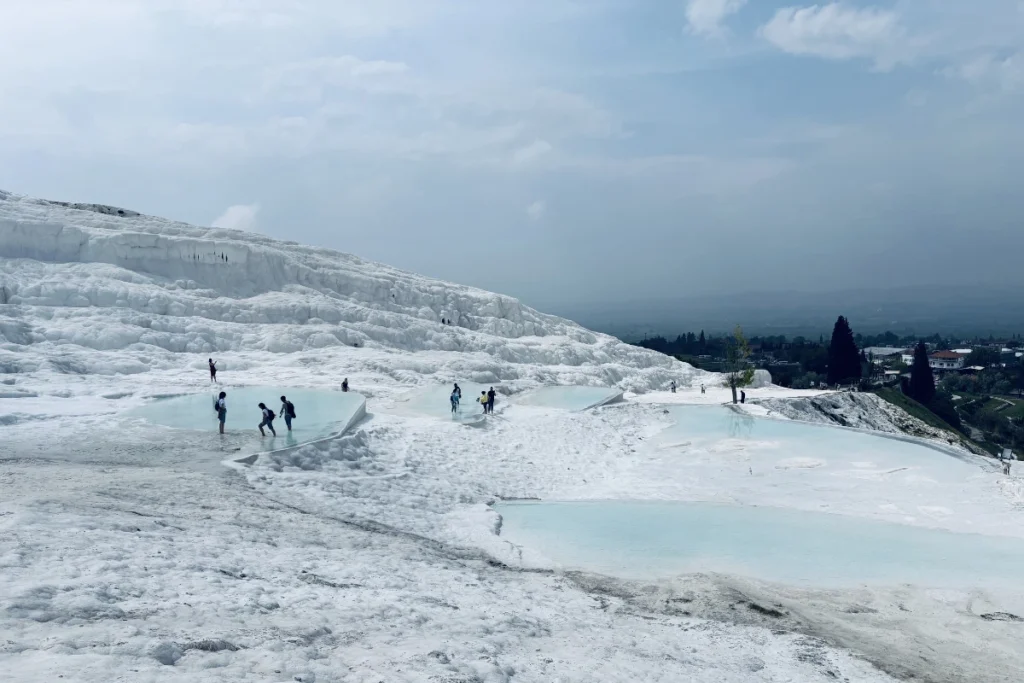
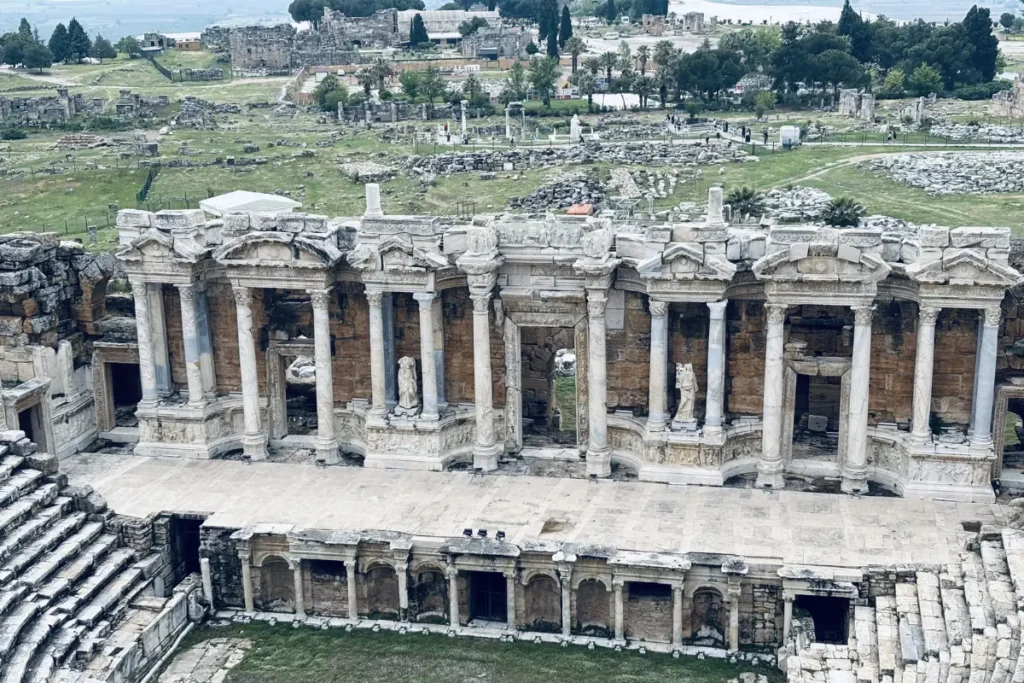
Walking barefoot on thermal travertine terraces in freezing rain. The water was warm beneath the feet; the air was cold on the skin. The combination is exactly as strange as it sounds.
The Hierapolis necropolis beside it: a 2 km stretch of 1,200 Roman tombs. The Plutonion nearby…a cave the ancients called the physical entrance to the underworld, venting carbon dioxide that killed birds thrown into it while priests emerged unharmed, apparently protected by their proximity to the god. A geological explanation exists. The mythology was built on the geology, not despite it.
Pergamon: The Steepest Theatre in the Ancient World
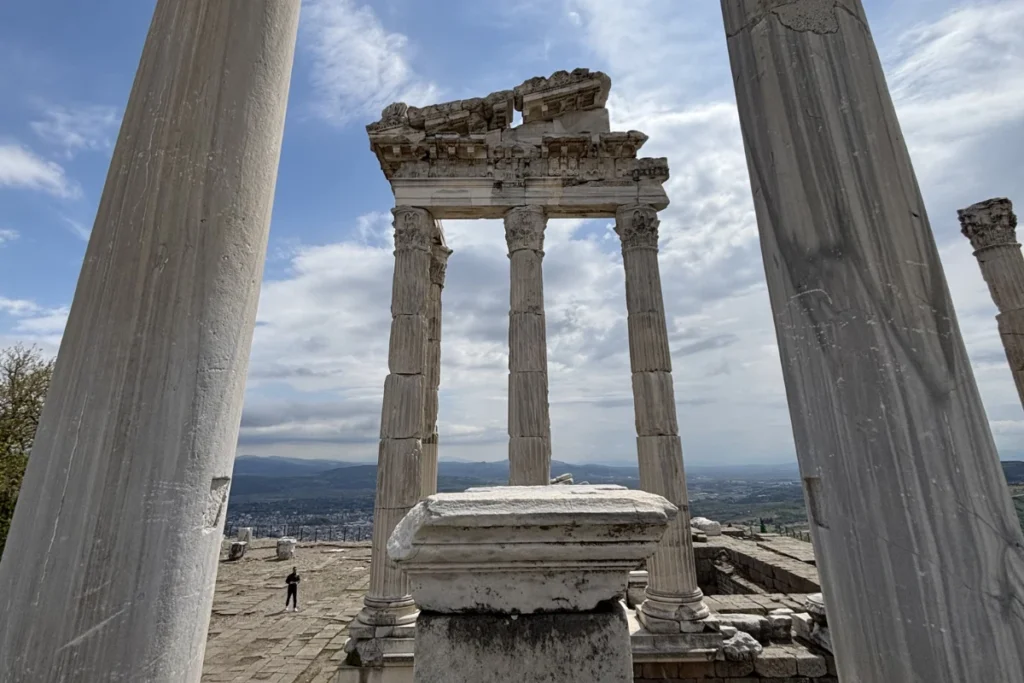
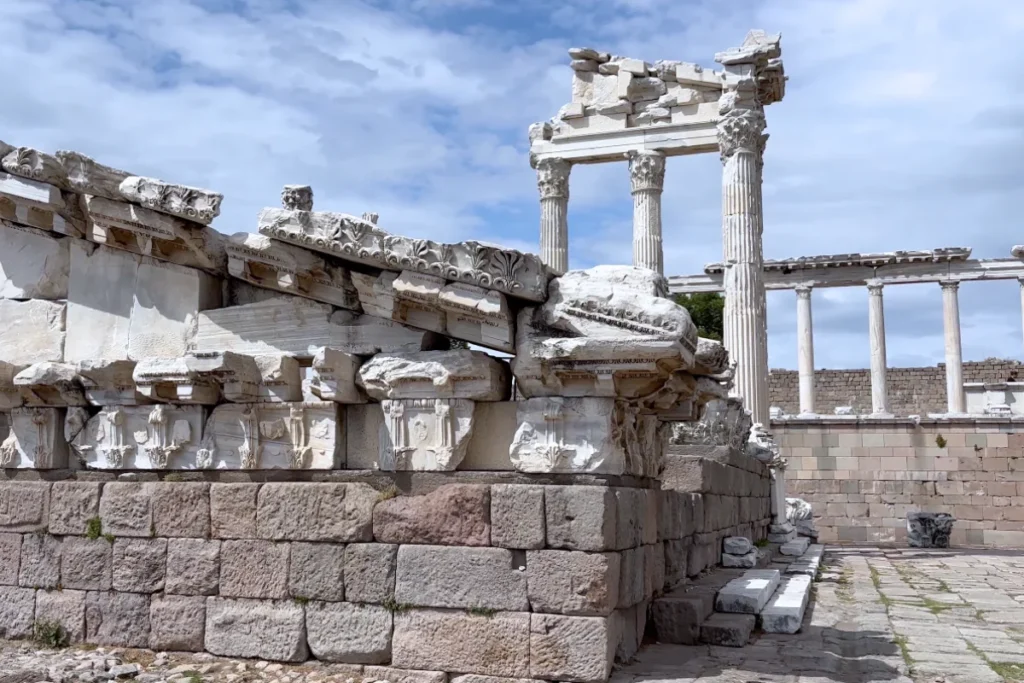
The theatre at Pergamon is carved into a cliff at approximately 50 degrees…the steepest angle of any ancient theatre known. It overlooked a city that once held a library of 200,000 scrolls rivalling Alexandria. When Egypt cut off the papyrus supply to prevent that library from overtaking theirs, Pergamon’s scholars invented parchment from animal skin. The word parchment comes from Pergamum.
The Asclepion below was the first psychological healing centre in recorded history: patients walked through dark tunnels in which priests whispered therapeutic suggestions through holes in the ceiling. The method anticipated what we now call subconscious therapy by two thousand years.
How We Traveled Turkey
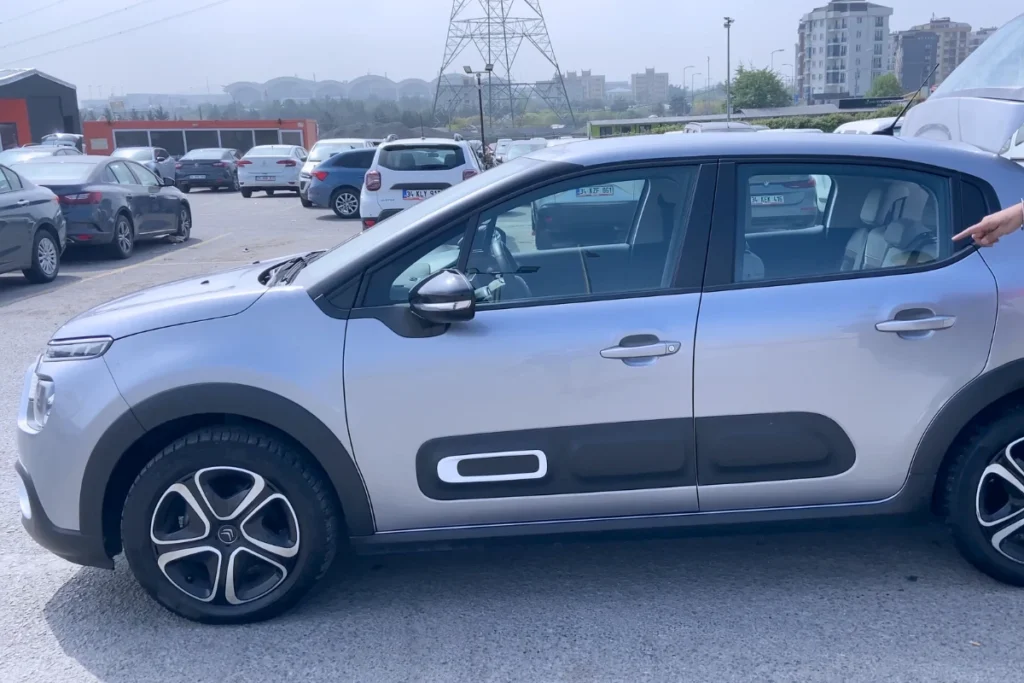
A Citroën C3 hatchback, picked up from Sabiha Gökçen Airport, Istanbul. 14 days on the road. Booked through our car rental service provider’s official website before arriving.
Total distance: 4,150 km. Turkey drives on the right side of the road. Indian drivers are accustomed to the left. The adjustment took approximately 30 minutes of concentrated effort and then became automatic. Turkish highways are excellent. Village roads in the east vary considerably. Mountain roads near Nemrut are genuinely dangerous…steep, narrow, loose rock falling from above, no guardrails. We drove them. We would do it again.
An International Driving Permit is required and will be scrutinised. Our rental agent examined ours for 20 minutes before approving it. If yours is rejected, the trip collapses. Carry it.
In Istanbul, we used the Istanbulkart transit card for public transport and taxis. The Havabus and Havaist airport bus connects Istanbul’s airports to Fatih. Allow for traffic.
Food strategy: we brought instant Indian staples from home…poha, Maggi, oats, vermicelli. We cooked breakfast and dinner in hotel rooms on long driving days. Bread, eggs, and basics from local Turkish markets for everything else. Restaurant meals in tourist zones ran TRY 300 to 500 for two. The food we brought from India saved both budget and morale across the stretches of eastern Turkey where no restaurants existed.
What Turkey Costs for Two
Turkey is significantly affordable for Indian travellers, particularly on a self-drive road trip where accommodation and food costs stay low outside the main tourist centres. The figures below are rough ranges. Prices shift with season, operator, and year. Always verify current rates before planning. Detailed breakdowns are in the dedicated articles.
| Category | Rough Range (INR) | Approx. USD | Notes |
| Flights (per person, return from India) | INR 45,000 – 90,000 | ~USD 540 – 1080 | Varies widely by airline, routing, and booking window |
| Car rental — 14 days (mid-size hatchback) | INR 35,000 – 50,000 | ~USD 420 – 720 | Includes basic insurance. Book early through official rental site |
| Fuel (per 100 km approx.) | INR 1000 – 1,500 | ~USD 12 – 18 | Petrol prices fluctuate; budget generously for long eastern routes |
| Budget to mid-range accommodation (per night) | INR 3,000 – 9,000 | ~USD 36 – 108 | Wide range; cave hotels in Cappadocia can be higher |
| Monument and site entry fees (per person) | INR 1,000 – 4,000 | ~USD 12 – 48 | Göbekli Tepe, Cappadocia sites, Pamukkale among the higher ones |
| Local restaurant meal (per person) | INR 600 – 1,800 | ~USD 7 – 22 | Significantly cheaper away from tourist zones |
| Bosphorus cruise (per person) | INR 1500 – 3,500 | ~USD 18 – 42 | Book on Klook before arriving for better rates |
| eSIM — data only (full trip) | INR 3,500 – 6,000 | ~USD 42 – 72 | Activate before landing; essential for navigation in the east |
The single habit that made this budget work: we brought Indian instant food from home and cooked in hotel rooms. On long driving days through eastern Turkey where no restaurants existed, this was not optional…it was structural. It saved tens of thousands of rupees across 17 days and removed one entire category of stress from a complex itinerary.
All figures are approximate and lean toward the higher end intentionally…Turkey’s entry fees and tourism costs have increased significantly in recent years. Treat these as a planning buffer, not a budget. Verify current rates before you travel.
When to Visit Turkey
April for the full route. The eastern mountains…Nemrut, the approaches to Göbekli Tepe…are buried under heavy snow from November through March and become physically inaccessible. By May, the afternoon heat in southeastern Turkey makes long outdoor walks at archaeological sites difficult. April provides the narrow window: warm enough for the east, cool enough for long drives, before the peak-season crowds arrive in Cappadocia and Istanbul.
We travelled April 17 to May 4. The weather ranged from heavy rain at Hattusa and Pamukkale to intense afternoon sun at Dara and Göbekli Tepe. Evenings in eastern Turkey were cold. Mountain nights near Nemrut required warm layers. Pack accordingly.
Istanbul and Cappadocia are viable year-round but are significantly less crowded in April than in summer.
Suggested Route
For 10 to 17 days, the route we drove is reproducible. Each arrow below is a day of driving.
| Days | Destination | Nights |
| 1–2 | Istanbul — Arrive, explore Balat, Süleymaniye, Bosphorus cruise (pre-road trip) | 2 |
| 3 | Car Pickup. Drive to Ankara — Museum of Anatolian Civilizations | 1 |
| 4 | Boğazkale — Hattusa and Yazılıkaya, Reach Cappadocia | 1 (drive to Cappadocia) |
| 5–8 | Cappadocia — Göreme, Zelve, Kaymaklı, Selime, Love Valley, Red Valley | 4 |
| 9 | Mount Nemrut — summit and Hotel overnight stay | 1 |
| 10 | Mardin — Dara, Kasımiye, Zinciriye. Overnight stay | 1 |
| 11 | Karahan Tepe → Göbekli Tepe → Şanlıurfa. Overnight stay | 1 |
| 12 | Şanlıurfa Museum → Halfeti → Gaziantep. Overnight stay | 1 |
| 13 | Gaziantep → Çatalhöyük → Konya Overnight Stay | 1 |
| 14–15 | Laodikeia → Pamukkale and Hierapolis. Overnight Stay | 1–2 |
| 16 | Pergamon (Bergama). Overnight stay | 1 |
| 17 | Return car to Sabiha Gökçen Airport → final night in Istanbul → Next day departure | 1 or 0 |
The complete self-drive route guide…every drive, every hotel, every decision we made…is the next article to publish.
Safety and Practical Tips
- Turkey is safe for independent travellers. We drove through southeastern Turkey near the Syrian and Iraqi borders without any security concern. Standard awareness applies everywhere.
- An International Driving Permit is non-negotiable. Carry the original and a copy. Some rental agents examine it closely.
- Buy an eSIM before leaving home…we used Nomad, data only, which activated automatically on landing. Connectivity in eastern Turkey is not guaranteed, but a working data plan is essential for navigation.
- Exchange currency at the Grand Bazaar in Istanbul. The rate is significantly better than airport kiosks. We learned this after already exchanging money elsewhere.
- Book experiences on Klook before arriving. Bosphorus cruise and select museum tickets are cheaper when pre-purchased.
- Carry food for long driving days. Eastern Turkey between sites has stretches with no restaurants. This is not romantic scarcity…it is a practical reality that affects the budget and the mood.
- Hire spontaneous local guides at complex sites. At Selime Monastery, our unplanned TRY 700 guide showed us routes the group tours never reach. The return on that expenditure was not proportional; it was categorically different.
- e-Visa: most nationalities need one, obtained through evisa.gov.tr before arrival. Verify current requirements and fees close to your travel date.
“4,150 kilometres. A rented car. Sites that rewrite what you thought you knew about human history. The Turkey guide holds the full picture. The individual stops…Göbekli Tepe, Hattusa, Mardin, Cappadocia…each have their own deep-dive. Start here and follow wherever the route takes you.“