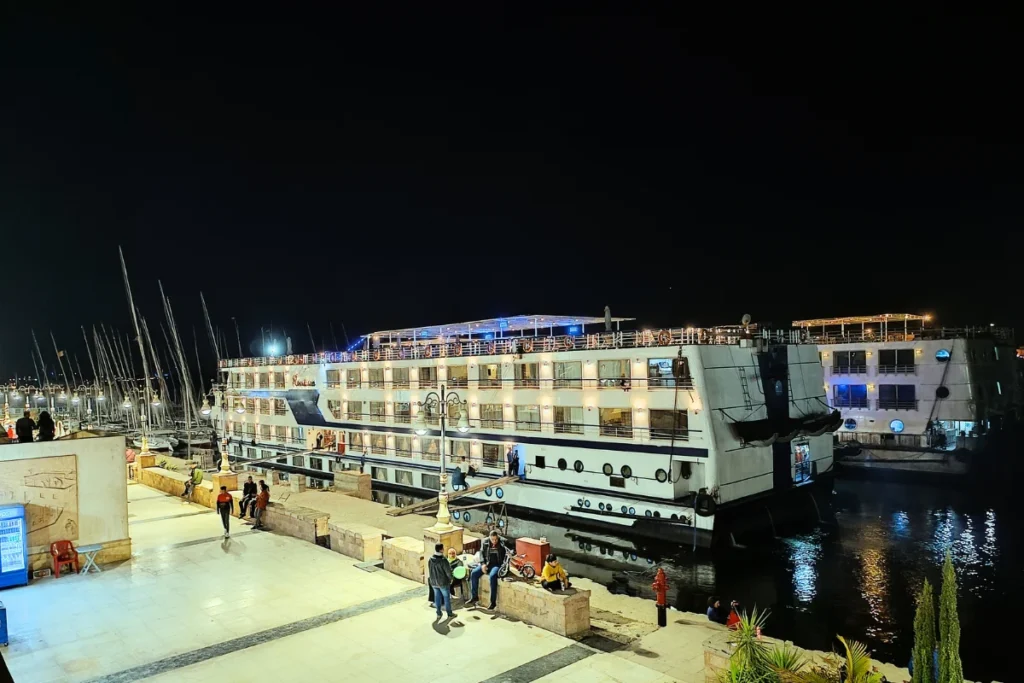
This Nile cruise honest review is built from three nights on the King Tuti…what the brochures show and what nobody thinks to tell you.
Nobody tells you that the most overwhelming moment of a Nile cruise is not the first temple. It is the cabin.
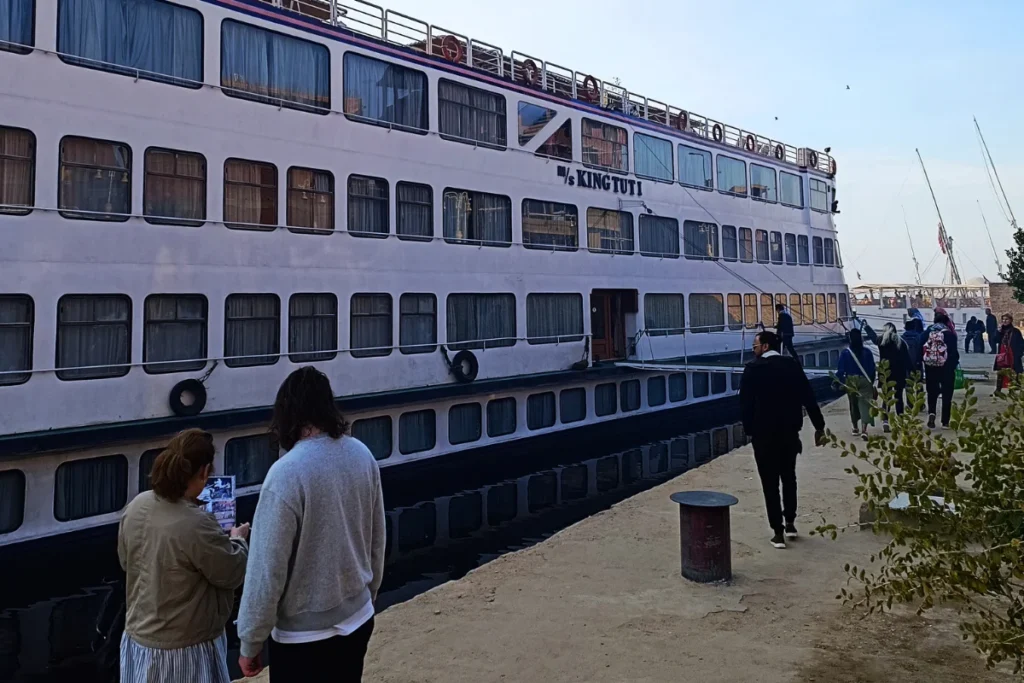
We had spent two days in the desert completely off the grid. We had slept in a small tent pitched right on the sand, washed our faces with a splash of bottled water, and eaten flatbread baked directly on campfire coals…loving every single bite of it. Then came the fourteen-hour train ride from Cairo to Aswan. Still without a shower. But when the cruise operator picked us up from the station, led us across the riverbank, and walked us through three moored ships to reach our own, the door to our cabin finally swung open. The feeling that hit us wasn’t excitement. It was pure disbelief.
A bed. A bathroom. A shower. Clean sheets. Air conditioning. And a window onto the Nile.
We hadn’t actually chosen the room. We had simply booked the cheapest three-night package on Agoda that included the tours, food and the stay. Honestly, we were terrified we would end up in a lower-deck cabin below the waterline…a windowless basement room that would have completely ruined the experience. A Nile view was non-negotiable for us, so landing an upper-deck cabin came down to pure, unadulterated luck.
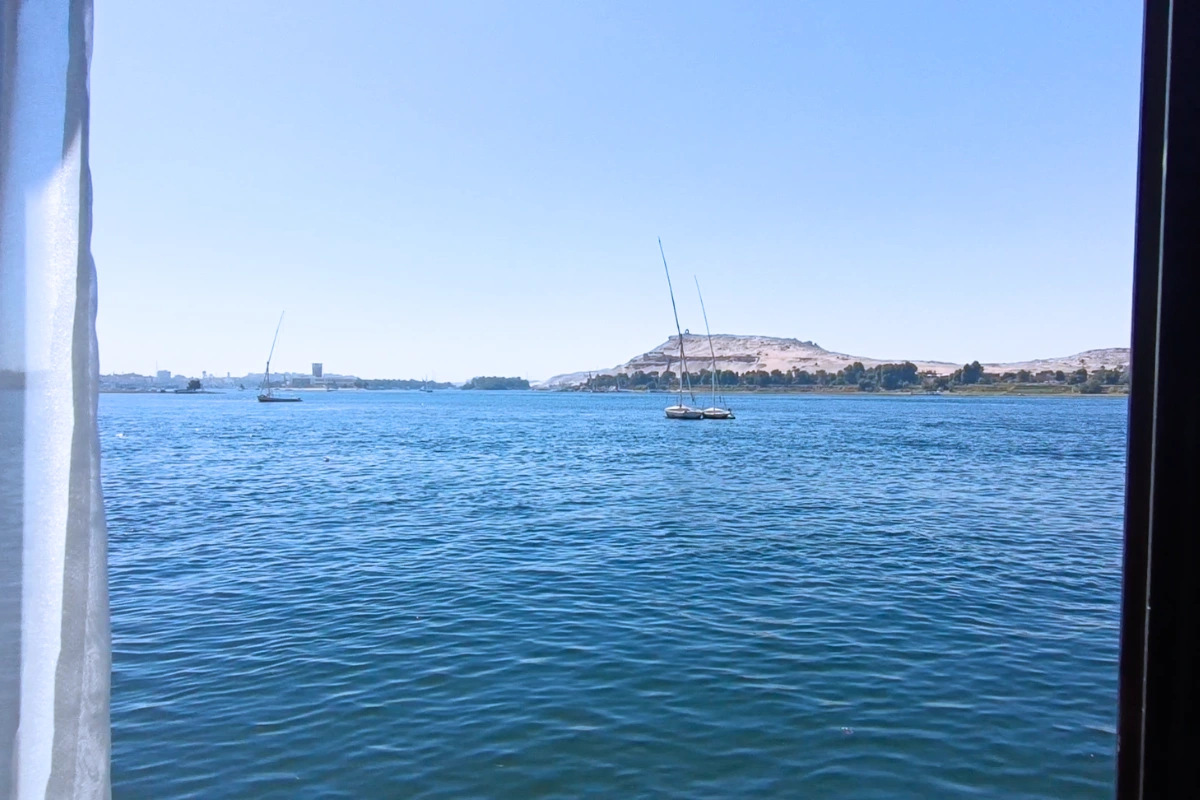
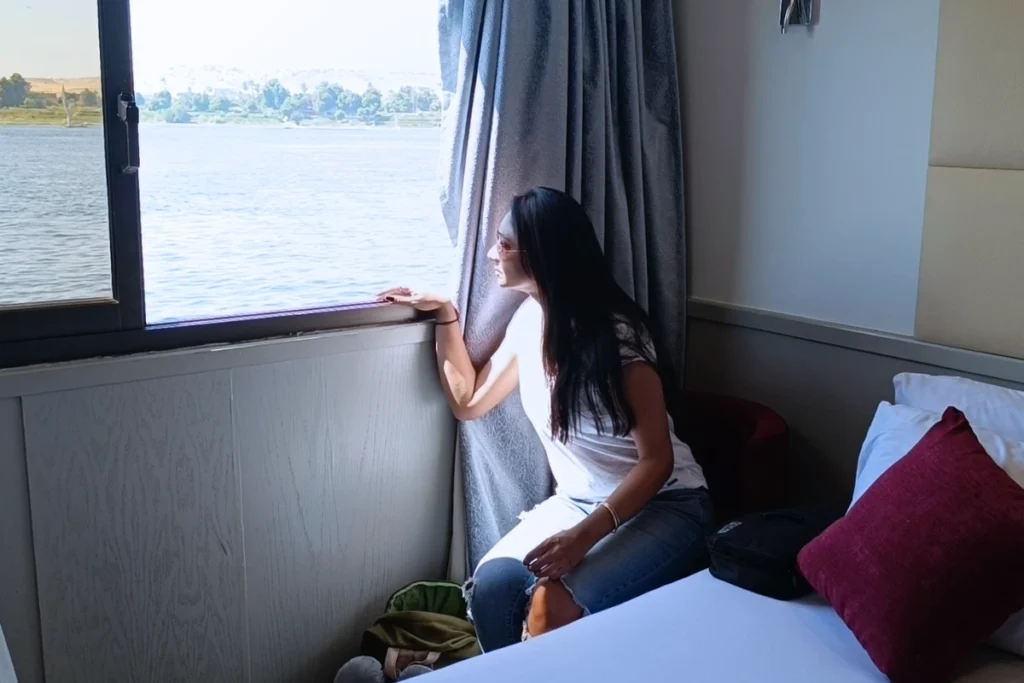
But, when we looked out of our window for the first time, all the anxiety vanished. The water was bright, reflecting the sun, and impossibly blue. Looking out at the river, Sumana said, “Never in my life did I think I would be in such a beautiful place.”
That was Day 5 of our Egypt trip. After the pyramids. After the desert. Before the temples and the Valley of the Kings. The Nile cruise was the third act, and like most third acts, it contained both the resolution and the surprise.
Here is what the brochures show: temples, the river, comfortable dining. Here is what nobody tells you.
“You wake up. You eat a buffet breakfast. You walk off the ship. You enter a temple that is three thousand years old. You walk back. You eat a buffet lunch. On Day 3, this has still not normalised.“
What Is a Nile Cruise?
A Nile cruise is a multi-day river journey between Aswan and Luxor, aboard a ship that serves as both transport and accommodation. The standard package is three nights and four days. The ship moors at different points along the river each day, and passengers disembark to visit the ancient temple complexes. Meals, typically buffet-style three times a day, are included. Entry fees to all temples are not.
Our cruise was the King Tuti, booked the package through Agoda for INR 52,000 / USD 690 for two people for three nights. Entrance fees to all temples totalled approximately INR 6,000 per person. This is significant and often missed in the headline price. Budget for it separately before you book.
The First Day: Gentle on Purpose
The first afternoon of the cruise is strategically gentle.
Check-in was at noon. We had arrived at Aswan station at 9:35 AM using the sleeper train, waited for the cruise pickup, driven to the ship, and spent two hours in the reception area before the cabin was ready. When the door finally opened, we nearly collapsed with relief. After spending two and a half days roughing it in the Sahara and on the train, a functioning shower felt like the most sophisticated technology on Earth.
We showered. We charged every device. We lay on the bed and looked at the ceiling and processed the fact that we were on a cruise ship on the Nile River in Egypt.
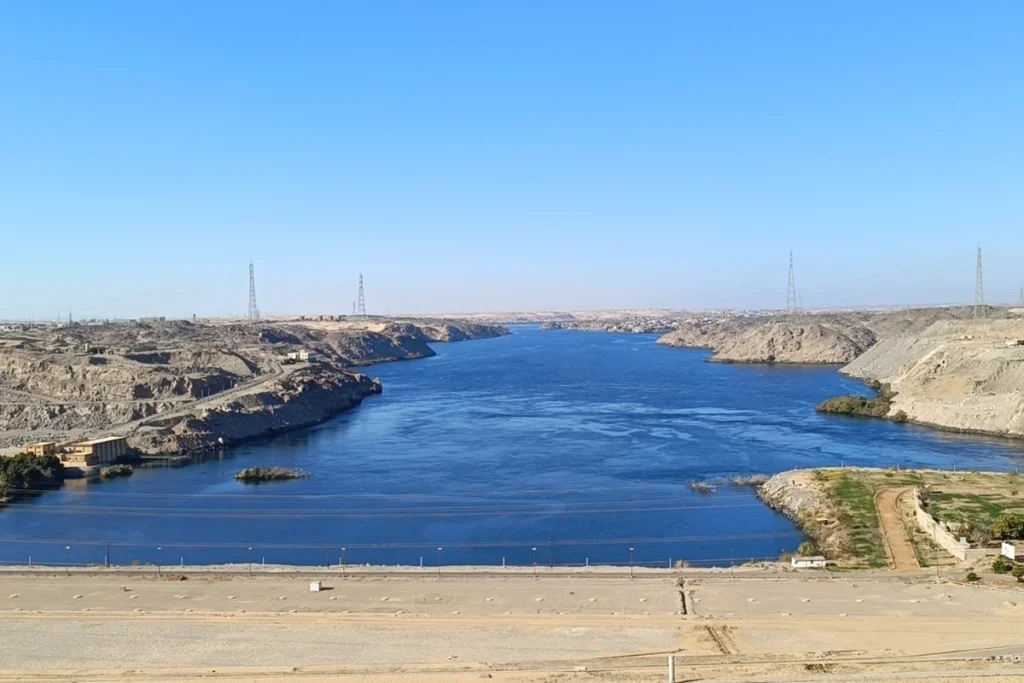
The group departed at 2 PM for the first excursion: the Aswan High Dam.
The honest assessment: the Aswan High Dam is not worth the entrance fee. It is a dam. A large, important, historically significant dam that controls the Nile’s flood cycle and provides Egypt’s electricity. We say this without dismissiveness. Engineering at this scale is genuinely remarkable. But as a visitor experience, it is a dam. If you are allocating your entrance fee budget, allocate it elsewhere.
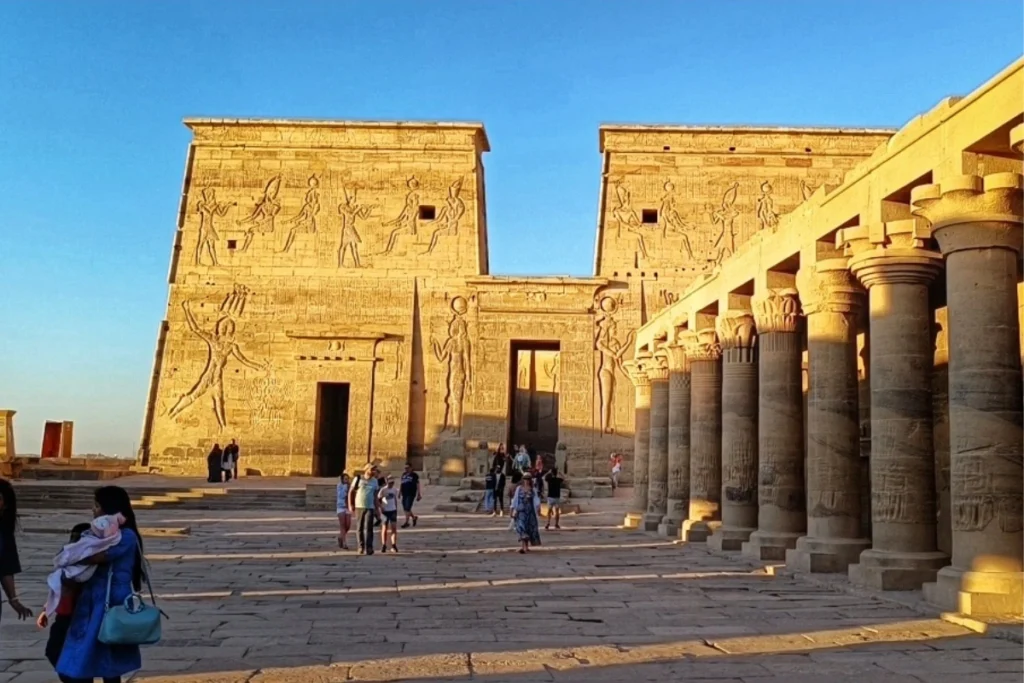
Philae Temple, the second stop of the afternoon, is the opposite.
Reached by a short boat ride to an island in the reservoir, dedicated to the goddess Isis, moved stone by stone by UNESCO to save it from the rising waters of Lake Nasser. We arrived during golden hour. The light hit the carved gateways at an angle that changed everything. Standing inside a temple where Isis gathered the scattered pieces of her murdered husband Osiris and breathed life back into him felt less like tourism and more like the trip telling us what it was actually about.
The Food: What Nobody Tells You
The food is better than you expect and stranger than you are prepared for.
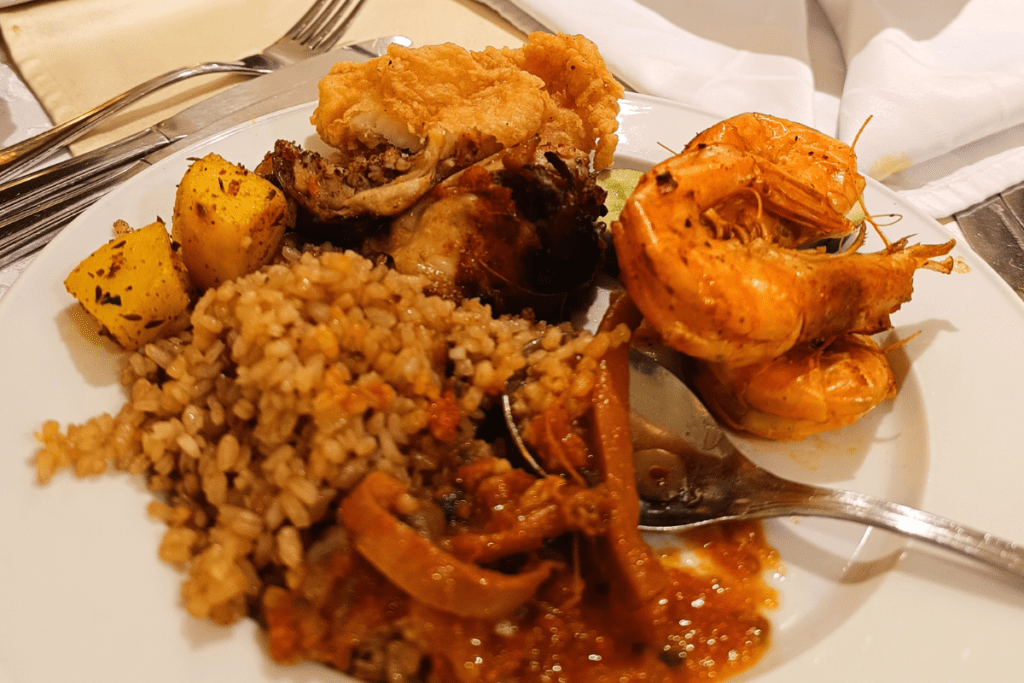
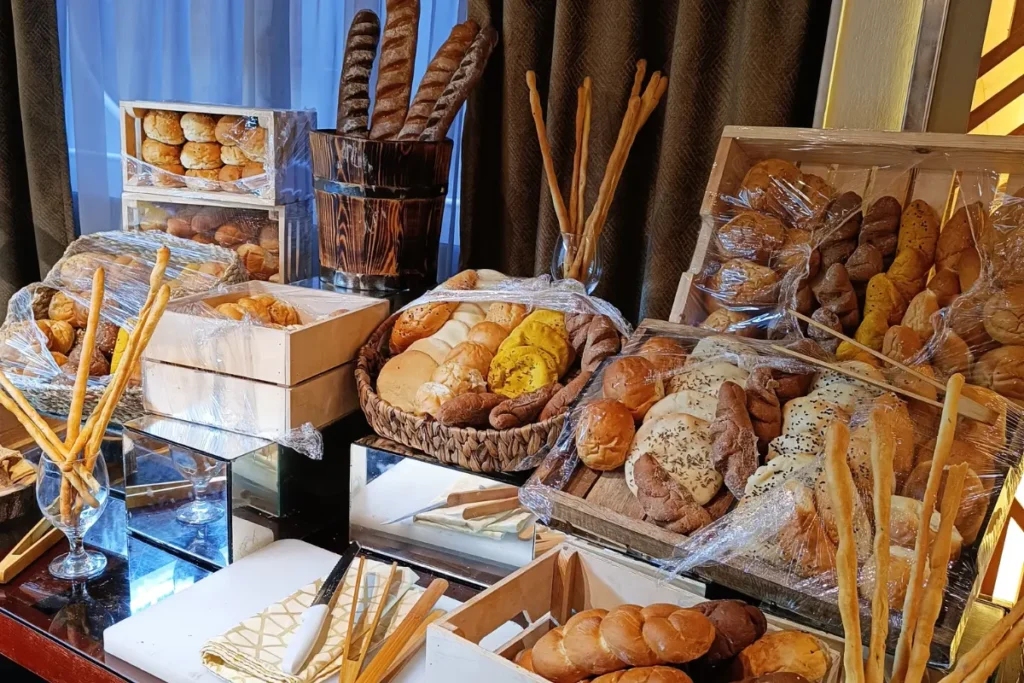
Buffet meals three times a day. Egyptian and international dishes, salads, grilled meats, rice, pasta, breads, desserts. The quality ranges from excellent to adequate, meal to meal, but never drops below acceptable. For Indian travellers: rice, grilled chicken, vegetables, and bread are available at every meal. You will not struggle.
What nobody tells you is the specific experience of eating things you have never eaten before, on a river you have dreamed about since childhood, between two temple visits.
We ate kalamari for the first time on this cruise. Duck for the first time. Quail for the first time. Each was a small private event. We looked at each other across the table and said, without words: “We are eating quail on the Nile.” The gap between our ordinary Bengaluru dinner table and this one was so wide that the food tasted not just new but improbable.
And then there was kunafa.
Kunafa is warm pastry soaked in sugar syrup with cheese inside. The cheese stretches. The syrup is not too sweet. The pastry crunches. It was served on the buffet on the second night, and after the first bite, the trajectory of our dessert expectations changed permanently. Every dessert since, in any country, has been silently compared to that kunafa on the Nile and found wanting.
Nobody tells you that a cruise ship dessert on a river in Egypt will reorder your relationship with all other desserts. We are telling you now.
“Every dessert we have eaten since, in any country, has been silently compared to the kunafa on the Nile and found wanting. Nobody tells you that this will happen. It will happen.”
The Temples: Three Thousand Years and Buffet Lunch
The temples are extraordinary. This is obvious. Every review says so. What nobody tells you is the specific surrealism of the sequence.
You wake up. You eat a buffet breakfast. You walk off the ship. You enter a temple that is three thousand years old. You look at carvings made by hands that believed absolutely in what they were making. You listen to a guide explain the mythology. You take photographs. You walk back to the ship. You eat a buffet lunch.
This combination of the mundane and the impossible repeats every single day of the cruise, and it never normalises. On Day 3, you are still processing the fact that you have just returned from a temple where priests performed rituals for a falcon god, and now you are eating pasta while the Nile slides past the dining room window.
The comfort does not diminish the awe. The awe does not diminish the comfort. They coexist for the entire trip in a way that is strange and somehow entirely appropriate.
The Horse Carriage to Edfu
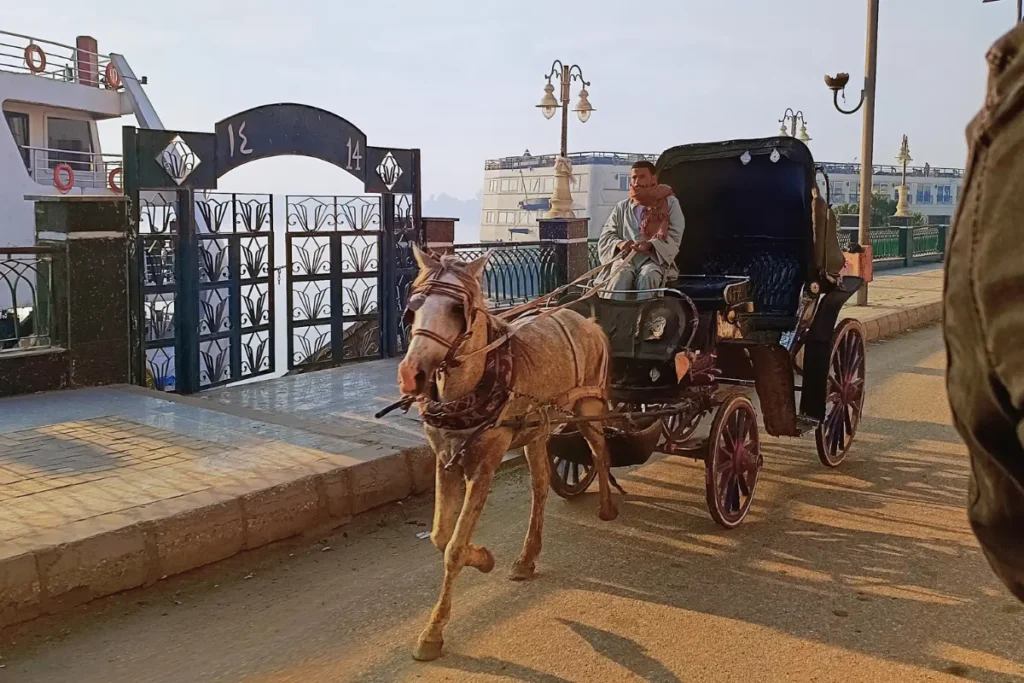
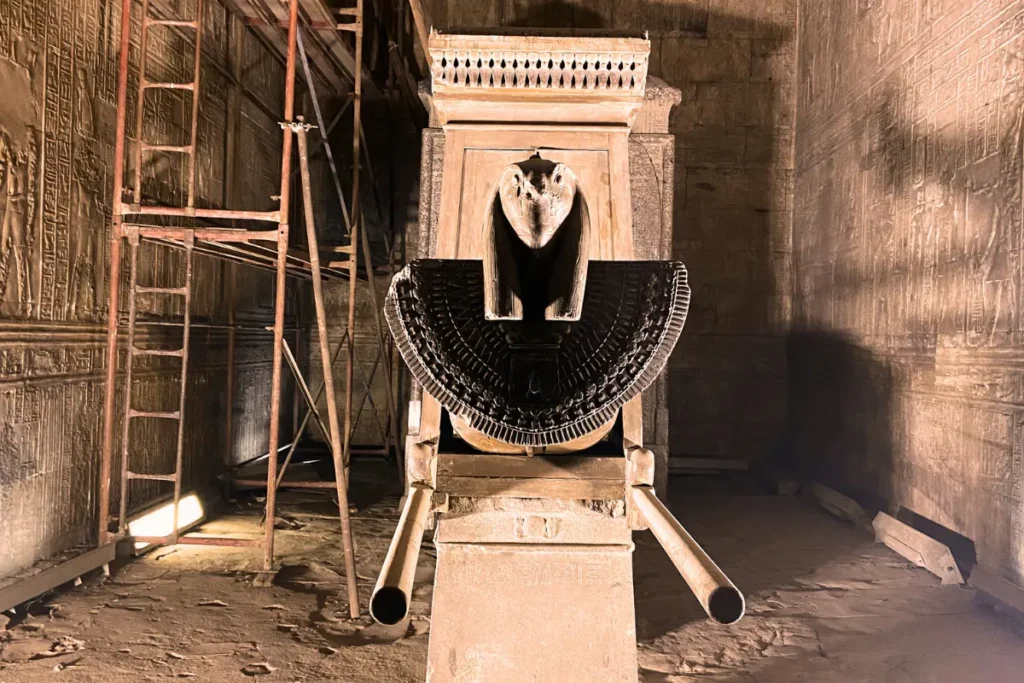
Nobody tells you about the horse carriage.
On the third morning, the cruise moored at Edfu. We disembarked and boarded horse-drawn carriages with the other passengers. The carriages moved through empty streets in cold morning air. It was early. The city had not yet woken. The roads were quiet, the air was cool, and the particular atmosphere of a river city before sunrise was everywhere.
It was the first time either of us had ridden in a horse carriage. In Egypt. Before dawn. Going to a temple dedicated to Horus, the falcon god.
Some experiences resist description because every word makes them smaller. The carriage ride to Edfu was one of those. When we arrived, the crowds were already there…every cruise ship on the Nile knows about the early morning slot at Edfu, and they all dock overnight for exactly this reason. The temple itself is the best-preserved in Egypt. The Edfu Texts inscribed across the inner walls describe a creation narrative. The sacred marriage between Horus and Hathor was celebrated here annually for centuries.
But the ride. The cold. The quiet streets. The sound of hooves on stone. The fact that we were doing this at all. That is what stays.
Abu Simbel
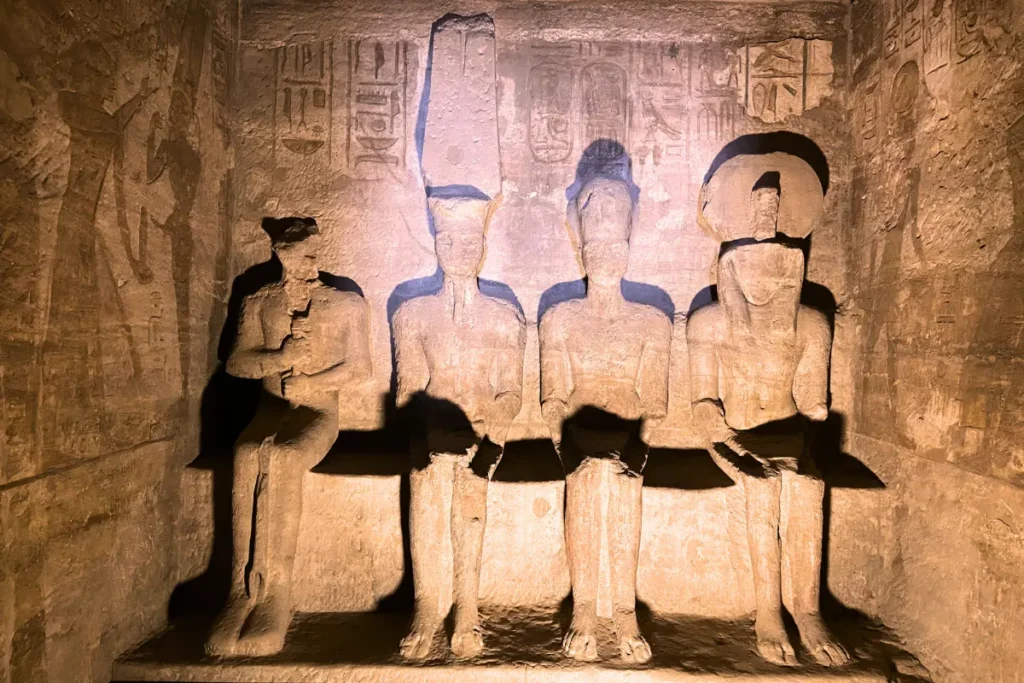
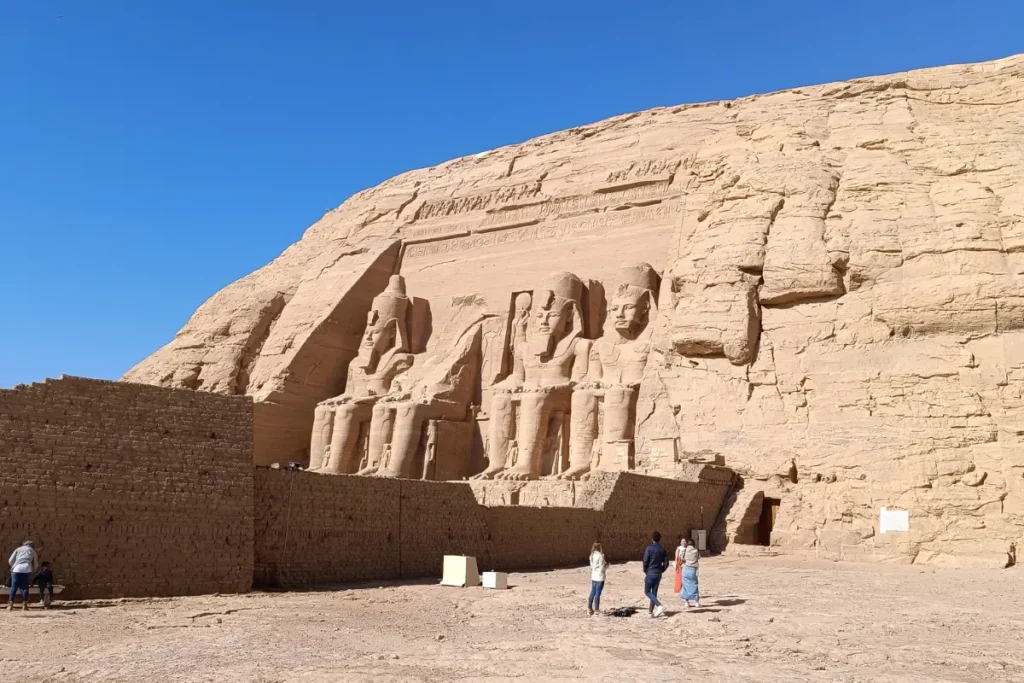
Abu Simbel is not on the river. It requires a pre-dawn bus departure, three and a half hours south toward the Sudanese border. The cruise organises this as a group excursion. We woke at 4:30 AM.
The four colossal statues of Ramesses II. The solar alignment that sends light 60 metres into the inner sanctum twice a year. The UNESCO operation that cut the entire complex into 1,041 pieces and reassembled it on higher ground to save it from the Aswan Dam reservoir. Abu Simbel is its own article. What we will say here is that Ramesses II intended you to feel small, and standing at the base of those statues in morning light, with the desert behind and silence in every direction, he succeeded.
Kom Ombo
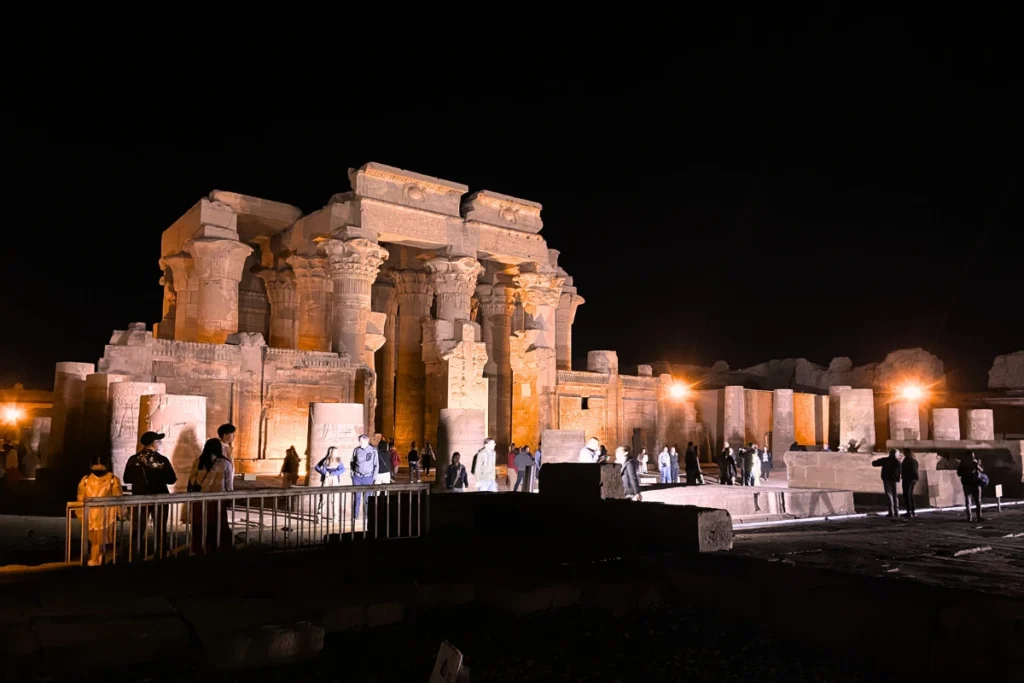
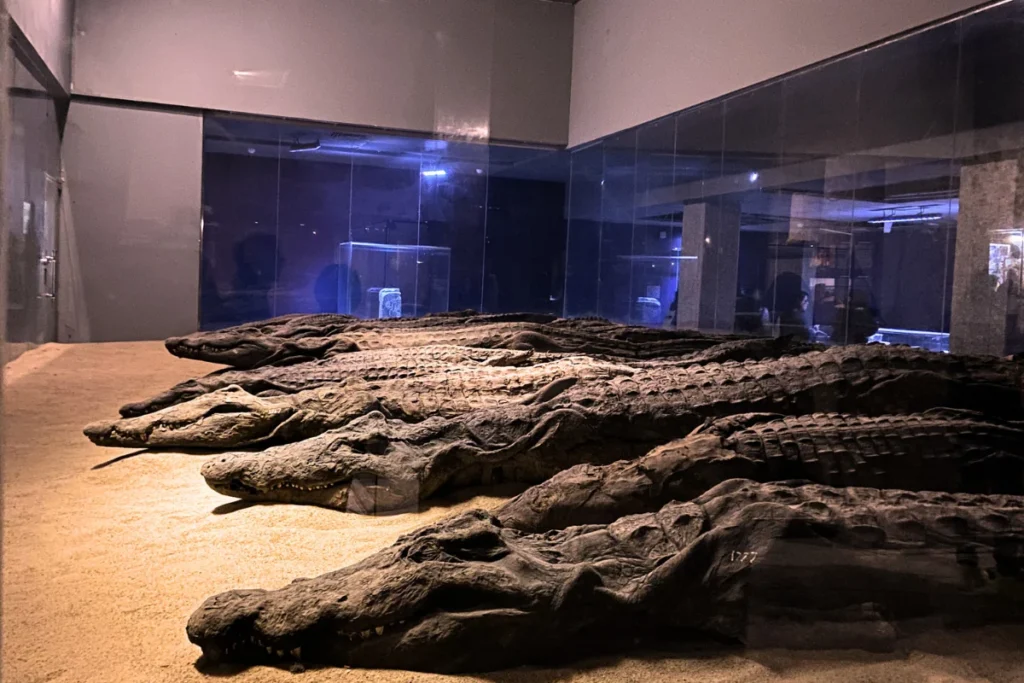
An evening visit, after the return from Abu Simbel. The temple is dedicated to two gods simultaneously: Sobek, the crocodile god, and Horus the Elder. The dual dedication is architecturally visible…everything is doubled, with two entrances, two halls, two sanctuaries. The adjacent Crocodile Museum holds mummified crocodiles from the temple’s sacred animal collection. The sunset on the columns was the kind of light that makes ancient stonework look like it is glowing from inside.
Luxor Temple at Night
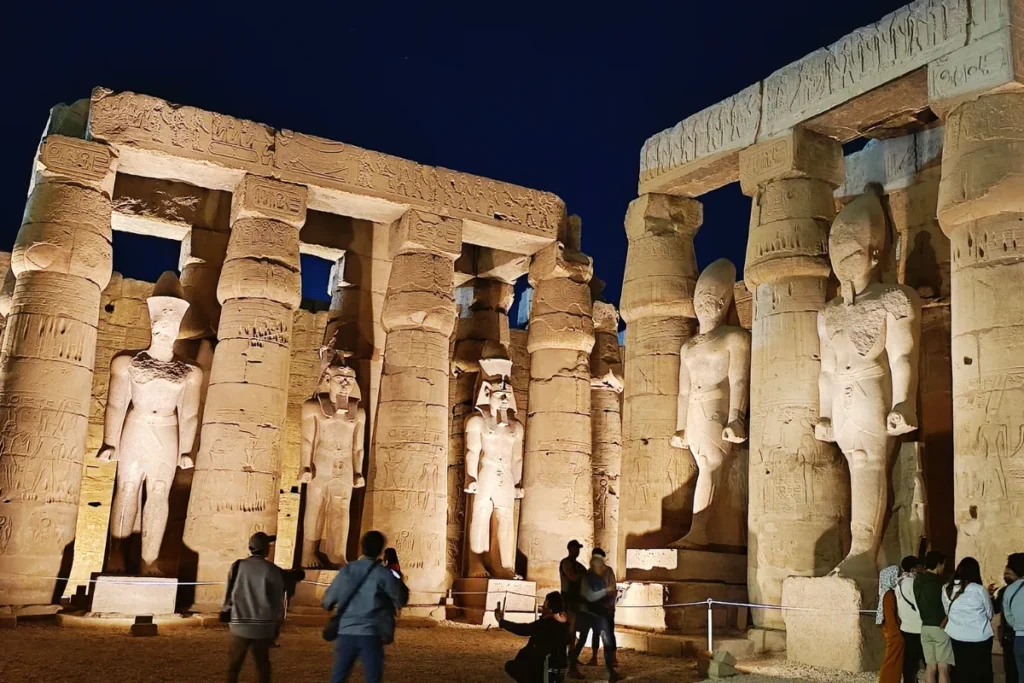
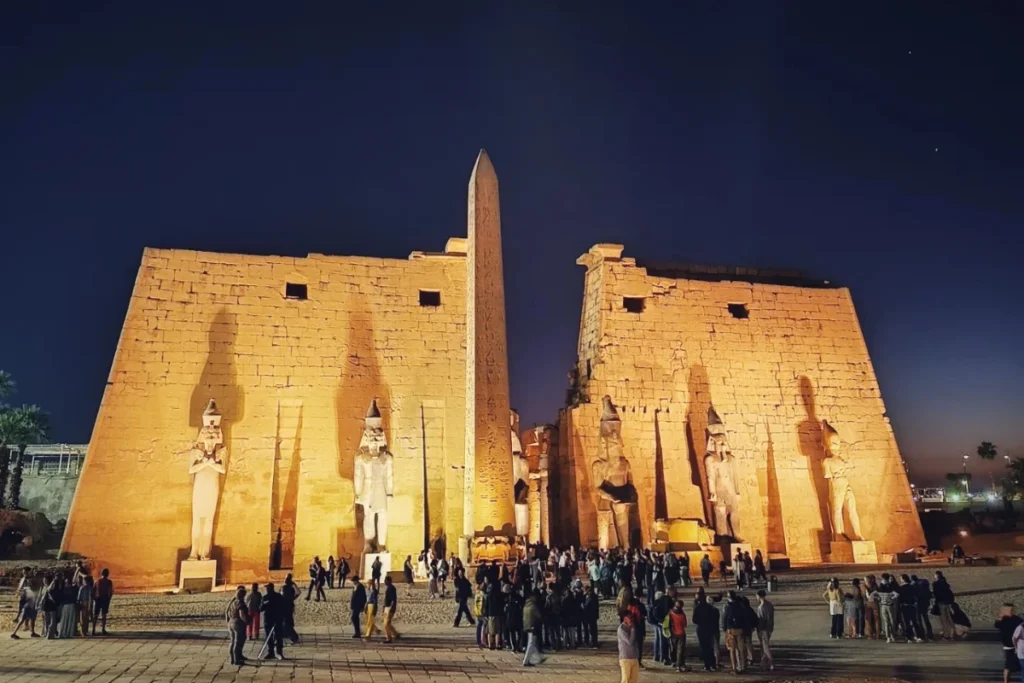
We visited the evening we docked, walking from the cruise to the temple as the sun went down. By the time we entered, the floodlights had taken over, and the columns cast long, sharp shadows that daylight never produces. Luxor Temple was not dedicated to a god. It was dedicated to kingship itself. Alexander the Great carved his cartouche into these walls to claim legitimacy. A Roman legion built their headquarters inside. A mosque was constructed within the same precinct and still functions today. Three thousand years of continuous occupation in one bounded space. The Avenue of Sphinxes stretches 2,700 metres to Karnak, lined with sphinx after sphinx, each one watching the next. At night, the avenue disappears into the darkness like a sentence that does not end.
The Hot Air Balloon
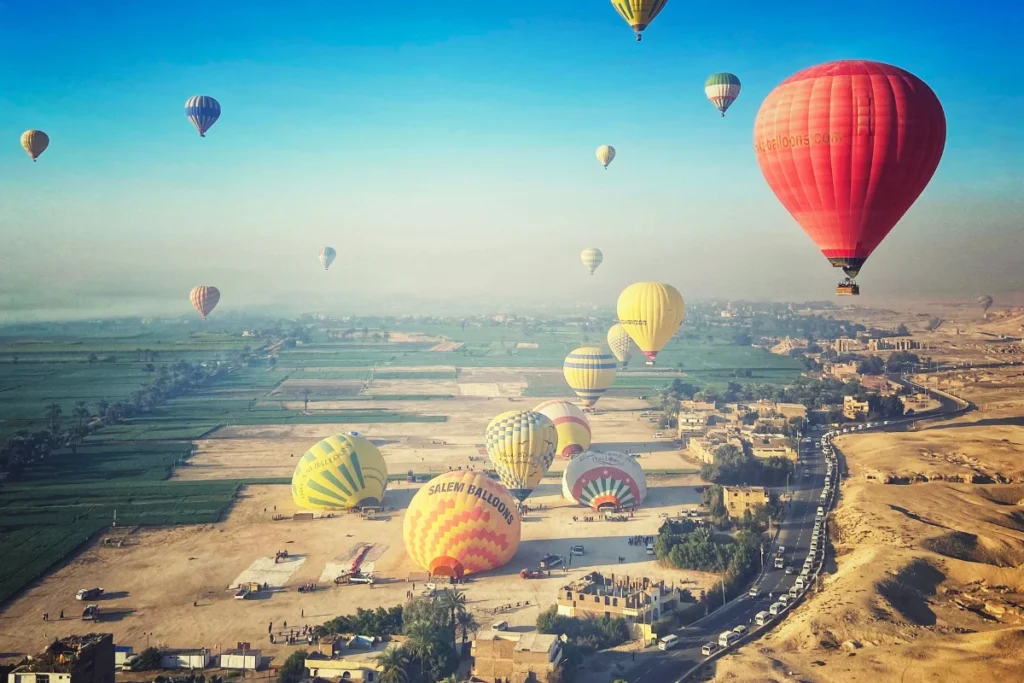
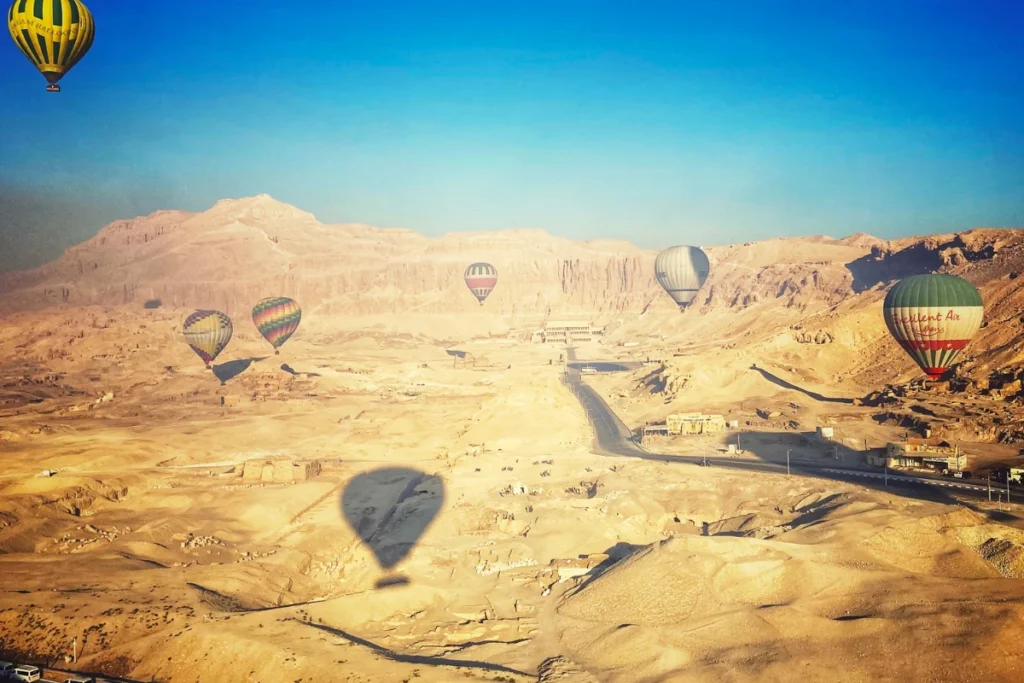
On the final morning, before the Valley of the Kings, we were lifted off in a hot air balloon at dawn. The sunrise turned the west bank gold. Below us, the Valley of the Kings and Queens, Hatshepsut Temple, and the full Luxor landscape spread out at a height that made everything make sense. The calmest moment of the entire trip. The quietest.
The landing required work. Local boys ran to catch the ropes and pull the balloon down. Their effort was real, visible, and physical, and worth acknowledging with a tip afterward. The captain was warm and professional throughout.
We were given certificates after the ride. We still have them. First time in a hot air balloon. Viewing ancient civilisations from a bird’s eye view. There is no point to worry about safety. Go.
Valley of the Kings
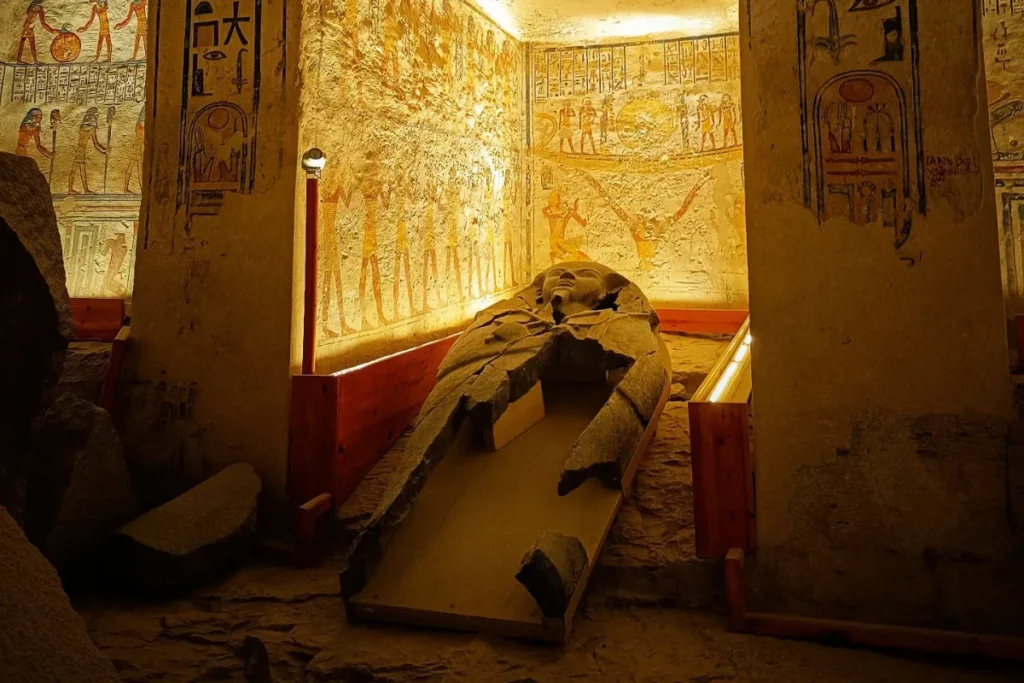
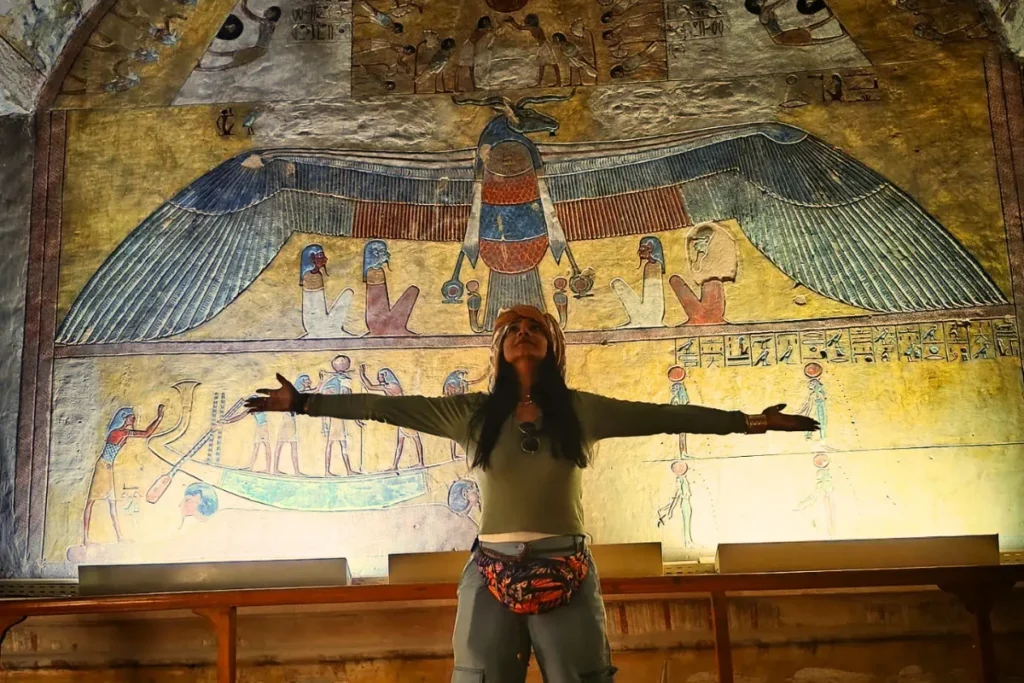
The tombs are not tombs in the way we use the word. They are maps. The ancient Egyptians believed the afterlife had its own geography: obstacles, gates, rivers, guardians. Every surface inside every pharaonic tomb is a painted guide to the journey through the Duat, the Egyptian underworld. The walls are instructions for the dead.
Sixty-three tombs have been discovered. Excavations continue. Entry covers three tombs; additional tombs cost extra. We paid for one extra: the tomb of Ramesses V and VI. The difference was significant. The ceiling carries a complete astronomical map from the Book of the Dead, every star and constellation and protective deity positioned and labelled. The colours, after three thousand years, are still vivid enough to stop you mid-step. If the Valley of the Kings is on your list, budget for at least one premium tomb. The standard tombs are impressive. The premium ones are a different experience entirely.
Hatshepsut Temple
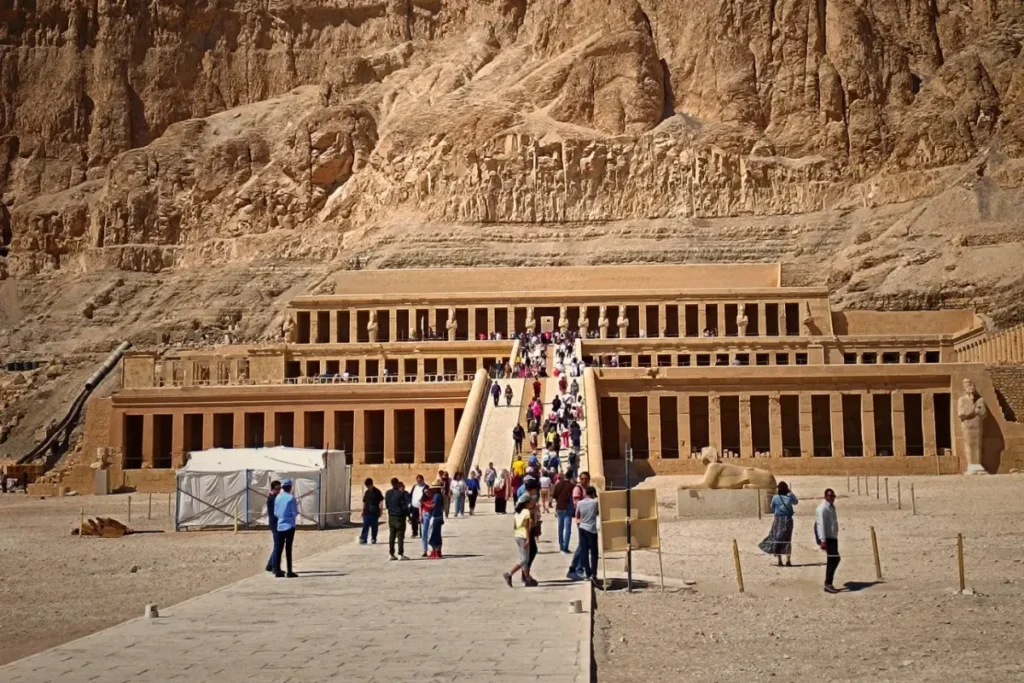
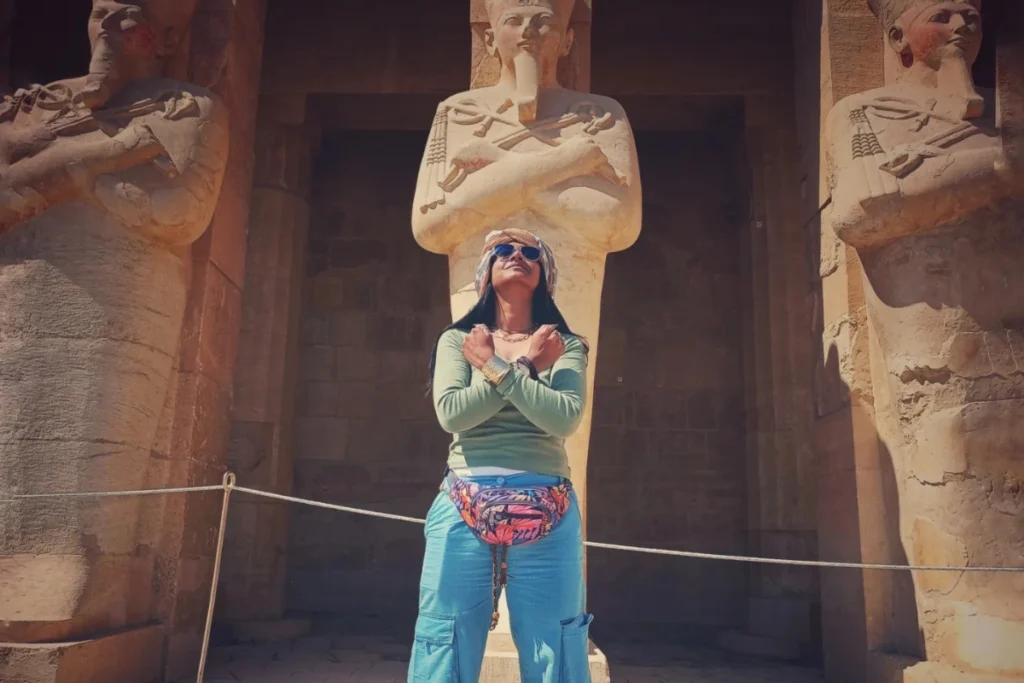
After the Valley of the Kings, the bus took us to Deir el-Bahari. Every other temple on the cruise is built from the ground up. Hatshepsut is built into a cliff. Three wide terraces pressed against a towering wall of raw limestone, designed so the approach is a performance: small from a distance, overwhelming up close. Hatshepsut was one of the very few women to rule Egypt as pharaoh. She reigned over twenty years during one of the most prosperous periods in Egyptian history. After her death, her successor tried to erase her name from every wall. The erasure failed. The temple survived. The man who tried to delete her is now remembered primarily for trying to delete her. An hour earlier, we had seen this temple from the balloon above. Now we were inside it, looking outward. The two perspectives completed each other.
Karnak Temple
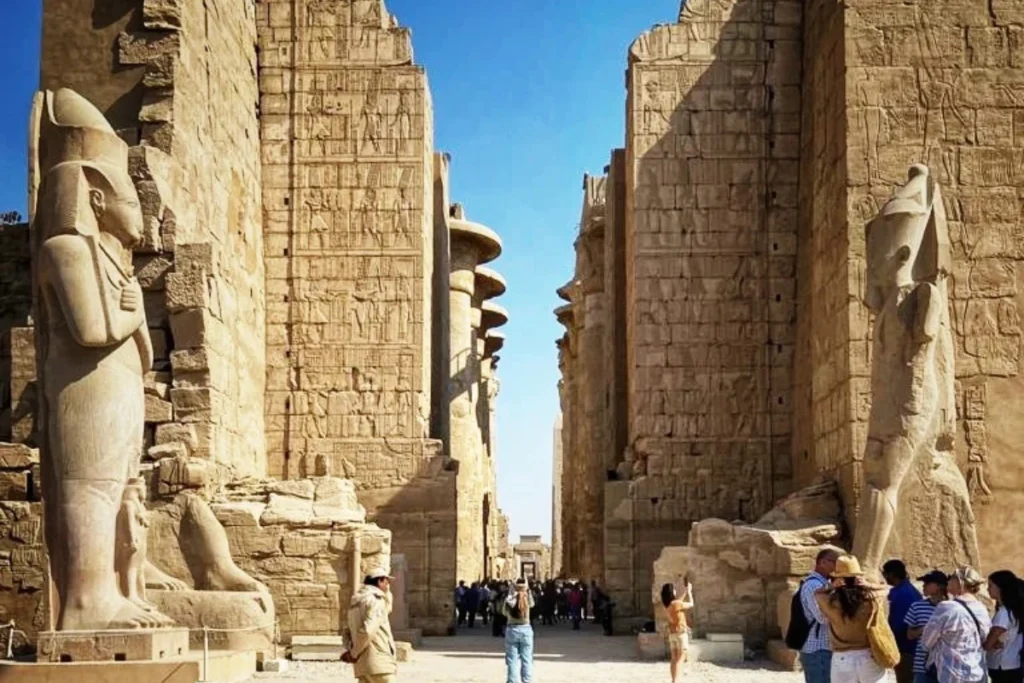
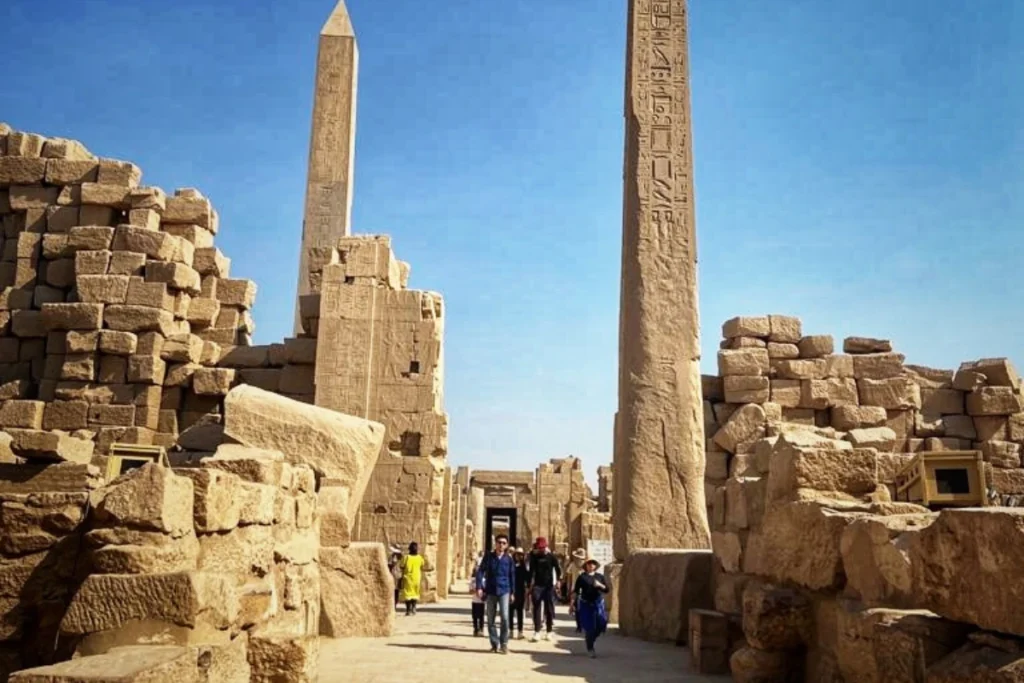
We reached Karnak exhausted. We had already done the balloon, the Valley of the Kings, and Hatshepsut Temple that morning. Some of our cruise group did not come at all. Others were sitting in the shade near the entrance.
We kept walking.
Karnak is the largest religious complex ever built by humanity. Thirty pharaohs added to it over two thousand years. The Hypostyle Hall contains 134 columns, the tallest 23 metres high, every surface covered in carved hieroglyphs. Walking through it produces a feeling that is closer to awe than to admiration, and the difference between those two feelings becomes clear only when you are inside it. The opportunity to stand in a space built by thirty pharaohs, across two millennia, does not come back. Tired legs are a temporary problem. Karnak is not.
The Evening on the Upper Deck
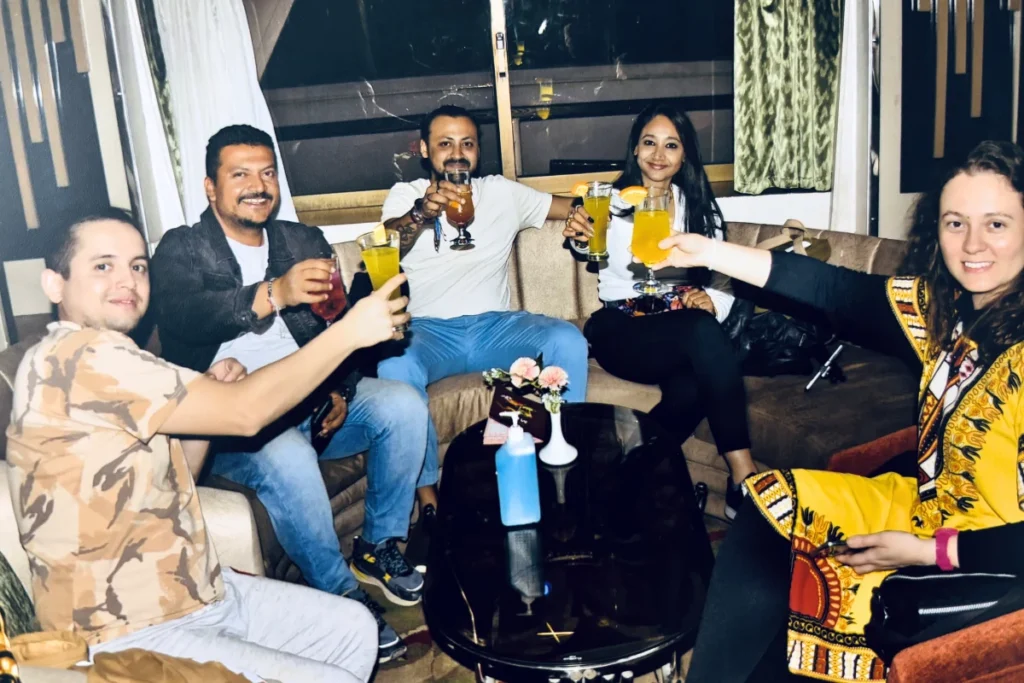
One evening, there was a belly dance performance.
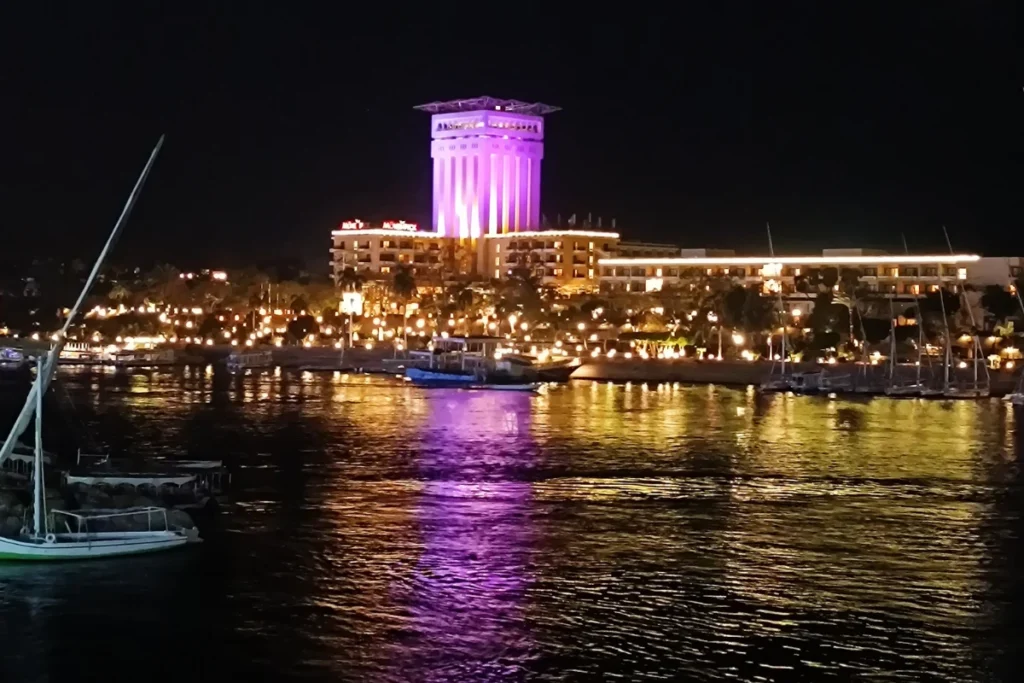
On the upper deck. On the Nile. Under the moon. With mocktails.
This sentence should not work. A belly dance on a cruise ship upper deck sounds like a tourist package cliché. It was not. The performer was skilled. The music was live. The river was moving beneath us. The moon was above. The mocktails were sweet and cold.
We looked at each other during the performance with the specific expression that means: “This is actually happening.” Not the temples. Not the history. A mocktail party on the Nile with a belly dancer and the moon. The absurdity and the beauty occupied the same space without competing.
The evenings on the upper deck, after the temple visits, after the meals, watching the riverbank slide past in the fading light, were some of the quietest hours of the trip. The cruise provides deck chairs. The river provides the view. Time provides the specific quality of stillness that comes from being in a place where everything around you has been flowing for longer than human memory.
What Is Worth It and What Is Not
- Worth it: The cruise itself. Three nights, four days, all meals, a comfortable cabin, and the logistical elegance of waking up at a different temple complex each morning. INR 52,000 / USD 690 for two. For what it provides, the value is remarkable.
- Worth it: The cabin window. Insist on a Nile-facing cabin when booking. The view from bed, the view during meals, the view at sunset from your own window…this is the difference between a river cruise and a hotel that moves. Ours was just pure luck.
- Worth it: Every temple entrance fee except one. Philae, Abu Simbel, Edfu, Kom Ombo, Karnak, Luxor Temple, Valley of the Kings, the hot air balloon. All worth the cost.
- Not worth it: The Aswan High Dam entrance fee. It is a dam. Historically significant. Not worth the ticket when your budget could go toward an extra tomb in the Valley of the Kings.
- Worth noting: Entrance fees are not included in the cruise package and add up to approximately INR 6,000 per person for all sites. Budget for this before you book. Or book an all inclusive package
- Worth noting: Tipping. The cruise staff mention tips at check-in. We gave 150 Egyptian pounds at checkout. The amount is your choice, not a fixed requirement. They did not force it. Factor it into your budget.
What It Costs
All figures from our February 2022 visit. Egypt’s tourism prices have changed significantly since. Verify current rates before booking.
| Item | We Paid (Feb 2022) | Notes |
| Nile cruise, King Tuti, 3N4D, two people | EGP 28,410 / USD 690 | Booked through Agoda. All meals included. |
| Temple entrance fees, all sites, per person | EGP 3278 / USD 80 | NOT included in the cruise package. Budget separately. |
| Abu Simbel entry (per person, 2022) | EGP 600 / USD 11.54 | 2026 current: EGP 750. Verify before travel. |
| Philae Temple entry (per person, 2022) | EGP 200 / USD 3.85 | 2026 current: EGP 550. Verify before travel. |
| Edfu Temple entry (per person, 2022) | EGP 180 / USD 3.46 | 2026 current: EGP 550. Fees have risen sharply. |
| Kom Ombo entry (per person, 2022) | EGP 80 / USD 1.54 | Includes Crocodile Museum. |
| Karnak entry (per person, 2022) | EGP 300 / USD 5.77 | 2026 current: EGP 600. |
| Valley of the Kings (per person, 2022) | EGP 260 / USD 5 | Covers 3 tombs. 2026 current: EGP 750. Extra tombs cost more. |
| Hot air balloon, Luxor (per person) | Included in our package | Typically INR 3,000–5,000 / USD 40–66 if booked separately. |
| GoBus overnight Luxor–Cairo (two people) | EGP 900 / USD 17.32 | Business class, double-decker, personal screens. |
Egypt’s monument entry fees have increased substantially since 2022 and continue to rise. Always verify current rates at the official Egyptian tourism portal or directly with the cruise operator before booking.
Before You Go: What Actually Matters
- The cruise connects seamlessly to the sleeper train. The Watania arrives in Aswan at 9:35 AM. Cruise check-in is at noon. The operator picks you up from the station. The sequence works without stress.
- Book a Nile-facing cabin. This is the single most important booking decision. The view from bed, from the desk, from the window at any hour…it is the difference between a cruise and a floating hotel. Insist on it.
- The first afternoon is gentle by design. Aswan Dam and Philae are manageable after a sleeper train arrival. The intensity builds from Day 2. Abu Simbel on Day 2 requires a 4:30 AM wake-up.
- Pack light layers for early morning excursions. The Abu Simbel bus departs before dawn. The Edfu horse carriage leaves in cold morning air. February mornings on the Nile are cold.
- The hot air balloon may or may not be included in your package. Ours was included. If yours is not, book it independently in Luxor. The sunrise from above the Valley of the Kings is worth every decision that led to it.
- Carry cash for tips and small purchases. The cruise accepts cards, but tips, extra drinks, and small vendors at temple sites are cash-based.
- After the cruise, the GoBus overnight from Luxor to Cairo (approximately INR 900 / USD 12 for two, business class) is the budget return option. Double-decker, personal screens, comfortable reclining seats. We checked into Grand Agata Hostel in Cairo for a few hours to freshen up, then took a taxi to the airport.
“The sequence that worked for us: pyramids first, desert second, sleeper train third, Nile cruise fourth. Each part prepares you for the next. By the time you are eating kunafa on the upper deck watching the Nile at sunset, the accumulation of everything before it makes the sweetness mean something it could not have meant on Day 1. Check out our complete Egypt itinerary here.”