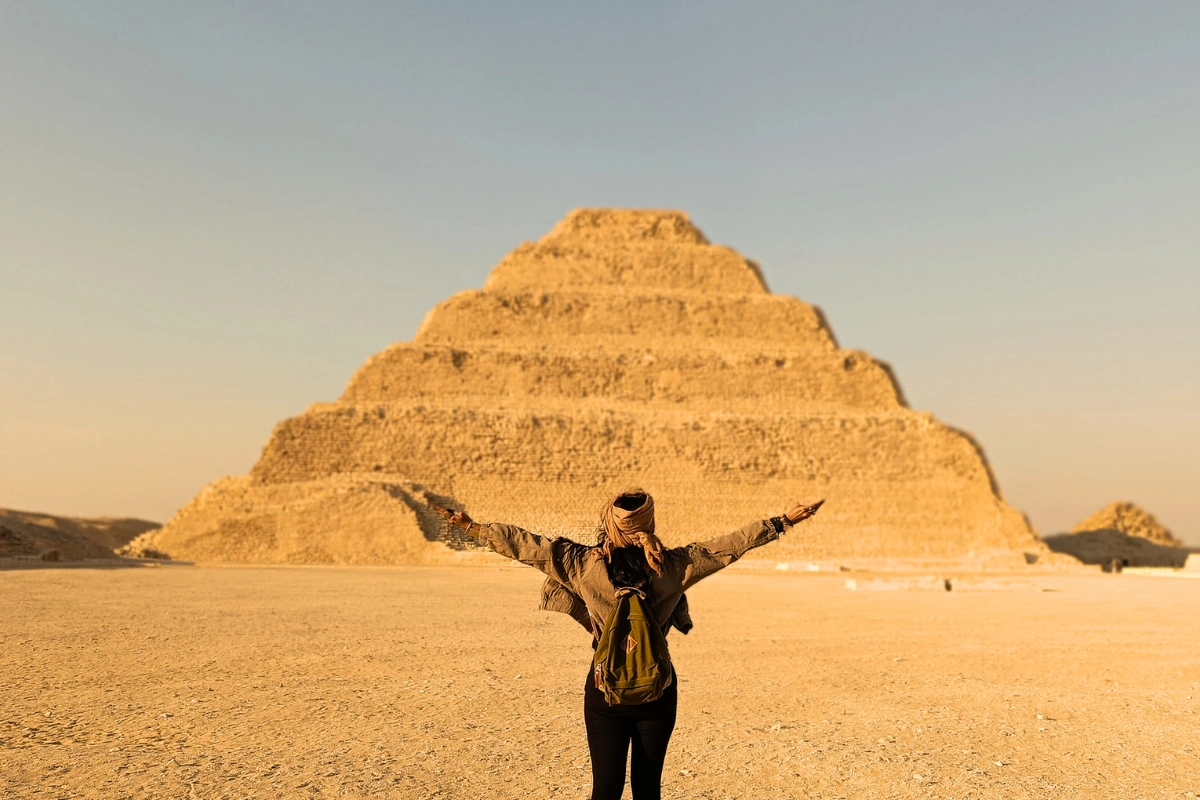
These Egypt travel tips come from nine days on the ground in February 2022…Cairo, the desert, the sleeper train, the Nile cruise, Luxor, and back.
We spent nine days in Egypt in February 2022. We made mistakes. We learned from every one. This article is the list of things we wish someone had handed us before we boarded the flight.
It’s easy to write about the magic of a Nile cruise or camping in the White Desert. But behind every great travel story is a mountain of boring logistics. This guide is the unglamorous, practical foundation beneath the bucket-list moments…the exact blueprint we use to keep a dream trip from turning into a total headache.
“Every tip in this article cost us something the first time. That is the only kind of advice worth giving.”
Is Egypt Safe?
Yes. With context.
Every major tourist site we visited…Giza, Saqqara, Dahshur, the White Desert, the Nile Valley temples, Luxor…felt safe. Security presence at monument sites is visible and consistent. The hotels, the cruise, and the sleeper train were all secure. We did not experience or witness any safety incident across nine days.
What you will experience: persistent vendors at monument entrances. They approach. They offer services: guiding, photography, camel rides, souvenirs. They continue after you decline. This is commercial pressure, not aggression. Decline once, clearly, without prolonged engagement. They move on. The moment you explain your reasons or keep talking, the interaction extends.
Ramy, our pre-arranged Cairo driver on Day 1, told us before we entered the Red Pyramid area: “Do not pay anyone inside. Someone will ask. It is not required.” He was right. Someone approached us inside the complex. We declined and kept walking. The moment passed. This pattern repeated at multiple sites throughout the nine days. Ramy’s rule worked at every one of them.
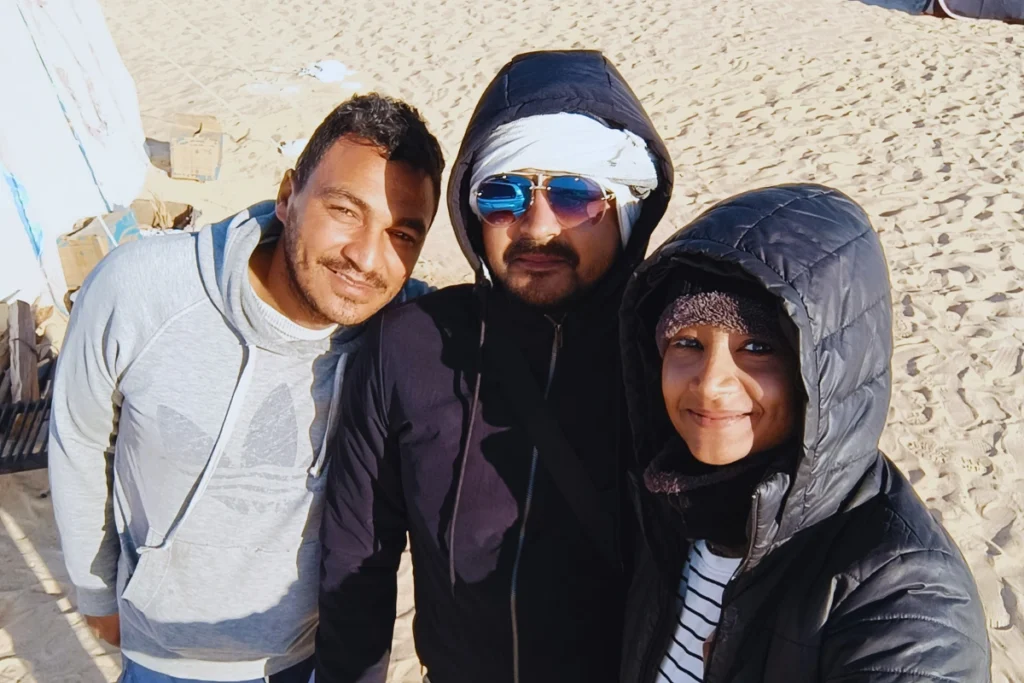
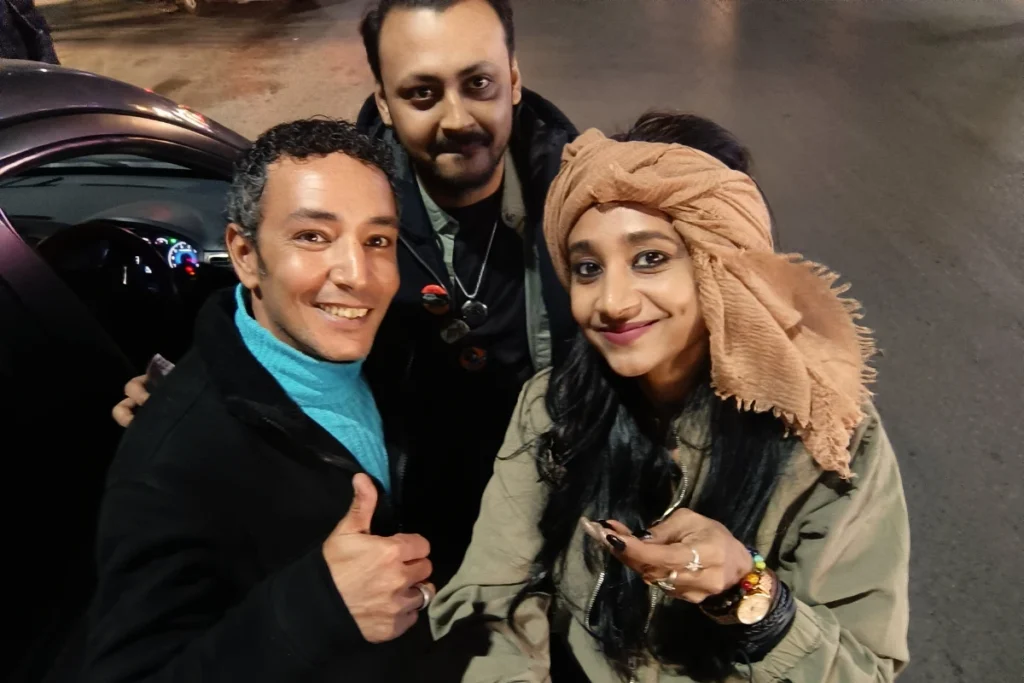
What surprised us: the unsolicited kindness. Mahmood, our Bedouin guide in the White Desert, treated us like family for two days and never asked for anything beyond the agreed price. Ramy spent an entire day with us, navigated the traffic and the sites, and did not ask for a tip. We gave him one anyway because he earned it. He received it warmly and clicked photos with us as we parted. Egypt’s people are friendly, presentable, and genuinely warm. The vendors are not representative.
Our honest assessment: Egypt is safe for tourists at established sites. Pre-arrange trusted transport where possible, keep valuables secured, and carry the confidence of a single clear refusal. That refusal, delivered without anger and without further engagement, resolves almost everything.
“We are used to chaotic tourist sites, but Egypt demands an entirely different level of boundary-setting. If you don’t stay stubborn, your peace of mind…and your cash…will vanish.”
What Egypt Actually Costs
Every figure below is from our February 2022 trip for two people. Egypt’s monument fees have increased substantially since then. The 2026 current rates are noted where confirmed. Use the 2022 figures for structure, verify current rates before budgeting.
The Major Costs
| Item | Our Cost, Two People (Feb 2022) |
| Flights Bengaluru–Cairo–Bengaluru (Emirates out via Dubai, Etihad return via Abu Dhabi) | ~INR 1,20,000 |
| Black & White Desert safari, 2D1N, all-inclusive | INR 25,000 |
| Watania sleeper train Cairo–Aswan (per person) | INR 6,500 per person |
| Nile cruise 3N4D, King Tuti, booked via Agoda | INR 52,000 |
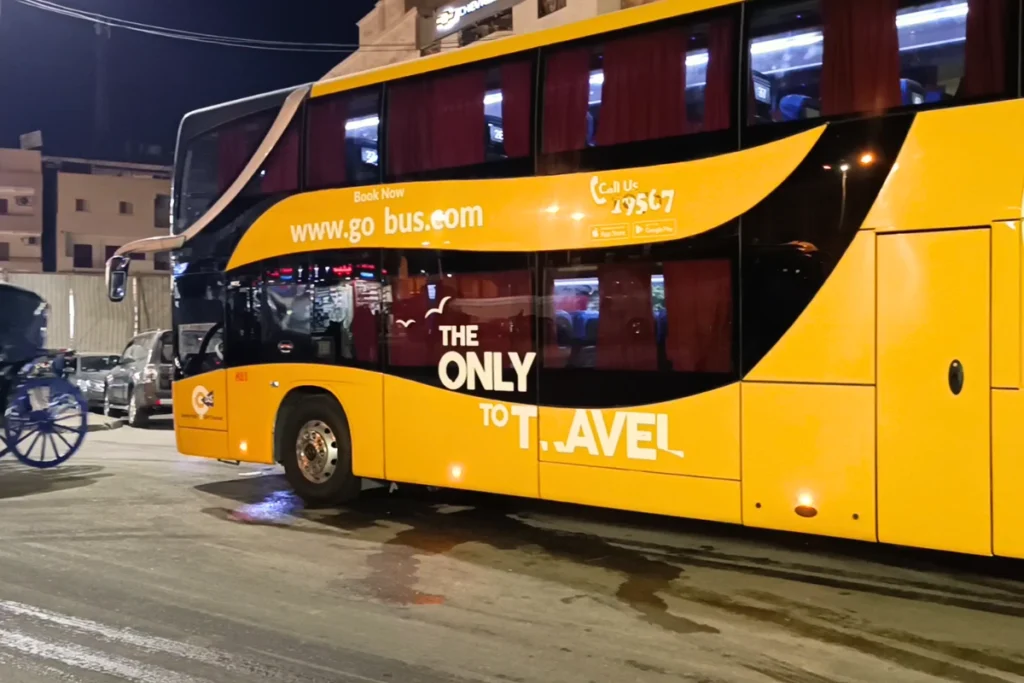
| GoBus overnight Luxor–Cairo, business class | INR 1650 total |
Monument Entrance Fees
The cruise package does not include temple entrance fees. They add up quickly. Budget approximately INR 6,000 to 10,000 per person for the full Nile Valley itinerary.
| Site | Our Cost Per Person (2022) | Current 2026 (where confirmed) |
| Red, Bent & Black Pyramids (combined) | EGP 60 | Verify |
| Saqqara Step Pyramid | EGP 180 | Verify |
| Giza Pyramids | EGP 240 | Verify |
| Inside Khafre Pyramid (2nd/3rd) | EGP 100 | Verify |
| Inside Great Pyramid (Khufu) | EGP 440 | Verify |
| Egyptian Museum, Tahrir Square | EGP 550 | Verify |
| Aswan High Dam | EGP 100 | Not recommended (see Tip 3) |
| Philae Temple (including boat) | EGP 200 | EGP 550 (confirmed) |
| Abu Simbel | EGP 600 | EGP 750 (confirmed) |
| Edfu Temple | EGP 180 | EGP 550 (confirmed) |
| Kom Ombo | EGP 80 | Verify |
| Luxor Temple | EGP 180 | EGP 500 (confirmed) |
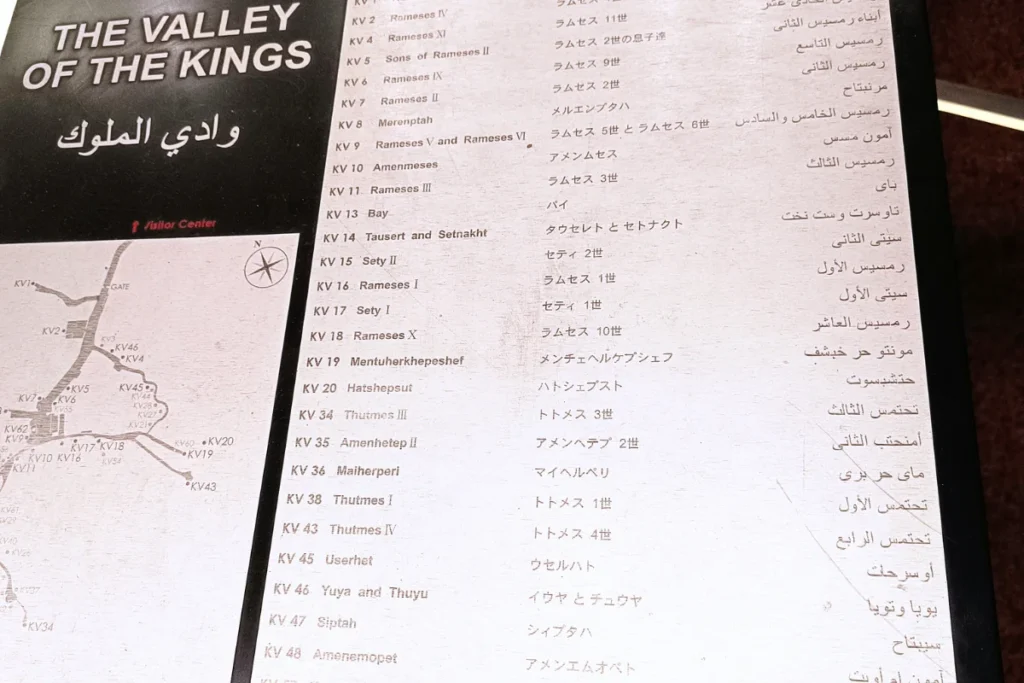
| Valley of the Kings (3 tombs) | EGP 260 | EGP 750 (confirmed) |
| Tomb of Ramesses V & VI (extra ticket) | EGP 100 | Verify…worth it |
| Hatshepsut Temple | EGP 100 | EGP 440 (confirmed) |
| Karnak Temple | EGP 300 | EGP 600 (confirmed) |
All 2026 current rates confirmed from available sources. Verify against the official Egyptian Ministry of Tourism portal and your cruise operator before budgeting, as fees continue to be revised.
Daily Running Costs
| Category | Approximate Daily Cost, Two People |
| Food (local restaurants and street food) | EGP 200–400 |
| Local transport (taxis within cities) | EGP 100–300 |
| Water and small purchases | EGP 50–100 |
Approximate total trip cost for two people over nine days (flights, desert, train, cruise, monuments, food, local transport): INR 2,40,000 to 3,00,000. This excludes shopping and any premium extras.
Thirteen Things We Wish We Knew
1. Brace Yourself for the Aggressive Tip Culture and Pyramid Scams
⚠️ CRITICAL WARNING: Tipping (baksheesh) in Egypt is expected everywhere, but around the main tourist sites…especially the Pyramids…it morphs into relentless hustle. Vendors will heckle you constantly, aggressive camel handlers will try to trick you onto rides, and children at major monuments will follow you continuously asking for money. Being from India, we are completely used to dealing with pushy vendors and crowded tourist chaos, so we had the natural habit to handle it. However, if you aren’t prepared, it can be overwhelming. Hold your ground firmly. Be careful, stay alert to textbook tourist scams, and absolutely do not give in to repeated, aggressive insistence for unearned tips. Save your money for the people who provide genuine, hassle-free service.
2. Skip the Airport SIM Card
We skipped the airport SIM counter because the queue was long and we wanted to get moving. This turned out to be a great decision, as airport SIM card prices are significantly higher compared to the city. Orange and Vodafone both have counters at Cairo Airport, but we don’t recommend buying there. Instead, it is always better to just get an eSIM before reaching Egypt, or wait to buy a physical card later. We eventually bought from the Vodafone shop near Tahrir Square for a much better rate. Navigating Cairo without data on Day 1, finding monuments without maps, and coordinating transport without a local number might give you some friction…so definitely secure your data early…but skip the overpriced airport counters.
3. Carry Cash. More Than You Think.
Egypt is cash-based for everything except hotel payments, cruise packages, and some monument ticket counters. Taxis, restaurants, street food, market purchases, tips, desert supplies: all cash. Withdraw Egyptian pounds from a Cairo ATM before leaving the city. The desert has no ATMs. The Nile Valley towns have limited ones. Our lesson here was carried forward from a difficult experience at Ajanta in India, where we had no cash and no signal. Apply it from Day 1 in Egypt.
4. The Aswan High Dam Is Not Worth the Entrance Fee
It is a dam. Historically significant. Architecturally unremarkable for a tourist visit. The EGP 100 entry fee (our 2022 price) is better allocated to an extra tomb in the Valley of the Kings or a second visit to Philae during golden hour.
5. Pre-Book the Watania/Abela Sleeper Train
Tickets sell during peak season. Walk-up availability at Ramses Station is not guaranteed. Book online through the official Abela Trains portal before arriving in Egypt. Our dedicated booking guide covers the full step-by-step process.
6. The Desert Is Cold in February
We say this in every Egypt article because it is the most consistently underestimated thing. February nights in the Sahara are cold beyond what the word normally communicates. The White Desert camping means sleeping in a small basic tent with sleeping bags and a few blankets. By midnight, the temperature drops severely. Pack a warm jacket, a hat, and a scarf. Pack one extra layer beyond what you think you need. You will use it.
7. Do Not Pay Anyone Who Approaches Inside Monuments
Ramy’s rule, given to us on Day 1, before we entered the Red Pyramid area. Someone will approach inside the pyramid complexes, offering to guide you, take your photo, or show you something “special.” It is not required. The entry fee covers access. Decline once. Walk on. Engagement, even to explain, extends the interaction.
8. The Best Shawarma in Cairo Is Near Tahrir Square
After Day 1 with Ramy, we were dropped at Tahrir Square to buy our SIM cards at the Vodafone store nearby. On the way back, we found a street shawarma stall. They brought us hot lentil soup while we waited. Then came the roll. Back home in India, we had eaten shawarma many times. This was different: more authentic, more layered, genuinely the best we have had. We ate it standing on the pavement on Day 1 of Egypt. It set a standard for the rest of the trip.
9. Pre-Arrange Your Cairo Driver
A trusted driver transforms the Cairo experience. Ramy spent an entire day with us…picking us up from the airport, taking us to the pyramids and Saqqara, navigating traffic, waiting patiently at every stop, and dropping us at Tahrir Square at the end of the day. He never asked for a tip. He never overcharged. He never created a moment where money was uncomfortable. If you can find a pre-arranged driver through trusted recommendations, it is worth more than its cost.
10. The GoBus Overnight From Luxor to Cairo Is Excellent
Double-decker. Business-class reclining seats. Personal screens. Air conditioning. A toilet. INR 900 total for two people. It departs from near Luxor at midnight and arrives at Tahrir Square in Cairo by morning. This is not a budget compromise. It is a genuinely comfortable overnight option that replaces a hotel night and positions you in Cairo for a morning flight or transfer.
11. Pay for at Least One Premium Tomb in the Valley of the Kings
Standard entry covers three designated tombs. Additional tombs require a separate ticket. The tomb of Ramesses V and VI is worth the extra. The ceiling carries a complete astronomical map from the Book of the Dead…vivid, intact, and overwhelming after three thousand years. The standard entry tombs are significant. The premium one is on a different level.
12. Respect the Culture and Dress Modestly
As Egypt is a conservative Muslim country, it is highly important to respect their local culture and religious traditions by dressing modestly. This means planning outfits that keep your shoulders and knees covered, especially when exploring local neighborhoods or historical towns outside of resorts.
13. The Dubai Layover Can Require Running
Our Emirates outbound flight had a one-hour connection in Dubai. Our seats were cancelled at the gate. We ran through the world’s largest airport, caught the internal metro between terminals, and argued until we received new boarding passes. We made it. We do not recommend replicating this voluntarily. If your itinerary includes a Dubai connection, give yourself more than an hour between flights.
Money and Payments
- Currency: Egyptian Pound (EGP). Carry cash for daily expenses like taxis, street food, markets, and tipping.
- ATMs: Available in Cairo and major cities like Luxor and Aswan. Note that local ATMs have low per-transaction withdrawal limits (often 3,000 to 5,000 EGP), which can rack up transaction fees. Withdraw enough cash for the desert segment and early Nile Valley days before leaving the major hubs; availability drops significantly outside main cities.
- Credit & Forex Cards: Accepted at hotels and Nile cruise operators. Crucial Update: Card payment is now strictly mandatory at almost all major monument ticket counters (including the Pyramids and Luxor temples). Cash is no longer accepted for entry tickets. For general shops that accept cards, watch out for a hidden 3%–5% service fee tacked onto the bill.
- Tipping: Tipping is expected almost everywhere in Egypt…often well beyond what most travelers consider normal. However, in our personal opinion, being from India meant we were already well-conditioned to handling these types of high-pressure situations. While the cruise staff mentioned tips at check-in and collected them at checkout, we gave 150 EGP and felt absolutely no pressure. Our guides, Ramy and Mahmood, never even asked. Our best advice? Everyone should be careful and not give in to repeated, aggressive insistence for tips. When someone provides genuine service, give what feels right to you.
- Currency Exchange: The airport offers convenience, but city-centre currency exchange shops typically provide much better rates. If possible, test both options with a small amount on Day 1 to compare. However, use only official, licensed exchange bureaus. Avoid illegal street money-changers offering “black market” rates, as currency frauds and scams are incredibly common. Make sure to carry a reliable forex card for your trip; we used the Niyo Global Card and it worked great.
What to Pack
Essentials
- Warm layers: Pack a warm jacket, a hat, and a scarf for desert camping and early morning excursions (such as the 4:30 AM Abu Simbel departure or pre-dawn Edfu horse carriages).
- Comfortable walking shoes: Choose shoes with excellent grip, as temple complexes require substantial walking on uneven, ancient stone.
- Sun protection: Bring a hat, sunscreen, and sunglasses; the Giza plateau in February is incredibly bright and windy.
- Cash in Egyptian pounds: Withdraw enough cash from Cairo ATMs before leaving the city to cover tips, taxis, markets, and street food.
- Credit or Forex card: Mandatory to keep on you for entry tickets. Crucial Update: Almost all major archaeological sites and museums (including the Pyramids and Valley of the Kings) are now strictly cashless and do not accept cash at the ticket counters
- Hardcopies: Printed copies of all bookings: train tickets, cruise confirmation, e-Visa
- SIM card or eSIM: Secure an eSIM online before reaching Egypt, or wait to buy a physical card at a city shop like the Vodafone store near Tahrir Square. Do not buy at the overpriced airport counters.
- Reusable water bottle: Ideal for staying hydrated during long days of exploring the temples.
- Light scarf: A light scarf is highly versatile for sun protection, chilly evenings, and fulfilling respectful dress codes for entering mosques.
Useful But Not Essential
- Camera with manual settings: Critical if you want to capture the White Desert stars or low-light temple interiors.
- Instant food from home: Highly recommended; we carried Indian staples to keep us going during long transit days.
- Small daypack: Perfect for carrying your water, card, and essentials during temple excursions away from the cruise ship.
Not Necessary
- Formal clothing: No strict dress codes exist beyond basic modesty (covering shoulders and knees) at religious sites.
- Sleeping bag: Your desert tour operator provides blankets and bedding; the sleeper train also includes fresh sheets and pillows.
- Printed guidebook: Downloaded digital maps and online articles will easily cover everything you need to know on the ground.
When to Go
November through April. This window can allow the full itinerary comfortably.
The pyramids in summer exceed 40°C. The Valley of the Kings in July is punishing. White Desert camping in summer is not safe. February was nearly perfect: cool enough at night in the desert, comfortable enough at temples for long walks, and cold enough on the Giza plateau that our breakfast got cold within minutes… which is a minor problem compared to the alternative.
February 22nd carries an additional reason to visit: the Abu Simbel solar alignment, when sunlight penetrates 60 metres into the inner sanctum and illuminates the statues of the gods. If your dates are flexible, build your trip around this.
If your trip falls during Ramadan, restaurant hours shift and food availability in some areas is reduced. Plan meals accordingly.
Visa
Most nationalities require an e-Visa, obtained through the official Egyptian portal at visa2egypt.gov.eg before departure. Processing is typically fast. Carry a printed copy alongside your digital confirmation. Verify current requirements close to your travel date as policies change.
The Ground Rules
Everything on this page is a lesson we paid for in time, frustration, or cold hard cash on the ground. While our complete Egypt travel guide sketches out the master nine-day itinerary, and our other features dive headfirst into the raw, romantic magic…sleeping under a canopy of stars in the surreal White Desert, hearing the rhythmic rumble of the overnight sleeper train, drifting down the Nile, or chasing horizons on a dusty desert safari…this specific guide is the invisible machinery that actually makes the dream work.
“If you pull just three rules from our experience, let it be these: First, sort out your eSIM or city data early so you aren’t dropping blind into Cairo on Day 1. Second, keep your wallet stacked with more physical cash than your instincts tell you to. And third, take the sleeper train from Cairo to Aswan/Luxor or reverse at least once. Watching the ancient, misty banks of the river wake up at dawn from your bed isn’t just a nice detail… it is the entire reason you came.”