We are not professional photographers… just dedicated travellers who love capturing a place well. This Egypt photography guide is built from nine days on the ground in Egypt in February 2022 (Cairo, the Western Desert, and a Nile cruise from Aswan to Luxor), focusing on the honest, practical reality of what the light does to these ancient monuments and when to be there.
We arrived in Cairo on February 18, 2022, carrying the specific anticipation of people who have been planning a trip for a long time. Egypt’s visual world had been present in our imagination for years: the Giza silhouette at dawn, the Karnak columns in golden afternoon light, the White Desert formations under the Milky Way. We had seen thousands of photographs and had formed expectations of what each place would look like.
The expectation and the reality were aligned in terms of what the places contained. They diverged significantly in terms of what the light did to those places in the hours we visited them. Some of the most vivid photographic memories from the nine days came from situations we had not planned: the first light falling on Abu Simbel’s colossuses as we arrived by bus at 6 AM, the Nile at dawn seen from the cruise ship cabin window before we had gotten out of bed, the Luxor Temple at midnight when every hieroglyph was a shadow and every column a lit surface.
This guide is the photography knowledge we assembled across nine days. What the light does to each environment, and when.
“Egypt’s monuments are timeless, but their magic is ephemeral. Between 11 AM and 3 PM, ancient stone looks flat under a harsh sun. Before 9 AM and after 4 PM, that same stone comes alive—absorbing the golden hour and glowing from within.”
- Egypt’s Light: Understanding the Foundation
- The Pyramids and Cairo: First Light on Ancient Stone
- The Nile: Dawn, Dusk, and the Cruise Ship Window
- The Nile Valley Temples: Light, Crowds, and the Column Shadow
- Abu Simbel: The Early Bus and the First Light
- The White Desert: Dusk, Night, and Dawn
- Practical Notes by Site
- What We Learned from Nine Days
- Practical Gear & Camera Setup
- Frequently Asked Questions
Egypt’s Light: Understanding the Foundation
Egypt’s photographic character is defined by its desert latitude. At roughly 24 to 30 degrees north, Egypt receives direct overhead sun for a larger portion of the day than temperate-zone destinations. Midday sun is harsh, near-vertical, and eliminates the side-lighting shadows that make architecture three-dimensional in photographs.
But the counterpart of Egypt’s brutal midday light is its extraordinary golden hour. At the same latitude, the sun descends at a lower angle than it does in higher latitudes, and the golden-to-twilight window is correspondingly longer and more intense. The stone of the temples… sandstone, limestone, granite… responds to warm low-angle light differently from marble or brick. The stone absorbs the warmth of the light and adds its own inherent colour: red sandstone becomes deep amber, limestone becomes warm cream, granite becomes near-gold.
The practical implication for photography: Egypt rewards the same early morning and late afternoon discipline that every desert landscape rewards, but the rewards are larger and more dramatic than in most other destinations because the stone itself participates in the light rather than simply reflecting it.
The Pyramids and Cairo: First Light on Ancient Stone
Giza
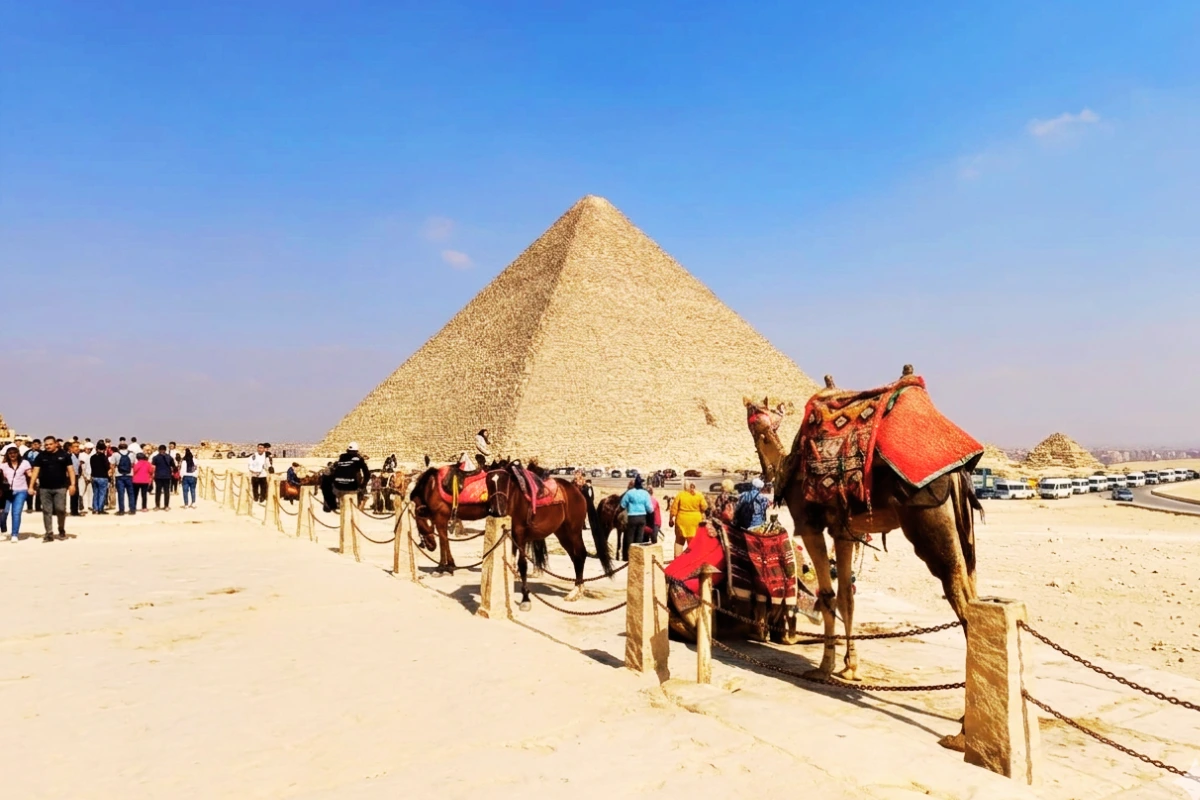
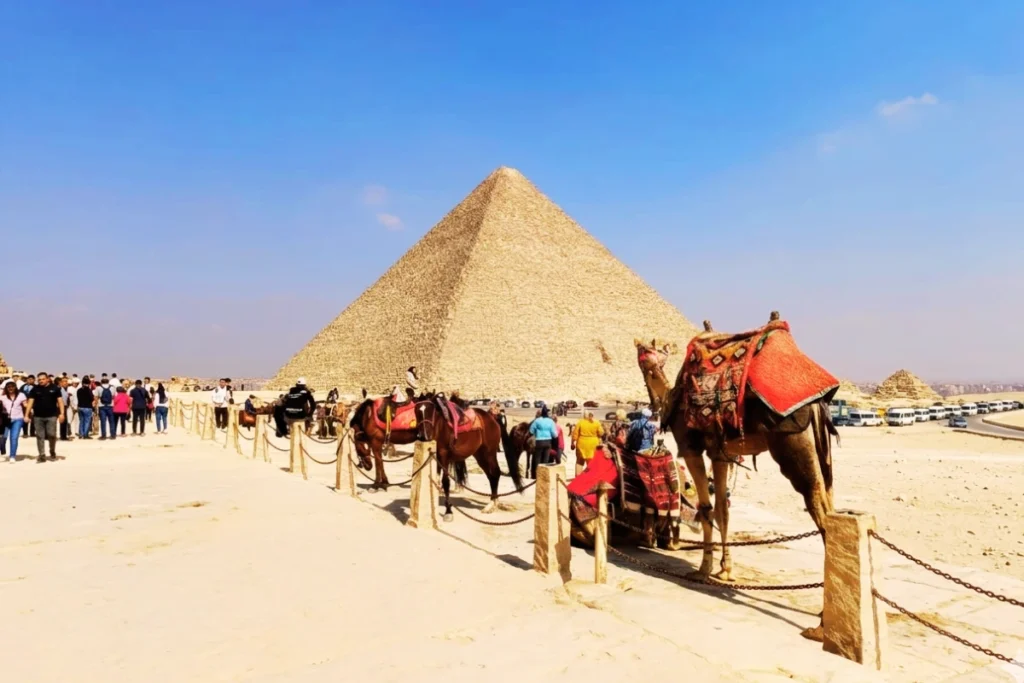
The Giza plateau is one of the most photographed places in the world, which means that the photographs that distinguish themselves from the mass are those taken when the mass is not present. The pyramids are open early morning, and arriving at or before opening time puts you in the complex before the tour buses arrive and before the light reaches overhead.
The most distinctive Giza photograph… the three pyramids in alignment against a clear sky… is a telephoto compression shot available from the south side of the plateau. The standard tourist circuit approaches from the north and produces the head-on view of the Great Pyramid. Walking south, beyond the second and third pyramids, puts all three in recession behind each other. The low morning light at this position catches the east faces of all three structures simultaneously and produces the warm amber that the standard tourist view, in midday light from the north, does not.
The Sphinx is best photographed at dawn from the viewing platform at the base of the Khafre causeway. In the morning, the sun rises behind the Sphinx’s left side and the face is in partial shadow. By 9 AM, the sun has moved enough to light the face fully. By 11 AM, the overhead light produces the flat, colourless photograph that most Sphinx images are. The 8 to 9 AM window is the Sphinx window.
Saqqara
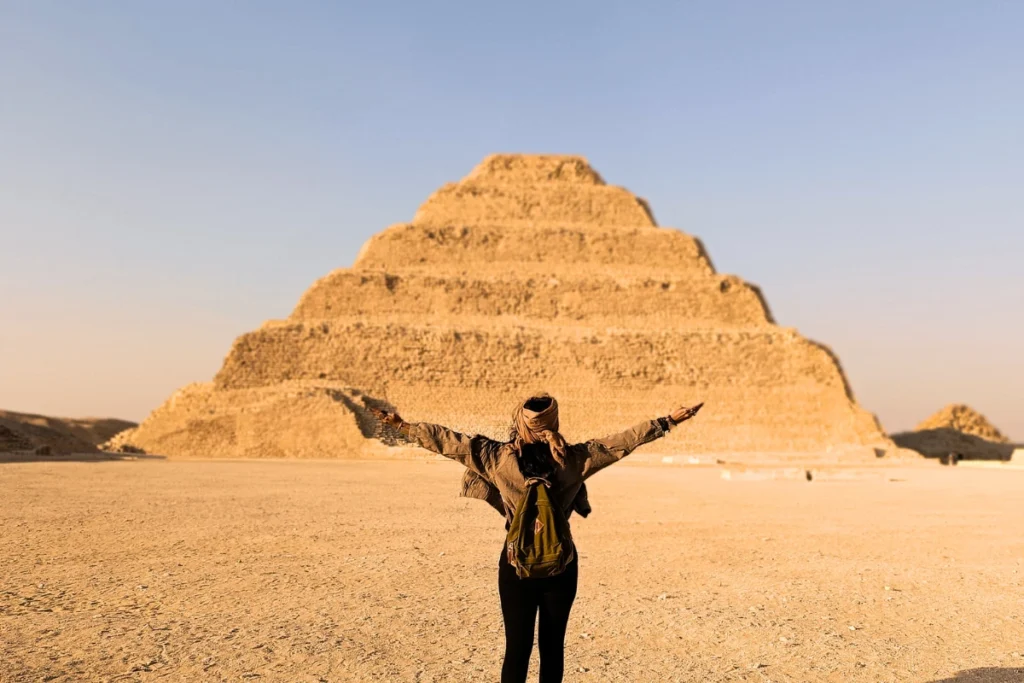
The Step Pyramid at Saqqara, which we visited in the late afternoon with thirty minutes before closing, was photographically productive precisely because of the timing. The afternoon light on the Step Pyramid produces a warm amber that emphasises the horizontal layering of the stepped structure: each tier casts a shadow on the tier below, and the shadow depth increases as the sun angle decreases. Arriving at Saqqara in the late afternoon is inadvisable for the tour (thirty minutes is genuinely insufficient for the site) but produces the best photography conditions. The lesson: if you are planning your day, hit Giza right at 7:00 AM opening to beat the buses, and save Saqqara for late afternoon (3:30 to 5:00 PM) when low-angle side light casts dramatic horizontal shadows across every tier of the Step Pyramid.
“The Saqqara Step Pyramid in late afternoon light: each tier of the stepped structure casting a shadow on the tier below, the shadow deepening as the sun angle decreases. The horizontal layering of the world’s oldest monumental stone structure is most visible when the light arrives from the side, not from above. We had thirty minutes, and the light was doing everything.”
The Nile: Dawn, Dusk, and the Cruise Ship Window
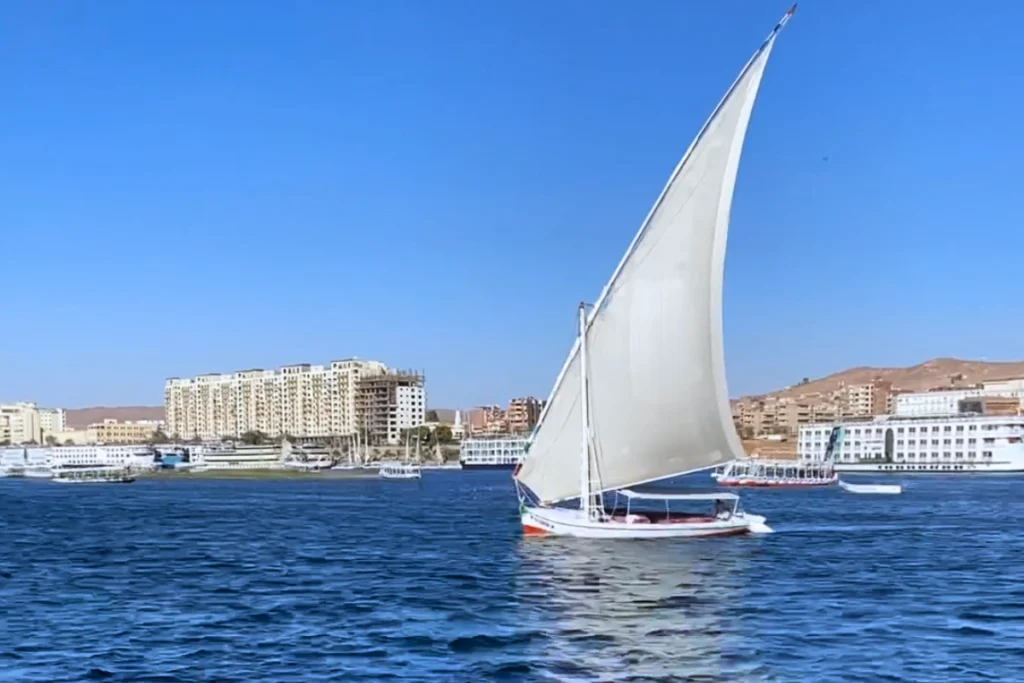
The Nile River is the most consistently beautiful subject in the Egyptian photography portfolio, and the least planned for. Most Nile photography happens from the banks of the river during day trips or from the cruise ship during the day. The Nile at those hours is a river: wide, brown, with feluccas and tourist boats. The Nile in the hour after sunrise or the hour before sunset is a different subject.
The Cruise Ship Window
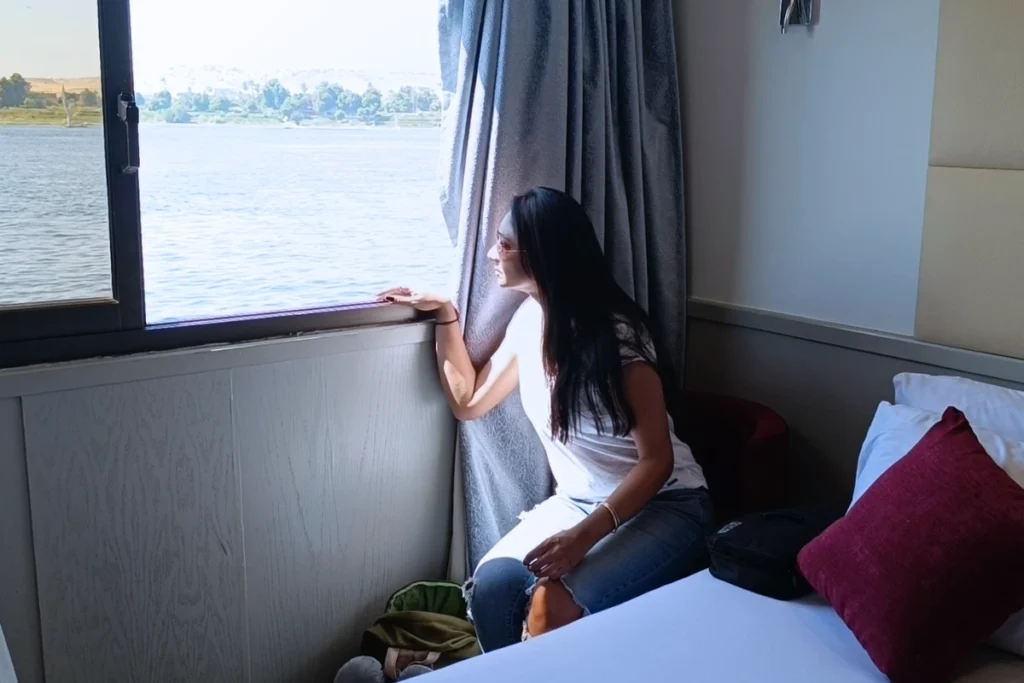
We booked a cabin on the King Tuti cruise specifically for the river-view window. We luckily received a Nile-facing room without even asking for it. The window opened directly onto the West Bank of the Nile, with date palms on the opposite bank and the river between.
The Nile at dawn from a cruise ship cabin window is the photograph that does not appear in Egypt travel brochures. Not because it is less beautiful… it is arguably more beautiful than the standard Karnak shot… but because it requires being in the cabin when the light arrives, which means being awake before 6 AM on a cruise itinerary that had kept us up until midnight the night before. We were awake because the balloon departure at 4:30 AM had already started the morning.
The dawn light on the Nile produces a specific colour sequence: the water shifts from dark grey to warm pink to amber as the first light arrives. The date palms on the bank catch the light a few minutes before the water surface does, producing a brief window where the palm fronds are gold and the water is still cool grey. This window lasts approximately ten minutes. It is the most characteristically Egyptian dawn image and requires no more equipment than a camera pointed through a cabin window.
The Nile from the Cruise Deck
The cruise deck, accessible throughout the journey, provides a moving photographic platform. The Nile Valley landscape between Aswan and Luxor changes continuously: cultivated green strips against the desert, the escarpment of the hills rising behind, ancient temple silhouettes appearing on the bank. The cruise moves slowly enough that the changing landscape is visible without blur, and the deck position is high enough to shoot over the low riverbank vegetation.
The best deck photography comes at two hours: the hour after sunrise when the east-bank landscape catches warm light, and the hour before sunset when the west-bank temple silhouettes are backlit. We photographed the Kom Ombo Temple from the cruise deck as the ship approached, which gave a wide-angle view of the temple complex on the bank that the on-site visit, which puts you inside the columns, does not provide. The approaching-by-river photograph is a legitimate and underused composition for Nile Valley temples.
The Nile Valley Temples: Light, Crowds, and the Column Shadow
Karnak: The Hypostyle Hall
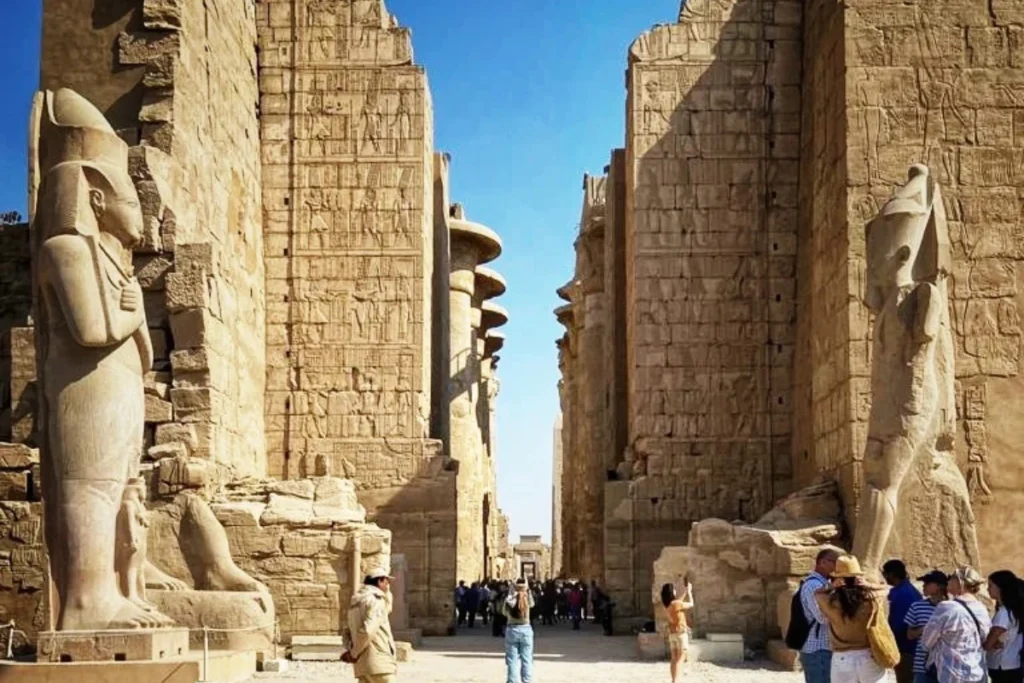
Karnak Temple is the largest religious complex ever built. The Hypostyle Hall… 134 columns, the tallest standing 21 metres, covering an area of approximately 5,000 square metres… is the most architecturally overwhelming interior space in Egypt and one of the most challenging photography environments.
The columns are so large and so close together that wide-angle lenses produce distortion at the edges. The corridors between the columns are narrow enough that including multiple columns in a single frame requires a significant retreat from the subject. The light entering the Hypostyle Hall comes from above through the clerestory windows… rectangular openings high in the walls between the tall central columns and the shorter outer columns. This light is directional and falls in shafts between the columns in the morning, when the sun is low enough to enter through the east-facing clerestory windows at an angle.
We arrived at Karnak at the end of a day that had started at 4:30 AM with the balloon and continued through the Valley of the Kings, Hatshepsut, and the midday heat of Luxor without food. In the transcript from our vlog that day: ‘It’s quite difficult to walk around in the sun after visiting the hot air balloon, Valley of the Kings, and Hatshepsut temple without eating anything since morning. But it’s a matter of luck to come to such a place and can’t come back here again and again. So no matter how hard it is, can’t stop moving.’ This is the correct spirit for Karnak. The complex is enormous. Most group members had sat down or turned back. We covered the entire site.
The photography lesson from Karnak: the Hypostyle Hall is best photographed in the first two hours after opening. The clerestory light arrives at the best angle before 10 AM. The crowds, which build quickly, are thinnest immediately at opening. Karnak is a site where time is the resource… time to explore its enormous extent, and time to wait for the light shafts to fall where you want them between the columns.
Luxor Temple at Night
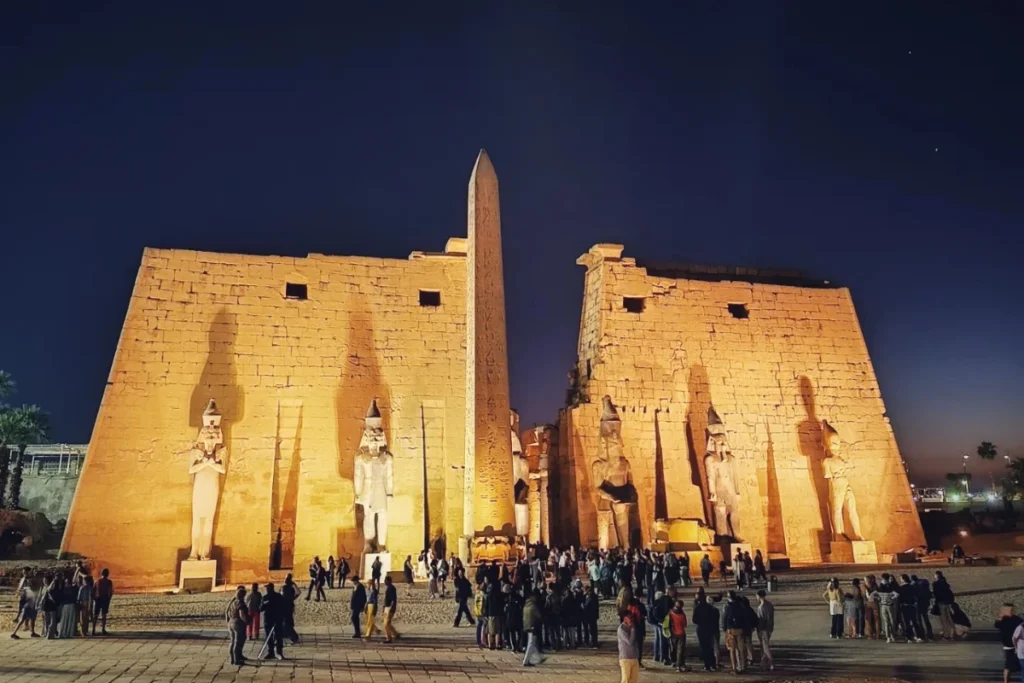
Luxor Temple is the only major Egyptian monument we visited specifically at night. The floodlit experience is completely different from the daytime experience. In the daytime, the scale of the temple reads against the sky and the surrounding city. At night, the sky is dark and the temple is lit warm against it. The columns, 23 metres tall, are orange-lit from below and appear to glow against the black sky. The Alexander cartouche on the inner sanctuary wall, which in daylight competes with the surrounding carved surfaces for attention, at night is highlighted by the directional spot lighting.
The photography at Luxor Temple at night is available to anyone with a camera that handles moderate high ISO, because the floodlit surfaces are bright and the necessary shutter speeds are achievable without a tripod for the main columns. The side chapels and the inner sanctuary require a tripod or a body rail for support because the light levels are lower and the surfaces are darker. The combination of very bright outer surfaces and very dark interior recesses is the main exposure challenge at night: expose for the lit surfaces and let the deep shadow be deep shadow.
“Luxor Temple at midnight. The 23-metre columns lit from below, orange against the black sky. The surrounding city invisible. The hieroglyphs in sharp relief because the directional light creates shadows in the carved channels that the flat daylight does not. The temple at night is a different building. Both are worth seeing.”
Abu Simbel: The Early Bus and the First Light
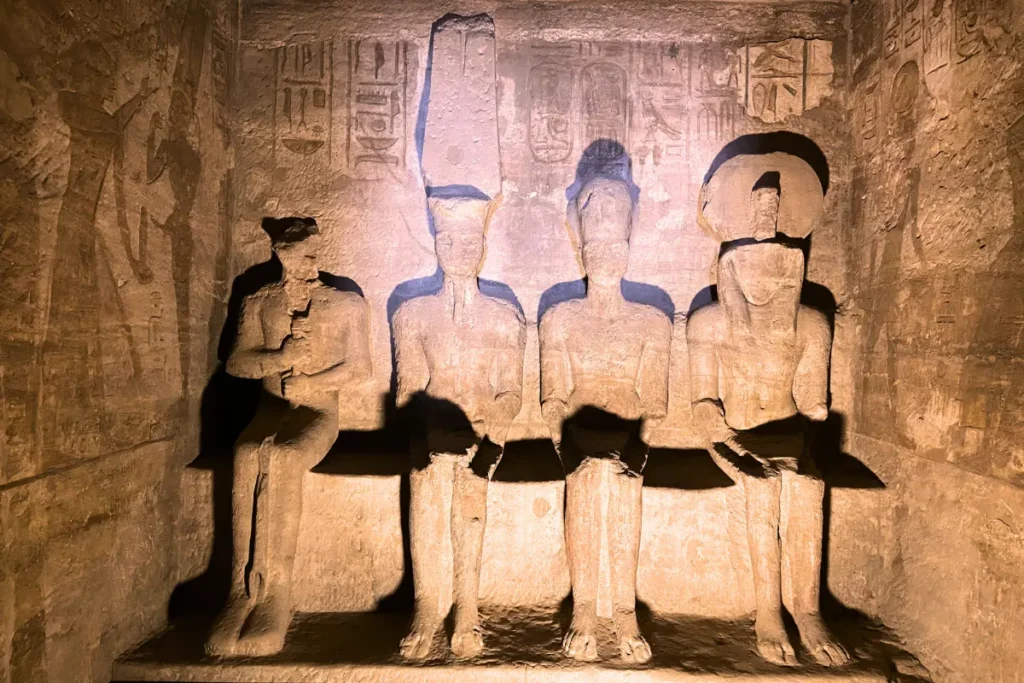
Abu Simbel is a four-hour drive south of Aswan, near the Sudanese border. The Nile cruise departs for Abu Simbel at 4:30 AM, arriving at approximately 6:30 to 7 AM. We were on that bus.
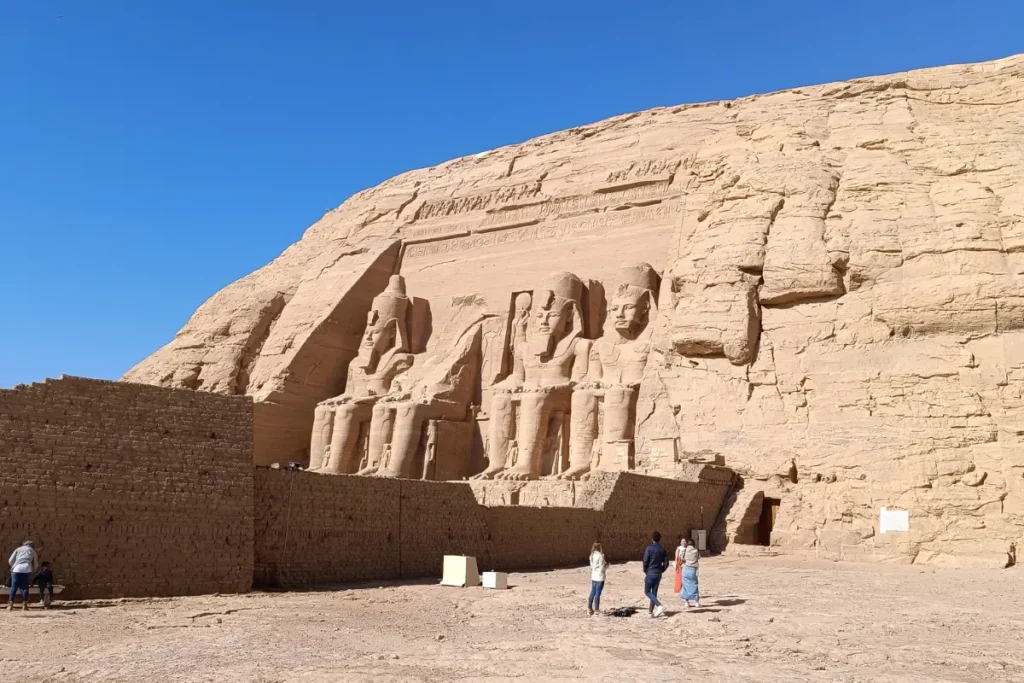
The reason to take the early bus is not only to avoid the midday crowds. It is the light. At 6:30 to 7 AM in February, the sun is low enough in the east to illuminate the four colossal statues at an angle that makes them three-dimensional in photographs. The faces of the statues face east with a slight south inclination… they are oriented to catch the equinoctial sunrise. At 6:30 AM, the light arrives from the east at a low angle, and the shadows on the statues’ faces create the depth that the famous images of Abu Simbel are built around.
By 10 AM, the sun is high enough that the shadows have shortened and the statues appear flatter. By noon, the overhead light eliminates the facial shadows and the statues, though still enormous, become visually less dramatic.
The four statues of Ramesses II are 20 metres tall. They are close together. For a frame that includes all four statues from base to crown requires a wide-angle lens and significant distance from the cliff face, which means shooting from the desert area to the right or left of the central axis. The central axis photograph, from directly in front of the entrance, includes the pylon composition that is most recognisable but least interesting because it places the statues in symmetry without showing the spatial relationship between them. The slightly-off-centre composition from the left, with the sun angle putting light on the faces, is the more photographically productive position.
The White Desert: Dusk, Night, and Dawn
The White Desert produces three distinct photography environments, each requiring a different approach.
Dusk: The Formation Colour Shift
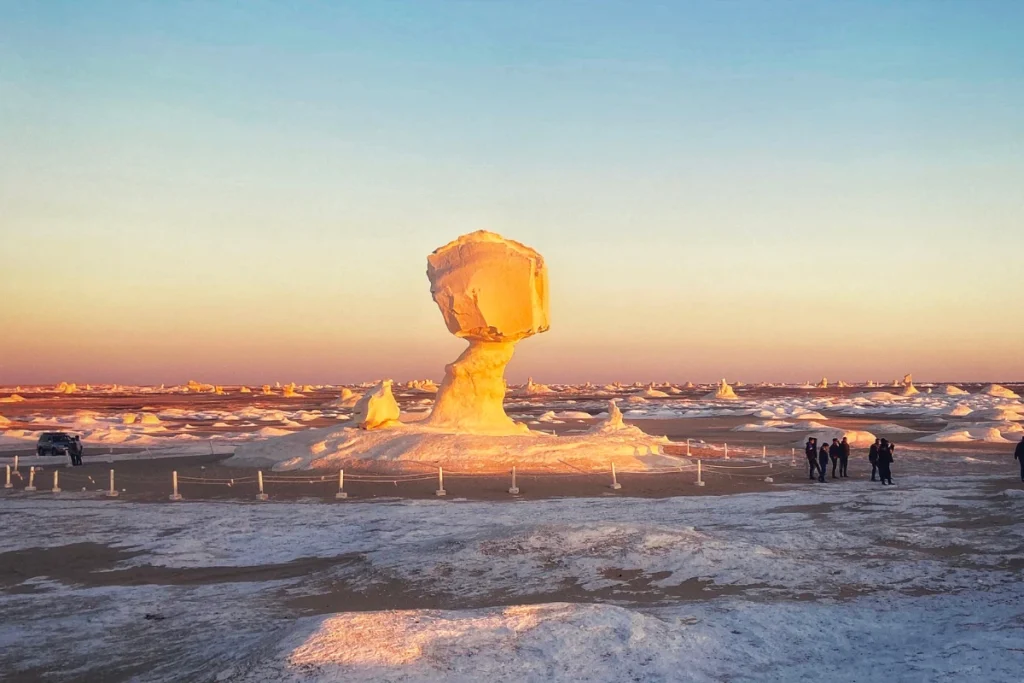
The chalk formations of the White Desert change colour as the sun angle decreases in the afternoon. At midday, the formations are off-white, and the shadows between them are minimal. In the two hours before sunset, the warm tones of the setting sun work with the calcium carbonate surface of the formations to produce amber, gold, and eventually orange. The specific quality of this colour shift… warm light on white chalk… is different from warm light on sandstone or granite because the chalk has no inherent colour. The colour it shows at golden hour is entirely the colour of the light, making the shift from white to gold to orange particularly pure and vivid.
We were at the White Desert as the sun set, moving between formations as the colours changed. The pace is important: the colour shift happens over approximately forty minutes, and the specific amber-gold maximum occurs for about ten minutes before the sun drops far enough for the light to become less intense. During those ten minutes, move to the formation that the light is most directly hitting and shoot the shadow side rather than the lit side… the shadow side in golden-hour light shows the formation’s shape more clearly than the fully lit side.
Night: The Milky Way and the Formation Silhouettes
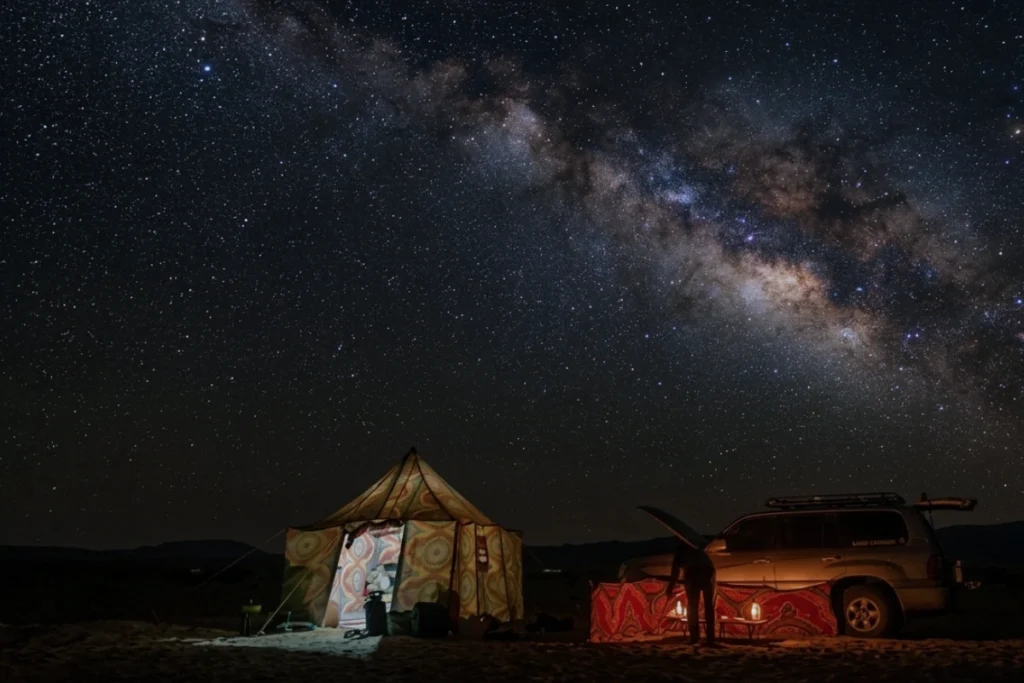
The White Desert has no light pollution. This is unusual in a world where most people live near enough to urban lighting that the night sky is permanently compromised. In the Western Desert, 400 km from Cairo, the sky at 10 PM in February is the sky that existed before electricity.
The Milky Way at the White Desert is not subtle. It is the dominant visual element of the night sky, visible to the naked eye as a dense white band crossing the sky from horizon to horizon. Against the chalk formations, which are pale and reflective enough in moonlight to be visible in long-exposure photographs without additional lighting, the Milky Way produces photographs that are difficult to achieve in most other locations.
For Milky Way photography, the equipment requirements are significant: a camera body capable of high ISO (6400 or above) without excessive noise, a lens with a maximum aperture of f/2.8 or wider (f/1.8 ideal), and a tripod. The exposure parameters for Milky Way photography in a dark-sky location: ISO 3200 to 6400, f/2.8 to f/1.8, shutter speed 20 to 25 seconds (to avoid star trails at standard 24mm focal length). The chalk formations, lit by the ambient moonlight or starlight reflected from the pale desert sand, provide foreground without requiring a separate light source.
Our camping arrangement with Mahmood included a fire, which provides warm light for the campsite but reduces the night sky visibility in the immediate area. The correct Milky Way photography setup is to move away from the fire to a formation 50 to 100 metres from camp where the fire’s light does not affect the sensor. The walk is worth it.
Dawn: The Reversed Colour Sequence
Dawn in the White Desert reverses the dusk sequence: the formations shift from cool grey to pink to amber to gold as the sun rises. The specific quality of White Desert dawn is different from the dusk equivalent because the light arrives from the east and hits the western faces of the formations… the faces opposite to those lit at sunset. Knowing this matters for positioning: the dawn photograph looks different from the dusk photograph taken from the same position because the light is on the other side of the formation.
We ate breakfast at dawn in the White Desert: flatbread, tahini, eggs, coffee. This is the breakfast described in the camping article as the best meal of the entire trip. For photography, it produced a secondary subject: the simple breakfast spread on sand in the first morning light, with the chalk formations in the background and the sky still faintly pink. This category of photograph… ordinary activity in extraordinary context… is available only to people who are in the landscape at the hours when the landscape is most alive, which requires staying overnight.
Practical Notes by Site
| Site | Best Time | Photography Note |
| Giza Pyramids | 6–9 AM | Arrive at opening. South-side alignment shot. Telephoto compression. Sphinx before 9 AM. |
| Saqqara Step Pyramid | Late afternoon | Tiered shadow on each level most visible in low-angle light. Thin crowds at all hours. |
| Abu Simbel | 6:30–8 AM | Take the 4:30 AM early bus. First light produces facial shadow depth. Off-centre composition for all four statues. |
| Karnak Hypostyle Hall | Opening, first 2 hours | Clerestory light shafts between columns at best angle before 10 AM. Cover full site despite size. |
| Luxor Temple | Night (floodlit) | Night visit transforms the site. Warm lit columns against dark sky. High ISO or tripod for inner sanctuary. |
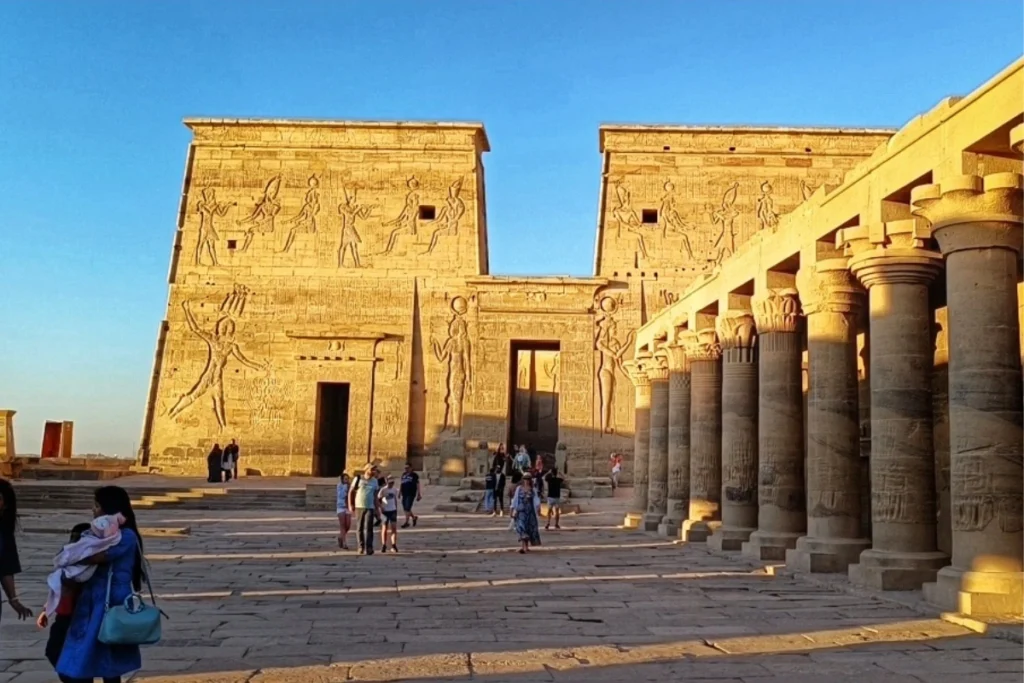
| Philae Temple | Late afternoon | Approach by boat at sunset for the island-on-water composition unavailable from inside the site. |
| Edfu Temple | Morning | Arrive by horse carriage at opening. Dawn light inside the pylons before the crowds. |
| White Desert (formations) | Dusk and dawn | Chalk colour shift: white to amber to gold at dusk; grey to pink to gold at dawn. Stay overnight. |
| White Desert (night sky) | 10 PM onwards | Dark sky, Milky Way visible to naked eye. f/2.8 or wider, ISO 3200+, 20–25 sec. Tripod essential. |
| Nile River | Dawn from cruise ship | Date palms catch light before the water. Cabin window or cruise deck. 10-minute prime window. |
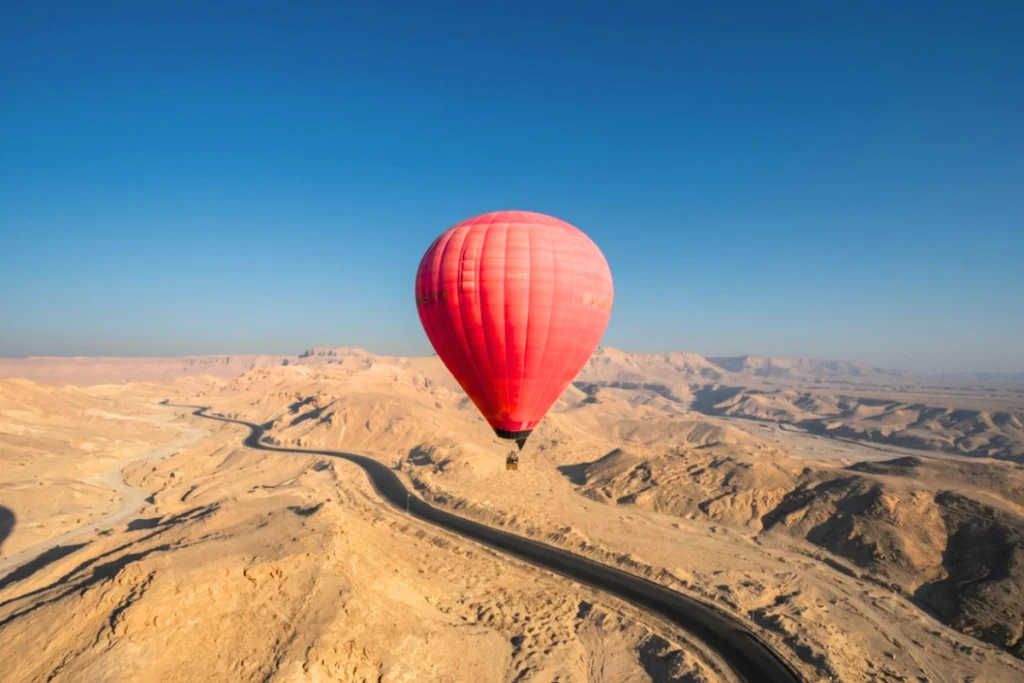
| Hot air balloon (Luxor) | 5:30–7 AM | Valley of the Kings from above at first light. Telephoto for Valley geography. Wide for balloon + sky. |
What We Learned from Nine Days
Egypt is not a destination where the photography takes care of itself. The monuments are there regardless of the hour. The photographs that distinguish themselves from the mass of Egypt photography were almost always taken in a specific window of light, at a specific position, with a specific understanding of what the light does to the stone at that hour.
The single most important lesson: visit each temple category twice when possible. Once in the morning, once at a different time of day. The Luxor Temple in the day and the Luxor Temple at night are two different photographic subjects. The White Desert at dusk and at dawn are two different colour palettes. The Nile from the cruise deck moving downstream and the Nile from the cabin window before dawn are two different rivers.
Egypt rewards return visits to the same subject in different light far more than it rewards new sites in the same light. The instinct to cover more ground at the cost of the right hour is the instinct that produces adequate Egypt photographs rather than exceptional ones.
“The common mistake in Egypt photography is visiting every temple but visiting each one only once, in whatever light the itinerary provides. The Egyptian stone responds so dramatically to different hours that the same temple at 8 AM and at 3 PM is not the same photograph. Going back to the same place at a different hour is not repetition. It is a different subject.”
Practical Gear & Camera Setup
- Wide-Angle Lens (16–35mm / 0.5x on phones): Your primary lens for towering pylon entrances, the cramped Hypostyle Hall at Karnak, and wide White Desert vistas.
- Mid-Range / Portrait Lens (50–85mm / 2x–3x zoom): Ideal for isolating individual wall reliefs, detailed hieroglyphic panels, and statue portraits without distortion.
- Telephoto Zoom (70–200mm / 3x–5x+ zoom): Essential for compressing all three Giza pyramids into one frame from the south, framing hot air balloons over Luxor, and capturing temple approaches from the Nile cruise deck.
- Tripod Necessity: Only essential for White Desert night photography (20-second Milky Way exposures) and interior chapels at Luxor Temple at night. Handholding works fine for standard daytime shots.
- Lens Filter & Extra Battery: A polarising filter helps deepen blue skies and cut glare on pale limestone. Always carry a spare battery… desert heat and cold desert nights drain power quickly.
“You don’t need a truckload of camera gear or years of technical training to photograph Egypt. You just need an early alarm clock, the willingness to walk a little farther than the tour groups, and the patience to watch how morning light transforms ancient stone.”