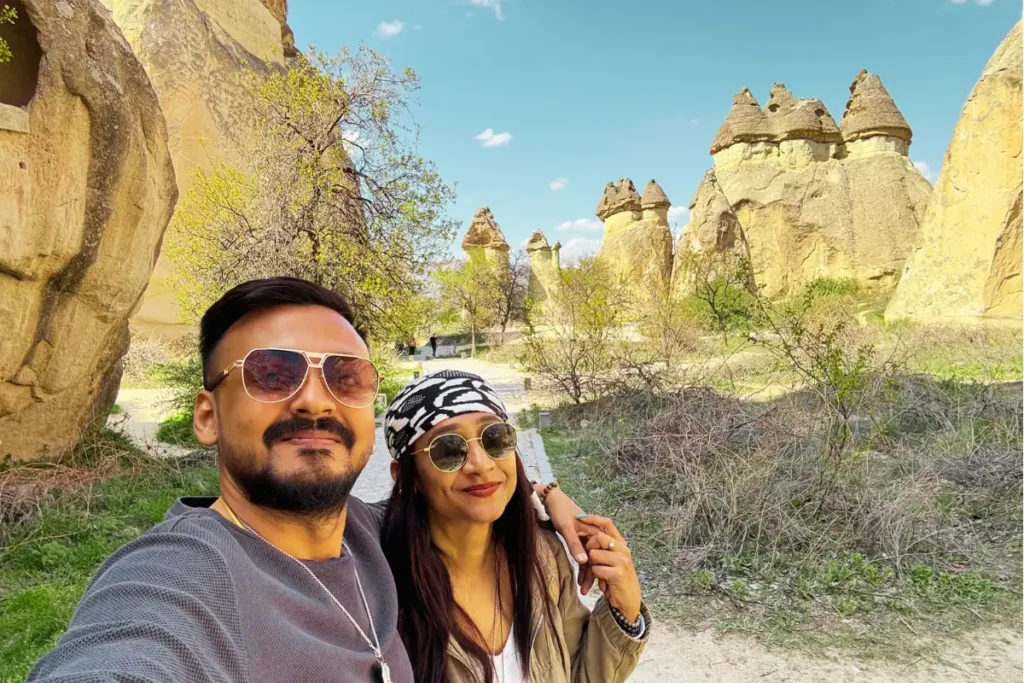
We are not professional photographers… just passionate travelers who love capturing a place well. This Cappadocia photography guide is built from four days of self-drive exploration in April 2025: shooting the same landscapes across different hours, making a few mistakes, and learning through direct experience which locations reward which light.
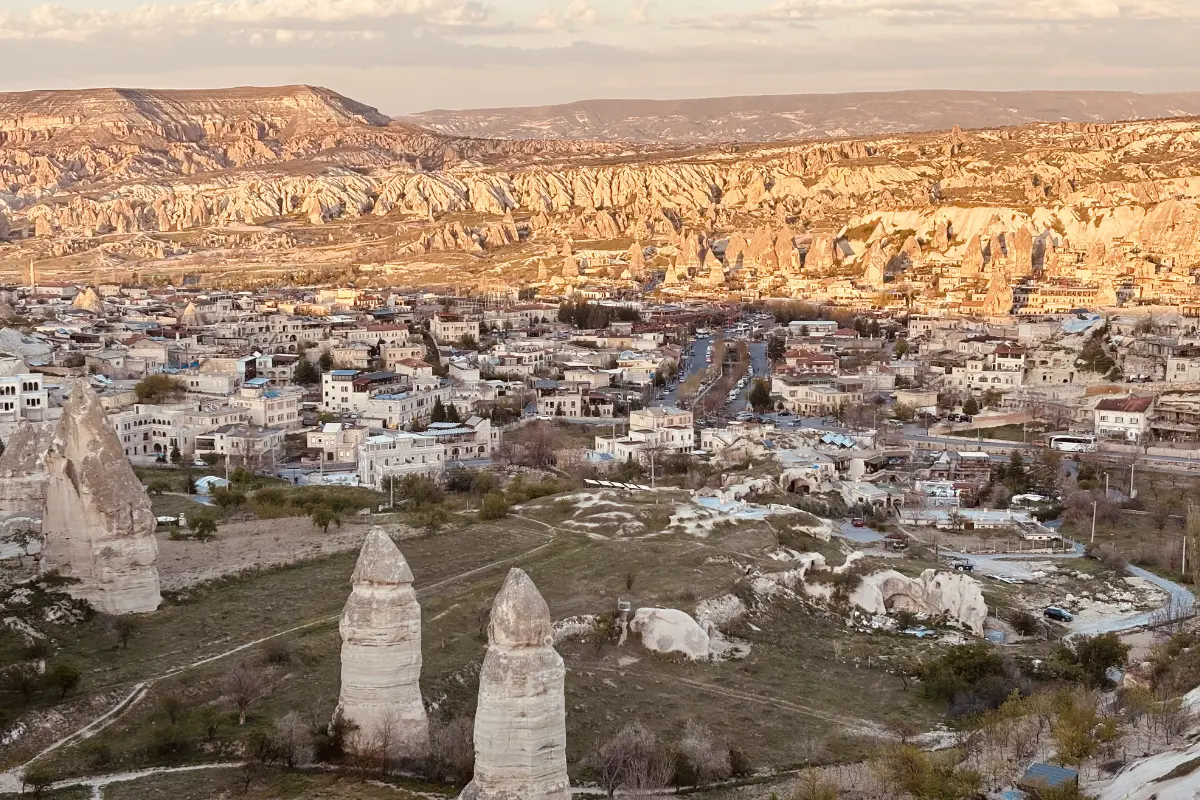
We arrived at the Göreme Panorama Viewpoint at 5 PM on our first evening in Cappadocia. The sun was low. The fairy chimneys below were turning gold and orange. It was the best possible introduction to the landscape because it was the first light we saw Cappadocia in, and the first light was the right light.
Over the following four days, we returned to that viewpoint and to every other major photography location at different times of day. The difference between the same place at noon and at 6 PM was, in every case, significant. The difference between the same place at golden hour and at dusk was sometimes the difference between a good photograph and an extraordinary one.
This guide is about timing. Where to be, when to be there, and what the light will be doing to the landscape at each hour.
Cappadocia’s landscape does not photograph itself. The same fairy chimney that produces a flat grey image at noon produces a vivid amber object at 6 PM. The same valley that is washed out in midday sun is luminous and textured in the golden hour. You are not photographing the landscape. You are photographing the light on the landscape. The difference between a good Cappadocia photograph and a great one is almost always the hour.
- Why Cappadocia Photographs the Way It Does
- The Pre-Dawn Window: Balloons and Silhouettes
- Sunrise: Göreme Panorama and the Valley Fill-Light
- Midday: What to Do and What to Skip
- Golden Hour: The Valley Sequence
- Twilight: The Illuminated Valley
- Specific Location Notes
- The Practical Photography Setup
- The Timing Summary
- What We Learned from Four Days
- Frequently Asked Questions
Why Cappadocia Photographs the Way It Does
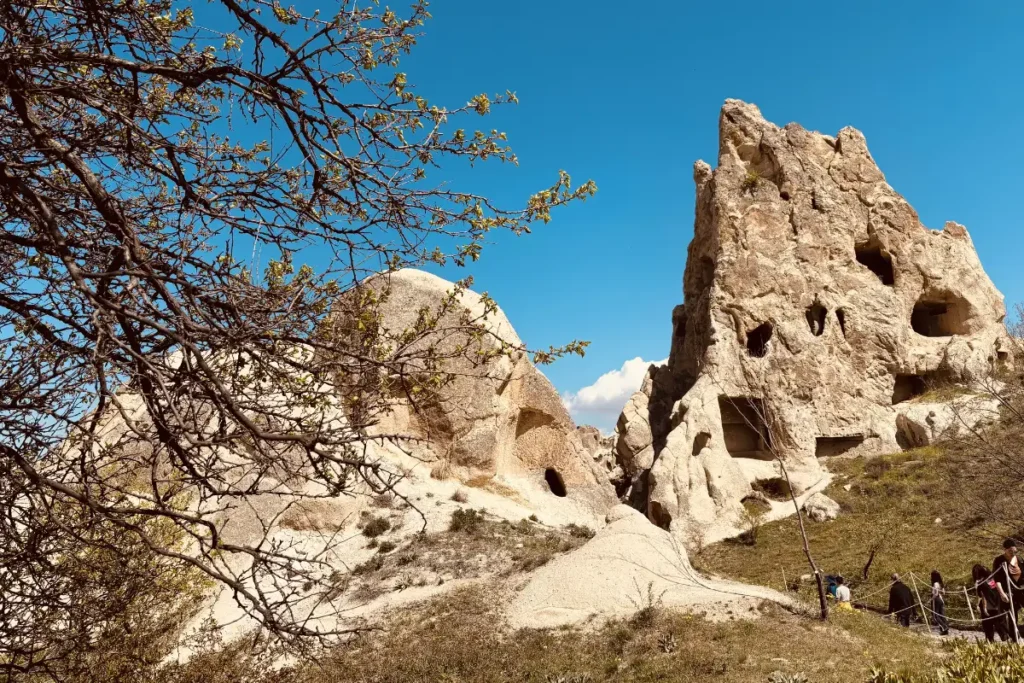
The fairy chimneys of Cappadocia are made of tuff: volcanic ash that compressed into soft stone. The specific composition of the tuff determines how it responds to light. Unlike limestone, which reflects light in a relatively consistent way regardless of angle, tuff has a rougher, more irregular surface texture. At low angles, the light catches every small irregularity and the formation appears highly three-dimensional. At overhead angles, the light reaches every surface equally and the formation appears flat.
This is why the golden hour transformation in Cappadocia is more dramatic than in most other landscape photography destinations. The formations are physically textured in a way that rewards low-angle light. The valley floors, which channel and concentrate shadow as the sun drops, produce the deep contrast between the lit faces and shadow sides of the chimneys that makes Cappadocia photographs immediately recognisable.
The colour of the light matters additionally. The tuff’s base colour is warm… a creamy off-white to pale gold. At noon under direct sun, this base colour is washed out by the intensity of the overhead light. At golden hour, the warm tones of the sunset light work with the warm base of the tuff to produce the amber and orange glow that Cappadocia photographs are built around. The light is not doing something foreign to the rock. It is amplifying a quality that is already there.
The Pre-Dawn Window: Balloons and Silhouettes
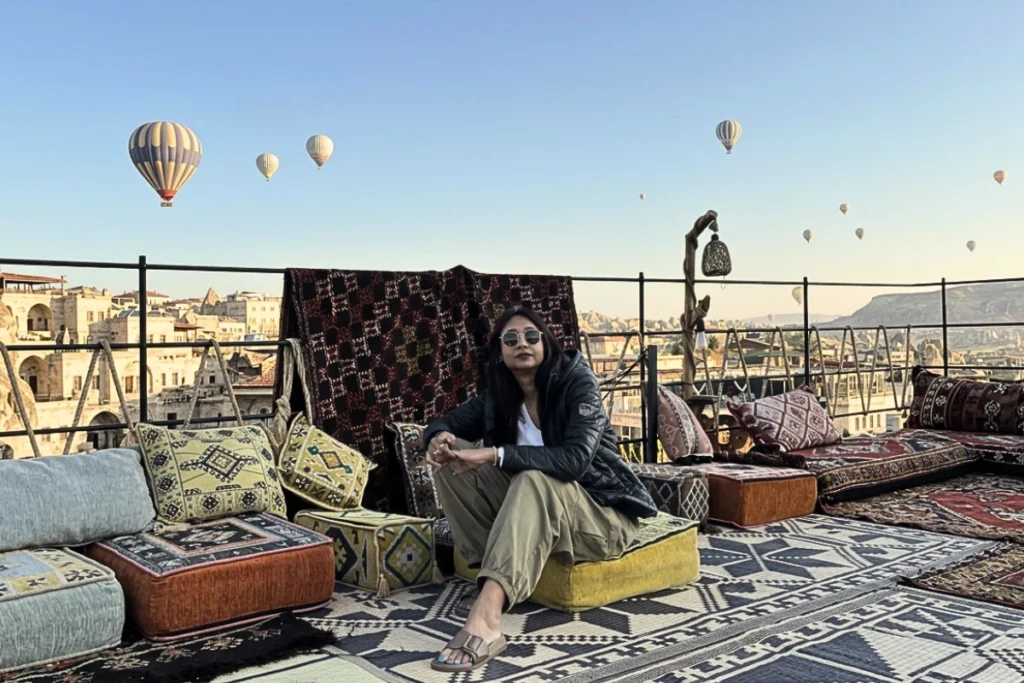
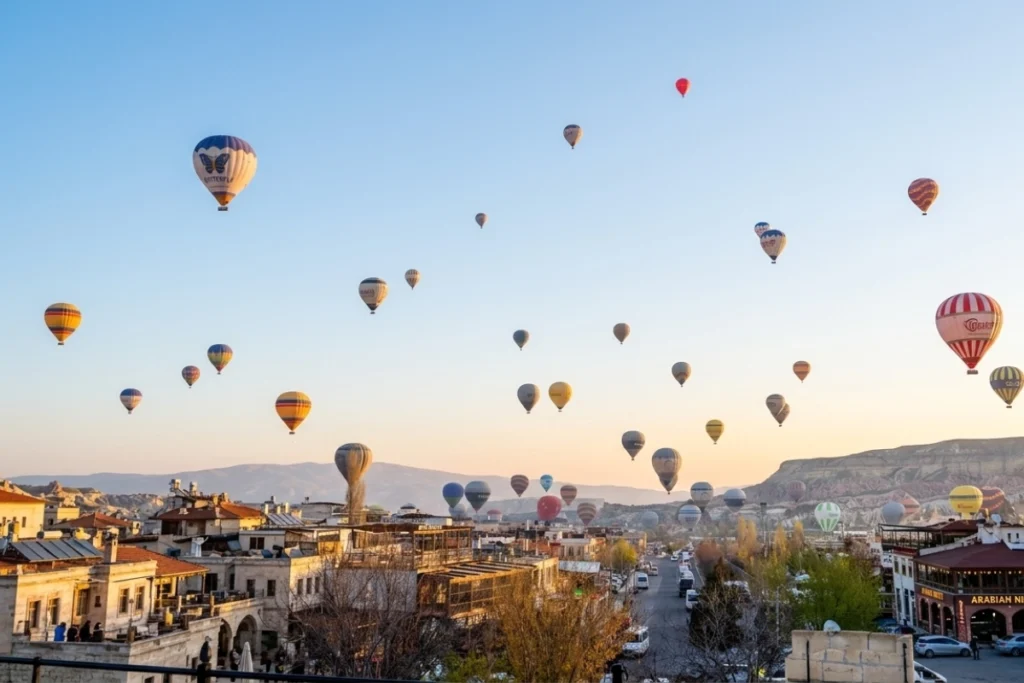
The most photographically distinctive Cappadocia experience… the hot air balloons drifting over the fairy chimneys at dawn… requires being in position by 5 to 5:30 AM.
The balloon launch window is determined by the wind conditions of each morning. The balloons lift off in the calm air of the early morning before the thermal winds build. The window is typically an hour to an hour and a half, from approximately 5:30 to 7 AM. After that, the wind conditions change and the balloons have landed.
The best photography position for balloons over the fairy chimneys is an elevated location that gives you the valley with the chimneys in the foreground and the sky behind. The hotel rooftop at Nomads Cave Hotel gave us exactly this on our successful balloon morning: the valley below, the balloons rising above the formations, the sky shifting from dark blue to warm pink as the sun approached.
The Rooftop Advantage
If your hotel has a rooftop that faces the valley, it is the superior photography position for the balloons. Here is why: the organised balloon viewpoints in Cappadocia have other photographers competing for position. A private hotel rooftop has nobody competing. You can set up your tripod, frame your shot, and adjust your position without negotiating with other visitors. The view may be slightly different from a dedicated viewpoint, but the absence of other photographers and the ability to move freely makes the rooftop consistently more productive.
We watched the balloons from the Nomads Cave Hotel rooftop without freshening up first, which is the correct priority decision. The balloon window is short. The freshening up can wait. Set the alarm for 5 AM. Go immediately to the rooftop when the balloon conditions look promising. The fifteen minutes of sleep you lose are not worth the balloon window you miss.
Shooting the Balloons
For the balloons, a longer focal length (70 to 200mm equivalent) pulls the balloons into the frame and produces the compression effect that makes the balloons appear closer to the fairy chimneys than they actually are. A wide-angle lens captures the full sky with multiple balloons but reduces the visual weight of each individual balloon. Both compositions are valid; the choice depends on how many balloons are visible and how dense the formation is.
The light during the balloon window shifts rapidly. Expose for the sky, not the ground, to prevent the balloons from being blown out against the brightening sky. The balloons are lit from below by their burners… the orange glow visible in the balloon envelope… and from the side by the rising sun. The mix of warm artificial and warm natural light produces a colour range that overexposure destroys and correct exposure preserves.
Sunrise: Göreme Panorama and the Valley Fill-Light
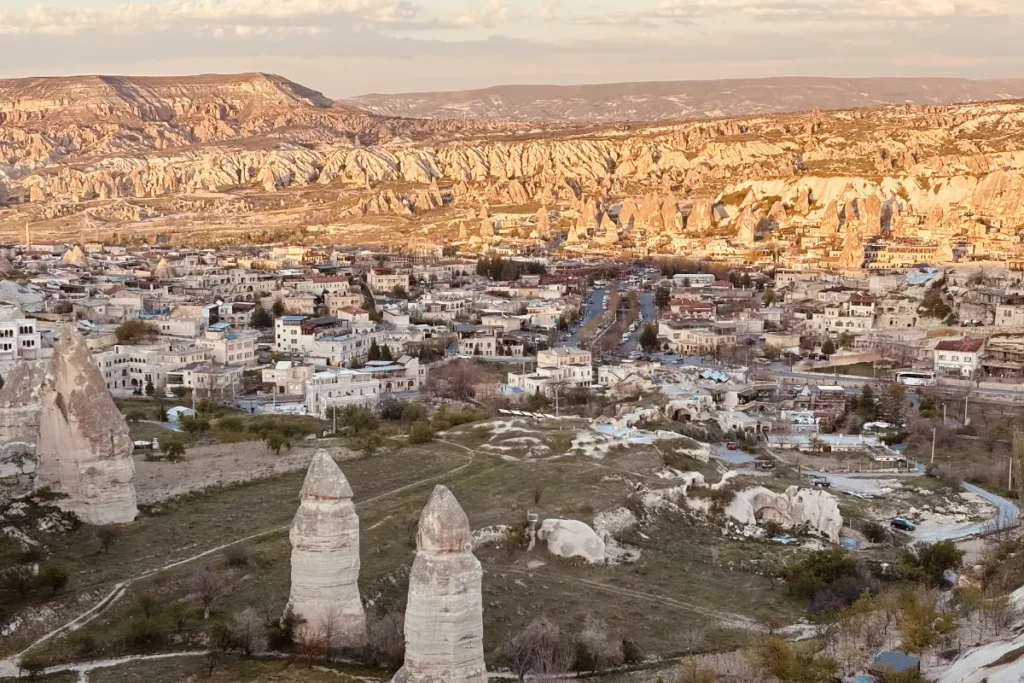
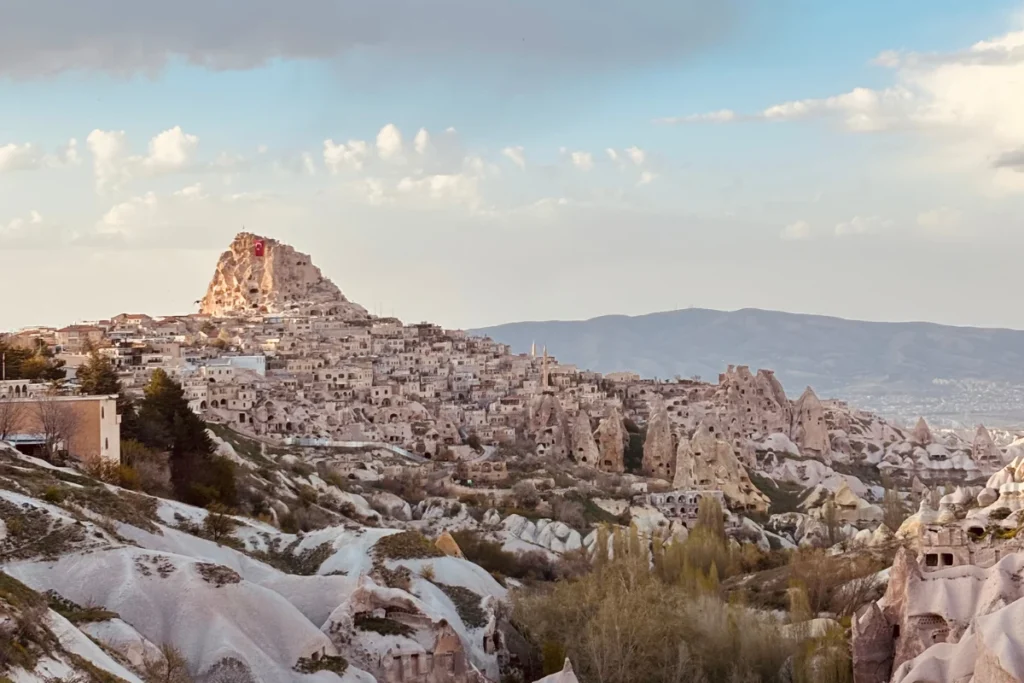
The Göreme Panorama Viewpoint is the most reliably productive sunrise location in Cappadocia. It sits above the main Göreme valley with a direct east-facing view, which means the first light of sunrise arrives on the chimneys below before it arrives anywhere else in the landscape.
We reached it at 5 PM on our arrival evening and understood immediately that this viewpoint is designed for both sunset… when it faces the illuminated chimneys directly… and for sunrise, when the valley floor fills with shadow while the chimney tops catch the first orange light. The contrast between the lit tops and the shadow-filled base is the specific photographic condition that the sunrise at Göreme Panorama produces.
“The secret to photographing Cappadocia isn’t finding a secret location… it’s visiting the famous ones at the hour everyone else is still asleep.”
The access road to the Göreme Panorama is narrow and lined with parked cars in the evenings. In the morning, it is clear. The viewpoint itself is shared with other visitors at sunset; at sunrise, it is close to empty. For serious photography, the morning visit is more productive than the evening visit even though the landscape is in the same direction.
Midday: What to Do and What to Skip
Midday in Cappadocia is not landscape photography time. The overhead sun flattens the formations, eliminates the shadows that give them dimension, and produces a colour palette of pale grey and washed beige that the landscape genuinely is at that hour. This is not a failure of the landscape. It is how tuff behaves at noon.
Midday hours are, however, useful for several photography purposes that golden hour is not suited for.
Interior Photography: The rock-cut churches at Göreme Open Air Museum, Zelve, and Red Valley have dark interiors that benefit from ambient midday light pouring through cave mouths.
Structural Details: Close-ups of carved tuff textures, door arches, and rock architecture hold up well under overhead light.
Portraits & Human Scale: Harsh midday sun flattens landscapes, but it provides predictable exposure for portrait shots of travelers exploring the trails.
Golden Hour: The Valley Sequence
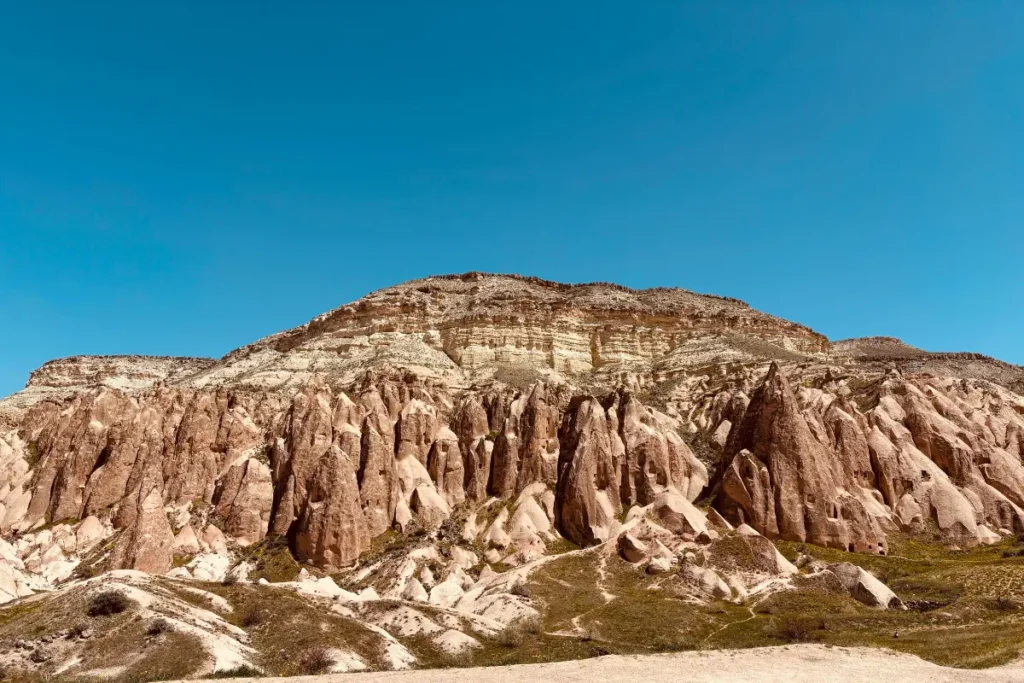
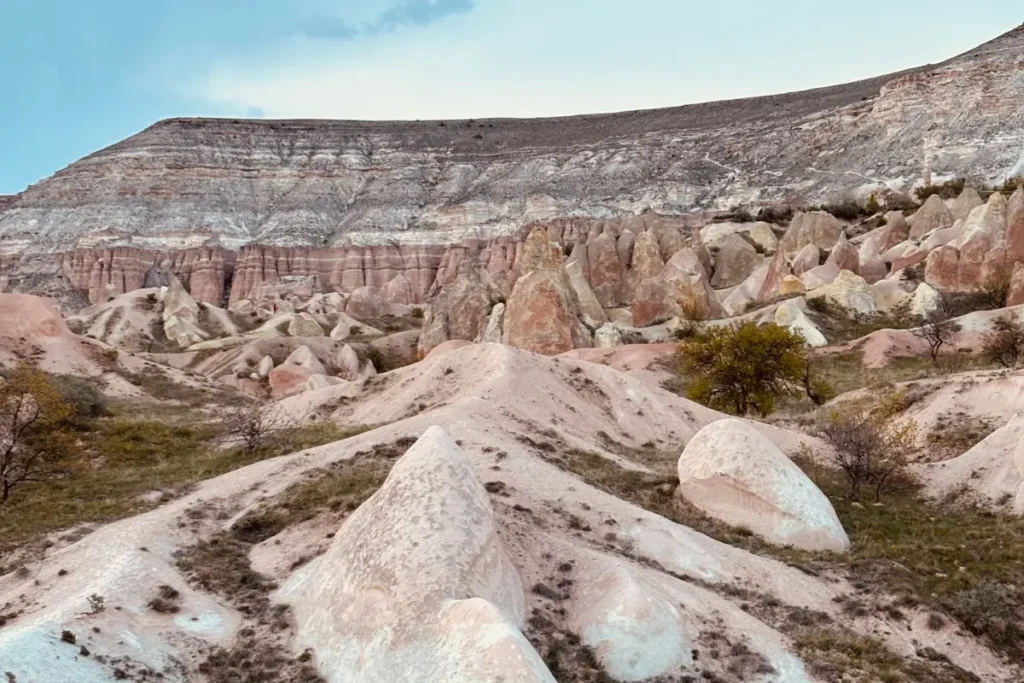
The most productive photography in Cappadocia happens in the two hours before sunset. The sequence we developed across four days:
Love Valley: 4 to 5:30 PM
The Love Valley rim faces roughly southwest, which means the afternoon light arrives on the eastern faces of the formations from an angle that produces strong shadow contrast. The best photography at Love Valley is from the rim looking into the valley, with the sun behind and to the side, illuminating the valley floor while the shadows on the chimney sides provide dimension.
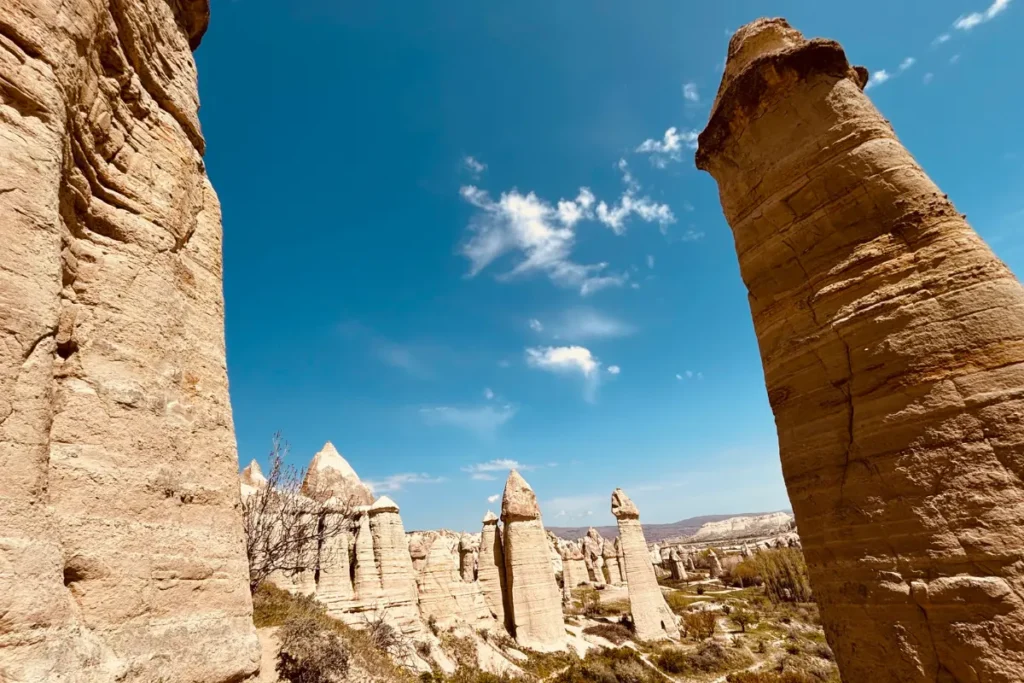
The valley floor, accessible via a descending trail, produces a different photograph: looking up at the chimneys from below, with the sky visible above and the formations filling the frame from the sides. This photograph is most productive in the hour before sunset when the rim is in shadow and the chimney tops still catch the direct light. The contrast between the lit cap and the shadowed column is the specific quality the valley floor photographs produce.
Red Valley: 5 to 6:30 PM
Red Valley’s iron oxide content turns the formations dark red in low-angle light. This is not subtle. The same formations that look pale beige at noon appear as vivid saturated red at 5 PM when the light is at a low angle and the shadow depth makes the colour three-dimensional.
The Red Valley trail enters from the northern end near Göreme and exits at the Rose Valley junction to the south. Walking from north to south in the afternoon puts the sun at your back for the first section of the trail, which illuminates the valley walls you are facing. By the time you reach the southern section, the sun has dropped further and the formations on both sides are lit in warm orange.
The cave churches in Red Valley are photographically interesting for the same reason as Göreme Open Air Museum: the dark interiors open to a brightly lit formation exterior, and the contrast between interior shadow and exterior light produces photographs that are available only at cave mouths.
Rose Valley: 6 to 7:30 PM
Rose Valley is the sequence finale. The formations here contain a slightly different iron oxide composition from Red Valley that turns pink and rose in the last 40 minutes before sunset rather than red. The transition from the deep amber of Red Valley to the specific rose tone of Rose Valley, which happens in a short walk between the two, is one of the landscape transitions that Cappadocia produces because of its geological variety.
The Rose Valley sunset point sits on the valley rim above the formations. The view from this point in the final 30 minutes before sunset, when the sky is transitioning from blue to orange above and the formations below are turning from amber to rose, is the photograph most associated with Cappadocia in the minds of photographers who have visited. It is reproducible every clear evening from October to May. The challenge is being there at the right moment, which requires being at the Rose Valley parking area no later than 5:30 PM to walk to the viewpoint with time to set up.
Twilight: The Illuminated Valley
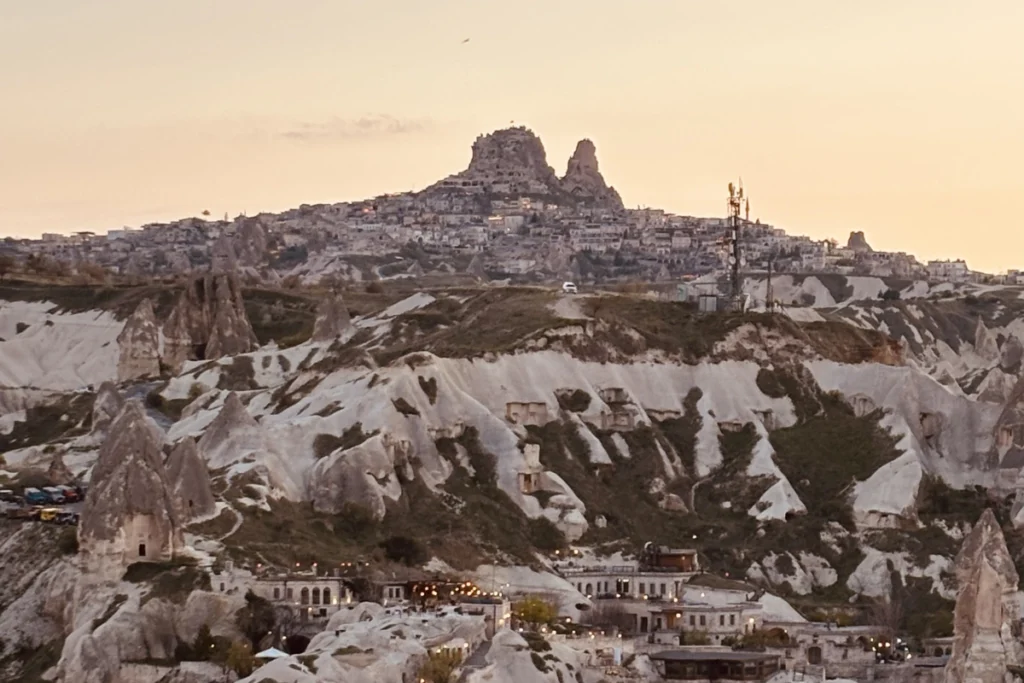
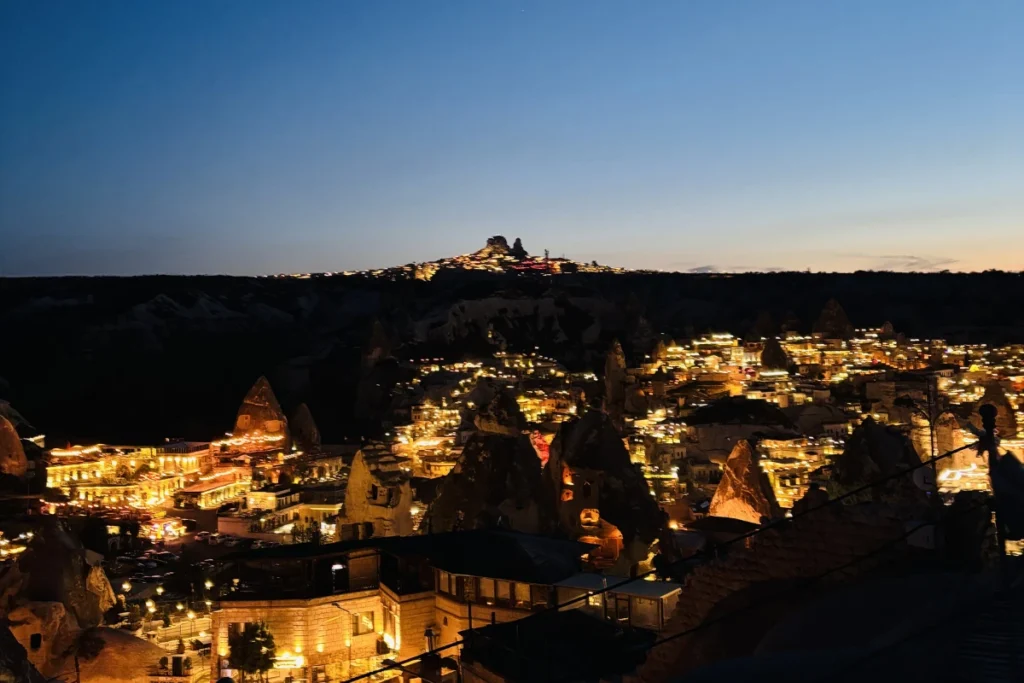
After sunset, as the sky deepens from orange to blue, the fairy chimneys of Göreme begin to be illuminated by the village’s exterior lighting. This is the photographic moment that most visitors miss because they leave the viewpoints when the sun sets.
From the Göreme sunset viewpoint… the narrow road above the town… the twilight view of the illuminated valley is extraordinary: the fairy chimneys glow warm against the deep blue of the post-sunset sky, the shadows between them are deep, and the sky provides a blue-hour backdrop that no other time of day produces.
The access road to this viewpoint was described in our trip notes as ‘incredibly narrow and packed with vehicles.’ This is accurate for the sunset hour. For the twilight view, the sunset crowd has departed and the road is significantly clearer. The twilight view is the reward for staying after the main crowd leaves.
Twilight photography requires either a tripod for long exposures or a camera body that handles high ISO well. The light level is low. The illuminated chimneys are bright but the surrounding sky is transitioning to dark. Expose for the chimney illumination, let the sky remain naturally dark blue rather than pushing the exposure, and the photograph becomes the blue-hour Cappadocia image that is distinct from anything produced in daylight.
Specific Location Notes
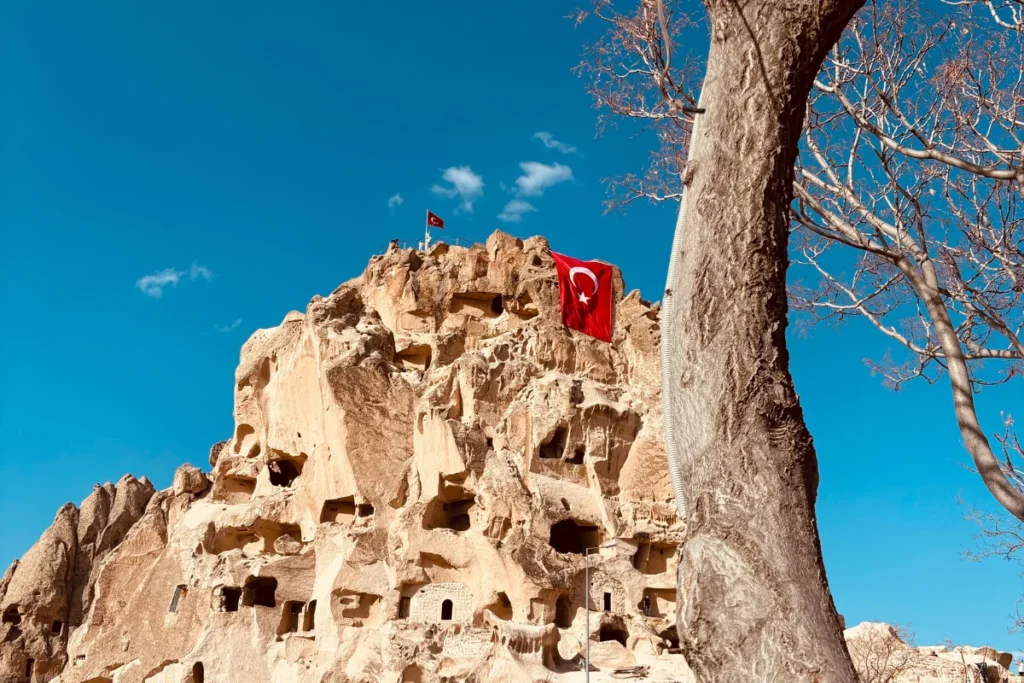
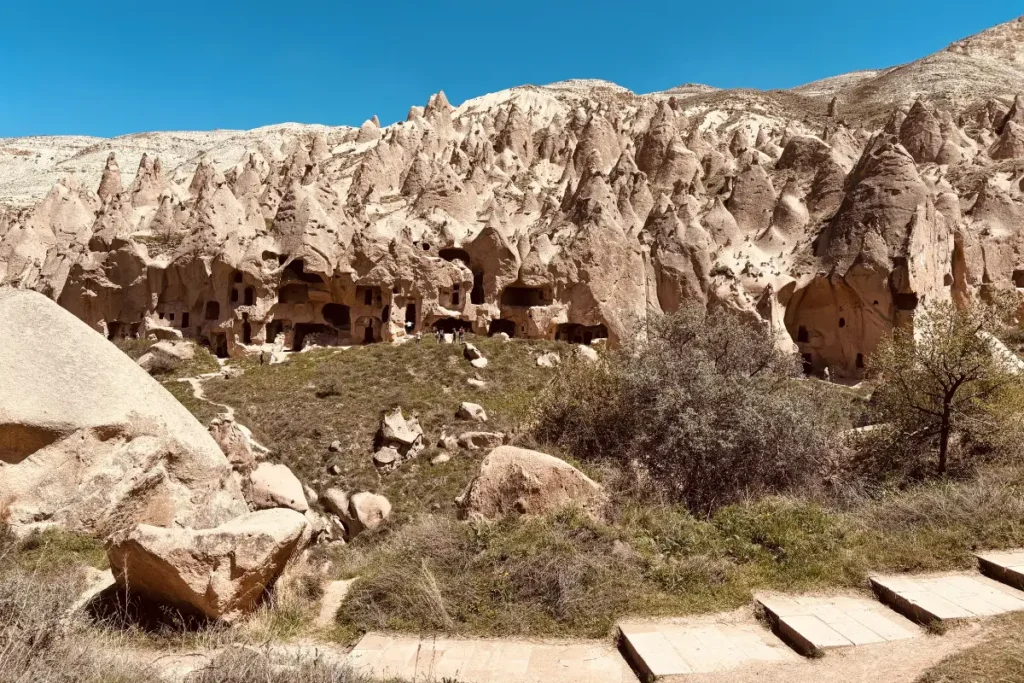
Uçhisar Castle: Any Elevation, Any Direction
Uçhisar Castle is the highest point in Cappadocia and provides the most complete 360-degree view. Entry: 640 Lira for two. For photography, the castle produces useful images in several directions simultaneously: west toward the sunset, east toward the plains and the Erciyes mountain on clear days, and down at the fairy chimney landscape below. The castle is photographically productive at both golden hour (for the sunset direction) and at sunrise (for the east-facing view over the plains).
The specific Bollywood connection… Tiger 3’s ‘Leke Prabhu Ka Naam’ sequence was filmed here… making Uçhisar an additional draw for Indian visitors who want the recognisable location.
Paşabağ: Morning, Not Afternoon
Paşabağ (Monks Valley) faces east, and the triple-capped fairy chimneys are illuminated from the east in the morning and in shadow in the afternoon. The classic Paşabağ photograph… the multi-capped chimneys in warm light against the sky… is a morning photograph. Visiting Paşabağ in the afternoon produces a photograph that is technically correct but lacks the light quality that makes the chimneys appear three-dimensional.
The interior of the Saint Simeon chimney, accessible via carved internal stairs, produces an interesting photograph looking out through the narrow chimney aperture at the sky: the opposite of the exterior portrait. This works at any time because the light from outside is always brighter than the interior.
Zelve Open Air Museum: Soot and Shadow
Zelve’s cave kitchens, with their soot-blackened ceilings, produce dark interior photographs that work well in any light because the darkness is the subject. The connecting tunnel between Valley 2 and Valley 3, requiring a crouch to navigate, is photographically interesting for the same reason: the darkness of the passage against the bright exit is a natural frame.
Zelve’s three valleys face different directions. Valley 1 faces east and is best photographed in the morning. Valley 2 and 3 face primarily north and are usable throughout the day without strong directional dependence. For the most even light on the cave church interiors of Valley 1, midday is acceptable because the entrance faces east and the interior receives indirect light rather than direct sun at noon.
Ihlara and Selime: Different Photographic Logic
We viewed Ihlara from above rather than hiking into the canyon, which is an honest disclosure about our visit. The overlook view of the canyon… the green river corridor cut into the pale plateau… is strong from above and does not require the hike to be a productive photography location.
Selime Monastery, which we accessed via a local guide for 700 Lira, produces photographs that are distinct from every other Cappadocia location because the formations genuinely look like science fiction. The guide’s route through the hidden backside of the monastery complex reaches formations that the standard tourist path does not, and the photographs available from that route are not available anywhere else in the Cappadocia photography circuit.
The Practical Photography Setup
Equipment
Cappadocia is a wide-angle landscape. The valleys, the panoramic views, and the balloon sky all favour a wide-angle lens (24 to 35mm equivalent). The fairy chimneys, which photograph well as individual subjects, can use a normal or short telephoto (50 to 85mm). The balloons at distance, and the compression of the valley from a panoramic viewpoint, use a longer focal length (70 to 200mm).
A tripod is useful for the pre-dawn balloon window and for the twilight illuminated valley shot. For golden hour landscape photography, handholding is generally sufficient if your shutter speed stays above 1/60 second. The light at golden hour is bright enough for handheld photography in most conditions.
The Rental Car Advantage
Self-drive access to Cappadocia’s photography locations makes the difference between a photography trip and a tourism experience. Tour buses arrive at each location at predictable times and produce crowded viewpoints. A rental car allows arrival 30 to 45 minutes before the buses. At the Göreme Panorama, 30 minutes before tour bus arrival means a crowd-free viewpoint at golden hour. At Paşabağ, early arrival means the classic chimney compositions without visitors in the foreground. At Rose Valley, early arrival means finding the best position on the rim before the sunset crowds fill it.
We rented from Cizgi Car Rental. Our coverage of the self-drive approach is in the Cappadocia Valleys Walking Guide. For photography specifically: the car means you can leave when the light changes rather than when the tour schedule requires. This is not a minor benefit. It is the entire difference between photographing Cappadocia on the landscape’s schedule versus a tour operator’s schedule.
The Timing Summary
| Time | Location | What You’re Shooting |
| 5:00–5:30 AM | Hotel rooftop | Balloons lifting over fairy chimneys at first light. Silhouettes against the brightening sky. |
| 6:00–7:30 AM | Göreme Panorama Viewpoint | Chimney tops in first light while valley floor remains in shadow. High contrast, warm tops, cool base. |
| 8:00–11:00 AM | Paşabağ, Zelve, Göreme Open Air Museum | Paşabağ chimneys before they go into afternoon shadow. Zelve soot interiors. Göreme church frescoes. |
| Midday | Cave interiors, Kaymaklı underground | Interior photography, structural detail, underground city. Avoid landscape photography. |
| 4:00–5:30 PM | Love Valley, Uçhisar Castle | Valley floor from rim. Uchisar sunset direction. Shadow and light contrast building. |
| 5:00–6:30 PM | Red Valley | Iron oxide turning deep red in low-angle light. Walk north to south. |
| 6:00–7:30 PM | Rose Valley | Rose and pink tones in the final light. The most characteristic Cappadocia sunset photograph. |
| After sunset | Göreme sunset viewpoint | Illuminated fairy chimneys against the blue-hour sky. Long exposure or high ISO. |
What We Learned from Four Days
The single most useful thing we learned in four days of photography in Cappadocia is that the landscape rewards return visits to the same location. The Göreme Panorama in the morning produces a completely different photograph from the Göreme Panorama in the evening. Love Valley from the rim is a different photograph from Love Valley from the floor. The twilight illuminated valley is a different photograph from the same valley at sunset.
The traveler on a one-day Cappadocia stop sees the landscape once, from a fixed set of organised viewpoints, at whatever time the tour schedule places them there. The self-drive traveler with four days sees it in multiple lights, from multiple positions, and begins to understand which combinations produce the photographs that are worth having rather than the photographs that record the fact of being there.
Cappadocia does not require expensive equipment or advanced technique. It requires being in the right place when the light is doing what the landscape is capable of, and that requires knowing in advance what the landscape is capable of. This guide is the knowledge we wish we had arrived with.
“You don’t need expensive gear or years of professional training to capture Cappadocia. You just need a rental car, an early alarm clock, and the patience to watch how five minutes of changing light can completely transform three million years of volcanic history.”