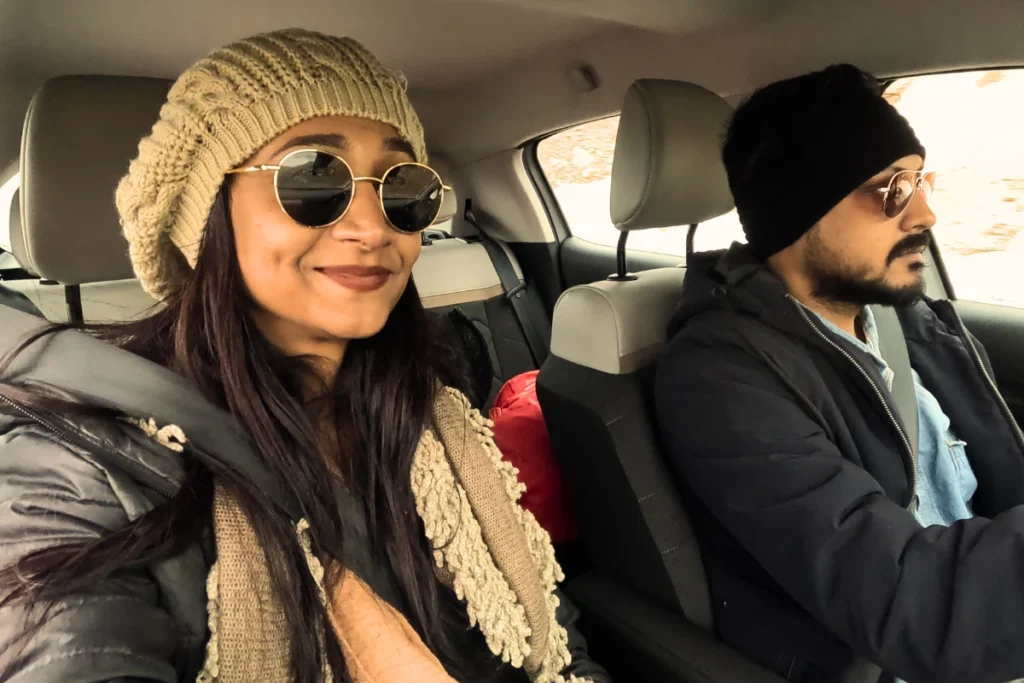
This eastern Turkey travel guide covers Days 8 to 11 of our 14-day self-drive road trip: the 1,200 km from Cappadocia to Gaziantep through the part of Turkey that tourism has not yet found.
The guesthouse owner at Mount Nemrut told us he had not seen an Indian traveler in at least five years. He could not recall ever meeting one before us. At Göbekli Tepe, guides confirmed it was extremely rare for Indian tourists to come this far east. In Mardin, the cave hotel owner seemed genuinely surprised we had arrived by car from the west without an organised tour.
We drove through eastern Turkey for four days across approximately 1,200 kilometres. During those four days, we did not see another tourist vehicle with non-Turkish plates. We did not encounter a single organised tour bus at any site except Göbekli Tepe. We ate at restaurants where no one spoke English and the menu existed only in Turkish. We drove through villages where children stared because foreign faces were unfamiliar.
Eastern Turkey is the part of the country that Turkey’s own tourism marketing barely acknowledges. The billboards promote Istanbul, Cappadocia, Antalya, and the Aegean coast. The east gets silence. The silence is the point.
What the east contains, behind that silence, is the densest concentration of ancient human sites we have encountered anywhere in the world. The oldest known temple built by human hands. A king who built his tomb among the clouds because he believed he was divine. A city where the Serpent Queen’s face appears on every doorway. A shamanic womb carved into bedrock. Sacred pools where fire turned to water. A sunken Euphrates village. The largest mosaic museum on Earth. And a UNESCO City of Gastronomy where the kebabs are so good they require their own paragraph.
All of it costs less than a single day in Istanbul.
This article covers the eastern half of our 4,150 km Turkey road trip: four days from Cappadocia to Gaziantep, through the southeast, along the Syrian and Iraqi border region, and back. The individual sites have their own dedicated guides. This article is about the region as a connected experience: what the east feels like, how the driving works, what the silence means, and why the road nobody takes is the road that stays with you.
“Four days. No tour bus at any site except one. No tourist vehicle with non-Turkish plates. No English on any menu. The history was denser than anything we found in the west. The prices were half. The kindness was greater.”
- What Is Eastern Turkey?
- Mount Nemrut: Where a God-King Built His Tomb in the Clouds
- Mardin: The City Where Mythology Still Lives
- The Road to Göbekli Tepe
- Şanlıurfa: The City of Prophets
- Halfeti: The Kingdom the Dam Drowned
- Gaziantep: Where the East Ends and the Food Begins
- What the East Costs
- The Driving
- Is Eastern Turkey Safe?
- Frequently Asked Questions
What Is Eastern Turkey?
When we talk about eastern Turkey means the southeastern Anatolian region stretching from Cappadocia’s eastern edge to the Syrian and Iraqi border zone: the provinces of Adıyaman (Nemrut), Mardin, Şanlıurfa, and Gaziantep. This is Mesopotamian Turkey. The landscape is dry, sun-drenched, and enormous. The hills roll without interruption. The villages are small and quiet. The ancient history is layered so thickly that you cannot drive thirty minutes without passing something that predates most European civilisations.
The region is ethnically and culturally diverse in ways that western Turkey is not. Kurdish, Arabic, Syriac Christian, and Turkish communities coexist across these provinces. The food changes at every city. The music changes. The architecture shifts from volcanic tuff to golden limestone. The atmosphere moves from the tourist economy of Cappadocia to something rawer, more local, and significantly more affordable.
The tourism infrastructure is minimal. Hotel options range from family-run pensions to basic city hotels. Restaurant menus are in Turkish. English is rare. Google Translate and sign language do more work than phrasebooks. The sites themselves, with the exception of Göbekli Tepe, receive a fraction of the visitors that western Turkey’s attractions draw. This is the east’s advantage, not its limitation.
Mount Nemrut: Where a God-King Built His Tomb in the Clouds
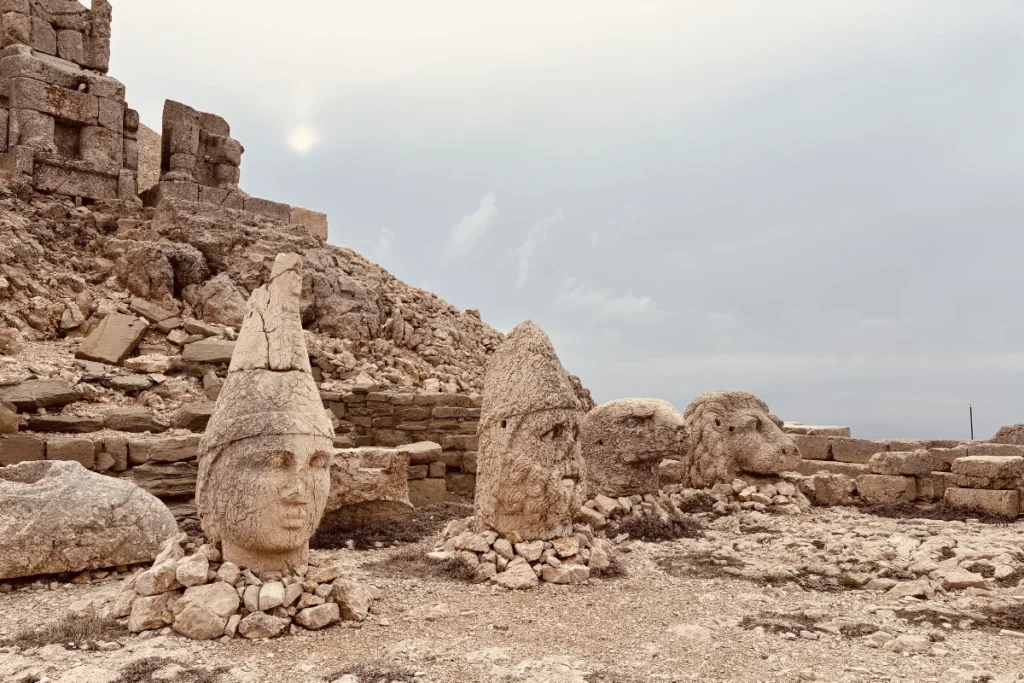
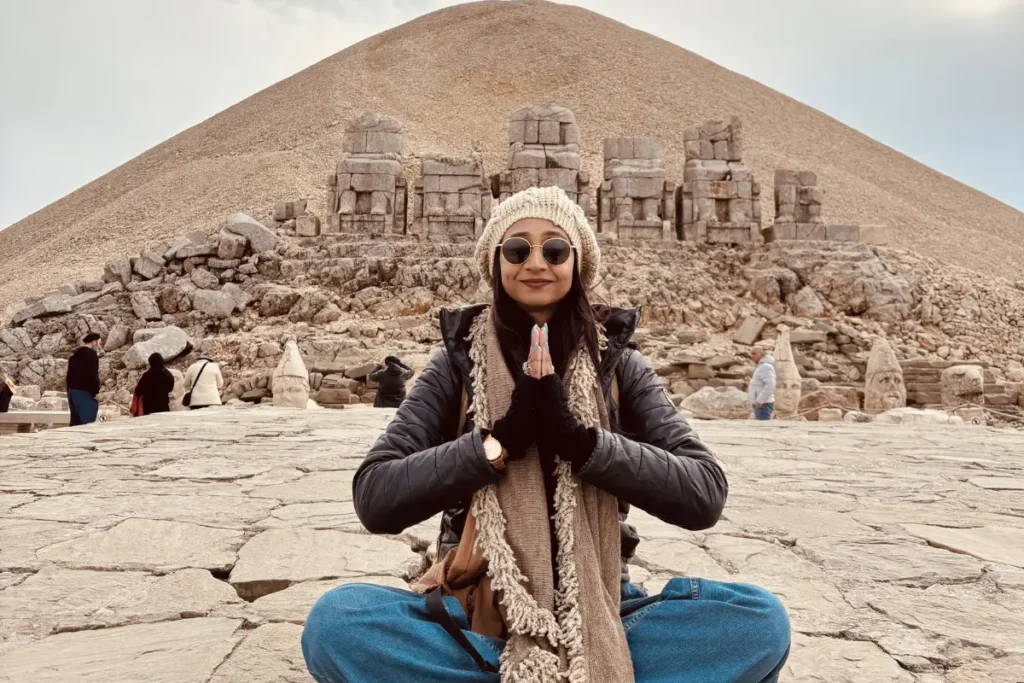
The drive from Cappadocia to Mount Nemrut is 509 kilometres and took us 7.5 hours. It was the longest single driving day of the entire 14-day trip and the most physically demanding.
The final approach is where the trip shifts from driving to endurance. The roads narrow, steepen, and deteriorate. Loose stones lie on the surface where they have fallen from the cliffs above. The mountain roads have no guardrails. In the last few minutes of the ascent, our tyres lost traction on loose gravel and skated sideways. We were not certain the car would make it. It made it. We stepped out at the summit into the cloud.
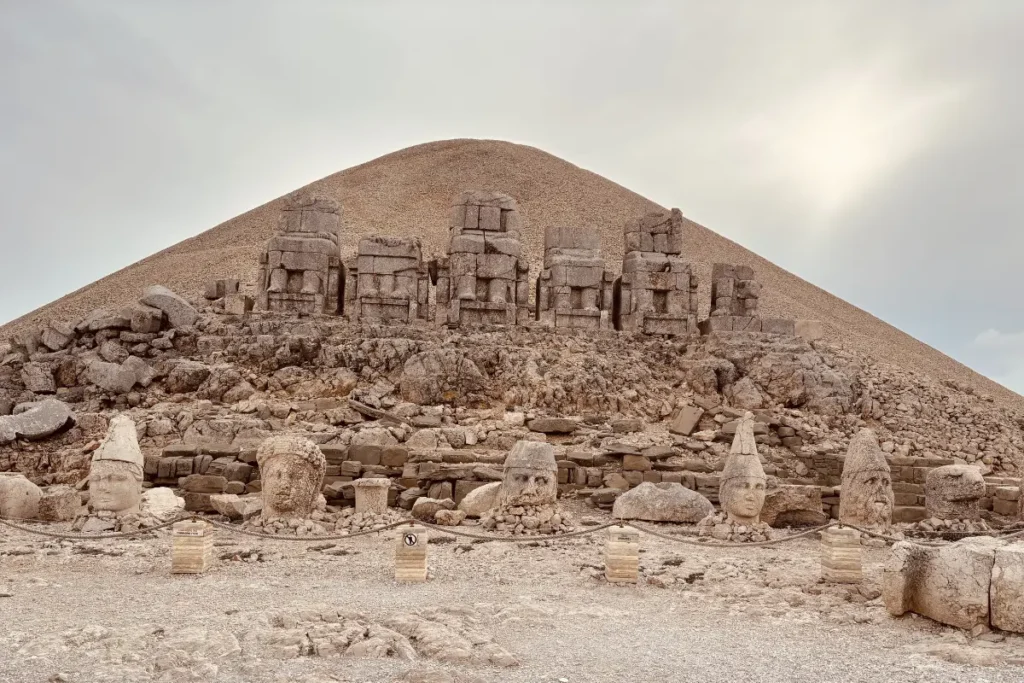
Mount Nemrut was built in the 1st century BCE by King Antiochus I, who believed he was a living god. The 50-metre burial mound at the summit is constructed from millions of loose limestone pieces engineered to be self-healing: any tunnel dug into it collapses and fills itself back in. Nobody has found the tomb. The fallen stone heads of Antiochus’s giant statues, each originally 9 metres tall, sit on the east and west terraces. At the base, tunnels plunge 150 metres into the earth, associated by some researchers with the mystical cult of Mithras.
Standing among those heads, surrounded by cloud, looking at the scattered remains of a man’s attempt to become eternal…this felt like the single most significant moment of the trip. Not the most beautiful. Not the most educational. The most significant. The kind of moment where you understand, physically, that you are standing somewhere that will not leave you.
We stayed at the Karadut Pansion (TRY 1,580 / INR 3,634 / USD 39 including dinner) in the village at the base of the mountain. The family was extraordinarily warm. The chicken soup, bread, and rice they served was exactly what a mountain evening after that drive requires. The wind howled outside. We slept knowing we had driven the most dangerous roads of our lives and would do it again without hesitation.
Entry fee: TRY 680 / INR 1,564 / USD 17 for two.
Note from the guesthouse: as far as the owner could remember, we were the first Bengali travelers from India to reach Nemrut. He had not seen an Indian traveler of any kind in at least five years. We mention this not as a boast but as a data point about how rarely this part of Turkey appears on Indian travel itineraries.
“Standing among the fallen heads of Mount Nemrut, surrounded by cloud at 2,134 metres, looking at the scattered remains of a man’s attempt to become eternal…this was the single most significant moment of the trip. Not most beautiful. Not most educational. Most significant.”
Mardin: The City Where Mythology Still Lives
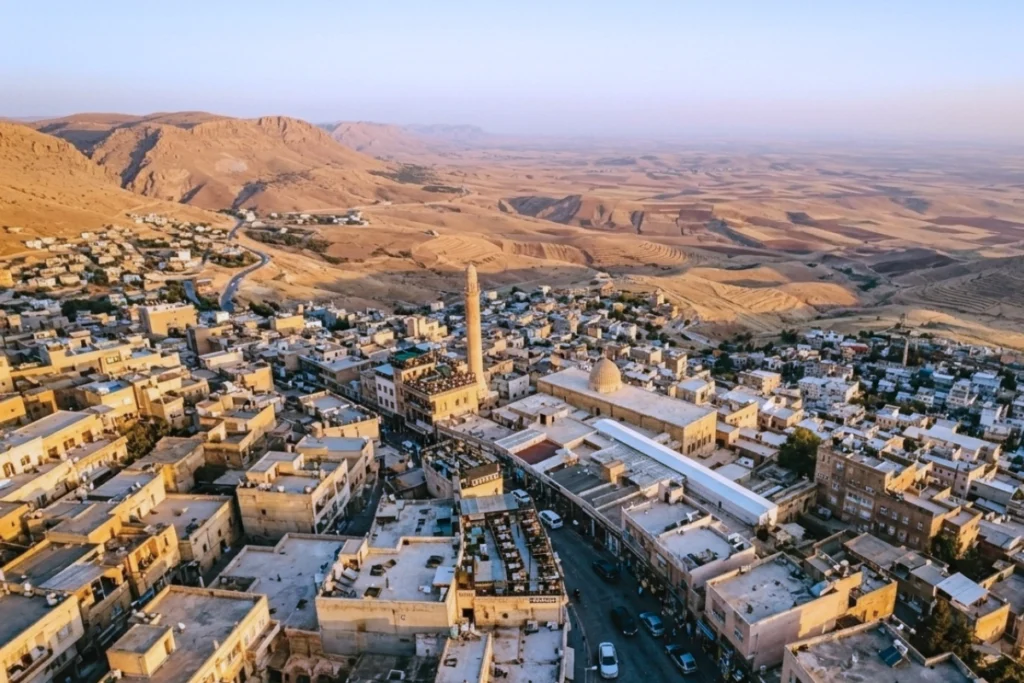
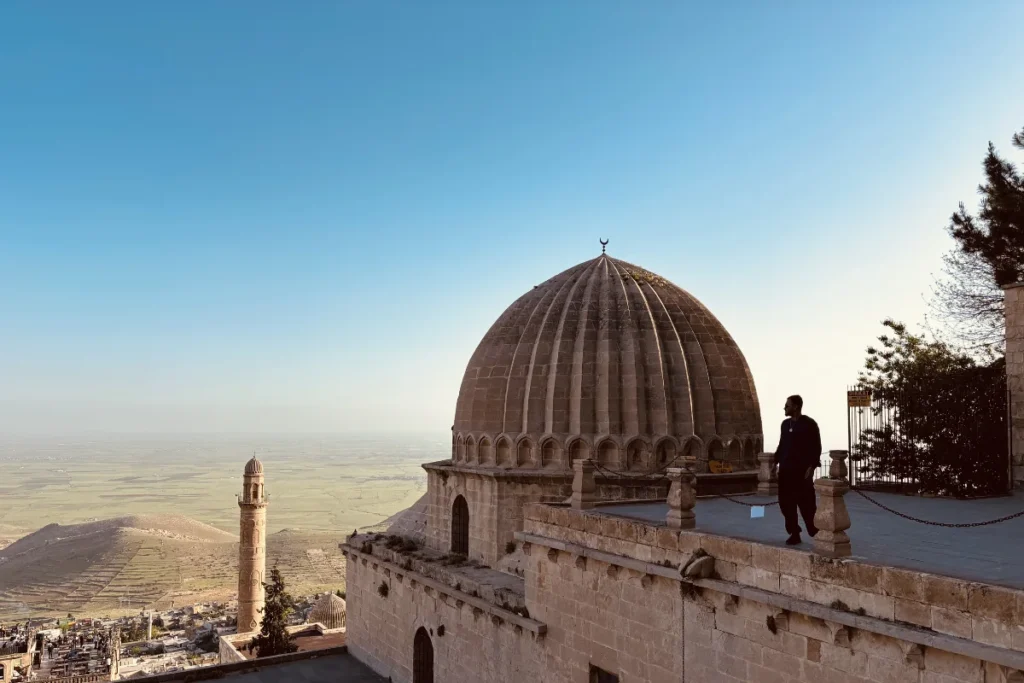
From Nemrut, we drove 270 kilometres southeast to Mardin, stopping first at the ancient garrison city of Dara, 30 kilometres from the Syrian border.
Dara is carved from limestone bedrock. A three-storey underground gallery grave with a carved relief depicting the Resurrection of the Dead. Gargantuan underground cisterns supported by stone pillars, where an entire city’s water supply was hidden from besieging armies. A quiet Kurdish village built directly on top of Roman ruins, modern life and ancient death occupying the same ground.
One practical note: Dara closes to general visitors between 12 and 1 PM for a lunch break. The open-air village ruins remain accessible during this hour, but the main cisterns and closed tomb areas are locked. Plan around this.
Mardin itself is unlike any city we have visited. Golden limestone terraces cascading down a hillside, overlooking the flat Mesopotamian plain that stretches south toward Syria, approximately 20 kilometres away. The Kasımiye Madrasa, where a Sufi fountain maps human life from birth to death through the movement of water. The Zinciriye Madrasa, where a sultan was imprisoned inside the building he designed for his own eternity. The sunset from the Zinciriye roof terrace, looking out over the golden city dropping away into the endless Mesopotamian plain, was the most dramatic view of the entire 17 days.
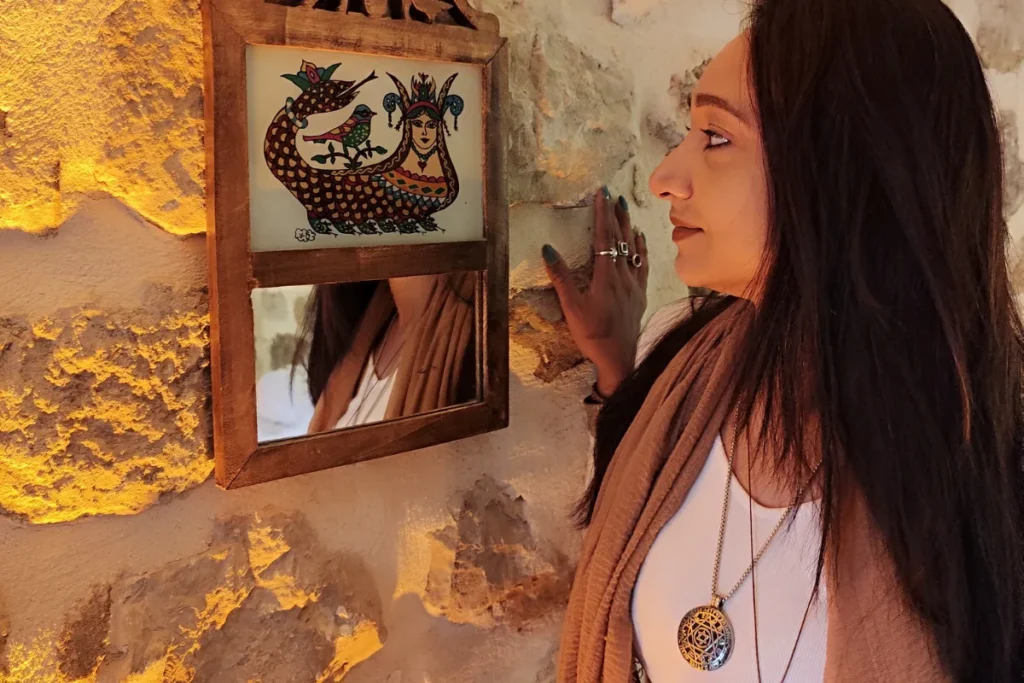
The mythology of Shahmaran, the Serpent Queen, is woven into every copperplate, every silver filigree piece, every family doorway in the city. Our cave hotel was Edo Evleri (TRY 1343 / INR 2,733 / USD 29 per night), with Shahmaran portraits on the walls and ancient kitchen utensils still in the stone alcoves. The architecture reminded us instantly of Rajasthan.
One day was not enough. We know this. We will return.
The full Mardin guide covers every chamber of Dara, every doorway mythology of the Serpent Queen, and the specific moment when the Syrian border becomes visible from a madrasa rooftop.
The Road to Göbekli Tepe
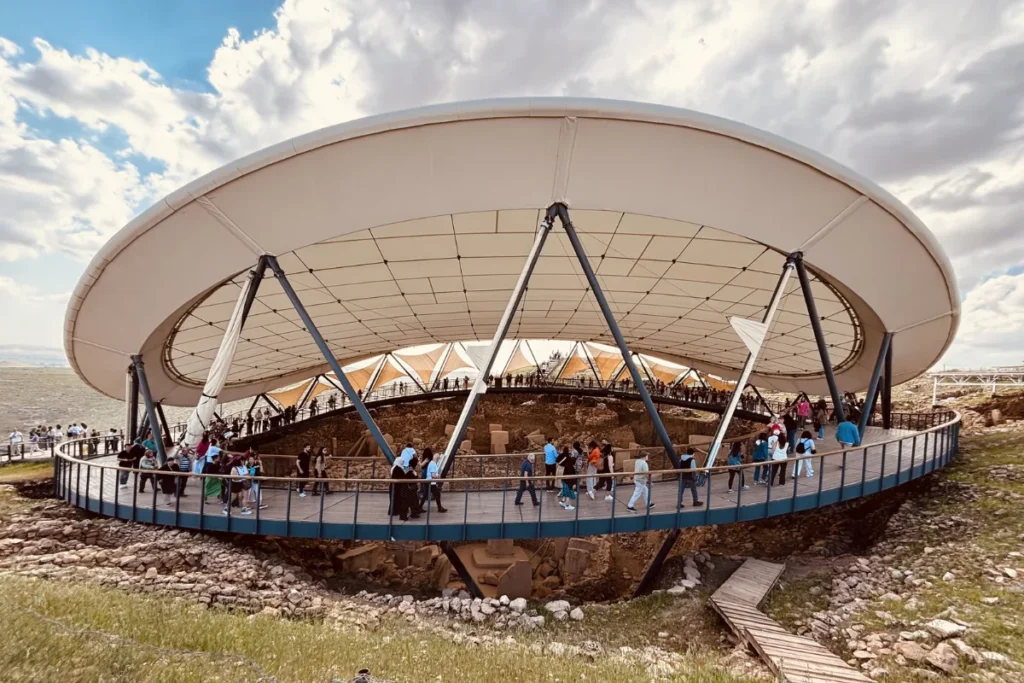
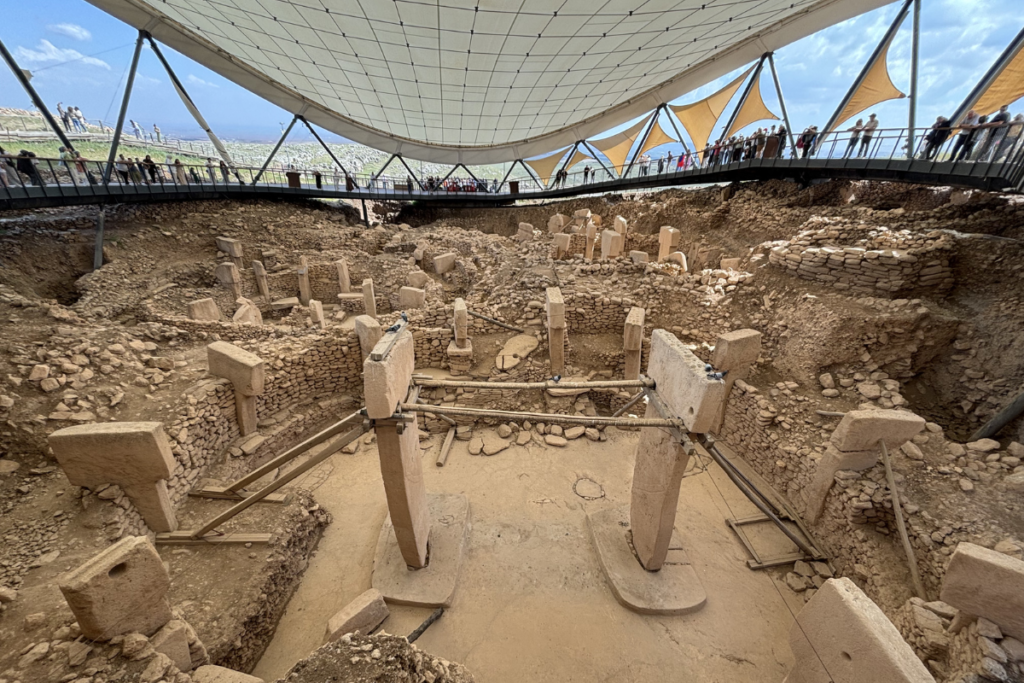
Day 10 was the day we had been building toward since the Netflix series that started everything.
We left Mardin at approximately 9 AM. The drive to Karahan Tepe took about two and a half hours through sun-drenched southeastern hills. The landscape between Mardin and Şanlıurfa is bare, rolling, and ancient. The road feels like it is taking you somewhere that time has not fully reached.
Karahan Tepe came first. Free entry. A subterranean chamber with 11 phallic pillars and a human face emerging from the bedrock, gazing down into the darkness. The leading archaeological theory is that it was a shamanic womb of spiritual rebirth: initiates crawled in through one opening and out through another, symbolically reborn. It is older than Göbekli Tepe and significantly more intimate. We stood over that chamber in the morning light and felt something that preparation does not prepare you for.
Then Göbekli Tepe. TRY 1,840 / INR 4,230 / USD 45 for two. The visitor centre and museum first…followed by the boardwalk over the excavated enclosures. The T-shaped pillars. The animal carvings. The watertight terrazzo floors. The vulture stone. The fact that only 5 percent has been excavated, and the rest is still underground.
The full Göbekli Tepe visitor guide covers everything in detail: what the museum holds, what the pillars mean, why the site was deliberately buried, and the Vedic parallels that stopped us mid-sentence.
“The gratitude was overwhelming. Not gratitude for travel. Gratitude for being alive in the particular century where this place has been uncovered, and where two people from Bengaluru could drive a rented car across Anatolia to stand in front of it.”
Şanlıurfa: The City of Prophets
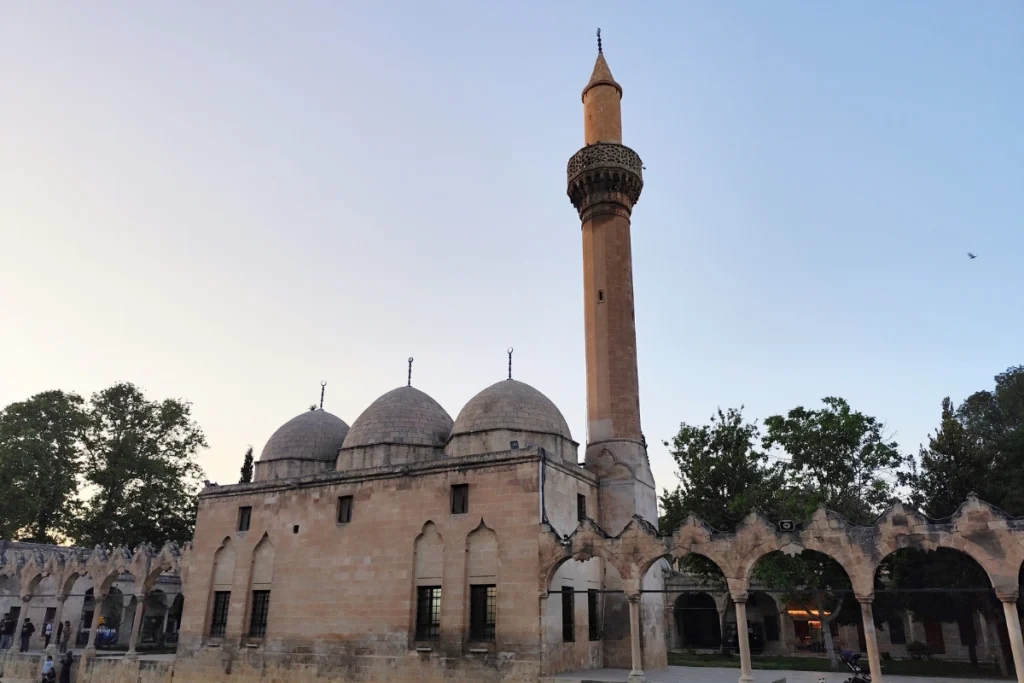
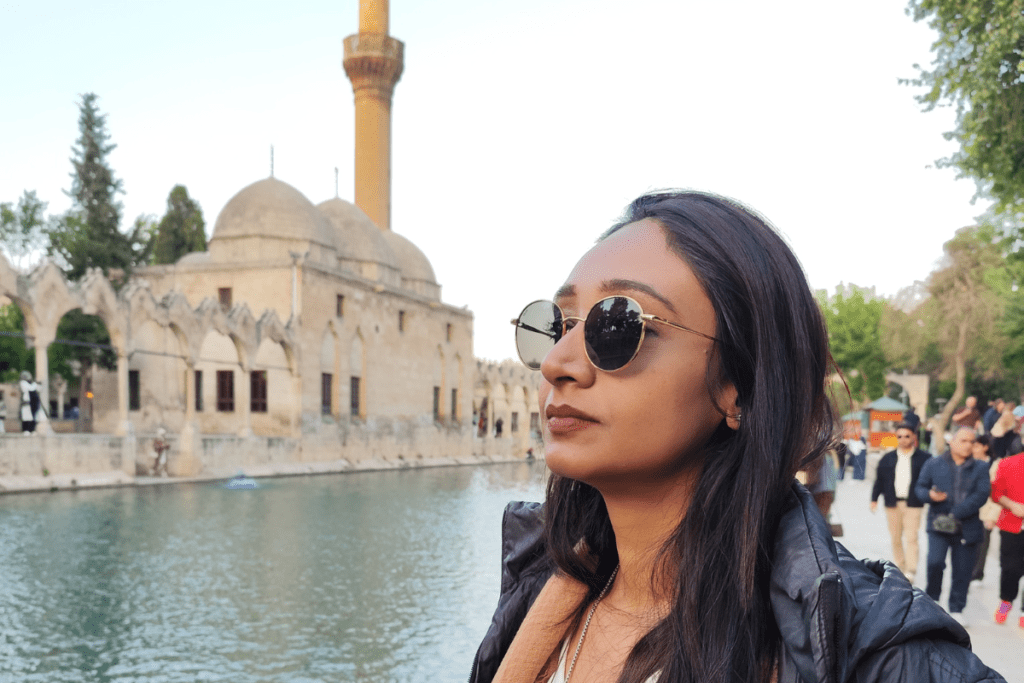
From Göbekli Tepe, we drove 30 minutes into Şanlıurfa, historically known as Edessa, one of the oldest continuously inhabited cities in the world.
Balıklıgöl, the sacred pool in the city centre, holds thousands of black carp that Islamic tradition says were created when God turned fire into water to save the Prophet Abraham from a tyrant’s flames. The dark spots on the carps’ scales are said to be permanent marks from the embers. Feeding the fish (TRY 10 per plate) instantly reminded us of feeding fish in Hindu temple tanks back home. The same impulse, the same reverence, the same water…separated by thousands of kilometres and a different faith.
The Kızılkoyun Necropolis, a 2,000-year-old Roman burial ground discovered beneath a modern neighbourhood during urban renovation, is illuminated at night. Looking up at the glowing cave mouths against the cliff face at dusk felt like Dara and Cappadocia compressed into a single city block.
The next morning, the Şanlıurfa Archaeology Museum (TRY 871 / INR 2,003 / USD 21 for two)…the largest in Turkey…took us through the complete timeline of human civilisation in a single chronological loop. The magnificent Urfa Man with his obsidian eyes. The Nevalı Çori Temple, reassembled stone by stone. The Haleplibahçe mosaics of Warrior Amazon Queens.
We stayed at the Ramin Hotel (TRY 1792 / INR 3,647 / USD 38). That evening, we survived on poha, biscuits, and oats brought from India, because the traditional city’s shops close early, and we arrived too late for a sit-down meal. The free hotel breakfast the next morning compensated generously.
Halfeti: The Kingdom the Dam Drowned
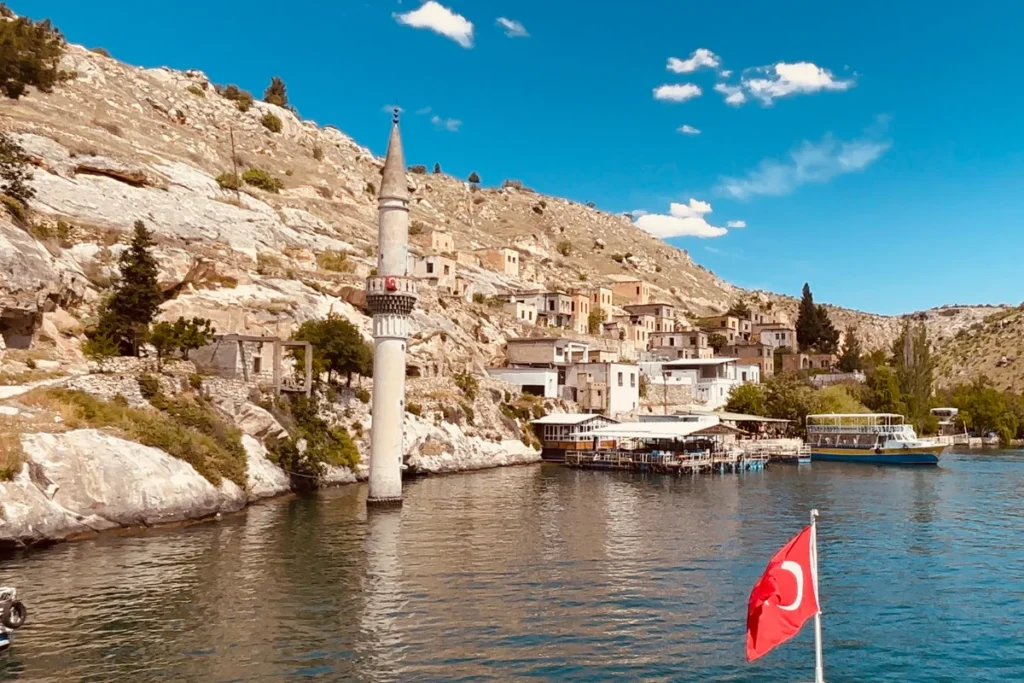
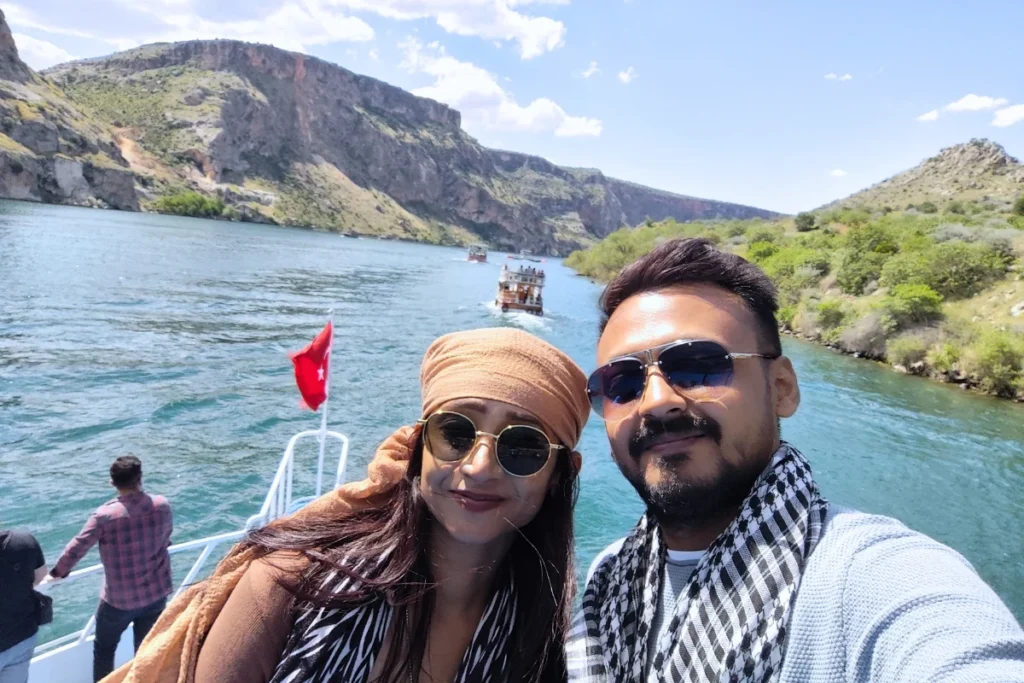
From Şanlıurfa, we drove west toward Halfeti. A boat ride on the Euphrates: TRY 400 / INR 920 / USD 10 for two.
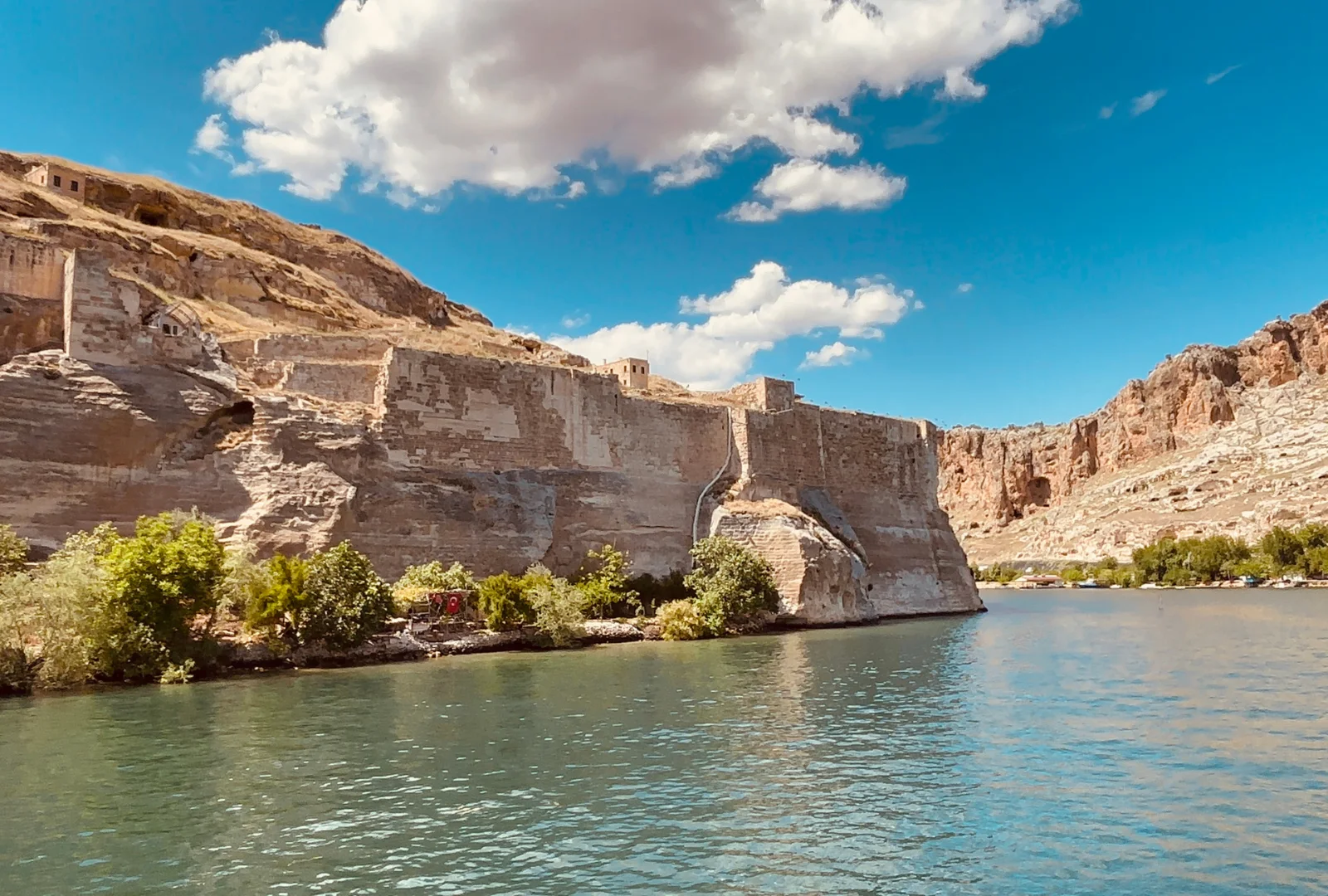
In 2000, the Birecik Dam deliberately flooded this canyon valley, submerging several historic stone villages. The boat took us to the sunken village of Savaşan, where the stone minaret of a mosque rises from emerald water while the rest of the building lies frozen beneath the surface. Abandoned stone houses cling to the empty cliffs above. The fortress of Rumkale, occupied successively by Assyrians, Romans, Byzantines, and Mamluks, perches on a rock peninsula above the river. Royal tombs sit high in the cliff faces, engineered to stay permanently out of the reach of grave robbers.
Halfeti is the only place on Earth where pitch-black roses grow naturally…a product of the unique soil chemistry and pH levels of the Euphrates valley water.
The boat ride was one of the most quietly beautiful experiences of the trip. No crowds. No audio guide. Just the Euphrates, the canyon walls, the submerged village, and the specific surrealism of a minaret emerging from green water.
Gaziantep: Where the East Ends and the Food Begins
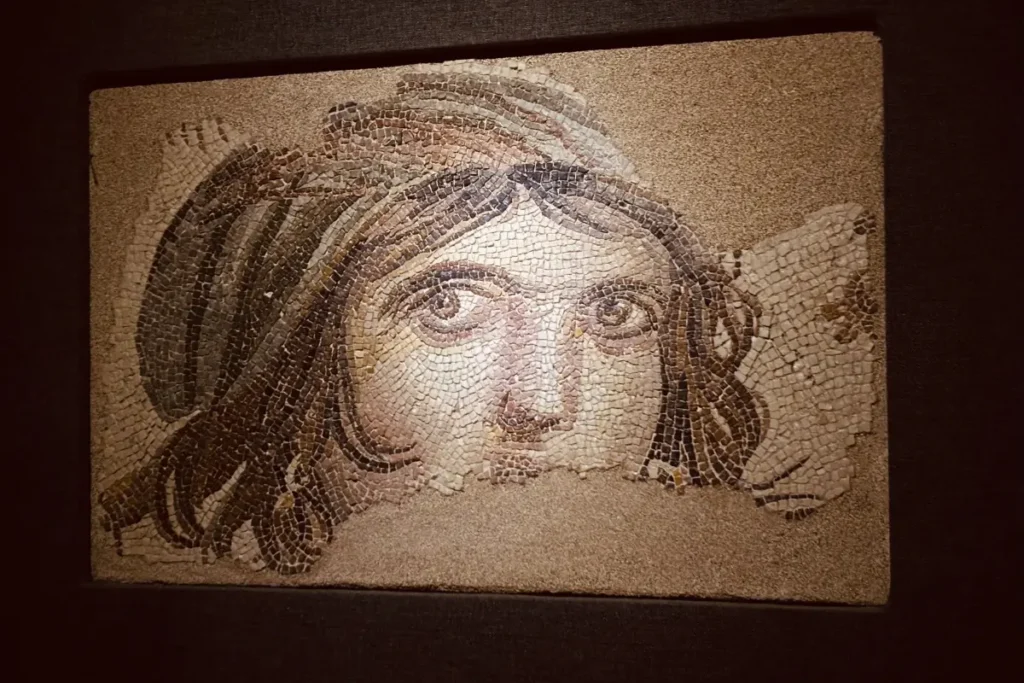
The Zeugma Mosaic Museum (TRY 1,047 / INR 2,408 / USD 25 for two) holds the Gypsy Girl mosaic, whose eyes follow you across the room through an ancient optical illusion. The Roman city of Zeugma, like Halfeti, was partially drowned by the same dam. Archaeologists raced against the rising water to peel millions of tiny coloured stones out of the mud, saving floor mosaics from luxury Roman mansions that would otherwise have been lost underwater permanently.
But Gaziantep’s real claim is food. Turkey’s first UNESCO Creative City of Gastronomy, with over 500 documented regional recipes. The Coppersmith Bazaar, where artisans hammer raw copper into trays and coffee pots using methods unchanged for centuries.
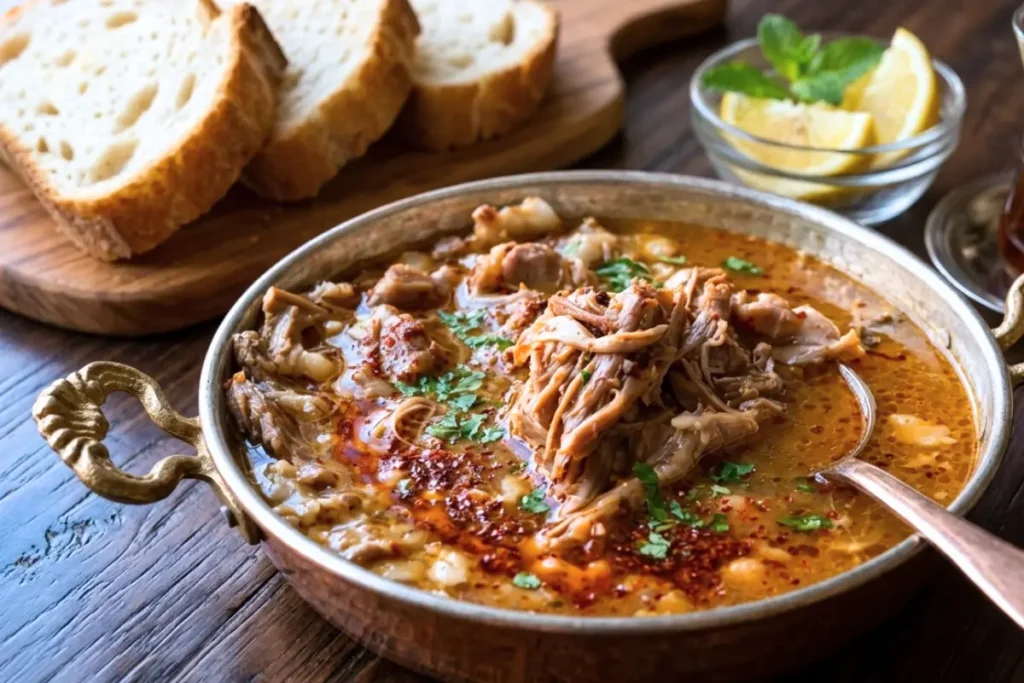
We ate lamb kebabs with fresh flatbread (TRY 350 / INR 805 / USD 9 for two) that were among the best things we put in our mouths across 17 days. Then we tried Beyran soup (TRY 250 / INR 575 / USD 6 for two), the city’s celebrated fiery morning broth of slow-simmered lamb, rice, and garlic. Our verdict: legendary reputation, genuinely not for our palates. We washed it down with cold drinks and called it an honest attempt.
We stayed at the Ibis Hotel Gaziantep (TRY 3207 / INR 6,529 / USD 69). Modern, clean, and the most expensive accommodation of the eastern circuit…still cheaper than a Cappadocia cave hotel.
From Gaziantep, we drove west toward Konya, leaving the east behind. The transition was immediate. The landscape softened. The signs became bilingual again. The restaurant prices increased. The silence that had accompanied us for four days dissolved into the noise of central Anatolia. We missed the silence before we reached Konya.
What the East Costs
Eastern Turkey is dramatically cheaper than the west. The difference is not marginal. It is structural.
| Item | Eastern Turkey | Western Turkey Equivalent |
| Cave hotel, Mardin, Edo Evleri (per night) | INR 2,733 / USD 29 | USD 53–84 in Cappadocia |
| Guesthouse + dinner, Karadut Pansion, Nemrut | TRY 1,580 / INR 3,634 | No western equivalent |
| Hotel, Ramin Hotel, Şanlıurfa | INR 3,647 / USD 38 | USD 74–106 in Istanbul |
| Hotel, Ibis Gaziantep | INR 6,529 / USD 69 | Comparable to mid-range Cappadocia |
| Full meal for two, local restaurants | TRY 200–350 / INR 460–805 | TRY 500–800 in Cappadocia / Istanbul |
| Euphrates boat ride, Halfeti (two people) | TRY 400 / INR 920 | Bosphorus cruise: TRY 800+ |
| Nemrut entry (two people) | TRY 680 / INR 1,564 | Comparable to major western sites |
| Göbekli Tepe entry (two people) | TRY 1,840 / INR 4,230 | Comparable to major western sites |
| Şanlıurfa Archaeology Museum (two people) | TRY 871 / INR 2,003 | Comparable to Istanbul museum entry |
| Zeugma Mosaic Museum, Gaziantep (two people) | TRY 1,047 / INR 2,408 | No western equivalent |
Across four days in the east, our daily spend for accommodation and food averaged roughly USD 85 to 95 / TRY 3,485 to 3,895 / INR 8,000 to 9,000 for two. In Cappadocia, the same standard of traveling ran closer to USD 140 to 160 / TRY 5,740 to 6,560 / INR 13,300 to 15,200. In Istanbul, higher still. The East is not cheaper because it is worse. It is cheaper because the tourist economy has not arrived yet. The quality of the food, the warmth of the hosts, and the significance of the sites are equal to or greater than their Western counterparts.
The Driving
The eastern half of our road trip covered approximately 1,200 km across four days. The highways between cities are well-maintained. The landscape is vast and produces a meditative driving rhythm that is difficult to replicate anywhere else we have driven. The mountain roads near Nemrut are the exception: steep, narrow, and genuinely dangerous, with no guardrails and loose rock on the surface.
- Fuel and food between cities: the distances are long (Cappadocia to Nemrut: 509 km, Nemrut to Mardin: 270 km, Şanlıurfa to Gaziantep: 150 km). Fuel stations exist but are less frequent than in the west. Restaurant options between cities are scarce to nonexistent during certain hours. We relied on food brought from India for multiple meals on long driving days.
- Connectivity: intermittent. Our Nomad eSIM worked in the cities but dropped signal on rural stretches between Mardin and Karahan Tepe, and on the Nemrut mountain approach. Offline maps downloaded before each driving day solved every navigation problem.
- The people: in four days of driving through the east, we were helped by strangers, fed by guesthouse families, welcomed by museum guards, and treated with warmth that exceeded anything we experienced in western Turkey. The kindness was consistent, unsolicited, and genuine.
Is Eastern Turkey Safe?
We drove through southeastern Turkey, within 20 kilometres of the Syrian border, without any safety concern.
The cities (Mardin, Şanlıurfa, and Gaziantep) are well-policed and well-maintained. The archaeological sites are staffed and secured. The mountain roads near Nemrut are dangerous because of the terrain, not security. The Kurdish, Arabic, and Turkish communities we interacted with were welcoming without exception.
Verify current security advisories before traveling, particularly regarding border proximity. At the time of our visit (April 2025), we encountered no restrictions on tourist movement in any area we visited. The risk in eastern Turkey is logistical, not security-related: overestimating your driving ability on mountain roads, underestimating the distance between fuel stations, or assuming restaurants will be open when you arrive in a traditional city after sunset. Plan for these and the east is as safe as any part of Turkey.
“We went to eastern Turkey looking for the past, but what we actually found was a stranger, quieter present. On the roads along the Mesopotamian plain, time isn’t money…it’s just space. And in that space, we found a version of travel we thought had vanished decades ago: raw, demanding, deeply moving, and entirely ours.”