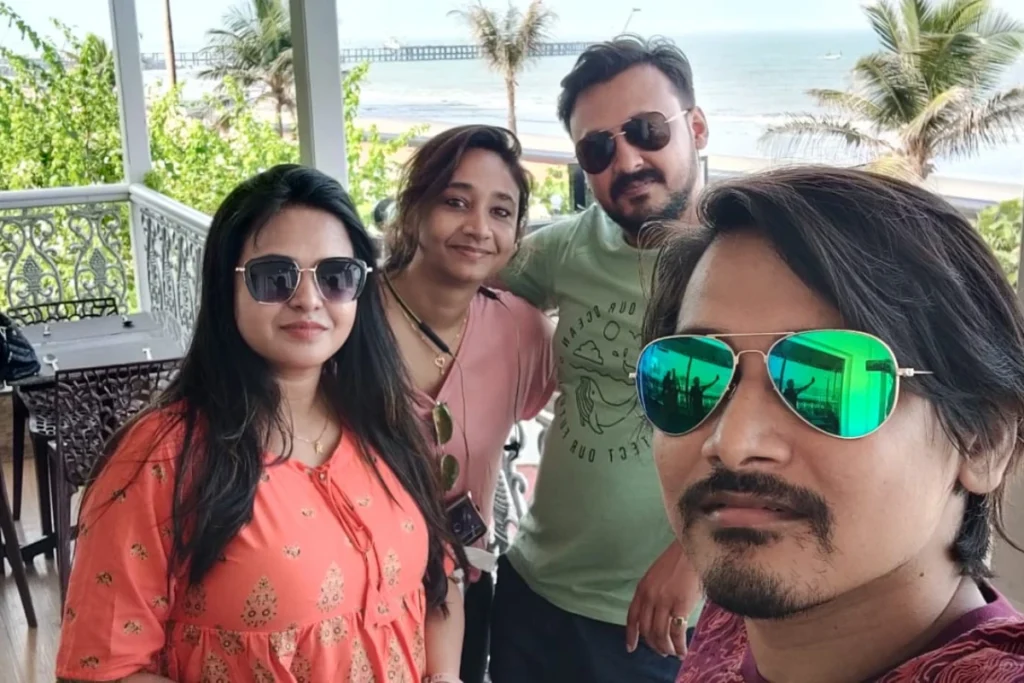
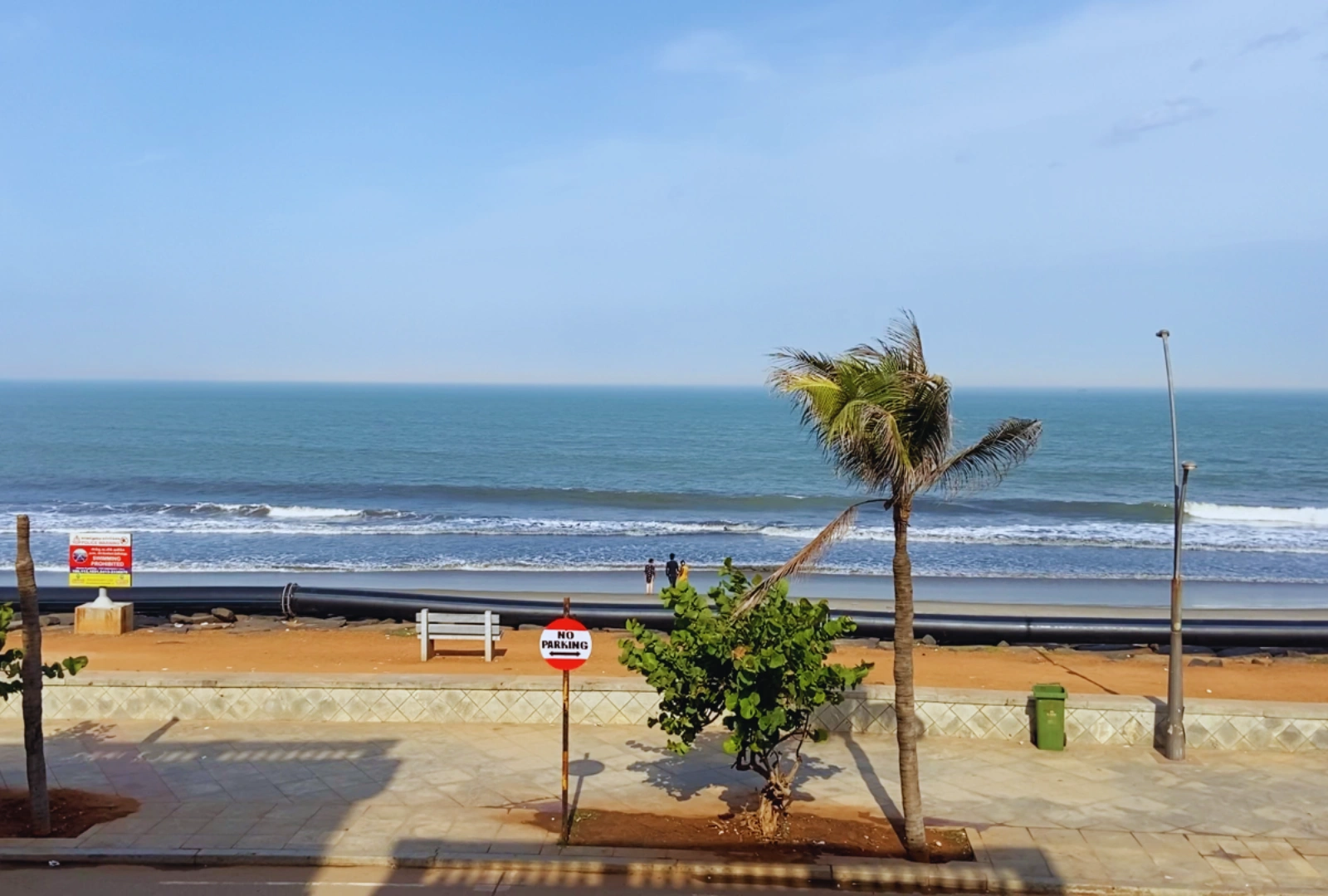
This Pondicherry guide is built from a two-night trip in July 2021: four friends, a hired car, and a three-room beach resort that had no real plan attached to it.
This was before the car.
Before the midnight departures. Before we learned to drive through Bandipur at dawn or push through 1,800 km of the east coast highway. Before the wedding, even. End of July 2021. Four friends, a hired car with a driver, and a 3 AM start from Bengaluru toward a town where India and France had spent three centuries negotiating the same streets.
Pondicherry was one of our earliest trips together. We did not know yet that we would build a travel site. We did not carry a notebook or document receipts. We did not have the specific attention that the later trips would develop. What we had was a weekend, a private beach, and the particular freedom of a trip taken with close friends where the only plan was to not have one.
This Pondicherry travel guide is honest about what we did: we stayed at a secluded resort, walked the French Quarter, looked at Auroville from the outside, and spent most of our time on a beach that belonged to no one. It is also honest about what Pondicherry offers travelers who want more than we sought. The town has depth. We skimmed the surface. This article gives you both versions.
“Long before we became travel writers who map out every turn, we were just four friends chasing a 3 AM headlights-only highway. Pondicherry wasn’t a research project; it was a weekend caught between the heavy monsoon surf and the quiet yellow walls of a town that has spent centuries forgetting the time.”
What We Actually Did
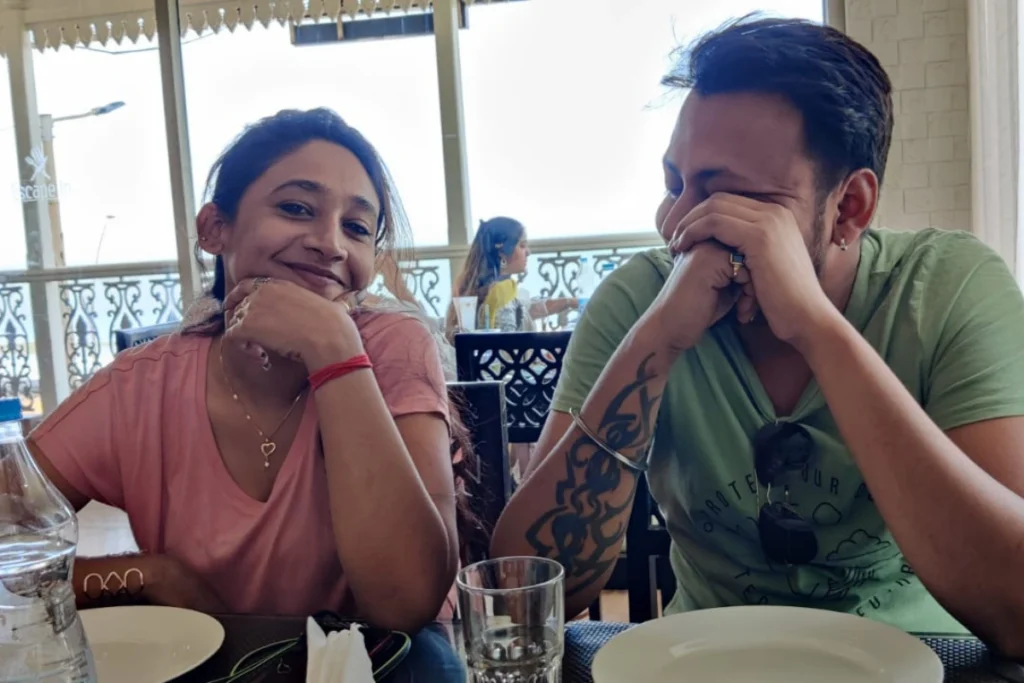
We hired a car with a driver. At the time, we did not own a car. We bought ours the following month. The driver was a practical choice for four people who wanted to arrive relaxed rather than spent, traveling alongside another couple, close married friends who matched our pace and our preference for no fixed itinerary.
The 3 AM departure from Bengaluru put us on empty highways for the first three hours. By the time traffic built, we were deep into Tamil Nadu. The drive took approximately eleven hours, reaching Pondicherry around 2 PM. The route is roughly 310 km, which should take six to seven hours. Our eleven hours included long rest stops, a proper breakfast, and the rhythm of four people who were not in a hurry.
A road note for self-drivers: on the route between Bengaluru and Pondicherry, particularly near the Union Territory border, police conduct vehicle checks for liquor. Pondicherry has a reputation for cheaper alcohol that draws weekend visitors from Tamil Nadu and Karnataka. The checks are routine and brief. In our experience, the price difference was minimal. Additional local taxes close most of the gap. The reputation significantly exceeds the reality.
We checked into Pranav Beach Resort at around 2 PM and did not leave the property until the next morning.
Why We Chose a Three-Room Resort Seventeen Kilometres from Town
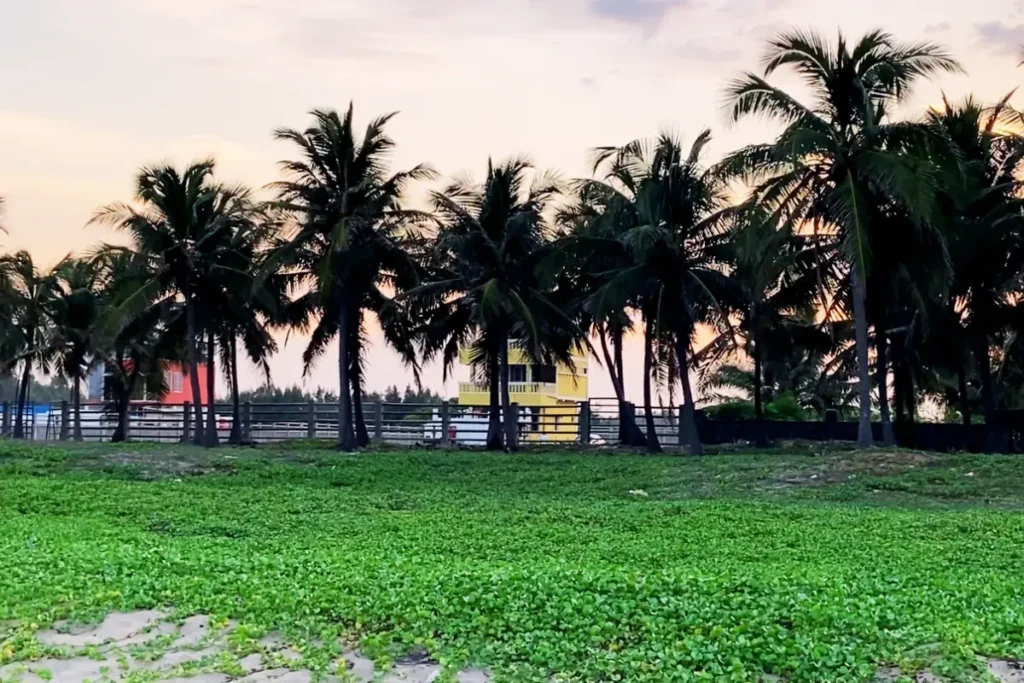
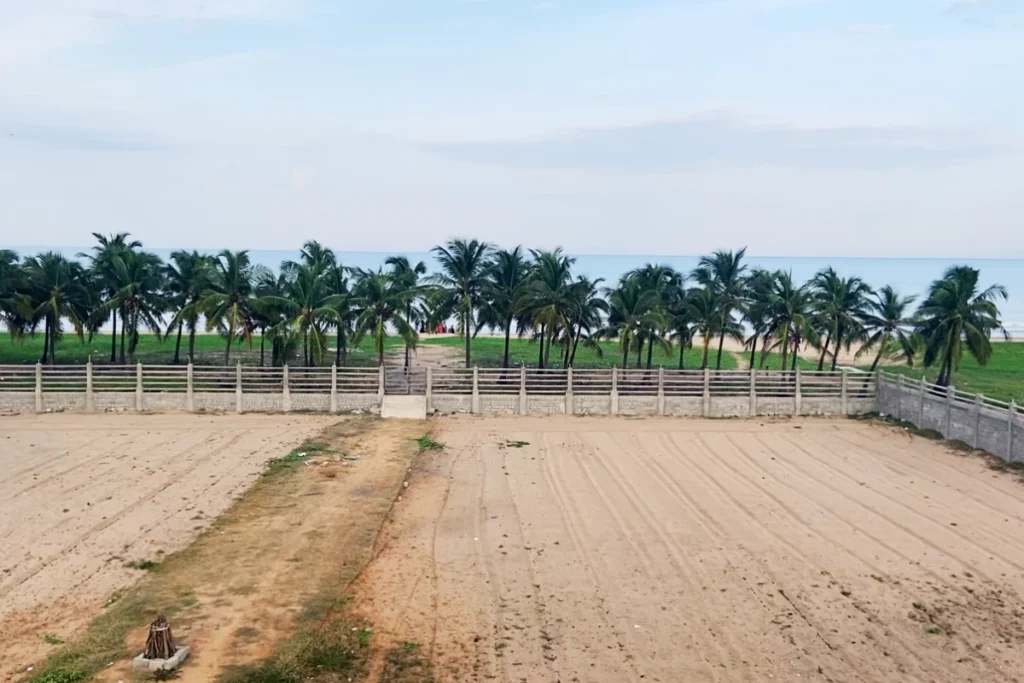
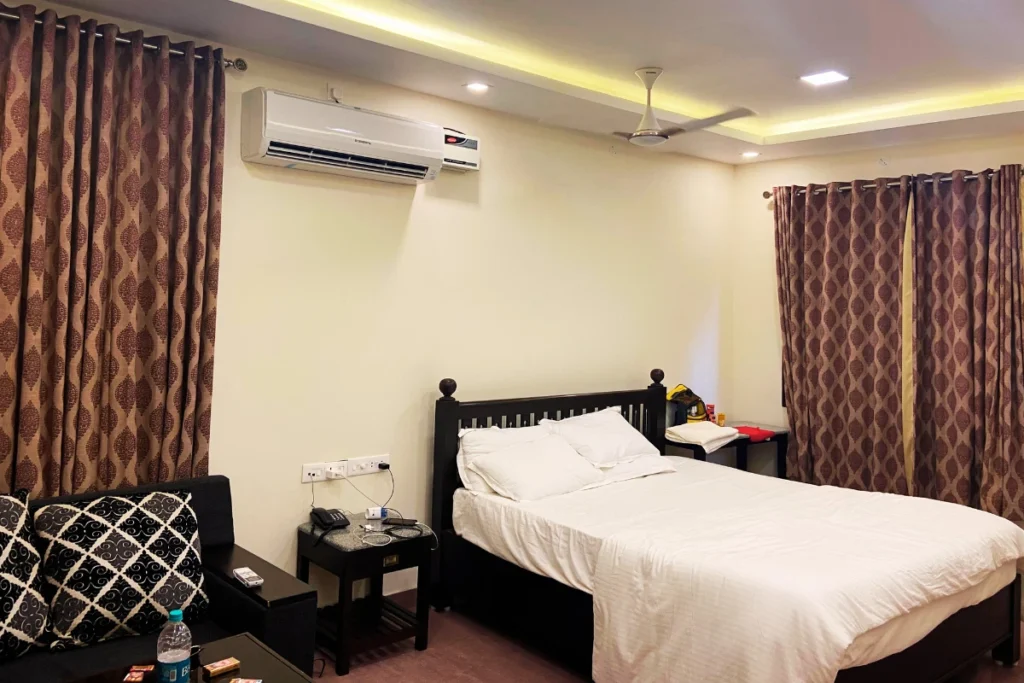
Pranav Beach Resort sits approximately 17 km from Pondicherry’s centre. It has three rooms. Not three hundred. Three.
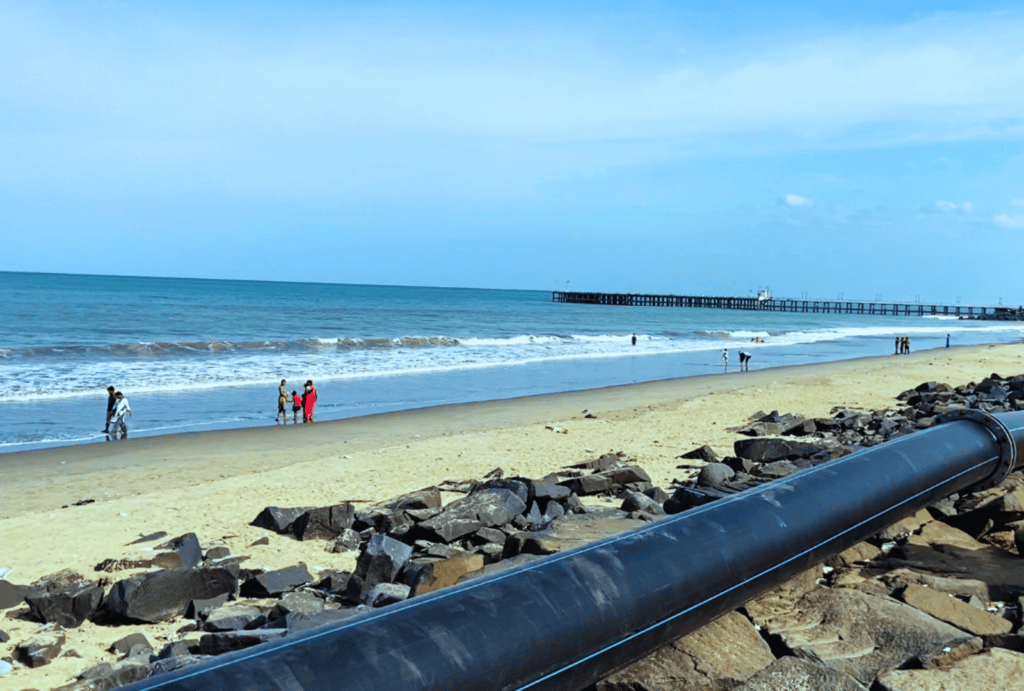
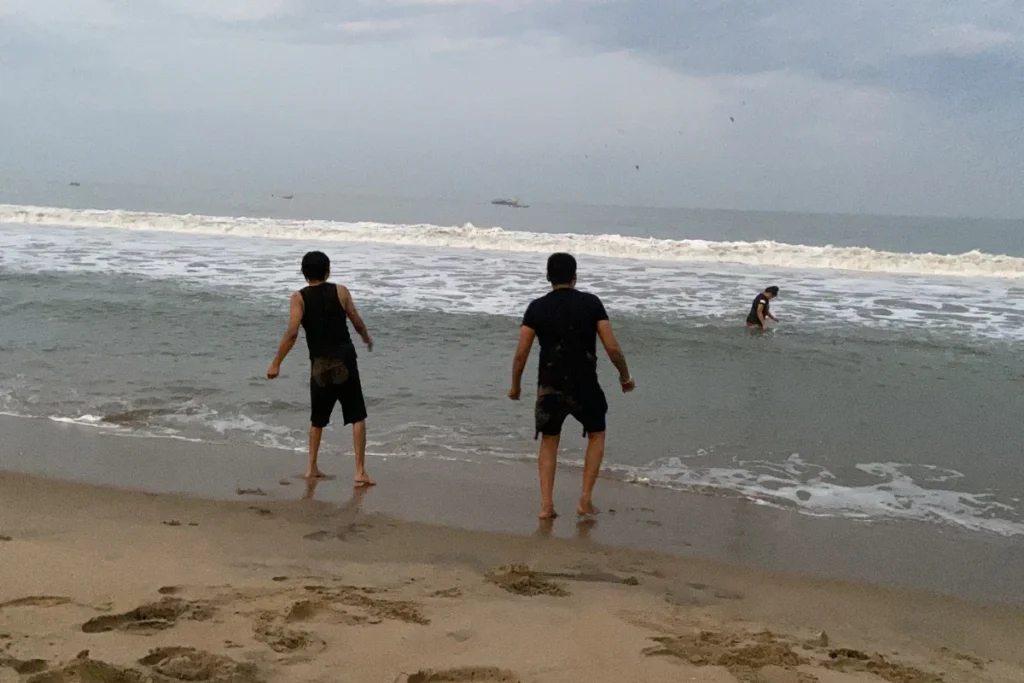
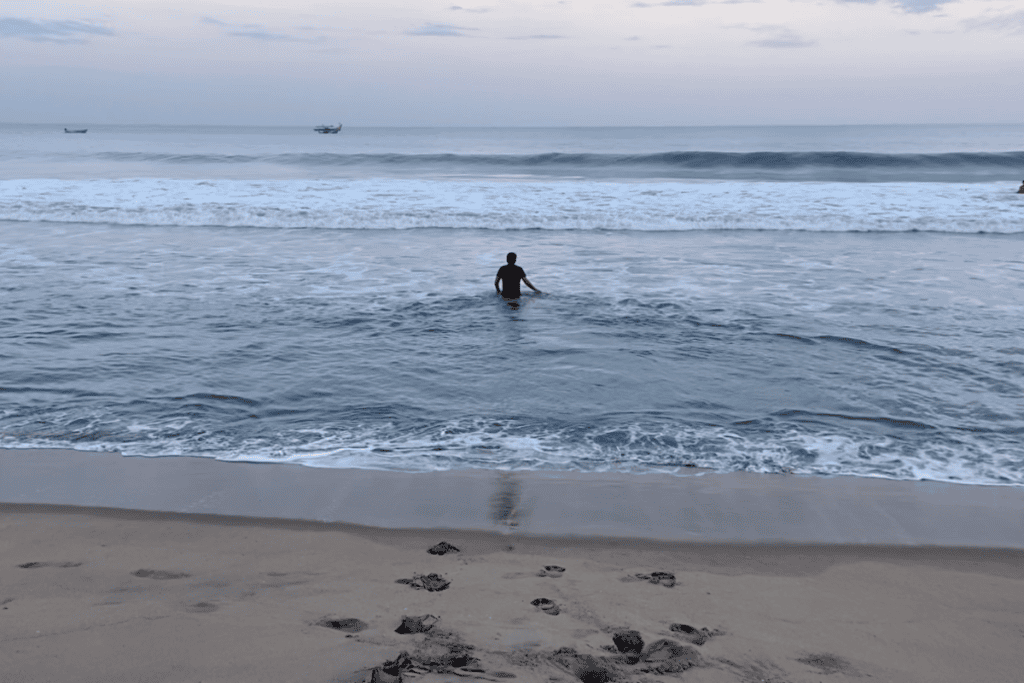
We chose it specifically because we wanted a private atmosphere between four friends. No lobby crowds. No breakfast buffet queue. No hotel corridor noise at midnight. The resort’s primary feature is its beach: a stretch of shoreline secluded enough that during the day, a handful of people appeared at most, and at night, nobody appeared at all.
We had the beach to ourselves.
This is the detail that defined the trip. Not the French Quarter. Not Auroville. The evening on a beach where the only sounds were the water, the wind, and four friends talking without a schedule. The morning where we walked to the shore before anyone else was awake and stood in the surf looking at nothing in particular. The specific quality of a night beach that belongs to you because the people who know about it are all still asleep.
The accommodation was simple. The food was adequate. The location was inconvenient for sightseeing. None of that mattered. The beach, the isolation, and the company were the trip. Everything else was optional, and we treated it exactly as such.
“We had the beach to ourselves. Not because we had planned it carefully. Because we had chosen a three-room resort seventeen kilometres from a town that most visitors never leave. The beach at night belonged to nobody, and then for a few hours, it belonged to us.”
The French Quarter Walk
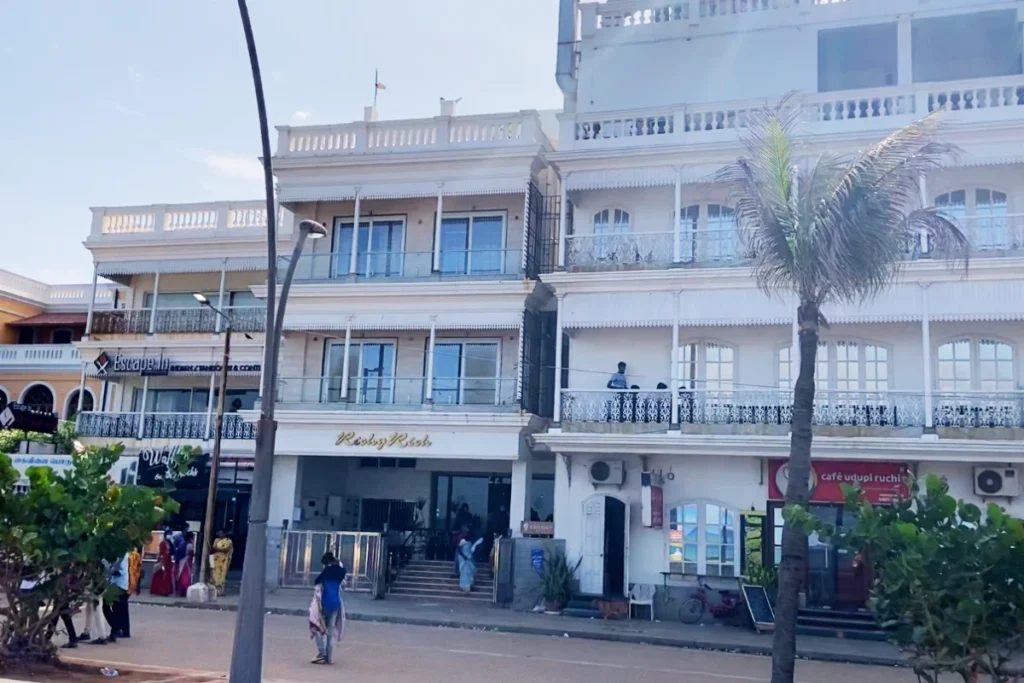
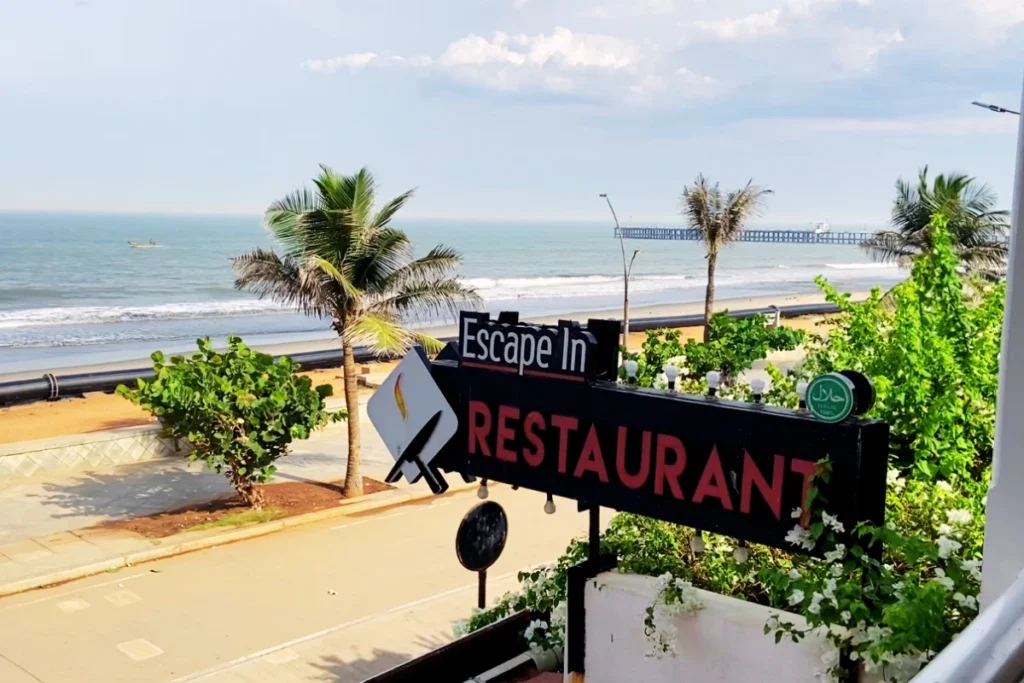
On our second day, we drove into Pondicherry centre and walked the French Quarter.
The French Quarter, officially Ville Blanche (White Town), is the colonial grid between the Promenade Beach waterfront and the canal that historically separated the French settlement from the Tamil town. The streets are lined with colonial buildings in mustard yellows, powder blues, and whites, with bougainvillea cascading over compound walls. Street signs are in both French and Tamil. The architecture is unmistakably colonial but the atmosphere is unmistakably Indian.
We walked. We looked. We did not enter museums or galleries. The French Quarter, at walking pace, provides its value without tickets or commentary. The streets themselves are the exhibition: the way French colonial planning and Tamil daily life have merged into something that belongs to neither tradition and both simultaneously.
The Promenade Beach (Rock Beach) runs along the eastern edge of the French Quarter. The stretch is paved, car-free in the mornings, and faces the Bay of Bengal directly. The beach itself is rocky, not sandy, which limits swimming but produces excellent morning and evening walking. The Gandhi statue at the centre and the old lighthouse are the landmarks.
We did not spend the entire day in town. We returned to the resort by afternoon. The beach was waiting.
Auroville from the Outside
We drove to Auroville, the experimental international township founded in 1968 on the principle of human unity, approximately 12 km north of Pondicherry.
We did not go inside. We walked around the periphery, looked at the surroundings from the visitor’s viewpoint, and absorbed the atmosphere of a place that is trying to be something no other place on Earth is trying to be.
We regret this.
Auroville deserves a longer visit than we gave it. The township covers 20 square kilometres and includes residential communities, farms, schools, workshops, and reforestation projects built by residents from over 50 countries. The Matrimandir requires advance booking for inner chamber access. The visitor centre provides a proper introduction to the township’s philosophy and history. We looked from outside and moved on. It is the one thing we would do differently.
Any Pondicherry guide that omits Auroville is incomplete. It is to Pondicherry what Göbekli Tepe is to Şanlıurfa: the reason some travellers come to the region in the first place, even if the town itself has its own independent identity. Book the Matrimandir inner chamber in advance. Go inside. We did not. You should.
What Pondicherry Offers That We Did Not Explore
This section exists because the town has more than we gave it. Travelers planning a longer stay or a more exploration-focused trip will find the following.
Sri Aurobindo Ashram
The spiritual centre founded by Sri Aurobindo and The Mother in 1926, in the heart of the French Quarter. The ashram is the philosophical precursor to Auroville. The main building houses Sri Aurobindo’s samadhi, which visitors approach in silence. Entry is free. The atmosphere is meditative and quiet in a way that is difficult to find in most Indian towns of this size.
Temples and the Tamil Quarter
Pondicherry’s Tamil Quarter (Ville Noire) holds several significant temples that most tourists skip in favour of the French Quarter’s photogenic streets. The Manakula Vinayagar Temple, dedicated to Ganesha, is the most prominent: centuries old, centrally located, and active with daily worship. The Tamil Quarter itself, the grid of streets west of the canal, is louder, denser, and more recognisably Indian than the French side. The food is better here. The prices are lower. The atmosphere is the counterweight to the colonial calm across the canal.
Beaches Beyond the Promenade
Pondicherry’s coast extends beyond the rocky Promenade Beach. Paradise Beach, accessible by boat from Chunnambar Boat House, is a sandy stretch with calmer water. Serenity Beach, north of town, is popular with surfers and has a growing café culture. Auroville Beach, near the township, is quieter and less commercial. Our resort’s private beach offered something none of these public beaches can: genuine isolation. But for travelers staying in town, Paradise Beach and Serenity Beach provide the sandy shoreline that the Promenade lacks.
Cafés and Food
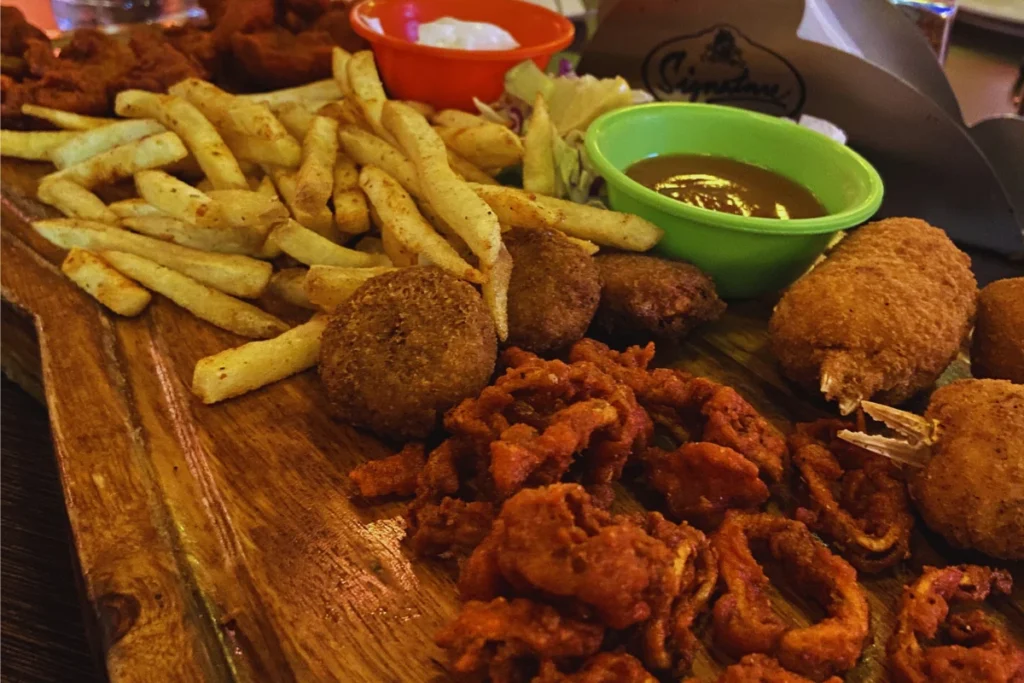
The French Quarter has developed a café culture that reflects its colonial identity: croissants, crêpes, wood-fired pizzas, filter coffee, and Franco-Tamil fusion dishes. The Tamil Quarter offers South Indian meals, dosai, and seafood at a fraction of French Quarter prices. The gap between a croissant in White Town and a thali in the Tamil Quarter is the gap between Pondicherry’s two identities, and eating in both is the most direct way to understand the town. We ate at the resort and at a couple of stops in town that we cannot name from memory. The food culture has expanded significantly since our July 2021 visit.
Water Sports
Pondicherry has a growing scuba diving scene, with operators offering PADI-certified courses and reef dives off the coast. Kayaking, surfing at Serenity Beach, and boat rides to Paradise Beach complete the water activity options. We did none of these. The beach at our resort was enough.
“The canal separates France from India. Cross it, and the streets get louder, the food gets better, and the prices get lower. The Tamil Quarter is the half of Pondicherry that most visitors skip. It is also the half that feeds you honestly.”
Where to Stay in Pondicherry
The accommodation decision shapes the entire experience. Pondicherry offers three distinct zones, each producing a different trip.
- French Quarter (White Town): heritage guesthouses and boutique hotels inside converted colonial buildings. Walking distance to the Promenade, the Ashram, the cafés. Higher prices. More atmosphere. Less quiet. Best for couples who want to walk out the door into Pondicherry’s most photogenic streets.
- Tamil Quarter: budget hotels and guesthouses west of the canal. Lower prices. Better local food access. More noise. Closer to the bus stand and markets. Best for budget travellers and those who want the Indian side of Pondicherry rather than the French one.
- Outside town (what we chose): beach resorts and guesthouses along the coast, 10 to 20 km from centre. Lower prices per quality. Genuine privacy. Requires transport to reach town. Best for couples or groups who value the beach and quiet over cultural proximity.
Our choice, Pranav Beach Resort at 17 km from centre, was driven by the group dynamic and the desire for isolation. For a couple returning without friends, we would choose a French Quarter guesthouse for one or two nights, then a beach property outside town for the remaining nights. Both versions of Pondicherry deserve time.
The Drive from Bengaluru
- Distance: approximately 310 km via NH48.
- Our time: 11 hours with extended stops and a hired driver’s pace. Realistic self-drive: 6 to 7 hours with minimal stops.
- Route: NH48 from Bengaluru to Krishnagiri, then southeast through Villupuram into Pondicherry. The highway is well-maintained throughout.
- Departure: we left at 3 AM and arrived at 2 PM. A midnight departure would reach Pondicherry by dawn, which is the version we would choose now that we drive ourselves. Arriving with the morning light, before the town’s tourist crowds build, is the better version of this drive.
- Police liquor checks: routine on the approach roads near the Union Territory border. Brief, professional, not aggressive. In our experience, the price difference for alcohol was minimal once local taxes were applied. The reputation significantly exceeds the reality.
- Return: we departed on the morning of August 2nd and reached Bengaluru between 8 to 9 PM. Leaving on a Sunday morning meant navigating daylight weekend traffic, which ran significantly longer than our outbound 3 AM run on July 31st.
When to Go
| Season | Months | What to Expect |
| Winter | October to February | Best window. Cool, dry, pleasant for walking and beach. Peak tourist season. |
| Summer | March to May | Hot and humid. Fewer tourists. Lower prices. Early morning and late evening are manageable. |
| Monsoon | June to September | Rain, humidity, occasional cyclone risk. Lowest prices. Emptiest beaches. We visited in July 2021. |
We visited in late July, during monsoon season. The beach was empty partly because of the season, partly because of the secluded location, and partly because July 2021 was still in the shadow of the COVID second wave that had swept through India two months earlier. The combination of monsoon, post-COVID caution, and a three-room resort produced the isolation we were looking for. For travellers who want the French Quarter cafés busy and the Promenade full of evening walkers, October to February is the window.
What It Costs
We do not have itemised receipts from this trip. It was 2021 and we were not tracking expenses with the discipline that the later trips developed. What follows is a structural estimate based on our experience and current pricing.
| Category | Approximate Cost, Two People |
| Fuel, Bengaluru to Pondicherry (round trip, self-drive) | INR 3,000 to 4,000 |
| Hired car with driver (round trip, as we did) | INR 8,000 to 12,000 |
| Accommodation, beach resort outside town (per night) | INR 2,000 to 4,000 |
| Accommodation, French Quarter guesthouse (per night) | INR 3,000 to 8,000 |
| Food, per day (two people, mix of café and local) | INR 800 to 1,500 |
| Auroville visitor centre | Free |
| Sri Aurobindo Ashram | Free |
| Scuba diving (per person, if opted) | INR 3,500 to 6,000 |
| Estimated total (self-drive, mid-range, 2 nights) | INR 12,000 to 22,000 |
Pondicherry remains one of the easiest, most budget-friendly weekend escapes from the quick pace of Bengaluru. The entire coastal getaway…including highway tolls, a cosy guesthouse, and plenty of fresh seafood…stretches your money incredibly far. Your biggest financial variable here is simply geography: planning a slow morning over croissants in the chic French Quarter will cost you a noticeable premium compared to standard dining in the adjacent Tamil Quarter. However, even if you spend your entire weekend café-hopping across White Town’s cobblestones, the final tab is still just a fraction of what you’d spend on a typical holiday abroad.
“Every map tells you how to get to Pondicherry, but no guide can teach you how to sit still when you arrive. We left plenty of the town unexplored, but as the highway swallowed the coast on the drive back to Bengaluru, we realised we hadn’t missed a thing. The best trips aren’t the ones where you see everything… they’re the ones where you find exactly what you went looking for.”