This Egypt Travel Guide is built from nine days on the ground…the pyramids at dawn, a night under Sahara stars, the Nile at sunrise through a sleeper train window, and temples that have been waiting three thousand years.
We booked the flight six months early because we knew ourselves.
Left any longer, we would have found a reason not to go. Egypt had lived in our heads since childhood…both of us, separately, before we met. The pyramids, the Nile, the pharaohs, the scale of a civilisation so old that its middle period is ancient history’s ancient history. Not a place you visit. A place you believe in, the way a child believes in something vast and unprovable, and then slowly, without quite noticing, stop trusting you will ever actually see.
We are, in our own words, very ordinary people who are scared to even dream, because dreams break. We have lost things. We have compromised. We live far from home, missing our festivals, moving through years of office work. Egypt was the dream we talked about most and trusted least.
The Dubai layover was one hour. An Emirates ground staff member told us we were late at the gate. We ran through the terminal. Reached the gate. Were told our seats had been cancelled. We asked until they gave us different ones…not together. We did not care. We were going.
The car from Cairo airport took about an hour. February cold. Palm trees everywhere. Roads that felt genuinely different, cars that moved with a different logic, light that had a different quality through the window. Then, between two ordinary buildings on the approach to Giza, the top of a structure appeared in the gap that should not exist.
We did not say anything. There was nothing to say that would have been accurate.
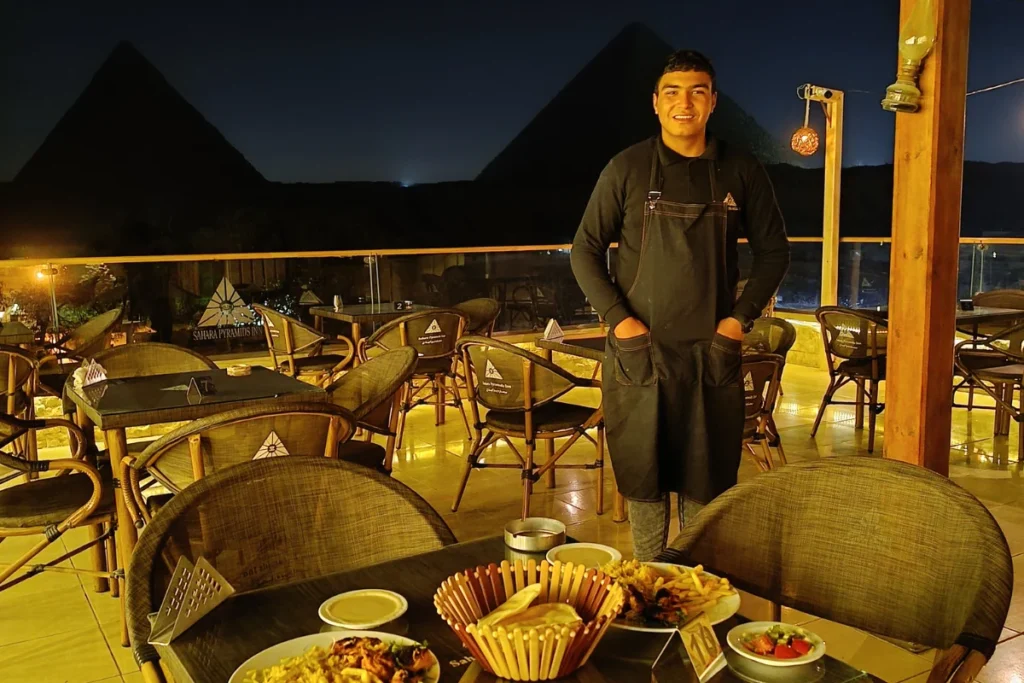
Our hotel was two minutes from the entrance to the Giza complex. When we climbed to the rooftop and looked over the railing, three pyramids were right there. Late afternoon light. Four and a half thousand years of continuous presence.
It almost brought us to tears.
This Egypt travel guide covers nine days: Cairo, the western desert, the sleeper train, the Nile from Aswan to Luxor. Every destination here will have its own dedicated article.
“To achieve something good in life, you must go through a few hardships. We believe that now.”
- Why Egypt Operates on a Different Scale
- Cairo and the Pyramids
- The Western Desert
- The Watania Sleeper Train: Cairo to Aswan
- The Nile Cruise
- The Temples
- Philae: The Last Hieroglyphs
- Abu Simbel: Precision That Has No Business Existing
- Edfu: Arriving by Horse Carriage Before Dawn
- Kom Ombo: Two Gods, One Temple
- Luxor Temple and Karnak: Three Thousand Years in One Complex
- Valley of the Kings: Maps of the Afterlife
- Hatshepsut Temple: The Pharaoh They Tried to Erase
- Costs, Timing, and Practical Notes
- Frequently Asked Questions About Visiting Egypt
Why Egypt Operates on a Different Scale
Other countries have history. Egypt has time.
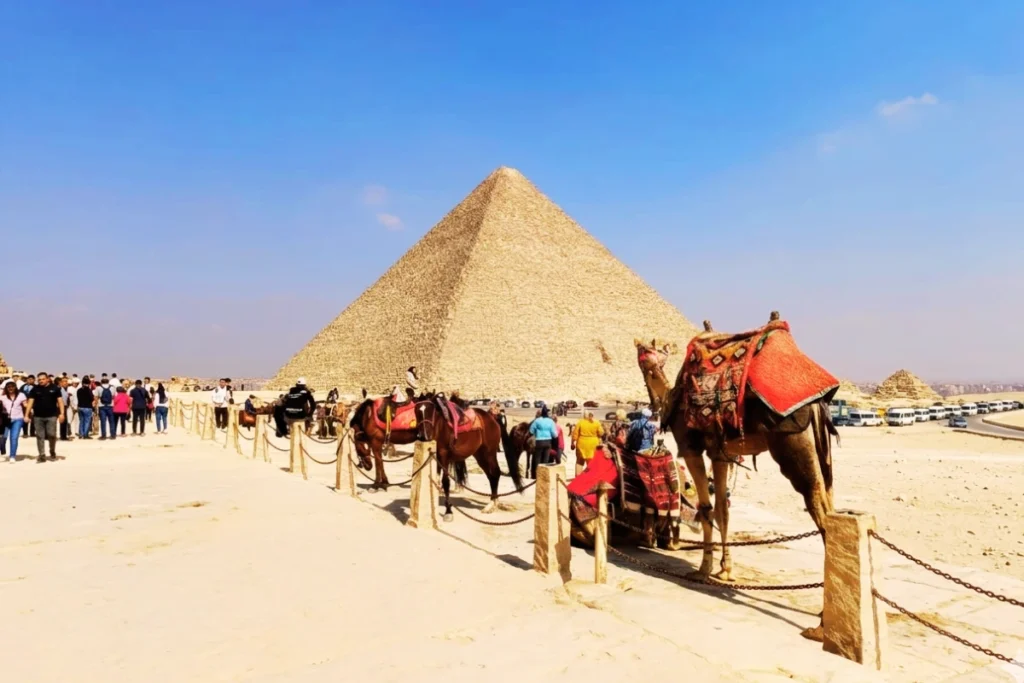
The Great Pyramid was already two thousand years old when Julius Caesar arrived in Egypt. Cleopatra lived closer in time to the invention of the smartphone than to the construction of the pyramid she could see from her palace. This is a fact that is easy to read and nearly impossible to feel until you are standing in front of the stones themselves.
What makes Egypt different from every other destination is the layering. Thirty dynasties of pharaohs spanning three thousand years, then Alexander, then the Romans, the Byzantines, the Arabs, the Ottomans, the British. Each left something in the stone, the food, the language, the sound of a city at dusk. Egypt does not have a past. It has pasts, stacked on each other, each one still visible if you know where to look.
Nothing we had read fully prepared us for what standing inside that layering actually feels like.
Cairo and the Pyramids
We ate breakfast on the hotel rooftop on the second morning. Bread, omelette, salami, cheese. Everything went cold within minutes because it was February and the wind off the Giza plateau carries a desert chill unlike anything we knew from home.
Giza: The Questions That Don’t Resolve
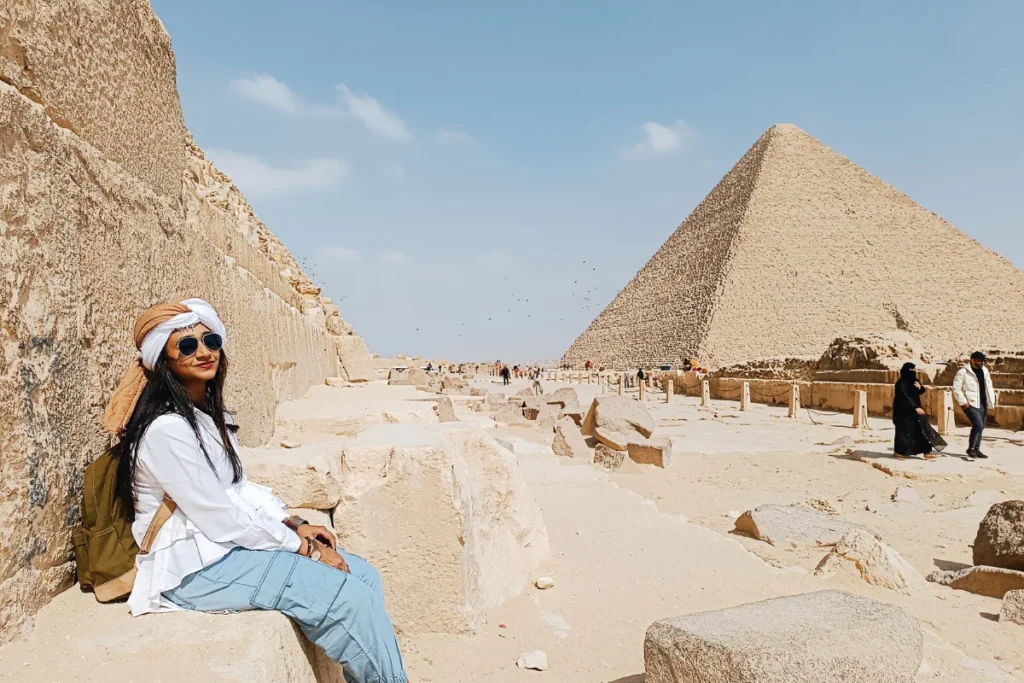
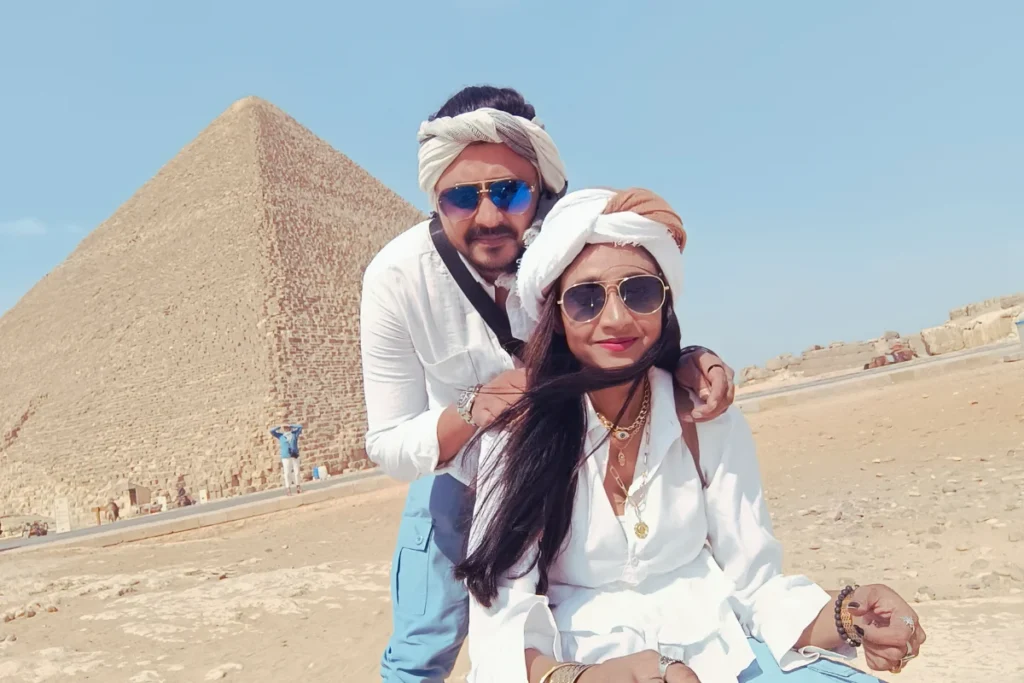
The Great Pyramid contains approximately 2.3 million stone blocks aligned to true north within 3/60ths of a degree…precision that would challenge modern construction. The question of how this was achieved in 2560 BCE has never been answered to everyone’s satisfaction.
Researcher Robert Bauval noted that the three pyramids mirror the stars of Orion’s Belt as they appeared around 10,500 BCE. Geologist Robert Schoch has argued that the Sphinx shows rainfall erosion predating its accepted construction date by thousands of years. Neither theory is mainstream. Both are worth knowing before you go, because they change the quality of the questions you find yourself asking while standing there.
Inside the Khafre Pyramid, the passage descends at a steep angle. Two people cannot pass each other. The air gets hotter with each step. The burial chamber at the bottom holds a single empty sarcophagus, and what remains is the smell of stone that has been enclosed for millennia and the specific sensation of being inside something that should not exist.
We tried to enter the Red Pyramid at Dahshur the day before and turned back at the entrance…the descent too dark, too steep. Finally, we made it to the bottom of the Khafre Pyramid the next day. The difference was not courage. It was that by then, Egypt had already taught us that some discomfort is the price of standing in places that cannot be described from the outside.
Saqqara: The First Stone Building in History
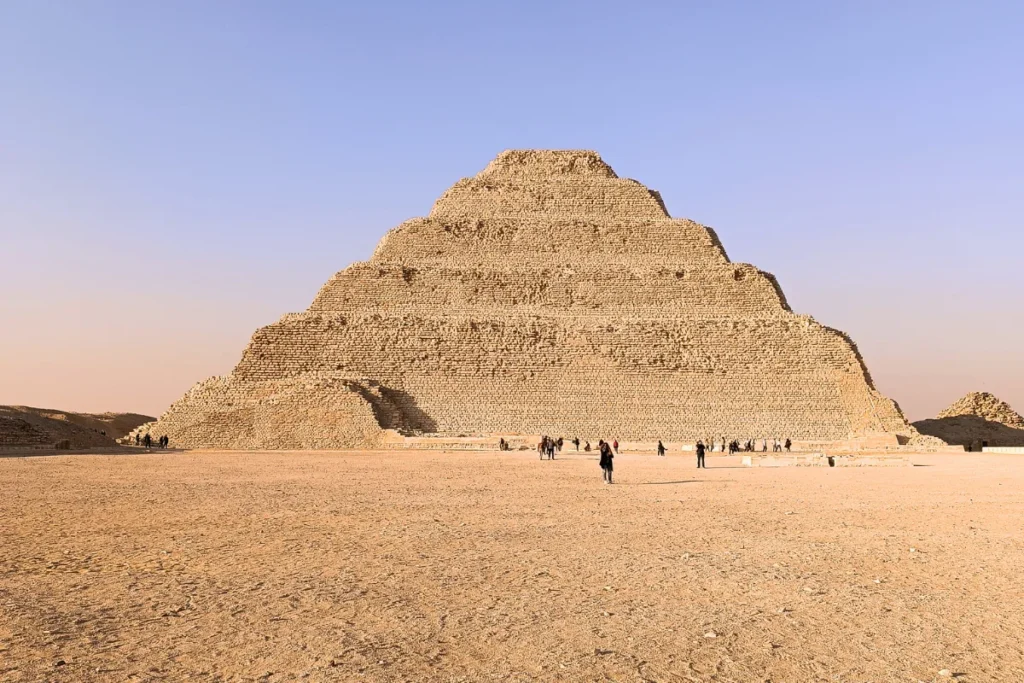
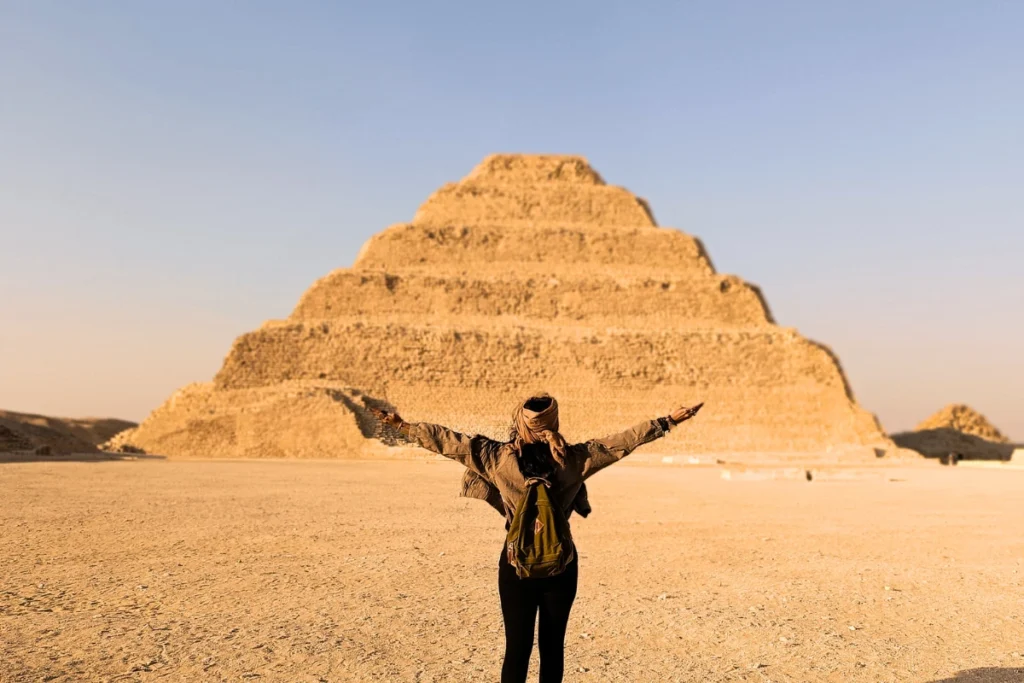
The Step Pyramid at Saqqara, designed by Imhotep approximately 4,700 years ago, is the world’s first large-scale stone structure. Imhotep was later deified…worshipped as a god of medicine and wisdom for centuries after his death. The step design was not decorative: ancient belief held that these ascending levels allowed the pharaoh’s soul to climb toward the stars. A staircase to the afterlife, built in stone because stone was the only material that could outlast eternity.
There is a question these pyramid complexes raise, and that the dedicated Cairo guide will explore: why did the ancient Egyptians eventually stop building pyramids? The shift from monumental above-ground tombs to hidden valley chambers represents one of the most significant changes in three thousand years of burial practice. What changed, and when?
The Egyptian Museum
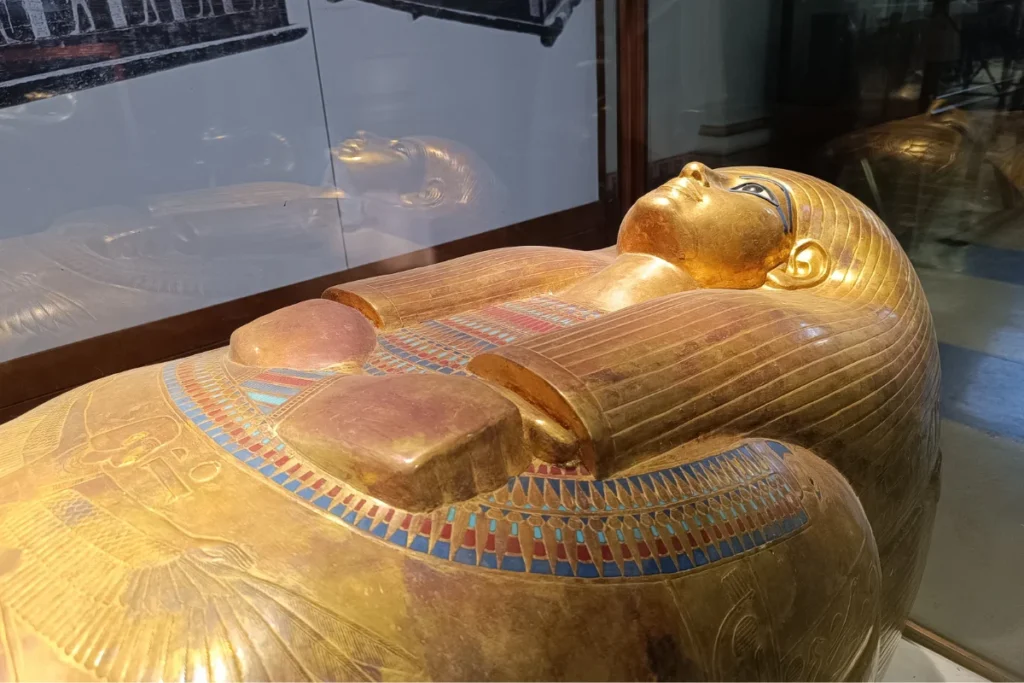
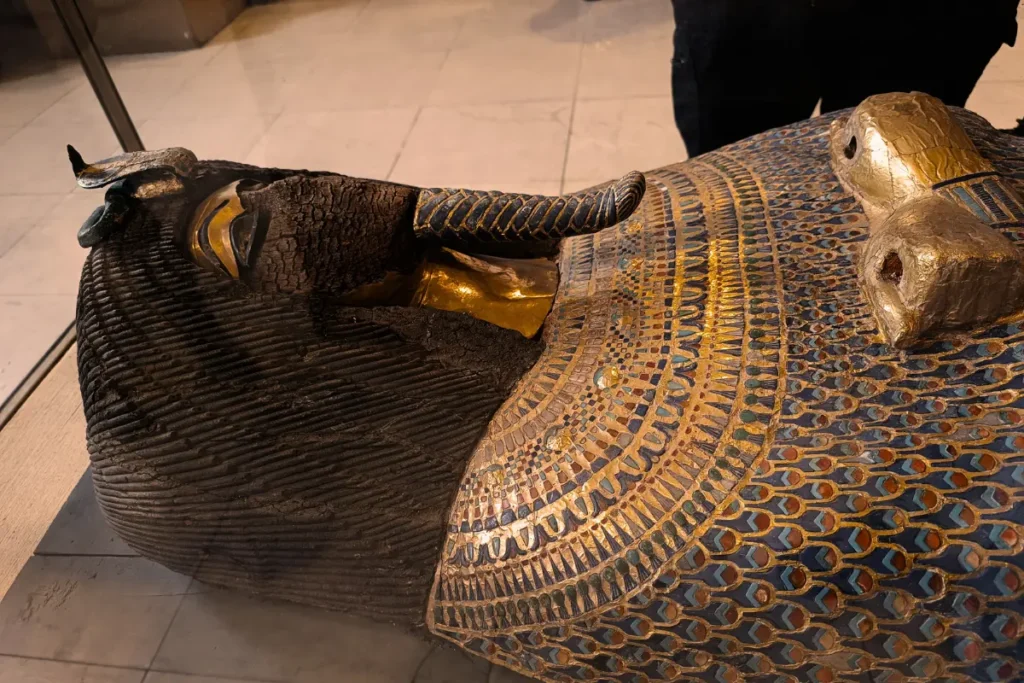
The Cairo Museum’s collection is the most concentrated assembly of ancient Egyptian artefacts in the world. Without a plan, it overwhelms. With one, it rewards. The Tutankhamun gallery alone contains over 5,000 objects from a single tomb…and Tutankhamun was a minor king who died at nineteen. The scale of what has been found, and what remains undiscovered, becomes clearer the longer you stand inside.
The Western Desert
Most Egypt itineraries skip the western desert. This is a mistake worth correcting.
Black Desert and Crystal Mountain
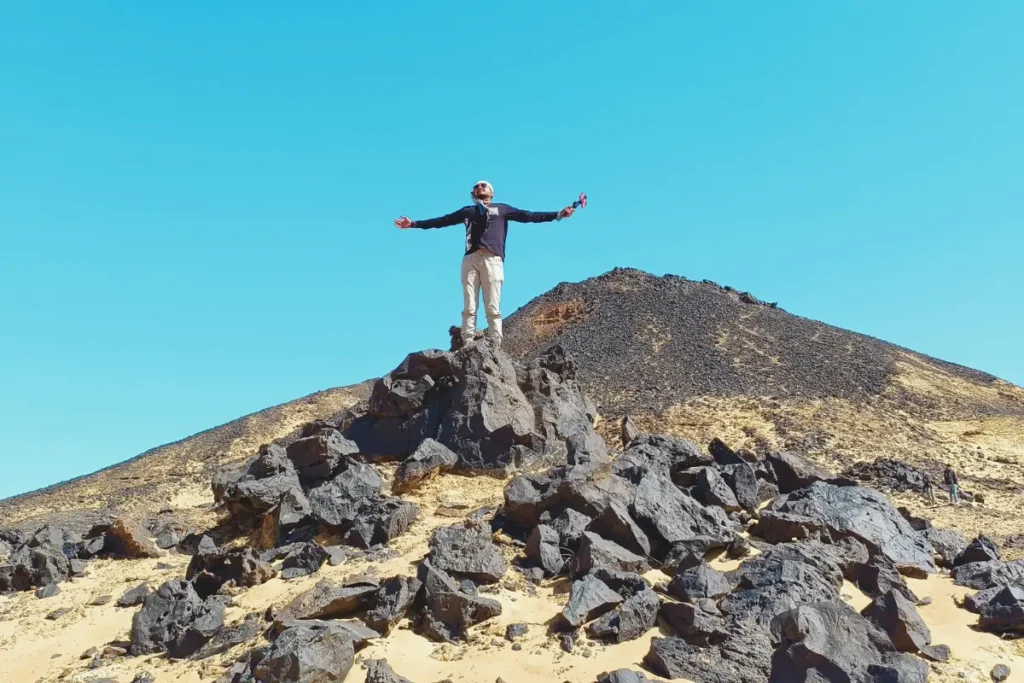
The Black Desert, four to five hours from Cairo via Bahariya Oasis, is a landscape of volcanic formations from eruptions 180 million years ago. Sitting on top of a volcanic hill in cold February wind, looking at a horizon of black rock formations and nothing else, the thought arrived without warning: this does not feel like Earth.
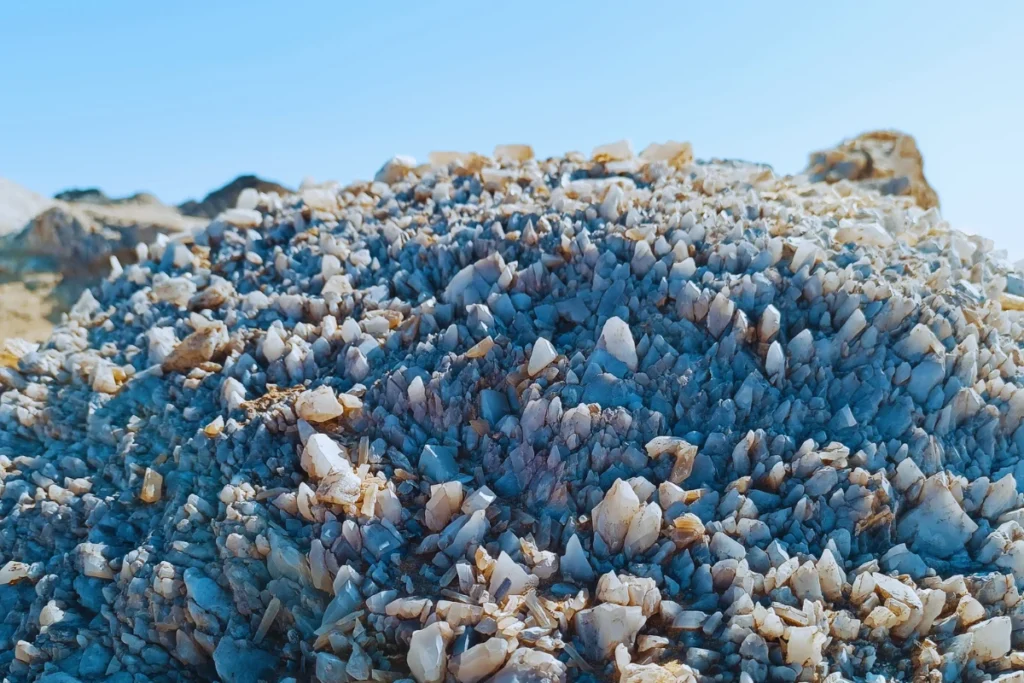
Crystal Mountain, further into the desert, was formed by a meteorite impact. The surface catches light in a way that ordinary rock does not. We picked up a fragment and held it against the sky. It glittered.
Agabat Valley
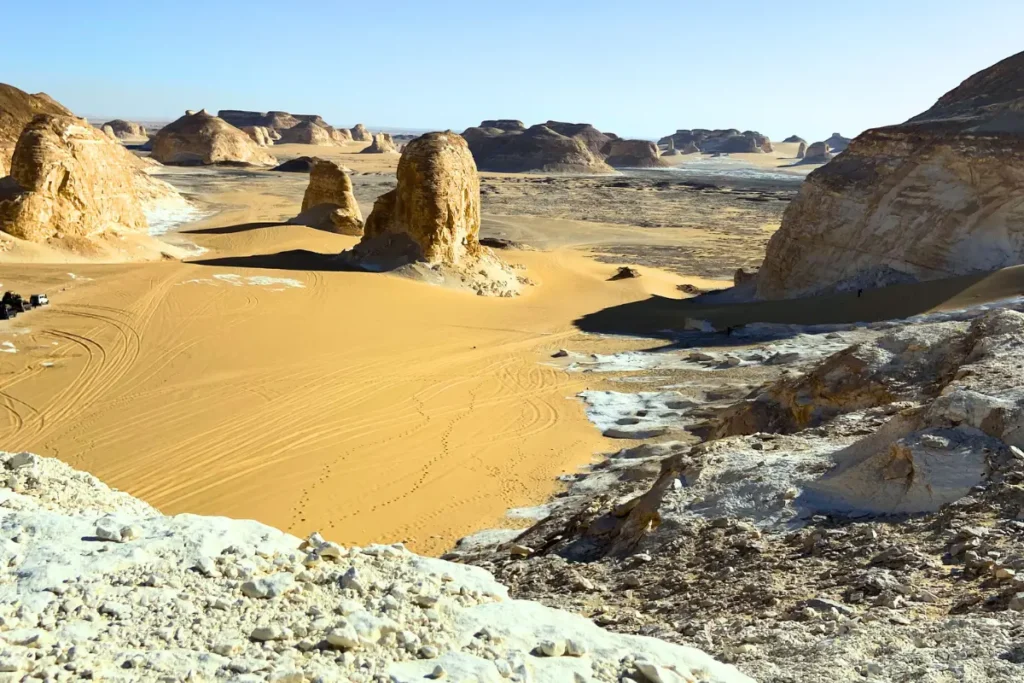
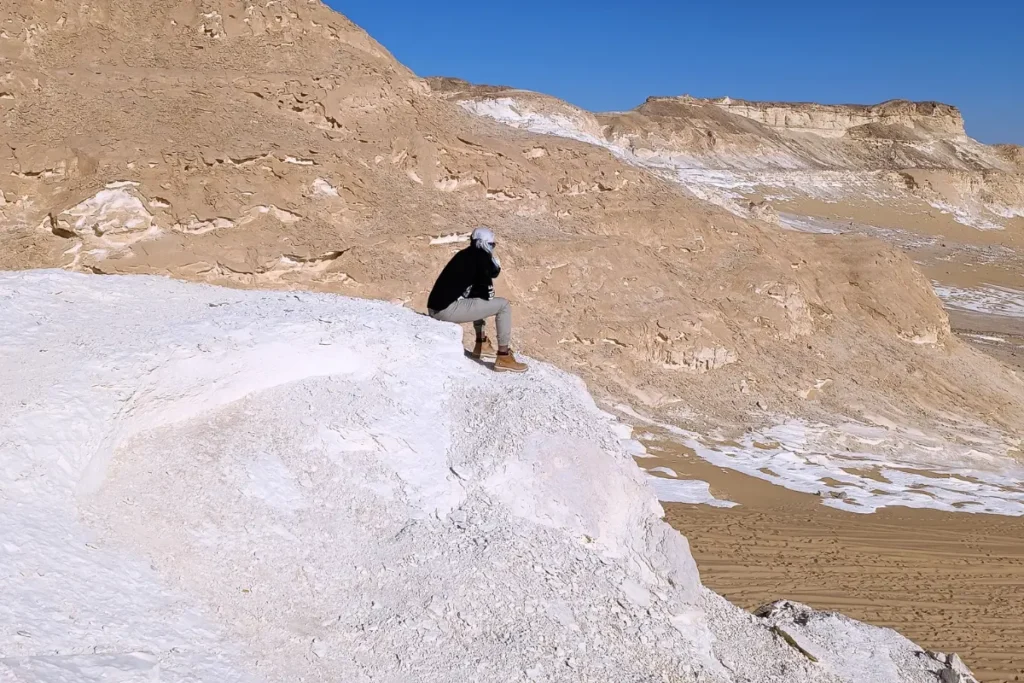
The Agabat Valley holds white limestone formations rising over golden sand. Among the rocks, if you look carefully, are fossilised oyster shells. This was a seabed before human memory began. Standing in a desert looking at evidence of an ancient ocean is the kind of moment that makes time feel genuinely long in a way that no amount of reading can produce.
We sandboarded on the nearby dunes. One of us fell immediately. The other managed a reasonable run. Neither of us was athletic about it. The guide found this funnier than we did.
The White Desert Overnight
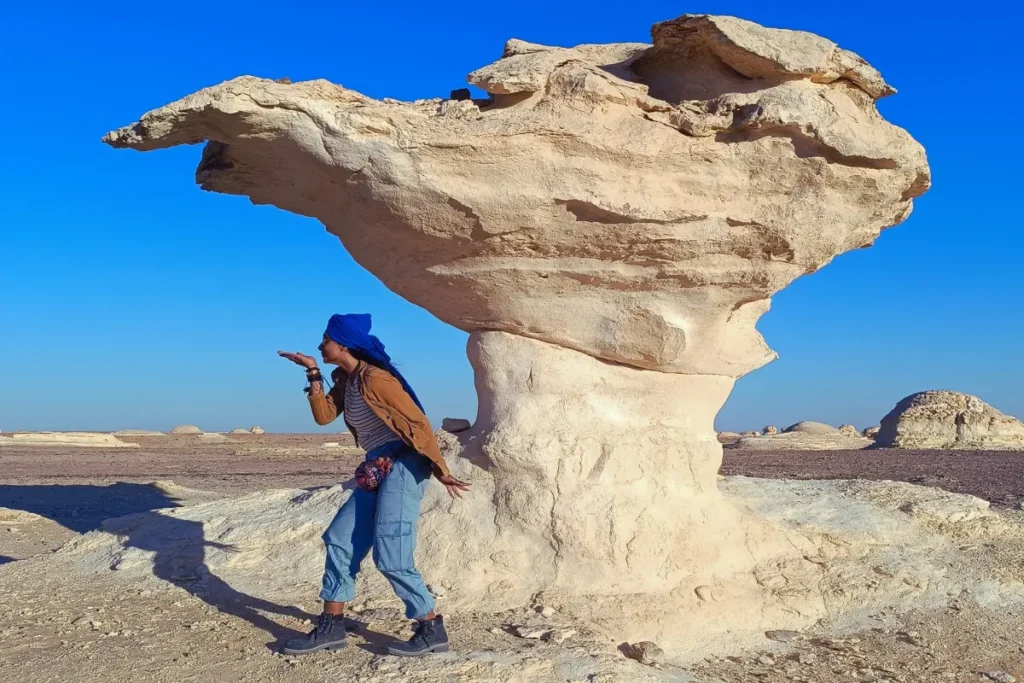
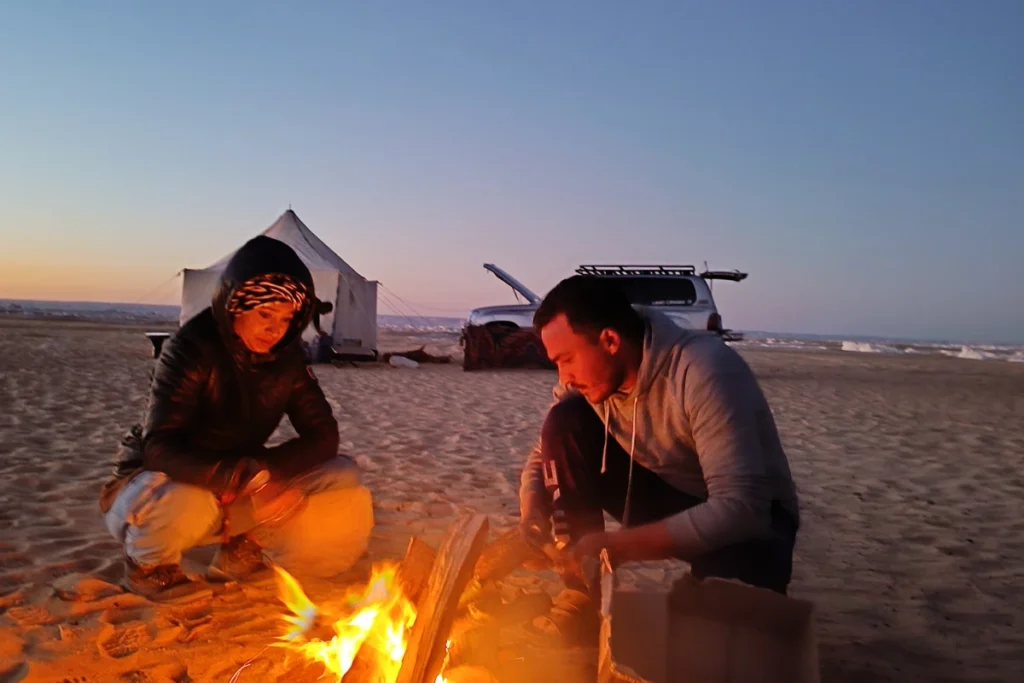
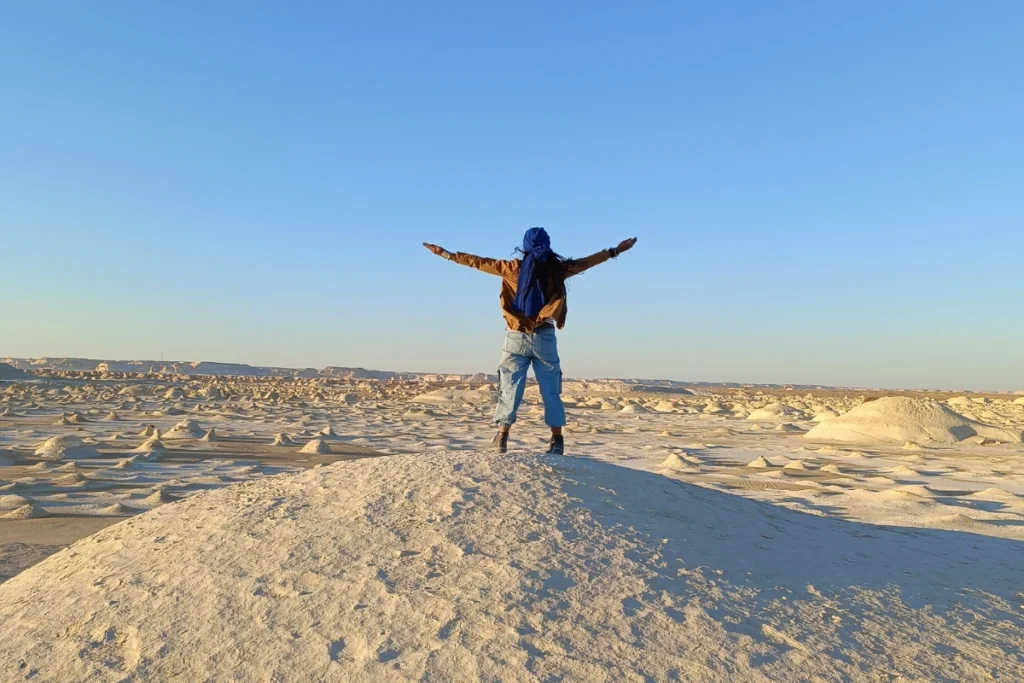
The overnight in the White Desert, under stars, with our guide Mahmood, was the most memorable night of the trip.
The fire took time to build against the wind. The cold was beyond what the word communicates…a deep, physical cold that the desert amplifies in the dark. The stars, once the sky was fully dark, were the stars of a place with no light pollution for hundreds of kilometres in any direction. We lay on the sand and looked up, and for a stretch of time that felt both very short and very long, neither of us spoke.
Breakfast the next morning: flatbread, tahini, olives, scrambled eggs, eaten on a blanket in the White Desert with chalk-white limestone formations casting long shadows in early light. We have not eaten a more memorable breakfast anywhere. The White Desert guide will explain why, and what the specific quality of that morning did to how we think about what a meal can be.
“The stars, once the sky was fully dark, were the stars of a place with no light pollution for hundreds of kilometres. Neither of us spoke.”
The Watania Sleeper Train: Cairo to Aswan
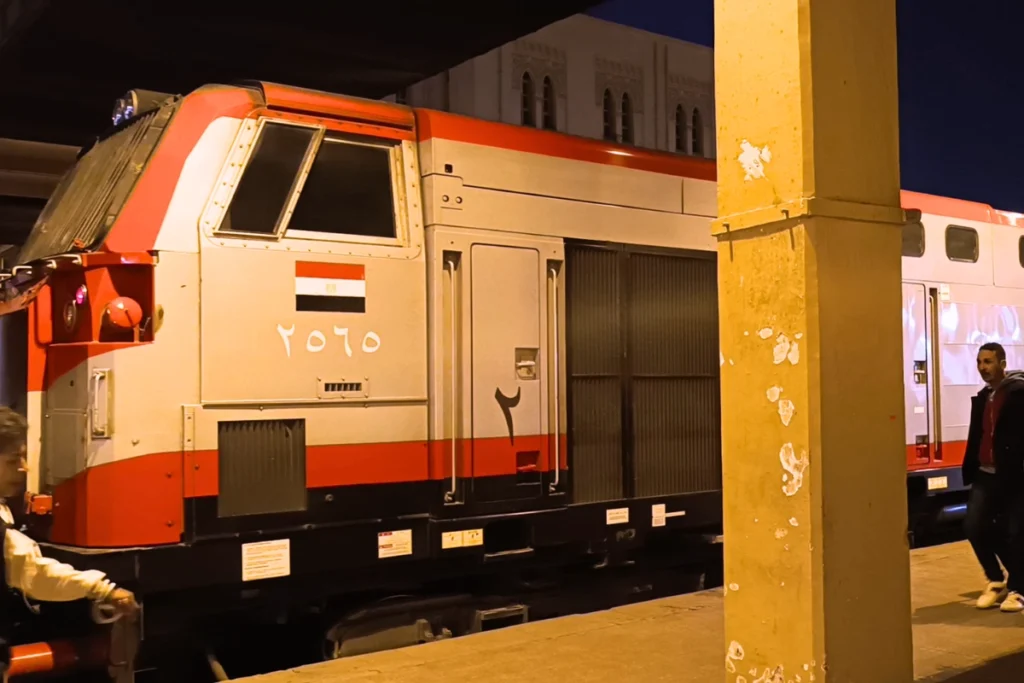
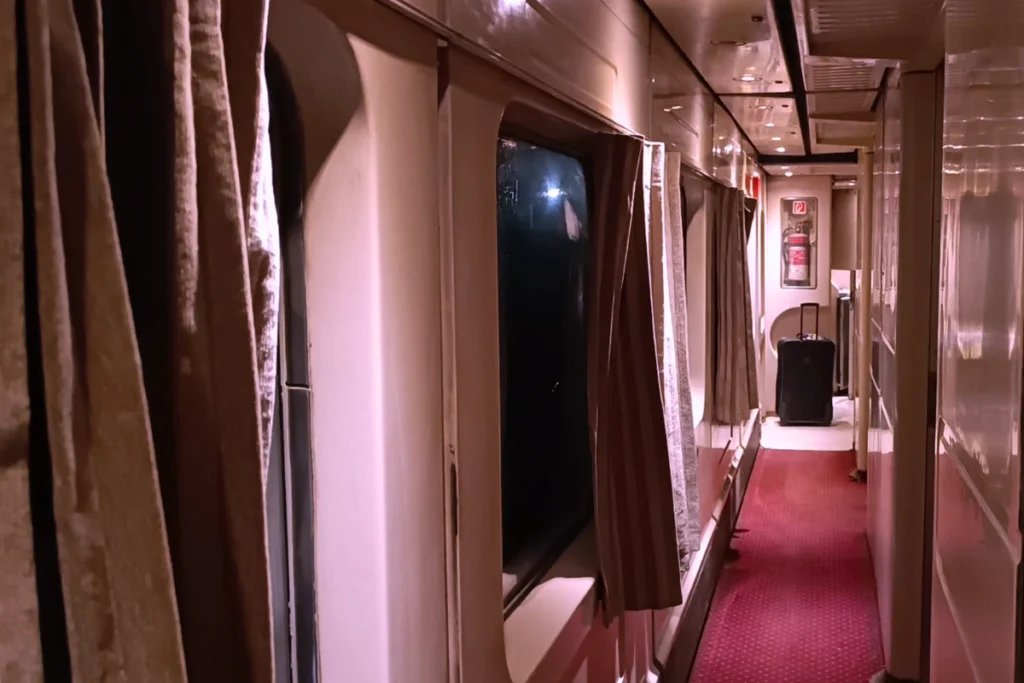
Ramses Station, Cairo. Platform 8 (Sometimes from Platform 11). Departure at 7:30 PM. The station interior is beautiful in a way that train stations rarely are anymore…golden light, arched ceilings, Egyptian design motifs that make the act of waiting feel less like waiting.
The morning was the reason for the journey. Waking somewhere in the middle of Egypt with the landscape moving past the window. Palm trees appearing, then the Nile alongside the tracks…wide, unhurried, the exact blue it is in photographs, which we had not believed until we saw it with our own eyes.
This landscape…the palms, the river, the flat desert on either side…has looked essentially like this for several thousand years. The train is new. Everything it moves through is not.
The bathrooms were clean. The food…rice, chicken, bread, juice…was better than a train had any obligation to provide. We arrived in Aswan at 9:35 AM, on time.
If you are planning this journey, the practical questions…how to book online before you arrive in Egypt, which platform to find at Ramses Station, what cabin to request for the Nile view, and the one mistake most people make before boarding…are all answered in our sleeper train booking guide.
If you want to know what the fourteen hours actually feel like…the cabin at night, the fire and sand still in your memory from the desert, and the specific quality of watching the Nile appear outside your window on a February morning…that is a different kind of piece. Read the sleeper train story.
The Nile Cruise
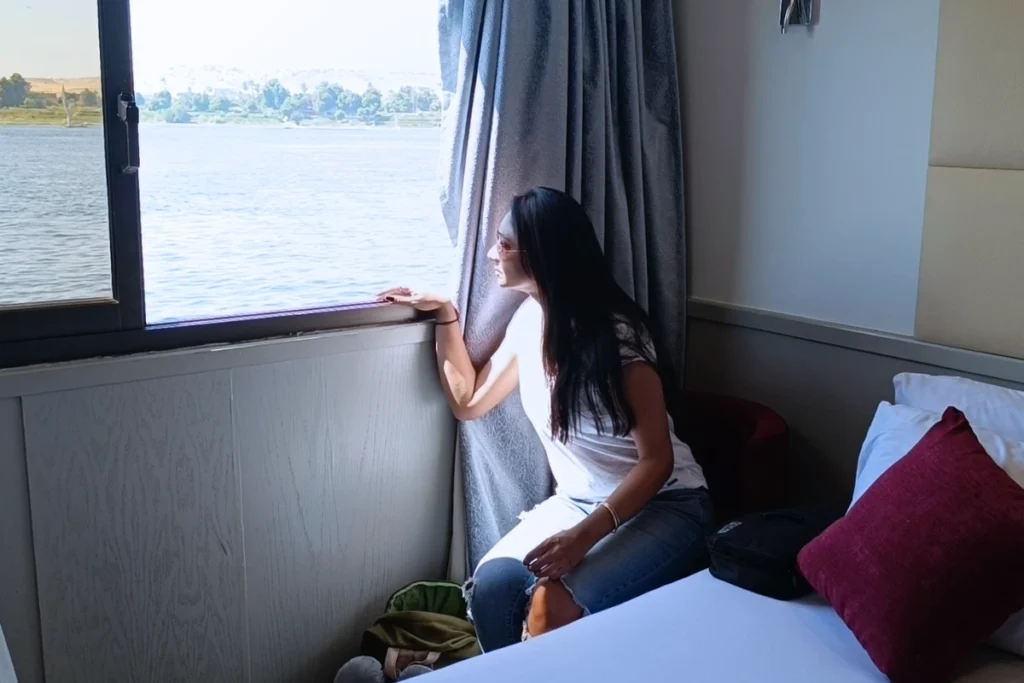
We want to be precise about what a Nile cruise actually is, because the description sounds unlikely.
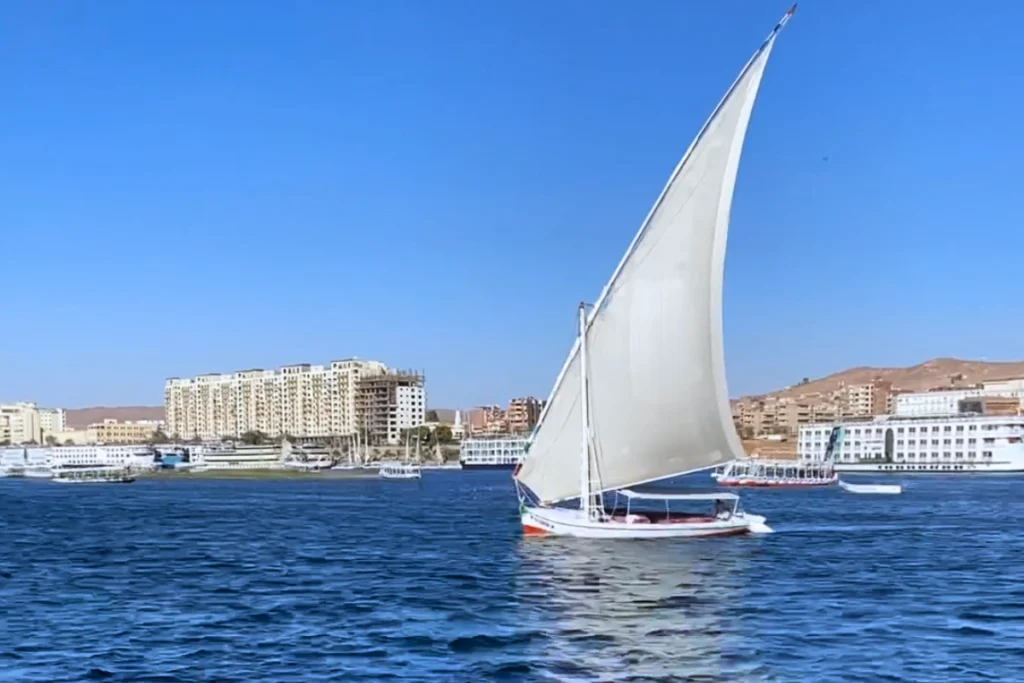
You wake up each morning moored at a different point on a river that has sustained civilisations for six thousand years. You walk off the boat into temples that are three thousand years old. You walk back and have a buffet lunch and sit on the upper deck and watch the riverbank move past. The combination of the mundane and the impossible is what the Nile cruise actually is.
Our cruise was the King Tuti…three nights, four days. The room had a window onto the Nile. We requested it specifically. It was worth every minute of planning.
We ate kalamari for the first time. Duck for the first time. Quail for the first time. Kunafa…warm pastry soaked in sugar syrup with cheese inside…became an immediate reference point for all desserts. There were rice preparations we could not name but have not stopped thinking about. The Nile cruise buffet is, unexpectedly, one of the better meals we have had in travel.
The evening on the upper deck…mocktails, a belly dance performance, the river dark on either side…is the kind of thing that sounds like a tourist brochure and turns out to be genuinely worth it. Our full Nile cruise review covers the cabin, the food, the schedule, and the specific moment when you look out the window and realise the Nile has not changed and everything else has.
The Temples
Every temple in Egypt rewards a different kind of attention. None of them reward rushing.
Philae: The Last Hieroglyphs
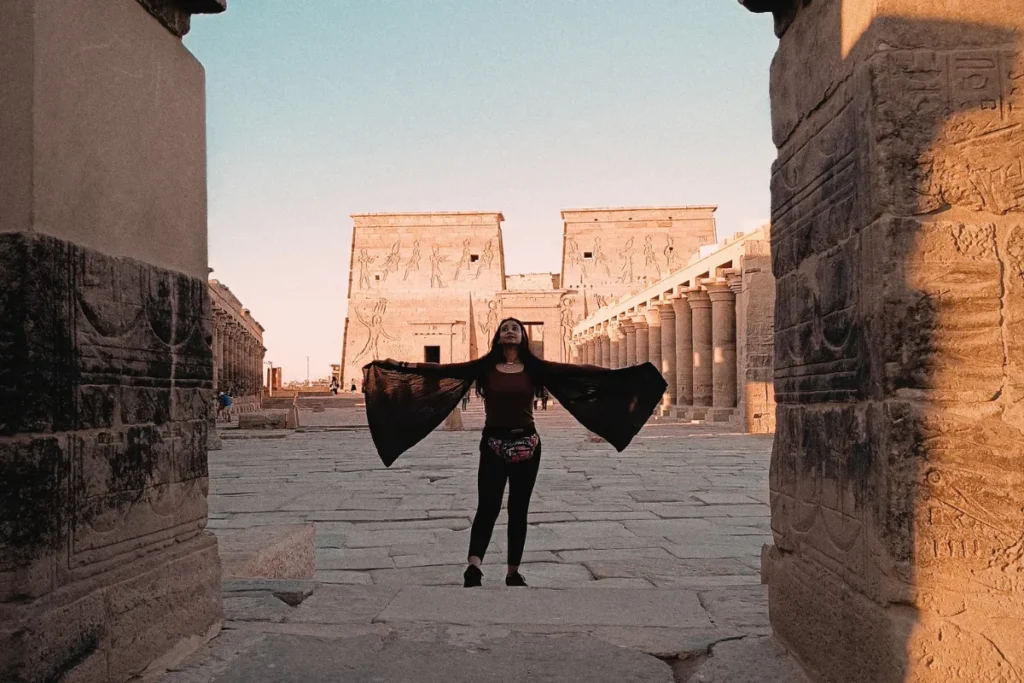
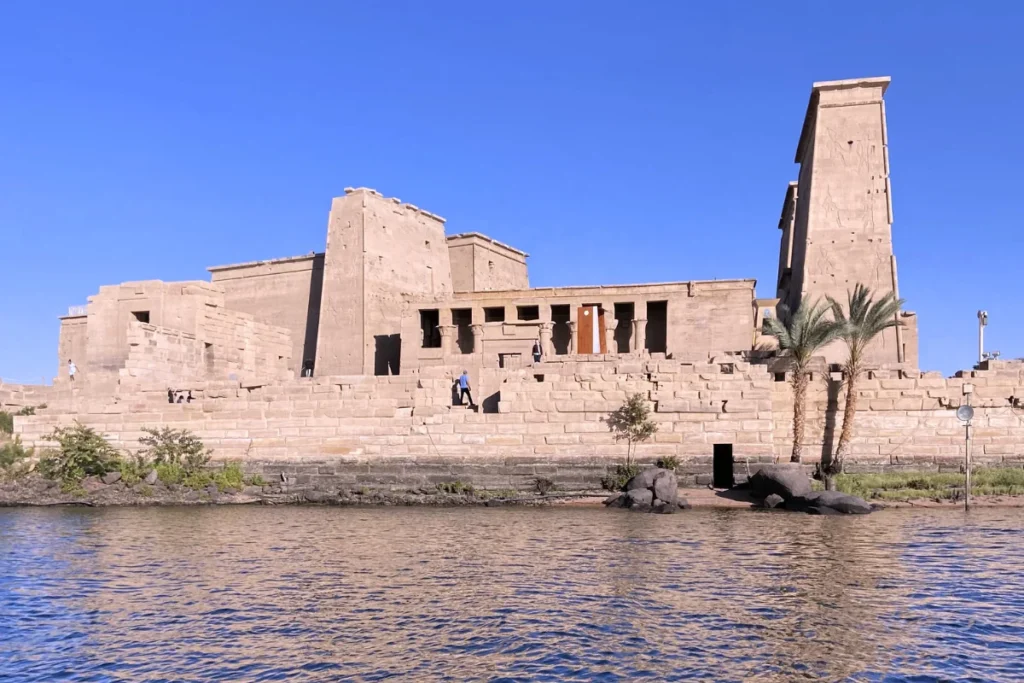
Dedicated to Isis, who gathered the fourteen pieces of Osiris’s murdered body and breathed life back into him. The temple was dismantled by UNESCO in the 1960s. 40,000 stone blocks moved to higher ground before the Aswan High Dam flooded the original island. The last hieroglyphs ever inscribed in ancient Egypt were found here, carved in the 4th century CE. That this was where the old religion made its final mark in stone is worth sitting with for a moment before you enter.
Abu Simbel: Precision That Has No Business Existing
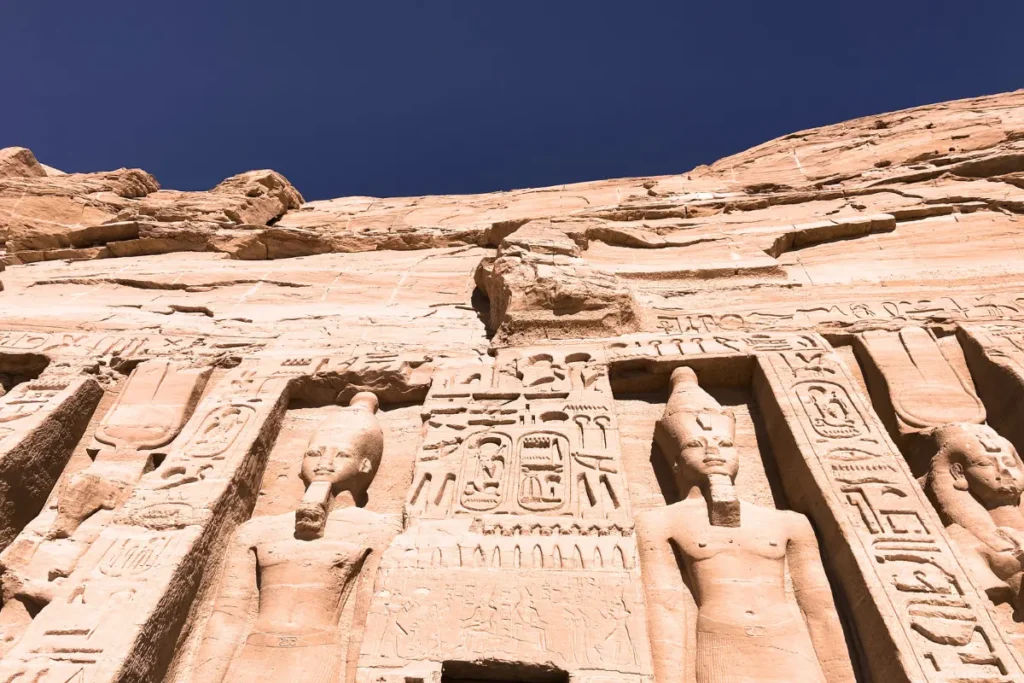
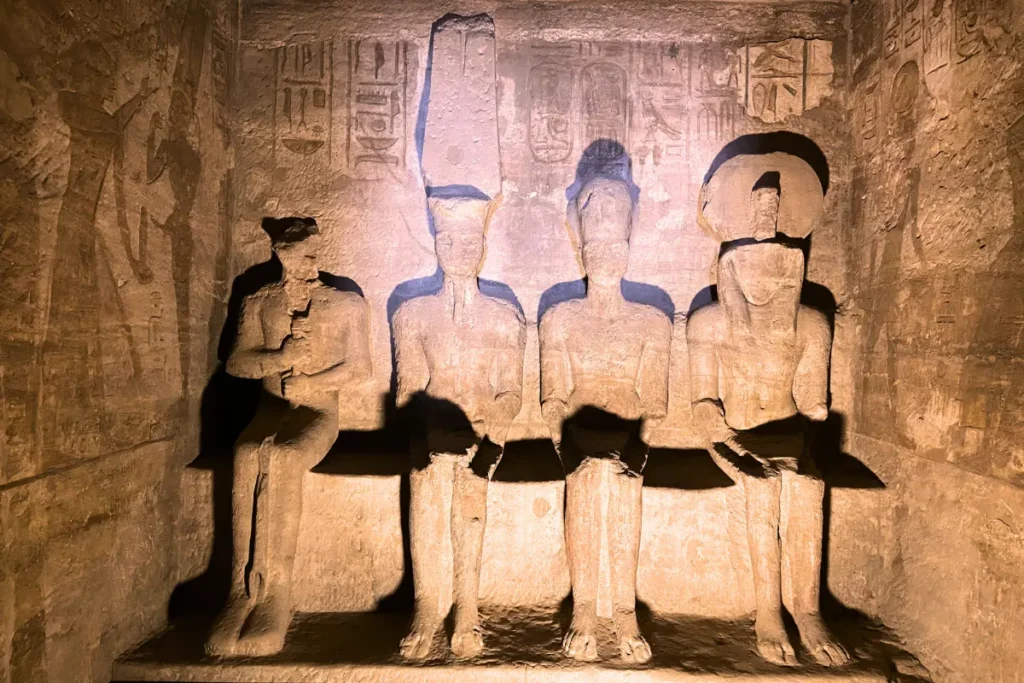
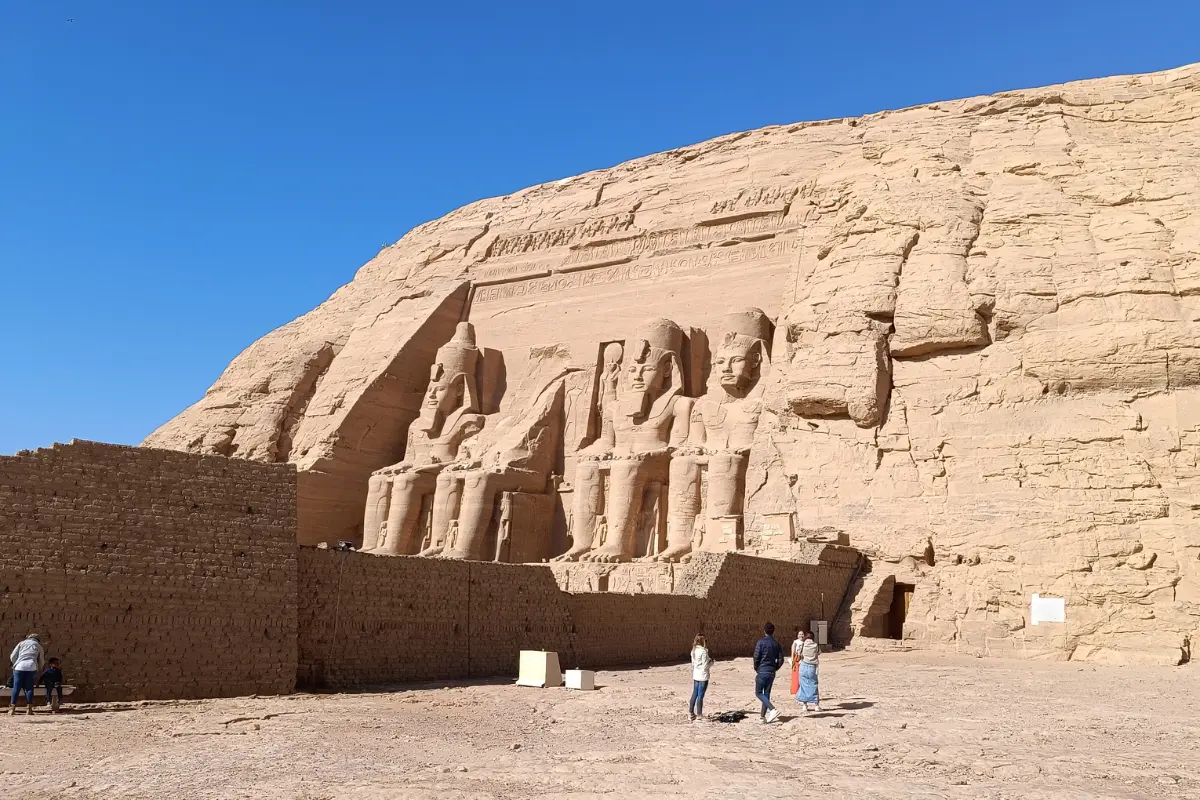
Four colossal statues of Ramses II, cut from a cliff face. Twice a year…around February 22nd and October 22nd…sunlight travels 60 metres into the inner sanctum and illuminates three of the four seated statues. The god of darkness remains in shadow. This solar alignment required a geometry that we would need computer modelling to replicate today. Ramses II’s engineers achieved it in the 13th century BCE with surveying instruments we no longer fully understand.
We arrived by pre-dawn bus from Aswan with the group. The light, when it came over the statues, was worth every uncomfortable hour of the drive.
Edfu: Arriving by Horse Carriage Before Dawn
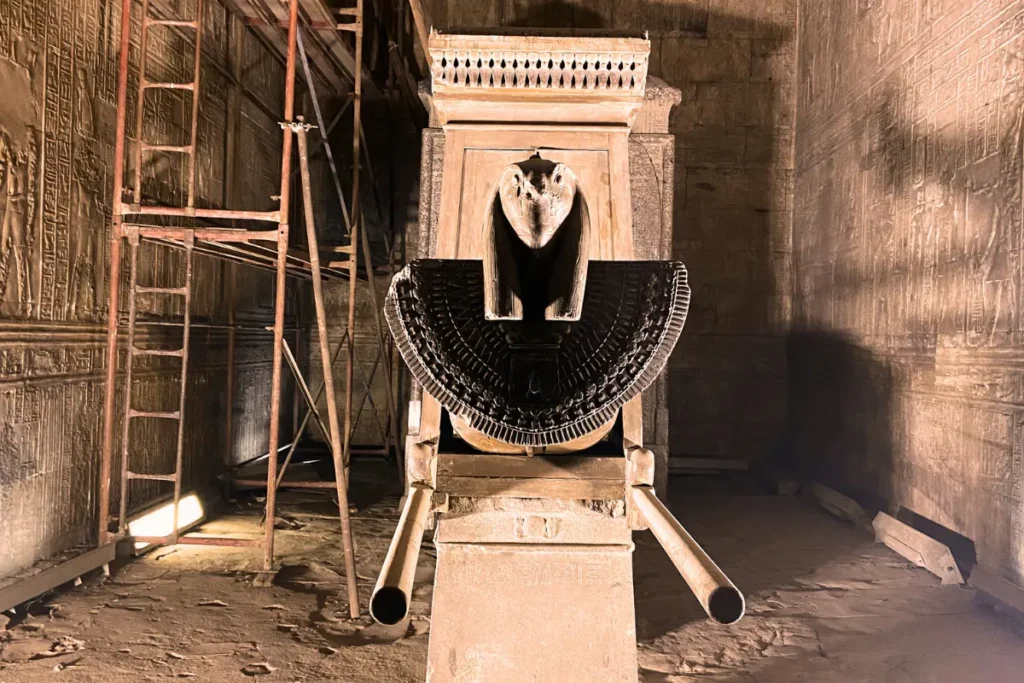
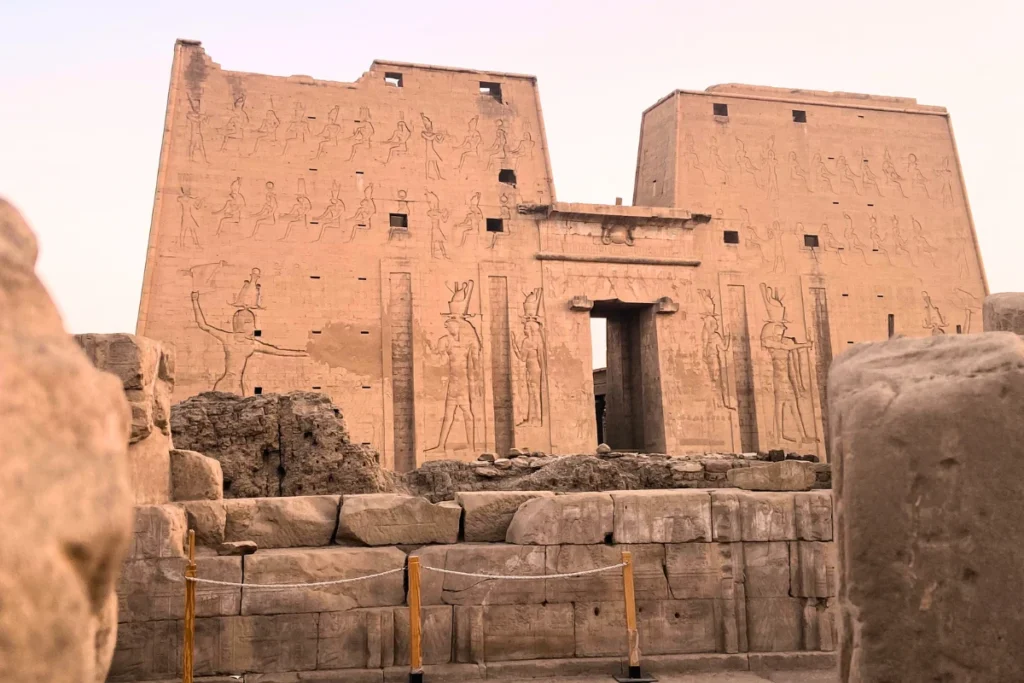
The best-preserved temple in Egypt. We arrived by horse carriage through empty streets before the city had woken up. First time either of us had ridden in a horse carriage. In Egypt. In the dark. On the way to a temple dedicated to a falcon god.
Some experiences resist description because every word you choose makes them smaller.
But the streets being empty did not mean we were alone. When we reached the temple, the crowds were already there…long queues of visitors who had arrived before us, most of them from the cruise ships that dock at Edfu overnight specifically so passengers can be at the gates when they open. The early morning slot is not a secret. Every ship on the Nile knows it.
The Edfu Texts, inscribed on the temple walls, describe a creation narrative that some researchers interpret as referencing an era before dynastic Egypt. The debate is unresolved. What is not debated: standing inside Edfu in the early morning light, even with a crowd, is one of the most complete sensory experiences Egypt offers. The scale of the columns, the depth of the carvings, the preserved colour in the upper chambers…none of it diminishes with company.
Kom Ombo: Two Gods, One Temple
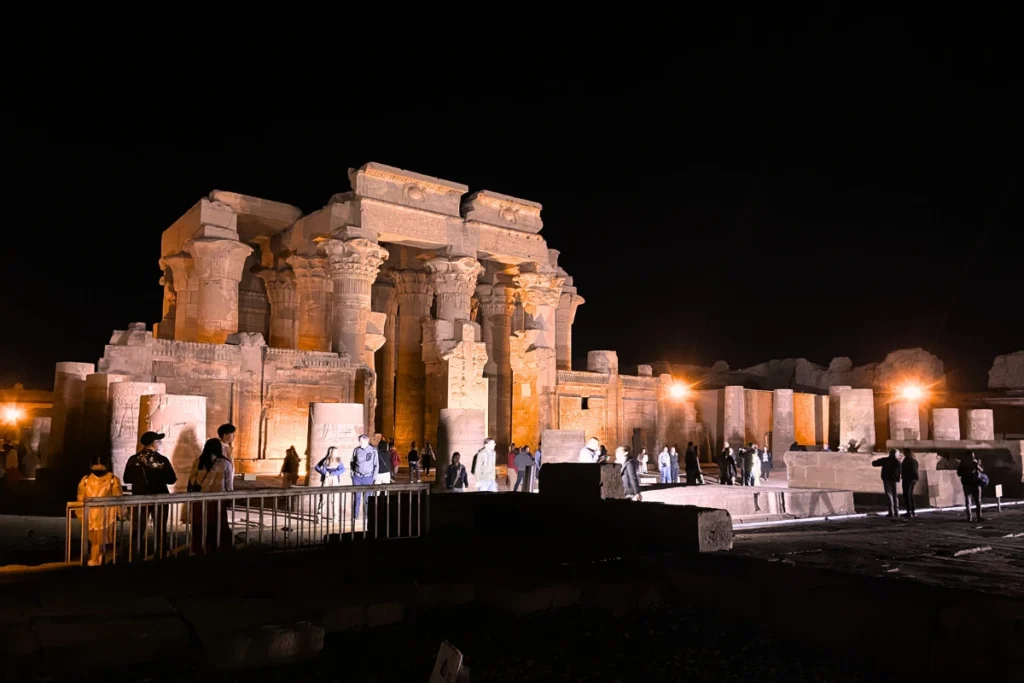
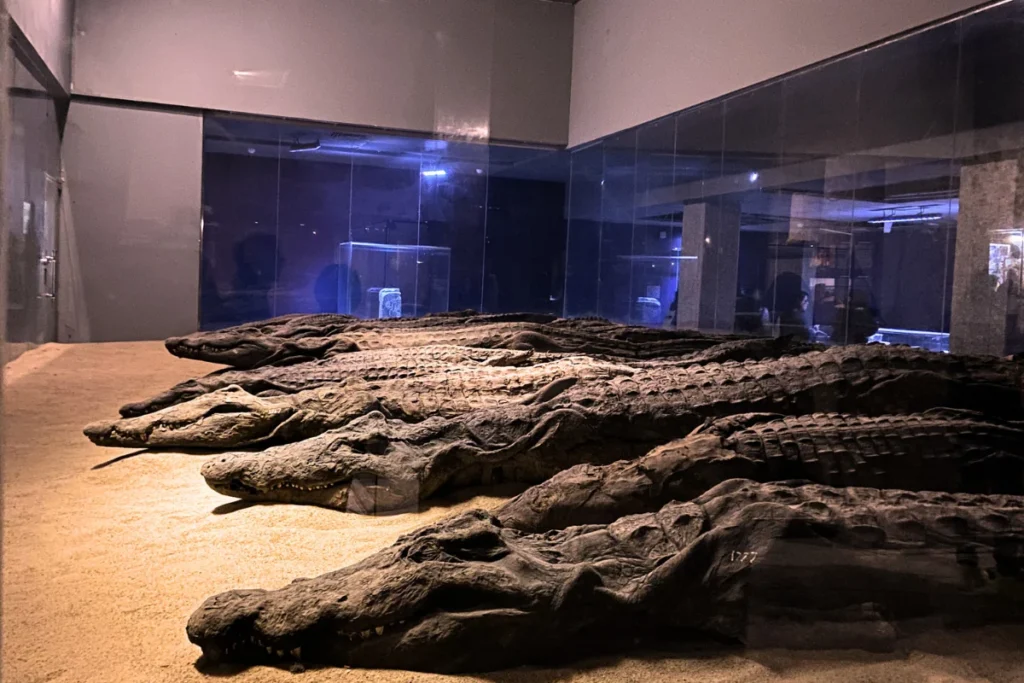
The only temple in Egypt built for two gods simultaneously, its design perfectly symmetrical down the central axis…half dedicated to Horus, half to Sobek, the crocodile deity. The Crocodile Museum beside it holds mummified crocodiles that were once worshipped as living embodiments of divine power. The logic of ancient Egypt…that divinity could be present inside an animal, inside a stone, inside a particular alignment of light…is most legible here.
Luxor Temple and Karnak: Three Thousand Years in One Complex
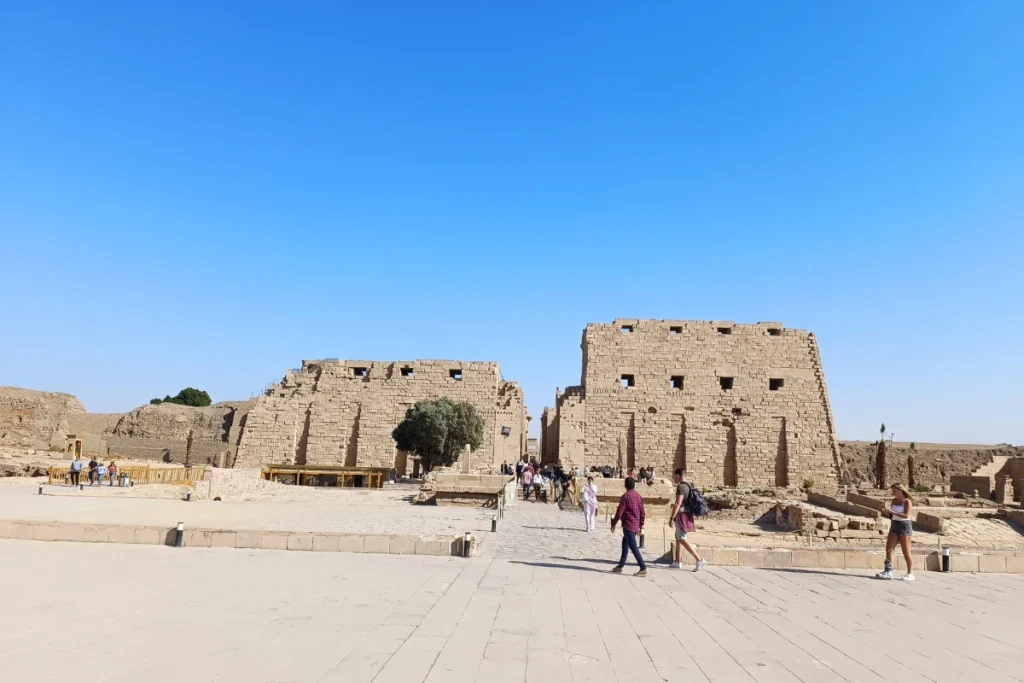
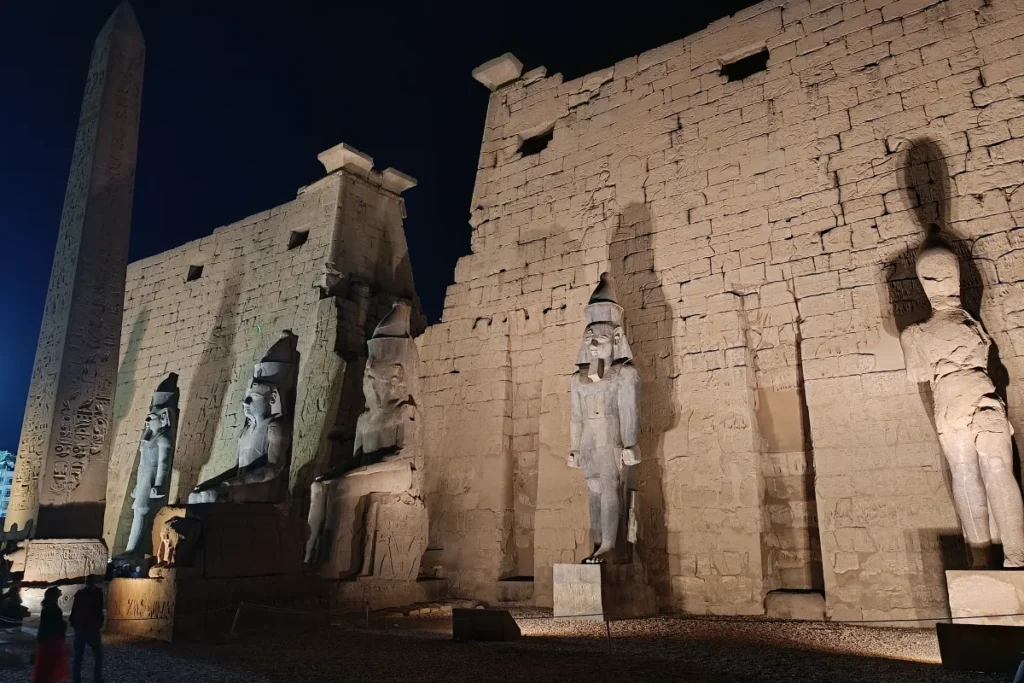
Karnak is the largest religious complex ever built by humanity, added to by thirty pharaohs over two thousand years. The scale does not register on first approach. It registers gradually, as you keep walking and the columns do not end.
We were exhausted when we arrived. Others from our group stayed at the entrance. We kept walking. The opportunity does not repeat.
Luxor Temple, a few kilometres south along the Nile, is quieter. The Avenue of Sphinxes connecting them was one of the most important processional routes in the ancient world. Standing at one end and looking down it at dusk, you can see why.
Valley of the Kings: Maps of the Afterlife
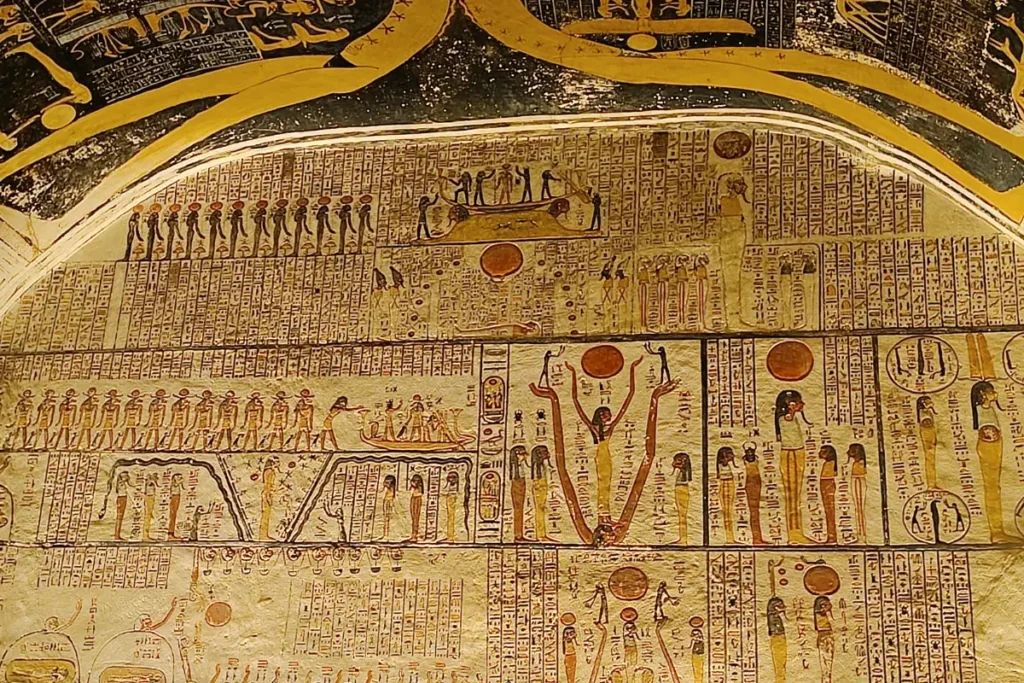
Sixty-three tombs discovered so far, with excavations ongoing. The paintings in Ramesses V and VI, detailed maps of the journey through the underworld, vivid after three thousand years…are the most complete example of ancient Egyptian cosmology you can stand inside.
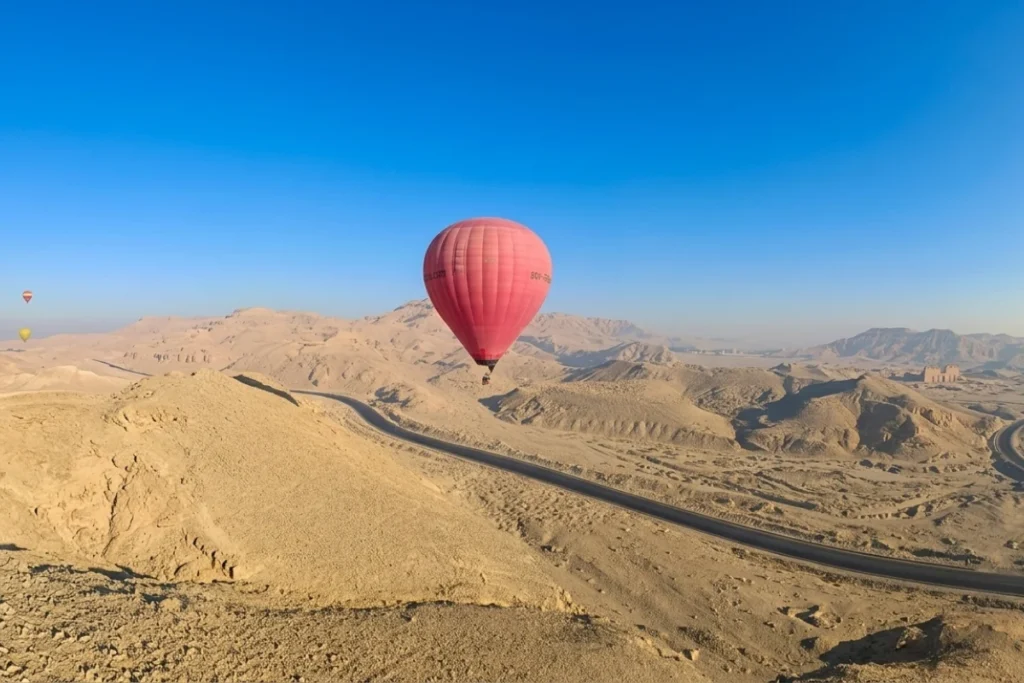
Our hot air balloon ride left before sunrise over the valley. The captain was calm and experienced. Local boys ran across the sand below to catch the landing ropes. Hard, physical work, done with complete commitment. We still have the certificates. We appreciated those boys with whatever we could. They had earned it.
A question worth asking: sixty-three tombs discovered. What else is under that valley?
Hatshepsut Temple: The Pharaoh They Tried to Erase
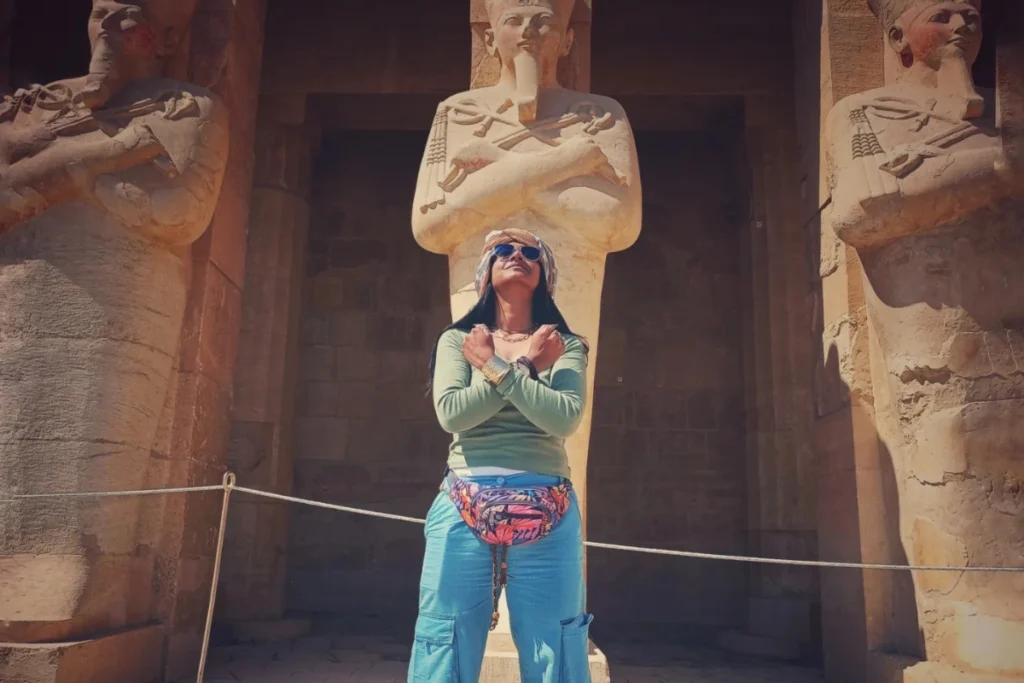
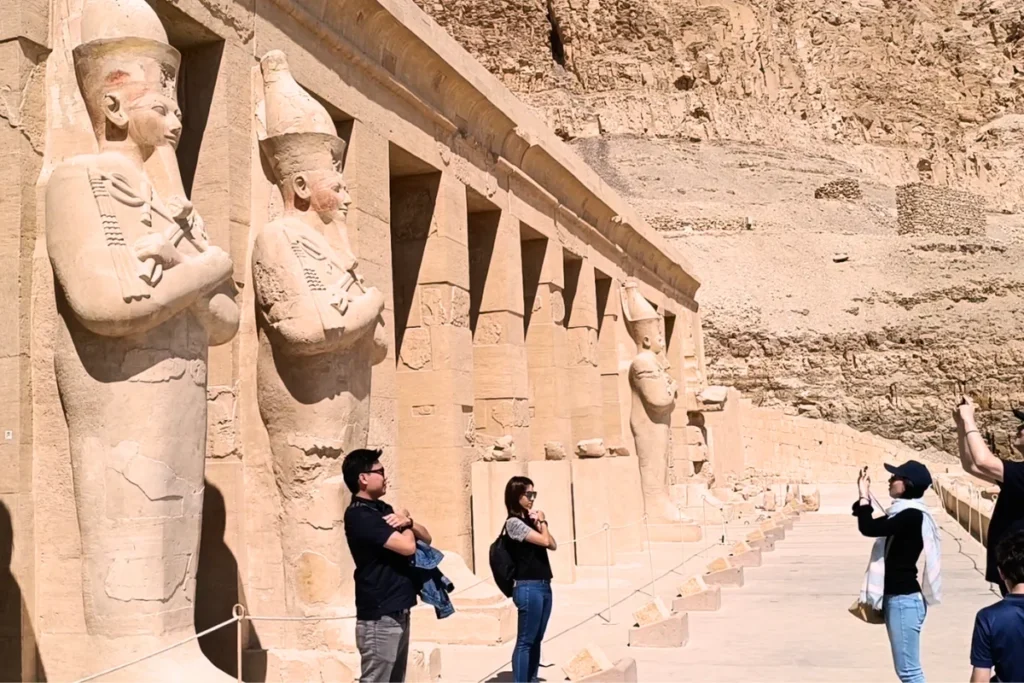
Hatshepsut ruled Egypt for over twenty years as pharaoh…not as regent, as pharaoh. During which time she sent a trading expedition to the land of Punt, built this mortuary temple at Deir el-Bahari, and oversaw a period of significant prosperity. After her death, her successor had her image chiselled from monuments and her name removed from the official record. For centuries, scholars did not know she had existed. The temple survived. So, eventually, did the record.
Costs, Timing, and Practical Notes
All prices below are from our February 2022 trip. Egypt’s monument entry fees have increased significantly since. Verify current prices before booking anything.
| Category | Rough Range (INR) | Approx. USD | Notes |
| Desert safari (overnight, per person) | INR 18,000 – 30,000 | ~USD 189 – 316 | Includes camp, meals, transport. Varies by operator…negotiate |
| Watania sleeper train (per person) | INR 7,000 – 11,000 | ~USD 74 – 116 | Dinner and breakfast typically included. Book in advance |
| Nile cruise, 3–4 nights (per person) | INR 27,000 – 52,000 | ~USD 284 – 547 | Temple entry not included. Wide range by ship and season |
| Temple and monument entry (per site, per person) | INR 800 – 4000 | ~USD 10 – 48 | Fees have risen considerably since 2022. Verify before travel |
| Local intercity overnight bus (per person) | INR 1000– 1500 | ~USD 11 – 16 | Good budget option for the Luxor–Cairo leg |
| Local restaurant meal (per person) | INR 500 – 2000 | ~USD 5 – 21 | Away from tourist zones; better food, better price |
For a full breakdown of what nine days in Egypt actually cost us…flight, desert, train, cruise, every temple entrance fee…and what those fees look like in 2026, see our Egypt travel tips guide.
Practical Lessons
- November through February is the right window. The desert is bearable, the temples walkable.
- Carry cash. Consistently. ATMs are not reliable at every site.
- Buy a local SIM card in Cairo before leaving the city. Signal varies significantly once you are on the Nile.
- At the Giza complex, negotiate nothing. Agree on prices before any interaction begins.
- If you have a Ramy…a driver who never asks for extra money, who shows up when he said he would, who treats you like a person rather than a transaction…tip generously and leave a review. Every trip has one person who changes the tone. Ours did.
- At complex sites…Karnak, Edfu, the Valley of the Kings, the Egyptian Museum…a guide is worth the cost. The difference between knowing what you are looking at and not is not a small difference.
- The Abu Simbel solar alignment happens around February 22nd and October 22nd. If your dates overlap with either, plan accordingly. It is worth rearranging the itinerary for.
- The Aswan High Dam entry fee, when we visited, was 100 EGP. We would not recommend it. It is, ultimately, a dam.
“Nine days. Four pyramids. A desert that showed us the actual night sky. A train that delivered us to the Nile at sunrise. Every single one of those moments has its own page here. If Egypt is on your list, don’t start anywhere else.”