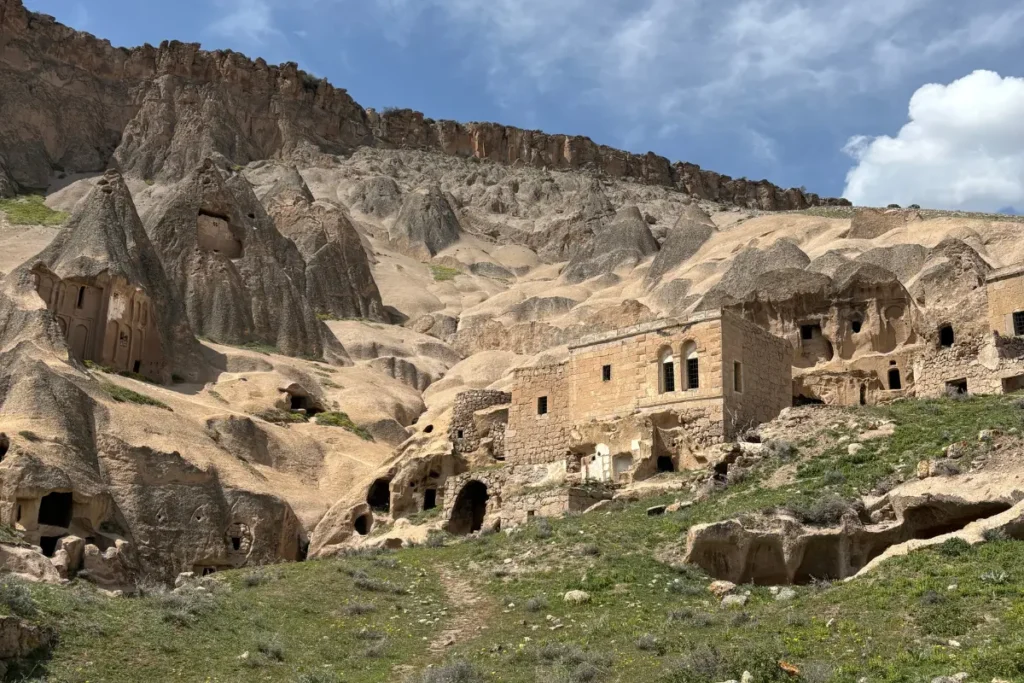
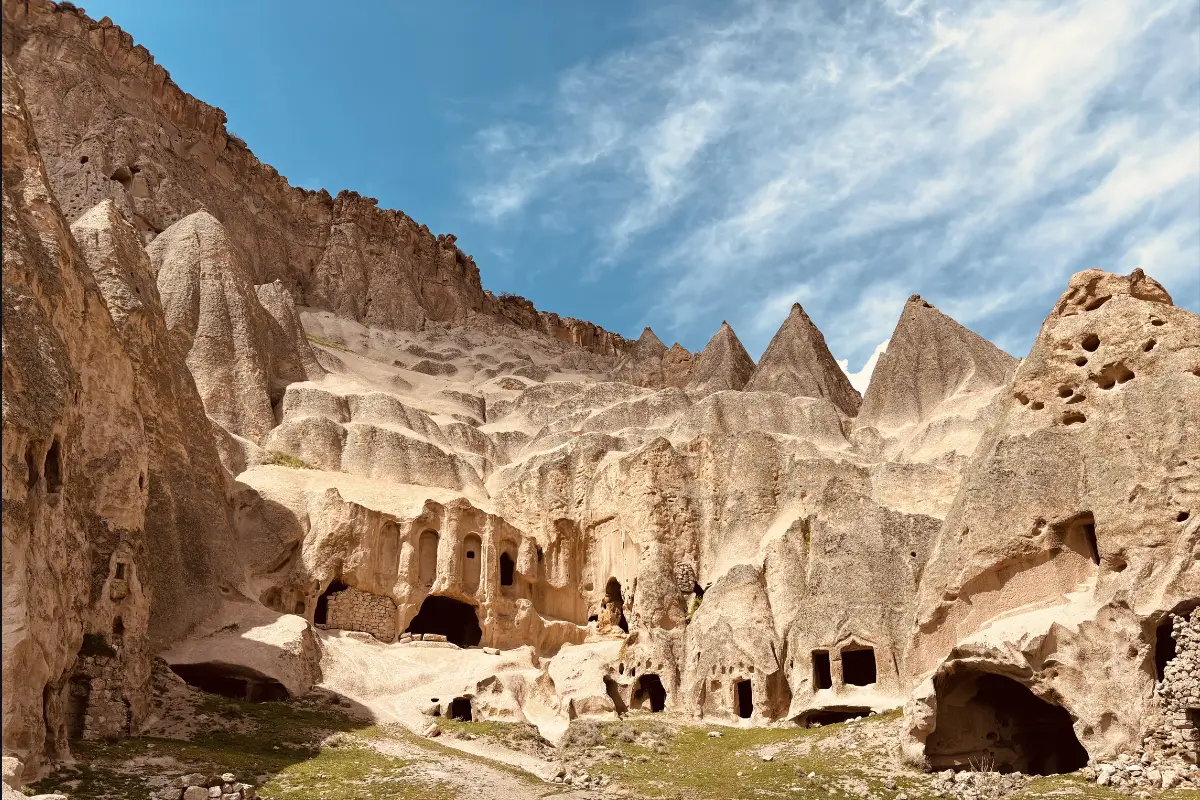
Most visitors to Selime Monastery Cappadocia spend just fifteen minutes taking photos from the parking lot before moving on. Looking at this 8th-century Byzantine site from below reveals only a fraction of its true scale. Tucked behind the cliff face lies a multi-level rock-cut community of hidden chapels, vaulted cathedral halls, defensive tunnels, and a surreal landscape that feels out of this world.
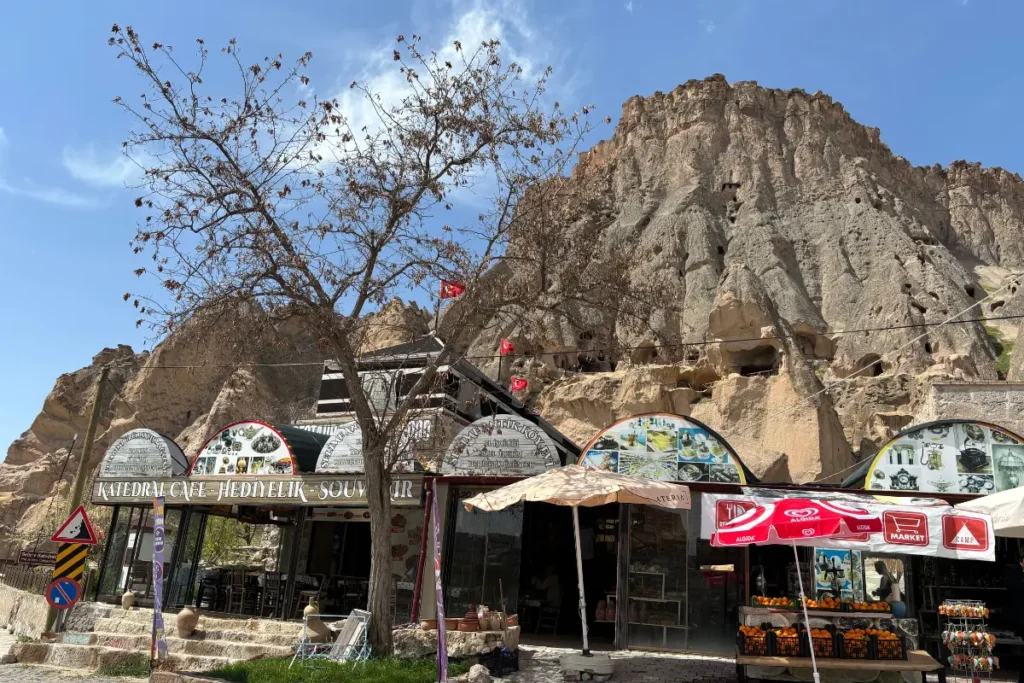
Fifteen minutes. That is the standard Selime Monastery visit. The tour bus parks. The group walks to the front of the cliff face. Cameras are raised. The massive rock formation, honeycombed with carved openings across multiple levels, is photographed from approximately the same angle by approximately every visitor. The guide provides two minutes of narration. The group returns to the bus. The bus drives to the next stop. Selime is checked off the list, filed under “monastery, large, saw it, moving on.”
We nearly did the same thing. We drove from Kaymaklı Underground City, passed the Ihlara Valley (viewed from the rim, did not hike down), and arrived at Selime Monastery with the specific energy of a couple on Day 6 of a road trip who had already processed an underground city, a canyon, and a crater lake that morning and were running low on processing capacity.
Then a man at the entrance offered to show us a different route. TRY 700 / INR 1,610 / USD 17. Approximately the cost of the fried chicken and pita we had eaten in Göreme the night before.
“The tour buses stop at the base, take their photos, and leave. But the true story of Selime isn’t carved onto the surface of the cliff; it is hidden in the dark, winding turns behind it.”
What Selime Actually Is
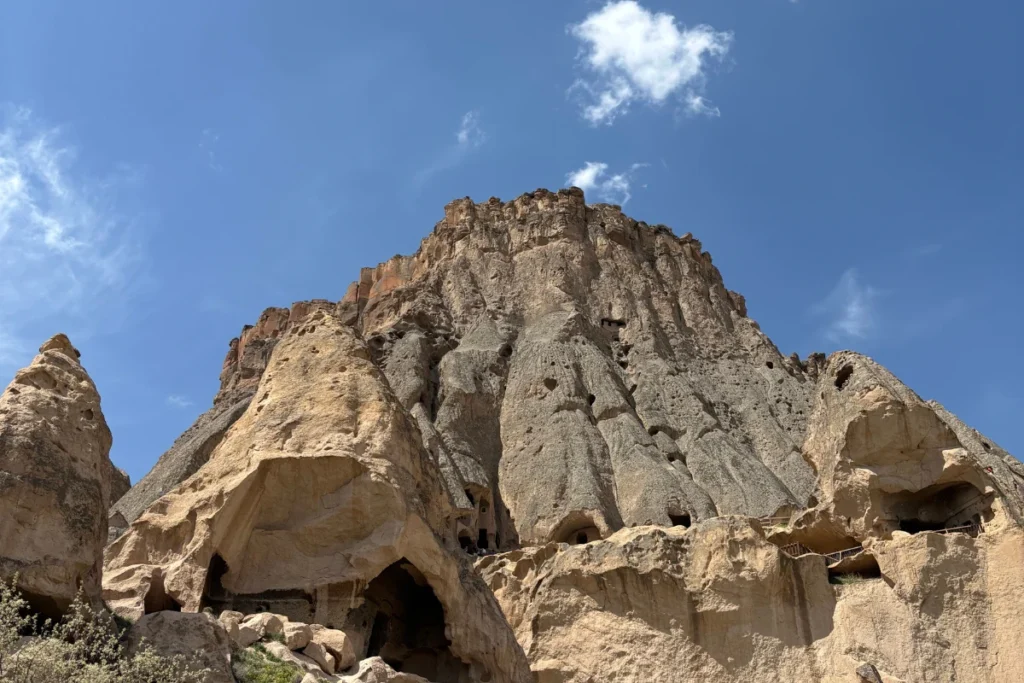
Selime Monastery sits at the northern end of the Ihlara Valley, carved into a massive volcanic tuff cliff approximately 80 km from Göreme (and 8 km from the Belisırma trail exit). It is one of the largest rock-cut religious complexes in Cappadocia, dating to the 8th and 9th centuries CE, when Byzantine Christian communities were carving their entire spiritual infrastructure into the soft stone of central Anatolia.
The complex is not one building. It is a cliff face that was converted into a multi-level settlement over several centuries. A cathedral-sized cave church with a vaulted ceiling high enough to forget you are inside rock. A kitchen with a chimney carved through solid stone to vent smoke to the surface. Stables where horses and donkeys were kept, the stone feed troughs still visible in the walls. Living quarters. Storage rooms. Passageways connecting different levels, some of them designed as defensive chokepoints that a single person could block.
The monastery housed a community. People worshipped here, cooked here, sheltered animals here, stored food here, and defended themselves here. The architecture serves all of these functions simultaneously, which makes it architecturally more ambitious than the Göreme Open Air Museum, where individual cave churches serve primarily liturgical purposes. Göreme gives you churches. Selime gives you a society.
The scale is difficult to communicate in photographs because photographs flatten the vertical dimension. Standing at the base and looking up, the cliff face rises approximately 50 metres, with carved openings at every level. The lowest levels held the stables and storage. The upper levels held the living quarters and the church. The arrangement follows the same vertical logic that the Zinciriye Madrasa in Mardin uses: the earthly functions below, the spiritual functions above, the architecture encoding a hierarchy in altitude.
The Fifteen-Minute Version
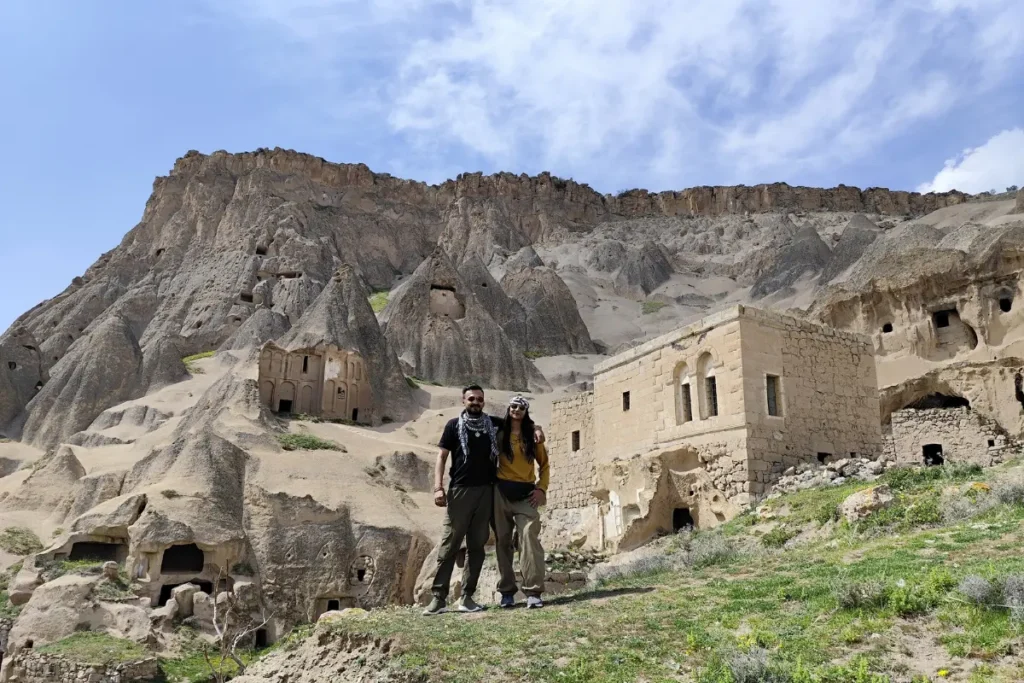
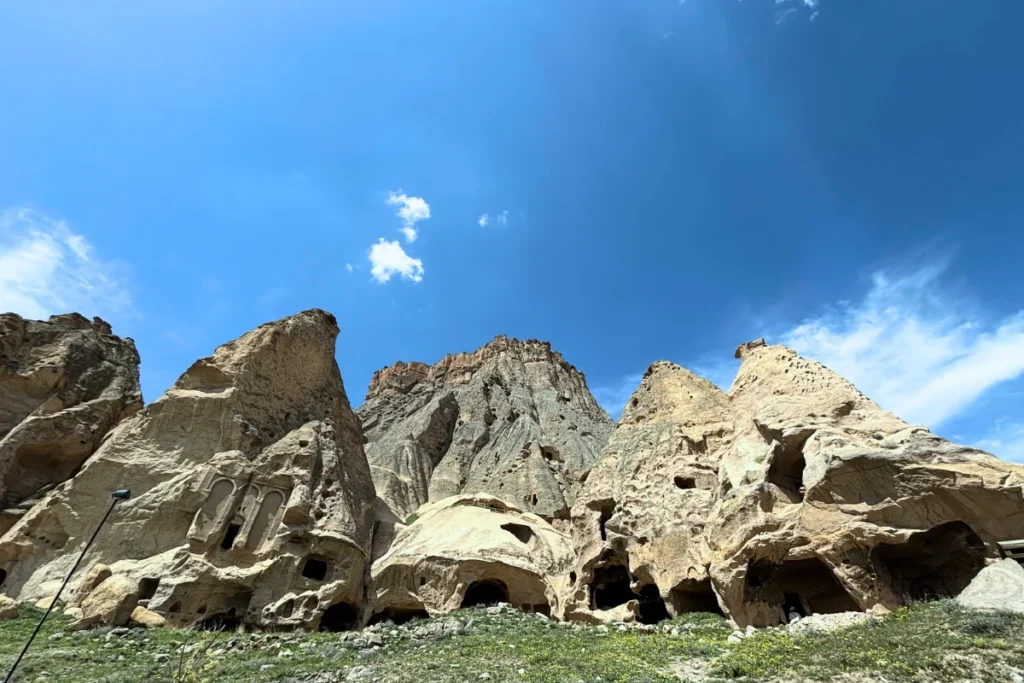
The front approach is the version available without a guide. A path leads from the parking area to the lower levels of the monastery. You can enter several of the ground-level chambers: the stables, some storage rooms, and the lower passage areas. The views from even this level are impressive. The rock surface, carved and weathered, shows the texture of centuries. Some visitors climb partially up the cliff face using the carved handholds and narrow paths.
The front approach takes fifteen to twenty minutes because it reaches a natural stopping point where the path becomes less defined and the climbing becomes more serious. Most visitors, especially those arriving with a tour group on a schedule, turn back here. They have seen the façade. They have entered two or three chambers. They have the photograph.
This is a legitimate visit. It covers the accessible lower levels. It provides the scale. For visitors with limited time or limited mobility, the front approach delivers Selime’s headline: a massive rock-cut monastery carved into a Cappadocian cliff.
It does not deliver the Star Wars landscape. Or the hidden churches. Or the upper cathedral. Or the specific moment when the geology stops looking like Turkey and starts looking like another planet.
The One-Hour Version
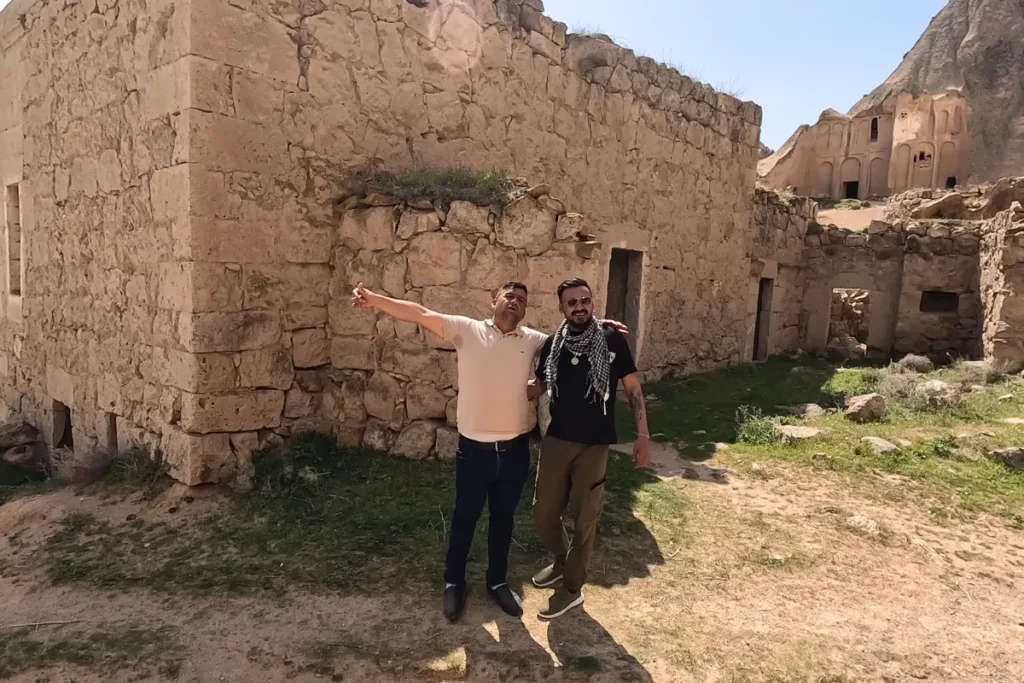
Our guide, a villager from the settlement near the entrance, did not lead us up the front path. He led us around the back.
The route climbed steeply from the side of the cliff, through a rocky trail that was not signposted, not paved, and not part of the standard visitor infrastructure. The terrain was rugged. Loose stones under foot. Tuff formations on both sides that narrowed the path to single file in several sections. The effort was physical in a way that the front approach is not.
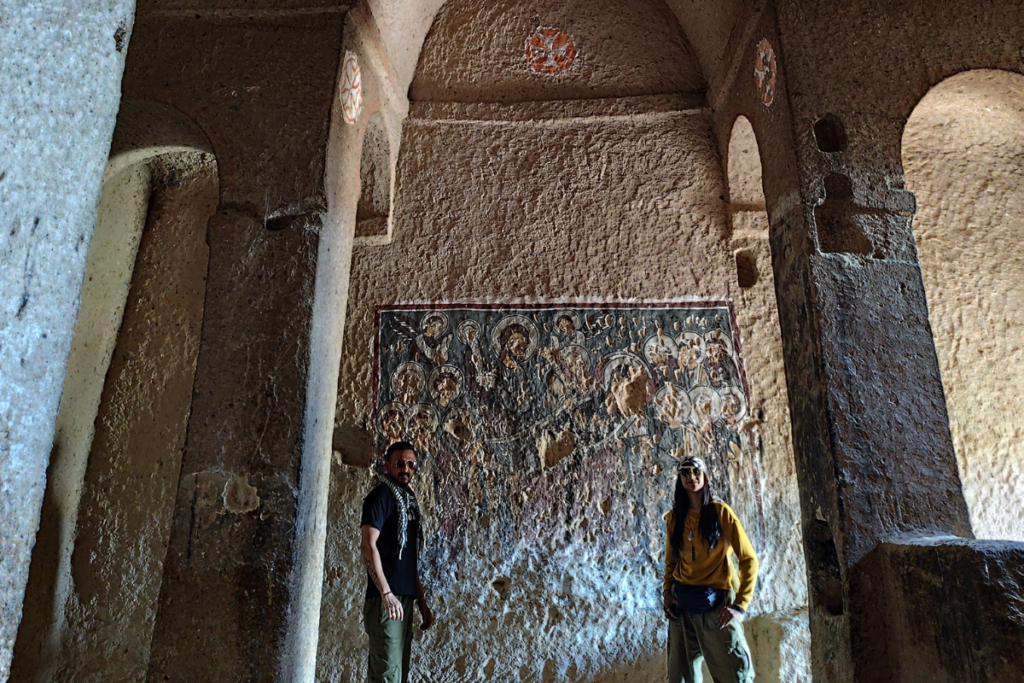
As we climbed, the cliff face opened. Hidden cave dwellings appeared at levels that the front path does not reach. Churches with carved crosses and remnants of painted plaster on the walls. Storage rooms where grain was kept in stone-cut bins. Defensive passages designed to be impassable without knowledge of the route. Our guide knew every turn. He had grown up here. The cliff was his neighbourhood in a way that was literal rather than metaphorical: his family lived in the village at its base, and the monastery had been the backdrop of his childhood.
He showed us alcoves that contained no signage. Chambers that contained no other visitors. Carvings on rock surfaces that were not visible from the front approach because the angle of the cliff hid them. Each stop was brief. A gesture. A few words. The rock spoke for itself.
The route took approximately forty-five minutes of climbing and exploring before reaching the section of the landscape where the rock formations change character.
The Alien Landscape
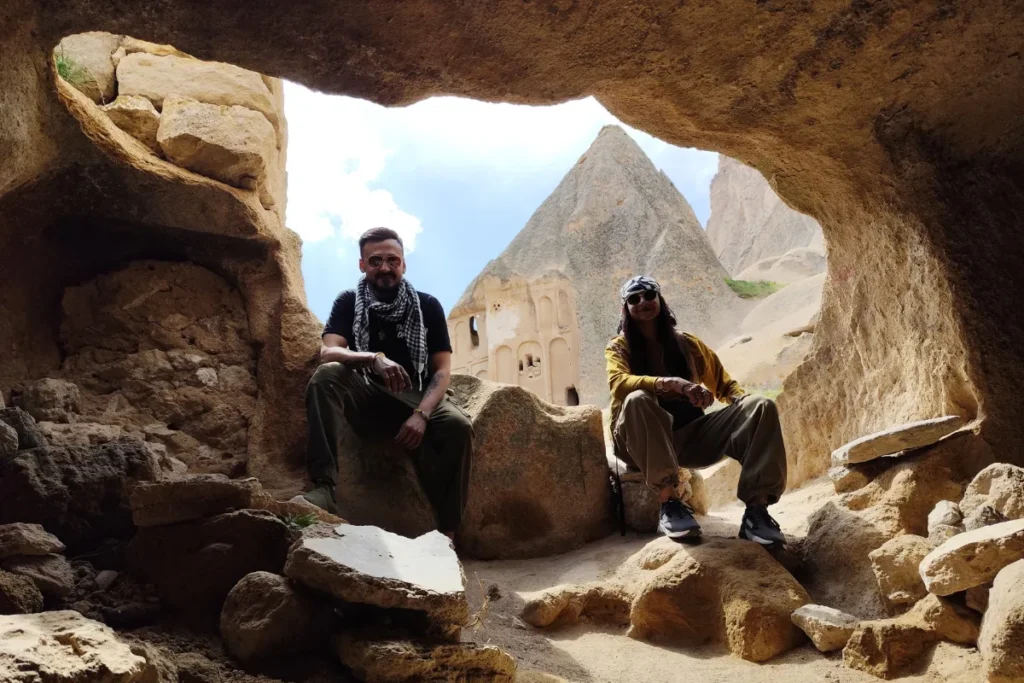
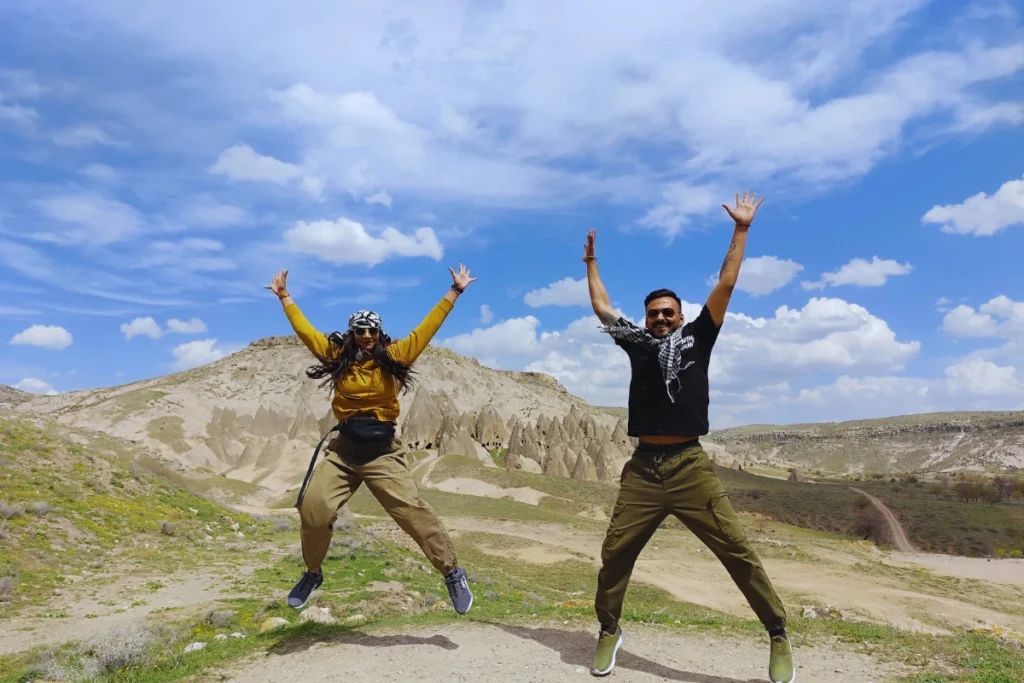
Above and behind the monastery, the terrain shifts from recognisable Cappadocian tuff (the fairy chimney formations that define the Göreme area) to something that does not look like it belongs on this planet.
The formations here are taller, more angular, more closely packed. The erosion patterns have produced pillars, walls, and overhangs that create a landscape of corridors, shadows, and vertical surfaces with no vegetation, no soil, and no visual reference point that says “Earth.” The colours shift from the cream-white of lower Cappadocia to grey, rust, and dark brown. The wind moves differently through the narrow gaps between formations, producing sounds that the open valley below does not carry.
George Lucas reportedly drew inspiration from this landscape for the desert planet Tatooine in the Star Wars films. Whether the filming occurred here specifically or the landscape served as a visual reference for set design is debated in the way that trivia about filming locations always is: passionately, inconclusively, and with a certainty on both sides that the evidence does not fully support.
What is not debated: standing in this landscape and understanding immediately why someone looked at it and thought “this is another planet.” The formation shapes do not reference terrestrial architecture or familiar geological patterns. They reference the visual language of science fiction. The experience of walking through them produces the specific cognitive dissonance of knowing you are in Turkey while your eyes insist you are somewhere else.
Our guide watched us absorb this. He had the expression of a person who has brought visitors to this spot many times and still finds their reaction satisfying. The landscape earns the reaction. The guide earns the tip.
“Standing among these towering, eroded spires, the boundary between historical Anatolia and science fiction completely dissolves. You don’t feel like you’ve walked further into Turkey; you feel like you’ve stepped off the planet.”
How to Visit
Location: Northern end of the Ihlara Valley, approximately 80 km from Göreme. Accessible by car. We drove from Kaymaklı Underground City with stops at Ihlara Valley (rim view) and Narlıgöl Crater Lake en route.
Official Entry Fee: Standard museum admission is TRY 600 / INR 1,380 / USD 16.50 (Included in the Museum Pass Turkey / Cappadocia).
The guide question: The front approach is self-guided and serviceable. The hidden route requires a local guide and is worth every lira. If a villager at the entrance offers to show you the back route, accept. Negotiate the price if needed, but do not skip the experience to save seventeen dollars. The front approach gives you the base structure; the back route delivers hidden chapels, defensive tunnels, and the upper ridge views.
Local Guide Fee: TRY 700 / INR 1,610 / USD 17 for the informal back route.
Time needed: Fifteen to twenty minutes for the front approach. Approximately one hour for the guided hidden route. Budget the hour.
Footwear: Walking shoes are essential for the hidden route. The terrain is rocky, uneven, and steep in sections. Sandals will produce regret. The specific quality of regret that occurs when loose tuff gravel enters a sandal at a 30-degree incline is a lesson that does not require repetition.
Combine with: Ihlara Valley (rim viewpoint), Kaymaklı Underground City, and Narlıgöl Crater Lake. This was our Day 6 circuit, driven in our own rental car. Because we were driving, we skipped the full canyon hike; the classic walk requires starting at one point and exiting kilometres downstream, which works well for tour buses but presents a vehicle-retrieval headache for self-drivers. Experiencing the valley from the rim viewpoint gave us the landscape scale without the logistical backtrack, letting us fit four distinct stops into a single day.
“Göreme shows you how the Byzantines prayed, but Selime shows you how they survived. The front approach gives you a photograph; the hidden route gives you an entire lost world.”