Looking for an Istanbul neighbourhood guide that goes beyond the usual tourist traps? This is the story of how we discovered the city’s hidden corners…twice.
We saw Istanbul in two distinct chapters, separated by a couple of weeks of complete silence.
The first time around, the whole city was overwhelming.. It was the very start of our road trip across Turkey, and the city was our first real taste of the unfamiliar. We still vividly remember the chaos of the traffic, the sudden weight of the minarets against the skyline, and the call to prayer bouncing off the water. Even the sunrise over the Golden Horn had this strange, crisp quality to it. Everything felt wide-open and new.
Then came the return. We came back to Istanbul after fifteen days of straight driving through places like Hattusa, Cappadocia, Mount Nemrut, and all the way down near Mardin and Göbekli Tepe. By the time we hit Pamukkale and Pergamon, we had put over 4,000 kilometers behind us…mostly empty mountain roads, ancient ruins, and quiet villages. We’d spent nights cooking instant noodles in cave hotels, pulling over for roadside gözleme, and navigating pitch-black roads cutting right along the Syrian border.
When we finally rolled back into Istanbul, it sounded entirely different. The city hadn’t changed, of course…we had. The noise that got our adrenaline pumping on Day 1 felt like a wall of sound by Day 16. The crowds didn’t feel vibrant anymore; they just felt heavy. Even the prices threw us off. After two weeks in eastern Turkey, where a massive dinner cost the same as a single drink in Taksim, the city felt incredibly steep.
This Istanbul guide isn’t a standard checklist. It’s about the neighbourhoods we actually wandered through…the spots most travel blogs pass over or ignore entirely. But more than that, it’s about what happens when you look at the exact same city from two opposite ends of a long journey, and realise both versions are completely real.
“We experienced Istanbul in two completely different phases, separated by fifteen days of silence. The same city. Different ears. Both versions were real, and only one of them prepared us for the other.”
- Why We Stayed in Fatih
- Balat at Dawn
- Süleymaniye: Where Centuries Have Weight
- The Grand Bazaar Is a Currency Exchange
- Sultanahmet: The Blue Mosque and the Egyptian Obelisk
- Beşiktaş, Football, and the Bosphorus at Sunset
- Galata Tower: Both Times, Packed
- Taksim and the Return: Istanbul Through Different Ears
- What We Skipped and Why
- Getting Around Istanbul
- What It Costs
- Frequently Asked Questions
Why We Stayed in Fatih
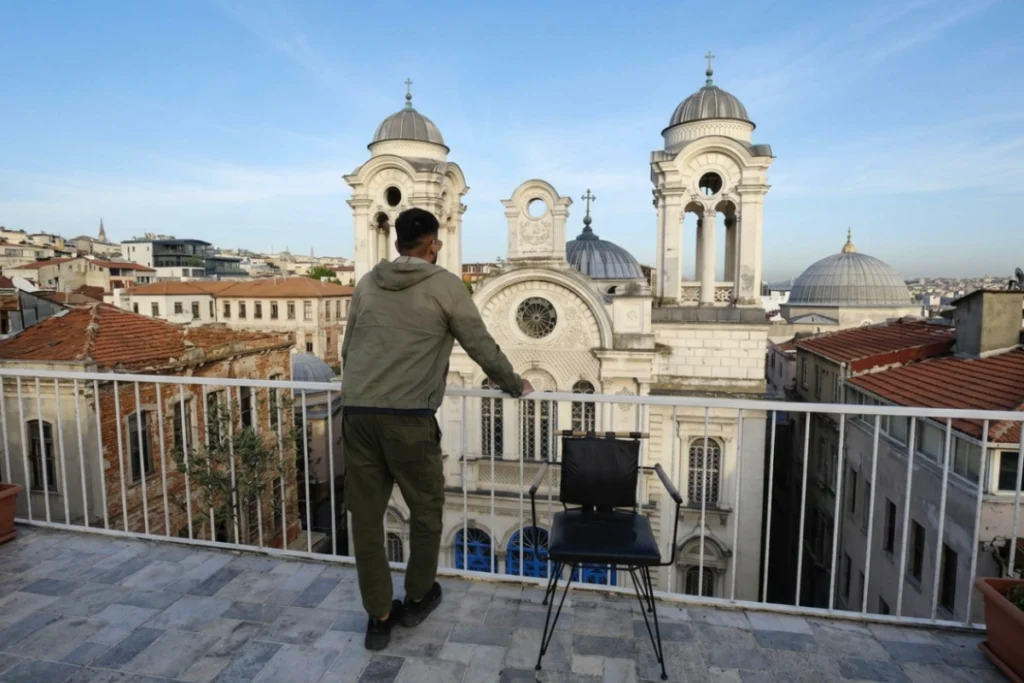
Most first-time Istanbul visitors stay near Sultanahmet (for the Blue Mosque and Hagia Sophia) or Taksim (for Istiklal Caddesi and the nightlife). We stayed in Fatih, at Hotel Global 2022 (USD 74.33 for 2 nights), and the choice shaped every meal and every morning of our Istanbul days.
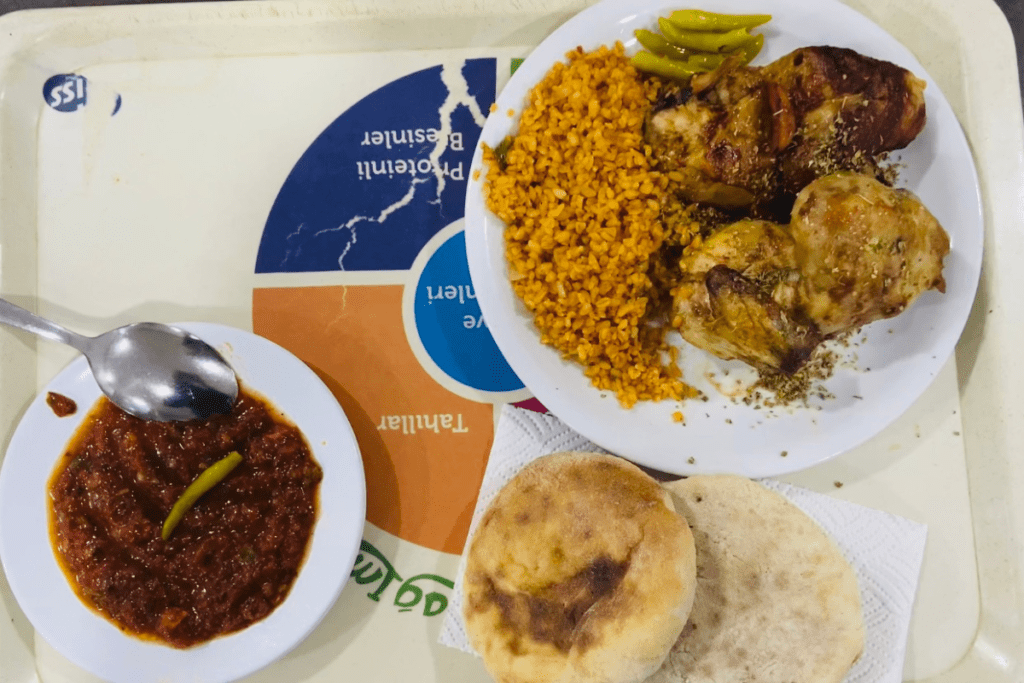
Fatih is a residential, conservative, predominantly local neighbourhood on the historic peninsula. The restaurants serve tavuk (chicken) and pilav (rice) to the people who live there, not to tourists. Our first dinner in Turkey was at a small local place with no English menu: grilled chicken and rice for TRY 200 / INR 460 / USD 5 for two, with long, spicy green chillies on the side. This meal set the price baseline for the rest of the trip. Every tourist-zone restaurant we encountered afterward was measured against it and found wanting.
Fatih connects to every major area by tram via the Istanbulkart transit card (TRY 400 total: TRY 130 for the card, TRY 270 loaded). Tram fare: TRY 40 per person per ride. Sultanahmet is minutes away. Beşiktaş, for the Bosphorus cruise, takes longer but remains affordable. The neighbourhood is walking distance from the Grand Bazaar, the Süleymaniye Mosque, and the waterfront.
What Fatih gives you that Taksim and Sultanahmet do not: the price of living like a resident. Our return-trip dinner, local chicken saute paired with instant noodles we made in the room, cost approximately TRY 100 for both of us. The street döner we ate standing up in Taksim two weeks later cost TRY 210 for one. The neighbourhood you choose is your food budget, and Fatih is the right neighbourhood.
“The restaurant in Fatih had no English menu. Grilled chicken, rice, long green chillies. TRY 200 for two. Every tourist-zone restaurant for the rest of the trip was measured against this meal and found wanting.”
Balat at Dawn
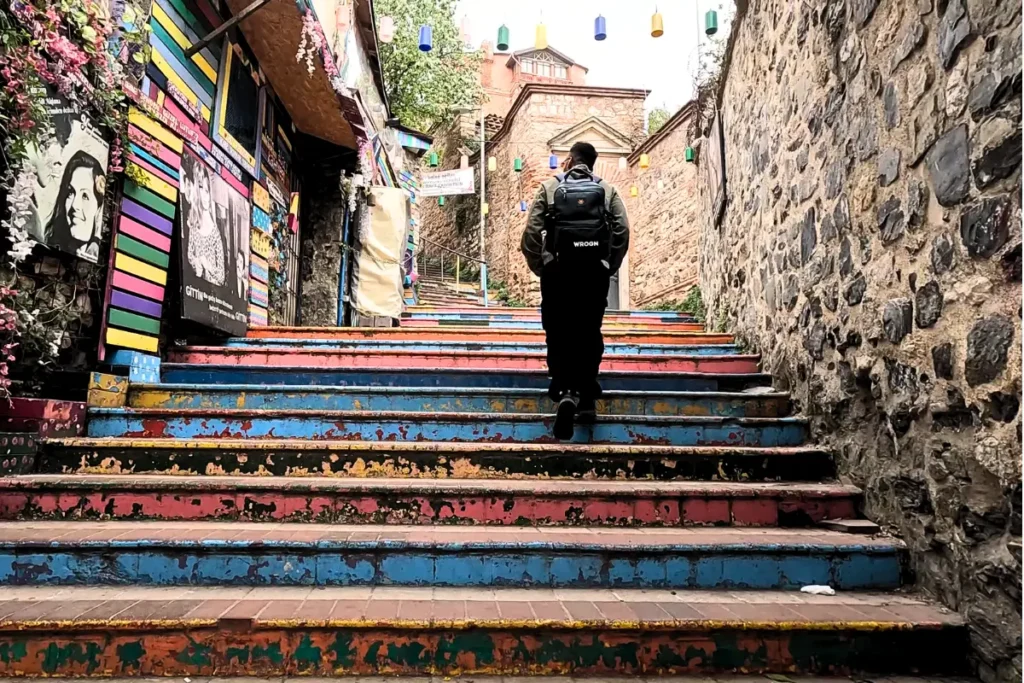
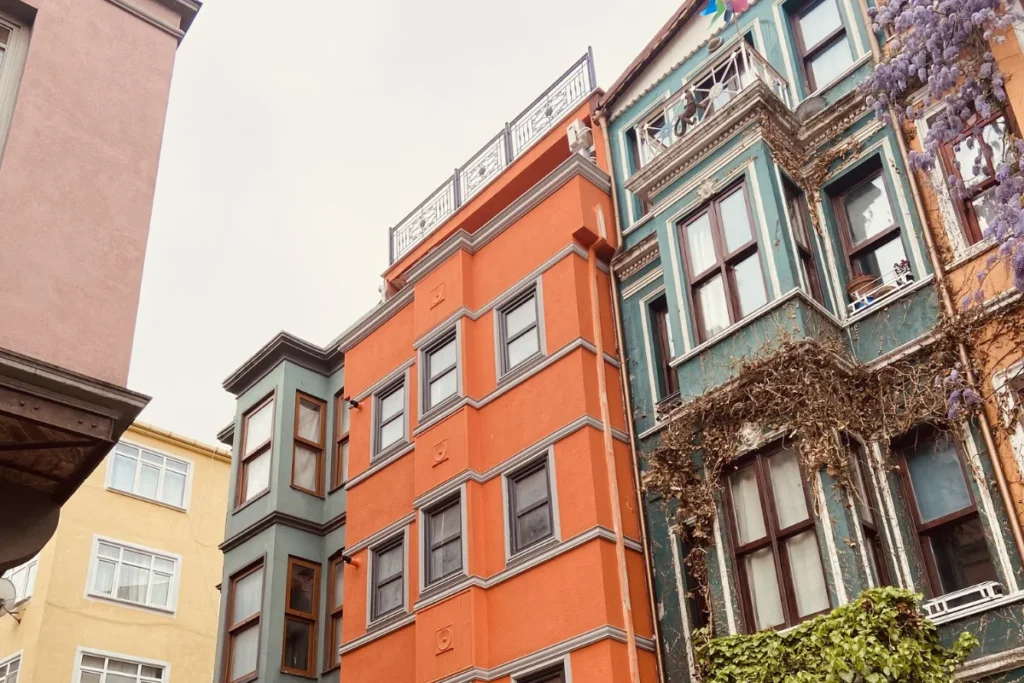
We took a taxi from Fatih to Balat early on our second morning (TRY 370 / INR 851 / USD 9). The objective was simple: arrive before the photography queue.
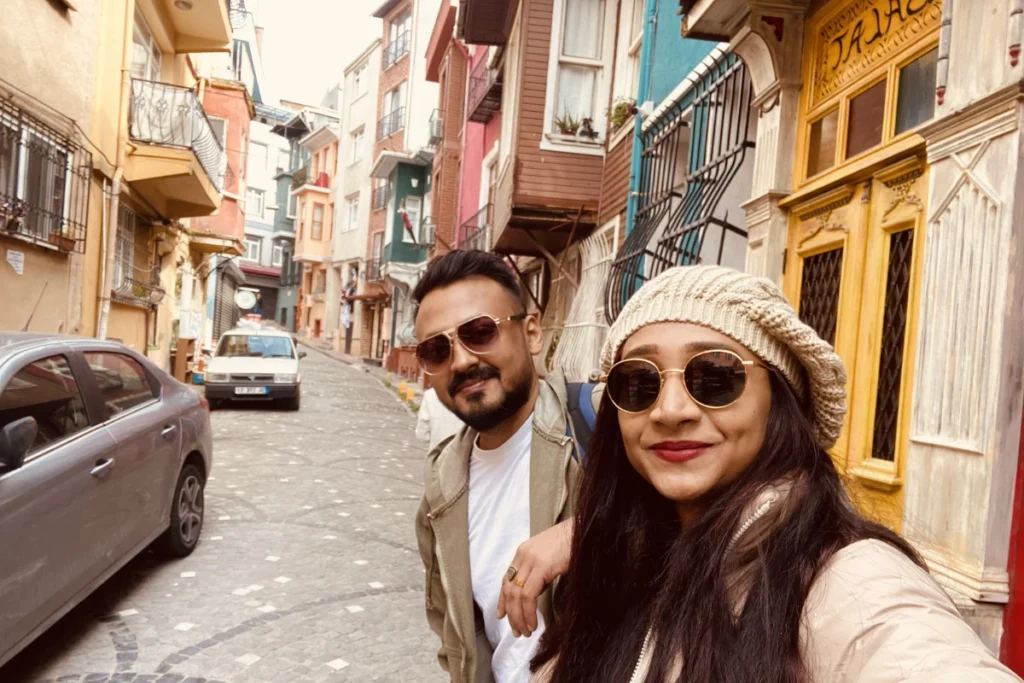
Balat is Istanbul’s most photographed residential neighbourhood. The narrow, climbing streets are lined with colourful vintage houses, painted in pinks, blues, greens, and yellows, that photograph so well they have become the visual shorthand for Istanbul’s non-mosque identity. On social media, every Balat photograph shows the same streets, the same staircases, the same facades. What the photographs rarely show is the queue of people waiting to take the photograph.
We arrived before the queue.
The streets at 7:30 AM were empty. The light was low and golden. The painted houses, which in the afternoon carry the flat, overexposed quality of a location that has been photographed too many times, looked genuinely beautiful in the early morning. We walked the winding streets without other people in the frame. We stood on the staircases alone. The photographs we took that morning look like a different neighbourhood from the one that exists by 10 AM.
Balat is not just facades. It is a historically layered district where Greek, Jewish, and Armenian communities lived for centuries under Ottoman rule. The churches, synagogues, and Ottoman houses that line the streets carry that layering visibly, if you look past the paint. Most visitors do not look past the paint. The dawn walk gives you the space to.
The advice is specific and non-negotiable: arrive before 8 AM or do not expect the experience described above.
Süleymaniye: Where Centuries Have Weight
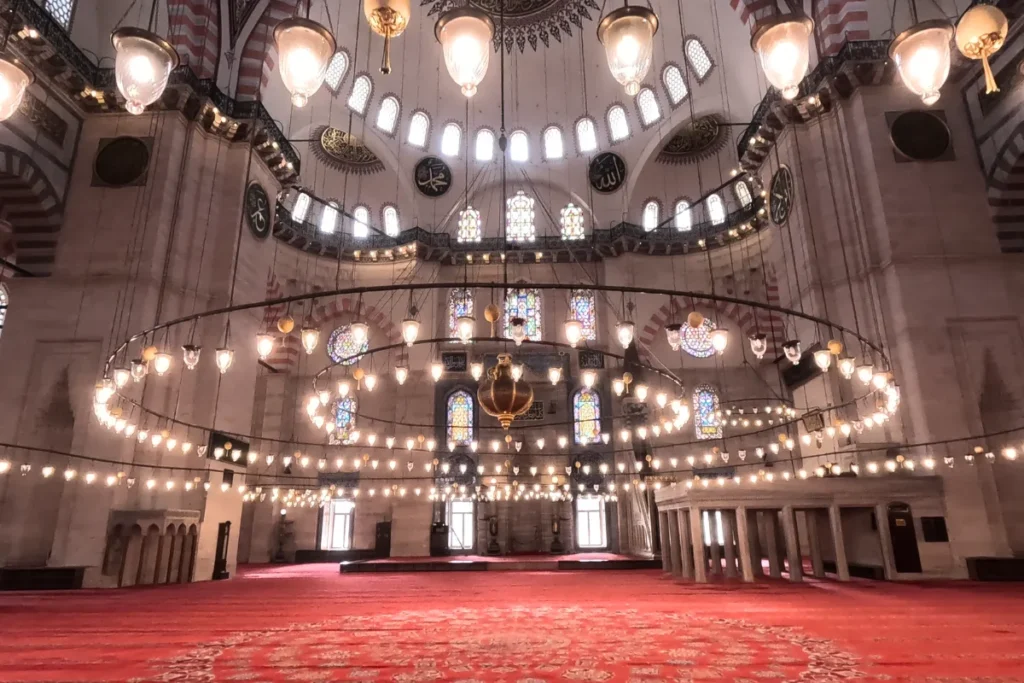
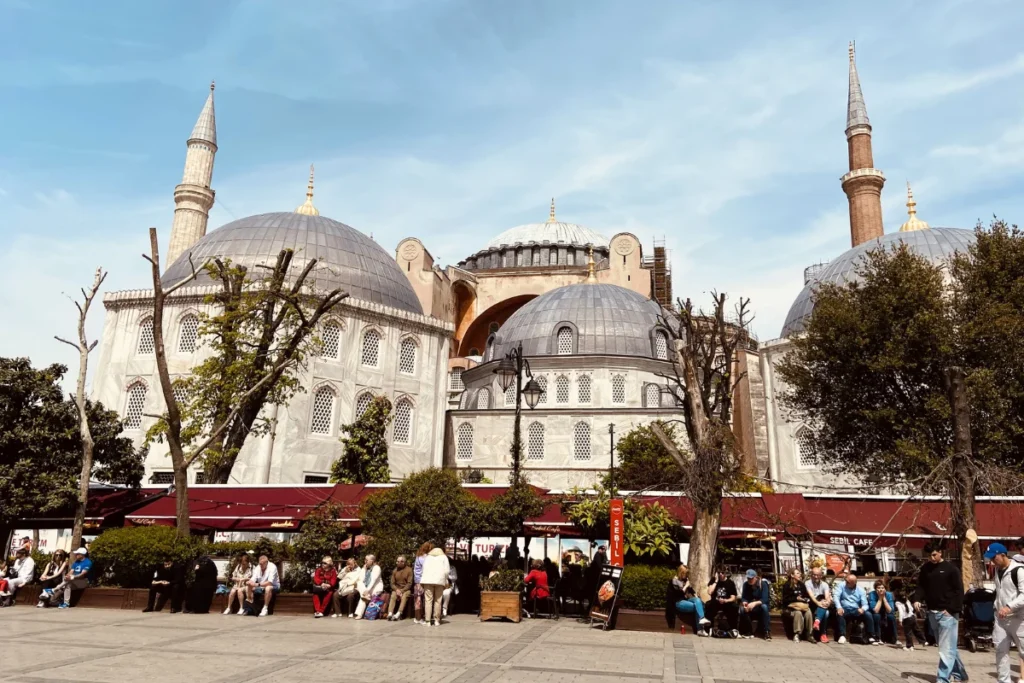
From the Fatih waterfront, where we stopped after Balat to sit by the water and feel the morning breeze off the Golden Horn, we used the tram and walked uphill to the Süleymaniye Mosque.
The Süleymaniye was designed by Mimar Sinan, the chief architect of the Ottoman Empire, and completed in 1557. It is not the largest mosque in Istanbul. It is not the most photographed. What it is, and what distinguishes it from the Blue Mosque and from Hagia Sophia, is atmospherically complete. The courtyard, the arcades, the dome, the surrounding complex of madrasas and tombs…all of it was designed as a single architectural statement, and the statement has not been edited.
Standing in the courtyard, looking up at the dome, the phrase ‘the weight of centuries’ arrived in our heads and would not leave. This is not a place where you learn history from information boards. It is a place where the history has soaked into the stone deeply enough that you feel it in your posture. You stand slightly differently inside the Süleymaniye than you do on the street outside.
We did not spend long. The mosque asks for respect more than time. We gave both and moved on.
The Grand Bazaar Is a Currency Exchange
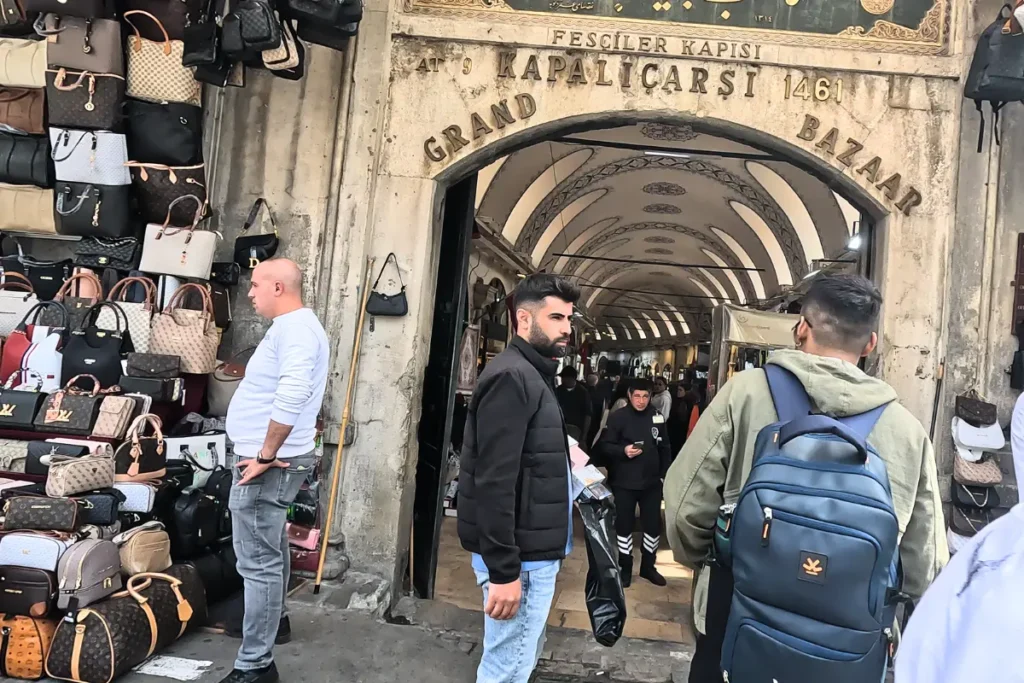
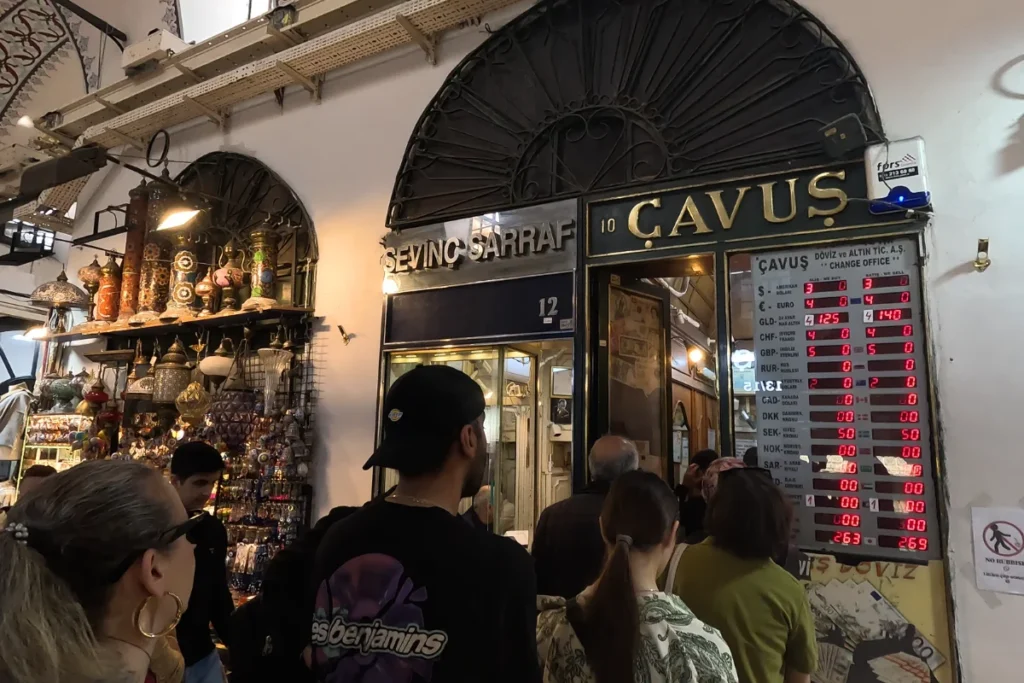
The Grand Bazaar is presented in every guidebook as a shopping experience: carpets, ceramics, lanterns, leather, spices. This is accurate. It is also a reason to visit. But it is not the most useful reason.
The Grand Bazaar is the best place in Istanbul to exchange currency.
The rates we received inside the bazaar were significantly better than the airport kiosks and the standard street-corner exchange booths. We exchanged inside the bazaar on Day 2 and received a visibly better conversion. The lesson confirmed across multiple international trips: exchange currency in the commercial centres of old cities, not at airports.
If you do shop, the bazaar’s prices for souvenirs are competitive compared to tourist shops elsewhere in the city. We returned here on our final days in Istanbul to pick up gifts, knowing that the same items in Taksim would cost more for the same quality.
Sultanahmet: The Blue Mosque and the Egyptian Obelisk
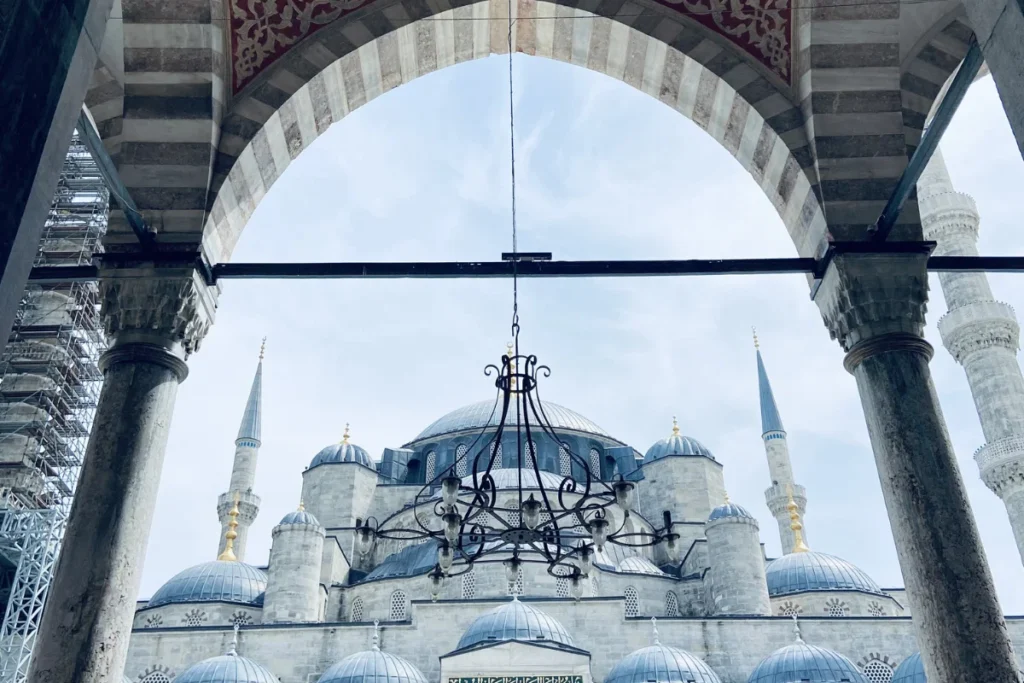
We walked from the Grand Bazaar toward Sultanahmet. The Blue Mosque was closed for prayer when we arrived. We did not enter. This is the practical reality of visiting active mosques: they close to tourists during prayer times, which occur five times daily. Check the schedule before walking over, or be prepared to return.
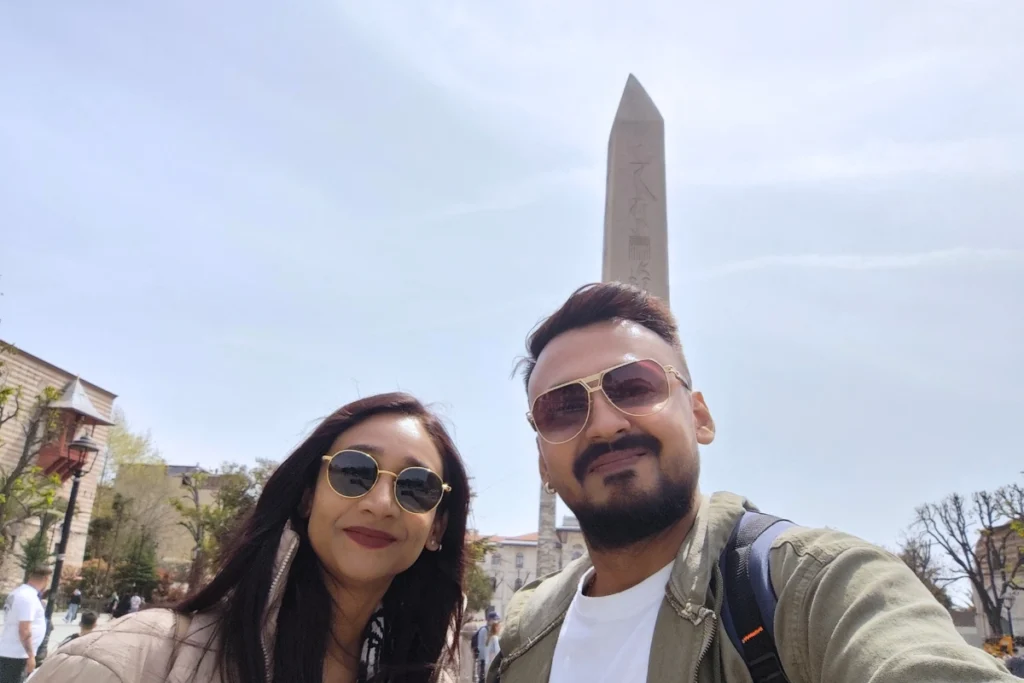
The ancient Egyptian Obelisk in the Hippodrome, a few minutes’ walk from the Blue Mosque, is a 3,500-year-old monument originally erected by Pharaoh Thutmose III at Karnak and transported to Constantinople by Roman Emperor Theodosius I in 390 CE. For us, having visited Karnak and the Valley of the Kings in Egypt the previous year, standing in front of an Egyptian obelisk in a Turkish square completed a connection that the original pharaoh could not have anticipated. The same stone. Two continents. Thirty-five centuries.
In the park nearby, food is limited to simple snacks and juice vendors. We bought a simit, the traditional sesame bread ring that appears in the hands of every other person in Istanbul, for TRY 45 / INR 104. If you are hungry for more than a snack, eat before you reach Sultanahmet or after you leave.
Beşiktaş, Football, and the Bosphorus at Sunset
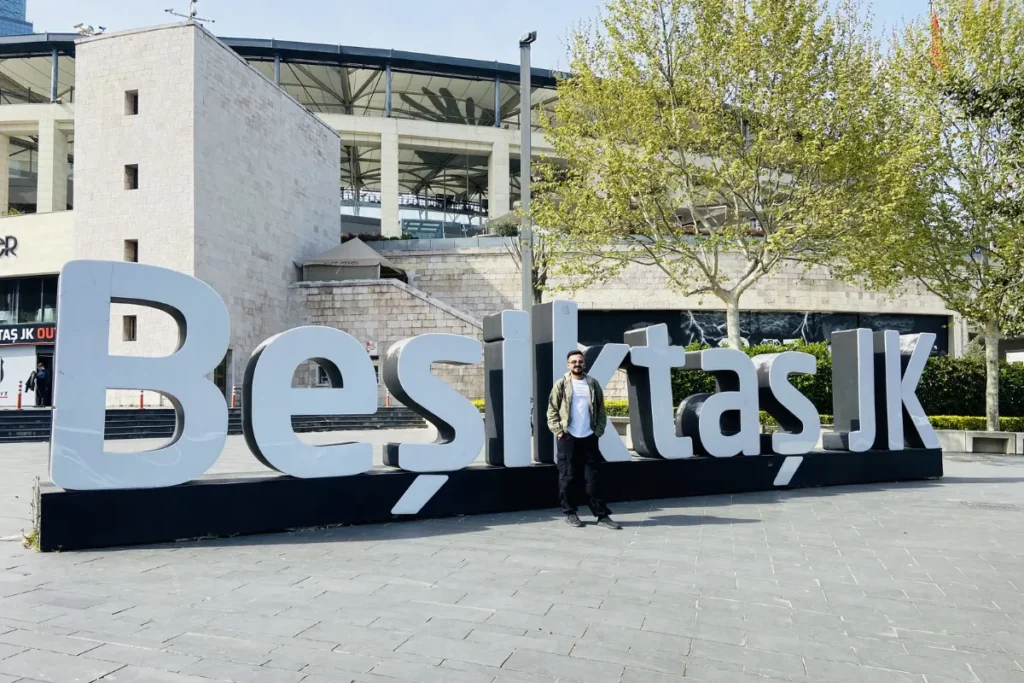
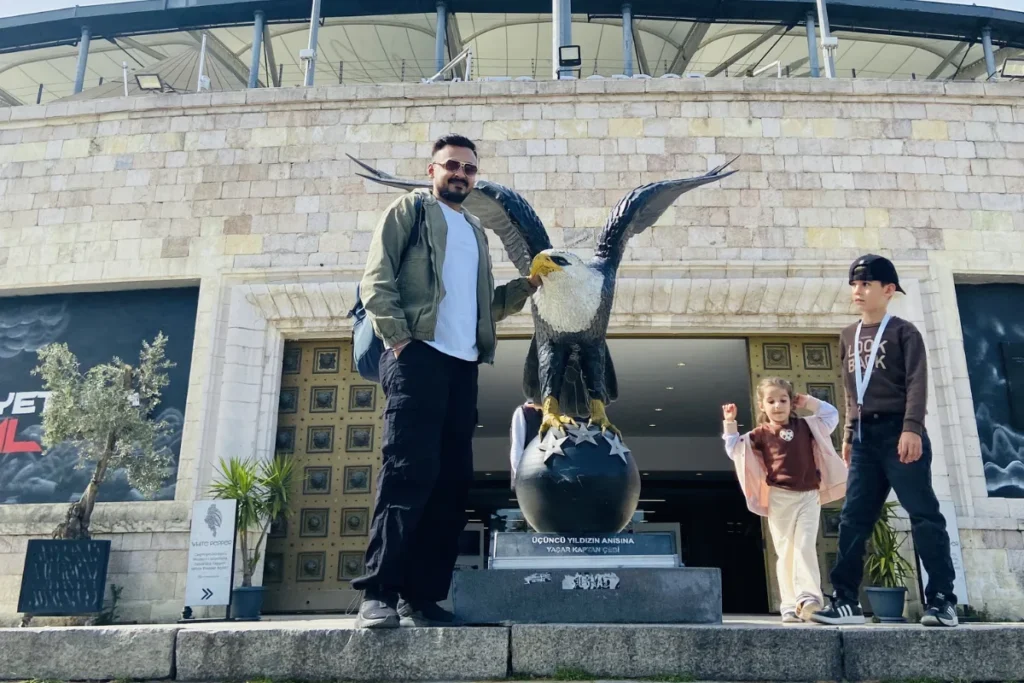
We took the tram to Beşiktaş in the late afternoon. The Bosphorus cruise was scheduled from the pier, but we had time before departure, and Akash is a football fan.
The Beşiktaş JK stadium sits in the heart of the waterfront district. We spent time exploring the stadium exterior and the museum area, taking photographs and absorbing the specific energy of a club that has been part of Istanbul’s identity since 1903. This was not in any guidebook. It was in the trip because travel becomes richer when it includes the things you love even when they are not in the itinerary.
The Bosphorus Sunset Cruise
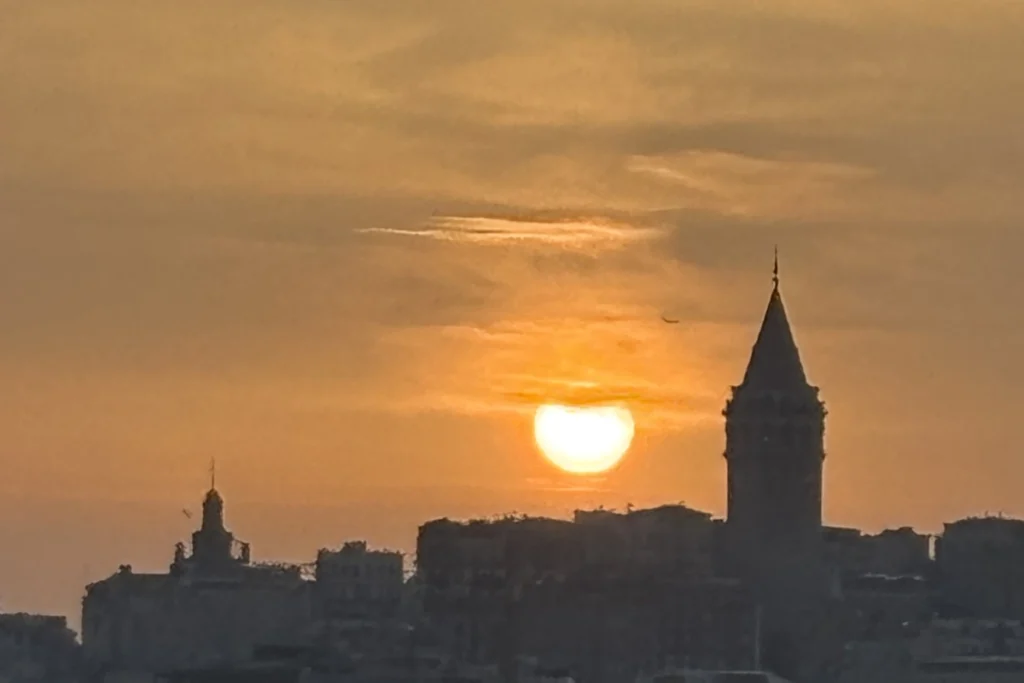
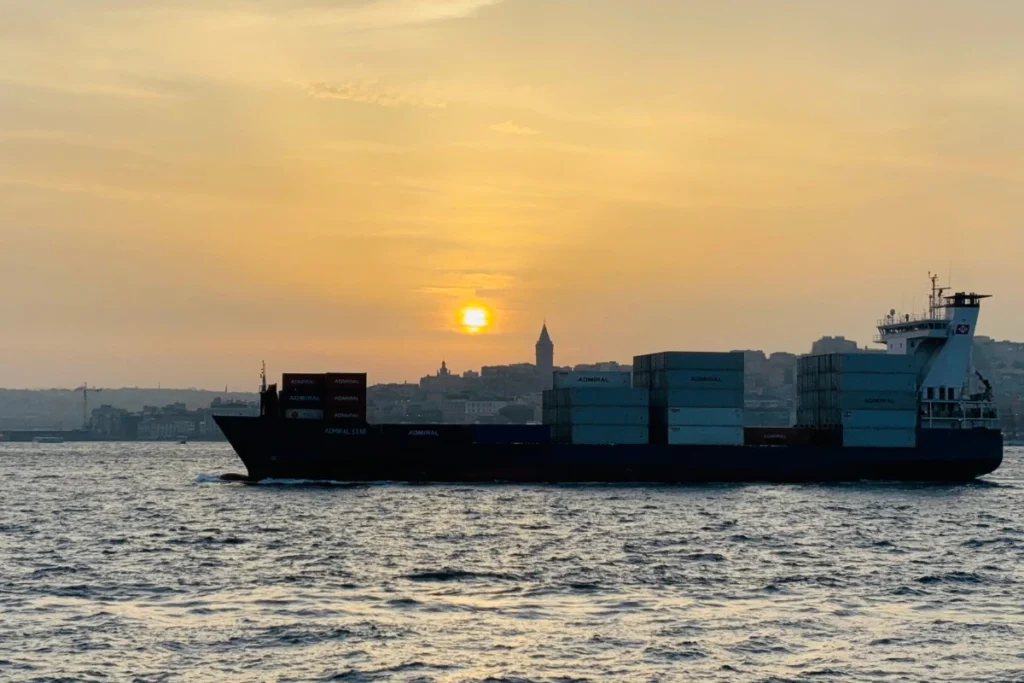
We had booked the cruise through Klook for approximately INR 1,600 / USD 17 for two, including complimentary juice and coffee. The original booking was for Day 1, but Istanbul’s traffic had devoured our first evening. We had to cancel and rebook for Day 2, losing the first night’s tickets.
The boat set off as the temperature dropped. A cold, biting wind picked up over the water. Most passengers retreated inside the warm cabin. We stayed on the deck. We had not come to Istanbul to watch the Bosphorus through glass.
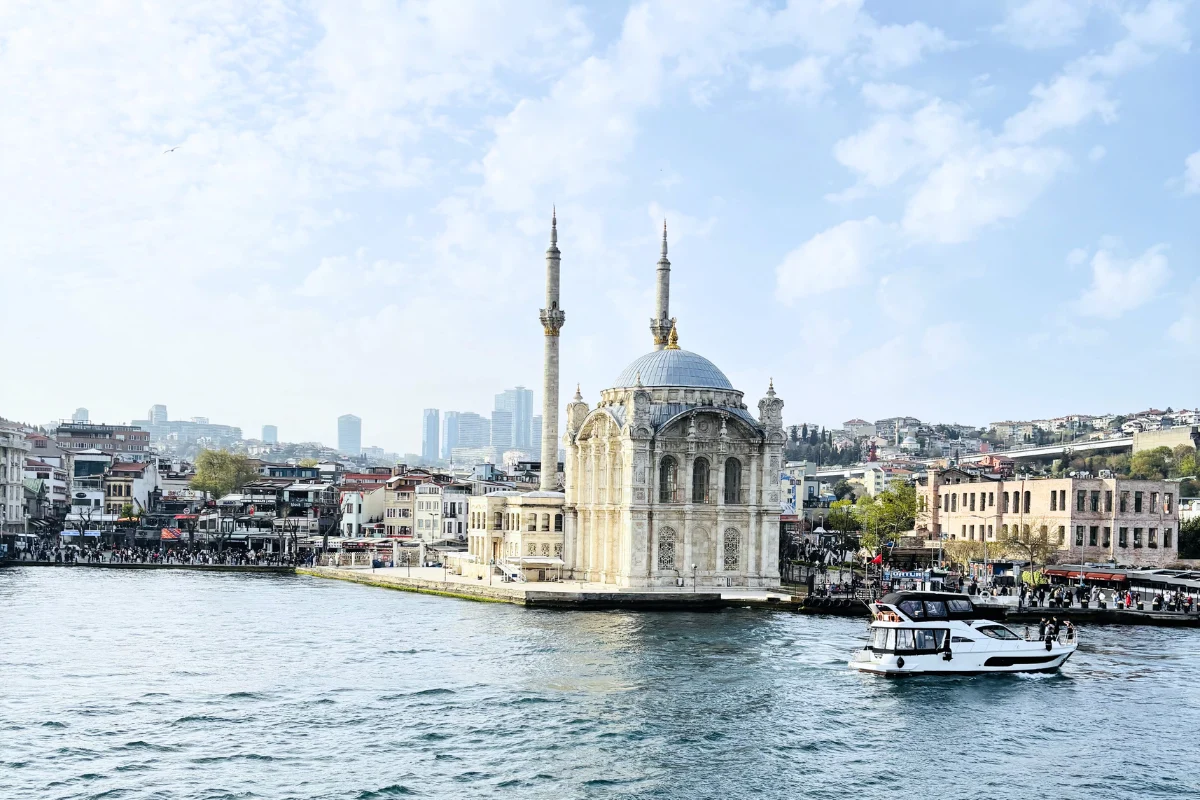
The sunset bled across the sky. Ottoman palaces passed on both sides: Dolmabahçe, Beylerbeyi, the wooden waterfront mansions that line the European and Asian shores. The Bosphorus Bridge, lit and massive, connected the two continents above us. The water was dark. The wind was genuinely cold. The light was the kind that makes everything it touches look like it was designed to be painted.
Staying on the deck while others went inside is a minor decision. But the minor decisions, the ones that trade comfort for experience, are the ones our travels are built from.
“The wind was cold enough that it hurt. The light across the palaces was the kind that makes everything look designed. We were uncomfortable, but we were not going inside.”
Galata Tower: Both Times, Packed
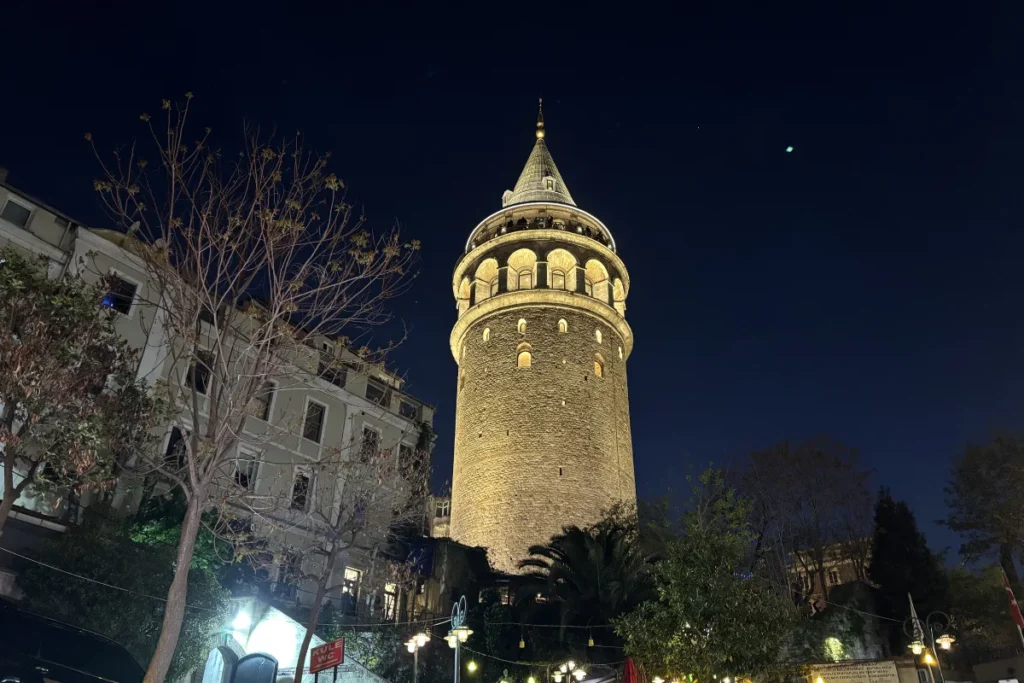
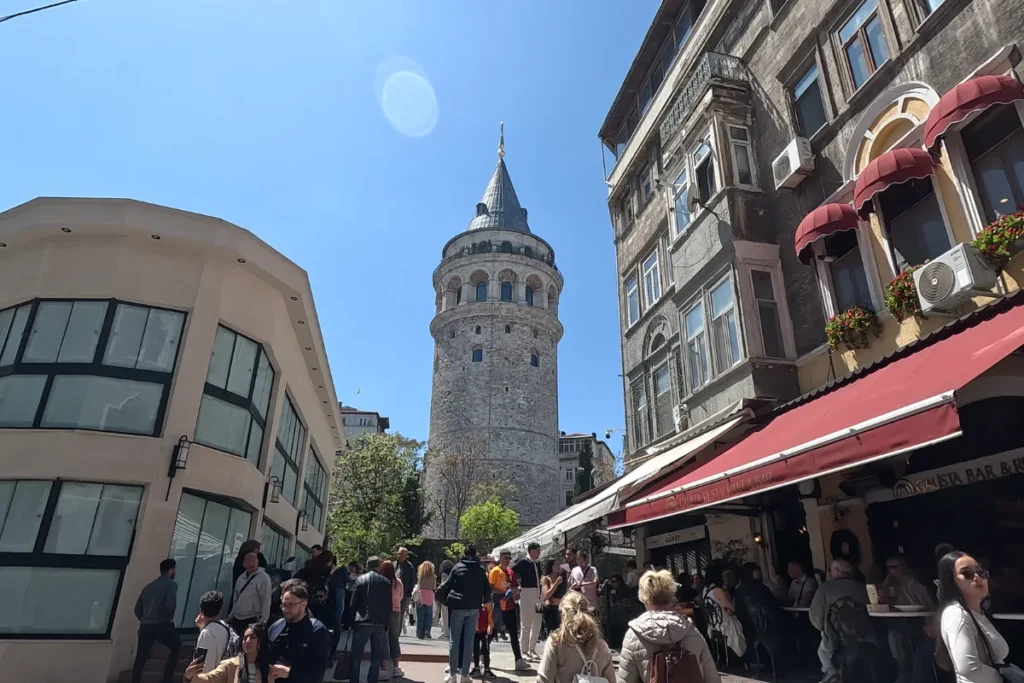
After docking, we walked toward the Galata Tower to see it illuminated against the night sky.
The tower was spectacular. Every café in the surrounding streets was full beyond capacity. The queue to enter wrapped around the base. We bypassed it, looked at the tower from the street, and caught the tram back to Fatih. Akash picked up local chicken saute on the way back; we paired it with instant noodles in the room. Budget dinner. Good enough.
We returned to Galata on our final morning in Istanbul, hoping for a quieter daytime experience. The area was, if anything, more packed. The queue still wrapped around the base. We looked at the tower again from the street, took the red Nostalgic Tram round trip down and back along Istiklal for TRY 42 per person each way, and caught the tram back to collect our bags.
This experience crystallised something we had been feeling throughout the trip. The difference between eastern and western Turkey is not just geography or history. It is density. At Hattusa, we had an entire Hittite capital largely to ourselves. At Dara, we explored underground cisterns with nobody else in the corridors. At Zelve, we spent three hours in an abandoned cave village while the tour group left in sixty minutes. In Istanbul, the same curiosity that carried us through empty archaeological sites met a city that does not have empty spaces.
This is not a criticism. Istanbul is one of the most extraordinary cities in the world. But the eastern archaeological sites provide something Istanbul cannot: the silence in which ancient things speak most clearly. If you are planning a Turkey road trip that includes both, understand that the two halves of the country produce different kinds of experience. Budget your patience accordingly.
Taksim and the Return: Istanbul Through Different Ears
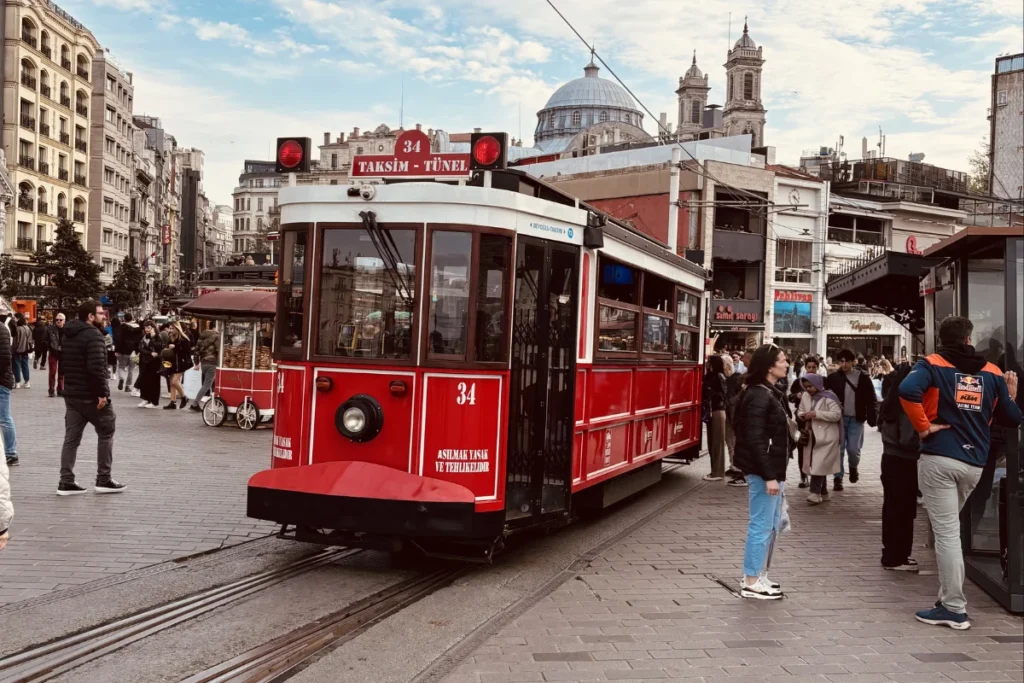
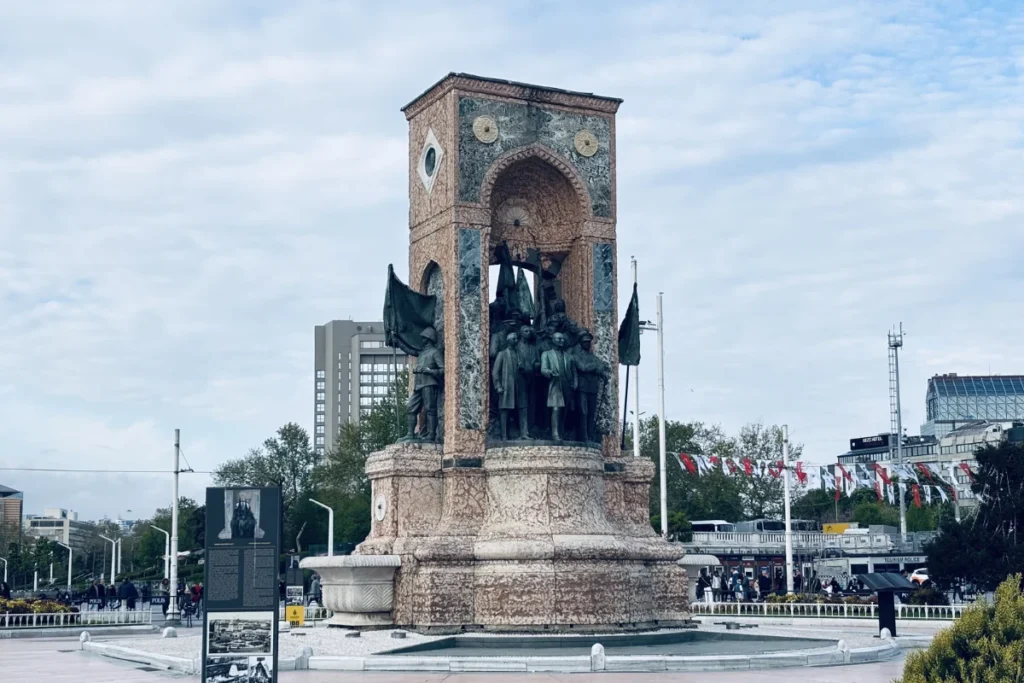
We returned to Istanbul on Day 16 after driving across the country and handing the car back at Sabiha Gökçen Airport. A Havabus to Taksim Square (TRY 566 / INR 1,302 / USD 14 for both) deposited us in a part of the city we had not yet seen.
Taksim Square: The Republic Monument (Cumhuriyet Anıtı, built in 1928), the sweeping modern architecture of the Taksim Mosque, and the iconic red Nostalgic Tram rumbling down Istiklal Caddesi. A street döner kebab cost TRY 210. We bought souvenirs and gifts along the avenue.
The energy was completely different from Fatih. Taksim after dark on a weekend is a city in full celebration. Young crowds on the pavements. Music from open windows. Our hotel, Bunkahaus, a sleek minimalist Japanese-design property for just 40.88 USD, was in the middle of it. Rather than a disturbance, the noise felt like a soundtrack. We had spent two weeks in the silence of ancient ruins. The noise of a living city celebrating on a Friday night was its own kind of beautiful.
Then, late that night, an IndiGo alert arrived on our phones. Our return flight had been rerouted: the layover moved from Delhi to Mumbai, successive notification waves arriving within minutes. A brief spiral of frustration and mild panic. Nothing we could do until morning. We turned off our phones and let the sound of Istanbul carry us through the last night.
Our final dinner in Turkey: chicken soup, bread, rice. TRY 200 / INR 460 / USD 5. Simple. Warm. Exactly right. Final morning: the same meal repeated as breakfast, TRY 270, to clear our supplies before the airport taxi.
What We Skipped and Why
We did not enter the Hagia Sophia. We did not enter the Blue Mosque (prayer time, and we did not return). We did not enter the Galata Tower (the queue, twice). We did not visit the Basilica Cistern. We did not visit the Topkapi Palace.
These are arguably the five most famous attractions in Istanbul. We skipped all of them…not as a deliberate strategy, but as the result of having just two and a half days in Istanbul and choosing depth over coverage within the time available. Balat at dawn, the Bosphorus at sunset, the Grand Bazaar for currency and gifts, Süleymaniye for atmosphere, and Fatih for meals: these gave us a version of Istanbul that felt experienced rather than collected.
We also chose to skip Ephesus, Troy, and Antalya entirely from our 17-day itinerary. Ephesus carries significant entry fees and tour-bus density. Troy offers little beyond the replica Trojan Horse. Antalya is a beach destination, and this trip was built around archaeological interiors. Each skip freed a day for the eastern sites that no standard itinerary includes, and we do not regret a single one.
The instinct to see everything famous produces the anxiety of coverage. The decision to see a few things well produces memory.
Getting Around Istanbul
- Istanbulkart: buy one immediately on arrival. TRY 130 for the card plus TRY 270 loaded = TRY 400 total. Works on trams, buses, metro, and ferries. Tram fare: TRY 40 per person per ride.
- Taxis: Uber or BiTaksi for transparent pricing. Our Fatih-to-Balat taxi: TRY 370. Fixed taxi from Fatih area to Istanbul New Airport (arranged through the hotel): TRY 1,200.
- Havaist bus from Istanbul New Airport to Fatih: TRY 275 per person. Takes up to two hours in traffic. Budget for this. Our Day 1 Bosphorus cruise was cancelled because of it.
- Havabus from Sabiha Gökçen Airport to Taksim: TRY 566 for two. Comfortable and efficient.
- Walking: Sultanahmet, the Grand Bazaar, Süleymaniye, and the Fatih waterfront are walkable from each other. Balat is walkable from Fatih but uphill. Galata and Taksim are connected by the Nostalgic Tram and walkable from each other.
What It Costs
All costs from our April/May 2025 visits. Turkish transport and entry fees change periodically; verify before travel.
| Item | Cost, Two People (April–May 2025) |
| Havaist bus, Istanbul New Airport to Fatih (per person) | TRY 275 / INR 633 |
| Istanbulkart (purchase + initial load) | TRY 400 / INR 920 / USD 10 |
| Tram fare, per person per ride | TRY 40 / INR 92 |
| Taxi, Fatih to Balat | TRY 370 / INR 851 / USD 9 |
| Bosphorus sunset cruise, two people (Klook) | INR 1,600 / USD 17 |
| Havabus, Sabiha Gökçen Airport to Taksim, two people | TRY 566 / INR 1,302 / USD 14 |
| Taxi to Istanbul New Airport (fixed rate) | TRY 1,200 / INR 2,760 / USD 29 |
| Dinner, local Fatih restaurant (two people) | TRY 200 / INR 460 / USD 5 |
| Street döner, Taksim (one person) | TRY 210 / INR 483 / USD 5 |
| Simit, Sultanahmet park | TRY 45 / INR 104 / USD 1 |
| Red Nostalgic Tram, round trip (per person) | TRY 84 (TRY 42 each way) |
| Hotel Global 2022, Fatih (two nights) | TRY 3455/ USD 74.33 |
| Bunkahaus, Taksim (one night) | TRY 1900/ USD 40.88 |
Istanbul is the most expensive part of Turkey. The Fatih base reduced our food costs by approximately 50% compared to Taksim dining. The Grand Bazaar exchange rate recovered the margin the airport exchange took. The Istanbulkart eliminated taxis on most routes.
“The instinct to see everything famous will always give you the anxiety of coverage. But choosing to see just a few neighbourhoods deeply? That’s how you leave Istanbul with a memory instead of just a checklist.”