This Egyptian temples guide is built from seven temples visited in four days in February 2022 and the research that explained… too late for that trip… what we had been walking through.
We walked through seven Egyptian temples in four days.
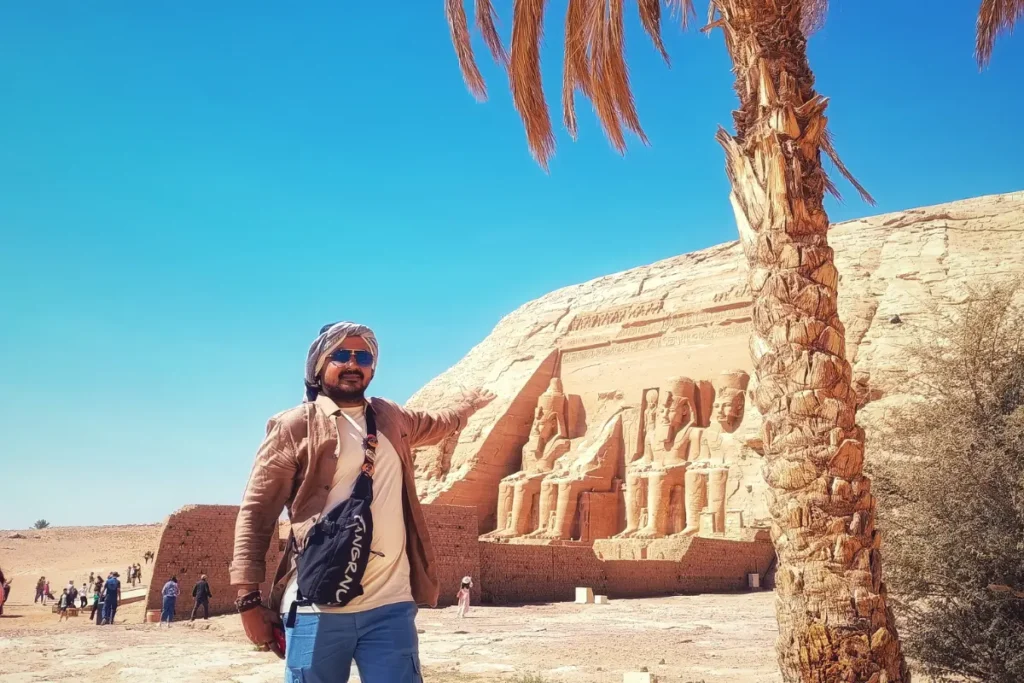
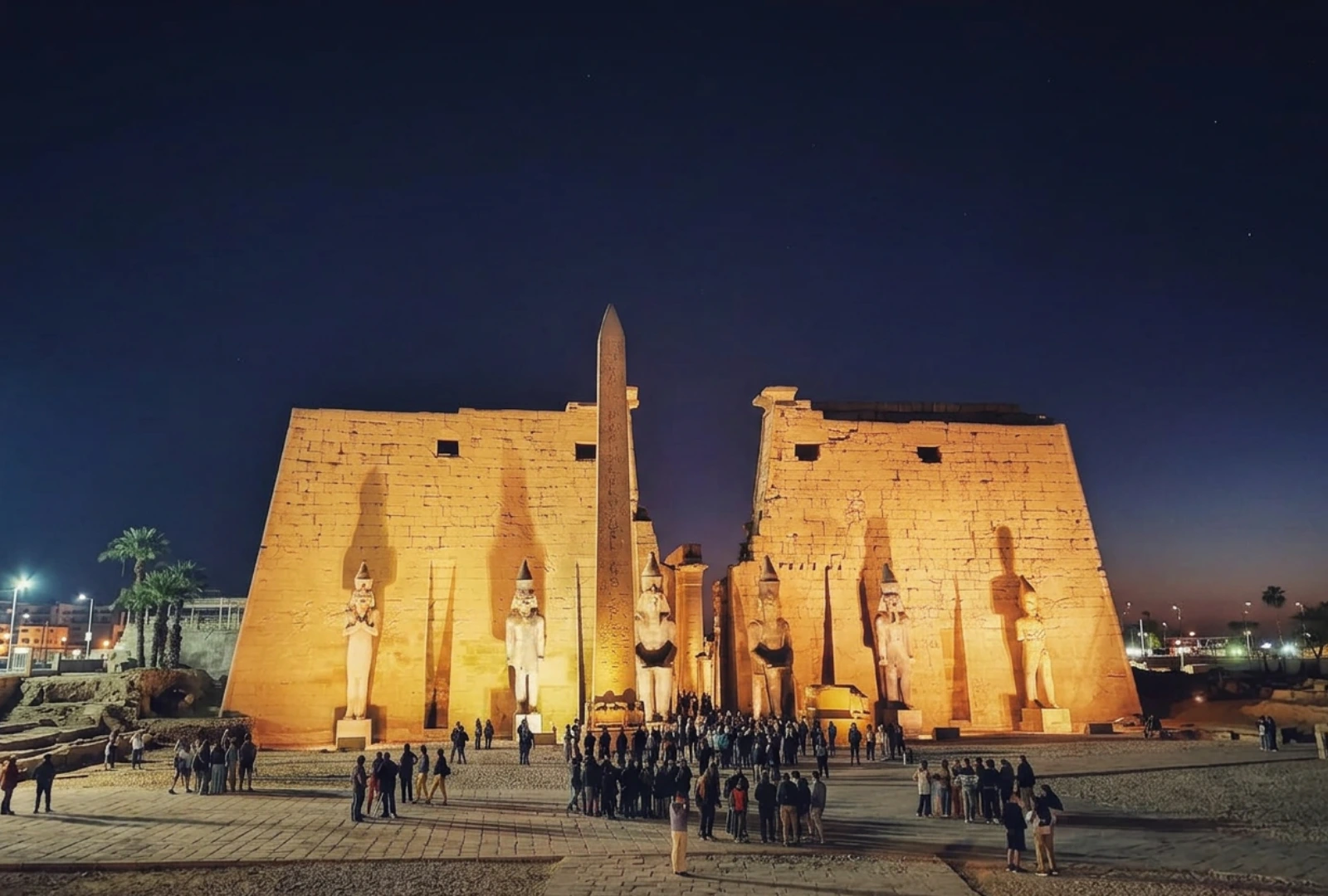
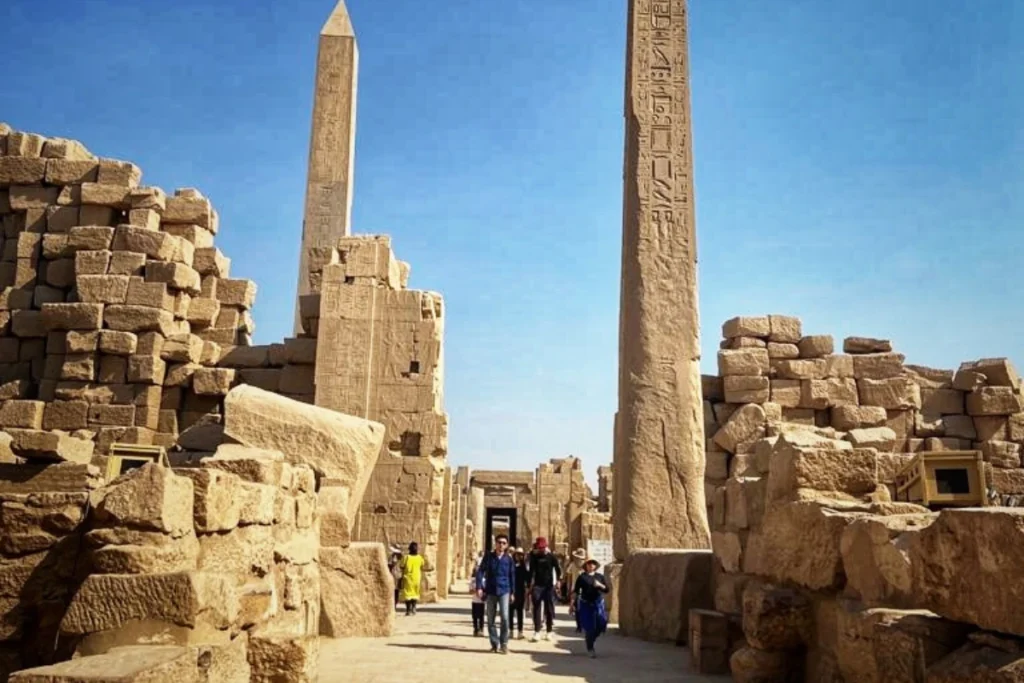
Philae on an island at sunset. Abu Simbel at dawn near the Sudanese border. Kom Ombo in the evening with mummified crocodiles. Edfu at dawn after a horse carriage ride through empty streets. Luxor Temple at night with Alexander the Great’s cartouche on the wall. Hatshepsut’s temple built into a cliff face. And Karnak, the largest religious complex ever built by humanity, where we walked through the Hypostyle Hall on tired legs because the opportunity to stand among 134 columns carved by thirty pharaohs across two thousand years does not repeat itself.
We understood almost none of what we were looking at.
The hieroglyphs were beautiful and opaque. The gods were numerous and unfamiliar. The architecture followed a grammar we had not learned. We took photographs, followed the guide, listened to fragments of explanation, and left each temple with the feeling of having been inside something significant without knowing exactly what.
This article is the guide we wish we had carried. It explains what Egyptian temples were built for, how their architecture works as a system, what the major gods governed, and the specific thing nobody told us until the research for this article uncovered it: that Indian travelers from Tamil Nadu and Kerala stood inside these same temples two thousand years ago, left their names on the walls of the Valley of the Kings, and traded pepper that ended up in a pharaoh’s nostrils.
“Four days. Seven ancient temples. And a growing realisation that we were looking at everything without actually seeing it. The stone walls were packed with stunning, unreadable stories; the gods blended into a blur of unfamiliar symbols; the columns rose up in a design we couldn’t decipher. We left each site deeply moved, but entirely in the dark. This article is the decoder ring we wish we had in our pockets.”
What Were Egyptian Temples For?
Egyptian temples were not churches. They were not places where ordinary people gathered to worship. They were machines.
A temple was a machine for maintaining cosmic order. The Egyptians called this order Ma’at: the balance between chaos and stability that kept the universe functioning. The pharaoh, as the intermediary between gods and humans, was responsible for maintaining Ma’at. The temple was where this maintenance happened.
Every morning, priests entered the innermost sanctuary, opened the sealed shrine, bathed the statue of the god, anointed it with oils, dressed it in fresh linen, and presented it with food offerings. This was not symbolic. The Egyptians believed the god’s ka (spiritual essence) inhabited the statue. The daily ritual sustained the god. The sustained god sustained the universe. If the rituals stopped, the universe would slide toward chaos.
The common people did not enter. They gathered in the outer courtyards during festivals, when the god’s statue was carried outside in a ceremonial procession. The rest of the year, the temple interior belonged to the priests and the pharaoh.
Understanding this changes how you see every temple on the Nile cruise itinerary. The massive outer walls and pylons were not designed to impress visitors. They were designed to protect the ritual space inside from the forces of chaos outside. The progression from bright, open courtyards to dark, enclosed sanctuaries was not architectural aesthetics. It was a physical journey from the human world to the divine one.
How to Read a Temple
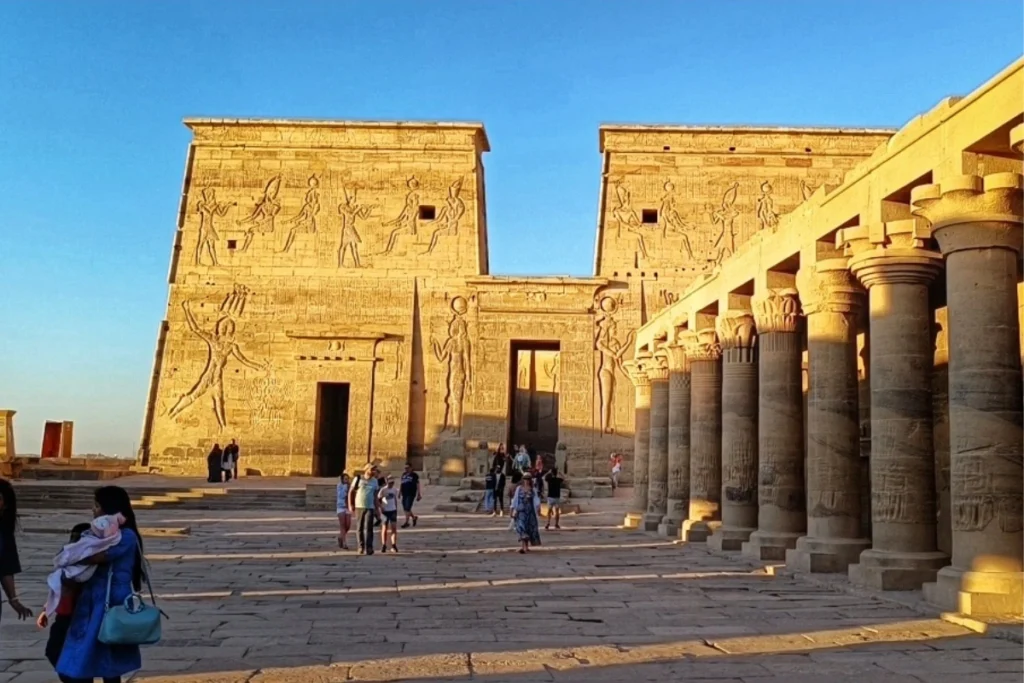
Every major Egyptian temple follows the same architectural grammar. Learning it once allows you to read every temple on the Nile.
The Pylon: the massive trapezoidal gateway at the entrance, usually decorated with scenes of the pharaoh smiting enemies or making offerings to gods. The pylon represents the horizon where the sun rises. Passing through it is symbolically entering the realm of the gods.
The Open Courtyard (Peristyle Court): a colonnaded courtyard open to the sky. This is the most public space. During festivals, selected members of the public could enter this far. The columns often represent papyrus or lotus plants, symbolising the primordial marsh from which creation emerged.
The Hypostyle Hall: a roofed hall filled with massive columns. The roof narrows the light. The space darkens. You are moving deeper into the divine realm. The ceiling is often painted with stars and celestial scenes, representing the sky. You are walking through a symbolic landscape: a marsh beneath the heavens, inside a building.
The Offering Hall and Sanctuary (Holy of Holies): the innermost rooms. Progressively smaller, darker, and more restricted. The floor rises and the ceiling drops as you approach the sanctuary, physically compressing the space. The final room held the god’s statue in a sealed shrine. Only the pharaoh and the highest priests entered here.
The progression is deliberate: from the bright, vast, public outside to the dark, small, private inside. From the world of humans to the dwelling of a god. The architecture enacts the journey.
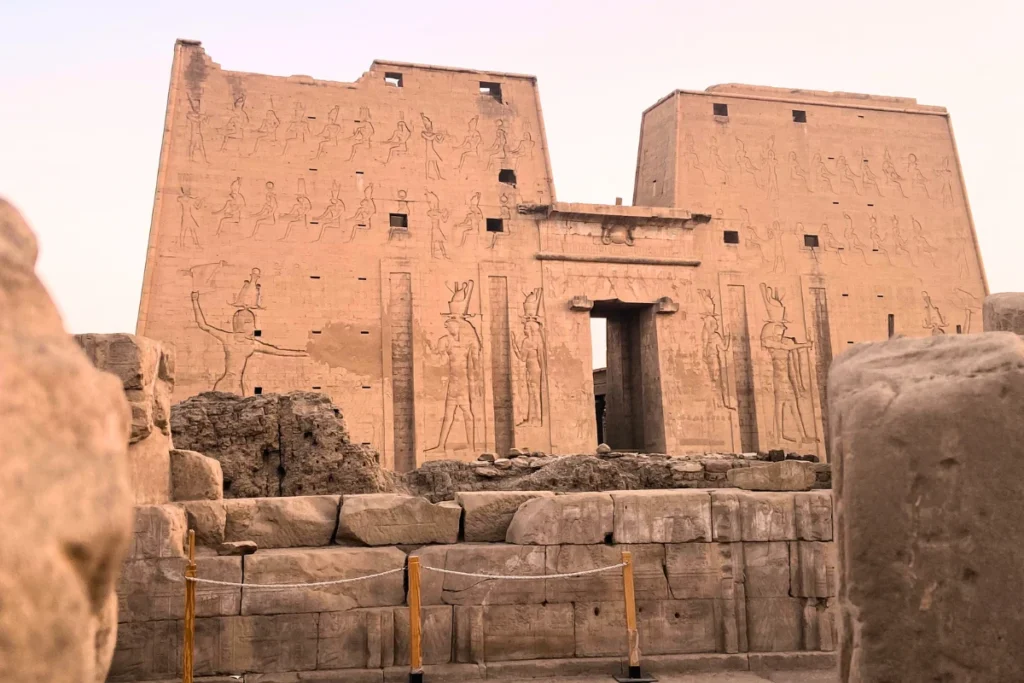
At Edfu, this grammar is preserved almost perfectly because the temple was buried in sand for centuries, which protected the structure. Walking from the pylon through the courtyard into the Hypostyle Hall and finally into the sanctuary at Edfu is the clearest experience of the temple grammar available anywhere in Egypt.
At Karnak, the grammar is expanded across two thousand years. Thirty pharaohs added courtyards, halls, pylons, and obelisks over twenty centuries. Reading Karnak requires understanding that you are not inside one building. You are inside a conversation between thirty rulers across two millennia, all speaking to the same gods.
“The temple is not a building you enter. It is a journey you perform. The architecture enacts the passage from the human world to the divine one: from light to dark, from large to small, from the noise of the courtyard to the silence of the sealed shrine.“
The Gods and What They Governed
Egyptian mythology is not a fixed canon. It is a fluid system where gods merged, separated, changed roles, and acquired new attributes across three thousand years of religious practice. The following is simplified for the traveler who needs enough context to understand what the carvings depict.
| God | Domain and Context |
| Ra / Amun-Ra | The sun god. Supreme deity in most periods. Creator of the world. Karnak is primarily dedicated to Amun-Ra and oriented with the sun’s path. |
| Isis | Goddess of magic, healing, and motherhood. Wife of Osiris. Collected her murdered husband’s body, reassembled it, and conceived their son Horus. Philae Temple is dedicated to Isis. |
| Osiris | God of the afterlife and resurrection. Ruler of the underworld. The pharaoh in death became Osiris. Valley of the Kings tombs guide the dead pharaoh to become one with Osiris. |
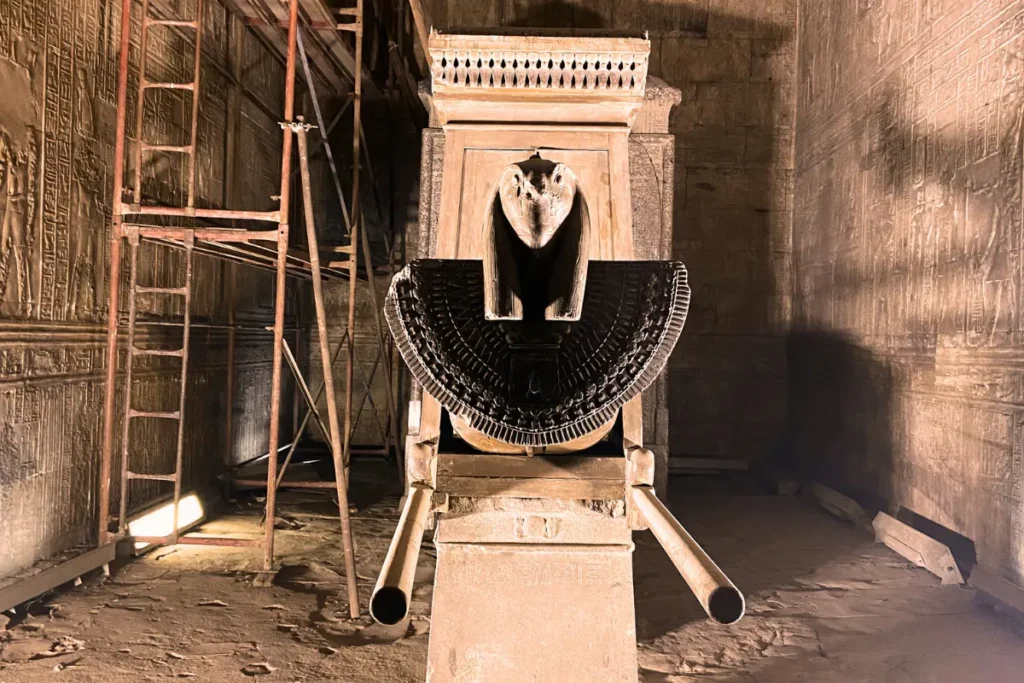
| Horus | The falcon god. Son of Isis and Osiris. The pharaoh was considered the living embodiment of Horus. Edfu Temple is dedicated to Horus. |
| Hathor | Goddess of love, music, joy, and motherhood. The sacred marriage between Horus and Hathor was celebrated annually, with Hathor’s statue sailed from Dendera to Edfu. |
| Sobek | The crocodile god. God of fertility, military prowess, and the Nile’s power. Kom Ombo is dedicated to Sobek on the south side and Horus the Elder on the north. |
| Thoth | The ibis-headed god of wisdom, writing, and measurement. Credited with inventing hieroglyphs. |
| Ma’at | Goddess of truth, justice, and cosmic order. Her feather was weighed against the heart of the deceased in the afterlife judgement. If the heart was heavier than the feather, the soul was devoured. |
| Ptah | The craftsman god. Creator deity in Memphis theology. Believed to have created the world through thought and speech. |
Knowing these names and their relationships allows you to identify the majority of carvings in the Nile Valley temples. The pharaoh is almost always shown making offerings to one of these gods, or being received by them, or performing rituals in their honour. The relationship is transactional: the pharaoh sustains the gods through ritual, and the gods sustain the pharaoh’s rule through cosmic order.
The Seven Temples We Walked Through
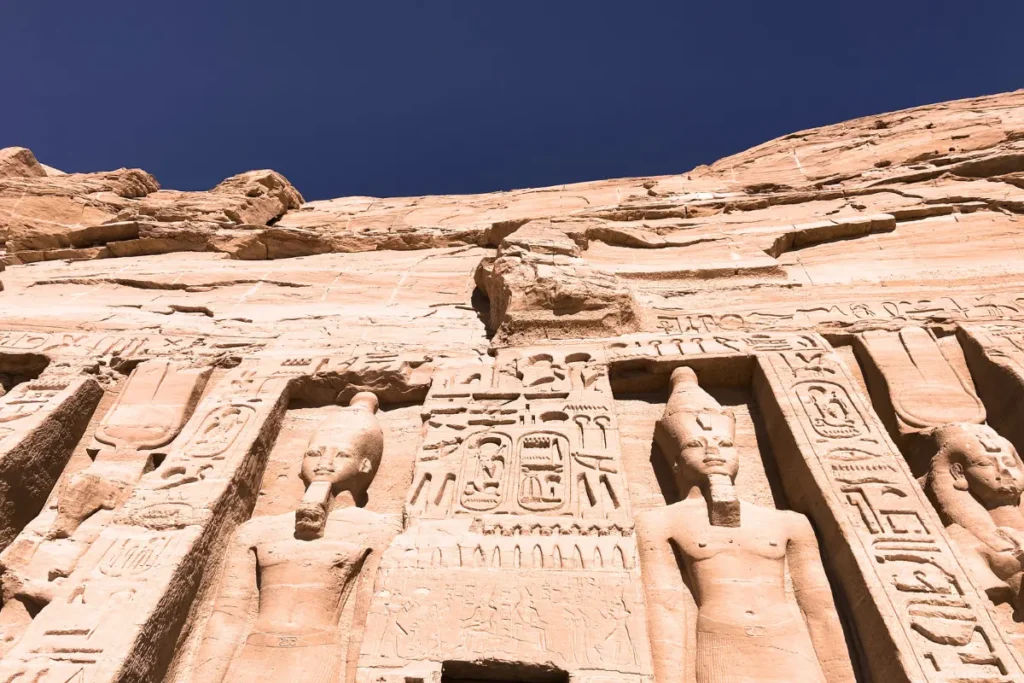
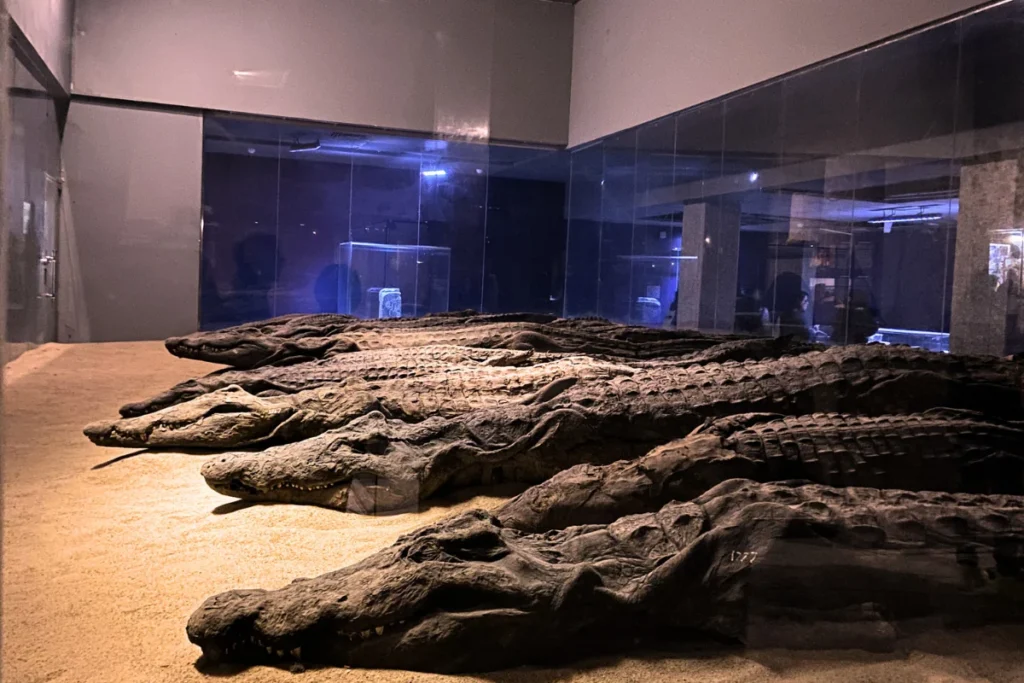
We visited these temples across four days in February 2022, on a 3-night, 4-day Nile cruise from Aswan to Luxor. Each one taught us something the others did not.
Philae (Isis): relocated stone by stone by UNESCO to save it from the Aswan Dam’s rising waters. Reached by boat. Dedicated to the goddess who gathered her husband’s body and breathed life back into him. We arrived at golden hour, watching the evening light shift across the carved gateways until the stone glowed orange.
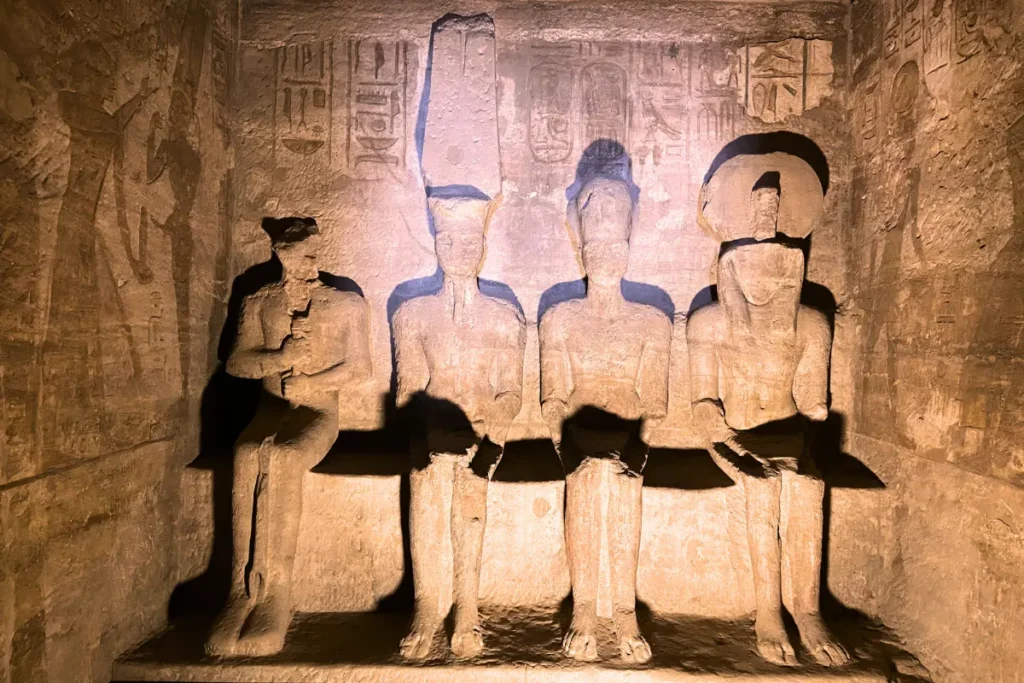
Abu Simbel (Ramesses II): four colossal statues carved into a cliff face near the Sudanese border. The solar alignment sends light 60 metres into the inner sanctum twice a year. The UNESCO operation cut the entire complex into 1,041 pieces and reassembled it on higher ground. Ramesses intended you to feel small. He succeeded.
Kom Ombo (Sobek and Horus the Elder): the dual temple. Everything is doubled: two entrances, two halls, two sanctuaries. The Crocodile Museum holds mummified crocodiles from the temple’s sacred collection. We arrived in the evening. The sunset on the columns made the stonework look like it was glowing from inside.
Edfu (Horus): the best-preserved temple in Egypt. Reached by horse carriage at dawn through empty streets, which was itself a first for us… a horse cart ride, of all things, in Egypt, in the early morning silence. The Edfu Texts inscribed on the inner walls describe a creation narrative that some researchers interpret as referencing an era before dynastic Egypt.
Luxor Temple (Kingship): not dedicated to a god but to the concept of kingship itself. Alexander the Great carved his cartouche here. A Roman legion built their headquarters inside. A mosque was constructed within and still functions today. Three thousand years of continuous occupation in a single building.
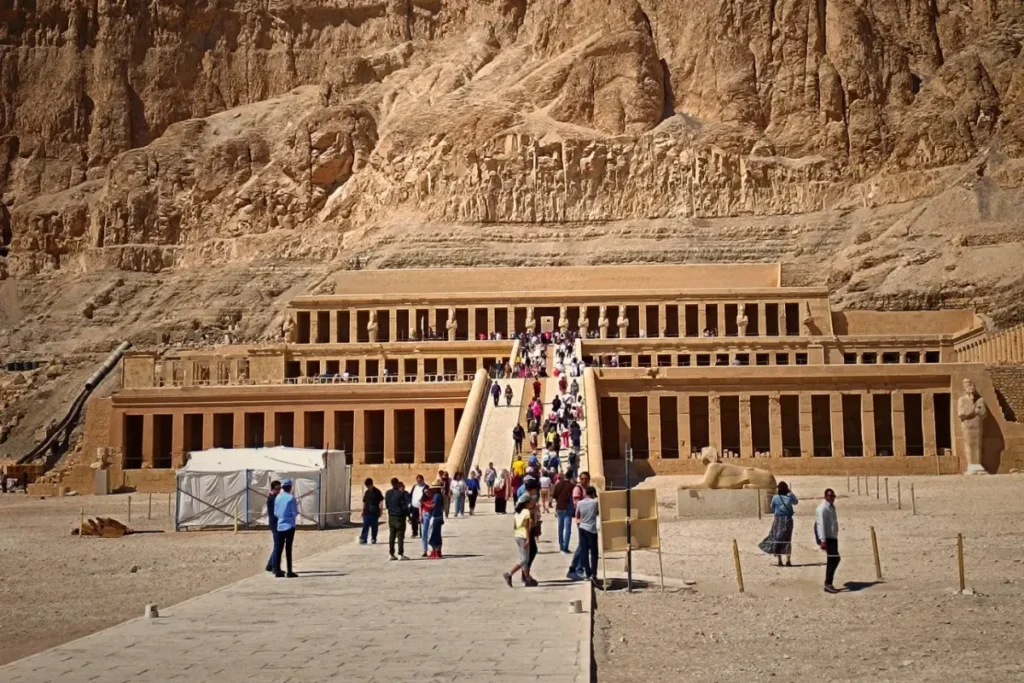
Hatshepsut (Deir el-Bahari): built into a cliff face, not up from the ground. One of the very few women to rule Egypt as pharaoh. Her successor tried to erase her name from history. The erasure failed. The temple survived. The man who tried to delete her is remembered primarily for trying.
Karnak (Amun-Ra): the largest religious complex ever built. 134 columns in the Hypostyle Hall, the tallest 23 metres high. Thirty pharaohs. Two thousand years of additions. We arrived exhausted after the hot air balloon, the Valley of the Kings, and Hatshepsut that same morning, our first-ever balloon flight having started at 4:30 AM. We kept walking anyway. The opportunity does not come back.
When India Came to Egypt
This section is the reason this article exists on this site rather than any other.
We are two Indians who walked through Egyptian temples in February 2022. Standing there, it was easy for us to feel like isolated modern travellers far from home. We assumed our journey was a relatively new crossover between two distant worlds.
We were wrong by approximately two thousand years.
The Pepper in the Pharaoh’s Nostrils
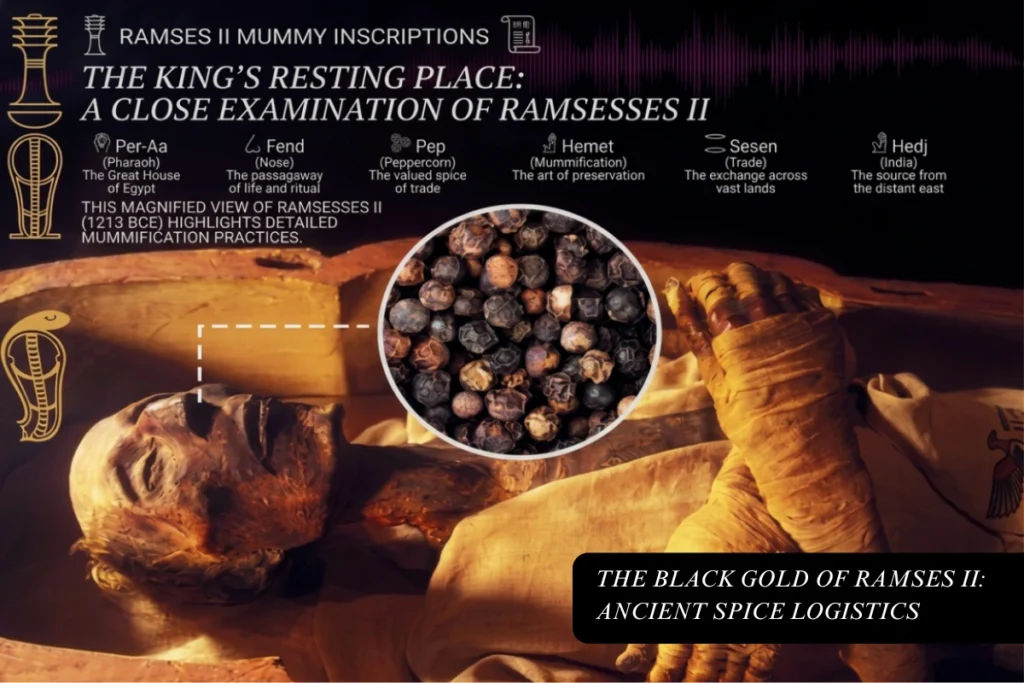
When 19th-century Egyptologists examined the mummified body of Ramesses II, the most powerful pharaoh of the New Kingdom, who died in 1213 BCE, they found something unexpected inside his nostrils: black peppercorns.
Black pepper is endemic to one place on Earth: the Malabar Coast of southern India, modern-day Kerala. It does not grow in Egypt. It does not grow anywhere in the Mediterranean, North Africa, or the Middle East. For peppercorns to reach Ramesses II’s nostrils in 1213 BCE, they had to travel from Kerala across the Indian Ocean, through the Red Sea, and into the Nile Valley. Over three thousand years ago.
How they arrived is unknown. The trade routes that would later formally connect India and Egypt were not documented until more than a thousand years after Ramesses II’s death. The peppercorns in his nostrils are evidence of a connection that predates the documentation.
A 2023 study published in Nature’s Scientific Reports analysed the mummification balms of Senetnay, an 18th Dynasty noblewoman buried in the Valley of the Kings around 1450 BCE, and found possible dammar resin… a substance endemic to Southeast Asia. If confirmed, this would push the evidence of Asian trade connections with Egypt back even further, to over two centuries before Ramesses II.
The Indians Who Lived in an Egyptian Port
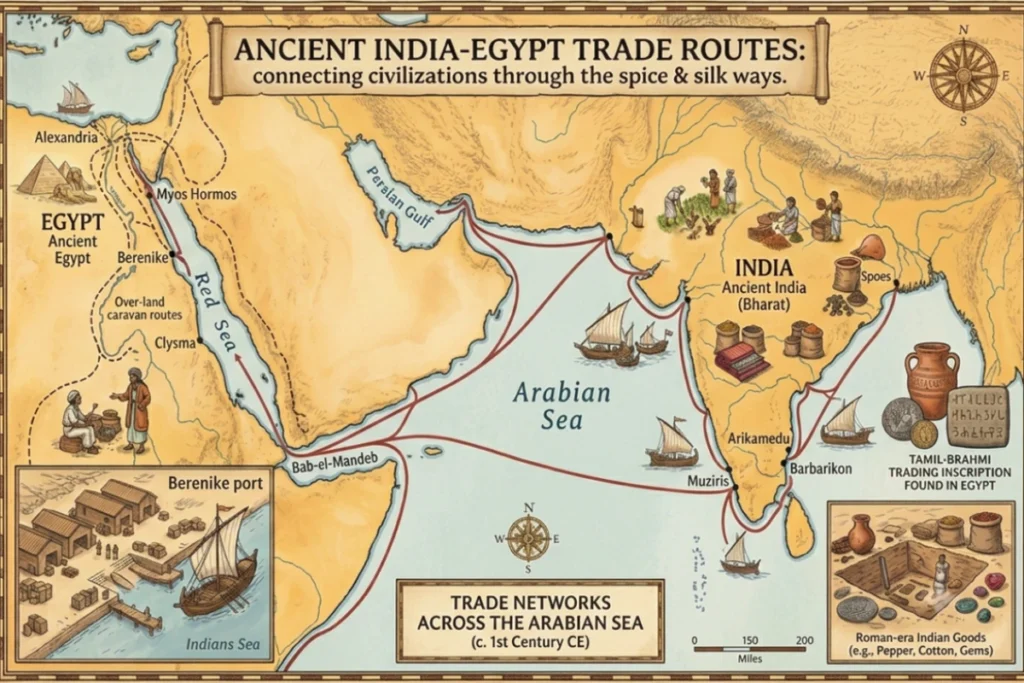
The port of Berenike, on the Red Sea coast of Egypt, has been excavated since 1994 by a team led by Professor Steven Sidebotham of the University of Delaware, in partnership with the Polish Centre of Mediterranean Archaeology. The discoveries transformed our understanding of India-Egypt connections.
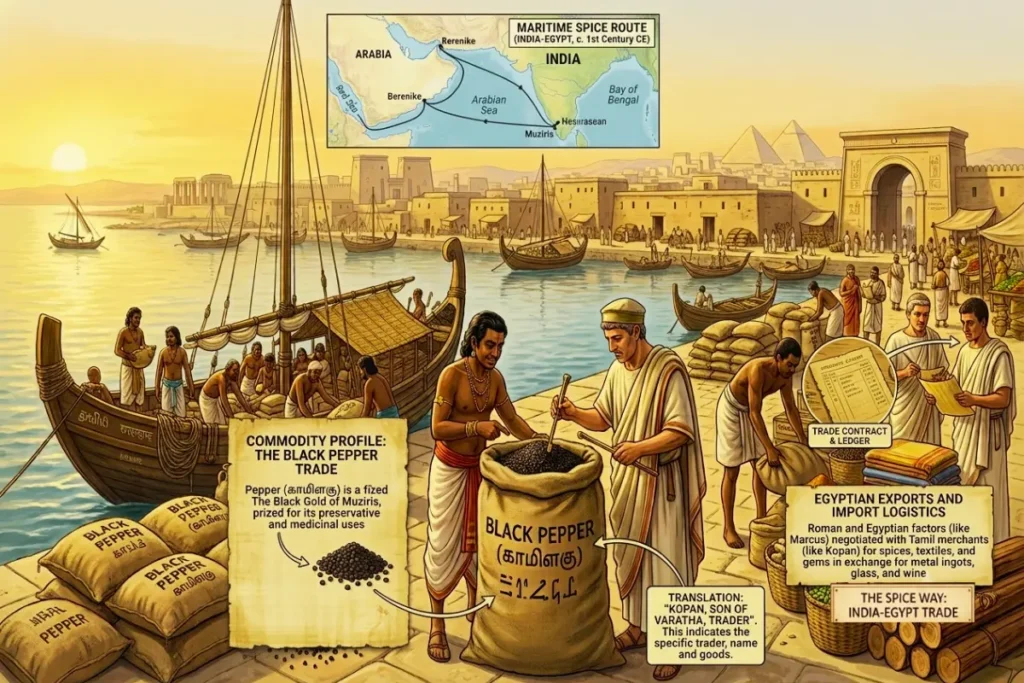
At Berenike, archaeologists found: the largest single concentration of black peppercorns (7.55 kg) ever recovered in the classical Mediterranean world, imported from southern India and found inside a large vessel in a temple courtyard. They found substantial quantities of Indian-made pottery: fine ware, kitchen cooking ware, and ceramics matching styles from Tamil South India. They found Indian-made sail cloth, basketry, and matting. Teak wood, which grows only in South and Southeast Asia. Coconuts. A Tamil Brahmi inscription mentioning ‘Korra,’ a South Indian chieftain.
The evidence went further than trade goods. The excavations revealed that inhabitants from Tamil South India… from what is today Kerala… were living in Berenike during the early Roman period. Not visiting. Living.
Indians were not just sending goods to Egypt. They were there.
“Finding over seven kilograms of Malabar peppercorns inside a remote Egyptian temple courtyard changes everything we know about ancient travel. It proves that thousands of years ago, Indian merchants weren’t just trading across the ocean…they had brought the literal flavours, smells, and daily realities of South India right into the heart of the Roman Empire.”
Tamil Names in the Valley of the Kings
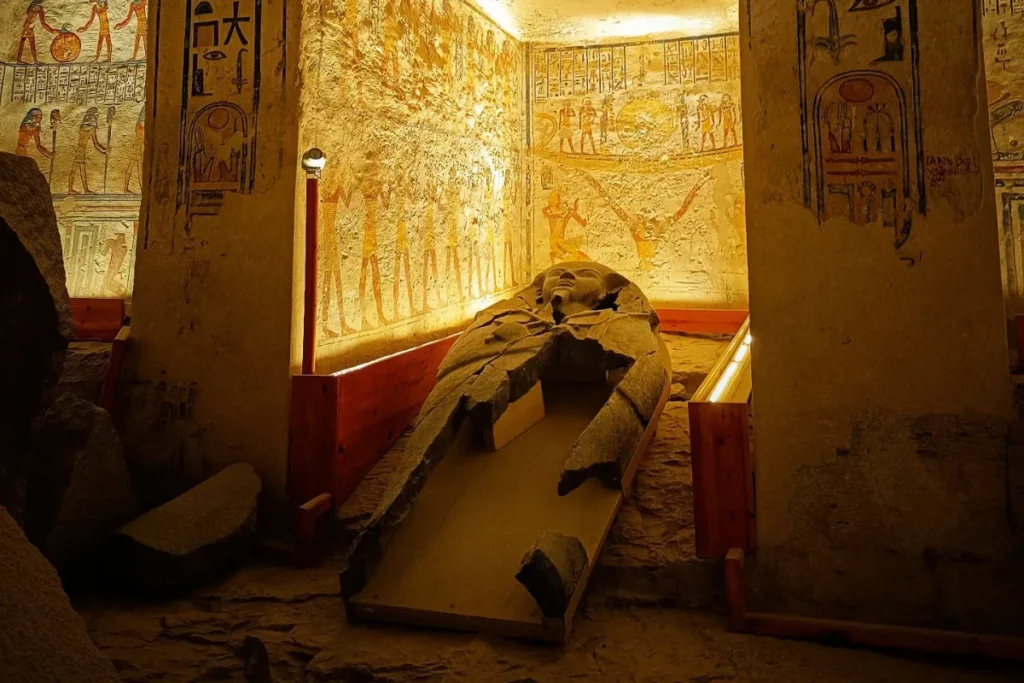
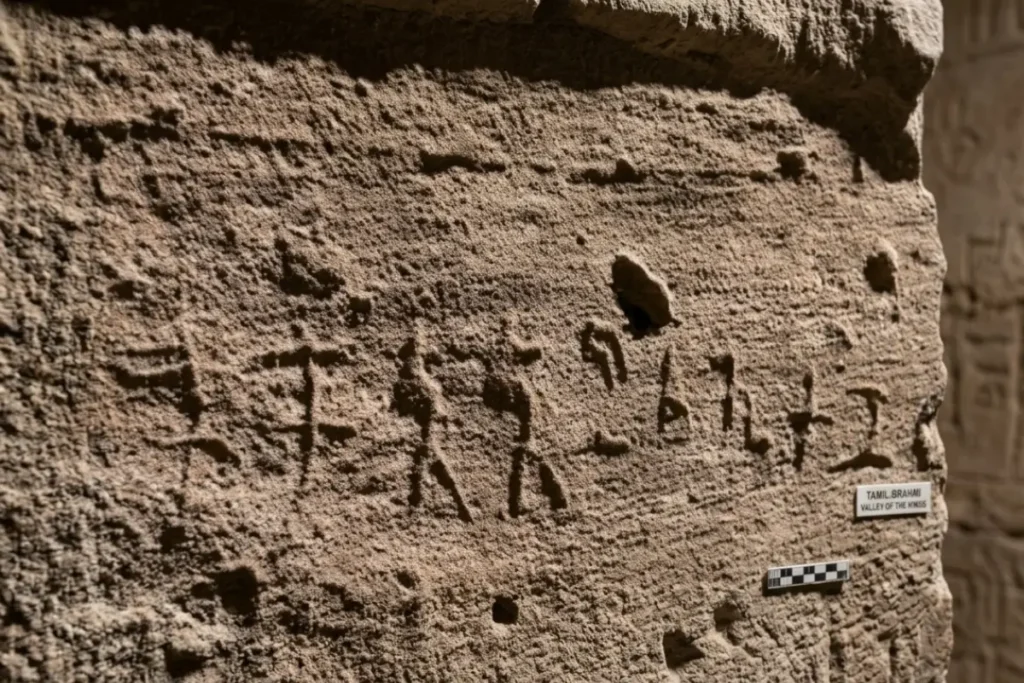
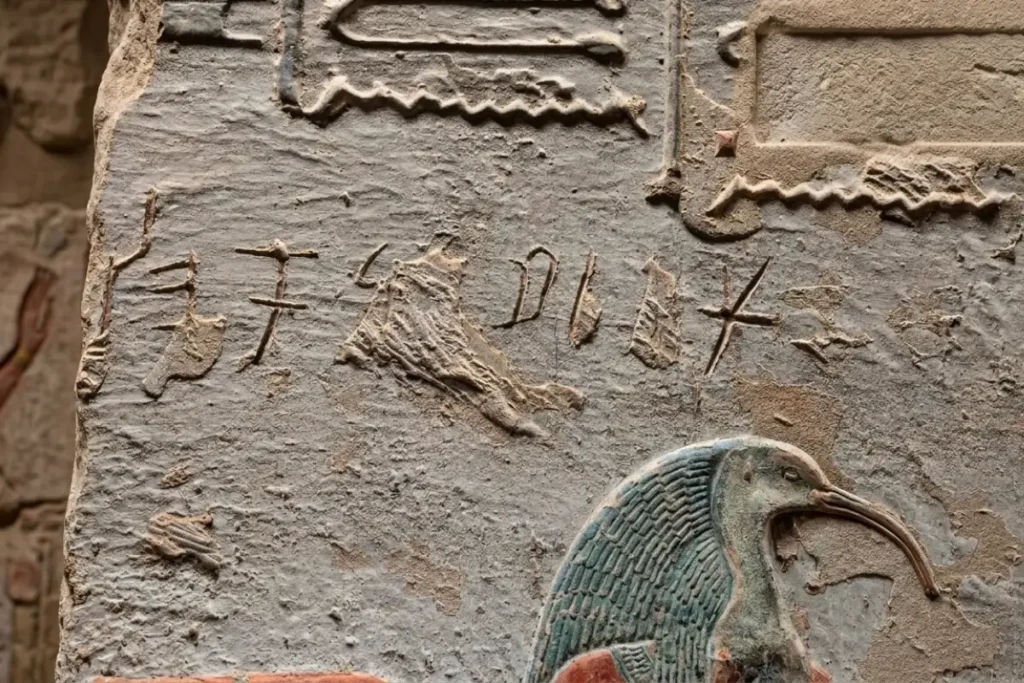
In 2024 and 2025, a study by Professor Charlotte Schmid of the French School of Asian Studies (EFEO) in Paris and Professor Ingo Strauch of the University of Lausanne documented approximately 30 inscriptions in Tamil-Brahmi, Sanskrit, and Prakrit inside six tombs in the Valley of the Kings.
The same Valley of the Kings where we took a hot air balloon at dawn. The same tombs where we entered to see the astronomical ceiling of Ramesses V and VI.
The inscriptions date to between the 1st and 3rd centuries CE. The Tamil name ‘Cikai Koṛṛaṉ’ appears eight times across five tombs, including one placed prominently about four metres high near an entrance, suggesting deliberate visibility. Another inscription reads ‘Kopāṉ varata kantan,’ translated as ‘Kopāṉ came and saw.’ The formula mirrors Greek tourist graffiti found in the same tombs. The Tamil travellers had learned the genre of the tourist inscription and applied it in a Dravidian language, two thousand years ago, on the walls of a pharaoh’s tomb.
We stood in the Valley of the Kings and looked at the paintings on the walls without knowing that Tamil travelers had stood in the same tombs, looked at the same paintings, and carved their names into the same rock two millennia before us.
The Muziris Papyrus
The Muziris Papyrus, discovered in 1985 and now held in Vienna, is a 2nd-century CE shipping contract written in Greek. It documents a cargo loan between an Alexandria-based financier and an Indian merchant at Muziris, a port on the Malabar Coast of Kerala (modern-day Pattanam, near Kodungallur).
The cargo was shipped from Muziris to the Red Sea port of Berenike aboard a vessel called the Hermapollon. After the Roman Empire’s 25 percent import tax was levied, the remaining three-quarters of the cargo was valued at approximately 6.9 million drachmas. Pepper constituted roughly 67 percent of the cargo value.
A single shipment. From Kerala to Egypt. The trade was neither casual nor modest.
Pliny the Elder, the 1st-century Roman historian, wrote that the Roman Empire sent approximately 120 ships per year on this route. The money flowing out of Rome to India was so substantial that he complained about it. The connection between India and Egypt was not a historical footnote; it was a roaring commercial artery.
What This Means for the Indian Traveler
When we walked through the temples along the Nile, we walked through spaces that our ancestors knew. Not metaphorically. Archaeologically. Tamil merchants from the Chera, Chola, and Pandya kingdoms of the Sangam age traded with Roman Egypt through Red Sea ports. They lived in Egyptian port cities. They traveled inland to the Valley of the Kings and left their names on the walls.
No other Egyptian temple guide tells an Indian traveler this. We are telling you because standing inside Karnak or the Valley of the Kings carries a different weight when you know that someone who spoke a Dravidian language and sailed from a Kerala port carved their name into the same rock two millennia before you arrived with a camera and a cruise ticket.
How to Visit Egyptian Temples
- The Nile cruise is the most efficient structure. A 3-night, 4-day cruise from Aswan to Luxor (or the reverse) delivers you to Philae, Abu Simbel (by bus), Kom Ombo, Edfu, Luxor Temple, and Karnak in logical sequence. The cruise review covers the experience and costs.
- Hire or follow a guide. The carvings are dense, and the mythology is layered. Without a guide, you see beautiful stone. With a guide, you read a narrative. The same principle applies at Indian heritage sites: Hoysaleshwara without a guide is a surface; with one, it is a story.
- Visit Edfu first thing in the morning. The temple’s preservation is unmatched. The horse carriage at dawn through empty streets is an experience the afternoon crowds erase. We arrived before the heat and before the other boats.
- Visit Luxor Temple at night. The floodlights change the architecture completely. The columns cast shadows that daylight does not produce. Alexander the Great’s cartouche and the functioning mosque inside the same walls are more atmospheric after dark.
- Pay for the premium tomb in the Valley of the Kings. The tomb of Ramesses V and VI has an astronomical ceiling that has survived three thousand years in vivid colour. Tamil travelers may have looked at that same ceiling in the 2nd century CE.
- Budget for entrance fees. They are not included in any cruise package and add up quickly. The Egypt travel tips article lists every fee from our visit, with both 2022 and current 2026 rates.
- Wear comfortable walking shoes. Temple complexes are large, surfaces are uneven, and the Giza plateau is sandy. The walking across a four-day temple itinerary is significant.
“We cross oceans to see things that are foreign, only to discover that the ancient world was far smaller, far braver, and far more connected than our modern maps admit. Standing in the dust of the pharaohs as an Indian traveller is not an act of looking at someone else’s history… it is a quiet homecoming to a highway our ancestors paved with the scent of Malabar pepper and the strokes of Tamil script.”