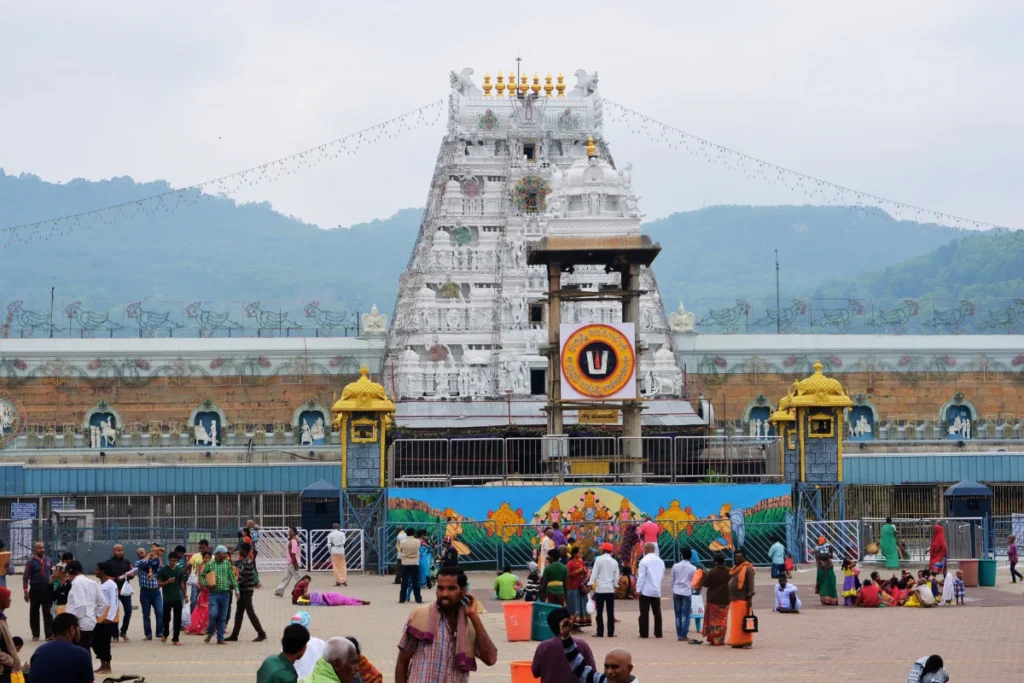
This is the Tirupati Balaji Darshan honest guide that nobody publishes: the one where we arrived, waited, and left without seeing Lord Venkateswara.
We went to see God and left without seeing Him.
This is not a dramatic opening for effect. It is what happened. We traveled from Bengaluru to Tirupati by bus, checked into our accommodation, visited the Padmavathi Temple the evening before as tradition requires, woke early the next morning, climbed the hill to Tirumala, stood in queues from 10:30 AM, were locked into a crowded compartment by 12:30 PM, were told at approximately 2 PM that our darshan would not happen until 1:30 AM the following morning, and by 3 PM, after five hours of standing and sitting in a cage-like iron enclosure with 300 to 400 other people in conditions that made breathing difficult, we made the decision to leave.
We begged the volunteers to unlock the exit. They were rude. They were unsympathetic. They eventually opened the door. We walked out of the Tirumala temple complex without a single glimpse of Lord Venkateswara.
This article exists because every other Tirupati guide online describes the spiritual grandeur. The chanting of ‘Govinda! Govinda!’ The oceanic scale of devotion. The divine energy. All of that is real. We heard the chanting. We saw the scale. We felt the energy. What we also felt was suffocation, hunger, helplessness, and the specific despair of realising that the system designed to deliver you to God is the system that prevented us from reaching Him in any condition fit for prayer.
We are publishing this because no first-time visitor should arrive at Tirumala as uninformed as we did. Every mistake we made is avoidable. This guide ensures you avoid them.
“We went to see God and left without seeing Him. Not because of insufficient faith. Because of insufficient information. Every mistake we made is avoidable. This article ensures you avoid them.”
What Is Tirupati?
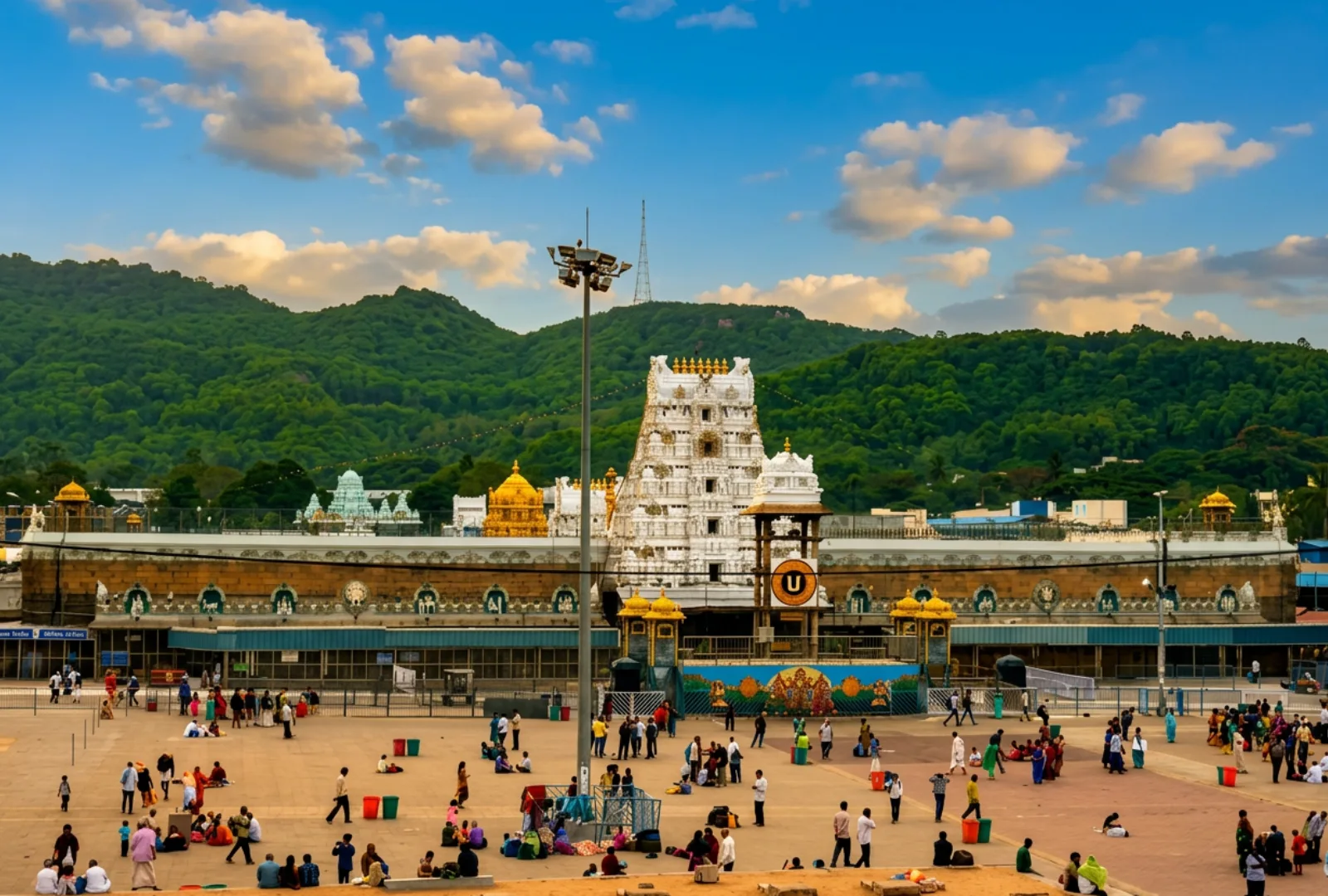
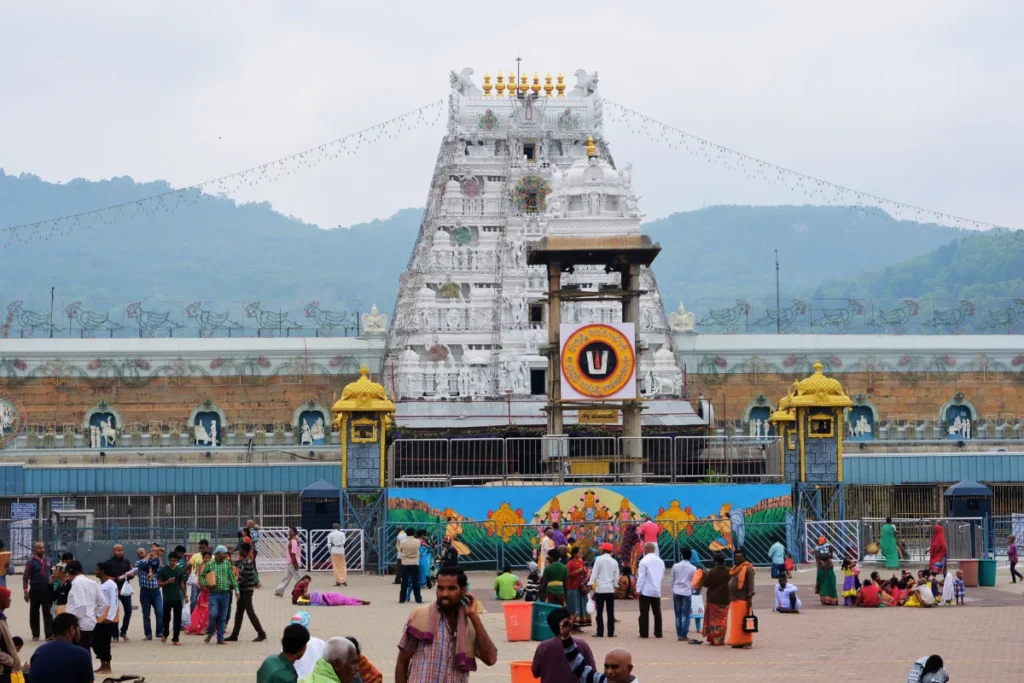
The Tirumala Venkateswara Temple, located atop the seven hills of Tirumala near the town of Tirupati in Andhra Pradesh, is the most visited religious site in the world. Lord Venkateswara, a form of Lord Vishnu, receives more annual visitors than the Vatican, Mecca, or any other pilgrimage destination on Earth. The temple is administered by the Tirumala Tirupati Devasthanams (TTD), which manages the entire complex, the accommodation, the dining halls, and the darshan system.
The temple is also one of the wealthiest religious institutions in the world. The donation hundis receive enormous quantities of cash, gold, jewellery, and precious stones daily. The free dining halls (Annaprasadam) feed hundreds of thousands of people every day with remarkable efficiency.
The scale is not a metaphor. It is the defining characteristic. Everything at Tirupati operates at a scale that is difficult to comprehend until you are standing inside it. The crowds, the queues, the compartments, the dining halls, the coconut-breaking areas where the steps are permanently drenched in coconut water from thousands of shells cracked every hour: all of it is larger than anything you have experienced at any other temple.
We visited for the first time. The scale overwhelmed us before we reached the sanctum. We never reached the sanctum.
How We Got There
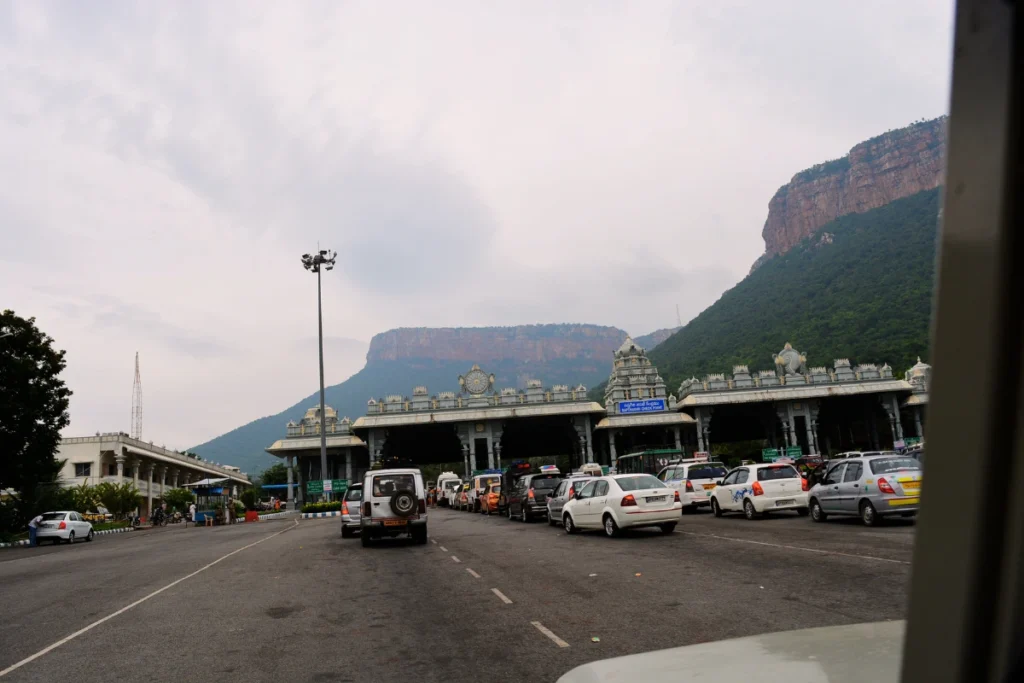
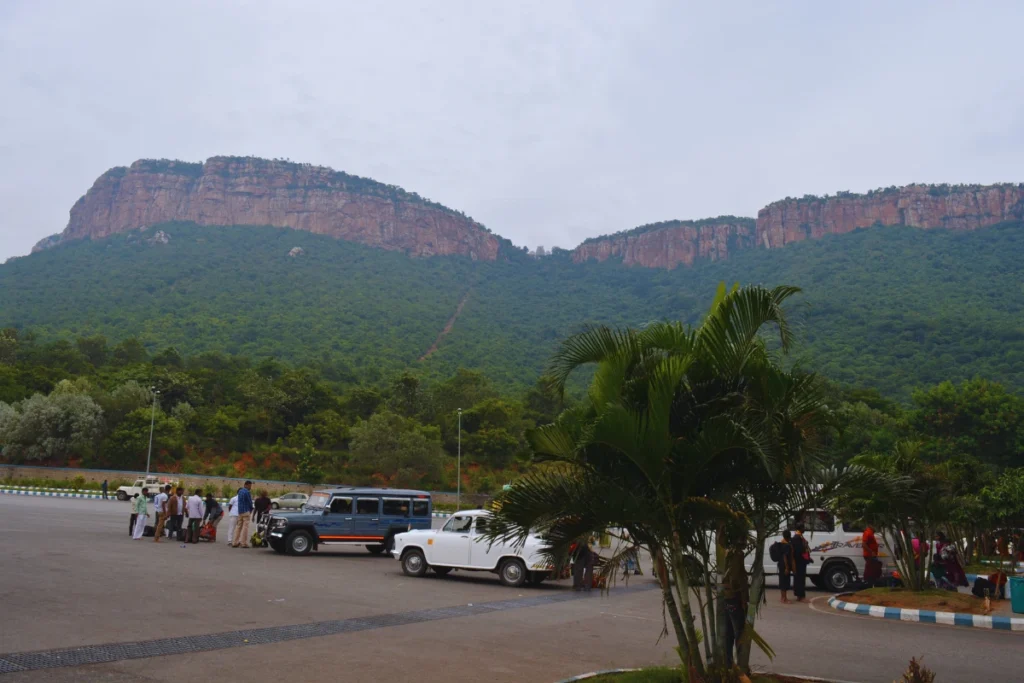
We traveled from Bengaluru to Tirupati by KSRTC bus from Majestic Bus Station to Tirupati Central Bus Station.
- Departure: 7:22 AM from Bengaluru
- Arrival: approximately 2:30 PM at Tirupati Central
- Fare: approximately INR 710 per person
- Duration: approximately 7 hours
The drive by car takes approximately 5 hours. For Bengaluru travelers: leave by 4 to 5 AM to avoid city traffic that can add 45 minutes to an hour to the journey. The advice is consistent with every road trip we have taken. Early departure, empty roads, arriving while the day is still useful.
From Tirupati Central Bus Station, we made our way to Bharat Sevashram Sangha by private auto. Dedicated shared jeeps or shared cars do not operate on this specific route down within Tirupati town. Hiring a private auto-rickshaw or booking via an app-based ride is your only practical option.
Where We Stayed: Bharat Sevashram Sangha
Bharat Sevashram Sangha in Tirupati. Two nights.
The Sangha is a charitable organisation that provides clean, spacious rooms at nominal rates. The cost per night was minimal, well under what a standard hotel in Tirupati charges. The rooms were clean and well-maintained. The view from the upper floors was genuinely beautiful. We did not eat at the Sangha; food came from roadside local restaurants nearby.
For budget travelers, the Sangha is a practical and comfortable base. Verify current room availability and rates directly with the Tirupati branch before your visit. Demand is high during festival periods and advance contact is advisable.
“The evening at Padmavathi Temple was peaceful, beautiful, and exactly right. We left the Sangha the next morning carrying that peace into a system that would take it apart, piece by piece, over five hours.”
Tirumala: What Nobody Prepares You For
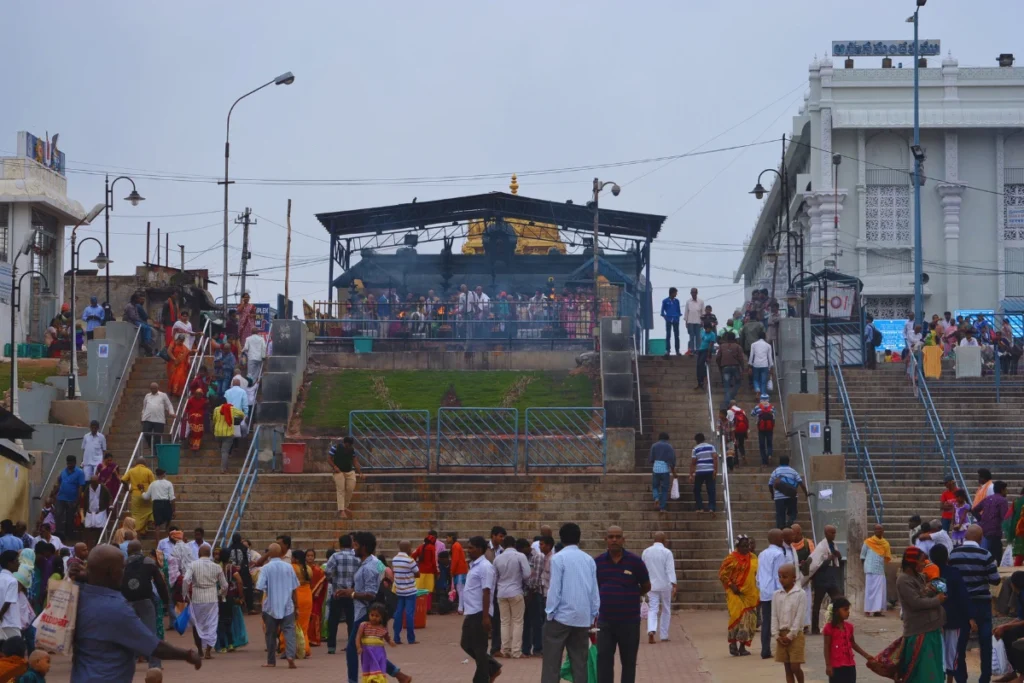
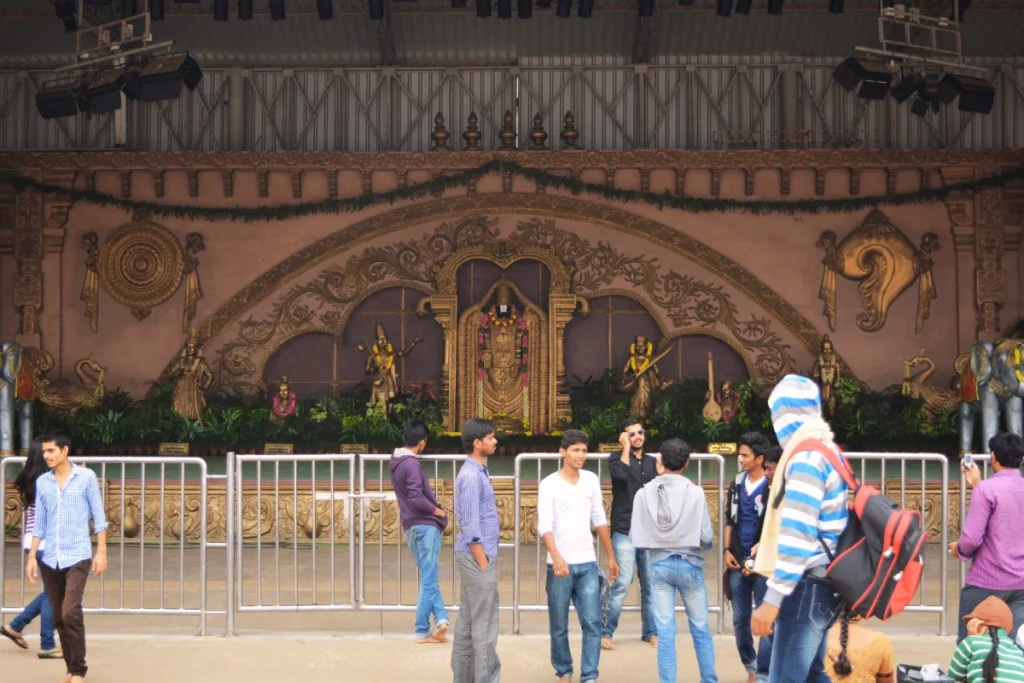
The next morning, we went up the hill to the Tirumala Venkateswara Temple. We did not have a pre-booked ticket. We did not know we needed one. This was the mistake that defined the entire experience.
The Queues
We arrived at the temple complex and joined the general entry queue at 10:30 AM. The queue moved slowly. By 12:30 PM, approximately two hours after joining the line, we were ushered into what the system calls ‘compartments.’
The Compartments
The compartments are massive, cage-like iron enclosures. Each one holds approximately 300 to 400 people. Once a compartment fills, the management locks the doors from the outside. There are dozens of such compartments, arranged in sequence, each holding its group of devotees in a locked waiting area until the queue advances enough for the next stage.
Inside the compartment: no ventilation. No seating for most people. No food beyond the cold curd rice distributed by volunteers, which we simply could not stomach under that intense heat on an already unsettled, empty stomach. No clarity on when the doors would open. No ability to leave, because the doors are locked from the outside.
We sat. We waited. The crowd pressed tighter. The air grew heavy. The temperature rose.
The Announcement
Between 1:30 and 2:00 PM, temple officials entered and announced that our expected darshan time would be approximately 1:30 AM. The following morning. This meant we were expected to remain inside a locked, crowded, poorly ventilated compartment for approximately twelve more hours.
The Decision to Leave
By 3 PM, we could not continue.
The combination of five hours without food (since we could not eat the curd rice offered), the crowd density, the absence of fresh air, and the knowledge that twelve more hours of the same conditions lay ahead produced a state that was not devotion. It was distress. One of us felt physically suffocated. The mental weight was heavier: the realisation that the system designed to bring devotees to God was subjecting them to conditions that made prayer impossible. You cannot speak to God when you are fighting for breath. You cannot open your heart when your body is in survival mode.
We decided to leave.
The exit doors were locked. We asked the volunteers to let us out. They refused. We asked again. They were rude. We begged. Their behaviour was harsh and unsympathetic, as though our desire to leave was an inconvenience rather than a distress signal. Eventually, after repeated requests, they opened the door.
We walked out of the Tirumala complex without darshan. Without a single glimpse of Lord Venkateswara.
“We left the compartment because staying had become a form of suffering that served no devotion. The five hours were not preparation for the deity. They were punished for the absence of a pre-booking. The two things have nothing to do with each other.”
What We Saw Before We Left
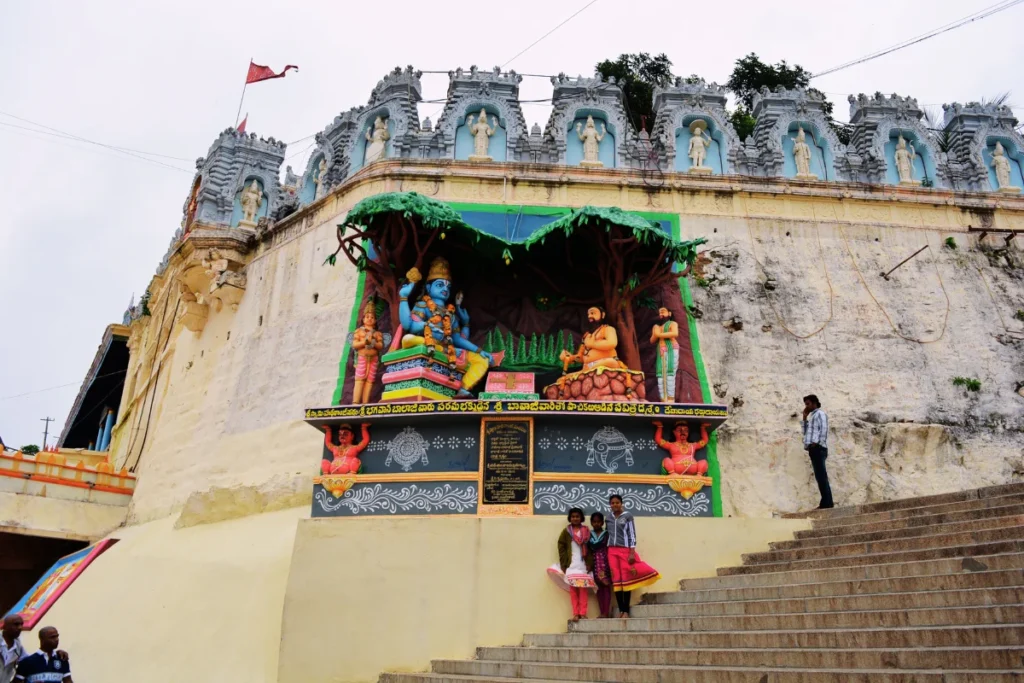
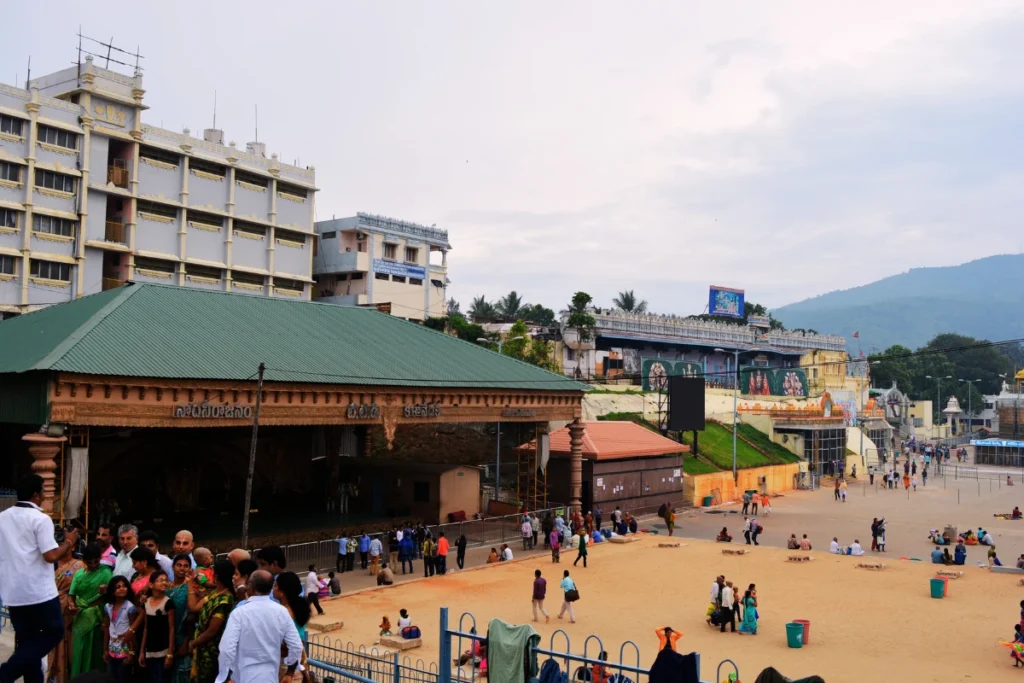
The experience was not entirely without value. Before the compartments claimed our day, and after we exited, we witnessed the scale of Tirupati’s spiritual infrastructure.
The dining halls (Annaprasadam): hundreds of thousands of people fed daily, for free. The efficiency is extraordinary. Rows of devotees seated together, served hot food with clockwork precision. In a world where most systems fail at scale, the Annaprasadam succeeds. It is the most impressive large-scale feeding operation we have encountered anywhere.
The hair tonsuring (mondan): men, women, and children voluntarily shaving their heads as an act of surrender, shedding ego before meeting the deity. Seeing thousands of freshly shaved devotees walking through the complex communicates something about faith that words cannot match.
The coconut-breaking area: a dedicated section where thousands of coconuts are cracked simultaneously. The continuous crashing sound. The mounds of broken shells. The steps completely drenched in coconut water, glistening and fragrant. It is a sensory experience unlike anything we have encountered at any other temple.
The donation hundis: massive, bag-like structures overflowing with cash, gold, and jewellery. The volume of offerings is staggering. The faith that produces this level of giving, regardless of your view on the institution that receives it, is genuine and visible.
These are the things that every Tirupati grandeur narrative describes accurately. The grandeur is real. The system that manages access to the grandeur is where the experience breaks.
A Question We Have Not Resolved
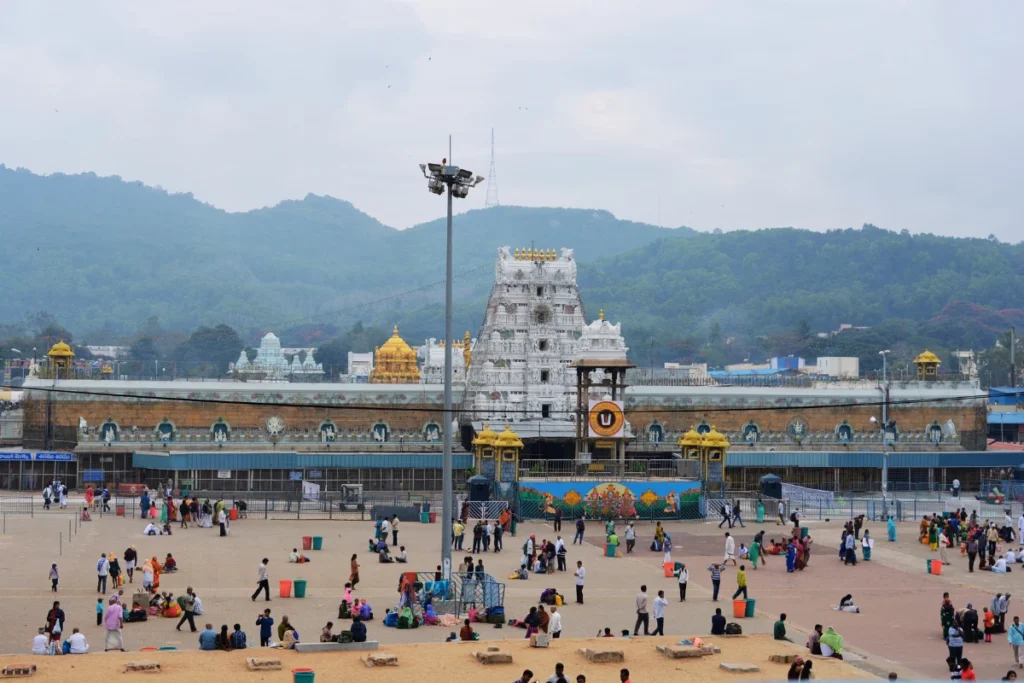
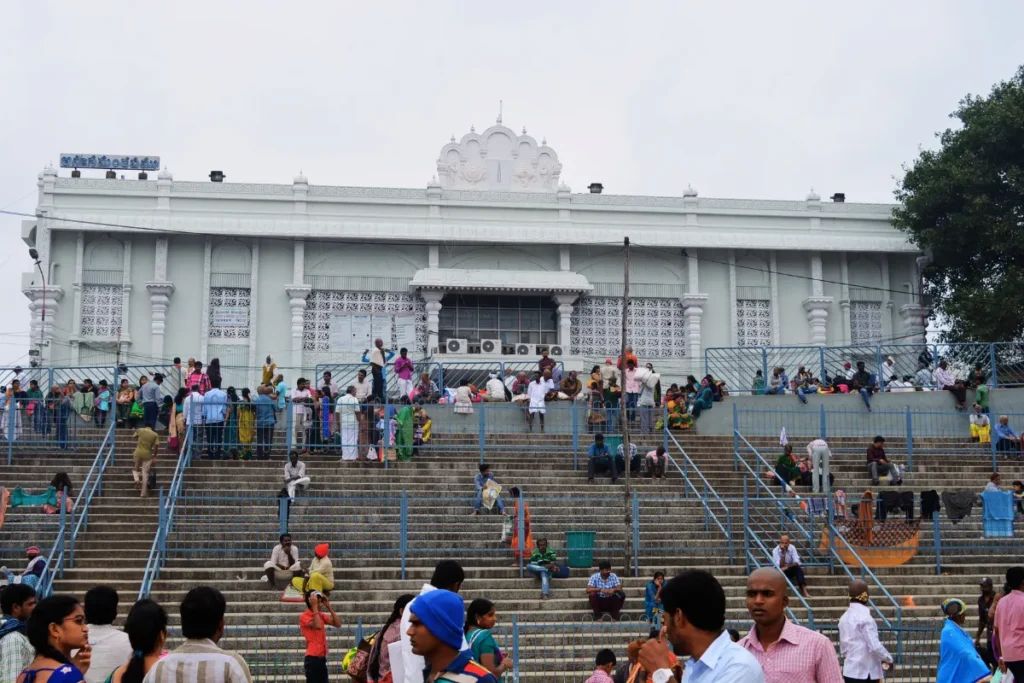
The system operates on tiers. Special Entry Darshan (INR 300) provides a shorter queue and a time slot. VIP and VVIP darshan moves faster. The general queue, which is free, is the one where 300 to 400 people are locked in compartments for half a day or more.
The tiering itself is not inherently wrong; managing millions of visitors requires an immense structural grid. But the conditions in the general compartments…the locked doors, the lack of ventilation, the unhelpful staff, and the complete absence of information…are not the inevitable consequences of scale. They are choices. An institution with Tirumala’s vast resources can choose to provide ventilated waiting areas, unlocked emergency exits, clear communication about wait times, and staff who treat devotees with dignity.
Every unique element of Tirumala is intentionally designed to strip away the human ego. When you see thousands of pilgrims…wealthy executives and penniless labourers alike…voluntarily shaving their heads, you are witnessing a profound level of humility. When you hear the thunderous, continuous crash of thousands of coconuts breaking in the outer courtyard, you are hearing the symbolic shattering of hard human pride.
Yet, once the general queue funnels you into the iron-railed containment blocks, a jarring paradox takes over. The system stops checking your ego and begins testing your basic endurance as a living being. There is a distinct difference between a crowded space and a confined space. In a standard queue, humanity moves forward together, creating a shared, kinetic energy. In the locked compartments of Tirumala, that movement stops entirely. You are held stationary behind heavy iron meshes under a low ceiling, packed tightly with hundreds of strangers, with the exit doors physically padlocked from the outside by administrators. Devotion quickly morphs into survival. When the human body is hungry, dehydrated, and physically confined, the mind cannot elevate itself to a state of prayer. You cannot look inward toward the divine when your immediate reality forces you to fight for basic breathing room.
This infrastructure forces us to confront a heavy, uncomfortable question about how we manage our holiest landscapes:
“If a pilgrimage is meant to be a conscious journey of surrendering the ego, why has our modern administrative machinery turned it into a process that strips away basic human dignity? When an institution possesses the infinite wealth and resources to feed oceans of people with flawless, clockwork precision, why can it not design a transit system that treats a general pilgrim with the same physical empathy as a VIP ticket holder?”
We felt a similar high-pressure energy at the Jagannath Temple darshan in Puri…the pushing, the shoving, the one-second glimpse for which you endure hours of crowd pressure. The question in both places is identical: Can devotion not be peaceful?
We do not have the answer. We are not temple administrators. We are simply two people who traveled from Bengaluru seeking a moment with God and received, instead, five hours in a cage. We are sharing this because honest travel writing requires including the temples that break your expectations alongside the ones that exceed them.
What We Should Have Done
Every mistake we made is avoidable. Here is what you must do.
Book the Special Entry Darshan ticket (INR 300 per person) online, 2 to 3 months in advance, through ttdevasthanams.ap.gov.in or the official TTD Devasthanams app. This is the single most important piece of advice in this article.
Warning: Search carefully on the app stores and ensure the developer is listed explicitly as Tirumala Tirupati Devasthanams. There are dozens of fraudulent copycat apps using similar names designed to scam users into paying high third-party agent fees.
The INR 300 ticket provides a specific date and time slot with a significantly shorter waiting time. It is the difference between a 2 to 4 hour managed queue and a 12 to 14 hour locked compartment.
How to book:
1. Visit ttdevasthanams.ap.gov.in or download the TTD Devasthanams app (Android and iOS)
2. Create an account
3. Select ‘Special Entry Darshan’ (INR 300 per person)
4. Choose your preferred date and time slot
5. Enter valid government ID details (Aadhaar, Voter ID, Passport, or PAN Card)
6. Pay online
7. Carry the same ID in original on the day of darshan
Tickets are released monthly, usually in the third or fourth week of the month, approximately 2 to 3 months in advance. Check the website’s ‘Latest Updates’ section for the exact release date. Tickets sell fast. Be ready on the release day.
Darshan options compared:
| Darshan Type | Cost | How to Book | Expected Wait |
| Special Entry Darshan | INR 300/person | Online, 2–3 months in advance | 2 to 4 hours (managed, with slot) |
| Slotted Sarva Darshan | Free | Offline counters down in Tirupati town only (First-come, first-served) | 4 to 8 hours (Slotted) |
| General Darshan (no booking) | Free | Walk in, join queue | 6 to 14+ hours in compartments |
| Arjitha Seva tickets | Varies | Monthly lucky dip on TTD website | Minimal (ritual-specific) |
Do not use the general queue without a booking. We did. The result is this article.
Before You Go: What Actually Matters
- If you cannot secure an online ticket, do not simply head straight up the hill to Tirumala. Stop in Tirupati town first to try to secure a free offline Slotted Sarva Darshan (SSD) token at designated centres like the Bhudevi Complex or Vishnu Nivasam. They open at 3:00 AM daily and are highly limited. If you go up the hill with absolutely zero booking or token, you are automatically routed into the brutal, unslotted general compartments described in this article.
- The dress code is mandatory. Men must wear dhoti or kurta-pyjama. Women must wear saree or salwar kameez with dupatta. This is enforced at entry.
- Carry valid government ID in original. The same ID used during booking. Aadhaar, Voter ID, Passport, or PAN Card are accepted.
- Visit Sri Padmavathi Temple first. Tradition requires it. The temple in Tiruchanur is 5.5 to 6 km from Tirupati town, reachable in 15 to 20 minutes by auto. We followed this tradition and recommend it.
- Use only the official TTD website. The only official portal is ttdevasthanams.ap.gov.in. If the URL does not end in .gov.in, close it.
- Eat before entering any queue. Even with a pre-booked ticket, the wait involves hours. The Annaprasadam dining halls are free and efficient. Eat a full meal before joining the queue. We did not, and the hunger compounded every other discomfort.
- Carry water. The compartments are hot. Ventilation is poor. Dehydration in a locked space with 400 people is a real risk.
- If you feel unwell, insist on exit immediately. The volunteers may resist. Insist firmly. Your health is not negotiable.
- Leave Bengaluru by 4 to 5 AM if driving. This avoids city traffic and saves 45 minutes to an hour on the journey. Our 7:22 AM bus was already efficient; self-drivers should aim for an earlier start.
- Bharat Sevashram Sangha is an excellent budget base. Clean, spacious, well-maintained, and centrally located. The view from the upper rooms is beautiful.
- You are strictly prohibited from carrying mobile phones, smartwatches, cameras, power banks, or large bags into the darshan queue lines. Leave all digital devices and luggage locked safely inside your room at the Bharat Sevashram Sangha. If you bring them up the hill, you will lose hours standing in separate, massive cloakroom queues just to deposit your phone before you can even join the main line.
What It Costs
| Item | Cost (Our Visit) |
| Bus, Bengaluru to Tirupati (per person) | ~INR 710 |
| Bharat Sevashram Sangha (per night) | Nominal (charitable rate) |
| Auto, Sangha to Sri Padmavathi Temple | INR 100 to 200 (negotiable) |
| Sri Padmavathi Temple darshan | Free |
| Tirumala general darshan (what we used, not recommended) | Free |
| Special Entry Darshan (what you should book) | INR 300 per person |
| Food, roadside restaurants in Tirupati (per meal, two) | INR 100 to 200 |
| Annaprasadam (temple free dining) | Free |
The total cost for our two-night, three-day Tirupati trip for two people was under INR 5,000, excluding the bus fare from Bengaluru. Tirupati is one of the most affordable pilgrimages in India. The Annaprasadam eliminates the food budget entirely if you choose to eat there. The INR 300 Special Entry Darshan ticket, which we did not buy and should have, would have added INR 600 to the total and eliminated ten to twelve hours of suffering. That is the most valuable INR 600 in Indian travel.
“We left Tirumala with empty hands and an unfulfilled prayer, watching the sacred hills fade into the rearview mirror of our bus back to Bengaluru. But as the highway stretched out before us, we realised that perhaps our first lesson from the deity wasn’t meant to happen at the sanctum gates. True pilgrimage isn’t about surviving a broken system to prove your worth to God…it is about recognising that the divine shouldn’t have to be found at the expense of your own humanity.”