This Old Dubai walking guide is built from a February 2024 anniversary trip and fifteen years of accumulated memories from when Akash lived and worked in Dubai at 18.
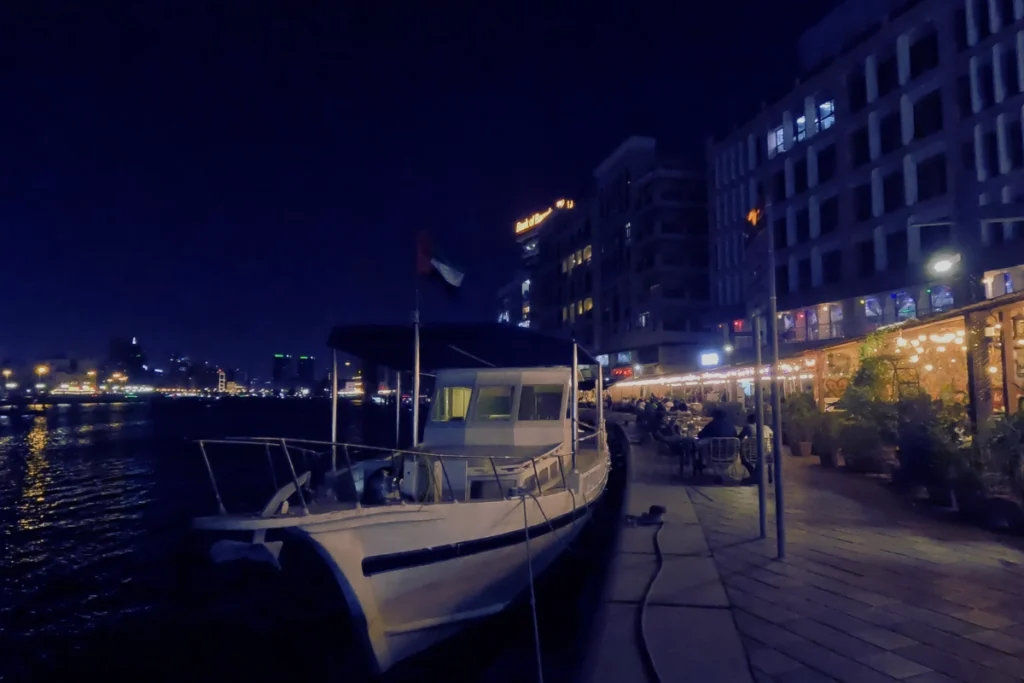
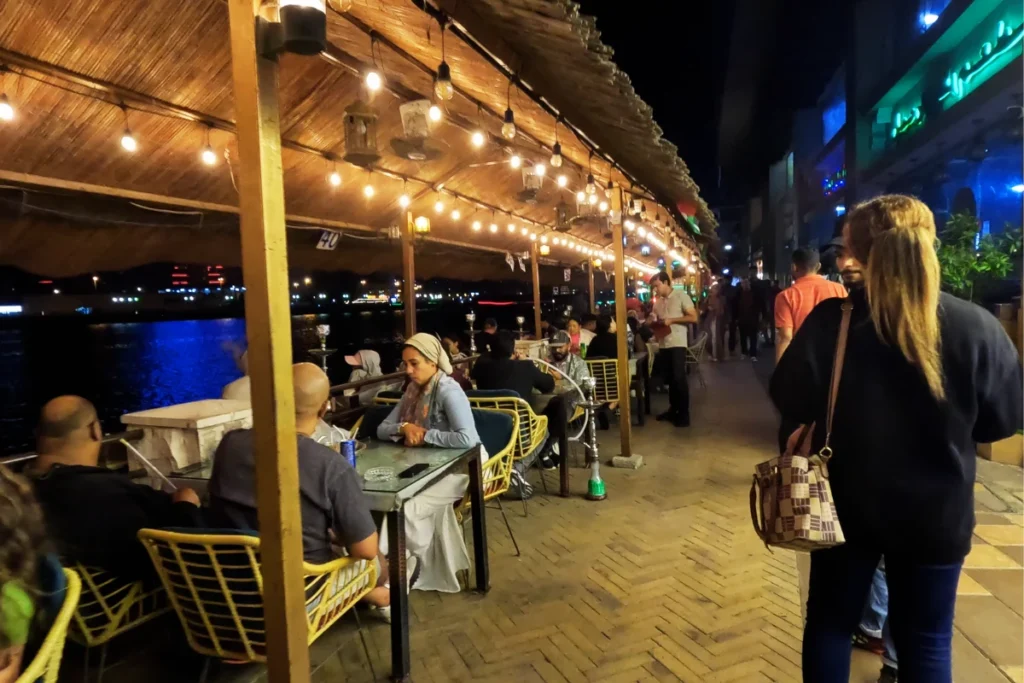
On the evening of our second wedding anniversary, we walked through the Bur Dubai Creek alleys.
This sounds like a romantic sentence. It was. But it was also something else. Akash had walked these exact alleys fifteen years earlier, at 18 years old, working in Dubai for roughly a year and a half, learning what it means to be young and far from home in a city that does not slow down for anyone. The restaurants were different then. The cafés were fewer. The crowds were thinner. The Creek smelled the same.
Returning to a place where you once lived is a different act from visiting a place for the first time. The eyes are doing two things simultaneously: seeing what is there now and remembering what was there before. The alleys near the Creek had more people, more shops, more polish. But the particular quality of Bur Dubai at dusk…the warm light from small restaurants, the sound of multiple languages overlapping, the specific energy of a neighbourhood where people from dozens of countries share the same narrow streets…had not changed.
Sumana was seeing it for the first time. The anniversary walk was two versions of the same place, experienced simultaneously: the nostalgic and the new. Old Dubai provides this without trying. It is the part of the city where the past has not been demolished to make room for the future.
This old Dubai walking guide covers the walkable Old Dubai corridor: Al Fahidi, the Creek, the abra crossing, Bur Dubai’s food streets, and the Deira souks. It is written from the perspective of someone who lived here and someone who visited, which is, conveniently, us.
“They will tell you that Dubai was built yesterday out of steel, glass, and ambition. But if you stand on the edge of the Creek at dusk, you can still smell the saltwater and the old wood of a city that was built by hand, trade, and tides long before the towers arrived.”
- What Is Old Dubai?
- Al Fahidi: Where Dubai Remembers Itself
- The Creek and the One-Dirham Crossing
- Bur Dubai: Where We Stayed, Where We Ate, Where the Memories Were
- Deira: The Gold Souk and the World Record Ring
- How to Walk Old Dubai in a Day
- Why Old Dubai Is the Better Base
- What It Costs
- Frequently Asked Questions
What Is Old Dubai?
Old Dubai is the historical core of the city, concentrated along both banks of the Dubai Creek, the saltwater inlet that originally made Dubai a trading port. The south bank is Bur Dubai. The north bank is Deira. The Creek runs between them, and the abra (traditional wooden water taxi) has connected the two sides for over a century.
Modern Dubai…the Marina, Downtown, JBR, the Palm…exists because oil money and ambition built a new city from sand. Old Dubai exists because trade built a city from water. The Creek was the original reason Dubai mattered: dhows loaded with spices, textiles, gold, and pearls moved through here for centuries before the Burj Khalifa was a concept.
The walking distance from Al Fahidi Historical Neighbourhood to the Deira Gold Souk, including the Creek crossing, is approximately 5-6 km (accounting for market wandering). The entire Old Dubai corridor is compact enough to explore on foot in a single day. The depth requires more than a single pass.
Al Fahidi: Where Dubai Remembers Itself
The Al Fahidi Historical Neighbourhood is the oldest surviving residential district in Dubai. The wind-tower houses, built from coral stone and gypsum, date from the late 19th and early 20th centuries. The wind towers are not decorative. They are an early air conditioning system: the tower catches the breeze above the roofline and channels it downward through the house, cooling the interior without electricity.
The district has been restored and repurposed. The narrow, sandy lanes between the wind-tower houses now hold small art galleries, cultural centres, the Coffee Museum, and the XVA Gallery, which operates as both an art space and a boutique hotel. The Dubai Museum, housed inside the Al Fahidi Fort (the oldest existing structure in Dubai, built in 1787), sits at the neighbourhood’s edge.
Al Fahidi is quiet. Deliberately, architecturally quiet. The lanes are too narrow for cars. The walls absorb the ambient noise of the surrounding city. Walking through Al Fahidi in the late afternoon, when the light turns the coral stone amber and the shadows lengthen between the towers, is the closest Dubai comes to feeling old in the way that Mardin’s stone streets or Istanbul’s Balat feel old. The difference is that those cities are old by accident and age. Al Fahidi is old by preservation and intention.
The neighbourhood is small. Thirty minutes of walking covers the physical space. The mood it creates lasts longer.
The Creek and the One-Dirham Crossing
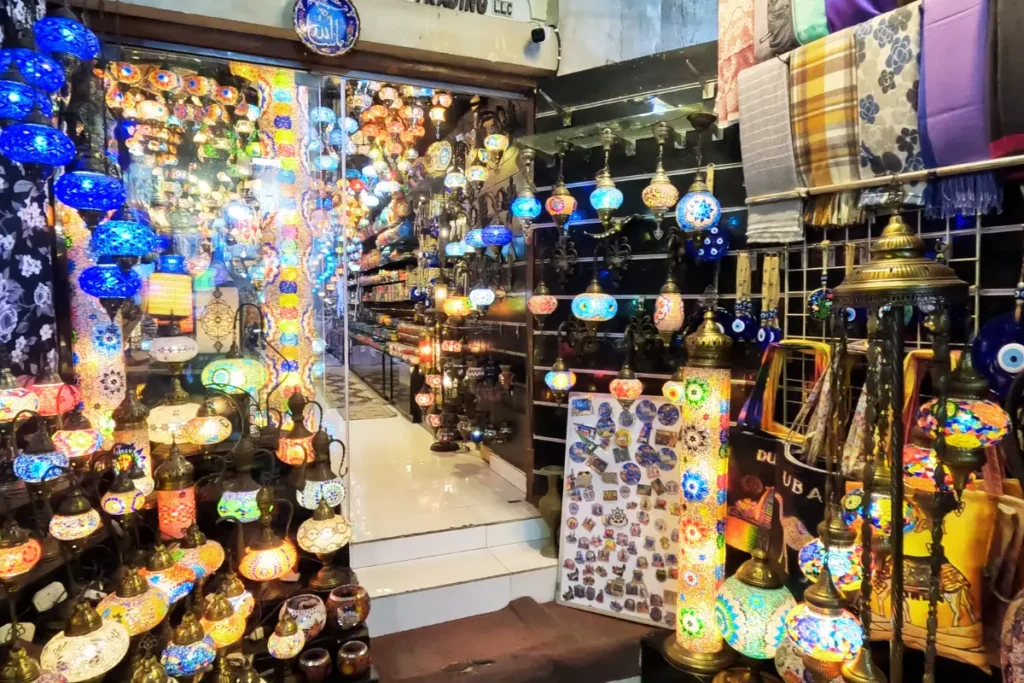
From Al Fahidi, the Creek is a five-minute walk east. The waterfront promenade runs along the Bur Dubai bank, past the Heritage Village and the old dhow wharfage, where traditional wooden trading vessels still dock with cargo from Iran, Pakistan, and the wider Gulf.
The abra crossing is the most democratic transport experience in Dubai. AED 1. Approximately INR 23. You step onto a wooden boat. The boat fills with workers, tourists, families, and traders. The crossing takes approximately five minutes. The Creek slides beneath you. The Deira skyline approaches. The wind carries the smell of the water and the sound of other abras making the same crossing in both directions.
The abra has been running this route since before the skyscrapers existed. It is the oldest continuously operating public transport in the city. Using it is not a tourist experience. It is a commuter experience that tourists happen to share. The distinction matters. This is not a cruise with commentary. It is a crossing with purpose.
The Bur Dubai Abra Station and the Deira Old Souk Abra Station are the two primary crossing points. Either one works. The route is short, the frequency is constant (boats leave every few minutes throughout the day), and the cost makes it the cheapest way to cross the waterway that historically separated two distinct trading communities.
“AED 1. Five minutes. The oldest continuously operating public transport in Dubai. A wooden boat that has been making this crossing since before the skyscrapers on either bank had been imagined. It is not a tourist experience. It is a crossing with purpose.”
Bur Dubai: Where We Stayed, Where We Ate, Where the Memories Were
We based ourselves in Bur Dubai for the entire five-day Dubai trip. The Orchid Vue Hotel near Burjuman Mall. AED 1,208 for four nights / INR 27,311 / USD 288. The decision to stay here rather than the Marina or Downtown was the single most important budget decision of the trip.
The budget calculation is covered in detail in the couple travel budget article, but the summary: a comparable hotel in the Marina costs double. The food in Bur Dubai costs a third of what the same cuisine costs near Dubai Mall. The neighbourhood savings across five days, on accommodation and food combined, were probably INR 23,000 to 45,000.
But the budget is only part of the reason.
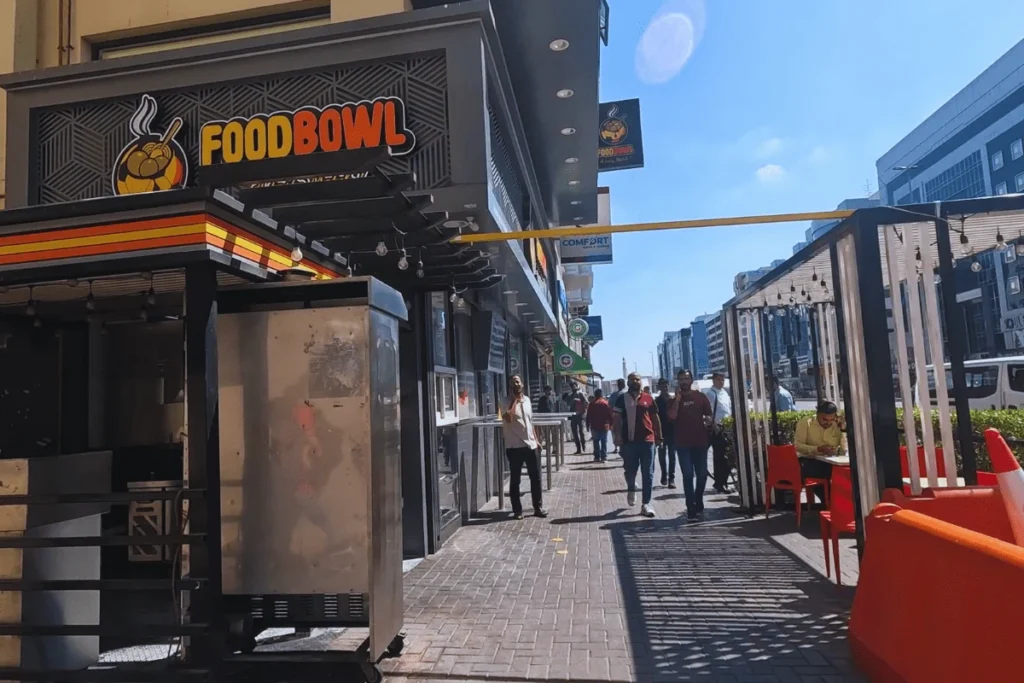
Bur Dubai is where Akash lived at 18. The Meena Bazaar area, the textile shops, the Indian and Pakistani restaurants, the narrow streets where Hindi, Urdu, Malayalam, and Arabic overlap: this was the daily landscape of a teenager working in a foreign country for the first time. Walking those streets at 18 produced a specific understanding: that the world is larger than Kolkata, that people leave home to build something, and that the small restaurants where common employees eat after their shifts are the most honest places in any city.
Walking the same streets fifteen years later, on an anniversary trip, with the person he married, produced a different understanding. The places where you once felt small can feel warm when you return with someone who makes you feel enough.
The Creek alleys on the evening of February 18th. The warm light. The crowds were larger than before. The cafés that were newer than before. The water smelled the same.
Where We Ate (Old Dubai vs. New Dubai)
| Restaurant | Location | Cost, Two People | What We Ate |
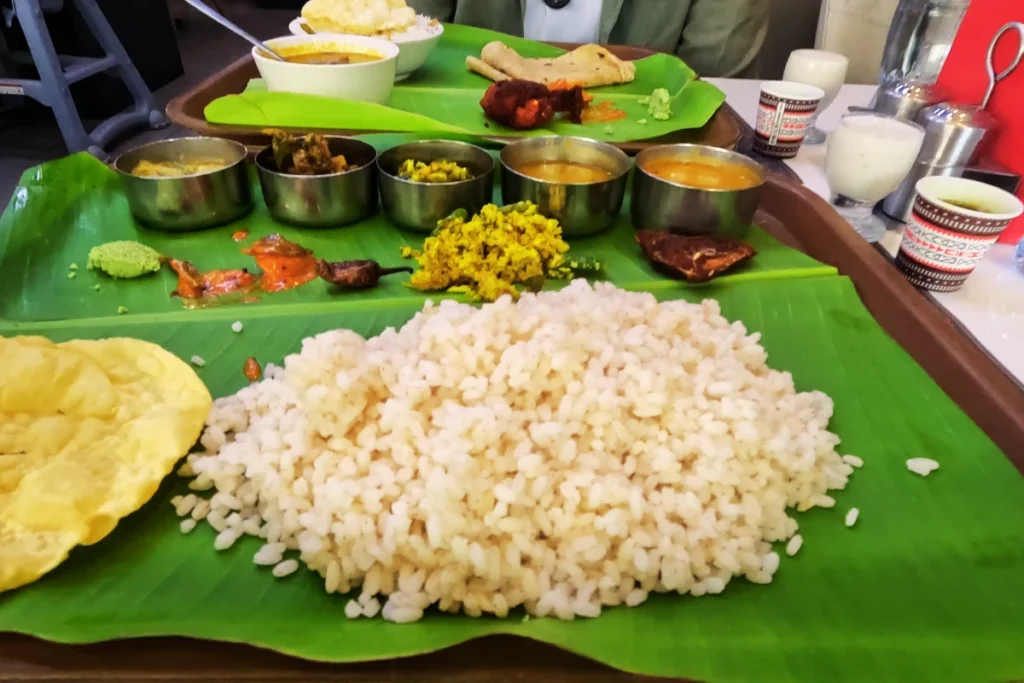
| Ushas Restaurant | Bur Dubai | AED 25.75 / INR 582 | South Indian thali, dinner |
| Ushas Restaurant | Bur Dubai | AED 30 / INR 679 | South Indian, lunch |
| Zaams Restaurant | Bur Dubai | AED 59.40 / INR 1,344 | Dinner, final evening |
| Panda Chinese | Dubai Mall food court | AED 80 / INR 1,810 | Chinese food, lunch |
The Ushas meals (AED 25 to 30 for two) and the Dubai Mall meal (AED 80 for two) tell the complete story of Old Dubai versus New Dubai pricing. The food quality at Ushas was equal to or better than the Dubai Mall food court. The price was one-third. The atmosphere was a neighbourhood restaurant where regulars eat, not a tourist food court where visitors pay for proximity to an aquarium.
Across the five days, we also ate Kerala thali, grilled chicken, Arabic Mandi, and mutton rogan josh at various Bur Dubai restaurants, all at prices that would be considered affordable even by Bengaluru standards. Old Dubai’s food scene is built for the workers and residents who live here. The prices reflect that economy. The quality reflects generations of cooks who have been feeding people from the subcontinent for decades.
Deira: The Gold Souk and the World Record Ring
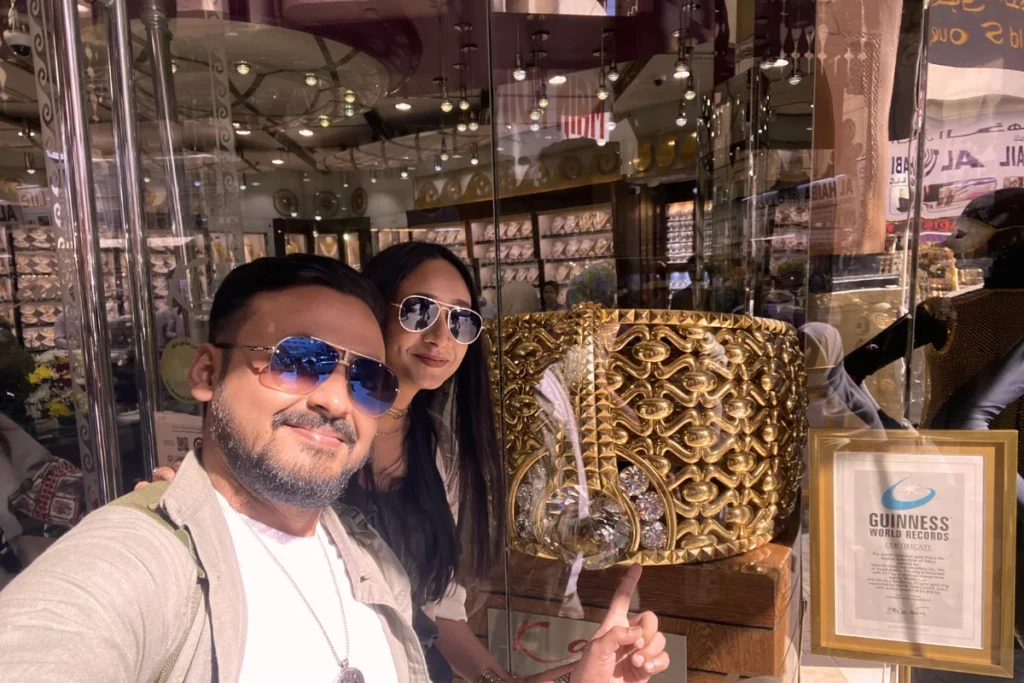
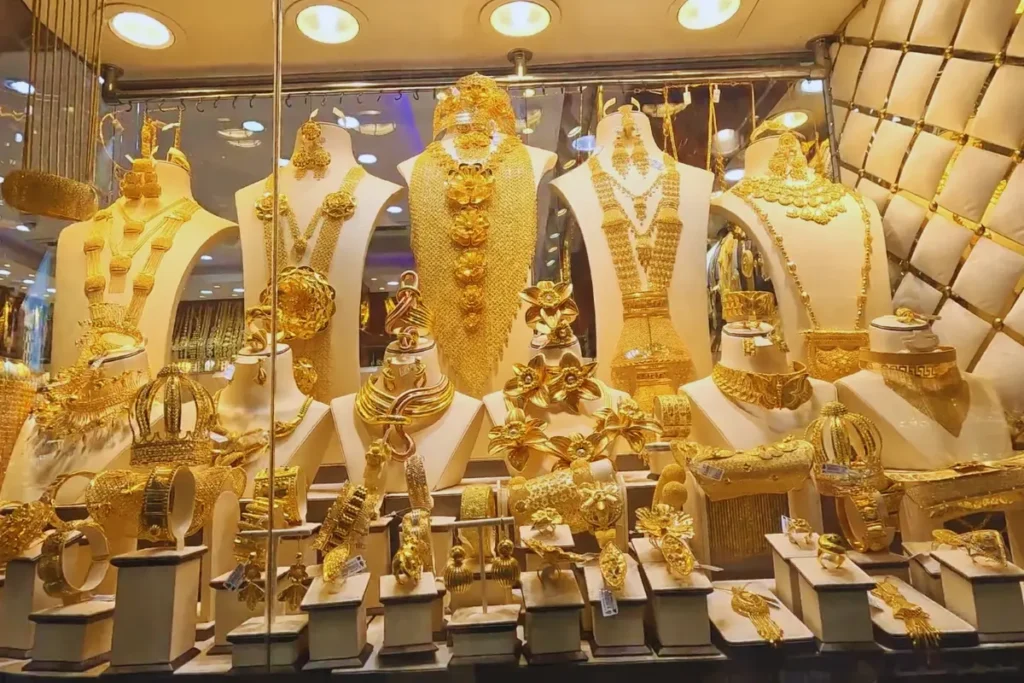
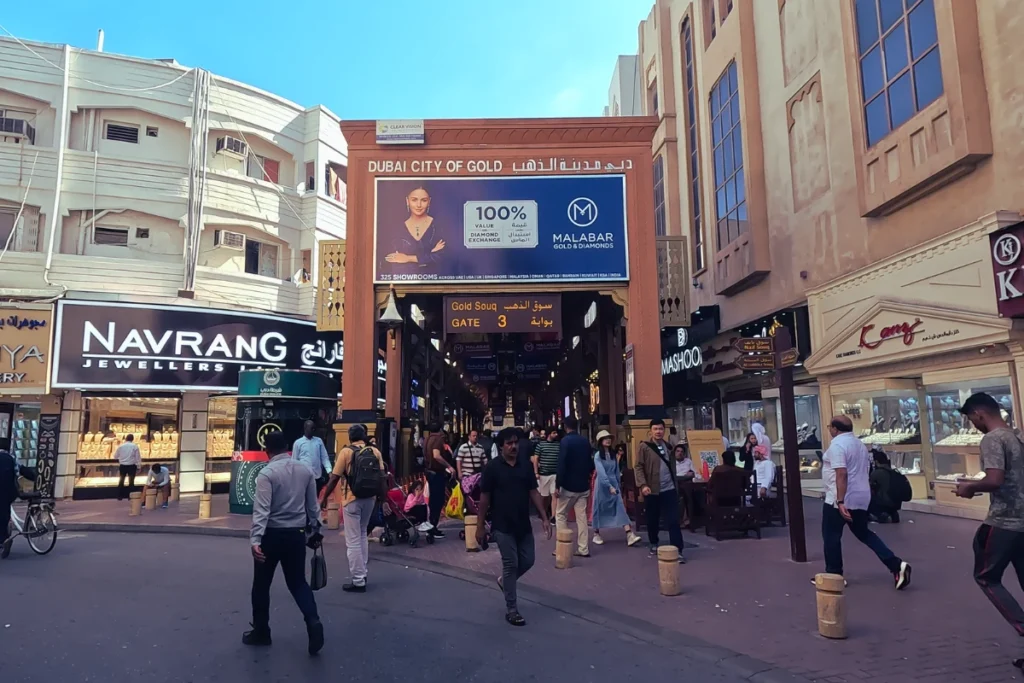
While you can easily walk this part, on Day 4 we opted to take a direct taxi straight to the Deira Gold Souk (AED 40 to 45).
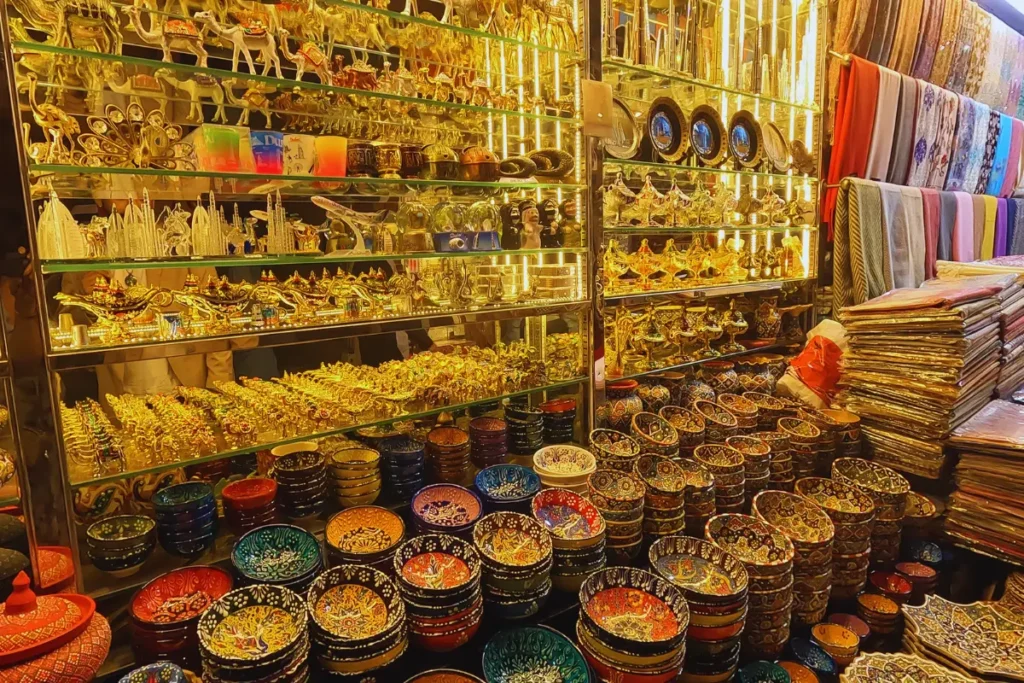
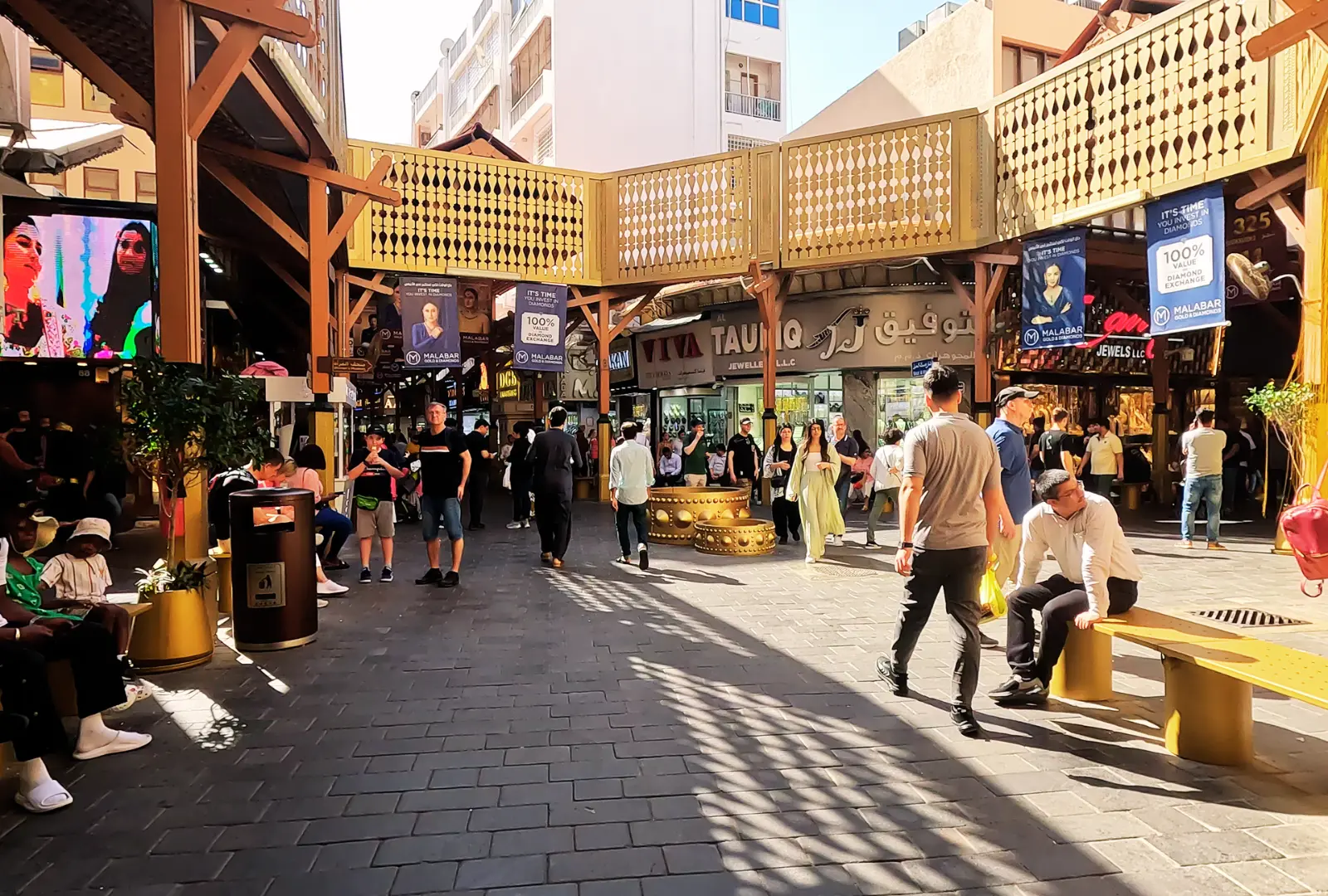
The Gold Souk is a covered market with approximately 300 shops selling gold jewellery, diamonds, precious stones, and watches. The density of gold per square metre is unlike anything either of us had seen. Shop windows filled with necklaces, bangles, rings, earrings, and ornamental pieces so large they seem designed for display rather than wear.
Sumana was overwhelmed. That is the accurate word. The sheer volume of gold, the variety of designs spanning Indian, Arabic, European, and fusion styles, the weight of the pieces visible through the glass, produced a specific wide-eyed absorption that required no commentary. She looked. She pointed. She looked more. We did not buy anything. The looking was the experience.
The souk holds the world’s largest gold ring, a Guinness World Record holder. We saw it. It is enormous. It exists to demonstrate what is possible, not what is practical.
Shopping note: gold prices in Dubai are competitive because the city charges no import duty on gold. The price you see is based on the daily international gold rate plus a making charge that varies by design and shop. Negotiation is expected on the making charge, not on the gold rate itself. Compare the total price against your home market before purchasing.
The Spice Souk, a short walk from the Gold Souk, operates on a smaller scale with the same sensory intensity: sacks of saffron, cardamom, dried fruits, frankincense, and spice blends stacked in open shopfronts. The smell arrives before the visual, which is the correct order for a spice market.
“The Deira Gold Souk is the one place in Dubai where standing still costs nothing and gives you something no other purchase in the city can. It does not need a buyer. It only needs someone who looks long enough to understand the scale of what has been put on display.”
How to Walk Old Dubai in a Day
A suggested route based on how the geography flows:
- Start at Al Fahidi Historical Neighbourhood, late morning. Walk the lanes. Enter the Coffee Museum or the XVA Gallery if they interest you. Allow 30 to 45 minutes.
- Walk east to the Creek waterfront. Turn left (north) along the promenade. Pass the Heritage Village. Reach the Bur Dubai Abra Station. Take the abra across (AED 1, five minutes).
- Arrive at Deira Old Souk station. Walk through the Deira Old Souk (textiles, household goods, everyday commerce). Continue north to the Gold Souk. Allow 30 to 60 minutes depending on your tolerance for gold-induced absorption.
- Walk east from the Gold Souk to the Spice Souk. Allow 15 to 20 minutes.
- Return by abra to Bur Dubai. Walk south through the Meena Bazaar and textile shops toward your hotel. Stop for a South Indian thali or Arabic Mandi at any restaurant that has a queue of workers outside it. The queue is the only quality signal you need.
Total walking distance: approximately 5 to 6 km. Total time: 3 to 5 hours depending on pace and stops. Total cost: AED 2 in abra crossings, plus food.
Why Old Dubai Is the Better Base
The Marina has the towers. Downtown has the Burj Khalifa. JBR has the beach. Old Dubai has the city that existed before any of those were imagined.
Staying in Bur Dubai provides three things the modern districts do not.
Food at resident prices. A full dinner for two at Ushas: AED 25.75. A full dinner for two near Dubai Mall: AED 80 to 120. Across five days, this difference compounds.
Walking access to history. Al Fahidi, the Creek, the abra, the souks: all of this is walkable from a Bur Dubai hotel. From the Marina, these require a 30-minute taxi.
The feeling of a city rather than a resort. Old Dubai has residents. It has routines. It has the specific energy of a neighbourhood where people live and work, not just visit. The Marina is spectacular. It feels like a destination. Old Dubai feels like a place.
We stayed in Bur Dubai and took taxis to the modern attractions when we wanted them. The commute added 20 to 30 minutes each way but saved enough money to fund the Burj Khalifa, the Museum of the Future, and the Palm Jumeirah view. The complete Dubai itinerary covers all five days.
What It Costs
| Item | Cost |
| Orchid Vue Hotel, Bur Dubai, 4 nights | AED 1,208 / INR 27,311 / USD 288 |
| Abra crossing, per person, one way | AED 1 / INR 23 |
| Dinner, Ushas Restaurant (two people) | AED 25.75 / INR 582 |
| Lunch, Ushas Restaurant (two people) | AED 30 / INR 679 |
| Dinner, Zaams Restaurant (two people) | AED 59.40 / INR 1,344 |
| Taxi, Orchid Vue Hotel to Deira Gold Souk | AED 40 to 45 / INR 905 to 1,018 |
| Gold Souk entry | Free |
| Spice Souk entry | Free |
| Al Fahidi Historical Neighbourhood | Free |
| Heritage Village | Free |
Old Dubai’s primary attractions are free. A full day of exploration, including two abra crossings, both souks, and a South Indian lunch, costs less than AED 50 / INR 1,130 for two people. This is less than a single taxi ride from the Marina to Downtown.
“We went back to the Marina on our final night to watch the neon lights bounce off the superyachts, and it was spectacular. But as we packed our bags, we realised that the glittering skyline is just what Dubai shows to the world. Old Dubai…with its one-dirham boats, its crowded spice lanes, and its quiet stone wind towers…is the part of the city that actually keeps its soul.”