
This slow travel philosophy guide is built from twelve articles across four countries…and from every midnight departure, wrong turn, and unplanned hour that made those articles possible.
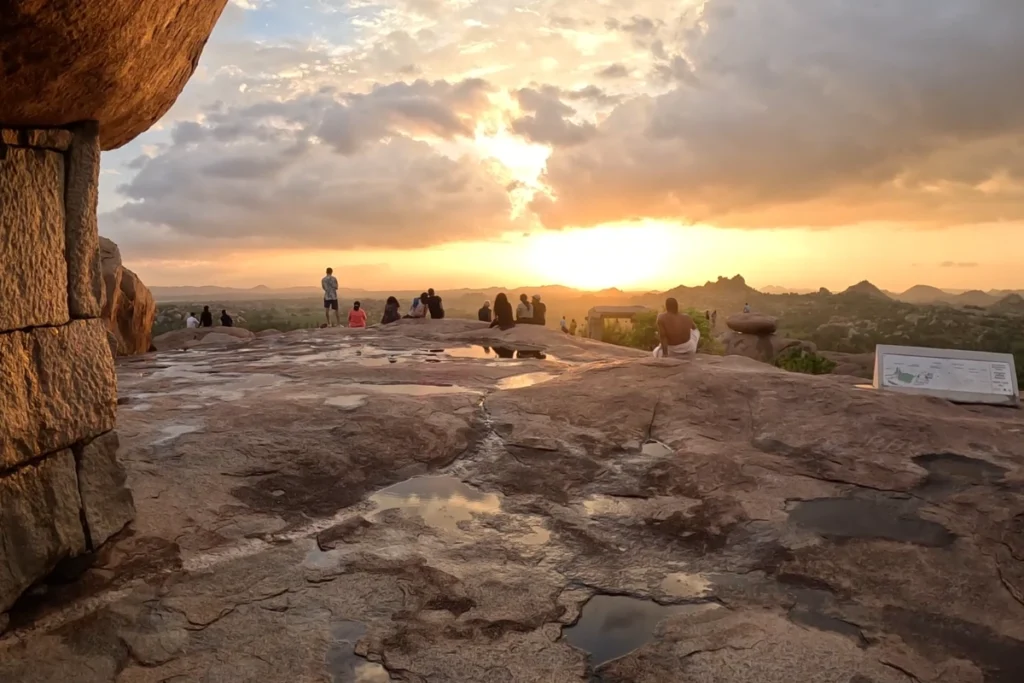
By the third morning in Hampi, we had stopped setting alarms.
We did not plan this. We did not wake up on Day 3 and announce a change of strategy. What happened was simpler: the place had taken over the schedule. The temples were not going anywhere. The boulders had been there for hundreds of millions of years. The sunrise did not require a reservation. And we were tired of starting each day by telling our phones what time to interrupt our sleep.
So we stopped. We woke when we woke. We walked in whatever direction the light suggested. We ate when we found food. We sat when the view asked us to sit. Five days in Hampi produced more lasting memories than most of our ten-day trips, and the memories that stayed longest were not the ones we planned. They were the ones that happened while we were not planning anything.
This is not a manifesto. We do not believe slow travel is morally superior to any other kind. We know people who have done fourteen countries in three weeks and come home buzzing with the specific energy of having seen a lot of the world quickly. That is a legitimate way to travel. It is simply not ours.
What follows is the version of travel that works for us, explained through specific moments across four countries, with the honest admission that we did not arrive at this philosophy through wisdom. We arrived at it through exhaustion, budget constraints, and the repeated discovery that the best things on our trips happened when the itinerary had broken down.
“We did not arrive at slow travel through wisdom. We arrived at it through exhaustion, budget constraints, and the repeated discovery that the best things on our trips happened when the itinerary had broken down.”
What Checklist Travel Looks Like
We know it well because we have done it.
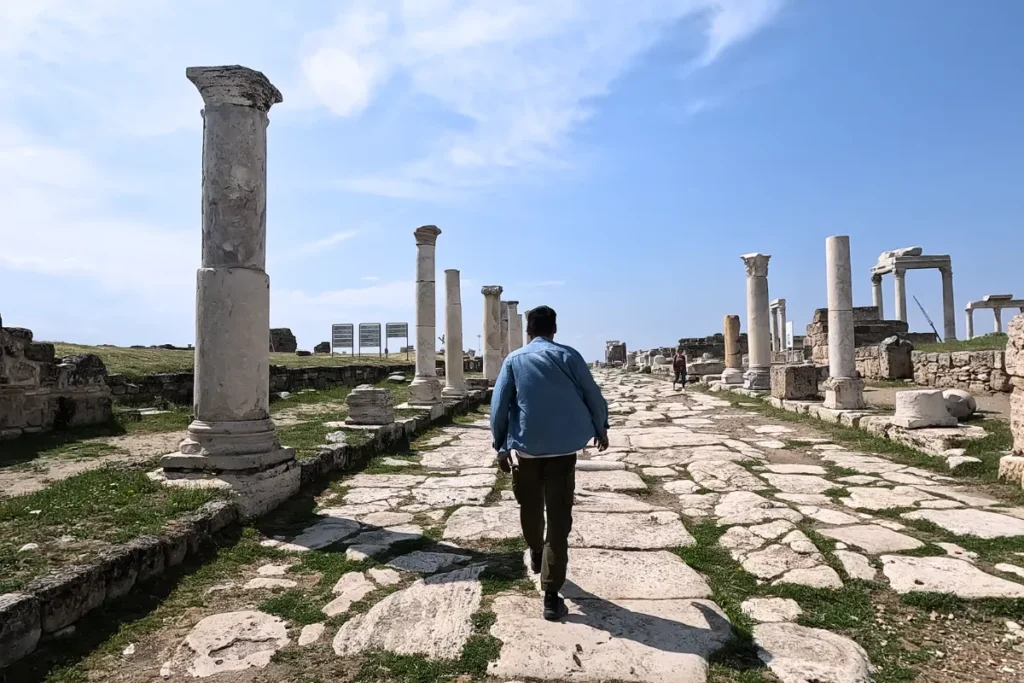
The version where you print the itinerary, time-block the temples, calculate the driving distances, and spend the trip executing a plan rather than inhabiting a place. The version where you arrive at a site, take the photographs, confirm you have seen it, and move to the next. The version where the question at the end of the trip is “Did we do everything?” rather than “Did we feel anything?”
Checklist travel is efficient. It maximises the number of sites per day. It works particularly well in expensive destinations where every additional night costs money. It produces excellent photograph collections. It is the default mode of most travellers, and the travel industry is built to serve it.
At Zelve Open Air Museum in Cappadocia, a tour group arrived, walked the main path, took photographs at the viewpoint, and left within sixty minutes. We spent three hours wandering through the abandoned cave villages, entering churches with soot-blackened ceilings, crawling through tunnels connecting the three valleys, and sitting in the shade eating dry snacks for lunch. We saw things in the third hour that the first hour did not reveal.
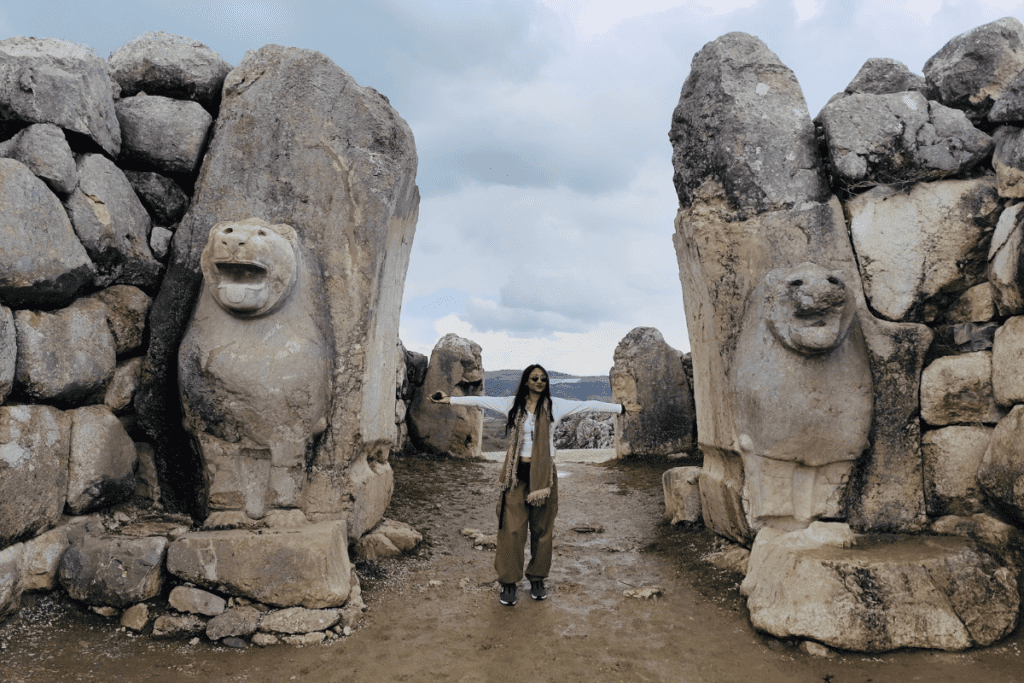
At Hattusa, we were the only visitors for most of the afternoon. The site is not on any standard Turkey tour. The tour buses go to Cappadocia, to Ephesus, to Pamukkale. Hattusa…which holds a 3,400-year-old tablet naming our own Vedic gods and a green stone possibly gifted by an Egyptian pharaoh…receives a fraction of those visitors. It is one of the most significant archaeological sites in the world. It is also one of the quietest.
The checklist does not include Hattusa because the checklist was not designed for depth. It was designed for coverage.
What We Actually Do
Our habits formed over years, not through a single decision. They are practical responses to real constraints: limited leave from work, a budget that requires creativity, and the rhythm of two people who have discovered that their best travel days are the ones with the least structure.
We leave at midnight.
Almost every road trip we have taken in India starts between 11 PM and 1 AM. The logic is practical: Indian highways between midnight and dawn are a different country. Fewer vehicles, cooler air, faster progress. By sunrise, we have covered what daytime traffic would stretch into an all-day ordeal. The midnight departure buys us daylight at the destination rather than daylight on the highway.
We drive ourselves.
In India, our own car. In Turkey, a rented vehicle. In Egypt, a pre-arranged driver. The self-drive principle is about control over time. When you drive yourself, you stop when you want. You stay longer when something holds you. You leave early when it does not. A tour bus cannot accommodate the sunflower field that appeared between Hampi and Badami…not on any itinerary, not on any map…that held us for twenty minutes we have never regretted.
We cook our own food.
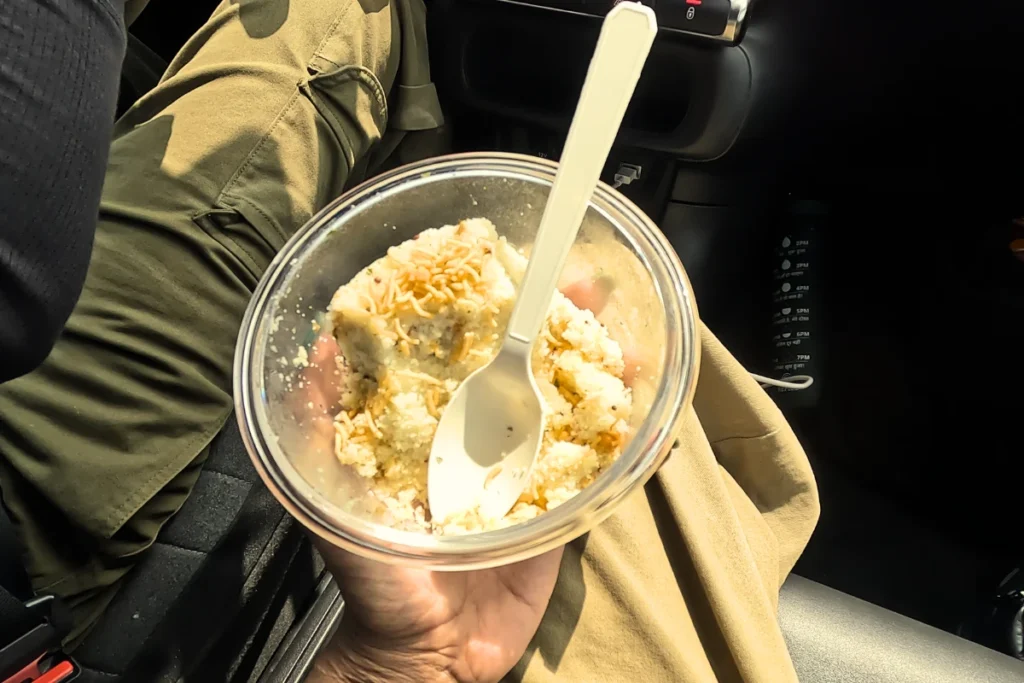
Not always. Not exclusively. But frequently enough that it has become a defining feature of how we travel. In Turkey, we brought instant poha, Maggi, oats, and vermicelli from India. We bought bread, eggs, and basics from local markets. We cooked breakfast in hotel rooms and sometimes dinner. In Cappadocia, where restaurant prices are built for tourist budgets, cooking saved us tens of thousands of rupees across four nights. In Denizli, we made khichri and boiled eggs the night before Pamukkale. In Konya, we ate at a local restaurant for the first time in days and felt the pleasure of it precisely because it was an exception rather than the routine.
Cooking is a budget strategy. It is also a time strategy. When you eat in the room, you do not spend forty-five minutes choosing, ordering, waiting. You eat simply, you rest, and you give the hours to the place rather than to the logistics of feeding yourself.
We stay longer than the guidebook suggests.
One day in Hampi is what most tour packages allocate. We stayed five. One day in Cappadocia is the balloon-and-leave version. We stayed four. One day in Mardin is the standard. We wished we had two. The extra days are not about seeing more sites. They are about seeing the same sites differently. The Vittala Temple on Day 1, exhausted from the overnight drive, is a different experience from the Vittala Temple on Day 4…rested, unhurried, and familiar enough with the landscape to notice what we missed the first time.
We follow disappointments.
Our Dubai trip was born from a 3 AM conversation after a friend’s wedding fell through. Our Turkey trip was born from a Netflix show we stumbled onto by accident. Some of our best decisions started as something going wrong. Slow travel requires a willingness to follow the redirect rather than insisting on the original plan.
“When you arrive somewhere exhausted and leave before it has settled, you see the surface. When you stay until the alarm stops mattering, the place starts showing you something the surface was hiding.”
The Moments That Only Happen When You Stay
The philosophy is abstract. The moments are specific.
The elephant in Bandipur. On our first road trip to the Nilgiris, our GPS route passed through the forest. An elephant crossed the road. Our schedule, already 6 hours behind plan, stopped mattering. The elephant did not know or care that we were running late. The photograph, taken through the windshield, is one of our most treasured from that trip.
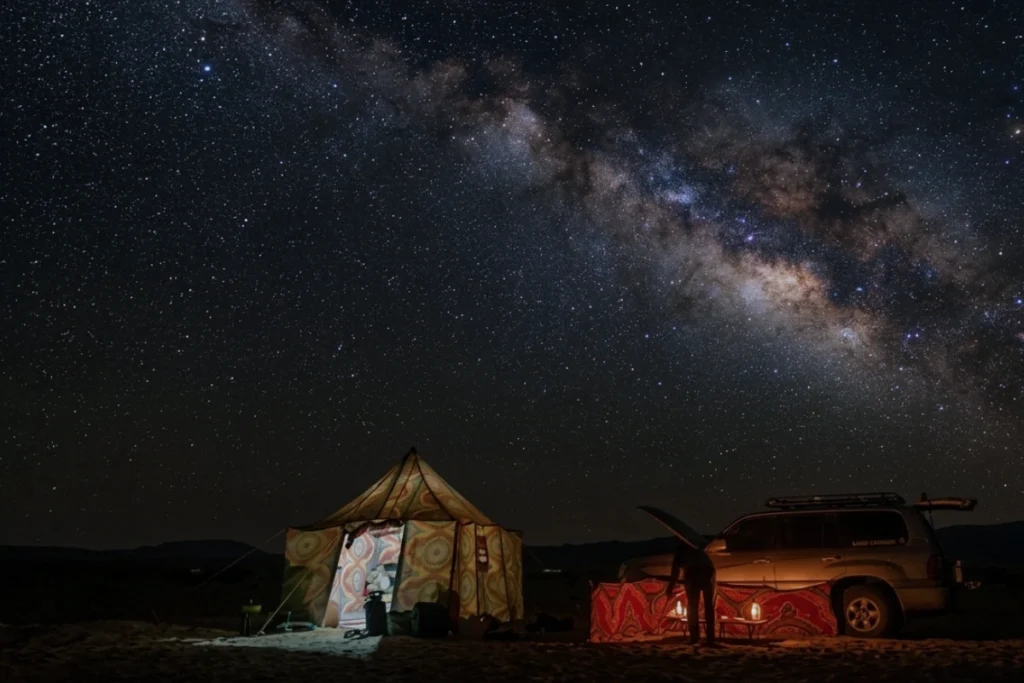
The White Desert sky. The overnight desert camping in Egypt exists only because we chose the 2-day safari package. The sky at 2 AM in the Sahara, with zero light pollution and the Milky Way as a physical presence rather than a suggestion.
The morning Nile. The sleeper train from Cairo to Aswan costs the same as the domestic flight. The flight gives you Aswan in ninety minutes. The train gives you a morning where the Nile appears outside the cabin window, wide and unhurried, looking exactly like the photographs you never believed were real. We chose the train because we had time. The time gave us the morning.
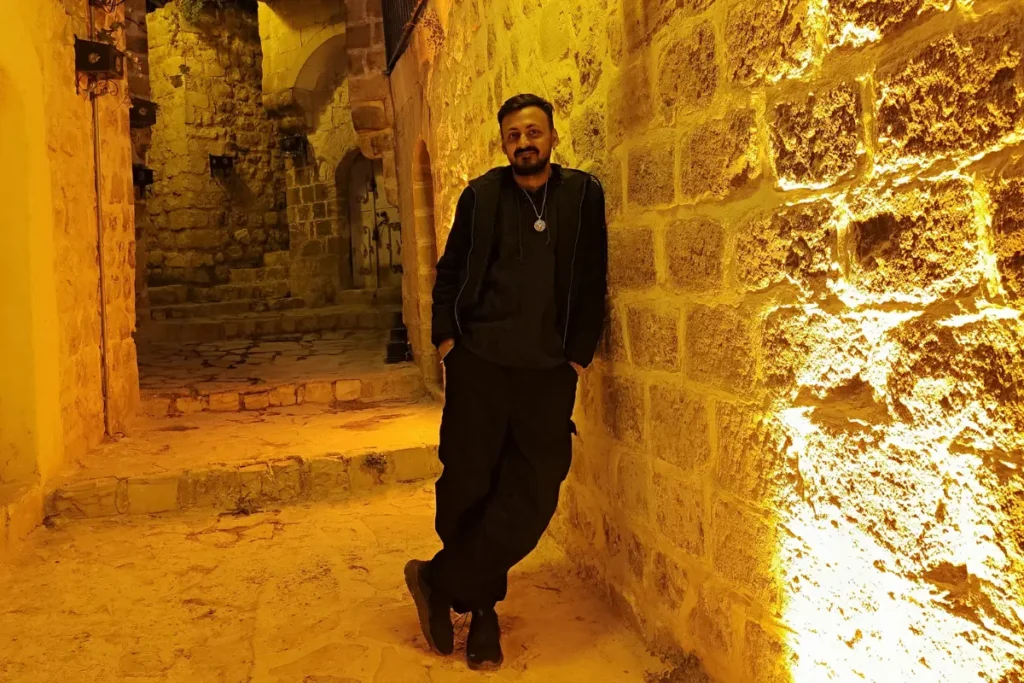
The Bur Dubai alleys. Akash lived in Dubai at 18, walking those Creek alleys, eating at those restaurants, learning what it means to be young and far from home. Returning fifteen years later, the decision to base ourselves in Bur Dubai rather than the Marina was a slow travel decision. The Marina is spectacular. Bur Dubai has memory. We chose memory.
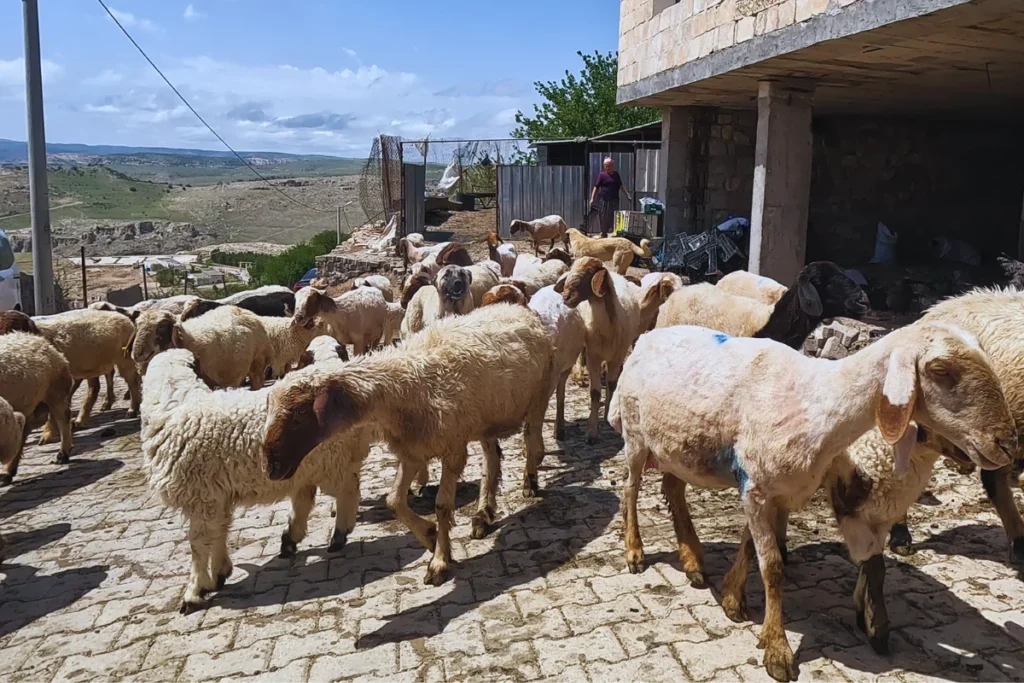
Getting lost near Acıgöl. In Cappadocia, we drove toward the mountain hoping for snow. The GPS led us into the middle of a farming village. No snow. No view. But the village roads, the quiet, the completely unplanned encounter with a place no package tour would ever visit, became its own kind of experience. The wrong turn was the trip happening.
The rain at Hattusa. It rained all afternoon while we explored the Hittite capital. The rain kept other visitors away. We had the Lion Gate, the Postern Tunnel, and the Green Wish Stone largely to ourselves. The rain made the stone darker and more atmospheric. What could have been a frustration became the backdrop for one of the most significant historical experiences of our lives.
None of these were on any itinerary. All of them required margin…the margin of extra hours, extra days, wrong turns, and the willingness to treat the unplanned as a feature rather than a failure.
The Budget Case
Slow travel is often presented as a luxury. Stay longer, spend more. In our experience, it’s the opposite.
Staying longer in cheaper accommodation costs less per day than staying shorter in expensive accommodation. Cooking meals from market supplies costs a fraction of eating at tourist restaurants. Driving yourself costs less than booking organised tours. Visiting lesser-known sites like Hattusa, Dara, Karahan Tepe…costs less in entrance fees than the major commercial attractions.
Our total trip to Turkey lasted 17 days, but we spent 14 of those days on an epic self-drive road trip in Turkey…covering 4,150 km and exploring more than a dozen archaeological sites. For two people, it cost approximately INR 3,00,000, excluding personal expenses. By comparison, a standard 7-day Turkey package covering only Istanbul and Cappadocia would cost a similar amount. But that package comes without the car, without the eastern sites, and without the freedom to stop for a sunset or a wrong turn.
Slow travel is not the expensive version. It is the version where you trade money for time, and discover that time buys better experiences than money does.
Three Practical Changes
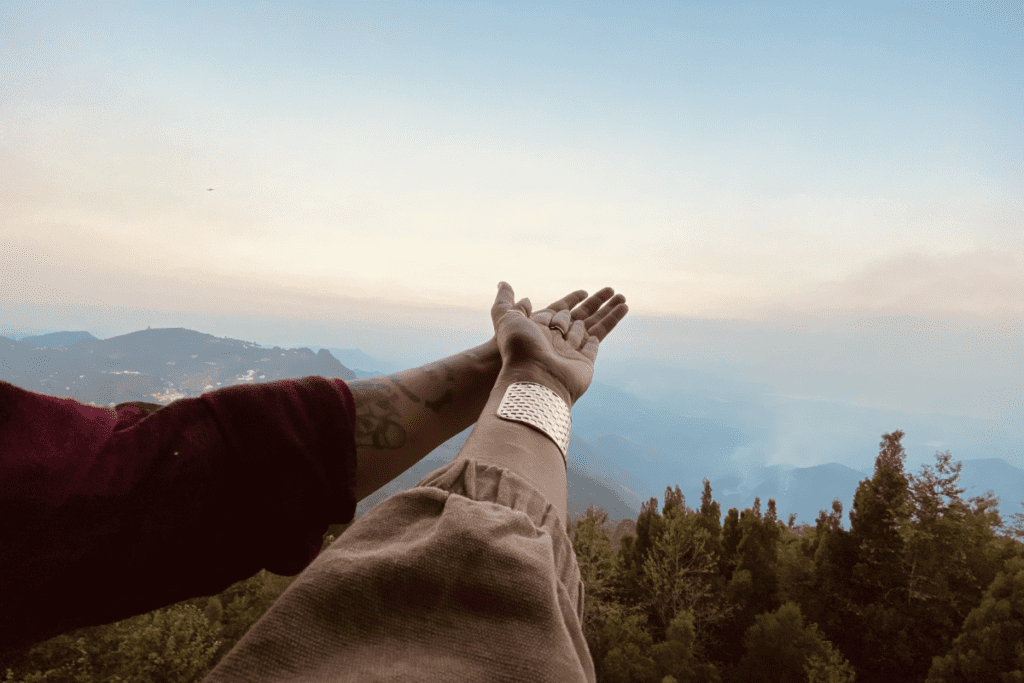
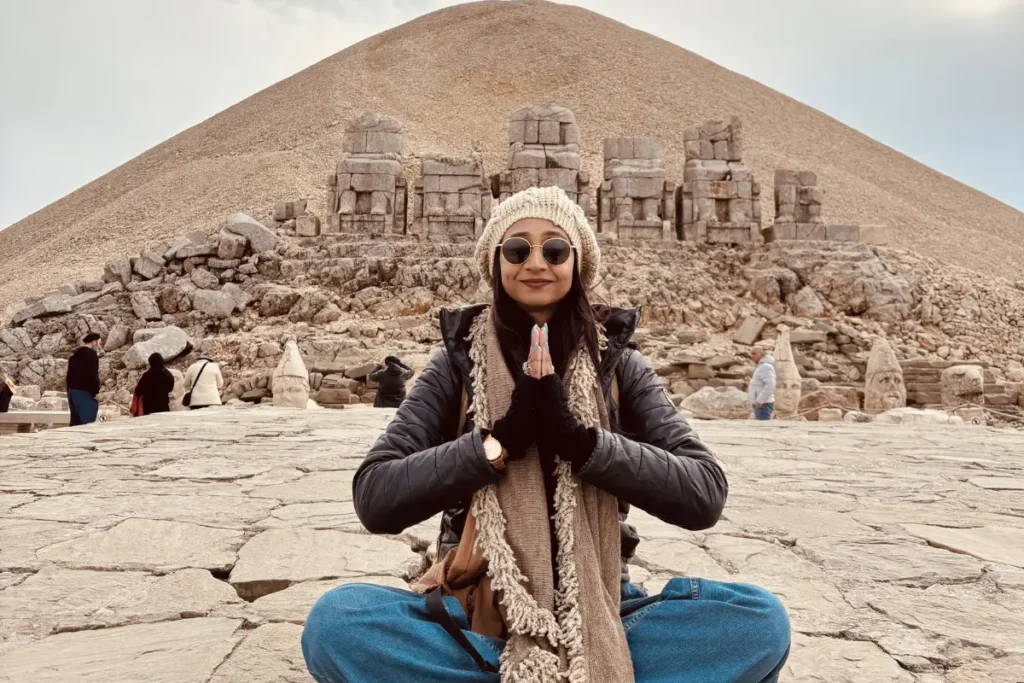
If you have traveled primarily on tight itineraries, the shift to slow travel does not require a philosophical conversion. It requires three changes.
- Add one extra day to your next trip. Not to add another site. To add nothing. One day with no itinerary, no alarm, no plan. Walk. Sit. Follow whatever direction interests you. That day will either reveal something about the place that the structured days missed, or it will confirm that you prefer structure. Both outcomes are useful.
- Cook one meal instead of eating out. Buy bread and eggs from a local market. Eat in the room. Notice how the rhythm of the evening changes when you are not searching for a restaurant. The money you save reduces the pressure on the next day. Reduced pressure changes what you notice.
- Drive yourself if you can. Rent a car. The independence changes the experience at a fundamental level. You stop when you want. You go where you want. You discover the sunflower field, the empty site, the village road the tour bus would never take.
These are not commitments. They are experiments. If they produce nothing, return to the itinerary. If they produce the kind of moments we have described across our articles and multiple countries, you will know.
What Slow Travel Is Not
It is not a judgement on anyone else’s trip. People who see twelve cities in two weeks are not doing it wrong. They are doing it differently. Travel is personal. The pace that works for one couple produces anxiety in another.
It is not laziness disguised as philosophy. Our Turkey trip covered 4,150 km in 14 days. We explored every gallery of every museum, walked every metre of every archaeological site, and drove through mountain passes at night where loose rock fell from the cliffs above. Slow travel is not about doing less. It is about doing fewer things more completely.
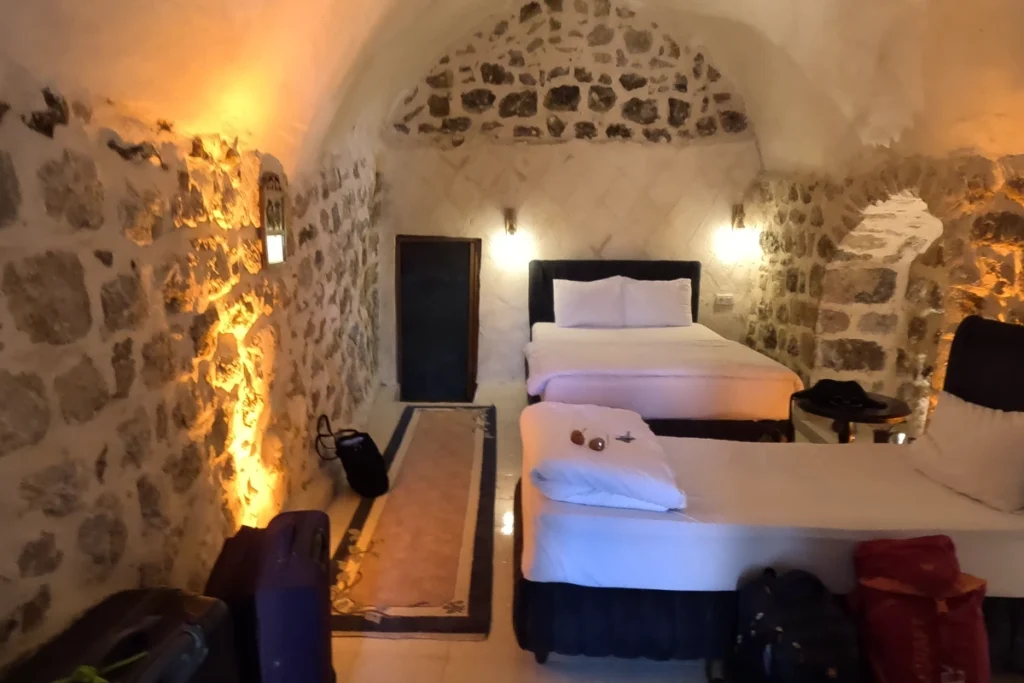
It is not an Instagram aesthetic. The carefully staged café photograph with the latte and the journal is not what we are describing. We are describing sleeping on a small tent on the sand, eating poha in a moving car, cooking Maggi in a cave hotel, and standing in the rain at a Hittite capital because the rain was not going to stop us and neither was the schedule.
Slow travel is the practice of giving a place enough time to show you what it actually is rather than what you expected it to be. The expectation is the itinerary. What the place actually is becomes visible only after the itinerary breaks down and you are still there.
“Give a place enough time and it shows you what it actually is. The itinerary shows you what you expected. Both are useful. Only one is memorable.”