Planning a trip to Turkey’s fairytale landscape comes down to one crucial decision: finding the best time to visit Cappadocia. Whether you want to watch hot air balloons float over fairy chimneys, hike through colourful valleys, or secure great cave hotel deals, picking the right month makes all the difference. Here is your honest, month-by-month guide to timing your visit perfectly.
There is no perfect month for Cappadocia. There is the month that matches what you want from the trip, and then there is the month that matches what everyone else wants from the trip, and the distance between those two months is usually the distance between a quiet valley walk and a queue at the balloon launch site that extends further than the balloon will fly.
We visited in April. Late April. Four nights in Göreme. The mornings were cold enough that watching the balloons from the hotel rooftop in pyjamas required a speed of tea consumption that bordered on medical. The afternoons were warm enough for valley walks in a t-shirt. The evenings were cool enough to justify the jacket and the second cup of tea. The crowds were present but not oppressive. The prices were building toward peak but had not peaked.
April was good. April was not the only good option. Here is every month, honestly.
“There is no universally perfect month for Cappadocia… only the month that aligns with your tolerance for cold mornings, crowd sizes, and the statistical gamble of a balloon flight.”
The Month-by-Month
January and February: The Snow Version
Temperature: -5°C to 5°C. Genuine cold. The kind where your phone battery drains faster than your enthusiasm, which is saying something because your enthusiasm at -5°C is already operating at reduced capacity.
What you get: Snow on the fairy chimneys. This is the photograph that Cappadocia’s winter tourism campaign is built on, and it is genuinely stunning. White caps on the tuff formations, white ground between them, the entire landscape looking like a geological dessert that someone dusted with icing sugar. The underground cities are warmer than the surface, which makes Kaymaklı feel less like an archaeological visit and more like a strategic retreat from the weather.
What you lose: Balloon flights are frequently cancelled due to wind and snow. If the balloon is your non-negotiable, winter is a gamble. Valley walks are cold, potentially icy, and shorter because the daylight hours are limited. Restaurant and hotel options thin as some seasonal businesses close.
Crowds: Minimal. You may have the Göreme Open Air Museum nearly to yourself, which would have been unimaginable during our April visit.
Prices: Lowest of the year. Accommodation drops 30 to 50 percent from peak rates.
Verdict: The photographer’s month. If you want the snow-on-chimneys shot and can tolerate the cold and the balloon uncertainty, January or February delivers a Cappadocia that summer visitors never see.
March: The Transition
Temperature: 2°C to 12°C. Warming but not warm. The mornings still bite. The afternoons flirt with comfortable.
What you get: Fewer crowds than summer. Lower prices than peak. The landscape begins to green. Early wildflowers appear on the valley floors, which adds a colour layer to Love Valley and Red Valley that the summer brown cannot provide.
What you lose: Balloon cancellations remain higher than in the warmer months. Some days are warm. Some are winter revisiting for an encore.
Verdict: A gambler’s month. The rewards are real (quiet sites, emerging colour, honest prices). The risks are real (weather inconsistency, balloon cancellations). Pack for both seasons. Bring the jacket and the t-shirt and let the morning decide which one you wear.
April: What We Got
Temperature: 8°C to 18°C. Cold mornings. Pleasant afternoons. Cool evenings.
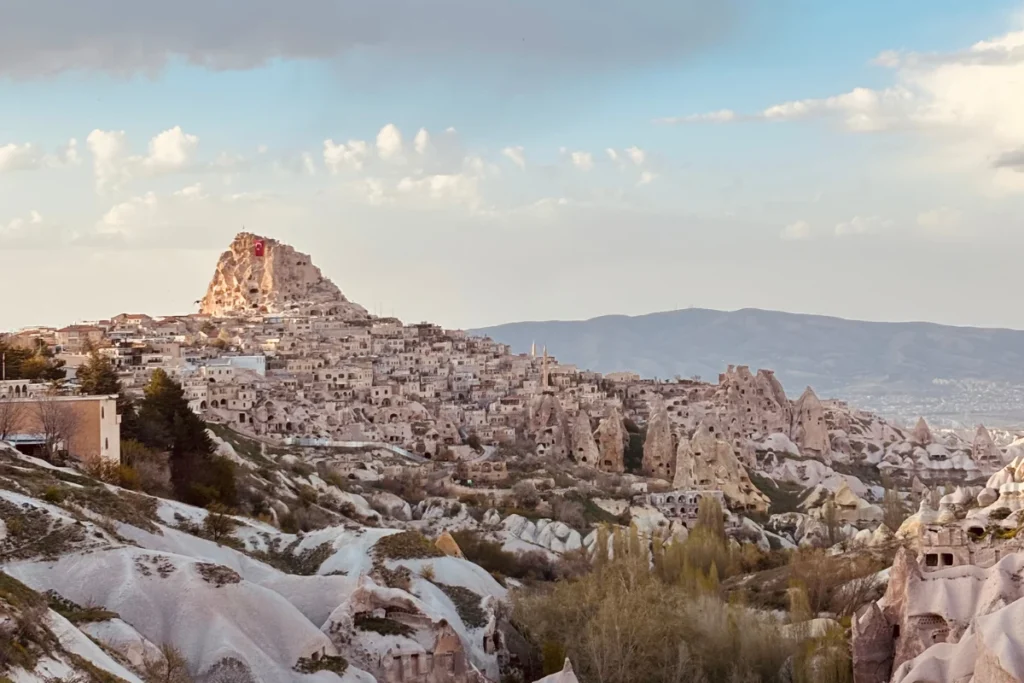
What you get: This is the month where the variables align most reliably. Balloon flights operate with higher consistency than winter or early spring. The valleys are green. The wildflowers are present. The light is clean: low-angle morning sun that makes the tuff formations glow and afternoon sun that warms the Red Valley iron oxide into vivid colour. The tourist season has started but the peak crowds (July-August) have not arrived.
What you lose: The snow is gone. The prices have started climbing. Weekend and holiday periods (Ramadan timing varies) can produce localised crowding.
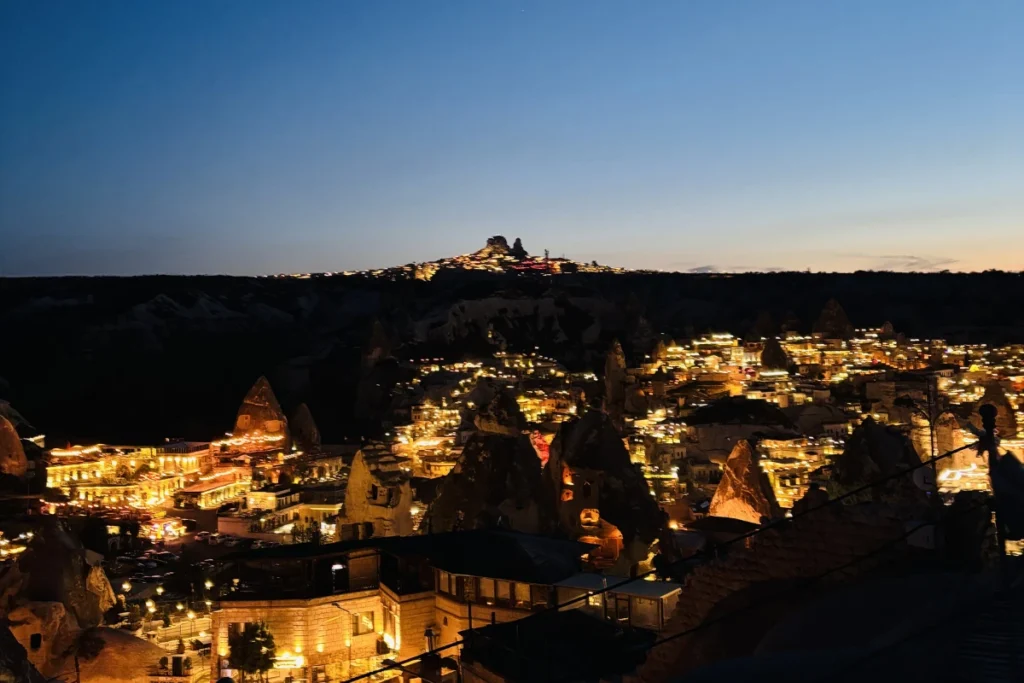
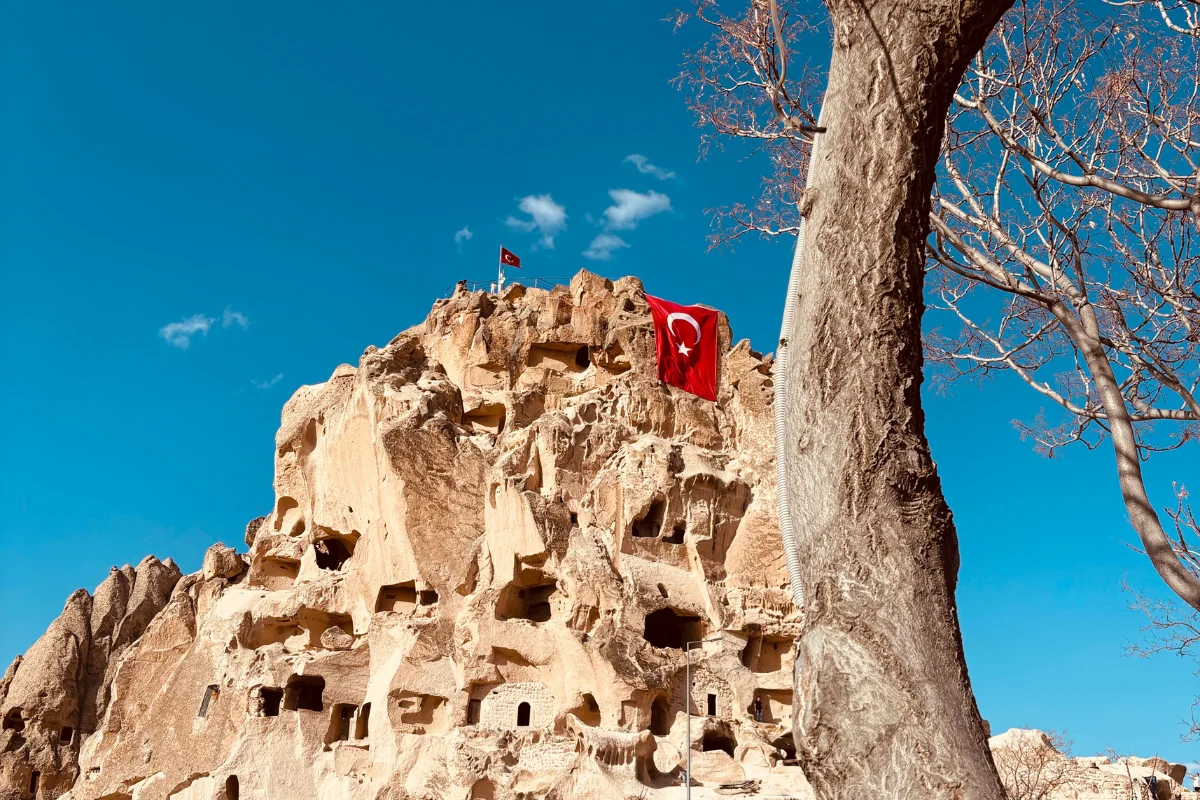
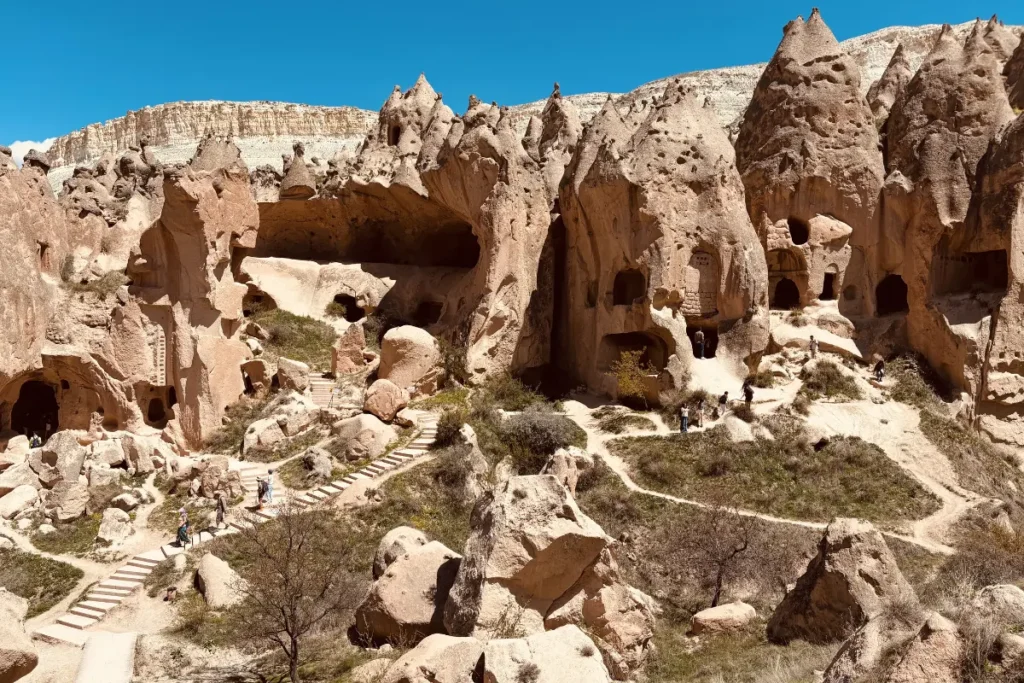
Our experience: Four nights was tight but sufficient for the Göreme Museum, Zelve, Kaymaklı, Selime, Love Valley, Red Valley, Uçhisar, and Çavuşin. The weather cooperated every day. The balloon appeared on our third morning. The sunset point after dark, when the fairy chimneys lit up against the twilight, required a jacket and rewarded the discomfort.
May: The Last Good Window
Temperature: 12°C to 23°C. Warm days. Comfortable evenings. The jacket becomes optional.
What you get: The warmest reliable month before summer heat arrives. Balloon flights are consistent. The valleys are at peak green. Outdoor dining becomes pleasant. The long daylight hours extend your exploration time.
What you lose: Prices are approaching peak. The crowds are building. Weekends in May, particularly around national holidays, can feel significantly busier than weekday visits.
Verdict: The month for visitors who want warmth without the summer intensity. If April feels too risky on temperature for your tolerance, May is the warmer guarantee.
June: The Shift
Temperature: 16°C to 28°C. Hot afternoons. Still pleasant mornings and evenings.
What you get: Long days. Reliable balloon weather. Every hotel and restaurant is open.
What you lose: The crowd volume increases noticeably. Tour bus presence at the Göreme Museum and the viewpoints intensifies. Midday valley walks become uncomfortable rather than pleasant. The green starts fading toward brown.
Verdict: The beginning of the trade-off months. You gain reliability and warmth. You pay in crowds and midday heat. Morning and evening exploration is the strategy. Midday is for the underground cities, where the temperature below ground is consistent year-round and the surface heat is irrelevant.
July and August: The Peak
Temperature: 20°C to 33°C. Hot. Midday in a valley with no shade is not a walk. It is a slow-motion discussion between your body and the sun about who has more endurance.
What you get: The highest balloon consistency of the year. Every facility is open. The widest range of tour options, day trips, and activities.
What you lose: Everything that Cappadocia provides when it is quiet. The sunset point that held fifty people during our April visit holds two hundred in July. The Göreme Museum, which we navigated by waiting for gaps between tour groups, operates in July with no gaps. The Zelve third hour, which we found rewarding because the tour group left after sixty minutes, is replaced by a second tour group arriving as the first departs. The prices are at their annual peak. Accommodation that costs TRY 2,150 / INR 5,000 / USD 60 in April easily jumps to TRY 4,300 / INR 10,000 / USD 120 in August.
Verdict: The month for travelers who prioritise guaranteed balloon flights and accept crowds as the cost. Not the month for couples seeking the quiet that makes Cappadocia feel personal.
“Midday in a Cappadocian valley during peak summer isn’t a scenic walk; it’s a slow-motion negotiation between your body and the relentless Anatolian sun.”
September and October: The Second Window
Temperature: September: 15°C to 27°C. October: 8°C to 20°C.
What you get: The return of balance. Crowds thin after the European school-holiday period ends in September. Temperatures drop from summer peaks into the comfortable range. The light quality improves as the sun angle lowers. October in Cappadocia carries a specific golden quality: the fairy chimneys in late October afternoon light turn warmer than at any other time of year because the sun is low enough to reach the surfaces that summer’s overhead angle misses.
What you lose: September is still warm. October evenings are cold. Balloon cancellations begin to increase as autumn weather patterns arrive.
Verdict: The second-best window after April. October particularly, for photographers and couples who value light quality and reduced crowds over temperature guarantees.
November and December: The Return of Cold
Temperature: November: 2°C to 12°C. December: -3°C to 5°C.
What you get: Dramatic reduction in crowds. Prices drop. The landscape shifts toward winter tones. Early snow is possible in December, producing the same snow-on-chimneys effect as January without the deep-winter severity. The underground cities are at their best: warm relative to the cold surface, and nearly empty of other visitors.
What you lose: Balloon cancellations increase with winter weather. Some hotels and restaurants begin seasonal closures. Valley walks are cold and the daylight is short.
Verdict: The quiet-seeker’s months. If crowds are your primary adversary, November and December provide the emptiest Cappadocia outside of January.
The Decision Table
| Priority | Best Month | Why |
| Overall balance | April | Weather, crowds, balloon reliability, light quality, prices |
| Balloon guarantee | July–August | Highest statistical flight consistency |
| Photography | October | Lowest sun angle, golden light, reduced crowds |
| Snow on chimneys | January–February | Cold but visually unique |
| Budget | January–February | 30 to 50 percent below peak accommodation rates |
| Avoiding crowds | November–February | The quiet months, each with its own trade-off |
| Warmth without summer heat | May | The last comfortable month before June’s intensity |
“Whether you choose the crisp green valleys of April or the golden low-angle light of October, the secret to Cappadocia is simple: explore pre-dawn, escape underground at noon, and catch twilight from above.”