This Ajanta, Ellora guide is built from four days in Aurangabad… now officially renamed Chhatrapati Sambhajinagar… from August 12 to 15, 2023.
The flight from Bengaluru to Aurangabad takes approximately one and a half hours. The Aurangabad airport is small, clean, and decorated with sculptures and motifs in the style of the sites you have come to see: the airport tells you what the city is before you step outside it.
We flew IndiGo, approximately INR 4,000 per person each way. We hired a private car with a driver for the three days of site visits. The driver was one of the best decisions of the trip, not because the sites require a guide… they do not necessarily… but because Pitalkhora requires someone who will agree to take you there despite the road, and the end of Day 4 requires someone who will offer you free biryani from his friend’s restaurant opening. Both of these happened with our driver. We consider him essential to the trip.
Hotel Yash Executive, Aurangabad. Four nights. Clean, centrally located, functional. The base was right.
“At the end of a long, rainy day at Ajanta, wet and exhausted, we were stranded with only a single torn fifty-rupee note. A local stranger stepped in out of nowhere, guided us through back alleys to bypass the massive queue, and made sure we were safely on a bus without taking a single rupee. The kindness of strangers on a rainy afternoon in Maharashtra remains the quiet heart of this entire trip.”
Day 1: Bibi Ka Maqbara at Sunset
We arrived at the airport at 3:30 PM and reached the hotel in time to rest briefly before driving to Bibi Ka Maqbara for the evening.
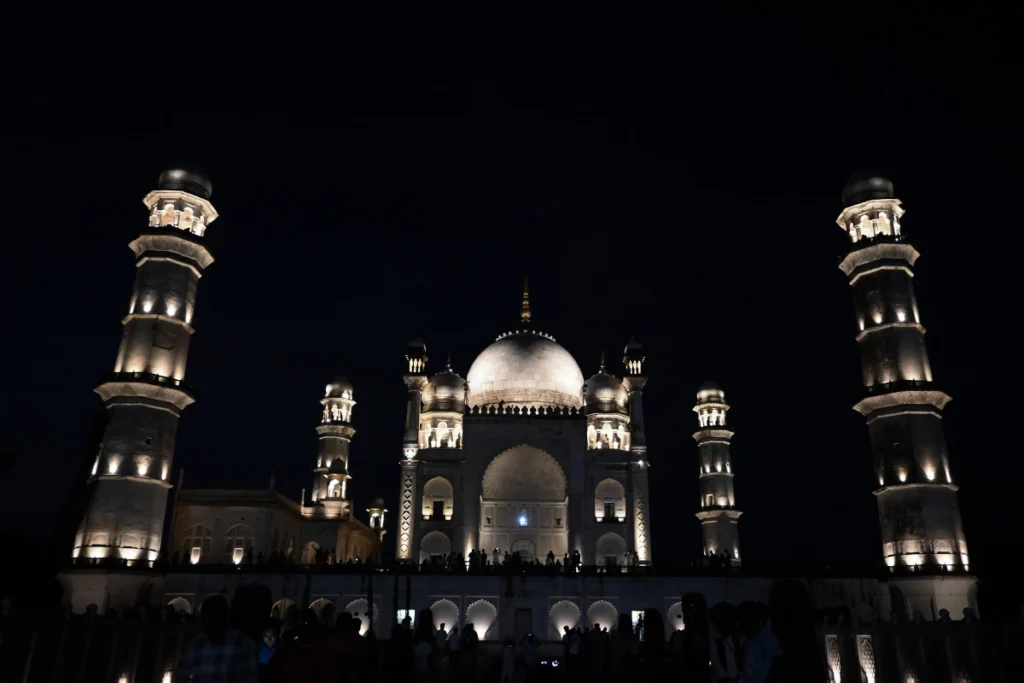
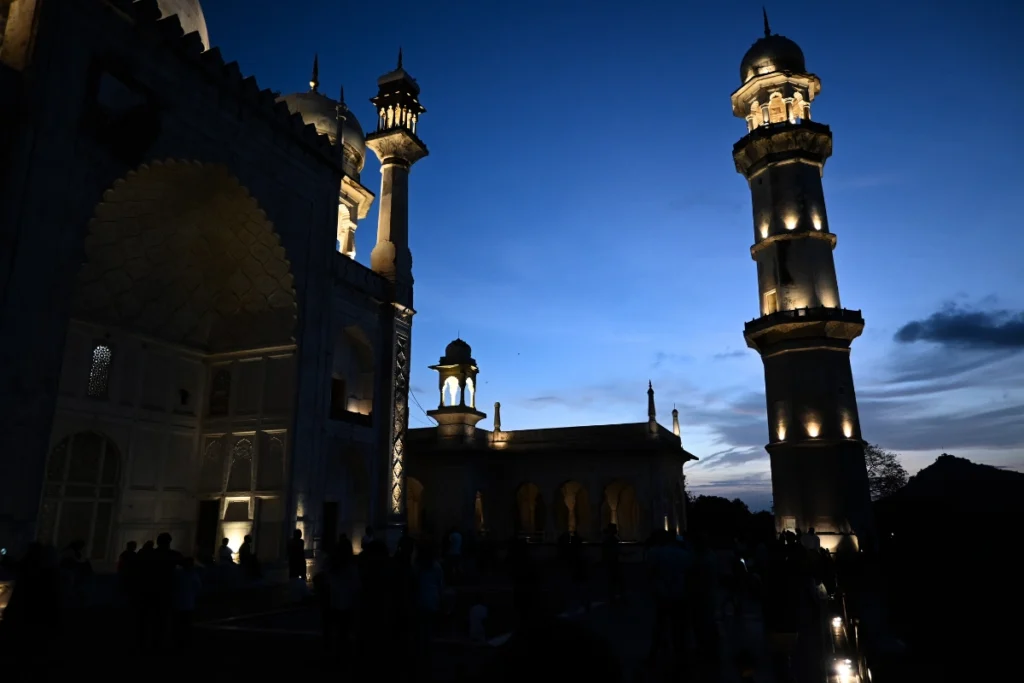
Bibi Ka Maqbara was built in 1679 by the Mughal prince Azam Shah in memory of his mother, Rabia-ud-Daurani, the wife of Aurangzeb. It is sometimes called the Poor Man’s Taj Mahal, a comparison that the building neither invites nor deserves. It is its own structure: a Mughal mausoleum at the scale that the Deccan Sultanate could finance, with the aesthetic vocabulary of the Mughal tradition applied with somewhat less extravagance than Agra. The gardens are formal and well-maintained. The marble dome is genuine. The evening light on the white stone, with the sky shifting from blue to gold to orange behind the minarets, is exactly what you want from the first evening of a heritage trip.
We watched the light change, walked the gardens, and returned to the hotel. Day 1 was the prelude. Day 2 was Ajanta.
Day 2: Walking the Horseshoe Arc at Ajanta
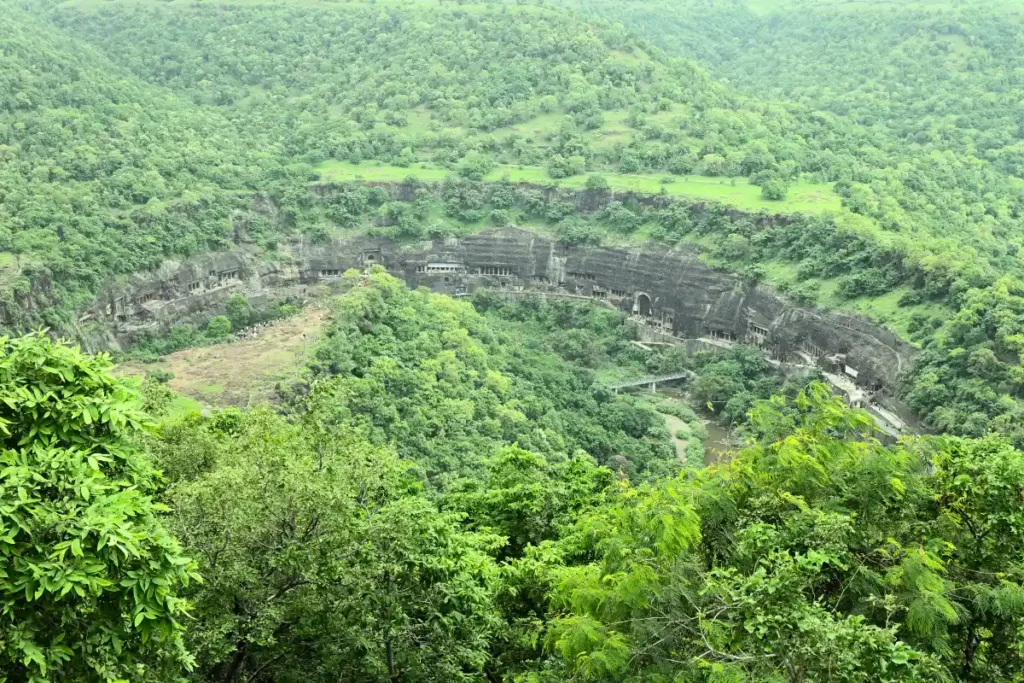
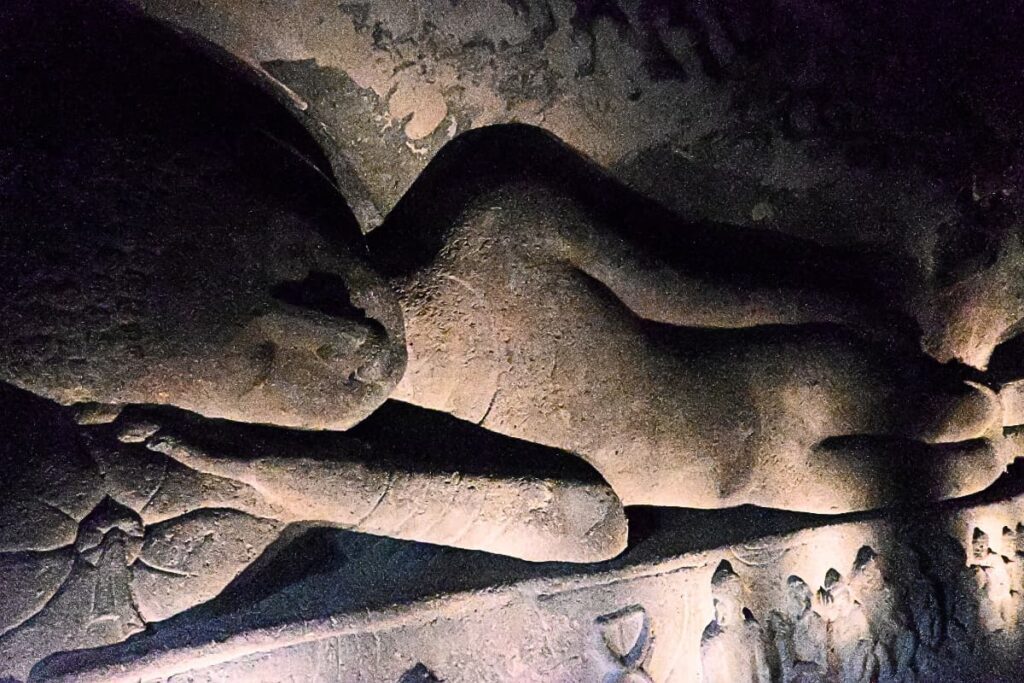
Ajanta is approximately 100 km from Aurangabad. The drive takes approximately two hours. We left early.
What Ajanta Is
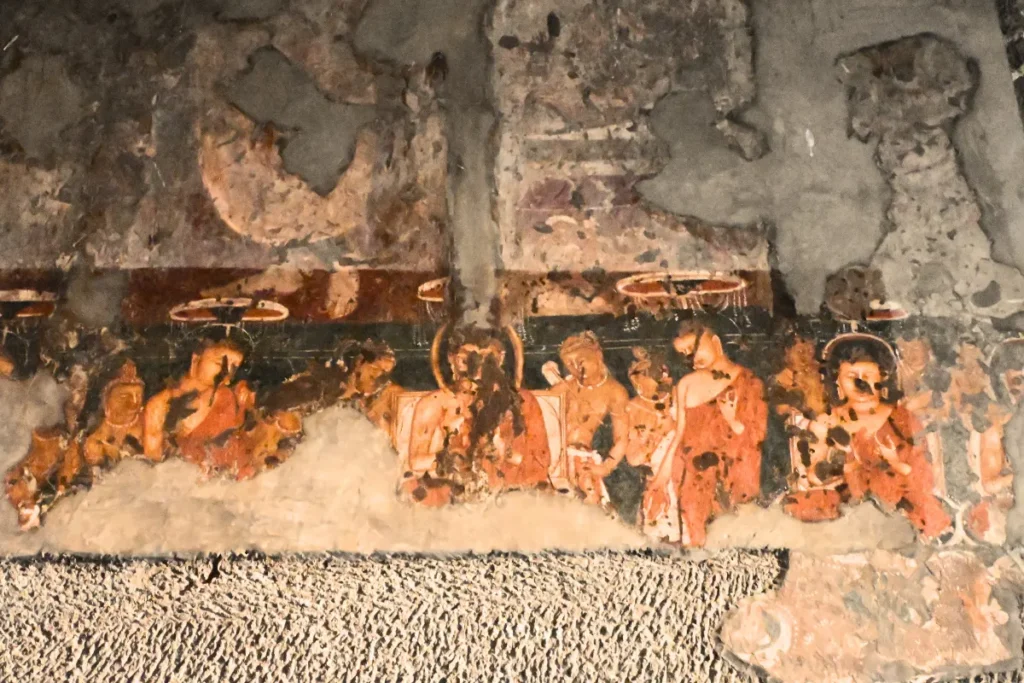
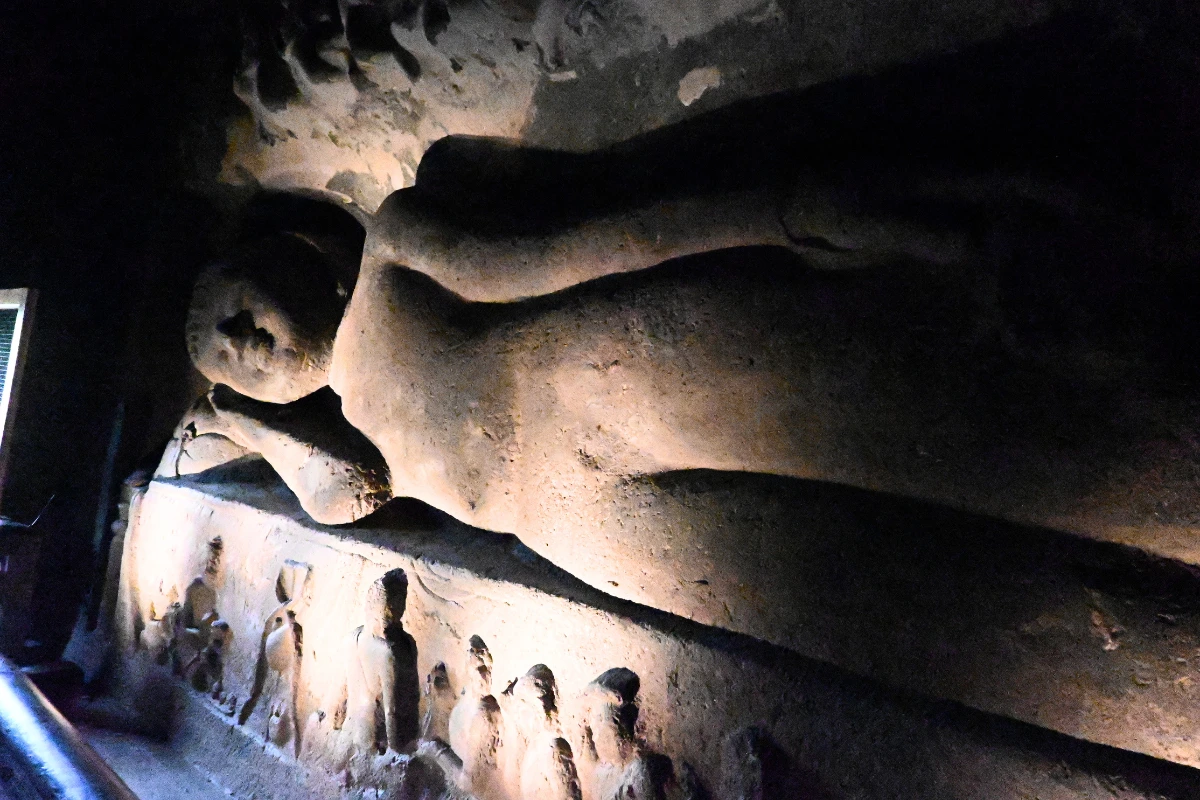
The Ajanta Caves are a complex of 30 rock-cut Buddhist cave monuments carved into the horseshoe-shaped cliff face of the Waghora River gorge in Maharashtra. They were created between approximately the 2nd century BCE and the 5th to 6th centuries CE, in two distinct phases separated by several centuries. The earlier caves (Phase 1, Hinayana) are simpler in form: chaitya prayer halls and viharas, with minimal figural decoration. The later caves (Phase 2, Mahayana) are extraordinary: every surface of the interior… ceiling, walls, pillars, vestibule… is covered with paintings.
The paintings are the reason Ajanta exists in the collective imagination. They are the most extensive surviving body of ancient Indian painting. The pigments used… made from lapis lazuli, malachite, burnt bone, lamp black, ochre, and other natural sources… have survived approximately 1,500 years in conditions that preserved their colour with a fidelity that continues to astonish conservation scientists. The subjects are Buddhist: Jataka tales showing the previous lives of the Buddha, scenes from the life of the historical Siddhartha Gautama, and celestial figures rendered with a sensuous naturalism that places them among the finest figurative art produced in the ancient world.
We walked all 26 accessible caves.
The Day in the Caves
It rained. Not briefly. It rained through most of the afternoon, intensifying as the day went on. By the time we finished the last caves, we were completely wet. Sumana was not feeling well: the combination of the distance walked, the humidity inside the caves, the hours of sustained attention that viewing the paintings requires, and the rain had taken more out of her than a normal day of sightseeing.
The government restaurant at the site was the only food option. It had a long queue. The service was slow. The staff were rude. Orders were brought incorrectly twice. We do not include this as a complaint but as a warning: Ajanta has one food option and it is unreliable. The restaurant also has no internet. The caves have no internet. There is no ATM on site. We had not known this. By the end of the day, we had INR 50 left in cash between us.
The shuttle bus from the caves back to the car park is the exit, and the queue for it is long. After exploring all 26 accessible caves in the rain, tired, wet, with Sumana unwell and fifty rupees between us, we stood at the back of a very long shuttle queue. The wait was estimated at one to two hours.
Then a man appeared. Seeing us wet, exhausted, and struggling with an ailing Sumana, he stepped in without being asked. All we had was a single torn ₹50 note… the exact bus fare for the two of us… and no cell service to pay digitally. He didn’t care about any of that. He guided us through narrow side alleyways, bypassed the overwhelming queue, and made sure we were safely seated on the next local bus back to the car park. He refused to accept a single rupee for his help.
Days later, back in Bengaluru, we sent him a Google Pay transfer as a small token of our gratitude. Standing there in the pouring rain, he felt like nothing short of a guardian angel.
We have travelled to Karahan Tepe and stood above an 11,000-year-old chamber carved from bedrock. We have stood inside Karnak’s Hypostyle Hall on legs that had already walked the Valley of the Kings and Hatshepsut that morning. We have driven through the Syrian border region near Mardin, and we have had a stranger pull over on a roaring, busy highway near Istanbul when our rental car ran completely dry. In both cases… on that chaotic Turkish highway and on that rainy afternoon in Maharashtra… strangers appeared like guardian angels when we had run out of options. We remember these kind men as clearly as any of the paintings.
“We had explored all 26 accessible caves. We were wet, tired, and down to our last INR 50. We needed the bus back to the car park, and the queue was an hour long. A stranger appeared, took the fifty rupees, and put us on the next bus. The Ajanta paintings had survived 1,500 years. On that afternoon, we needed fifty rupees and a stranger. Both were there.”
Day 3: Kailash Temple, Ellora, and the Road to Pitalkhora
We left for Ellora on the morning of August 14th, 2023.
Kailash Temple
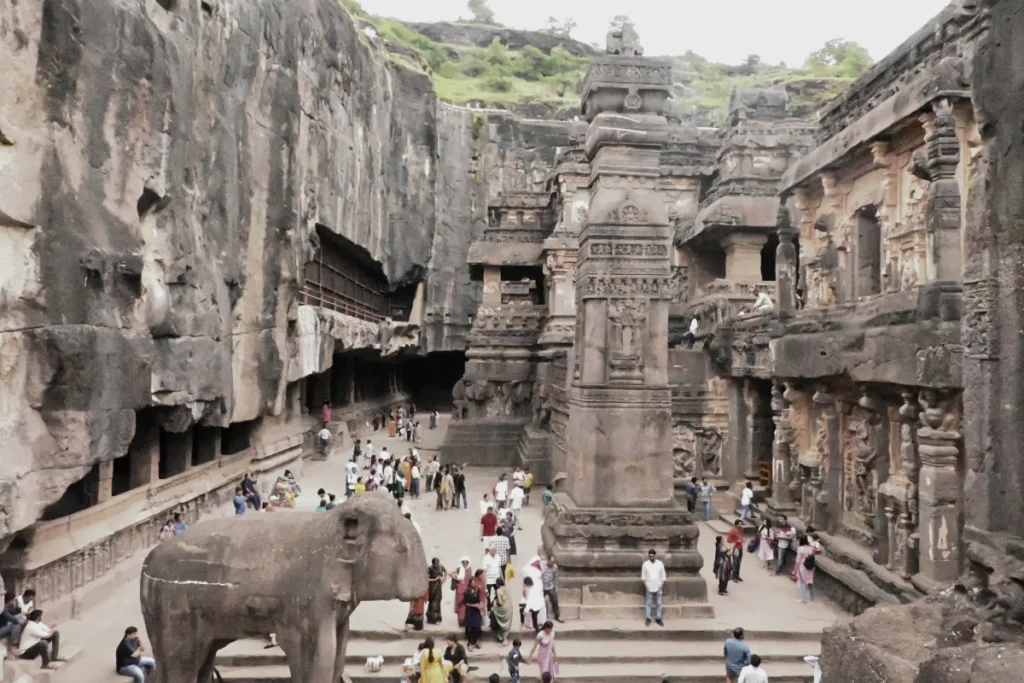
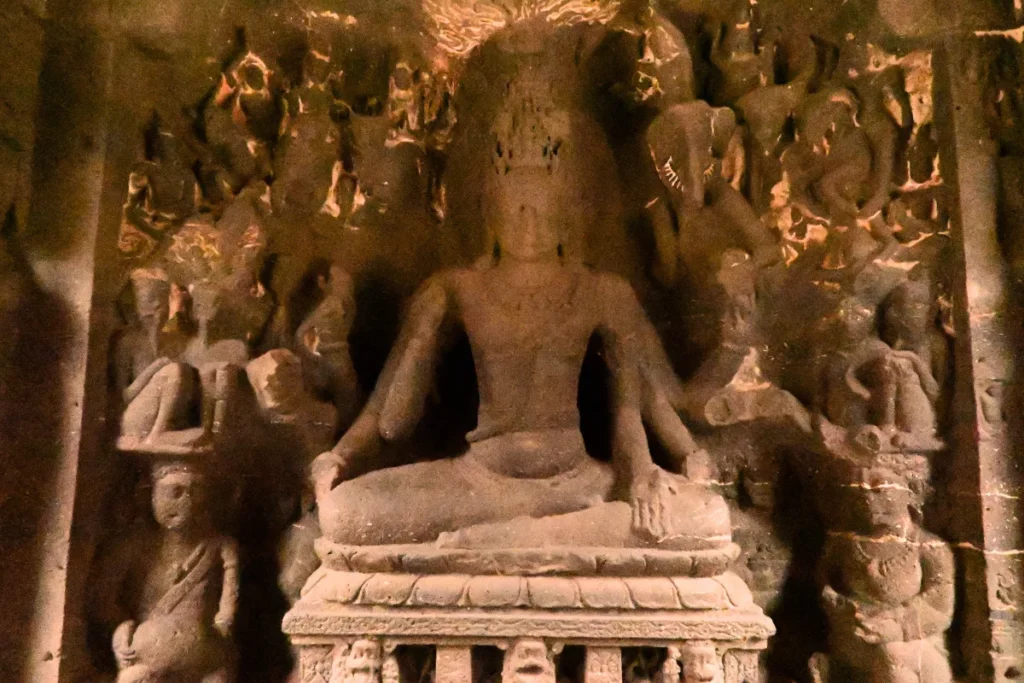
The Kailash Temple is Cave 16 at the Ellora complex. It is not a cave. It is a monolithic structure: the entire temple, from the base plinth to the highest point of the shikhara, was carved downward from the top of a basalt cliff face. No foundation was laid. No blocks were assembled. Archaeologists estimate that 400,000 tons of rock were removed over the course of the temple’s construction, which began under the Rashtrakuta king Dantidurga in the 8th century CE and continued under his successor Krishna I.
The structure is dedicated to Lord Shiva. It replicates, in plan and elevation, the layout of a freestanding Dravidian temple: the entrance gopura, the Nandi mandapa (the pavilion of Shiva’s bull), the main mandapa, and the garbhagriha… all carved from a single piece of living rock.
There is a moment, when you walk through the entrance and see the full scale of the Kailash Temple for the first time, that requires several seconds to process. You are looking at a structure approximately 85 metres long, 47 metres wide, and 32 metres tall. It is below you: carved downward into the cliff, so that you look down at the temple roof from the clifftop above, and then descend to ground level and walk around its base, and then look back up at the shikhara that was once the cliff surface you stood on. The spatial experience of the Kailash Temple is unlike any other temple in India because the usual spatial logic is inverted: the building goes down before it goes up.
We cried inside the Kailash Temple.
This is not something we write lightly or for effect. The specific combination of what we were looking at… a 1,200-year-old structure carved by human hands from an entire mountain, in a civilisation whose engineering we are still fully understanding, dedicated to a deity we had grown up with, in a country we were born in… produced an emotional response that neither of us had expected and that we did not try to suppress. We stood inside the temple and felt, at the same time, very small and very connected. The emotion that accompanied that feeling was gratitude. For the civilisation that made this. For the specific improbable luck of being the people who were born in this country and could come here and stand inside it.
“Most great structures on Earth were built stone by stone, rising upward from the dirt. The Kailash Temple was created by taking a mountain and removing everything that wasn’t a temple.”
Ellora’s Full Range
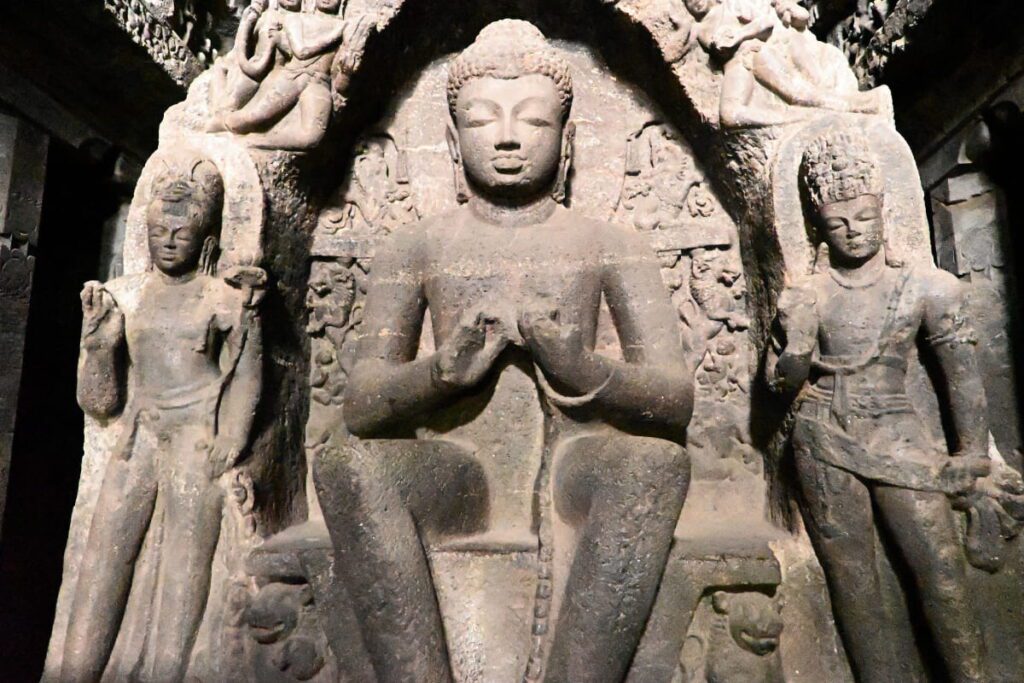
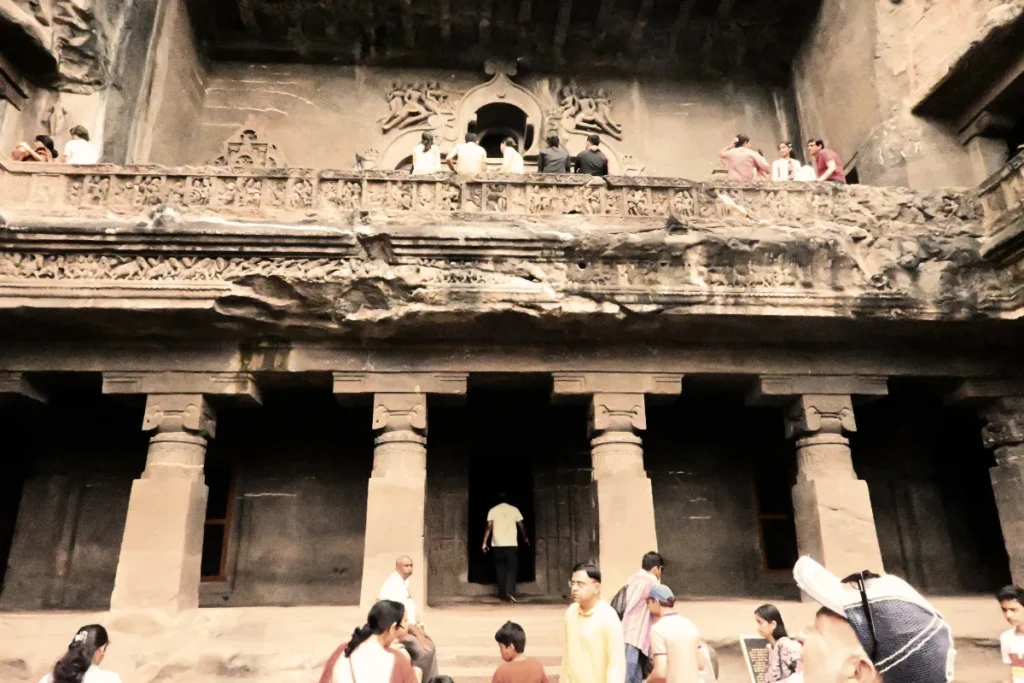
Ellora is a complex of 34 rock-cut temples and monasteries carved between approximately the 5th and 11th centuries CE. Unlike Ajanta, which is entirely Buddhist, Ellora contains Buddhist, Hindu, and Jain temples, sometimes within metres of each other. This coexistence… three distinct religious traditions sharing the same cliff face, built during overlapping periods of history… is one of Ellora’s most important and underappreciated features. The site is a physical record of religious plurality in medieval India.
Beyond Cave 16, the Buddhist caves at the northern end of the complex contain carved interiors of remarkable sophistication, including Cave 10 (the Vishvakarma Cave or Carpenter’s Cave), a chaitya hall with a stupa inside and a carved Buddha above it, whose barrel-vaulted ceiling mimics the structural logic of wooden architecture in stone. The Jain caves at the southern end, built between the 9th and 11th centuries, carry an austere refinement that contrasts sharply with the sensuous complexity of the Hindu caves.
We gave most of Day 3 to the Kailash Temple and the surrounding Ellora complex. The afternoon was for Pitalkhora.
Pitalkhora: The Caves Nobody Goes To
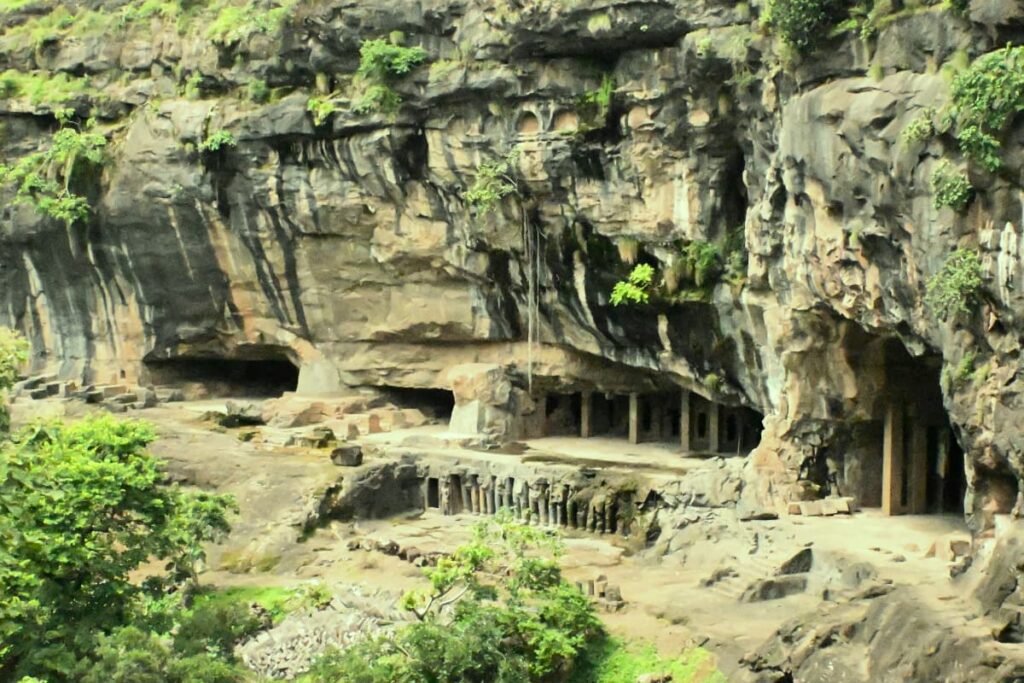
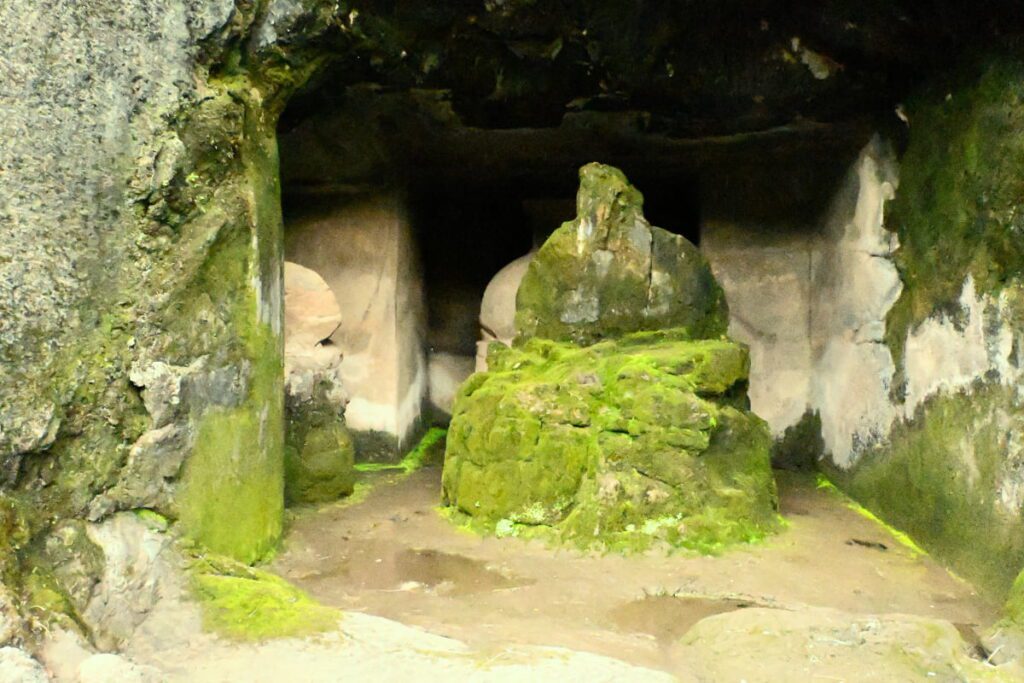
Pitalkhora is approximately 78 km from Aurangabad, in a remote gorge in the Sahyadri range. It contains 14 rock-cut Buddhist caves dating from approximately the 2nd century BCE… making them among the oldest Buddhist caves in the Deccan, older than most of the Ajanta caves and predating Ellora by centuries.
Our driver, when we mentioned Pitalkhora, was reluctant. The roads, he explained, were bad. Village roads. Mud sections in the monsoon. He generally avoided the route, and other drivers did the same. We asked twice. He agreed.
He was correct about the roads. The approach to Pitalkhora is genuinely rough, particularly in the monsoon season. The village roads are narrow. The mud sections are real. But Pitalkhora itself, when you reach it after that drive, has something that Ajanta and Ellora… with their shuttle buses and their entrance complexes and their international visitor counts… do not have: solitude. We were the only people there. The ancient Buddhist sanctuaries, carved into the cliff face of a quiet gorge, were entirely ours for the time we spent there. The carvings, though less elaborately painted than Ajanta, are among the oldest examples of Deccan rock-cut art in existence.
The drive was worth requesting twice. If you have a driver who will make it, go.
Day 4: Daulatabad Fort and the Free Biryani
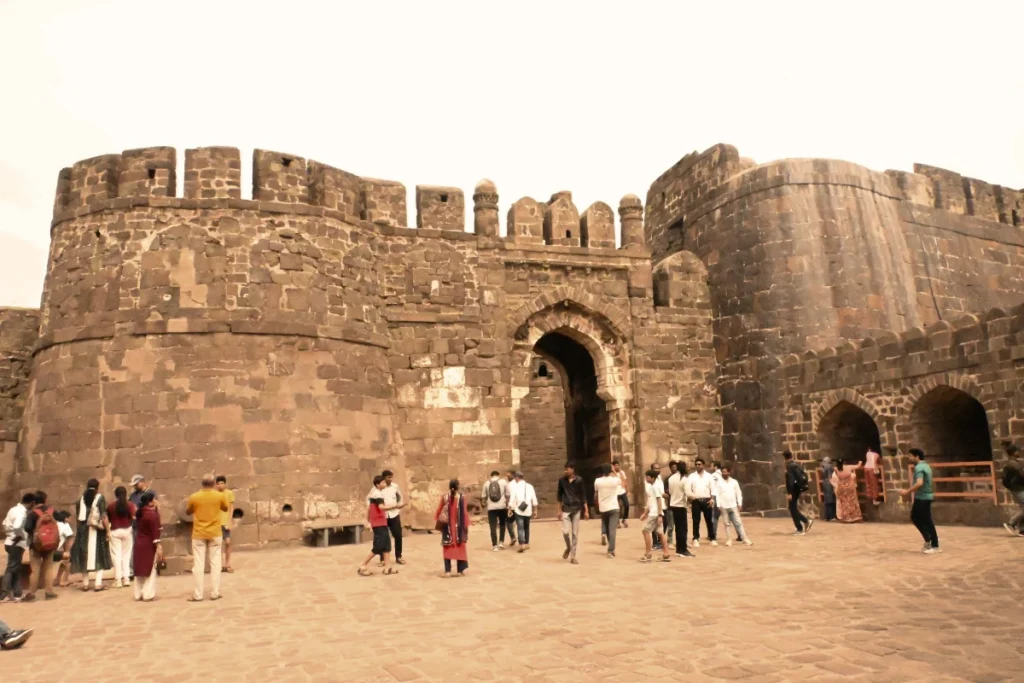
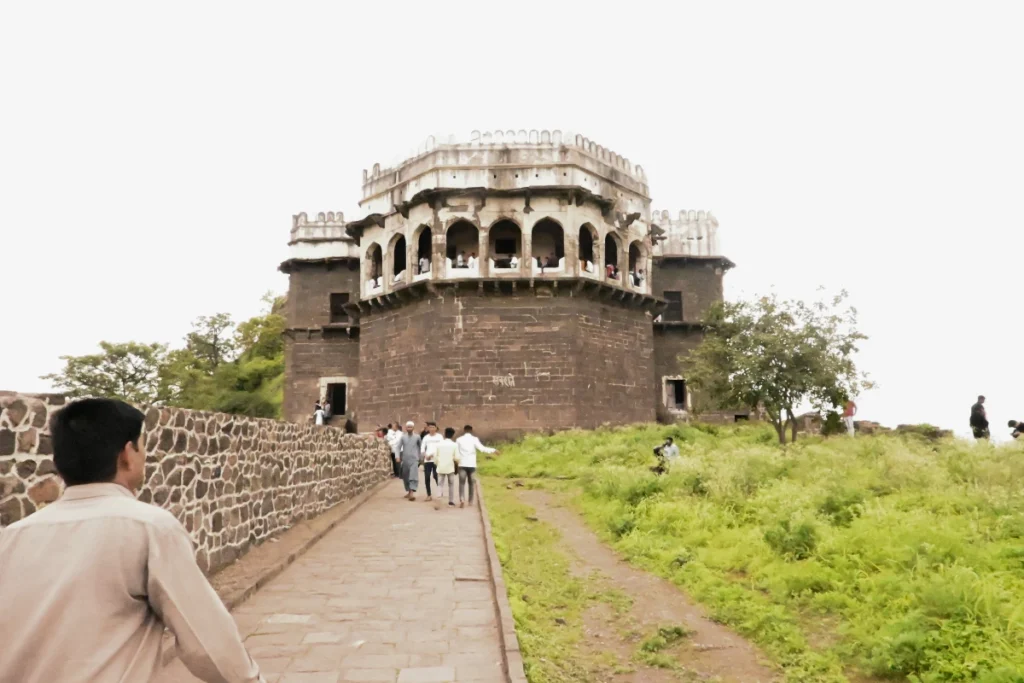
August 15th: Independence Day. We visited Daulatabad Fort in the morning, specifically at opening time to avoid the crowds. By midday on a national holiday, this fort is packed. At 8 or 9 AM, it is manageable.
Daulatabad Fort
Daulatabad Fort… originally called Devagiri, meaning Hill of the Gods… is a 12th- to 14th-century hill fort built by the Yadava dynasty and subsequently seized by the Delhi Sultanate. Muhammad bin Tughluq, the Delhi Sultan famous for the unprecedented decision to relocate his entire capital from Delhi to Devagiri, renamed it Daulatabad (City of Fortune) and ordered every resident of Delhi to walk here, a journey that killed many of them. The capital was moved back to Delhi within a few years. The fort remained.
The climb to the top: 750 steps. We counted. The ascent passes through successive layers of the fort’s defensive engineering: the moat (which once contained crocodiles), the drawbridge, the massive iron-studded doors (designed to be too hot to touch after heating), the kaman gola (the cannon positions), and the bhulbhuliya (the labyrinthine dark passage near the summit designed to disorient attackers). The bhulbhuliya requires a guide with a torch, or your phone. Without light, you do not exit.
The view from the top: 360-degree, unobstructed. The Deccan plateau spreading in every direction. On a clear morning, the scale of the landscape that this fort was built to control becomes comprehensible. Daulatabad is not just a fort. It is a statement about what the people who built it believed was possible to defend.
The Soneri Mahal on the grounds was closed during our visit. We note this as a practical detail: verify opening before visiting, as closures can happen on public holidays.
The Biryani
After Daulatabad Fort, the plan was lunch before the airport. There was no restaurant. The road between the fort and Aurangabad, at that hour on Independence Day, offered no suitable options. We were running out of time before the 7 PM flight.
Our driver stopped at a building where his friend was hosting a restaurant opening event. He brought us inside. His friend, whose restaurant was opening that day, had prepared biryani for the guests. We were offered plates. The biryani was free. We ate it quickly, in a room full of people we did not know, at a celebration we had not been invited to, and every single person in the room was warm and welcoming about the two strangers from Bengaluru eating their opening-day biryani.
We caught the 7 PM flight. We arrived in Bengaluru at 8:30 PM. The four days cost us approximately INR 30,000 / USD 355 for two people, all-inclusive… with flights and private transport accounting for almost 80% of that total. The airport at departure was as decorated with heritage motifs as the airport at arrival. Aurangabad knows what it is.
What It Costs
| Item | Cost (August 2023) |
| IndiGo flight Bengaluru to Aurangabad (Return) | INR 15,000-16,000 / USD 180-190 |
| Hotel Yash Executive, Aurangabad (per night) | INR 5,626 / USD 67 |
| Private car with driver (3 full days) | INR 7,500 – 10,000 / USD 90-120 |
| Ajanta Caves entry (per person) | INR 40 / USD 0.50 (Indian), INR 600 / USD 7.10 (foreign) |
| Ellora Caves entry (per person) | INR 40 / USD 0.50 (Indian), INR 600 / USD 7.10 (foreign) |
| Bibi Ka Maqbara entry (per person) | INR 25 / USD 0.30 (Indian), INR 300 / USD 3.55 (foreign) |
| Daulatabad Fort entry (per person) | INR 25 / USD 0.30(Indian) / INR 300 / USD 3.55 (Foreign) |
| Pitalkhora entry (per person) | Free |
| Total, two people, 4 days (estimate) | INR 28,000 – 32,000 / USD 330 – 380 including flights |
The entry fees for Indian nationals at ASI-maintained sites are nominal. The dominant cost for this trip is the flights and the private transport. If you are comfortable with shared auto-rickshaws and local buses, the trip cost drops significantly… though Pitalkhora on bad roads in the monsoon is significantly better with a car than without one.
Pro Tip: Paying via QR code / online booking at the ASI counters gives a flat ₹5 discount per ticket on the listed cash price.
What You Must Know Before You Go
- Carry cash at Ajanta. No ATM on site. No internet. No digital payment option at the shuttle bus or at most of the stalls. The government restaurant accepts cash only. Carry more than you think you need. We had INR 50 left. That is not a comfortable margin.
- The Ajanta shuttle queue gets long. At the end of the day, especially in the rain, the shuttle queue back to the car park can easily take an hour or two. Keep physical cash on hand for local public buses, as mobile networks and UPI fail in the gorge. Most importantly, remain patient… sometimes local kindness finds you right when you need it most.
- The Kailash Temple will likely produce a strong emotional response. We are not the only people who have cried inside it. We are telling you this so you are not surprised when it happens to you.
- Pitalkhora requires a driver who will say yes. Ask your driver in advance, not on the day. The road is genuinely bad in the monsoon. If the driver agrees, go. If not, the Ajanta-Ellora circuit is complete without Pitalkhora. But Pitalkhora with solitude is something Ajanta and Ellora cannot offer.
- Visit Daulatabad Fort at opening time. On a public holiday, the crowds by 11 AM are significant. At 8 or 9 AM, the fort is quiet and the morning light on the 750-step ascent is pleasant. The bhulbhuliya (dark passage) requires a torch or phone light. Do not enter it without one.
- Book the last day with flight time margin. We had exactly enough time between Daulatabad Fort and the airport. If we had stayed at the fort one hour longer, the biryani would not have appeared and the flight would have become a question. Leave Daulatabad by midday for a 7 PM flight.
- The Soneri Mahal at Daulatabad was closed during our visit on August 15th. Check opening status before visiting, especially on national holidays.
“To carve a temple out of a mountain is an act of engineering; to breathe life, devotion, and timeless grace into that solid basalt is a triumph of the human spirit. Long after the dynasties that funded them faded, Ajanta and Ellora remain… quietly reminding us that beauty, when forged in faith, outlasts the rock itself.”