
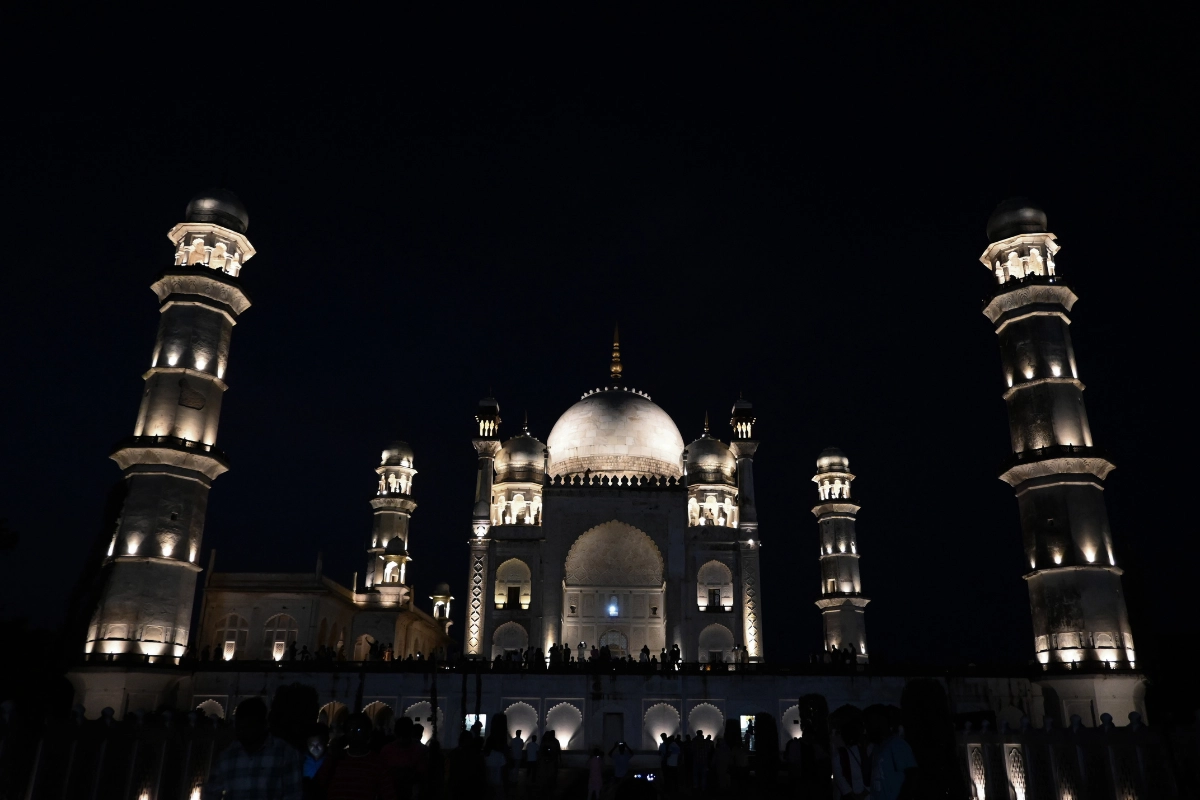
These India travel tips for first time visitors come from years of road trips across multiple states since childhood…the mistakes we made, what we did differently afterward, and the practical groundwork that international travelers need before they land.
India will not go according to plan. We can say this with the certainty of people who have been planning trips across this country for years and have watched every plan adjust itself the moment the car left the driveway.
The GPS route to Kotagiri was supposed to take six hours. It took twelve. The Ajanta Caves visit was supposed to be a smooth afternoon. We arrived with no cash, no signal, and no way to catch the bus. The sunset at Adiyogi was supposed to end with a quiet drive home. The parking took ninety minutes to exit.
Every tip in this article is a mistake we made first, or a gap we watched someone else fall into. Nothing here comes from a guidebook. It comes from driving at hours we probably should have planned more carefully, eating at restaurants with no menu and no name, and learning, repeatedly, that the things India takes away from your plan are usually replaced by something you would not have found otherwise. It also comes from being honest about the risks, because giving someone a romantic version of the road without the caution that should travel alongside it is not advice. It is a disservice.
“India does not test whether you can read a map. It tests whether you can still be curious after the map has been wrong twice.”
- Drive at Night…With Real Precautions
- Carry Cash. More Than Feels Necessary.
- Get Connected Before You Leave the Airport
- The Two Indias of Money
- Hire a Guide at Heritage Sites
- Pick One Region
- What to Know Before You Walk Into a Temple
- The Scams That Actually Happen
- What Your Stomach Needs to Know
- Book on Last Ten Reviews
- Cook When It Makes Sense
- Travel October to March for Most of India
- Respect the Distance
- If You Are Taking a Train
- Visa: More Than a Formality
- The Small Things That Matter
- Frequently Asked Questions
Drive at Night…With Real Precautions
This is our single most important piece of India travel advice, and it is also the one that requires the most honesty.
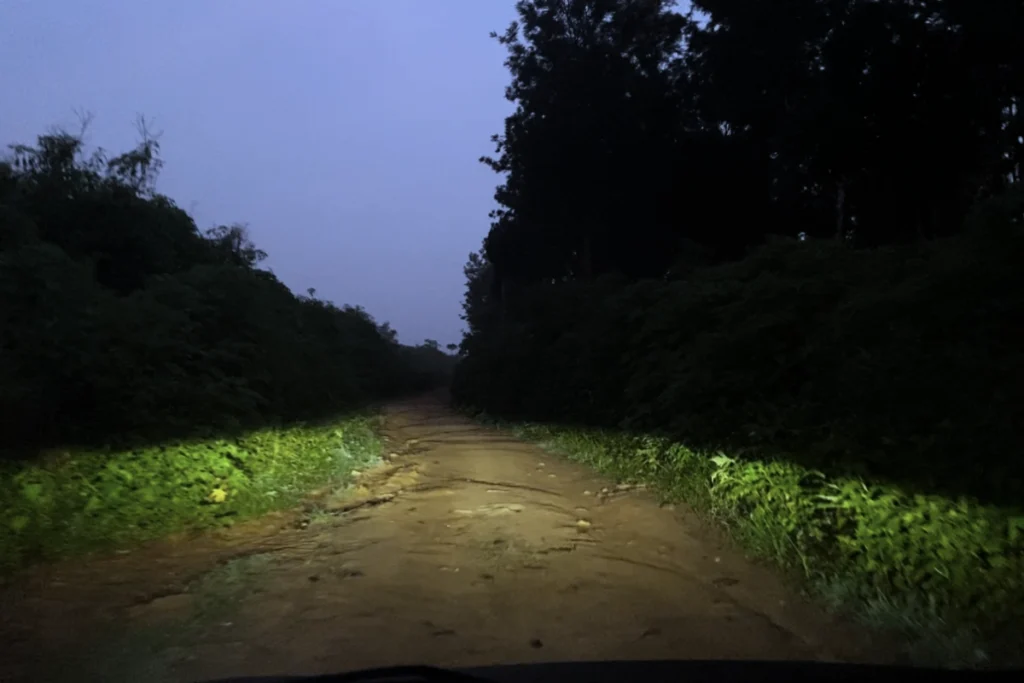
Indian highways between midnight and 5 AM belong to a different country. The trucks thin out. The heat disappears. The air cools. The road opens. What takes six hours during the day takes four at night, with less stress, less honking, and the particular calm of moving through a country that is asleep.
Ninety-nine percent of our road trips start between 11 PM and 1 AM. The Bengaluru to Kolkata drive, all 1,800 kilometres of it, was built around midnight departures. The drive to Hampi from Bengaluru started after 11 PM. The first Kodaikanal trip left our apartment at midnight and reached the hills by noon.
We want to be completely honest about this, because too much travel advice softens the risk to keep the story appealing. Our own relatives have repeatedly raised concerns about this habit…a couple, often with just the two of us, driving through stretches of highway in the dark, with all the standard risks that come with night travel anywhere in the world: fatigue, mechanical failure, isolated stretches with no help nearby, and the additional layer of concern many people in India still feel about women travelling at night, even inside a locked car with a partner. These are not imagined concerns. They are reasonable ones, and we do not dismiss them.
We have continued to drive at night because, across every trip we have taken this way, nothing has gone wrong. We say that with gratitude, not bravado. It is not a guarantee, and we do not want anyone reading this to treat our experience as proof that the risk does not exist. It exists. We have simply chosen, with full awareness, to accept it in exchange for what the empty highway gives back.
If you choose to do the same, take it seriously. Switch drivers when fatigue sets in. Keep your vehicle serviced and checked before any long drive. Share your live location with someone you trust for the full duration of the trip. Stop at well-lit, populated fuel stations rather than isolated ones. Avoid pulling over on the roadside for rest in a deserted stretch…wait for a dhaba or a town. If anything about a particular stretch feels wrong, trust that feeling over the schedule. An elephant crossed our road in Bandipur at a pace that made our schedule irrelevant. Be the kind of traveller who can let the schedule go that easily for the right reasons, and the wrong ones too.
Do not drive at night when fatigued, regardless of how close you are to the destination. A bad nap in a parked car at a safe, populated spot is better than a bad decision on a dark highway.
Carry Cash. More Than Feels Necessary.
At Ajanta, we had no cash. No signal either. No way to pay for the bus back, no way to order food, no way to call anyone. We were soaked from the rain, exhausted from exploring all 26 caves, and stuck.
A man appeared. He took our last INR 50 and arranged our place on the next bus. We still think about him. We still carry cash.
India’s digital payment infrastructure is extraordinary in cities. UPI works almost everywhere in Bengaluru, Kolkata, Delhi. But the moment you step into heritage sites, forest corridors, highway dhabas, or smaller towns, cash returns to power. Ajanta had no internet. The government restaurant there was the only food option, and it did not accept cards. The dhabas between Vizag and Puri at 4 AM are cash-only establishments.
Carry more cash than you think you need. Withdraw before entering any zone where connectivity is not guaranteed. Keep it split across bags, not in a single wallet, in case one is lost or misplaced.
Get Connected Before You Leave the Airport
The SIM Card Decision
India runs on mobile data. Ride-hailing apps, UPI payments, train tracking, navigation, hotel check-in confirmations: all of them require an active connection. Without one, you are navigating the world’s most complex country blind.
While finding the right balance between cost and convenience varies by country…just like navigating connectivity hurdles when buying SIM cards in Egypt…skipping a local connection in India is far too risky. The stakes are significantly higher here because almost every vital daily function seamlessly depends on having a working local connection the moment you land.
For international visitors, two options exist.
Option 1, a physical SIM at the airport: Airtel and Jio both operate kiosks in the international arrivals halls of Delhi, Mumbai, and Bengaluru. Airtel’s tourist SIM costs approximately INR 349 and provides 1.5 GB per day, unlimited local calls, and 100 SMS per day for 30 days. Jio offers a similar plan at INR 299 to 349 with 2 GB per day. Both require your passport, visa, and approximately 15 minutes for activation. The critical difference: Jio does not require a local Indian phone number as a reference. Vi (Vodafone Idea) does, which makes it impractical for independent travellers arriving without a local contact.
Option 2, Providers like Holafly, Saily, and Airalo offer data-only eSIM plans that activate the moment you land. We actually used Nomad for our Turkey road trip and had a seamless experience with it.
However, there is a massive catch when it comes to India: the government blocks many international travel eSIM apps on the domestic App Store and Google Play. Because of this, you absolutely must download the app, purchase your plan, and configure the eSIM profile before your flight lands. If you forget, you won’t be able to access or download the app once you touch down in India.
The OTP Trap That Nobody Warns You About
The OTP trap that nobody warns you about: many Indian services, including banking, UPI payments, and some booking platforms, send One-Time Passwords via SMS to verify transactions. A data-only eSIM cannot receive SMS. If you deactivate your home country SIM to avoid roaming charges, you lose the ability to receive OTPs entirely.
The solution is a dual-SIM setup. Keep your home SIM active for calls and SMS, with data roaming turned off to avoid charges. Use the eSIM or local SIM exclusively for data. OTPs arrive on your home number while all data flows through the local connection. Alternatively, put your home SIM in a second backup phone dedicated to receiving verification codes. We carry two phones on every trip, and this setup has solved the OTP problem on every international trip we have taken, without a single failed verification.
The Two Indias of Money
India operates two parallel payment systems, and first-time visitors need to understand both.
Digital India: UPI handles a significant share of global real-time payment volumes. In cities like Bengaluru, Delhi, and Mumbai, you can pay for chai at a street stall by scanning a QR code. Vegetable vendors, auto rickshaw drivers, and temple donation boxes all display QR codes.
Cash India: step outside the major cities, into Ajanta or the highway dhabas between Vizag and Puri at 4 AM, and cash is the only currency that exists. No signal, no QR code, no payment app. Just rupees.
For international visitors, the Reserve Bank of India offers UPI One World, a prepaid wallet available at airport kiosks in Delhi, Mumbai, and Bengaluru arrivals halls. Onboarding requires your passport and visa. The wallet can be loaded up to INR 25,000 at a time, with a monthly maximum of INR 2,00,000, using a foreign credit card or cash. It works at any merchant QR terminal in India. The alternative is the Cheq UPI app, which allows digital KYC on your phone and loads via international credit card for a 2 to 4 percent fee. The interface is rough but functional.
Our recommendation for first-time visitors: get UPI One World at the airport and carry cash. The digital wallet handles cities. The cash handles everything else.
What we carry as residents: both of us use UPI for approximately 90 percent of daily transactions in Bengaluru. On road trips, we switch to carrying INR 5,000 to 10,000 in cash the moment we leave the city. At Hampi, some entry counters accepted cards. The coconut seller outside the Vittala Temple did not. The ratio of digital to cash on a heritage road trip through rural India runs closer to 30:70. Plan accordingly.
Two rules about Indian currency worth remembering: non-residents cannot import or export Indian Rupees, so exchange at the airport or withdraw from Indian ATMs after arrival. And small merchants struggle to make change for INR 500 notes. Carry a mix of INR 100 and INR 200 notes for daily transactions, and withdraw smaller denominations from ATMs when possible.
Hire a Guide at Heritage Sites
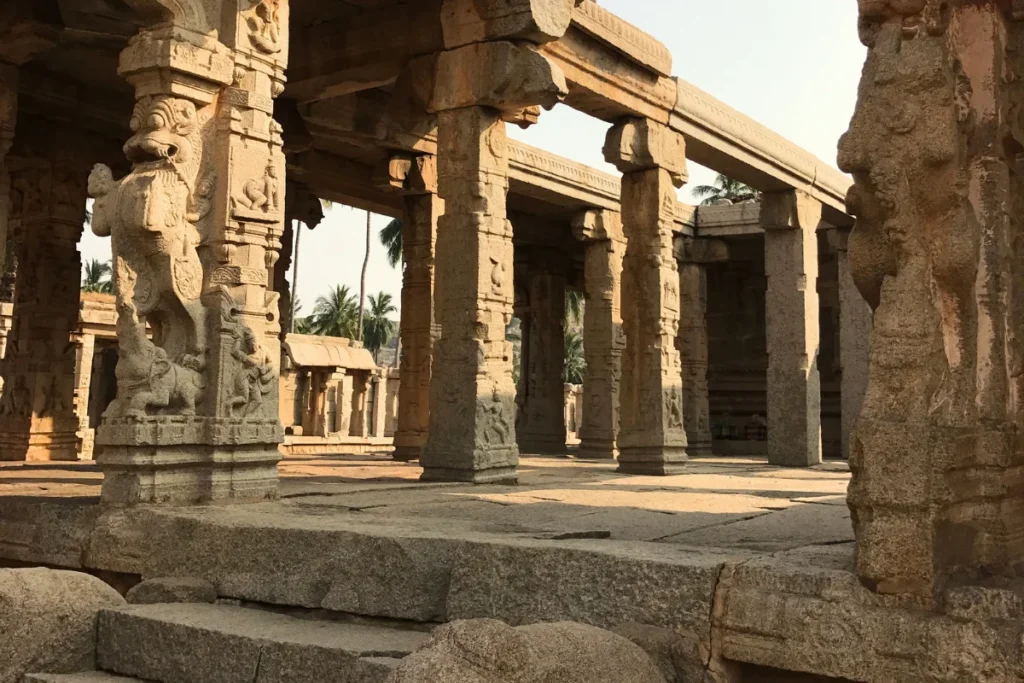
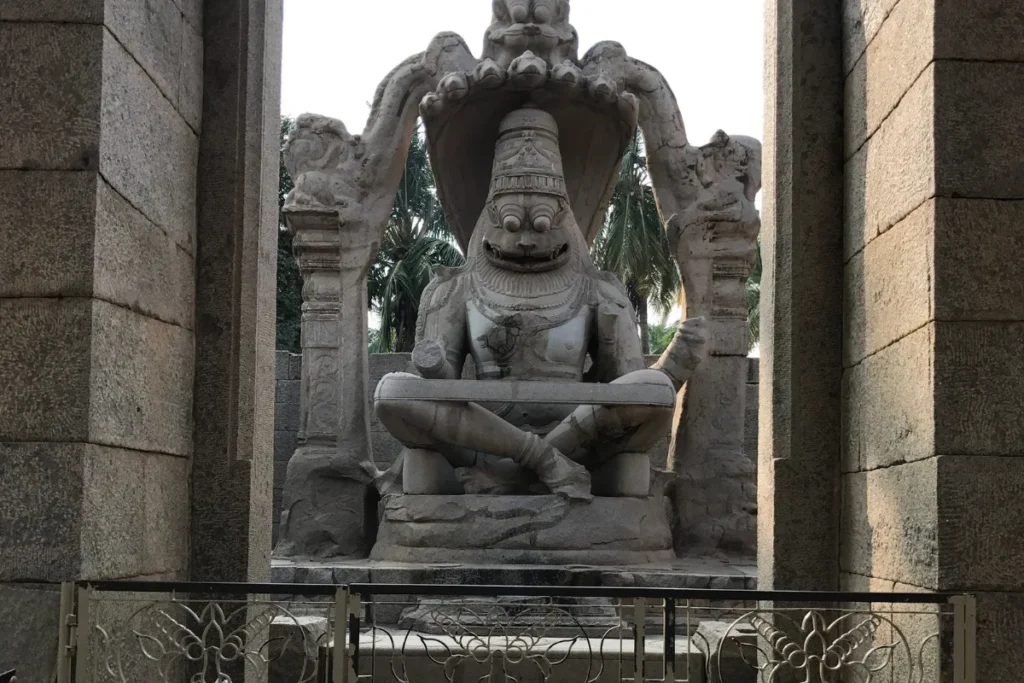
We visited the Hoysaleshwara Temple without knowing what we were looking at. Over 20,000 carvings on the exterior walls. Without context, it is a single overwhelming surface. With a guide, it becomes a narrative. Our guide pointed to a panel where a sculptor had hidden his own face inside the border of a frieze. Twelve centuries later, that face is still there, visible only if someone shows you where to look.
At Hampi, the musical pillars at the Vittala Temple are interesting without explanation. With a guide who understands the acoustic properties and the Ramayana carvings, they are extraordinary.
The cost is typically INR 500 to 1,500 for a couple at most Indian heritage sites. The difference between seeing and understanding is worth many times that, and a good guide will also tell you which sections of a site are safe to wander and which require more caution, especially around crowds, uneven terrain, or wildlife-adjacent paths.
Pick One Region
India is not one country in the way the word usually works. The food changes every two hundred kilometres. The language shifts at state borders. The climate, the architecture, the spiritual traditions, all of it transforms.
The travellers who try to combine North and South India in a two-week trip come home exhausted and remember airports more vividly than temples.
Pick one region. Go deep rather than wide. South India alone contains hill stations, heritage ruins, coastal drives, coffee plantations, temple towns, and enough variety to fill three separate trips without repeating a destination. We have been exploring South India from our Bengaluru base for years and have not finished.
What to Know Before You Walk Into a Temple
Etiquette Nobody Explains at the Door
India’s temples, mosques, gurdwaras, and churches each have their own protocols. International visitors often discover these at the entrance, which is too late to prepare.
Shoes come off. At every Hindu temple, Sikh gurdwara, Jain temple, and most mosques, footwear must be removed before entering. Designated shoe racks or attendants hold them. Wear slip-on sandals rather than laced shoes. On hot days, temple stone floors can burn bare feet. Socks are usually permitted and recommended.
Leather is prohibited in Jain temples. Not just leather shoes. Leather belts, leather wallets, leather watch straps, leather camera straps, and leather bags. All of it must be checked at the entrance. At sites with mixed Hindu and Jain heritage, awareness of this rule in advance saves an awkward moment at the door.
Cover your head in gurdwaras and mosques. Sikh gurdwaras require head covering for everyone, men and women. Most gurdwaras provide clean scarves at the entrance. Mosques require women to cover their heads. Carrying a lightweight scarf in your daypack solves both situations without relying on what is available there.
Walk clockwise around shrines. In Hindu temples, the circumambulation of a deity must move clockwise. The direction carries spiritual significance and is not arbitrary. Follow the flow of other devotees and you will get it right without needing to ask.
Use your right hand. For receiving prasad, for exchanging money, for eating. The left hand is culturally associated with hygiene. This applies across most of India, not just at religious sites.
Photography rules vary by site and by shrine within the same site. Outer courtyards are usually fine. Inner sanctums are almost always prohibited. The principle is the same everywhere: when in doubt, ask before shooting.
Accept prasad gracefully. If offered food, flowers, or vermilion at a temple, accept with your right hand. You do not need to follow the faith to receive it. The offering is a gesture of inclusion, and refusing it can cause unintended offence.
The Scams That Actually Happen
Most of India is safe and most people are helpful. The scams that exist are concentrated at specific high-traffic points and follow predictable patterns.
The ‘your hotel is closed’ scam operates primarily around major railway stations and airport taxi queues. You hire a taxi. The driver calls someone, speaks rapidly, then tells you your hotel is closed due to a local festival, protest, or overbooking. He offers to take you to a ‘government-approved tourist office’ instead, where agents pressure you into buying expensive private tours or redirecting to commission-paying hotels. The defence: maintain active mobile data, call your hotel directly, and state clearly that your reservation is prepaid and confirmed. If the driver persists, exit the vehicle in a busy area and switch to a ride-hailing app.
The broken meter is an auto rickshaw claiming the meter is broken and demanding an inflated flat fare. The defence: insist on the meter, use the prepaid auto counter at railway stations and airports, or book through an app instead.
The unsolicited guide approaches at major monuments and begins giving you information before you have asked for it. After several minutes, they demand payment. The defence: decline politely at the first approach. If you want a guide, hire one from the official monument desk.
The gem shop redirect happens when your driver suggests a quick stop at a friend’s gem shop, carpet store, or craft bazaar. The prices inside are inflated and the driver receives a commission. The defence: decline any unplanned shop visits suggested by transport providers.
Our own experience across six states: we have encountered the broken meter situation twice, both times in cities outside our home base, and both times switching to an app-based ride resolved it immediately. We have never encountered the fake tourist office scam, mostly because we drive ourselves. The scam ecosystem targets travellers who are dependent on others for navigation. Self-driving, using ride-hailing apps, and maintaining an active data connection eliminate most of the risk.
What Your Stomach Needs to Know
The phrase commonly used for traveller’s diarrhea exists because the condition is common enough in India to have earned its own nickname. The cause is not dirty food. It is unfamiliar bacteria. Your gut, calibrated to your home country’s microbial environment, encounters a new ecosystem, and the adjustment period produces symptoms.
For the first three days, eat lightly. Rice, dal, plain bread, bananas. Give your system time to adjust before ordering the street-side pani puri. We eat everything India offers, but we live here. A first-time visitor’s stomach has not had years to calibrate.
If it happens, Oral Rehydration Salts are the first response. They are available at every pharmacy in India for a small cost per sachet. Dissolve in bottled water and drink steadily. Dehydration is the danger, not the diarrhea itself.
What to carry: antacid, an anti-diarrheal, basic pain relief, and any prescribed course of antibiotics your doctor recommends before departure for traveller’s diarrhea specifically. Band-aids, antiseptic cream, and insect repellent complete a reasonable kit.
Drink bottled water only, and verify the seal is intact before opening. In cities, branded bottled water is available everywhere. On highways and at rural sites, carry your own supply. We fill reusable bottles at the hotel each morning and carry them through the day.
For international visitors, consult a travel medicine clinic before departure. Commonly recommended vaccinations for India include Hepatitis A, Typhoid, and a Tetanus-Diphtheria booster. Rabies pre-exposure prophylaxis is sometimes advised for extensive rural travel, and malaria prophylaxis may be recommended for specific regions. A Yellow Fever certificate is mandatory if arriving from an endemic country. None of this is medical advice…a travel medicine professional should make these calls, not a travel blog.
Air quality is a regional, not a national, issue. Delhi’s Air Quality Index regularly exceeds 300 to 400 after Diwali, in October and November, and a mask is not optional during that period. Southern India does not have this problem. This is one more reason we recommend starting in the south for a first trip.
Book on Last Ten Reviews
We have stayed in properties where the overall rating was 4.2 but the last ten reviews described a decline in cleanliness. We have stayed in properties where the rating was 3.8 but the last ten reviews described a recent renovation. The overall rating is an average across years. The last ten reviews are what the property is right now.
Our Kotagiri homestay listing showed beautiful photographs. The room did not match. The Wayanad property hosted by Bibin was exactly as described: warm, genuine, and surrounded by nature. The difference was visible in the recent reviews, not the overall score.
Cook When It Makes Sense
We cook meals in hotel rooms when the alternative is expensive tourist restaurants or when the nearest food option is unreliable. Bread, eggs, and a travel kettle cover breakfast. Instant poha, Maggi, and oats cover dinner on long driving days.
This is a budget strategy and a time strategy. When you eat in the room, you do not spend forty-five minutes finding a restaurant. You eat, you rest, you give the hours to the place rather than to the logistics of feeding yourself.
In Puri, where Bengali food was available at the hotel, we ate out happily because the food was good, affordable, and felt like home. The decision is situational, not ideological. When the local food is worth the money, eat it. When it is not, carry supplies.
Travel October to March for Most of India
| Region | Best Window |
| South India plains and coast | October to March |
| Hill stations (Nilgiris, Kodaikanal, Munnar) | April to June, September to November |
| Hampi and the Deccan Plateau | October to February |
| Goa | November to February |
| East coast (Vizag, Puri, Kolkata) | October to March |
| Northeast and Himalayan | March to May, October to November |
The exception is hill stations, which are at their best when the plains are at their worst. April and May, when Bengaluru is warm and Hampi is 38 degrees, is exactly when the Nilgiris are cool, green, and misty.
Respect the Distance
India is large in a way that maps underrepresent. The straight-line distance between two points and the driving time between them are not related in any predictable way. A 200 km drive in Karnataka might take three hours on a national highway or six hours on a state road. Ooty traffic can add two hours to a hill station bypass that the GPS estimated at twenty minutes.
Two or three sites per day is the maximum that allows you to actually experience what you are visiting rather than merely confirming you were there. At Hampi, by the third morning, we had stopped setting alarms. The place had taken over the schedule. Five days produced more than most ten-day trips because we stopped fighting the distance and started inhabiting the place.
India’s geography also produces dramatically different travel conditions by region, beyond just distance. Northern plains cities carry air pollution levels that southern and coastal cities do not, especially post-Diwali in October and November, when Delhi’s air quality can reach severe levels. Southern cities like Bengaluru, Chennai, and Kochi rarely face this problem. This is another reason we recommend South India for a first visit: the air is cleaner, the pace is gentler, and the infrastructure for independent travel is strong. The north holds extraordinary sites and deserves its own trip, ideally once you have found your rhythm with the country.
If You Are Taking a Train
Indian Railways for First-Time Visitors
We drive. That is our default. But Indian Railways is one of the most extraordinary transport networks in the world, and for travellers without a car, understanding how it works is essential.
The Foreign Tourist Quota reserves a dedicated allocation of berths for foreign nationals and NRIs on premium classes: First AC, Second AC, Third AC, and AC Chair Car. This quota can be booked up to 365 days in advance through the official IRCTC portal, compared to the standard 60-day advance booking window for domestic travellers. Registration carries a modest fee, plus a service fee per FTQ ticket.
Ticket status codes worth understanding before you book: CNF means confirmed…you have a guaranteed seat or berth and can board. RAC means Reservation Against Cancellation…you can board, but you share a berth with another passenger, and a full berth may open up if someone cancels. WL means waitlisted…you do not have a seat and cannot board reserved coaches; if the ticket is not confirmed before departure, it is automatically cancelled and refunded.
Tatkal booking opens one day before departure, at 10 AM for AC classes and 11 AM for non-AC. It is competitive, more expensive than regular fares, and non-refundable. Treat it as the emergency option, not the planning option.
Apps that help: the official IRCTC Rail Connect app for booking, ConfirmTkt for checking waitlist probability before you commit, and a real-time train tracking app for platform and location information once you are travelling.
For local transport within cities, ride-hailing apps operate in most Indian cities and are a more transparent option than negotiating with auto rickshaws on the street. The app provides clear pricing, GPS tracking, and a record of the trip. Verify the vehicle plate, model, and driver photo before boarding.
Visa: More Than a Formality
For international visitors, India offers multiple e-Visa categories through the official government portal. The most common categories for tourists:
| Visa Type | Validity | Entries | Max Stay Per Entry |
| e-Tourist (30-day) | 30 days from issue | Double entry | 30 days |
| e-Tourist (1-year) | 1 year from issue | Multiple | 180 days (US/Japan); 90 days (others) |
| e-Tourist (5-year) | 5 years from issue | Multiple | 180 days (US/Japan); 90 days (others) |
The date format trap: India formats visa dates as DD/MM/YY. A visa valid until 03/06/26 means June 3, 2026, not March 6, 2026. Misreading this format has caused real overstay situations. Check carefully, more than once.
Apply at least several days before travel, and ideally much earlier. The e-Visa application window opens 120 days before arrival for 1-year and 5-year visas, and 30 days before arrival for the 30-day visa.
Carry a printed copy. Airlines may check your ETA status at boarding, and immigration officers will stamp your passport on arrival. Having the printed confirmation in hand eliminates avoidable delays.
Passport requirements: at least six months of validity remaining from the date of application, and at least two blank pages for stamps.
Beware of fake visa websites. There is only one official portal for Indian e-Visas, and it ends in .gov.in. Multiple fraudulent sites offer expedited processing at inflated fees. If the URL does not end that way, close it.
Overstay penalties are severe: fines, potential detention, and multi-year entry bans. If your travel plans change and you risk overstaying, contact the nearest Foreigners Regional Registration Office immediately rather than waiting.
The Small Things That Matter
- Download offline maps before entering any forest corridor. Bandipur, Wayanad, the Western Ghats highway sections: signal drops without warning, and being lost without a map in a forest corridor is a genuinely risky situation, not an inconvenience.
- Wildlife is not a delay. It is the trip happening. Forest roads in Karnataka and Kerala pass through active wildlife corridors. An elephant, a bison, a troop of monkeys: these are not obstacles. They are the reason the road goes through a forest. Keep a respectful distance and never exit the vehicle near larger animals.
- Nandi Hills monkeys are fast. Food in your hand is food in their hand. Secure everything, and do not make eye contact or sudden movements if one approaches.
- The Adiyogi light show is worth the drive. The parking is not worth underestimating. We waited ninety minutes to exit the parking area after the show at Chikkaballapur. Plan for this. Do not park deep inside the lot if you want to leave on time.
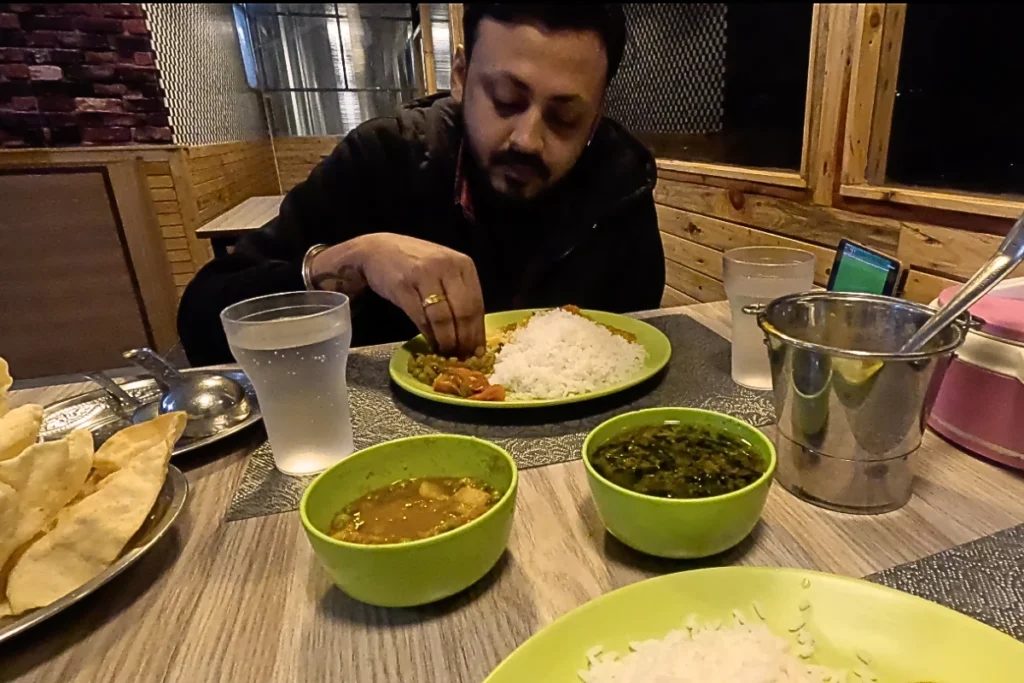
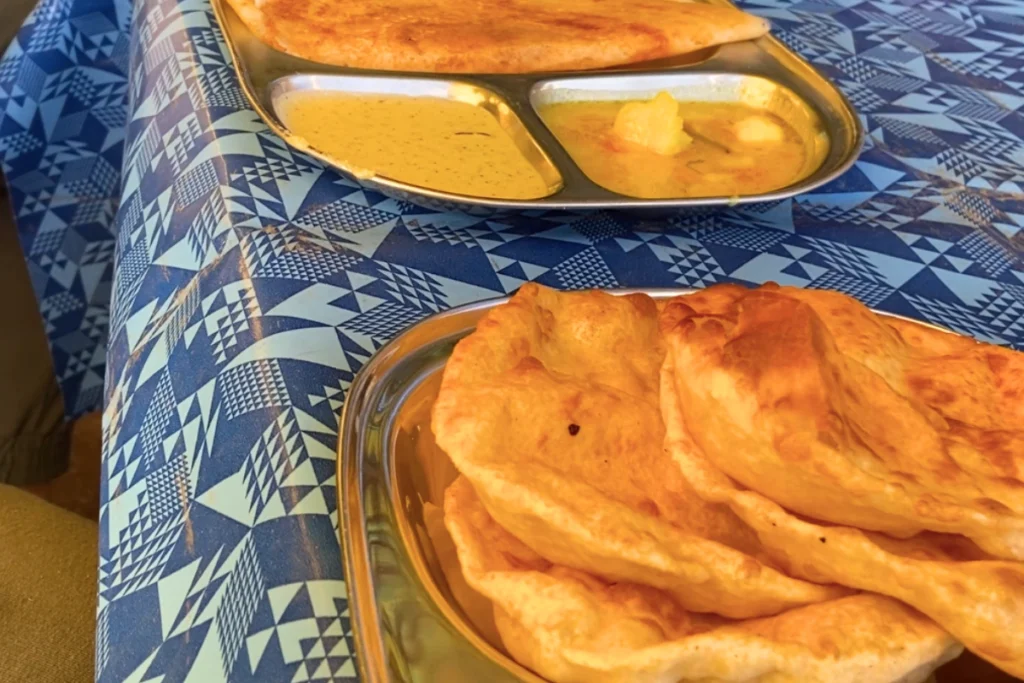
- If a restaurant has no name, no menu, and three options, eat there. Some of our best meals in India have come from roadside places that offer dal, rice, and omelette without ceremony. The food is fresh because the turnover is high. That said, use basic judgement on hygiene, especially with water and anything uncooked, if you have a sensitive stomach.
- Puri is not a tourist destination for us. It is origin. If you are visiting Puri for the first time, go for the Jagannath darshan at 4 AM, not during the day. The morning queue, the devotion in the dark, the specific energy of a temple that has operated for eight centuries: that is what Puri is.
- What plug adapter you need: India primarily uses Type D (three round pins in a triangle) and Type C (two round pins). A universal adapter that covers both, the same one useful for most other countries, solves this without a dedicated India-only purchase.
- The best souvenir from India is not an object. It is the name of the restaurant you found by accident, the recommendation from the auto driver who took you the wrong way first, the photograph of the sunflower field that was not on any itinerary. India does not give you the trip you planned. It gives you a better story. The story is the souvenir.
“India does not give you the trip you planned. It gives you a better story. Drive carefully enough, and prepare thoroughly enough, to be there to tell it.”