This Cairo to Aswan sleeper train experience guide is built from Day 4 of our nine-day Egypt trip…the fourteen hours that connected the desert to the Nile.
Twenty-four hours earlier, we had been sleeping on a tiny tent on the Saharan desert.
A tiny tent. Extreme cold. A fire that fought the wind. A sky so dense with stars that the constellations disappeared inside the density. Breakfast on a blanket in the Sahara at dawn…flatbread and tahini, with our Bedouin guide Mahmood sitting across from us calling us “brother.”
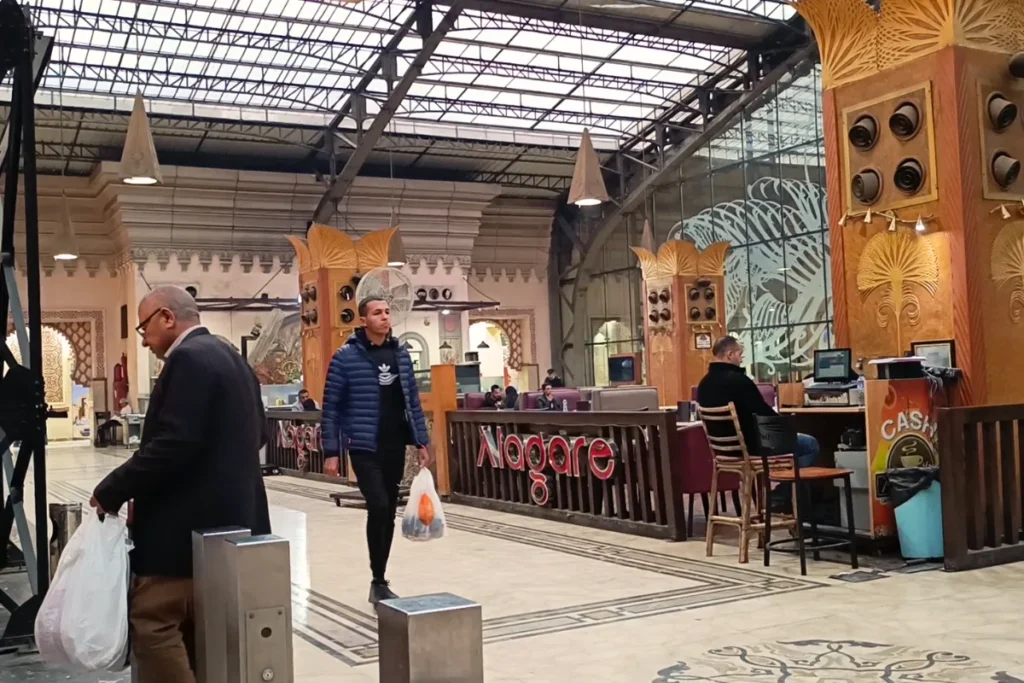
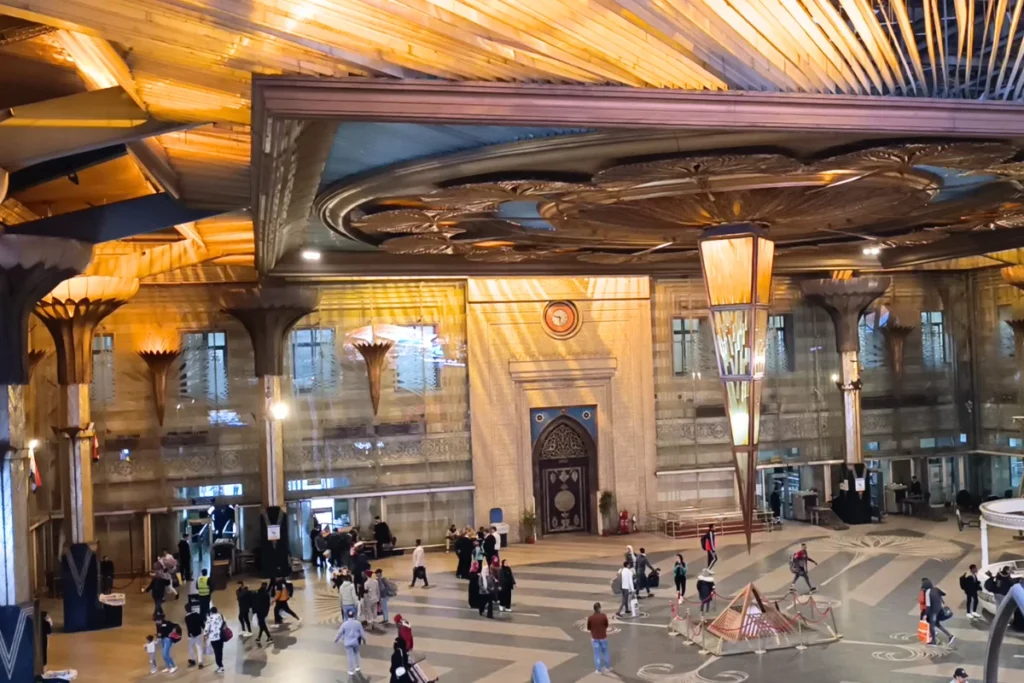
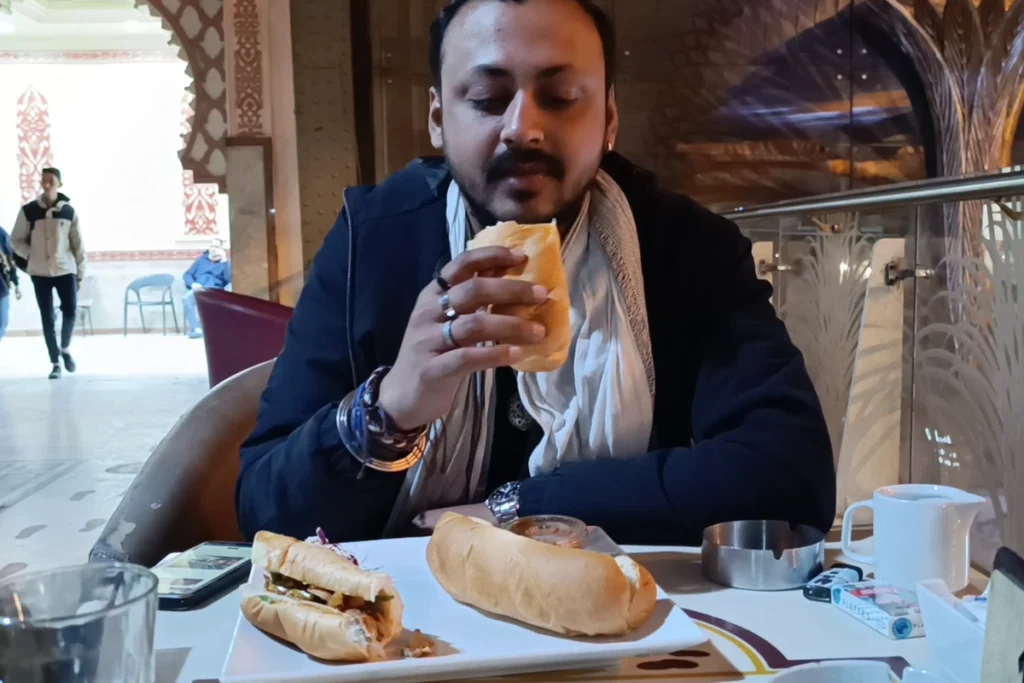
Now we were sitting in the cafeteria of Cairo’s Ramses Station, drinking coffee, listening to Arabic music playing from speakers somewhere in the golden-lit ceiling, waiting for a train.
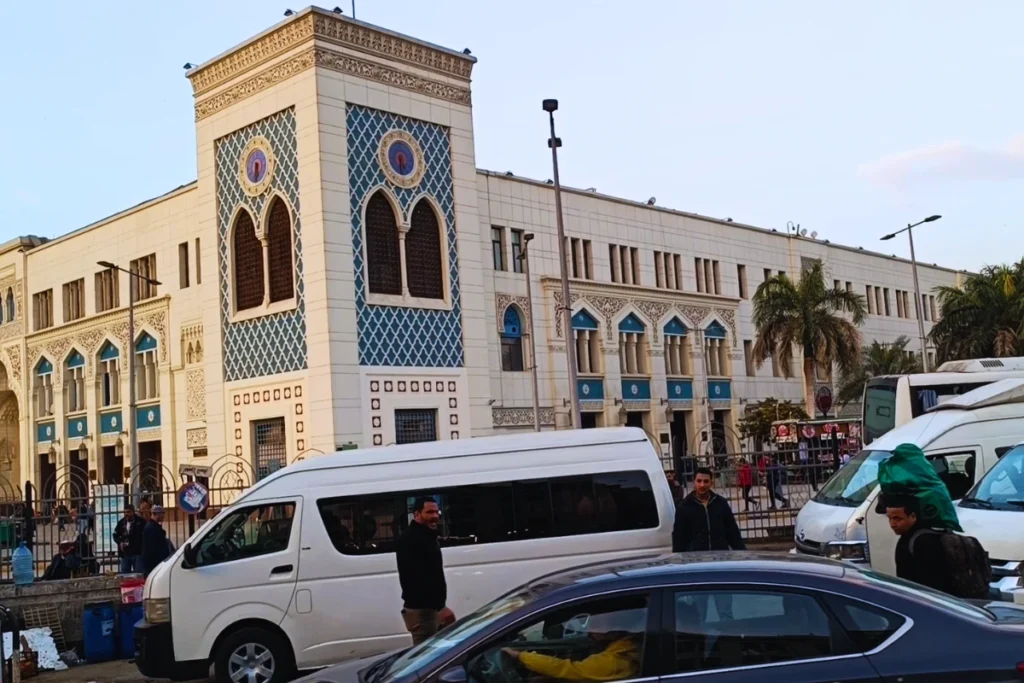
The contrast was sharp enough to feel physical. One day ago, we were in the desert, further from electric light than we had ever been. Now we were inside a 19th-century railway station with arched ceilings and Egyptian design motifs and a menu card that offered shawarma. We ordered the shawarma. It arrived looking nothing like shawarma. It was, by any honest assessment, a hotdog. A decent one. We ate it without complaint. After almost two days of desert food, anything from a kitchen felt like a form of luxury.
Our train was at 7:30 PM. We had arrived at 5:30. The two hours between were the decompression, the hinge between the first half of Egypt and the second. The pyramids and the desert were behind us. The Nile, the temples, and the cruise were ahead. The sleeper train was the bridge.
What we did not yet know, sitting in that cafeteria at 5:30 PM, was that the bridge itself would become one of the most memorable parts of the trip. Not because of what happened on the train. Almost nothing happened on the train. Because of what we saw through the window the next morning.
“Almost nothing happened on the train. The fourteen hours from Cairo to Aswan were quiet, dark, and ordinary. What happened when the morning light came through the window was not ordinary at all.”
- What Is the Cairo-Aswan Sleeper Train?
- What Ramses Station Feels Like
- What the Cabin Is Like
- What the Evening Looks Like
- What the Morning Does
- The Arrival in Aswan
- Why Take the Train Instead of Flying
- How to Book
- What It Costs
- Before You Go: What Actually Matters
- Frequently Asked Questions About Our Sleeper Train Journey
What Is the Cairo-Aswan Sleeper Train?
The Watania sleeper train…now rebranded as Abela Trains…is an overnight rail service from Cairo Ramses Station to Aswan, covering approximately 900 kilometres in fourteen hours. It departs at 7:30 PM and arrives at approximately 9:35 AM the following morning. The train includes sleeper cabins with two berths, a fold-down table, a window, and a call button for the attendant. Dinner and breakfast are included in the ticket price.
It is the only sleeper train service operating in Egypt for tourists.
A domestic flight from Cairo to Aswan takes approximately ninety minutes and costs roughly the same. The flight gets you there faster. The train gets you there differently. For the kind of trip we were taking…one where the journey is always part of the point…the train was never a question.
What Ramses Station Feels Like
Ramses Station in Cairo is beautiful in a way that train stations rarely are anymore.
The interior is large, high-ceilinged, and lit with golden-coloured light that bounces off the arched stonework and the Egyptian design elements built into the structure. It does not feel like a transit point. It feels like a building that was designed to make departure feel significant. The cafeteria sits inside the main hall. Arabic music plays from somewhere in the ceiling. The shawarma is a hotdog.
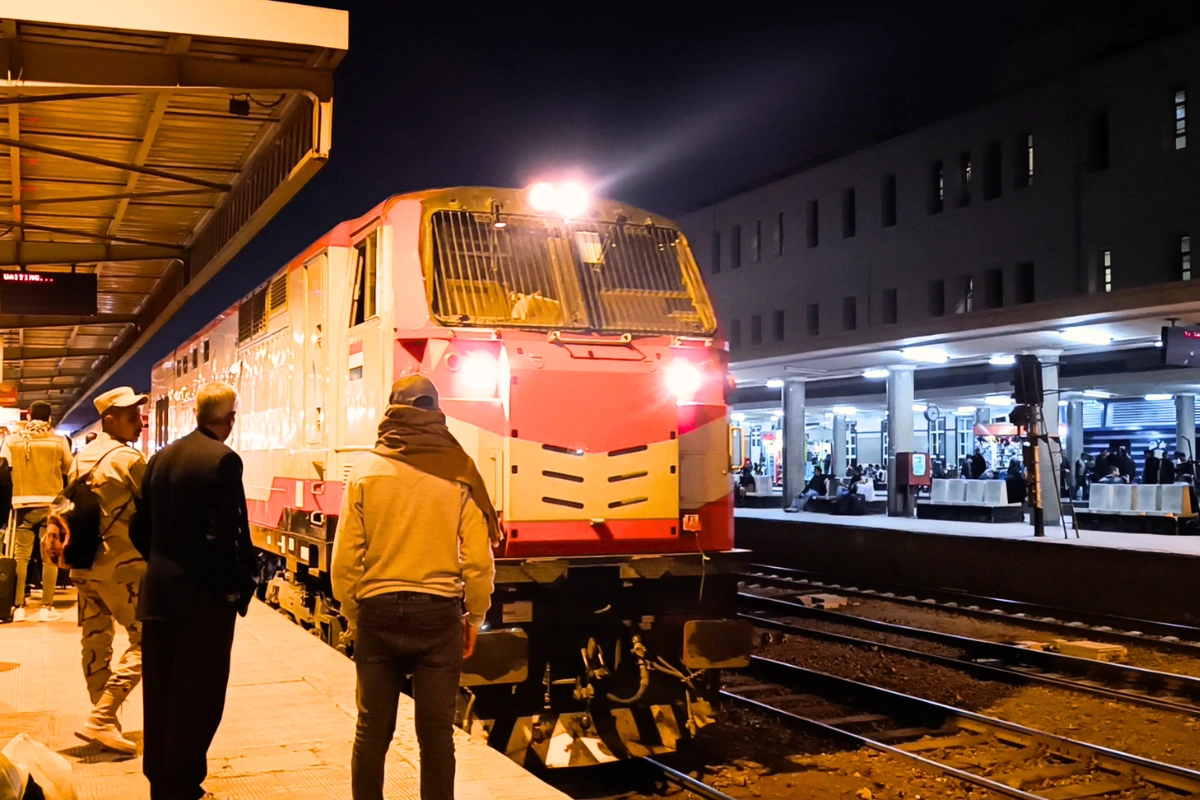
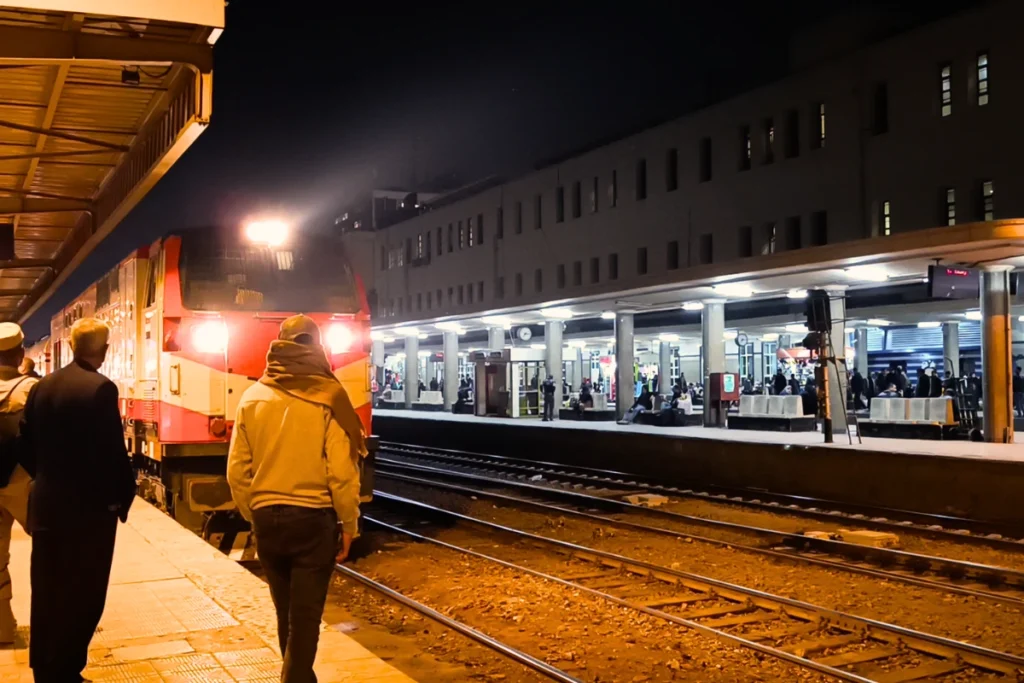
We arrived early, as we had been advised. Platform 8 is where the sleeper train usually departs, but it can change to Platform 11. Arriving with time allows you to confirm with station officials, scan your tickets, and navigate the subway tunnel that connects the main concourse to the platform.
On Platform 8, other passengers were already waiting. Ticket checkers verified multiple times. Then the train arrived, exactly on time, and the doors opened. We boarded, found our cabin, settled in. The train pulled out of the station before we had finished looking around the room. Right on time.
What the Cabin Is Like
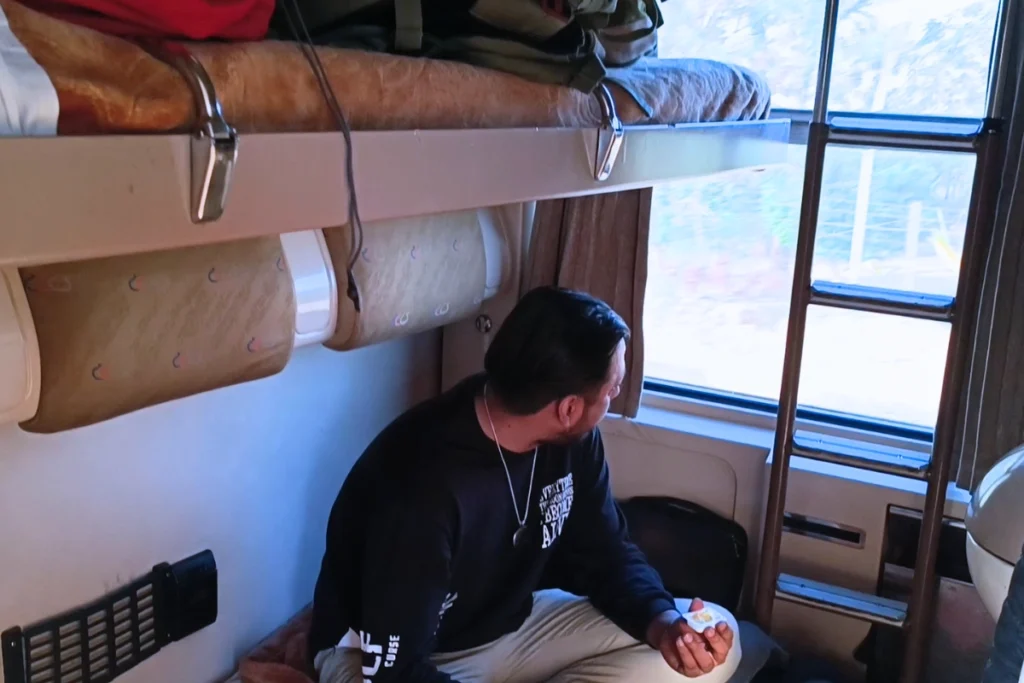
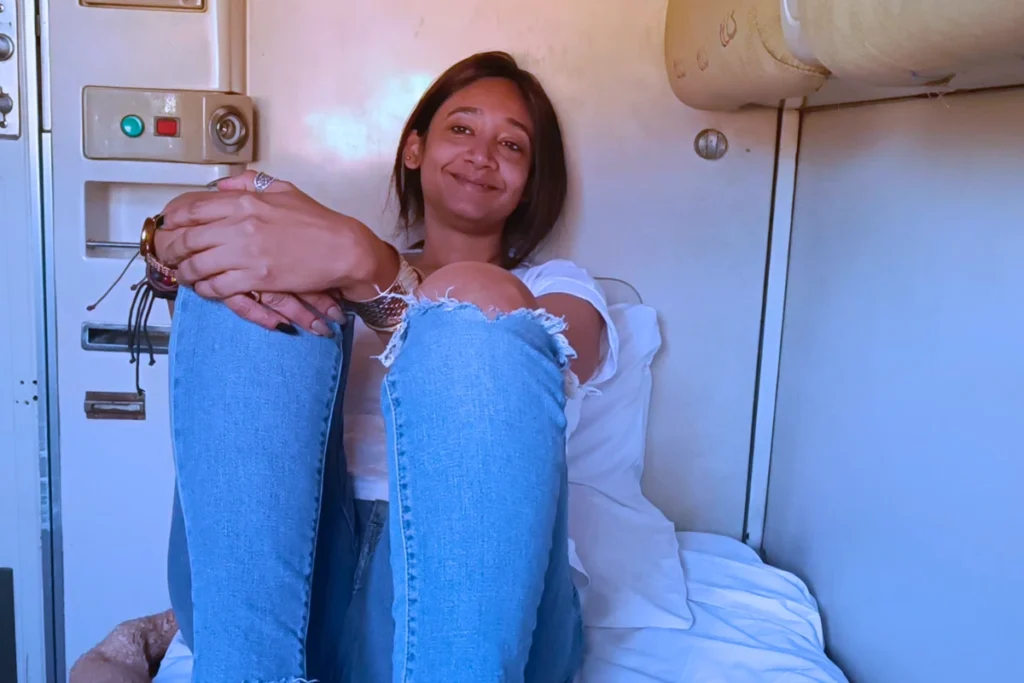
The cabin is compact and functional. Two berths, upper and lower, that fold out from the wall. A small fold-down table between the window and the berths. A call button for the attendant. A window onto the passing landscape. A lockable door.
The space is clean. The bedding is clean. The bathrooms…located at both ends of the carriage, accessible via a red-carpeted corridor…are clean. This is worth stating plainly because the reviews we had read before booking ranged wildly between “luxurious” and “terrible.” Our experience was neither. It was a comfortable, well-maintained cabin on a train that did exactly what it was supposed to do.
As Indians, we grew up with overnight trains. The Rajdhani. The Duronto. The Shatabdi. Indian rail culture is something our generation has in its bones. Boarding an overnight train feels familiar in a way that boarding a plane does not…the rhythm of settling in, arranging your things, looking out the window as the city thins and the countryside appears. The Watania cabin was different from an Indian sleeper in several ways. But the fundamental experience was the same. You are moving. The world is changing outside. You are lying down in a space that is carrying you somewhere while you rest.
There is an intimacy to sleeper trains that no other transport provides. Two people in a small room, moving through the night together, sharing a window. For us, on a trip where every day had been extraordinary, this was the ordinary interlude. The necessary quiet between two peaks.
What the Evening Looks Like
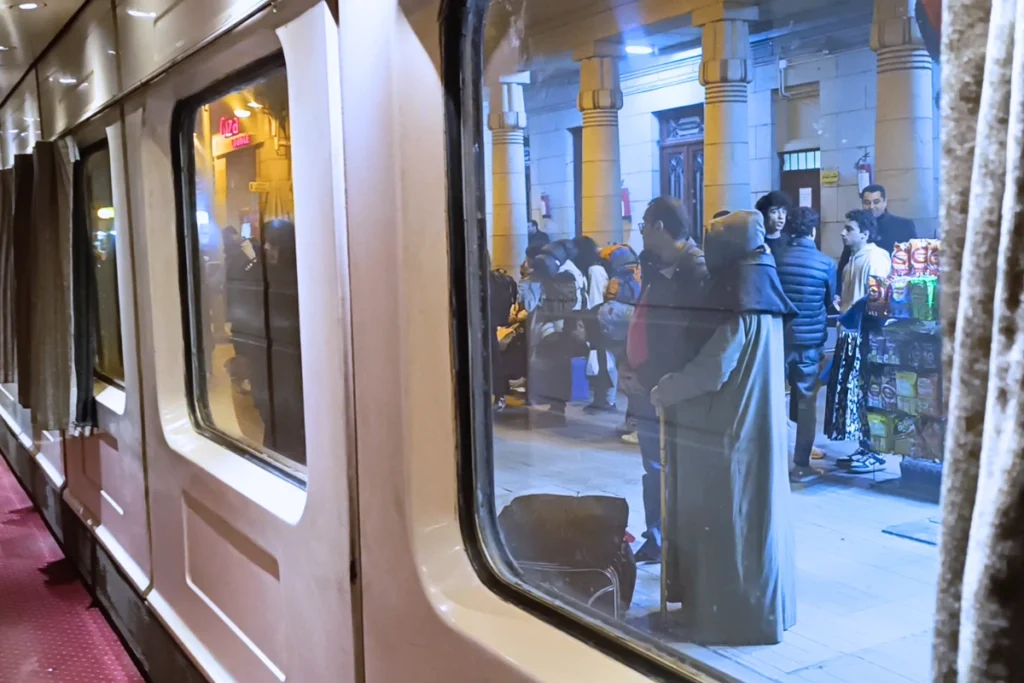
The first hour out of Cairo, the city dissolves. The lights thin. The buildings spread apart. The landscape darkens until there is nothing to see except the occasional village light passing and disappearing.
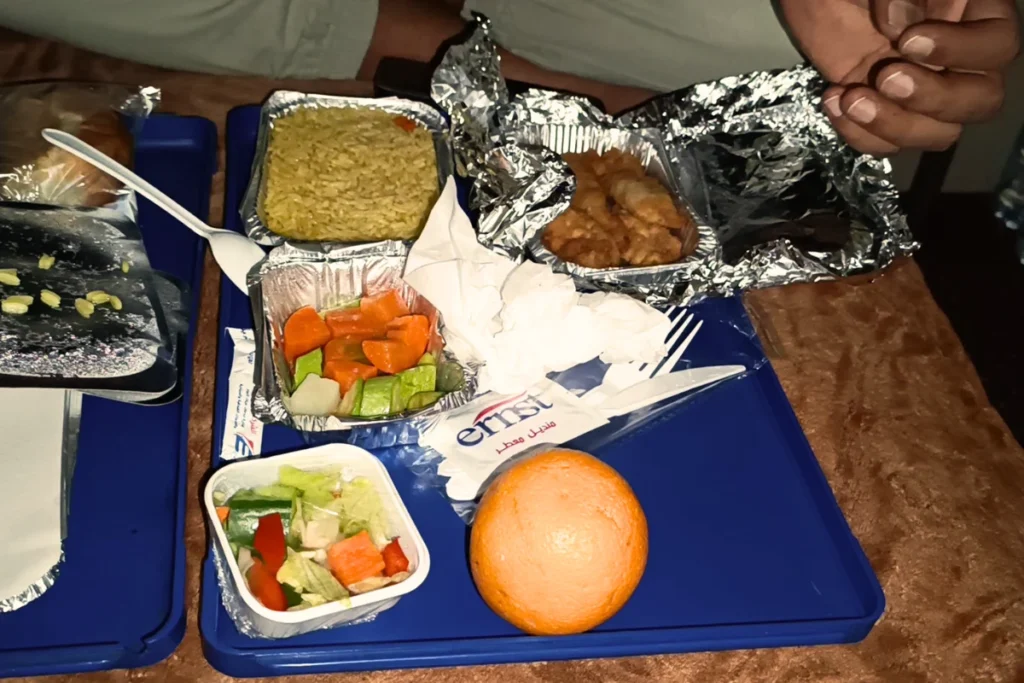
Dinner arrived without us asking. A knock on the cabin door. A tray: rice, chicken nuggets, bread, juice, fruit. The food was simple and adequate. Not remarkable. Not disappointing. The kind of meal that exists to sustain you through the night rather than to become a memory.
We ate on the fold-down table, facing each other, the train rocking gently, the window black with night. After the desert, where every meal had been an event, this felt pleasantly unremarkable. A return to ordinary rhythm after two extraordinary days.
After dinner, the attendant collected the trays. We adjusted the berths. Sumana took the lower, and Akash the upper. The train rocked. The rails made their sound. Sleep came easily.
We had spent the previous night on sand under the Milky Way. This night, we spent in a cabin with a locked door, clean sheets, and the hum of a train carrying us 900 kilometres south through the spine of Egypt. Both were extraordinary in different ways. The desert was extraordinary because of what it removed. The train was extraordinary because of what it provided: the specific comfort of being carried somewhere in the dark by a system that knows where it is going even when you are asleep.
“The desert was extraordinary because of what it removed. The train was extraordinary because of what it provided: the specific comfort of being carried somewhere in the dark by a system that knows where it is going even when you are asleep.”
What the Morning Does
This is the section the train exists for.
We woke to light. Not alarm light. Window light. The kind that enters a room gradually and changes the colour of the air before you open your eyes.
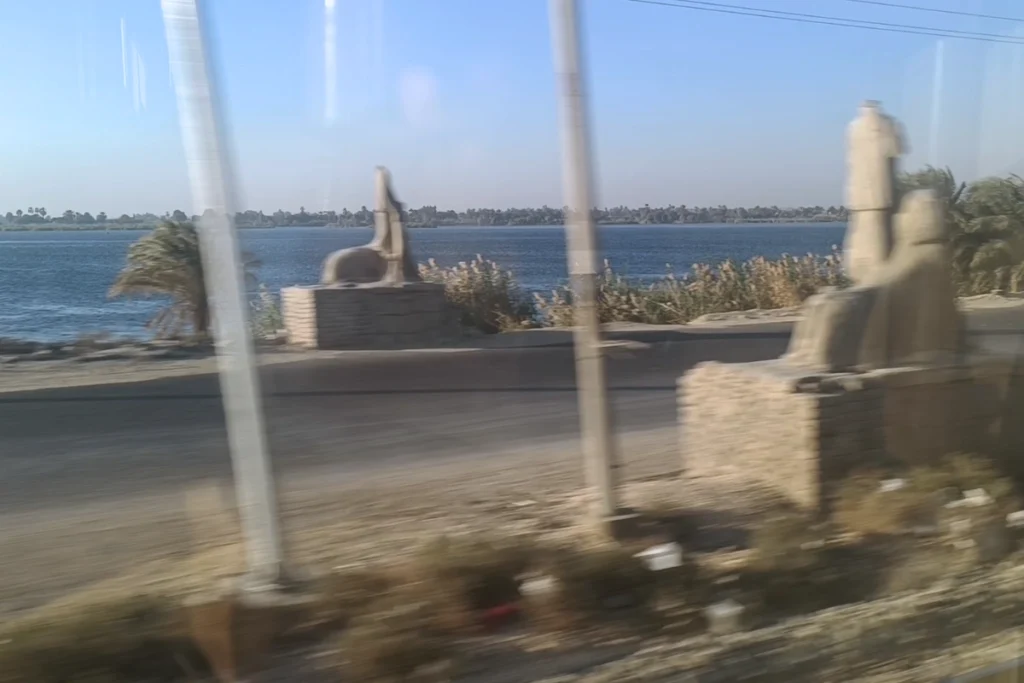
Looking out through the cabin window, we saw rows of palm trees. Not a few. Rows of them, lining the track on both sides, extending in every direction, their fronds catching the early light.
Then the Nile appeared.
Wide and blue and unhurried, running alongside the tracks as though it had been waiting for us to wake up before it showed itself. The colour was exactly what it is in photographs. This is a fact we had not believed until we saw it. The Nile is genuinely, accurately, photographically blue. Not tinted. Not enhanced. Blue, the way the sky is blue on a clear day. The blue of a river that has been flowing through this landscape for longer than any civilisation that has lived beside it.
Palm trees. The Nile. Flat desert beyond. This landscape has looked essentially like this for several thousand years. The pharaohs who ruled Egypt three thousand years ago would have seen this same composition: palms, water, sand, sky. The train added a window frame. Everything else was unchanged.
We sat in the cabin and looked out for a long time.
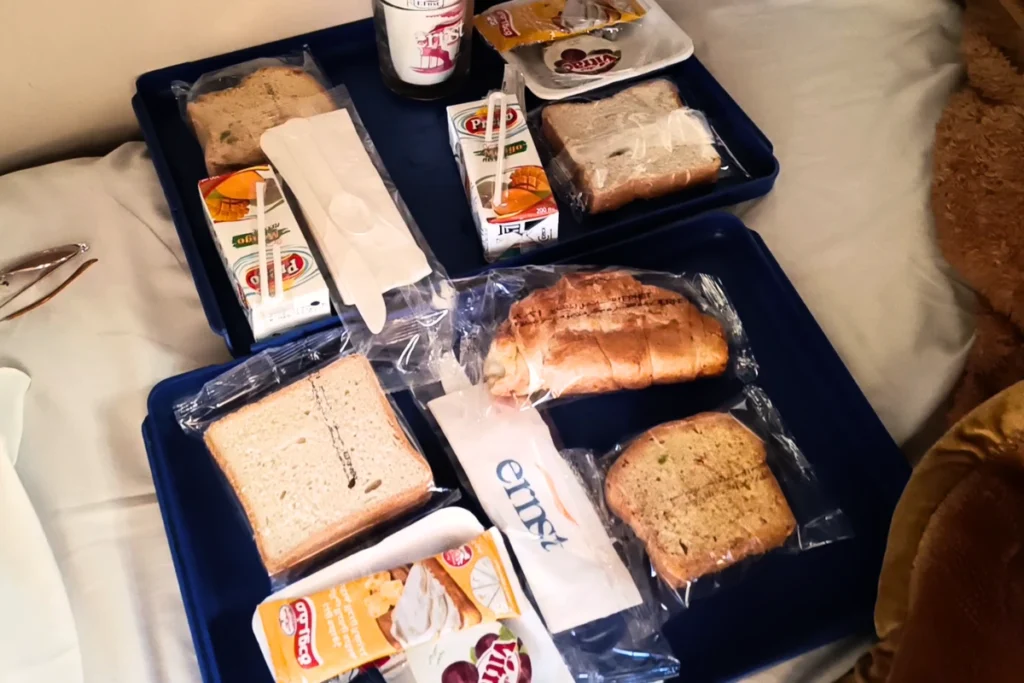
Breakfast arrived. A knock. A tray. Juice, bread, cheese, butter, coffee. We ate beside the window without looking at the food. The food was there. The Nile was there. The Nile won.
Akash came back from freshening up in the bathroom and stood at the window watching the landscape pass. One of us said, still slightly sleepy, rocking with the train: “I rode for the first time in such a train. I really like this.” The other one nodded. There was nothing to add.
The train arrived in Aswan at 9:35 AM. Exactly on time. We had heard it sometimes runs late. Our experience was flawless.
The Arrival in Aswan
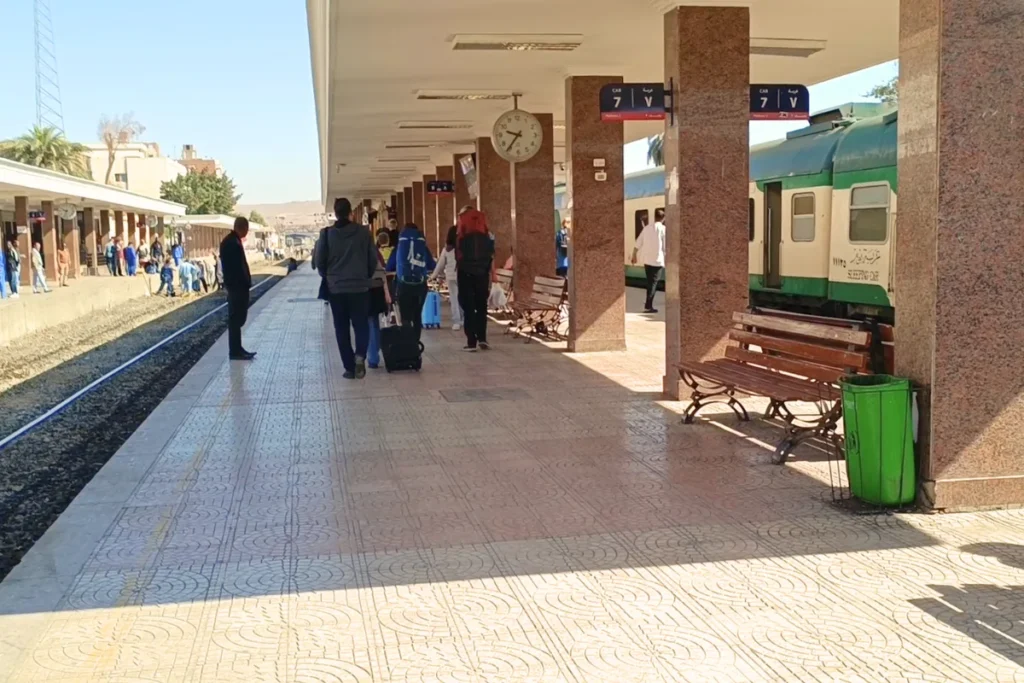
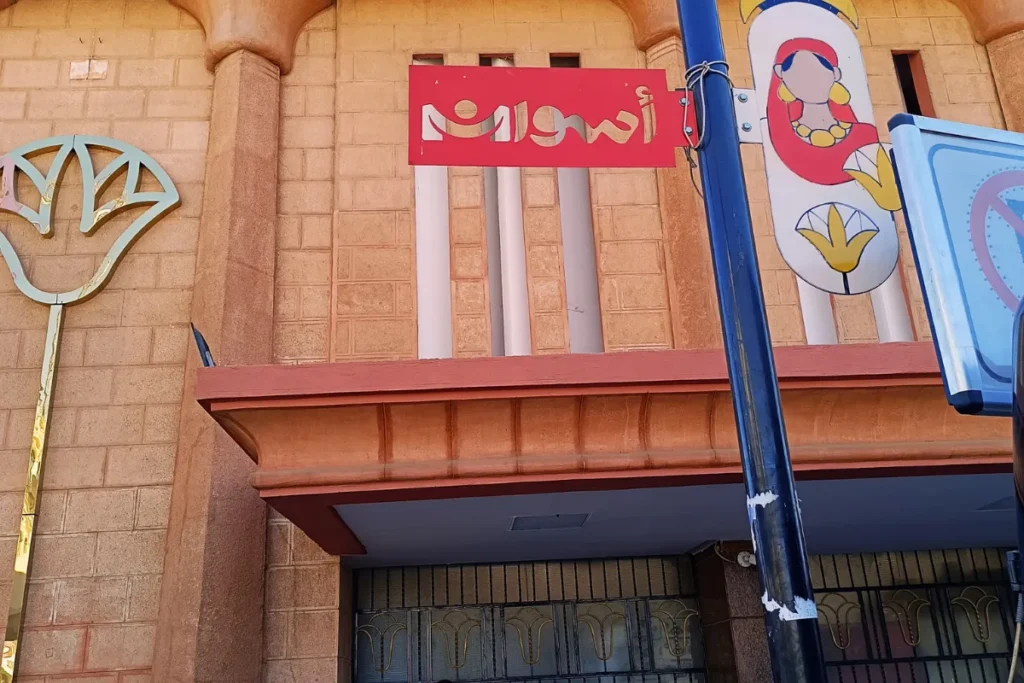
Outside Aswan station, we waited with other passengers. Multiple groups, all waiting for their respective cruise operators. After a short while, someone from the King Tuti arrived to collect us. A ten-minute drive through Aswan brought us to the Nile riverbank. We walked through three moored cruise ships until we reached ours. The cabin door opened. We looked out the window at the water.
Akash said: “Never in my life did I think I would be in such a beautiful place.”
The sleeper train had carried us from the desert to the Nile. The delivery was seamless. The morning view through the cabin window was the receipt.
Why Take the Train Instead of Flying
The flight from Cairo to Aswan takes ninety minutes. The ticket is roughly the same price as the train. The flight gives you Aswan by lunch. The train gives you Aswan by mid-morning, which is approximately the same useful arrival time since Nile cruise check-in starts at noon.
The difference is not efficiency. It is experience.
The flight gives you two airports and a seat belt sign. The train gives you a cabin with a window, dinner, sleep, and a morning where the Nile appears alongside the glass in a colour you did not believe was real.
We did not take this trip to be efficient. We took it to feel something. The sleeper train understood the assignment.
If you are the kind of traveller who wants to arrive as quickly as possible, fly. If you are the kind who understands that the journey between two points is sometimes the point itself, take the train.
How to Book
We booked our tickets online before arriving in Egypt, through the official Watania/Abela booking portal. Pre-booking is strongly recommended. Walk-up tickets at Ramses Station are available but risky, particularly in peak season (November to April) when demand is high.
Important: The train has been rebranded from Watania to Abela Trains. The operator name and booking website may have changed since our visit. Verify the current booking method before your trip.
We used a credit card for online booking. Verify whether international cards are currently accepted before your travel date.
Carry a printed copy of your ticket confirmation. The checkers on Platform 8 verified tickets multiple times before and after boarding.
What It Costs
All figures are from our February 2022 trip. Train prices in Egypt may have changed. Verify current fares before booking.
| Item | Cost (Feb 2022) | Notes |
| Sleeper train, one-way, per person | INR 6,500 / ~USD 87 | Dinner and breakfast included. Both berths and window cabin. |
| Comparable domestic flight (Cairo–Aswan, per person) | Roughly the same price range | Faster. Significantly less memorable. Your choice. |
When you factor in that the train replaces a hotel night, includes two meals, and delivers a morning experience that no flight can replicate, the value equation shifts decisively in the train’s favour.
Before You Go: What Actually Matters
- Book in advance. Do not rely on walk-up availability, especially in peak season (November to February).
- Arrive at Ramses Station early. We arrived at 5:30 PM for a 7:30 PM departure. The extra two hours allowed us to confirm the platform, eat, and decompress from the desert.
- The platform is usually 8 but can change. Confirm with station officials on arrival. Navigate via the subway tunnel to reach the platform.
- The cabin is clean and functional, not luxurious. Sheets are clean. Bathrooms are clean. Attendants are professional. The experience is what you make of the window, not the amenities.
- Dinner and breakfast are both included and arrive automatically. Dinner: rice, chicken, bread, juice, fruit. Breakfast: juice, bread, cheese, butter, coffee. Adequate, not remarkable.
- Wake up early. The morning is the reason to take the train. The Nile appears alongside the tracks in the pre-dawn light. If you sleep through it, you miss the emotional centre of the journey.
- The train connects seamlessly to the Nile cruise. Most cruise operators pick up passengers at Aswan station. The 9:35 AM arrival gives you time to transfer and check in before noon embarkation.
- For Indian travellers: if you have taken an overnight train at home, the rhythm is the same. The Watania is quieter and more enclosed than Indian sleepers, but the fundamental experience…moving through the night in a room that is carrying you somewhere…is something our culture understands deeply.
“If you are building an Egypt itinerary, the question is not whether to include the sleeper train. It is whether you are willing to trade ninety minutes of flying for fourteen hours of something you will remember for significantly longer. The Nile does not appear outside an aeroplane window at dawn. It appears outside a train cabin window, blue, wide, and unhurried, looking exactly like the photographs you did not believe were accurate. They were accurate.”