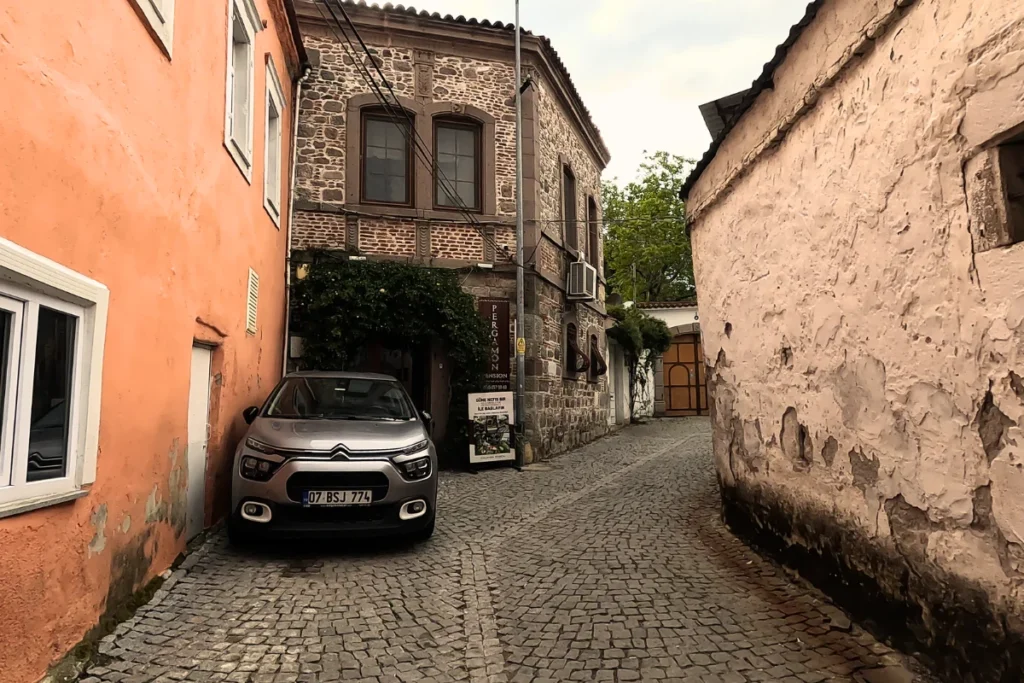
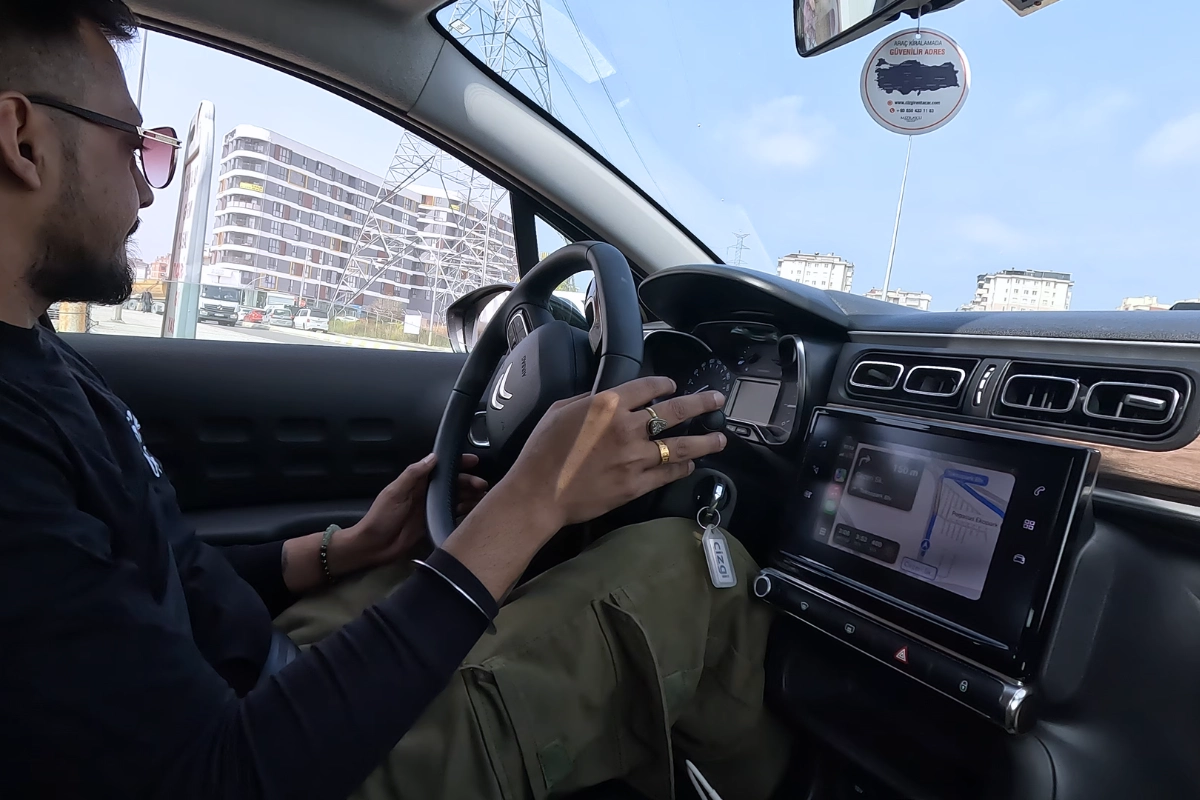
If you are planning on driving in Turkey with an Indian license, navigating the rental counter requirements, IDP verification, and right-hand traffic rules requires proper preparation. From securing your paperwork in India to managing fuel and HGS tolls, here is everything you need to know for a seamless road trip.
We spent twenty minutes at a rental counter watching a man decide whether our entire trip would happen.
The Cizgi Car Rental agent at Sabiha Gökçen Airport held our International Driving Permit, examined it, turned it over, examined it again, consulted something on his screen, examined it a third time, and said nothing. Our 17-day itinerary, our hotel bookings, our archaeological wish list, everything that had been planned over six months of research, depended on whether this document, obtained from an RTO office in India, met the standards of a man in Istanbul who had possibly never seen one from our country before.
He approved it. We exhaled. He led us to a Citroën C3. We adjusted the mirrors. We pulled onto the highway.
The car died within the first kilometre because the fuel tank was empty.
This article exists so that your experience at the rental counter and your first kilometre on Turkish roads go better than ours.
“A 4,000-kilometre road trip through Turkey doesn’t start when you merge onto the highway; it starts at the rental desk, watching an agent inspect your International Driving Permit.”

Step 1: Get the IDP Before Everything Else
The International Driving Permit is the document that the entire rental depends on. Without it, you do not drive. With it, you might still spend twenty minutes watching someone verify it. But at least you have something to show.
How to get it in India: Apply through the Parivahan Sarathi portal (online) or directly at the RTO where your domestic licence was issued. Requirements: a valid Indian driving licence with at least six months remaining, your passport, three to five passport photographs, a medical certificate (Form 1A from a government doctor), and approximately INR 1,000–3,000 / USD 11.70–35 in fees.
Validity: One year from issue, or until your domestic licence expires, whichever comes first. Not renewable. A fresh application is needed after expiry.
What we learned at the counter: Confirming that your rental company accepts an Indian IDP in advance is essential, even if customer support says yes. We had actually messaged Cizgi’s customer support on WhatsApp prior to flying, and they confirmed it was fine. However, when we arrived at the desk, the agent still scrutinised the physical copy for a long time because he was personally unfamiliar with verifying an Indian IDP. It was only after we mentioned our WhatsApp confirmation that he made a quick phone call to double-check with a supervisor while we waited and prayed. He finally approved it, but having your WhatsApp chat confirmation saved on your phone gives you vital leverage if a desk agent hesitates.
Step 2: Book the Car
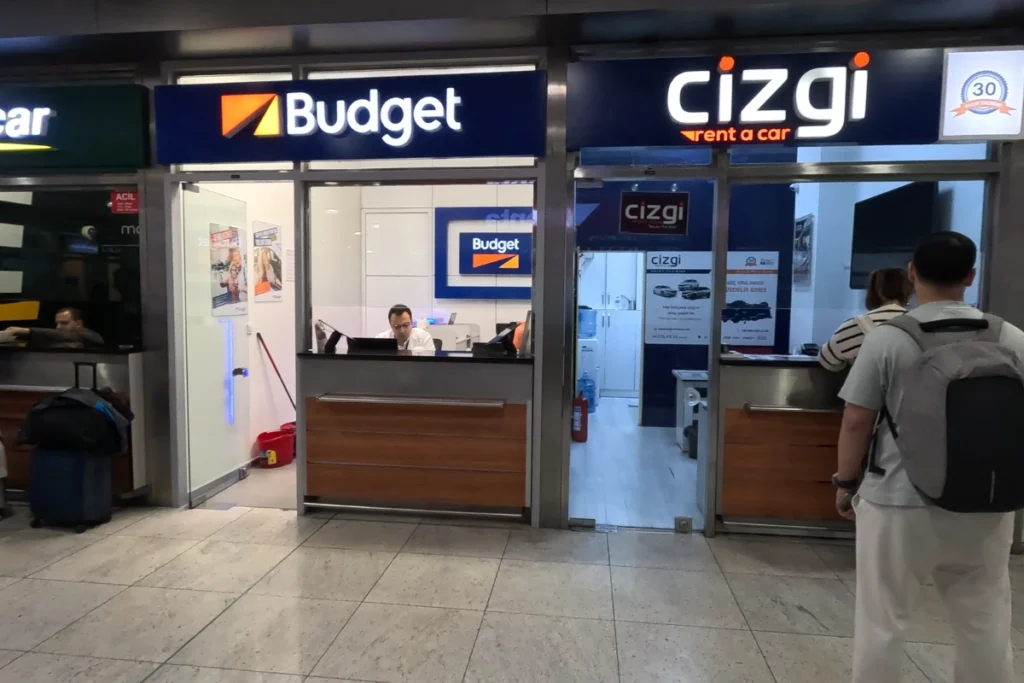
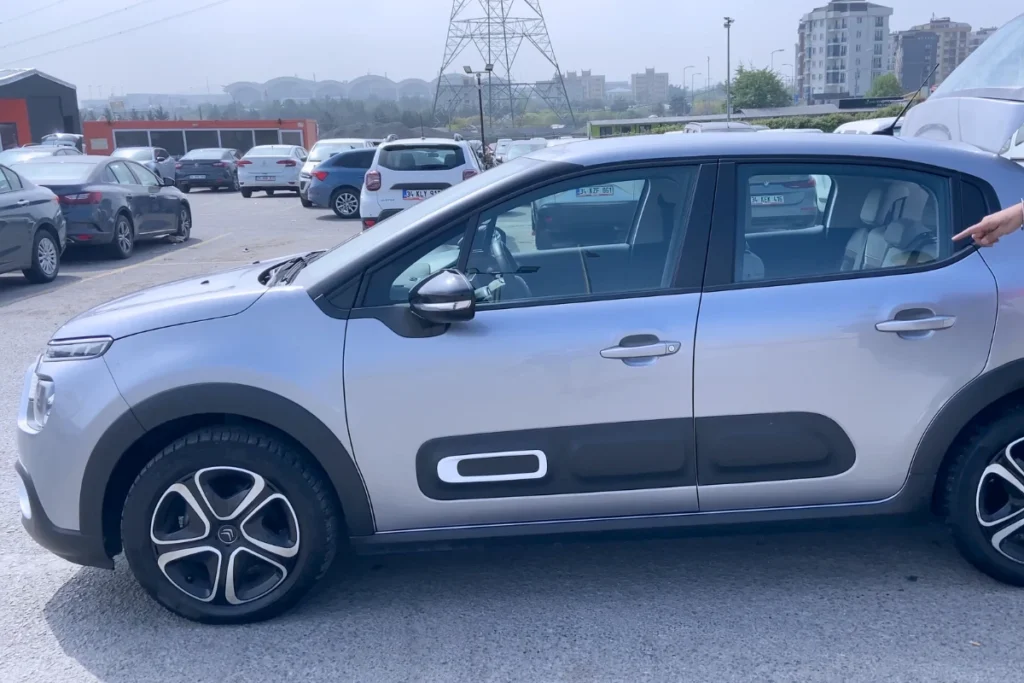
We used Cizgi Car Rental at Sabiha Gökçen Airport, booked through their official website before arriving in Turkey.
| Detail | Our Experience |
| Rental company | Cizgi Car Rental |
| Pickup location | Sabiha Gökçen Airport, Istanbul |
| Vehicle | Citroën C3 hatchback |
| Duration | 14 days |
| Insurance | Basic protection included |
| Cost | TRY 15,950 / INR 36,753 / USD 387 |
| Return | Same location, smooth handover |
Other rental companies operating at Turkish airports include Europcar, Sixt, Budget, Avis, and local operators. We chose Cizgi because the price was competitive and the reviews were reasonable. The choice was not sentimental. It was arithmetic.
Booking tips:
- Book online, before arrival. Walk-up rates are higher.
- Compare prices across local (Cizgi, Garenta) and international (Europcar, Sixt) companies. Local operators are often cheaper for the same vehicle class.
- Read the insurance inclusions carefully. Basic protection covers third-party liability. Full coverage (CDW, theft protection, tyre and windshield) costs more but eliminates the anxiety of driving through Nemrut’s gravel roads in a car that is not yours.
- Screenshot your booking confirmation. Print a copy. The counter may ask for it.
Step 3: Check the Car Before You Drive It
This is where we failed, and the failure cost us the most stressful hour of the trip.
Check the fuel gauge. Ours was nearly empty. The rental agency had not filled it. We discovered this one kilometre into a highway when the engine died, and we were stranded with hazard lights on and 4,149 km of itinerary suddenly in question. A Turkish road worker rescued us with fuel from a petrol station two kilometres away. He refused payment. The kindness was extraordinary. The situation was entirely avoidable.
Before driving off the lot:
- Fuel gauge. Is it full? Half? A sliver above empty? If the agency promises a full tank, verify. If the policy is “return it at the same level you received it,” note the exact level with a photograph.
- Exterior damage. Walk around the car. Photograph every scratch, dent, and mark. The rental company will photograph the car at return. Any undocumented damage becomes your financial responsibility.
- Tyre condition. Press the sidewalls. If they feel soft, ask for them to be inflated. The Nemrut approach roads are loose gravel. Soft tyres on gravel are a physics problem you solve with a tow truck.
- Lights and wipers. Test them in the parking lot, not on a rainy highway in Anatolia at dusk.
The five-minute walkaround before departure is the cheapest insurance on the trip. We skipped it. The engine died. Learn from our fuel gauge rather than from yours.
“Switching to driving on the right side of the road takes thirty minutes of deliberate focus; recovering from taking the wrong exit in Istanbul traffic takes considerably longer.”
Step 4: Adjust to Left-Hand Drive
India drives on the left side of the road with the steering wheel on the right. Turkey drives on the right side with the steering wheel on the left. Everything you have practised for years is now mirrored.
How long the adjustment takes: Thirty minutes of focused driving. The brain adapts. The hands follow. By the time you leave the airport zone and reach the highway, the new orientation feels workable. By the end of the first day, it feels normal.
What trips you up:
Roundabouts. Indian roundabouts flow clockwise. Turkish roundabouts flow counterclockwise. The first one will confuse you. The second one will be fine. The third one you will enter with the casual confidence of someone who has been driving in Turkey for years, which at that point is approximately forty-five minutes.
Right turns. In India, right turns cross traffic. In Turkey, right turns are the easy ones. Your instinct will check the wrong direction for oncoming vehicles for approximately the first hour. Override the instinct manually until the new pattern replaces it.
Lane positioning. Indian drivers naturally position toward the left side of the lane. Turkish roads require positioning toward the centre or right. The correction is subtle but important, particularly on narrow eastern Turkish roads where the margin between your wing mirror and the cliff face is not generous.
What transfers perfectly from Indian driving:
Awareness of unpredictable traffic. Indian drivers are trained by chaos. Turkish highways are orderly. Turkish village roads are less orderly. Eastern Turkish mountain roads are significantly less orderly. The Indian instinct to expect the unexpected, which is our national driving philosophy, serves you well everywhere in Turkey.
Comfort with manual transmission. Most rental cars in Turkey are manual. If you learned to drive in India, you learned on a manual. This is one advantage Indian drivers carry that drivers from automatic-transmission countries do not.
Step 5: Understand the Toll System
Turkish highways use the HGS (Hızlı Geçiş Sistemi) automated toll system. Toll booths detect an HGS sticker on the windshield and charge the associated account automatically. You do not stop. You do not pay cash. You drive through at speed.
Your rental car should have an HGS sticker already installed. Confirm this at the counter. If the car does not have one, the rental company may provide an OGS device or add toll charges to your final bill.
Our total tolls across 4,150 km: TRY 1,345 / INR 3,094 / USD 32.28. The tolls are moderate by international standards and significantly cheaper than equivalent distances in Europe.
Step 6: Return the Car
Our return at Sabiha Gökçen was the smoothest transaction of the rental experience. We drove to the Cizgi lot, the agent inspected the car, checked the fuel level, documented the condition, and processed the return in approximately fifteen minutes.
Return tips:
- Fill the tank to the agreed level before returning. Rental companies charge a premium for fuel they add.
- Arrive at least 30 minutes before your return deadline. Late returns may incur additional daily charges.
- Keep all fuel receipts from the trip. If there is a dispute about the fuel level, the receipts are your evidence.
- Photograph the odometer reading and the fuel gauge at return, the same way you photographed the car at pickup.
“Turkey’s highways are engineered for effortless long-distance driving, but the real secret to a stress-free road trip is simply checking the fuel gauge before leaving the airport parking lot.”