
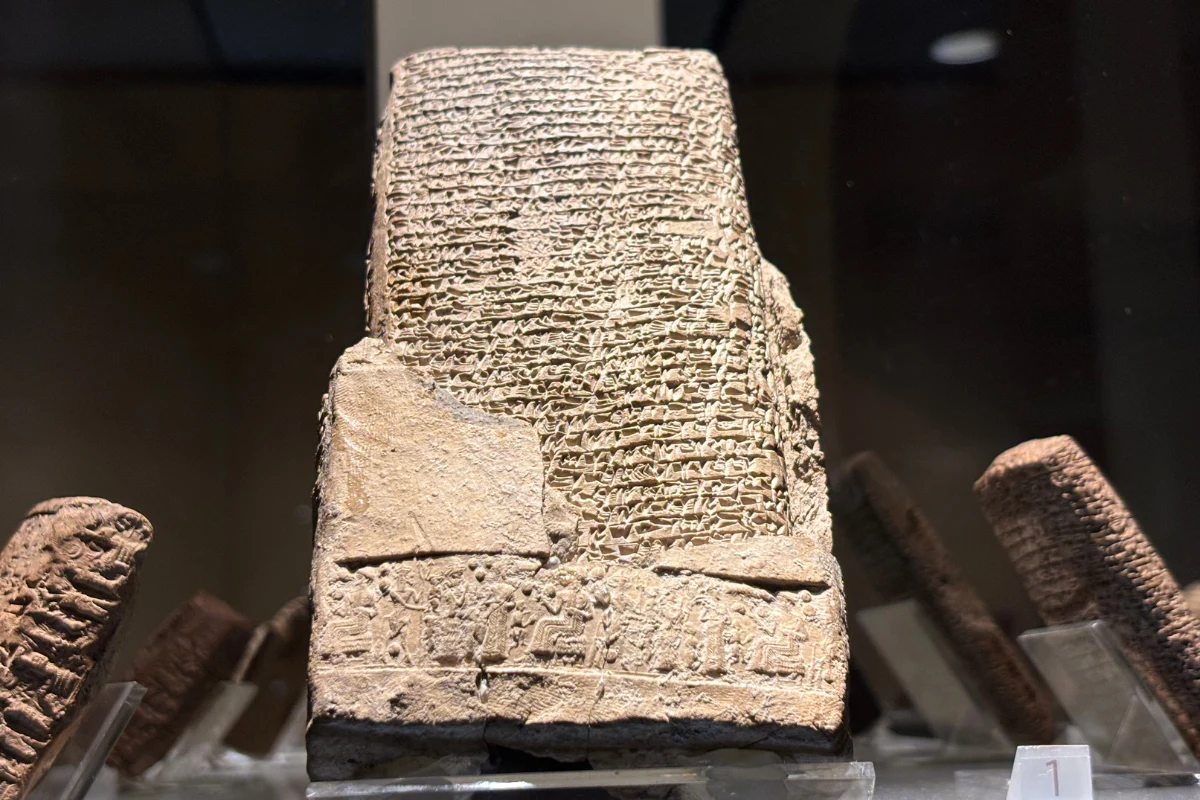
Long before royal monuments or sacred codes were carved in stone, written history in Turkey began with Assyrian trade tablets in Anatolian Kültepe. Excavated near modern Kayseri, these 23,000 cuneiform tablets reveal how Mesopotamian merchants introduced literacy around 2000 BCE… not to glorify kings, but to track shipments, settle disputes, and manage long-distance family businesses.
The first written documents in what is now Turkey are not royal proclamations. They are not religious texts. They are not military orders or philosophical treatises or legal codes etched onto the walls of a temple.
They are business receipts. Shipping manifests. Loan agreements. Quality complaints about textiles. And a letter from a wife to her husband that can only be described, across a distance of four thousand years, as the world’s oldest recorded marital argument about work.
Writing came to Anatolia because merchants needed it. Not because a king demanded it. Not because a priest required it. Because a man named Pushu-ken needed to complain about the quality of the fabric his wife was sending from Assur, and his wife Lamassi needed a medium to tell him, in cuneiform pressed into wet clay, that whoever was criticising her textiles could take the matter up with her directly.
The clay dried. The letter survived. Four thousand years later, it sits in a museum, and the argument remains unresolved.
“Four thousand years ago, a woman in Assur wove textiles, packed them onto a donkey, and sent them 1,000 km to her husband in Anatolia. Her husband complained about the quality. She picked up a reed stylus, pressed it into wet clay, and told him exactly what she thought about his criticism.”
What Happened at Kanesh
Around 2000 BCE, merchants from the city of Assur in northern Mesopotamia (modern Iraq) loaded donkey caravans with tin and textiles and sent them northwest across approximately 1,000 kilometres of terrain to a city called Kanesh in central Anatolia, near modern Kayseri. The journey took six weeks. The cargo was valuable. The profits were substantial.
At Kanesh, the merchants established a kārum: a trading quarter outside the main citadel, where Assyrian families lived alongside local Anatolian residents. The kārum at Kanesh was the headquarters of an entire network of Assyrian trading posts scattered across Anatolia, approximately forty stations connected by donkey caravan routes that moved tin, textiles, copper, gold, and silver across a geography larger than most modern European countries.
The merchants brought their record-keeping technology with them. Cuneiform: wedge-shaped marks pressed into soft clay tablets with a reed stylus. The system had been invented in Mesopotamia centuries earlier. The Assyrian traders adapted a simplified version for their commercial needs and carried it, along with their textiles and their tin, into a region that had never seen writing before.
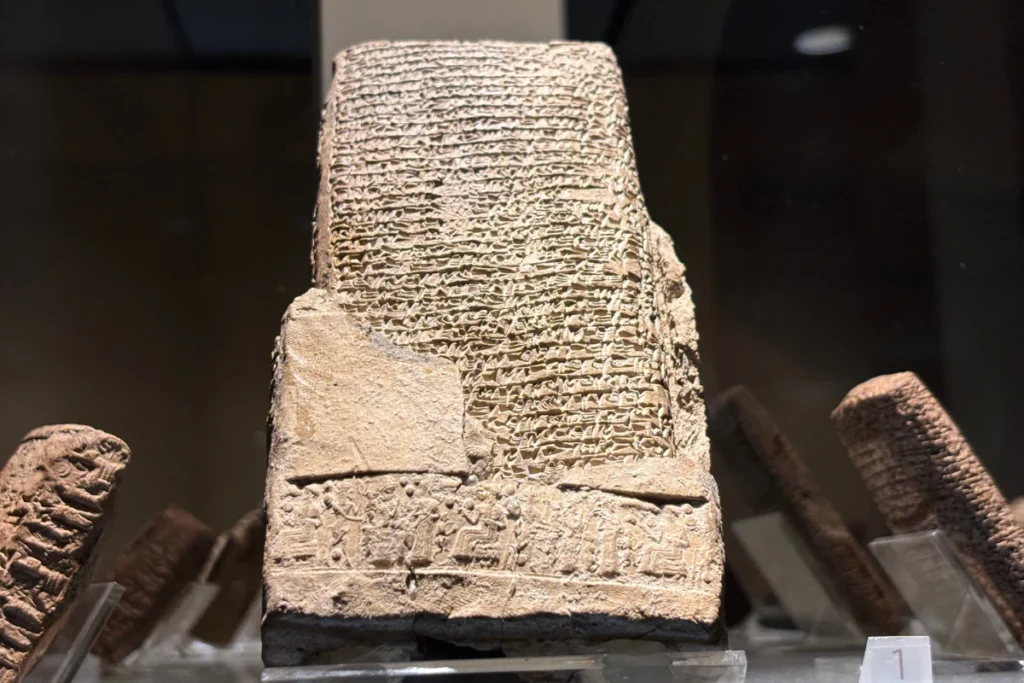
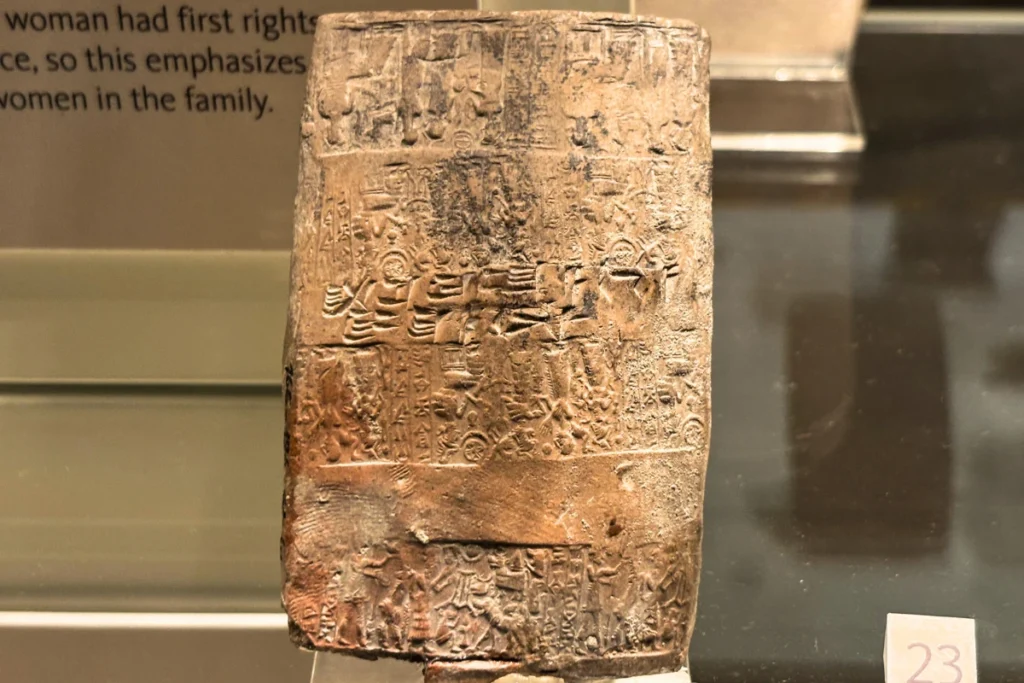
The site is called Kültepe today. It sits 20 km from Kayseri. We drove through the Kayseri region on our way to Cappadocia but did not stop at the site itself. We encountered the tablets at the Museum of Anatolian Civilizations in Ankara, where the Assyrian Trade Colonies section holds examples of the 23,000 cuneiform tablets recovered from Kültepe. We looked at small, palm-sized pieces of baked clay covered in wedge marks and understood, with the help of the museum’s information panels, that we were looking at the oldest written documents in Anatolian history.
The oldest documents in Turkish soil are not about gods or kings. They are about how much tin was shipped, who owes whom for the last delivery, and whether the textiles met quality standards. Commerce invented literacy in Anatolia. Everything else, the Hittite treaties, the inscriptions, the legal codes, came afterward.
What the Tablets Actually Say
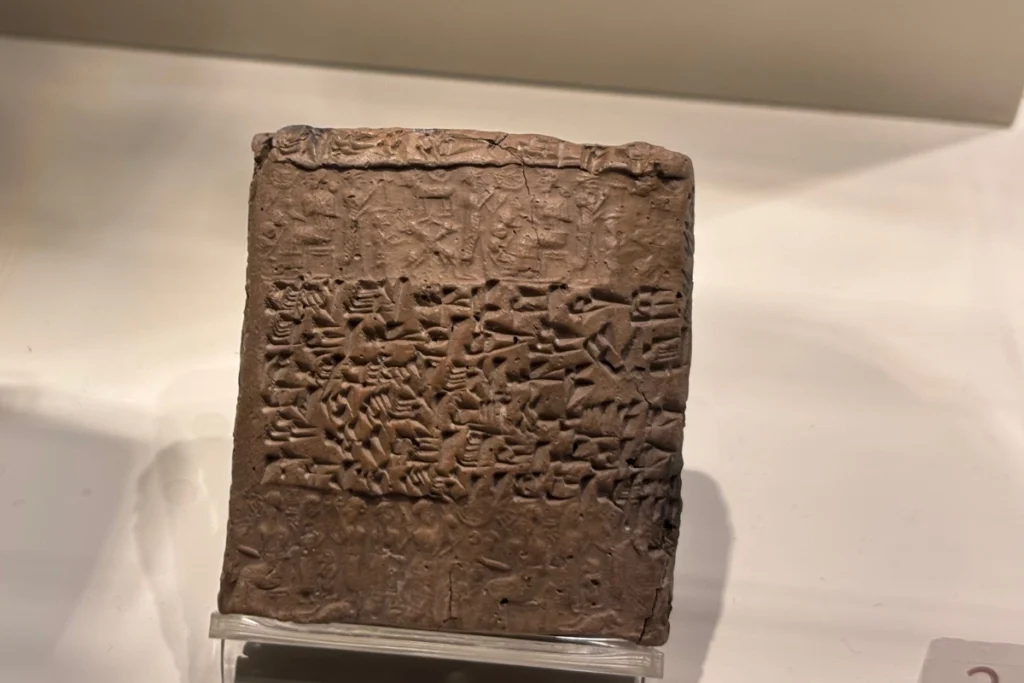
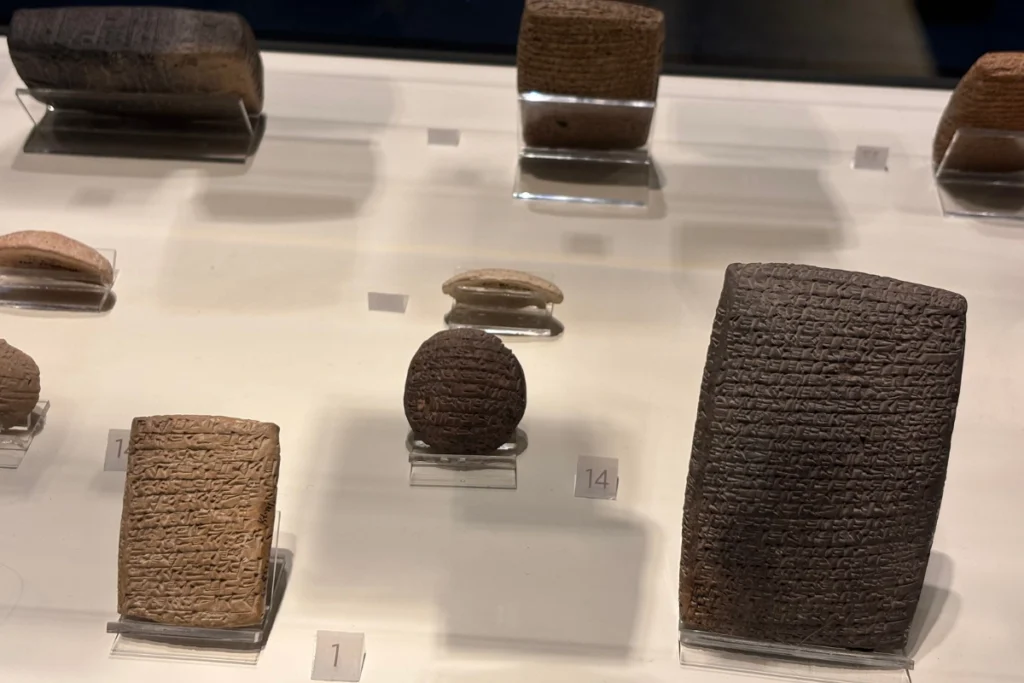
The 23,000 tablets from Kültepe constitute the largest collection of cuneiform documents ever found in private residences rather than in palaces or temples. These are not state records. They are household archives. Families kept their correspondence, their contracts, and their legal filings the way a modern business keeps its accounting files: organised, stored, and available for reference in case of a dispute.
The contents are remarkably familiar.
Loan agreements. Merchants extended credit to each other. Interest was charged. Repayment terms were specified. Default consequences were documented. The financial instruments are recognisable to anyone who has signed a loan document in the 21st century, except the 21st-century version does not require a reed stylus and six weeks of donkey transport.
Shipping records. Detailed manifests listing the contents of caravan shipments: quantities of tin, numbers of textile bales, weights in standardised units. The specificity is granular. Individual bales are counted. Individual donkeys carrying them are occasionally referenced. The logistics of a 1,000 km trade route, managed without GPS, without radio, without a tracking app, documented on clay the size of a smartphone.
Lawsuits. Merchants sued each other. Court depositions were recorded. Witnesses testified. The longest Old Assyrian legal text yet found is from Kültepe: a record of a court case between two merchants, delivered before witnesses representing the merchant government in Kanesh and sworn upon the dagger of the god Ashur. The dagger served the same function as a Bible in a modern courtroom. The principle, sacred oath-binding, has not changed in four millennia. The prop has.
Personal letters. Fathers writing to daughters. Husbands to wives. Partners to business associates. The tone ranges from formal to urgent to furious. One letter opens with a formulaic greeting and closes with a request so desperate that the writer added a postscript on a second, smaller tablet because he ran out of space on the first. The 4,000-year-old equivalent of hitting “send” and then immediately sending a follow-up.
The Women Who Wrote Back
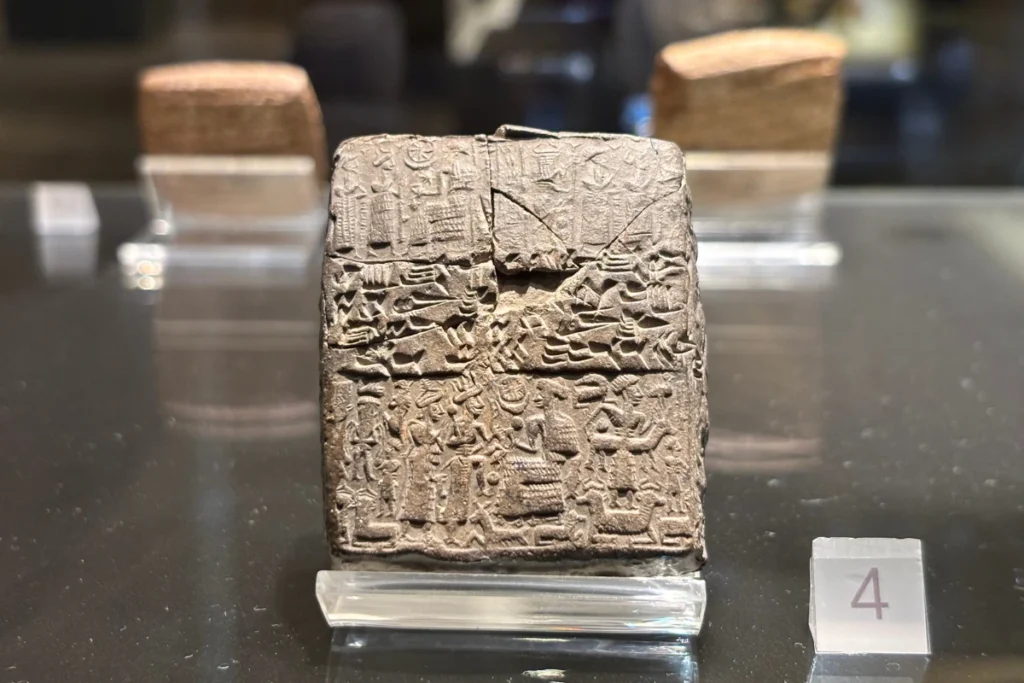
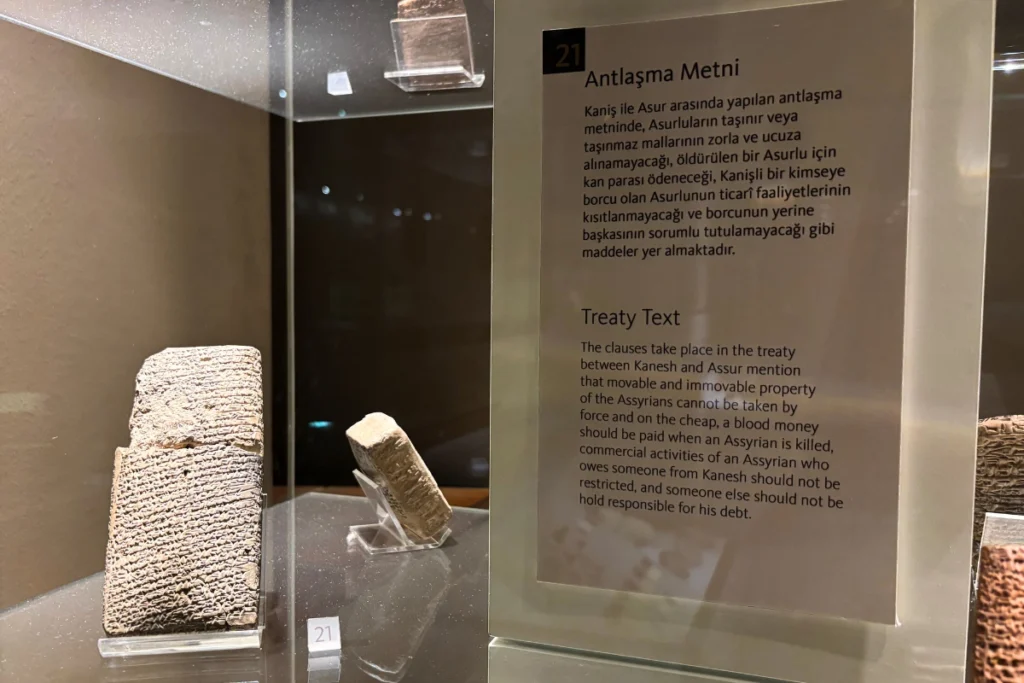
Assyriologist Cécile Michel of the French National Centre for Scientific Research has spent decades studying the Kültepe tablets, with particular attention to the correspondence written by women. Her findings overturned assumptions about female literacy in the ancient Near East.
The women of the Assyrian trading network were not silent partners. They were textile producers, financial managers, and correspondents who wrote their own tablets rather than dictating to scribes. The verb forms in many of the women’s tablets indicate first-person writing: the author held the stylus herself.
Lamassi, a weaver in Assur, received a letter from her husband Pushu-ken in Kanesh complaining about the quality of the textiles she had shipped. Her response, preserved in clay, translates approximately as: “Who is this man who lives in your house and who is criticising the textiles when they get to him? I try my best to make and send textiles to you!”
Taram-Kubi, another Assyrian woman, wrote to her husband explaining why the latest textile shipment was delayed: “You should not get angry because I couldn’t send you the textiles you asked for. As our little girl has grown up, I had to make a pair of heavy textiles for the carriage.”
The child needed clothes. The business waited. The priority is recognisable across four thousand years of parenting. The excuse is identifiable by anyone who has ever explained to a colleague why the deliverable is late because the school called.
Less than half of the 23,000 tablets have been fully translated and published. The women’s correspondence, which Michel’s work has brought into focus, suggests that the Assyrian trade network was not a male enterprise supported by silent households. It was a family operation in which the women managed production, handled finances, and wrote letters that are, by any modern standard, the correspondence of business professionals managing a long-distance operation with a six-week communication delay and no option to hop on a video call.
“Lamassi’s frustration has outlasted every empire that ever occupied Anatolia. Her textiles have not. But her words have, which suggests that the thing she produced in anger- the letter fired off in response to an unfair criticism- was more durable than the thing she produced with care.”
The First Anatolian Startup
In 2024, excavation director Professor Fikri Kulakoğlu announced the decipherment of a tablet documenting the foundation of what he described as the first company in Anatolia.
The tablet records a partnership of twelve individuals who pooled capital totalling 15 kilograms of gold to establish a joint commercial venture. Twelve partners. Shared capital. A formal agreement pressed into clay and stored as a legal record.
Fifteen kilograms of gold, four thousand years ago, in a trading quarter outside a citadel in central Turkey. The startup had no pitch deck. The investors met in person. The term sheet was cuneiform. The business model, moving tin and textiles from Mesopotamia to Anatolia and copper and silver back, was proven by the existing caravan routes. The risk capital was gold. The exit strategy was profit. The filing system was a shelf of baked clay in a mud-brick house.
The structure is familiar. The medium is not. Everything about the Kültepe enterprise, the partnership model, the pooled capital, the documented agreement, the assumption that the terms needed to be written down because verbal agreements between twelve people rarely survive the first disagreement, is recognisable as the architecture of modern business. The entrepreneurs of Kanesh would understand a shareholder agreement. They would not understand a PDF.
Why This Matters When You Visit Turkey
We did not visit Kültepe directly. We drove past Kayseri on the way to Cappadocia without stopping at the mound 20 km northeast of the city. The regret is minor because the site requires a nominal ticket fee of TRY 120 / INR 280 / USD 3.50 for a bare excavation mound with limited visitor infrastructure, whereas the 23,000 tablets… the actual objects that make Kültepe significant… are housed inside the Museum of Anatolian Civilisations in Ankara (TRY 480 / INR 1,120 / USD 13.20), the Istanbul Archaeological Museums, and international collections.
What Kültepe changes is how you read everything else in Turkey.
The Hittite cuneiform at Hattusa exists because Assyrian merchants brought writing to the region centuries earlier. The treaty that names Vedic gods was written in a script that arrived in Anatolia on the back of a donkey loaded with textiles. The Museum of Anatolian Civilisations dedicates an entire section to the Assyrian Trade Colonies period, and the tablets in that gallery are the foundation layer upon which every subsequent piece of Anatolian written history sits.
Writing in Turkey began with commerce. The first word pressed into clay on Turkish soil was almost certainly a number. The second was almost certainly a price. The third was almost certainly a complaint. The fourth, if Lamassi’s letter is any indication, was almost certainly a rebuttal.
“The tablet dried. The caravan left. The letter survived the journey, the centuries, the empires, the excavation, the museum classification process, and the specific indignity of being stored in a climate-controlled room where scholars read her private correspondence and publish it in academic journals.”