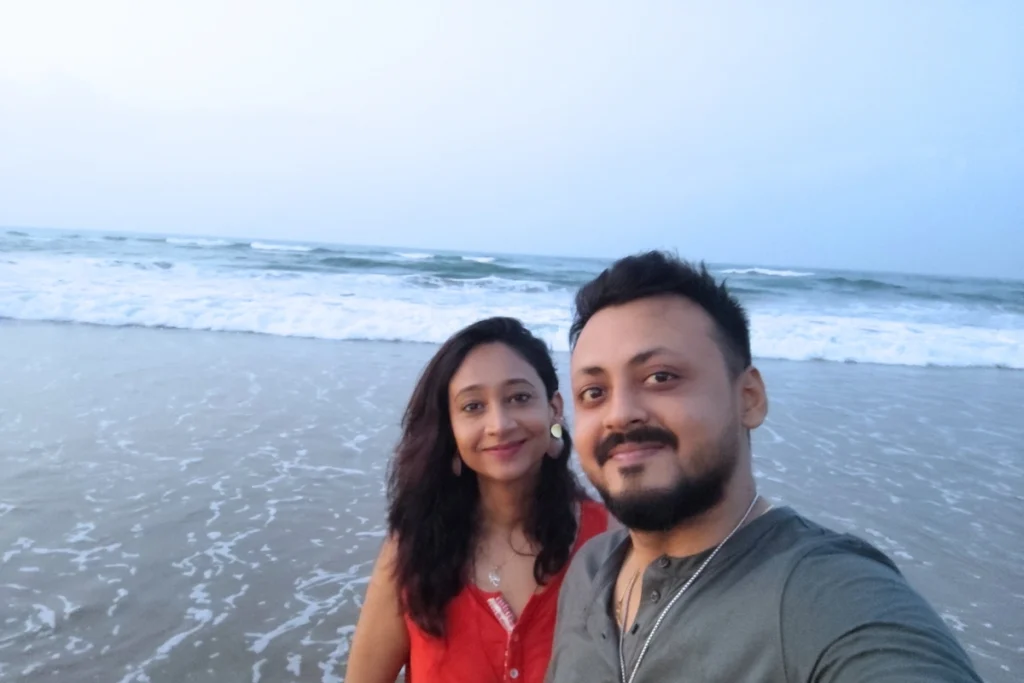
This Puri and Konark travel guide is built from three nights in October 2025, Day 4 to 7 of our Bengaluru-to-Kolkata road trip, and the specific weight of returning together to a place that was inside both of us before we met.
Puri is not a destination we discovered. It is a place that was already inside us before we met.
Both of us grew up in Kolkata. Both of us visited Puri multiple times during childhood, separately, with our own families. The Jagannath Temple, the beach, the sand, the sound of the evening aarti carrying across the town. These were not travel experiences. They were Bengali childhood experiences, filed in the same category as Durga Puja and afternoon rain and the particular sound of a pressure cooker whistle at lunchtime. Puri was there before we were old enough to understand what it meant.
In October 2025, on Day 4 of our Bengaluru-to-Kolkata road trip, we reached Puri at 8 AM after an overnight drive from Vizag. We checked into a hotel near the lighthouse. We ate breakfast. We rested. This was the first time we visited together.
The distinction matters. Every previous visit had been filtered through the lens of family: parents setting the schedule, siblings sharing the room, the specific dynamic of a group trip where you are a participant, not a decision-maker. This was the first time Puri belonged to the two of us. We could set the alarm or not set it. We could visit the temple at dawn or at noon. We could spend an entire day doing nothing, which is exactly what we did on Day 2, and nobody questioned the choice.
Three nights in Puri. One evening at Konark. The combination produced more than either place provides alone.
“For a Bengali, going to Puri isn’t an exploration of the unknown; it is a return to a landscape you already remember. Long before we travelled as a couple, this coast belonged to our childhoods—a shared memory of salt air and temple bells that we finally got to give to each other.”
- What Is Puri?
- Day 1: The Market, Chaitanya Square, and Mitra Café
- Day 2: The Day We Did Nothing
- Day 3: The Jagannath Darshan at 4 AM
- That Evening: Konark
- What Is the Konark Sun Temple?
- The Wheels That Tell Time
- The Lodestone That May Have Changed Navigation
- The Beaches Near Konark
- How to Visit
- Where to Stay
- What It Costs
- Before You Go: What Actually Matters
- Frequently Asked Questions
What Is Puri?
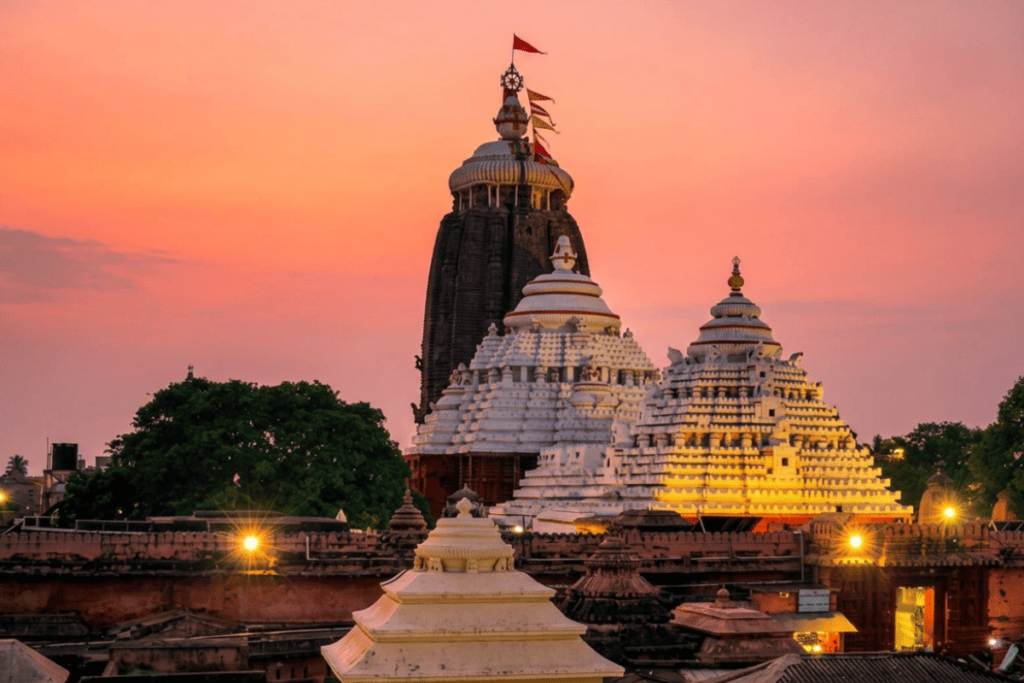
Puri is one of the four sacred Char Dham pilgrimage sites in Hinduism, located on the Odisha coast approximately 60 km south of Bhubaneswar. The Jagannath Temple, built in the 12th century, is the spiritual centre of the town and one of the most significant Hindu temples in India. The annual Rath Yatra, where the deities are carried through the town on massive wooden chariots, is one of the oldest and largest religious processions in the world. The English word ‘juggernaut’ derives from the name Jagannath, describing the force of the chariot through the streets.
Puri is also a beach town. The shoreline stretches wide and sandy along the Bay of Bengal. The town operates at two speeds simultaneously: the spiritual intensity of the temple precinct and the lazy, salt-air calm of the beach. Pilgrims and tourists share the same streets but inhabit different versions of the same place.
For Bengalis, Puri carries an additional layer. It is the family holiday destination that has persisted across generations. Bengali hotels line the streets near the temple. Bengali food appears on menus without translation. The language shifts seamlessly between Odia and Bengali in shops and restaurants. Puri is the one place outside Bengal where a Bengali family can feel simultaneously far from home and entirely at home.
Day 1: The Market, Chaitanya Square, and Mitra Café
We spent our first afternoon walking. Not to any specific site. Through the town.
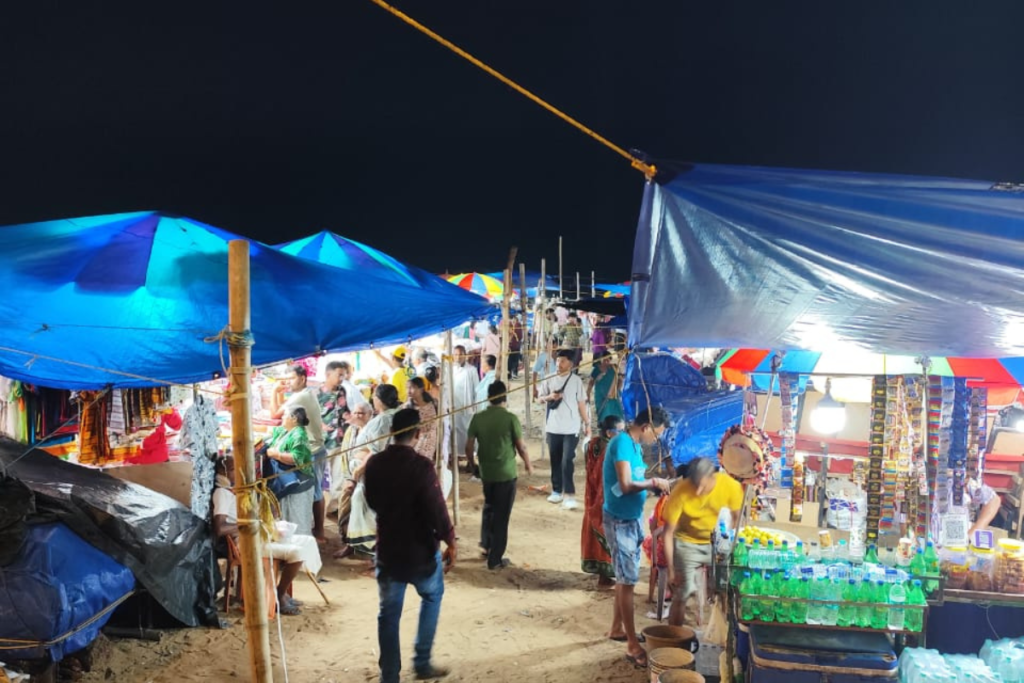
The main Puri market runs along the beach road. Stalls selling seashells, dried fish, religious souvenirs, textiles, and the particular variety of goods that accumulate at the intersection of pilgrimage and tourism. The market is not curated. It is alive in the way Indian markets are alive: overlapping voices, competing smells, the constant negotiation between what the seller offers and what the buyer needs.
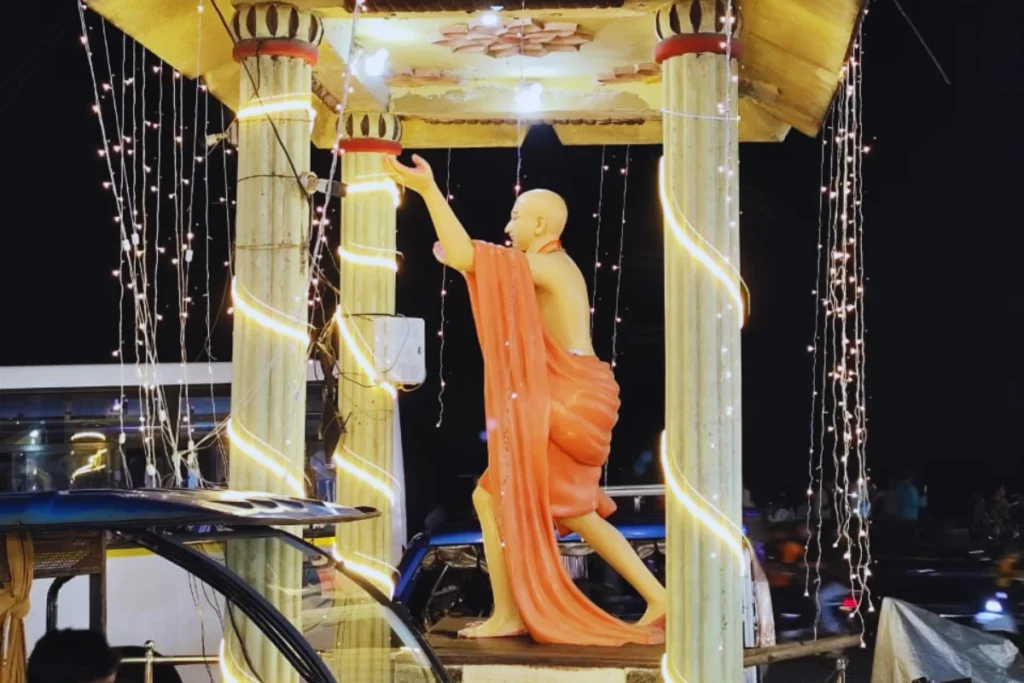
Chaitanya Square sits at the junction where the spiritual and commercial currents of the town meet. Named after the 15th-century saint Chaitanya Mahaprabhu, who spent the last years of his life in Puri, the square is both a landmark and a gathering point. The energy is different from the temple precinct, less devotional, more social, but still carrying the specific awareness that the most important building in town is a few hundred metres away.
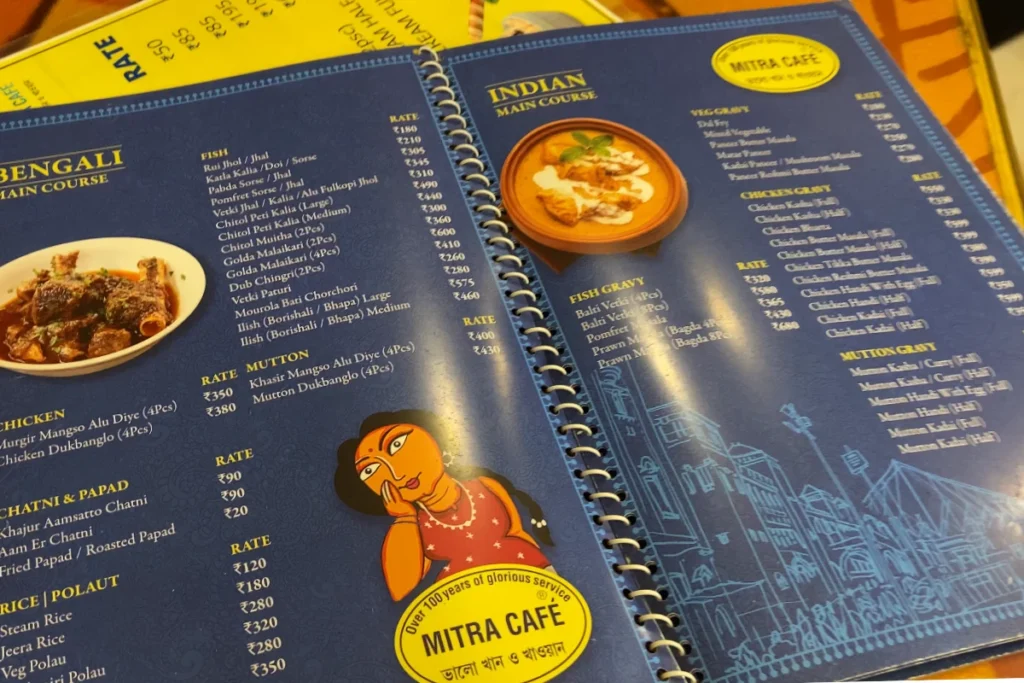
Dinner at Mitra Café. A legendary North Kolkata institution that brought its heritage across the border to Puri, proving that the craving for a perfect, crisp Diamond Fish Fry doesn’t stop at the Odisha coast. It serves authentic Bengali food to travellers looking for a taste of home…the kind of meal where the food is steeped in decades of tradition, providing a familiar warmth in a beach town that thrives on comfort.
Day 2: The Day We Did Nothing
October 22nd. Our second day in Puri. We rested.
The entire day. We made no plans. We visited no sites. We walked to the main area for small errands and walked back. We ate. We sat. We looked at the sea.
In a travel article, this paragraph should not exist. It documents nothing. It advances no itinerary. It does not help you plan your schedule. It is, by any editorial standard, empty content.
We are including it because it was the best day of the Puri visit, and because the philosophy that shapes how we travel was built from days exactly like this one. The rest day is the day the place stops being a destination and becomes a location. The distinction is subtle. A destination is somewhere you go. A location is somewhere you are. The shift happens when the schedule empties and the only thing filling the day is the place itself.
At Hampi, the same shift happened on the third morning, when we stopped setting alarms. At Kodaikanal, it happened on the second day, when we stopped trying to see things and started noticing them. At Puri, it happened on Day 2, when we chose rest over the temple, and the rest prepared us for what Day 3 would bring.
“We did not visit the temple. We did not photograph the market. We ate. We sat. We looked at the sea. In eight hours of doing nothing, Puri became something that three days of sightseeing would not have made it: a place we had actually been, rather than a list of things we had confirmed seeing.”
Day 3: The Jagannath Darshan at 4 AM
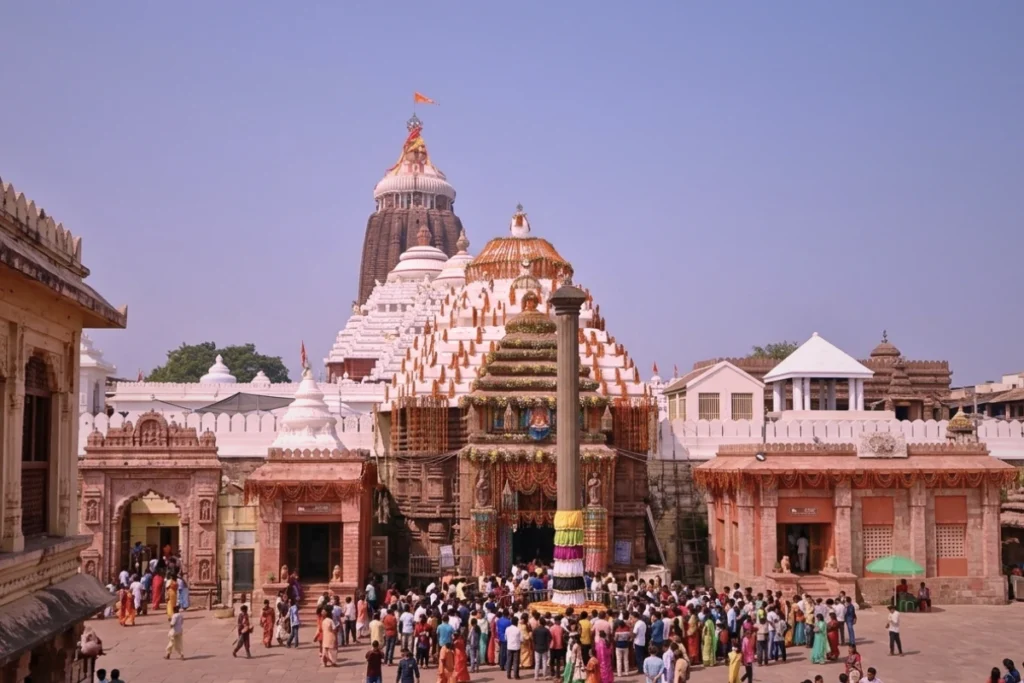
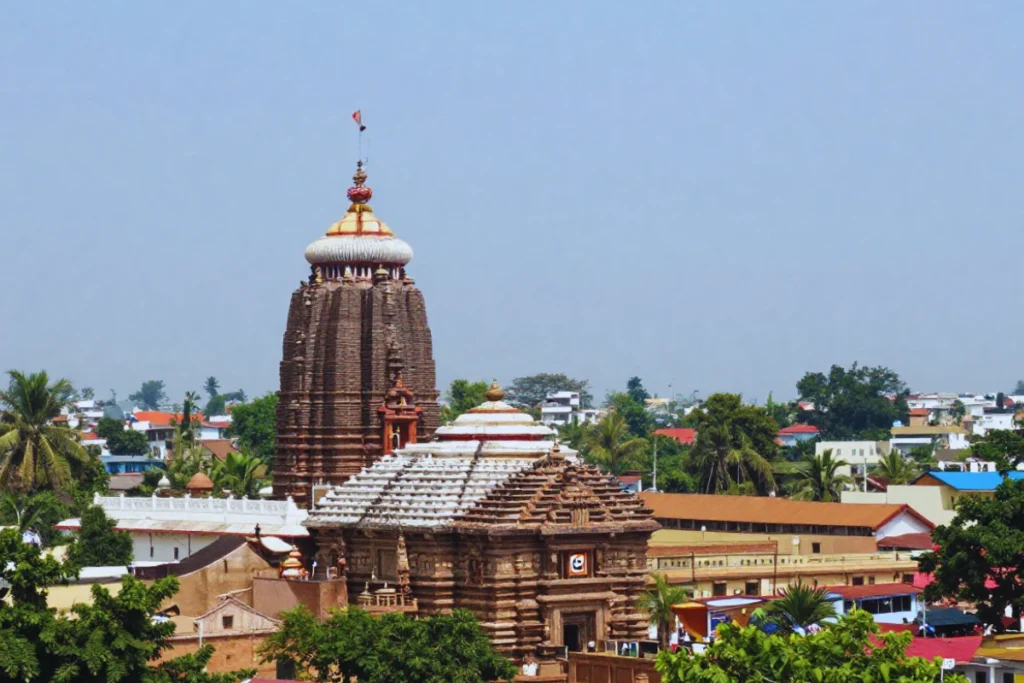
We woke at 4 AM on October 23rd.
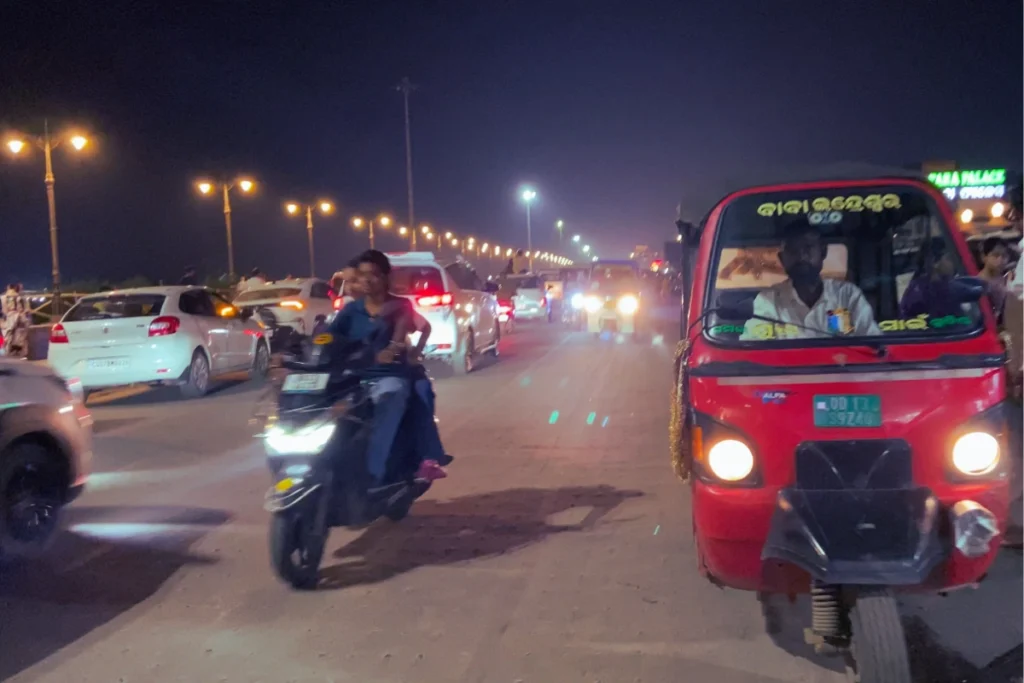
The journey to the temple in the pre-dawn dark was less about spiritual flow and more about a lesson in local transit economics. We took an auto that overcharged us, demanding INR 300 for a brisk 10-to-15-minute ride. It is the classic tax on sleepy travellers who have no leverage at 4 AM. But once you drop the frustration at the gates, the approach through the narrow streets near the Lion Gate concentrates the energy. The town is quiet but alert, and from there, you simply follow the crowd.
Jagannath Temple does not allow non-Hindus inside. This is not a tourism policy. It is a religious boundary that has been maintained for centuries. For visitors who cannot enter, the temple’s exterior, the surrounding streets, and the view from the rooftop of the nearby Raghunandan Library provide context.
We entered. The darshan in the morning dark, surrounded by devotees who had traveled from across India, carried a weight that the word sightseeing cannot hold. This was not tourism. This was participation in something that has been happening at this exact location, in this exact sequence, for eight hundred years.
We returned to the hotel by 7 to 8 AM. The rest of the morning was quiet. The darshan had been enough. Adding anything to the day would have diluted it.
For travellers who want to actively participate rather than just observe, there is an option to offer an official puja inside the temple. The costs vary wildly depending on the scale and nature of the ritual, starting from approximately INR 500. We opted to offer a personal puja ourselves, which cost us INR 1,500.
⚠️ Crucial Logistics Note on Temple Priests (Pandas): Navigating the internal rituals of the Jagannath Temple can be incredibly overwhelming for an outsider. There are local priests, known as pandas, who will approach you to guide you through the process. Hiring one is highly recommended if you want to offer puja quickly and efficiently; without them, the sheer crowds and complex customs can eat up a considerable amount of your morning. However, be fully prepared to negotiate: they expect a cash donation (dakshina) in return, and there are absolutely no fixed charges. Clear the amount before you begin the ritual to avoid awkward disputes afterwards.
The Paradox of Modern Darshan: Faith vs. Management
Once inside the barricades, the atmosphere shifts from quiet anticipation to an intense, high-pressure crucible. Whether you are navigating the massive, locked iron waiting compartments of Tirupati or the tightly packed stone corridors of Jagannath Temple, Puri, the experience of the ordinary devotee has increasingly become a test of physical survival.
To catch just a fleeting, microsecond glimpse of the divine, you must endure a chaotic sea of thousands of people pushing, shoving, and fighting for breathing room. Security guards and volunteers, overwhelmed by the sheer volume of humanity, often resort to harsh, unsympathetic handling…shoving pilgrims along like cattle the moment they reach the inner sanctum. There is no time to bow your head, no room to hold a silent thought, and no space to process the gravity of where you are standing.
It leaves you with a profound sense of exhaustion. People travel thousands of miles, spending their hard-earned money and enduring immense physical toll, just to seek a moment of mental solace. Instead, the current structures create an aggressive environment where the line between an ordinary pilgrim and a VIP ticket holder feels heavily commercialized.
An Open Question to the Administrators of Our Faith
This reality leaves us with an open, vital question for the authorities, temple boards, and system designers who hold the power to shape these sacred spaces:
“When a human being steps into a temple seeking peace, calmness, and a dignified connection with the divine, why must the system treat them with an utter lack of empathy? If our ancient temples were built to elevate the human soul, why can’t modern crowd-management systems be designed to protect basic human dignity? Is it truly impossible to manage oceans of people without stripping away the quiet, peaceful sanctity that the devotees have travelled so far to find?”
That Evening: Konark
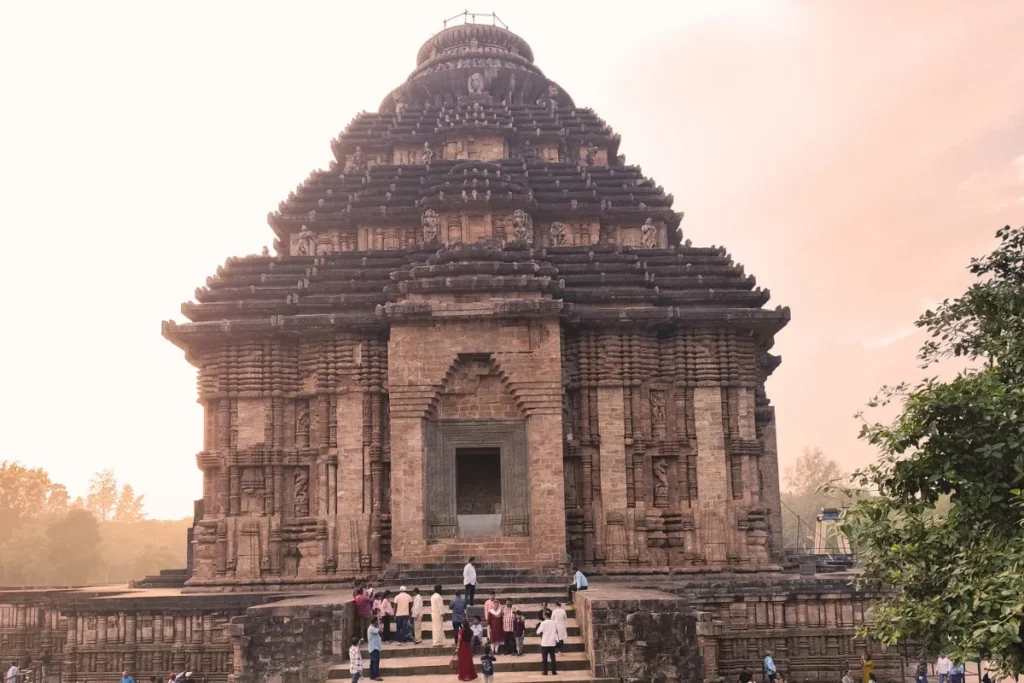
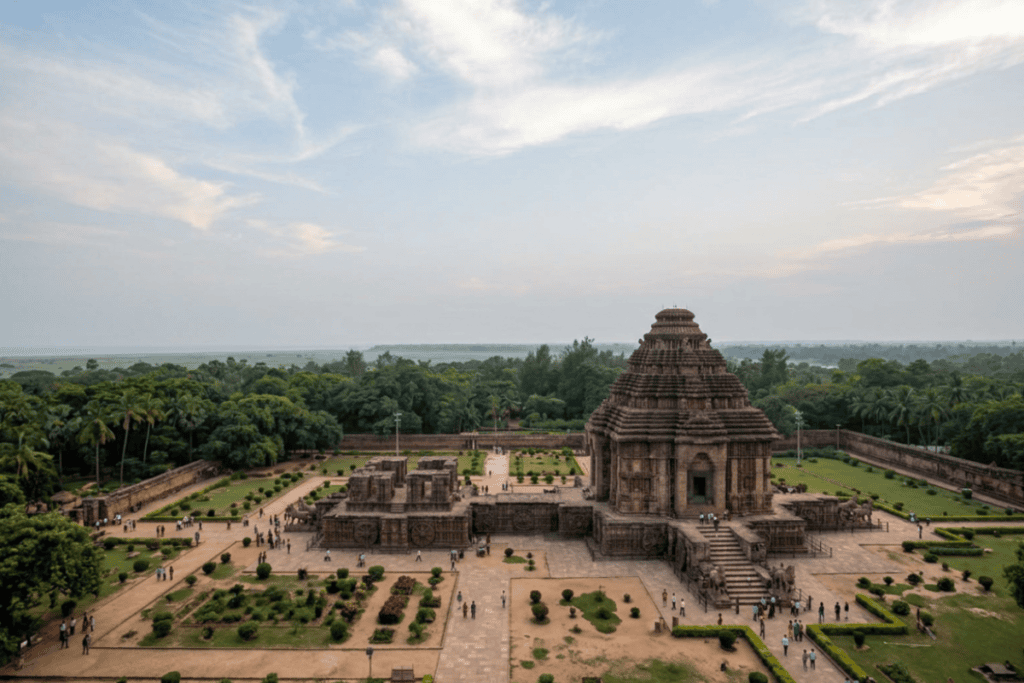
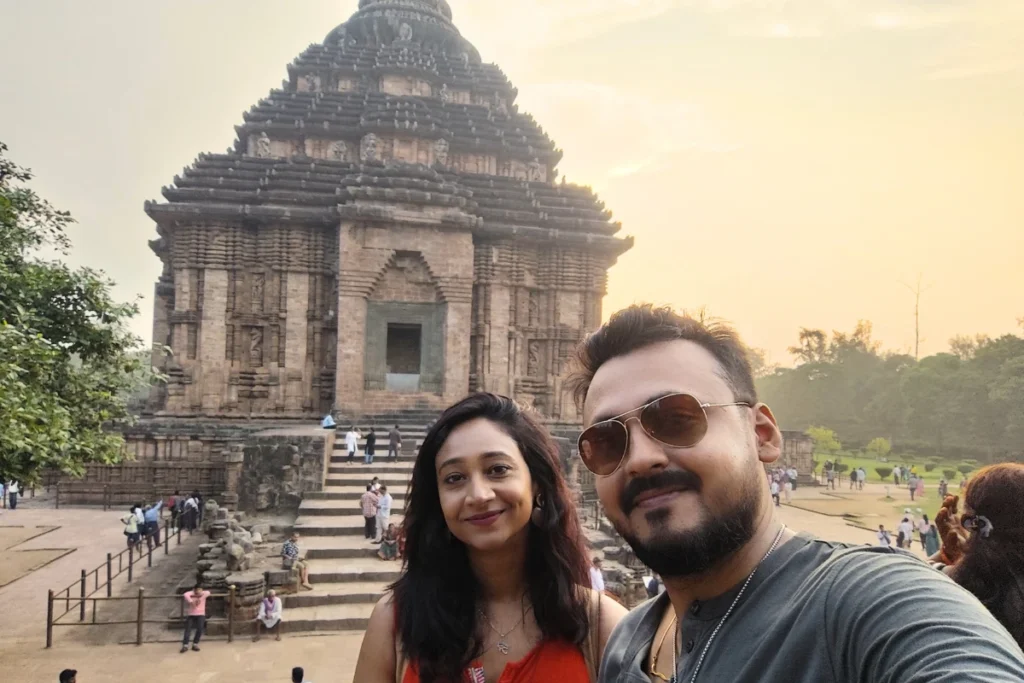
In the evening of October 23rd, after the darshan at dawn and a day of rest, we drove 35 kilometres south to the Konark Sun Temple.
Konark is where the trip left the category of road trip and entered the category of something we are still thinking about.
What Is the Konark Sun Temple?
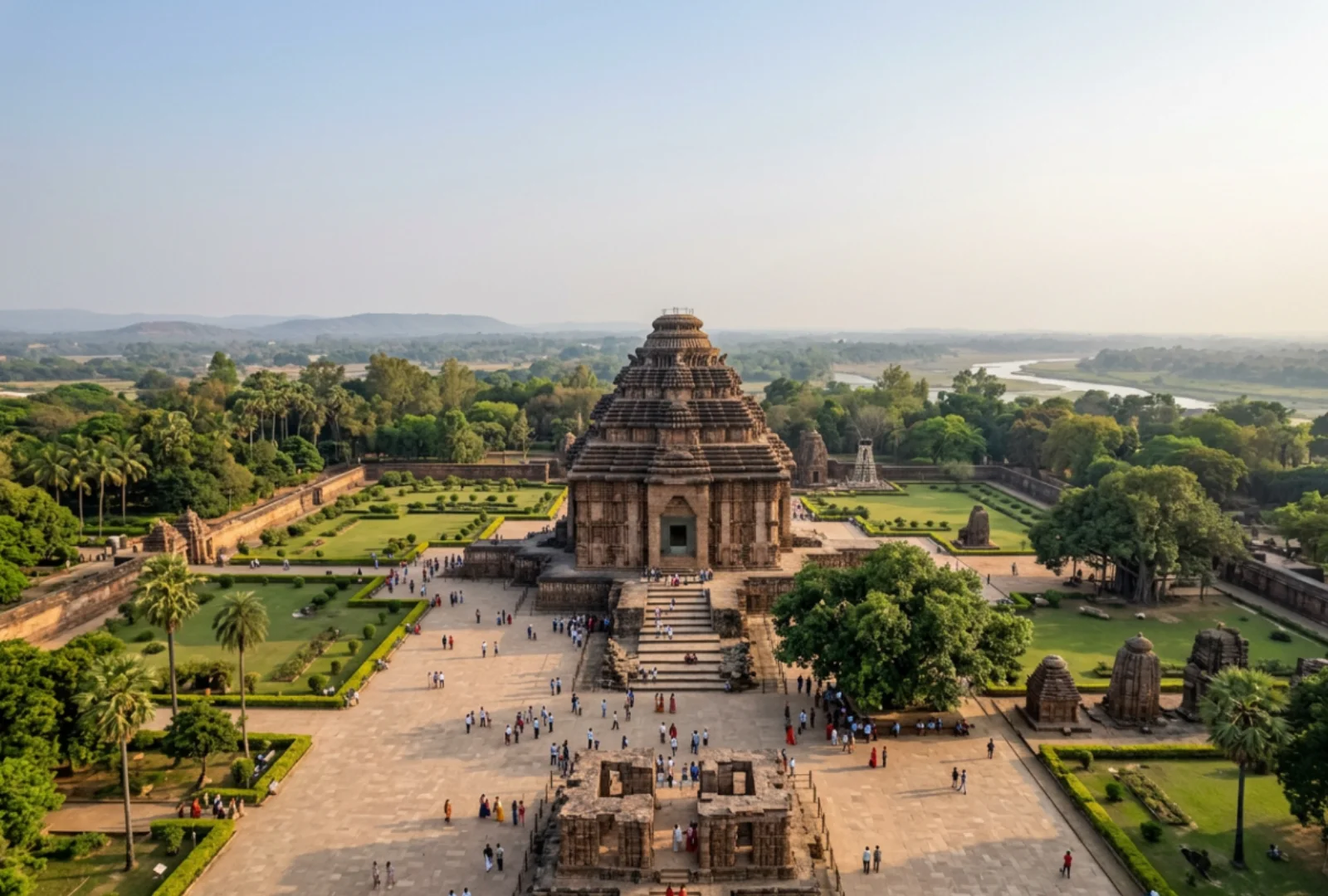
The temple was built in the 13th century by King Narasimhadeva I of the Eastern Ganga Dynasty. It is conceived as a massive stone chariot dedicated to Surya, the sun god: 24 carved stone wheels along the base, seven stone horses pulling the structure forward, the entire monument oriented so that the first rays of the morning sun would strike the main entrance and illuminate the interior sanctuary.
The main tower has collapsed. What survives is the jagamohana (audience hall) and the Nata Mandir (dance hall), along with the 24 wheels, the horses, and thousands of sculptural panels covering every surface. The sculptures depict daily life, mythology, celestial beings, animals, and erotic scenes that rival Khajuraho in their explicitness and exceed it in their integration into the temple’s overall narrative. The erotic panels are not separate from the spiritual ones. They occupy the same walls, because the builders did not separate the human body from the divine programme.
UNESCO designated Konark a World Heritage Site in 1984.
“The erotic carvings at Konark are not separate from the spiritual ones. They occupy the same walls, because the 13th-century builders did not separate the human body from the divine programme. This is not controversy. It is a different philosophy of what a temple is for.”
The Wheels That Tell Time
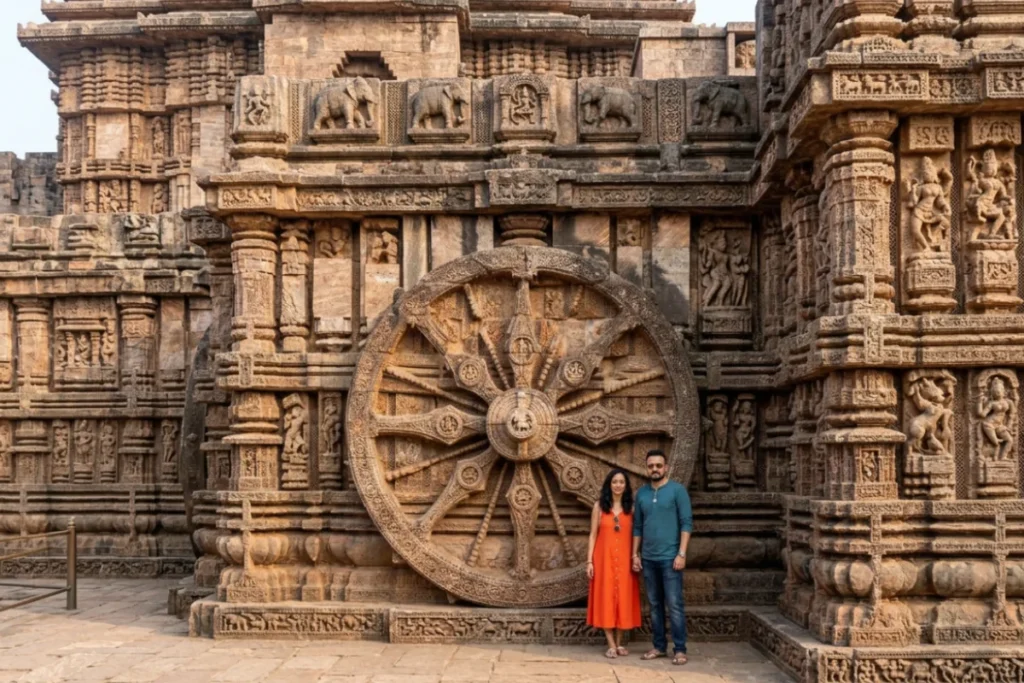
The 24 stone wheels are not decorative. They are functional.
Each wheel contains eight major spokes and eight minor spokes, dividing the wheel into segments. Engineers have confirmed that when a stick is placed at the centre of the hub, the shadow cast by the stick onto the carved spokes indicates the time of day with measurable accuracy. The wheels are sundials. Built into the base of a temple. In the 13th century.
The precision is not approximate. The spoke divisions correspond to time intervals. The shadow moves across the carved surface as the sun moves across the sky, and the position of the shadow against the spoke markings indicates the hour. This was tested and verified by modern engineers and archaeologists.
The builders of Konark embedded functioning astronomical instruments into what appears, at first glance, to be sculptural ornamentation. A temple that tracks time with the accuracy of a scientific instrument, built eight hundred years ago, using nothing but stone and the knowledge of how the sun moves. The engineering is not primitive. It is precise.
The Lodestone That May Have Changed Navigation
Historical accounts describe a massive magnetic lodestone mounted at the apex of the main temple tower. The lodestone, according to these accounts, generated a magnetic field strong enough to interfere with the compass needles of ships passing along the Odisha coast, pulling their navigation off course.
If accurate, a 13th-century Indian temple was disrupting the navigation systems of passing ships using magnetism. Whether deliberately or as a byproduct of the stone’s placement is debated. Whether it was subsequently removed by Portuguese sailors to protect their shipping routes is also debated. Whether it existed at all is debated, because the main tower that allegedly held it has collapsed and the physical evidence lies in the rubble.
What is not debated: the accounts exist, multiple historical sources reference the lodestone independently, and the questions it raises about the level of scientific understanding embedded in 13th-century Indian temple engineering are questions that the conventional timeline of technological history does not comfortably answer.
We stood near the temple as the sun moved toward the horizon. The same sun that the builders designed the temple to track. The wheels casting shadows that still indicate the correct time. The tower that may have held a lodestone lying in pieces on the ground. The questions in the air. The sunset not answering any of them.
The Beaches Near Konark
After the temple, we drove to the beaches near Konark. Chandrabhaga Beach, approximately 3 km from the temple, is the primary one: a wide, clean stretch of sand with fewer visitors than Puri’s main beach. The evening light on the water, after the weight of the temple, provided the specific decompression that moving from an intense historical experience to a simple natural one produces.
We did not stay long. The drive back to Puri in the dark, with the temple’s questions still circling, was its own kind of experience.
How to Visit
- From Bengaluru (as we did): we drove the 1,800 km east coast route via Vijayawada and Vizag as part of a six-day road trip. This is the scenic route, not the efficient one.
- From Bhubaneswar: 60 km, approximately 1.5 to 2 hours by car. Bhubaneswar has a domestic airport with regular flights from Bengaluru, Delhi, Mumbai, and Kolkata. This is the standard entry point for most visitors.
- From Kolkata: approximately 500 km by road (9 to 10 hours) or 1.5 hours by flight to Bhubaneswar plus a 1.5-hour drive. Multiple trains connect Howrah Station to Puri directly.
- Puri to Konark: 35 km, approximately 45 minutes by car. The road is well-maintained. We drove ourselves.
- Getting around Puri: the town is walkable within the temple-beach-market triangle. For Konark, Chilika Lake, and the surrounding area, a car or hired vehicle is necessary.
Where to Stay
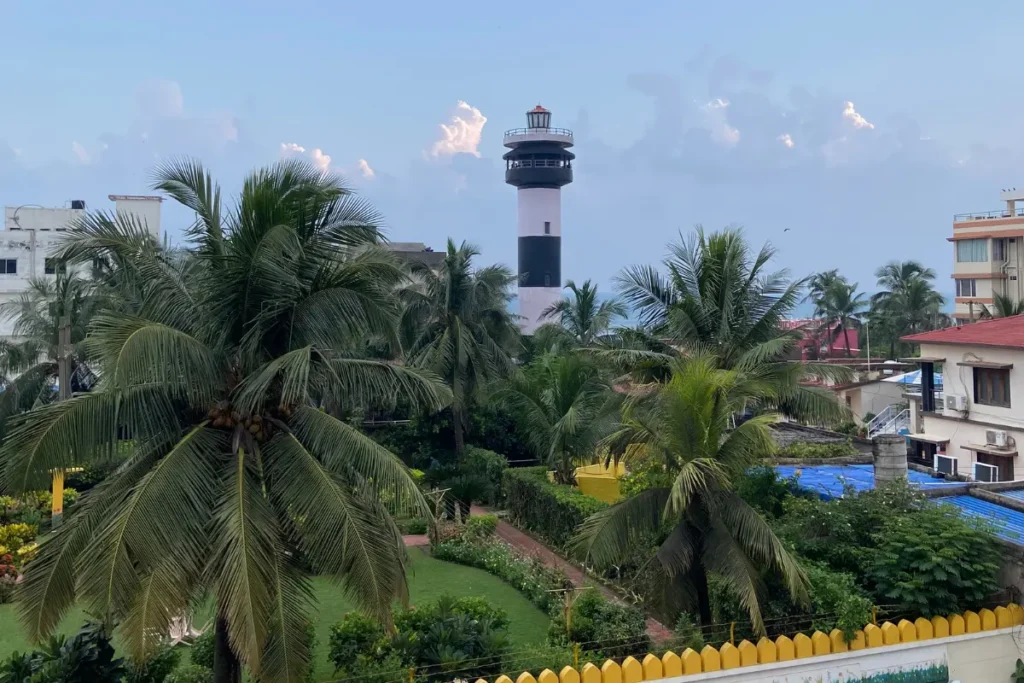
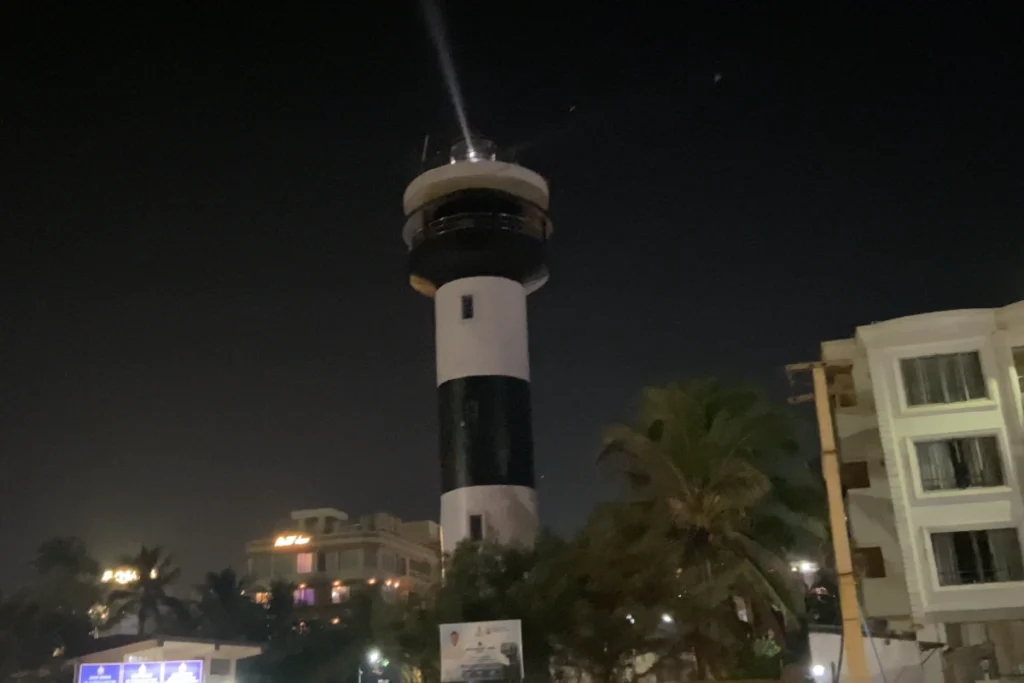
We stayed at Shivangi Hotel and Restaurant, near the Puri Lighthouse, at INR 2,500 per night. The food was Bengali, which for two people from Kolkata felt like the first sign of home on a road trip that had started in Bengaluru four days earlier. The rooms were adequate. The location, near the lighthouse and within walking distance of the beach and the market, was practical.
Puri’s accommodation clusters around two zones. Near the temple on Grand Road (Bada Danda): closer to the spiritual centre, more pilgrim-focused, Bengali and Odia hotels with simple food, lower prices, more noise during festivals and peak season. Near the beach on Marine Drive and the Lighthouse area: sea-facing properties, higher prices for sea views, more tourist-oriented, quieter in the evenings. Our hotel was in the beach zone.
For couples: the beach zone offers a better balance of convenience and calm. The temple is a short auto or walking distance from either zone. The beach, however, is accessible only from the coastal side. Choose the side that matches how you want to end each day.
What It Costs
All costs from October 2025.
| Item | Cost (October 2025) |
| Shivani Hotel, near lighthouse, per night | INR 2,500 |
| Dinner, Mitra Café (two people) | ~INR 300 to 500 |
| Konark Sun Temple entry (two people) | ~INR 80 to 100 |
| Fuel, Puri to Konark round trip (own car) | ~INR 300 to 400 |
| Chandrabhaga Beach | Free |
| Jagannath Temple darshan | Free (Note: Entry is strictly restricted to Hindus) |
| Temple Puja Offerings | INR 500 to 5,000+ (We spent INR 1,500) |
| Panda (Priest) Dakshina | Variable; entirely dependent on negotiation |
Puri operates on an incredibly gentle economy. Our entire three-night stay…hotel, seafood meals, and highway fuel combined…amounted to what you’d easily spend on a casual weekend brunch back in Bengaluru. The temple asks nothing for entry. The beach asks nothing for presence. The sunset at Konark asks nothing except attention.
Before You Go: What Actually Matters
- The dress code is mandatory. No revealing clothes allowed for both men and women.
- The 4 AM darshan is the one to do. The daytime queue is long, hot, and rushed. The pre-dawn queue is shorter, cooler, and carries a devotional intensity that the daytime crowd diffuses. We woke at 4 AM and were back by 7 to 8 AM. The morning was complete.
- Non-Hindus cannot enter Jagannath Temple. This is a religious restriction in place for centuries, not a tourism policy. The temple exterior, the surrounding streets, and the Rath Yatra (held annually in June or July and open to all) provide alternative access to the spiritual culture.
- Take a rest day. If you have three nights, use one full day for nothing. Puri’s value is not in its list of attractions. It is in the quality of time spent inside a town that has been a pilgrimage site for eight centuries. Rush it and you will see everything. Stay still and you will feel something.
- Visit Konark at sunset. The temple faces east (it was designed to catch the morning sun), but the evening light on the stone carvings produces a warmth and depth that morning light does not. The wheels cast their longest shadows at sunset. We visited in the evening and would not change the timing.
- The Konark wheels are sundials. Test them. Place a stick or pen vertically at the centre of a wheel’s hub. The shadow will indicate the approximate time on the spoke divisions. This is not a legend. It is a measurable fact. Testing it yourself produces the specific feeling of standing inside a 13th-century scientific instrument and watching it still work.
- October through March is the best window. Post-monsoon clarity, comfortable temperatures, accessible roads. June to July for the Rath Yatra, which is the most significant cultural event but also the most crowded period.
- UPI is Ubiquitous. You do not need to hunt for ATMs. From the smallest beachside balloon vendors and street-food stalls to the busy markets and auto drivers, almost everyone in Puri now uses UPI. It is the default way to pay. The only major exception where you will still absolutely need hard cash is inside the Jagannath Temple premises…specifically for offering dakshina to the pandas or buying Mahaprasad. Keep a few currency notes in your pocket for the temple rituals, but for everything else, your phone is enough.
- You are not allowed to take anything inside the Jagannath Temple premises except for hard cash. Mobile phones, cameras, smartwatches, earphones, bags, and any leather objects (including leather belts and wallets) are strictly forbidden at the entrance gates. You will need to leave all your shoes and restricted belongings at the secure baggage counters outside before joining the queue. Keep your cash loose in your pocket for the puja and pandas, and leave everything else at your hotel or in the car.
“We left Puri with salt in our shoes and the unsolved mysteries of an 800-year-old sun temple still lingering in our minds. But as we tracked the highway north toward Kolkata, we realized that the best heritage sites don’t offer neat answers. They simply remind you that long before our modern lives were mapped out, someone else was standing on the exact same shore, timing the universe with nothing but shadow and stone.”