If you are considering visiting Çatalhöyük, the world’s first city, this UNESCO World Heritage Site in central Anatolia offers an unparalleled window into early human settlement. Located just 50 km southeast of Konya, it makes for a straightforward and deeply rewarding detour on any self-drive Turkey road trip. Here is your essential guide to navigating the excavations, understanding the archaeological site, and planning your stop.
Imagine a city of 8,000 people where nobody uses the front door because front doors do not exist.
The houses are built wall to wall. No gaps. No alleys. No lanes. No streets. The settlement is a single continuous mass of mud-brick rooms, packed together like cells in a honeycomb, and the only way into your house is through a hole in the roof. You climb a ladder. You descend into your living space. The roof you just climbed across is your neighbour’s ceiling. The rooftops, collectively, are the streets. The postal system, if one existed, would have required a very specific kind of delivery person.
This is Çatalhöyük. Located on the flat Konya Plain in south-central Turkey, it was occupied from approximately 7500 to 5700 BCE and is home to one of the largest known Neolithic communities in the world, and a settlement that has spent the last sixty years quietly dismantling nearly everything archaeologists thought they knew about how cities begin.
We stopped here on Day 12 of our road trip, midday, on the longest driving day of the trip (532 km from Gaziantep to Konya). Entry: TRY 440 / INR 1,012 / USD 12 for two. The visit was brief. The questions it left behind were not.
“Nine thousand years ago, a community of 8,000 people built a city with no streets, entered their homes through the ceiling, buried their relatives under the living room, mounted bull skulls on the walls, painted volcanoes in the bedroom, and maintained the arrangement for two thousand years without producing a single king, palace, or evidence that anyone was in charge.”
What the Excavations Revealed
Çatalhöyük was first excavated in the 1960s by British archaeologist James Mellaart, whose discoveries electrified the field. Ian Hodder of Stanford University led a more systematic excavation from 1993 to 2018. UNESCO inscribed the site in 2012. Between the two campaigns, approximately 5 percent of the settlement has been excavated.
Five percent. The remaining 95 percent is still underground. Everything written about Çatalhöyük, including this article, is based on a fraction of what the site contains.
What that fraction has produced:
No Streets
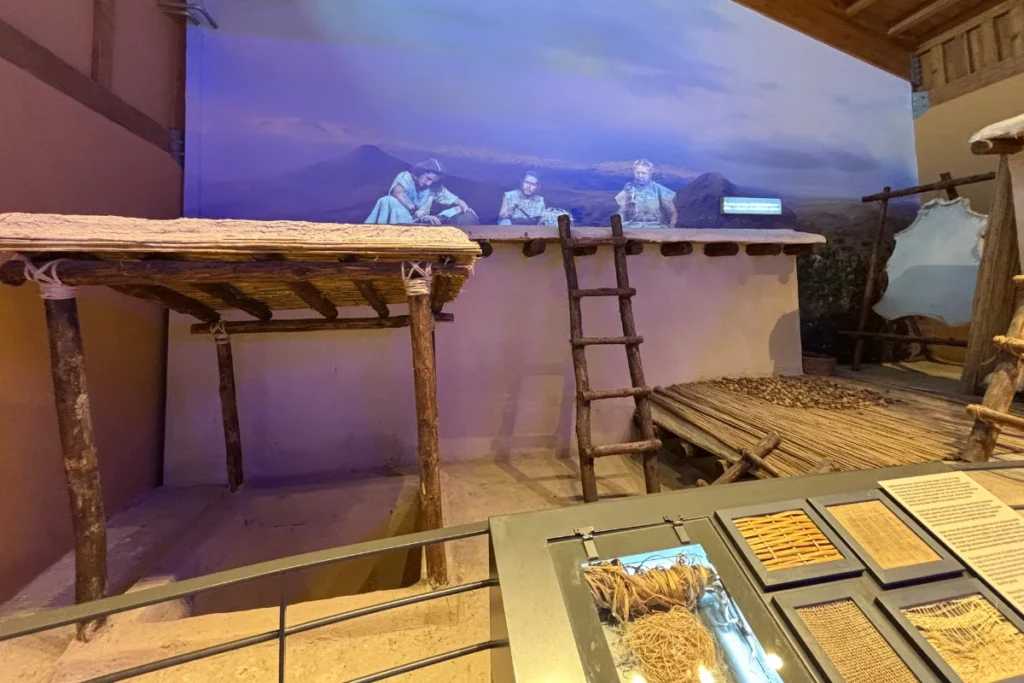
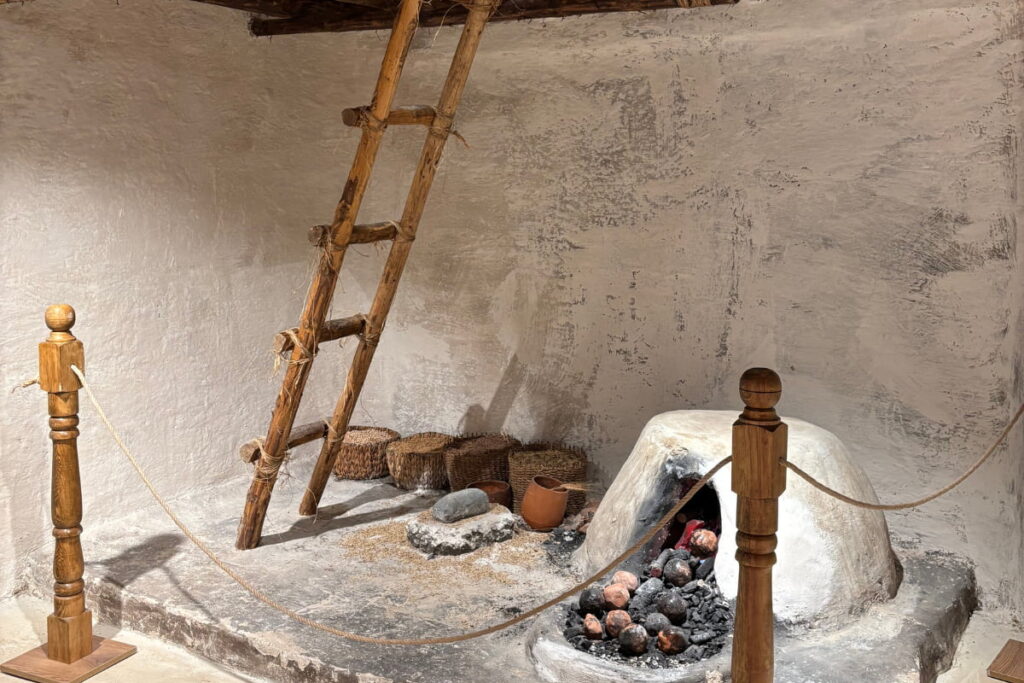
The houses share walls. There are no spaces between them. No paths, no roads, no public thoroughfares. The entire settlement is a rooftop: you exit your house upward, walk across the roof surface, and enter another house downward. The concept of “going outside” meant going up, not out. Children played on rooftops. Cooking fires vented through roof holes. Social life happened at ceiling level.
The practical implications are fascinating. Waste disposal required carrying garbage across rooftops to the edge of the settlement. Ventilation was through the same roof opening you used as a door. Privacy was a function of which ladder you pulled up behind you. And the experience of walking across a city while technically walking across the ceiling of every house you passed must have produced a spatial awareness that no modern urban dweller possesses.
The Dead Beneath the Floor
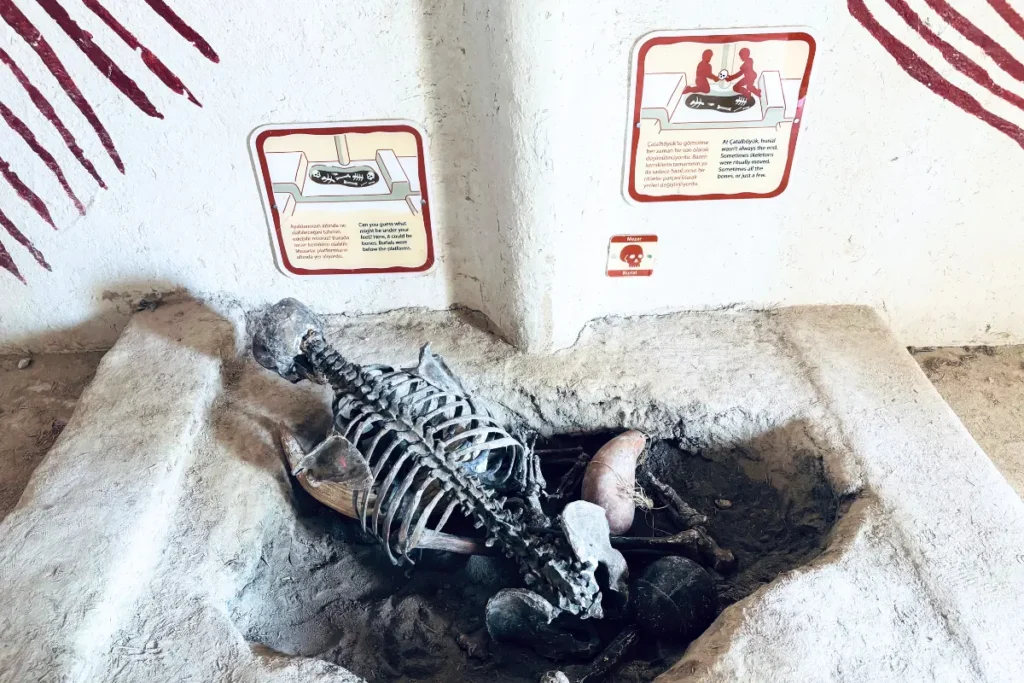
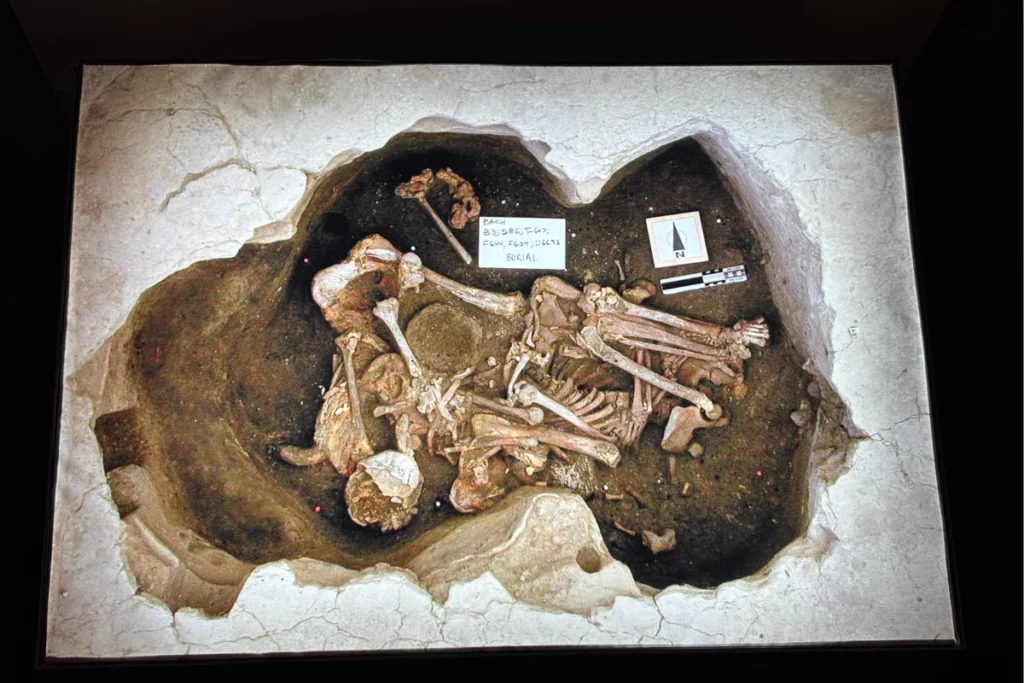
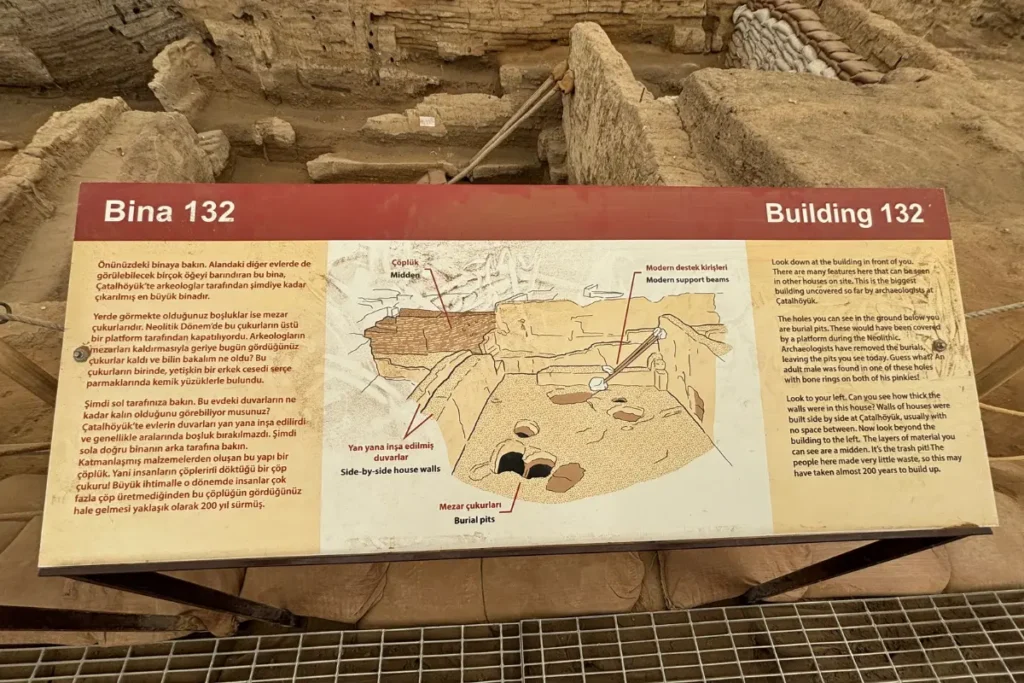
Çatalhöyük residents buried their dead under the platforms where they slept. Not in a separate cemetery. Not outside the settlement. Under the floor of the living room. You ate dinner above the bones of your parents. You slept above the bones of your grandparents. The dead were not removed from daily life. They were incorporated into its architecture.
Some bodies were buried with the skull removed. The skulls were plastered, painted, and kept separately, sometimes displayed on walls, sometimes passed between houses. Archaeologists have found individual skulls that were transferred from one house to another over generations, suggesting that the skulls functioned as objects of social connection rather than personal memorialisation. Your great-grandmother’s skull might live in your neighbour’s house. The neighbourhood dynamics this implies are outside the range of anything modern community planning has considered.
No King, No Palace, No Temple
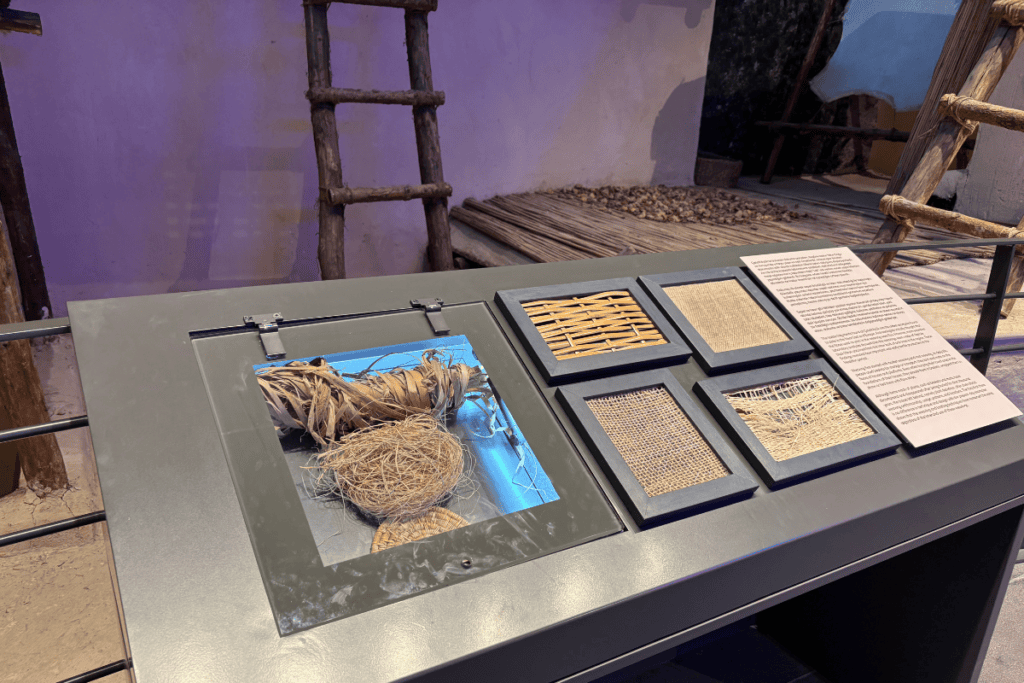
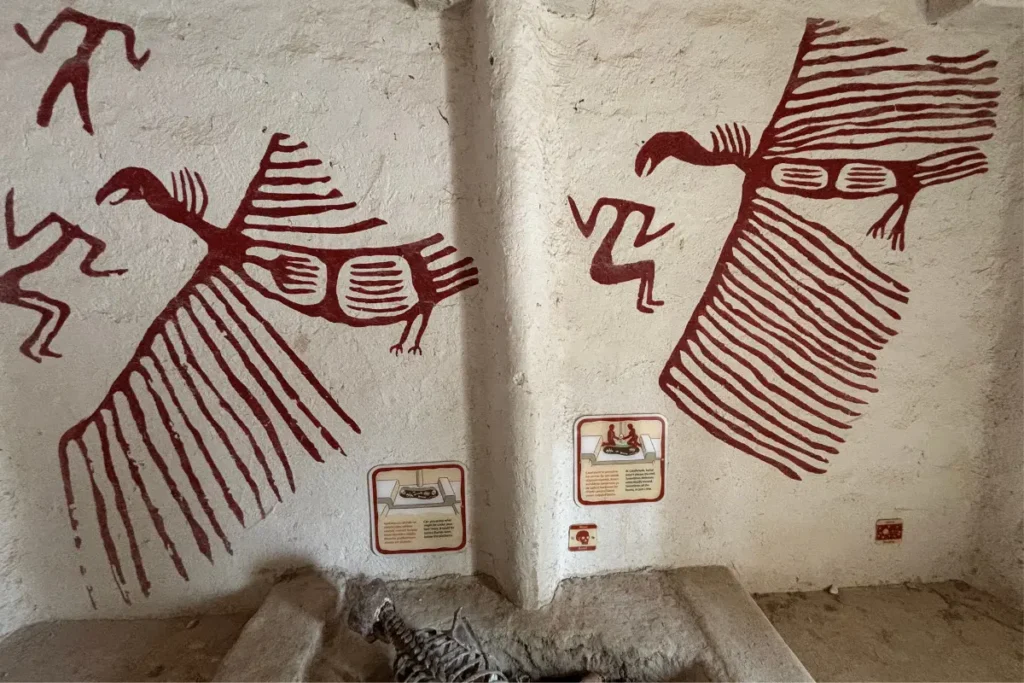
This is the detail that has generated the most academic debate.
Çatalhöyük, at its peak, held approximately 5,000 to 8,000 people. By any standard, this is a town. By Neolithic standards, it is a metropolis. And yet the excavations have produced no evidence of social hierarchy. No palace. No throne room. No administrative building. No granary controlled by an elite. No house that is significantly larger or more elaborate than its neighbours.
The houses are roughly equal in size, construction quality, and contents. The food remains are roughly equal across households. The burial goods are roughly equal. The wall paintings, which are extraordinary, appear in ordinary houses, not in special buildings. The conventional model of urban development, which places hierarchy at the foundation of any community larger than a village, does not fit what Çatalhöyük presents.
Whether this means the society was genuinely egalitarian or whether the hierarchy operated through mechanisms that do not leave archaeological traces (verbal authority, social pressure, ritual status) is debated. What is not debated is that the physical evidence, the architecture, the burials, the distribution of goods, does not show the inequality that other early settlements display. The city worked for 2,000 years without producing a visible ruling class. Modern cities struggle to work for twenty years with one.
“We build cities with streets, doors, cemeteries, and a comprehensive hierarchy, and most of them require significant maintenance within a century.”
The Walls That Speak
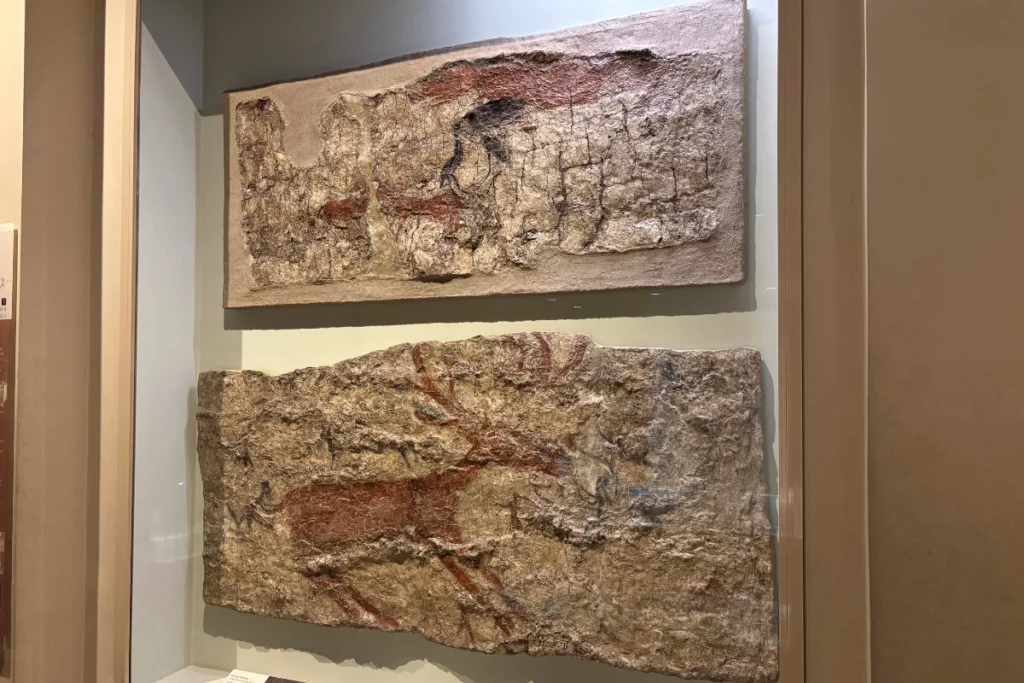
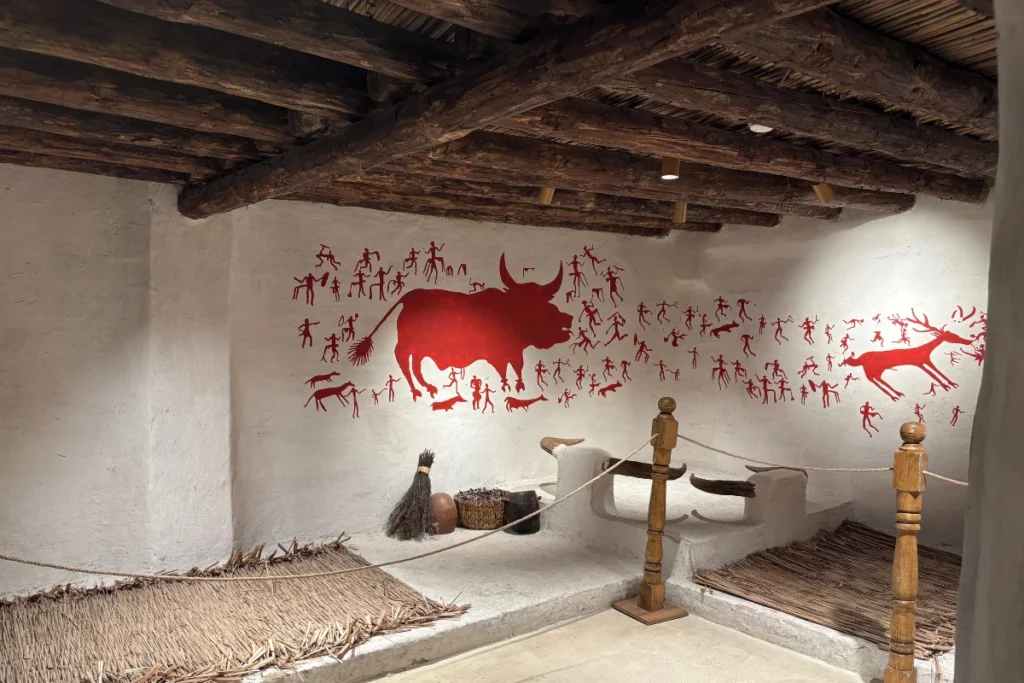
The interior walls of Çatalhöyük houses were painted. Not all of them. Not continuously. But frequently enough that the site has produced some of the oldest known examples of narrative wall art.
Hunting scenes showing humans pursuing deer and aurochs (wild cattle). Geometric patterns of red and white. Handprints. And the most debated image in Neolithic archaeology: a wall painting that may depict the eruption of Hasan Dağı, the volcano visible from the site, with a settlement shown in the foreground. If this interpretation is correct, it is the oldest known landscape painting and the oldest known depiction of a volcanic eruption. A piece of 8,500-year-old disaster journalism, painted on a living room wall.
Bull symbolism saturates the site. Bucrania, the skulls of wild bulls with horns intact, were plastered into the interior walls of houses, protruding into the living space. The horns were real. The plaster integrated them into the wall surface. You lived with a bull skull looking down at you from the wall, your ancestors looking up at you from the floor, and a hole in the ceiling where the sky looked in. The domestic space was not separate from the symbolic space. They were the same room.
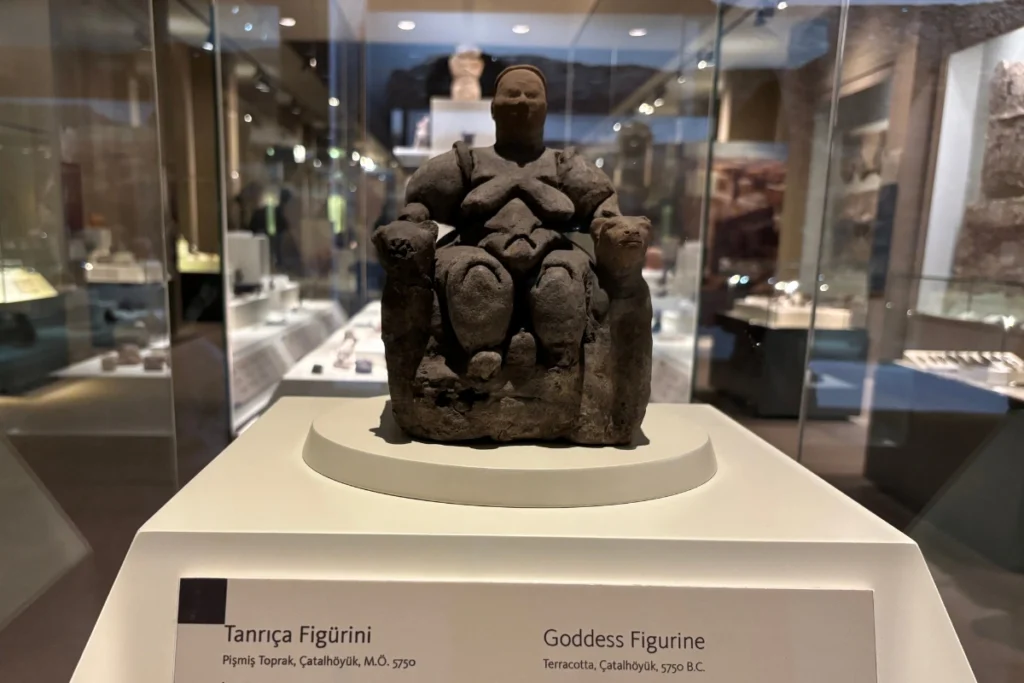
The Mother Goddess figurine, which we had seen at the Museum of Anatolian Civilisations in Ankara nine days before visiting the actual site, was found here. A seated female figure flanked by two large cats, interpreted as a fertility or earth-mother deity. She is small enough to hold in two hands. She is significant enough to have generated decades of academic reconsideration about the role of female deities in Neolithic societies.
What We Saw
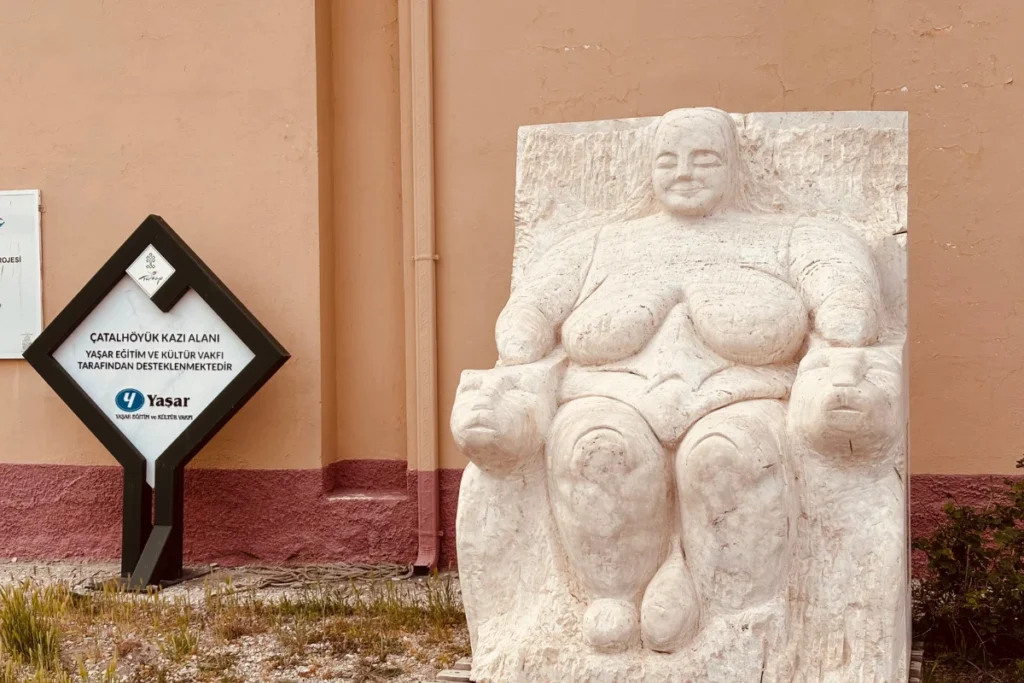
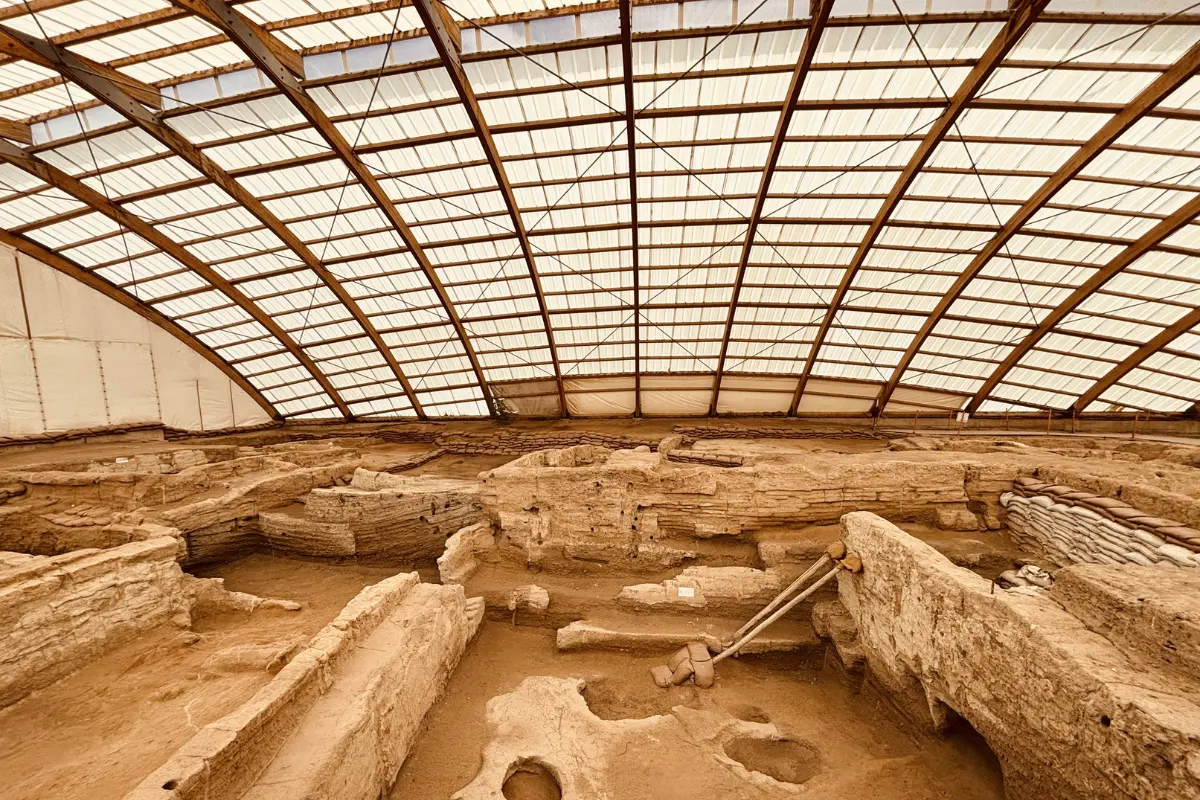
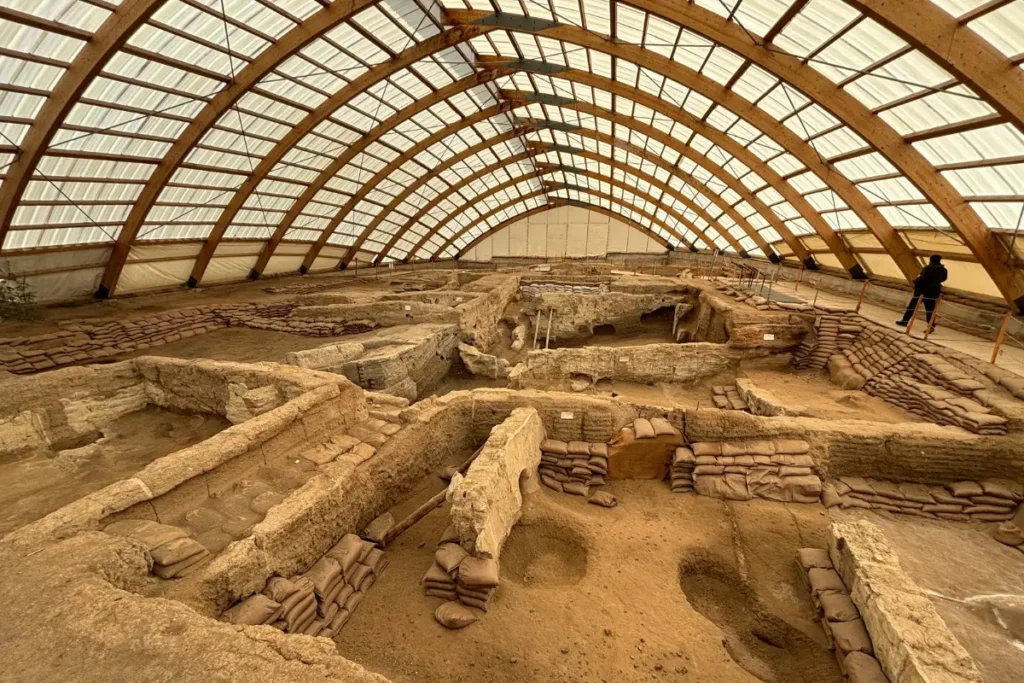
The site today is a mound, a höyük, rising from the flat Konya Plain. The excavation areas are covered by protective shelters. Inside the shelters, the exposed layers of mud-brick construction are visible: walls, floors, hearths, and the outlines of the rooms where the rooftop city once operated.
We arrived at midday on a 532 km driving day. The site was quiet. We walked through the sheltered excavation areas, looked at the exposed layers, and read the information panels. The visible remains are architectural: wall segments, floor platforms, and the outlines of rooms. The famous paintings, the figurines, and the plastered skulls are in museums, primarily the Ankara Museum and the Konya Archaeological Museum.
The experience of standing on the mound is specific. The Konya Plain extends flat in every direction. Hasan Dağı, the volcano that may appear in the wall painting, is visible on the horizon. The mound itself is the accumulated debris of 2,000 years of continuous habitation: each generation’s floors built on top of the previous generation’s collapsed walls, the settlement growing upward rather than outward, the city becoming a hill made of itself.
The visit was twenty to thirty minutes. Midday light. An empty car park. Two people from Bengaluru standing on a mound in the Konya Plain, processing the fact that 9,000 years ago, 8,000 people lived on this exact spot without streets, without doors, with their dead under the floor and their bulls on the wall and their ladders pulled up behind them.
“The mound at Çatalhöyük is the accumulated proof that an entirely different model of human community once worked, for longer than most modern nations have existed, on a flat plain in central Turkey where the volcano on the horizon is still visible, and the dead are still under the floor.”