This Bangalore to Kolkata road trip guide covers both directions…the outbound route via Vijayawada, Vizag, and Puri, and the return via Bhubaneswar, Vizag, and Nellore…driven in our own car, six months apart.
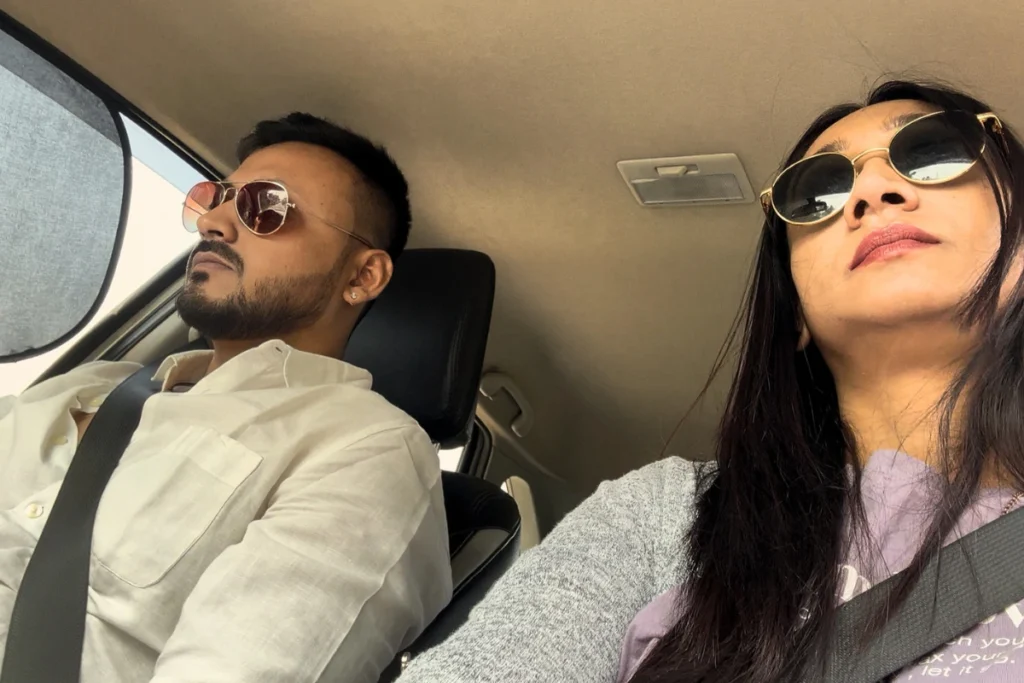
We are from Kolkata. Both of us. We grew up there, separately, before we met. We left for work, as people do, and ended up in Bengaluru, as IT professionals do. The distance between the two cities is approximately 1,800 kilometres by road along India’s eastern coastline, through Tamil Nadu, Andhra Pradesh, Odisha, and into West Bengal.
Most people fly. The flight takes two and a half hours. We have taken it many times. It delivers you from one city to the other with the efficiency of a system that knows you have somewhere to be.
In October 2025, we drove. Our own car. Over six days. Six months later, in March 2026, we drove back…a slightly different route, four days, the reverse direction.
The flight gives you Kolkata. The drive gives you the east coast of India, which is not the same thing. The east coast does not appear in most Indian travel content. The blogs talk about the western coast: Goa, Kerala, the Konkan. The east gets mentioned for Puri, briefly, and for Vizag’s beaches, briefly, and then the conversation moves on.
What the east coast actually holds is a 1,800 km corridor through landscapes that shift from the Deccan plateau to the Krishna delta to the Eastern Ghats to the Odisha coastline to the Bengal littoral, with temples older than most European countries, a 4 AM darshan at Jagannath, a sunset at Konark that asks questions the morning does not answer, and three hours of highway silence somewhere between Vizag and Puri at 4 AM that is worth the entire drive.
This article covers both routes. Use either one, or combine them into a loop.
“The road between Bengaluru and Kolkata holds something the flight cannot carry: the gradual transition, state by state, language by language, food by food, from the city where you work to the place that made you.”
The Two Routes at a Glance
Outbound (October 2025): Bengaluru → Vijayawada → Vizag → Puri → Kolkata. Six days. Approximately 1,800 km. Three overnight stops plus three nights in Puri.
Return (March 2026): Kolkata → Bhubaneswar → Vizag → Nellore → Bengaluru. Four days. Approximately 1,820 km. Three overnight stops, one night each.
Same coastline. Different sequence. Different stops. Both driven in our own car. Both starting late at night.
The Outbound Route: Bengaluru to Kolkata
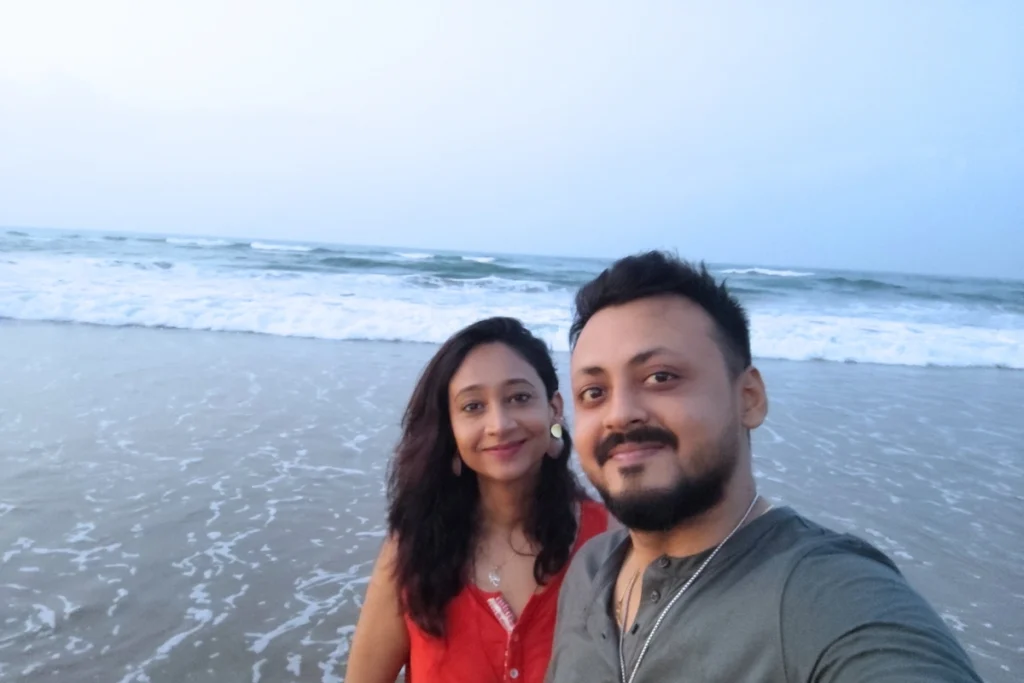
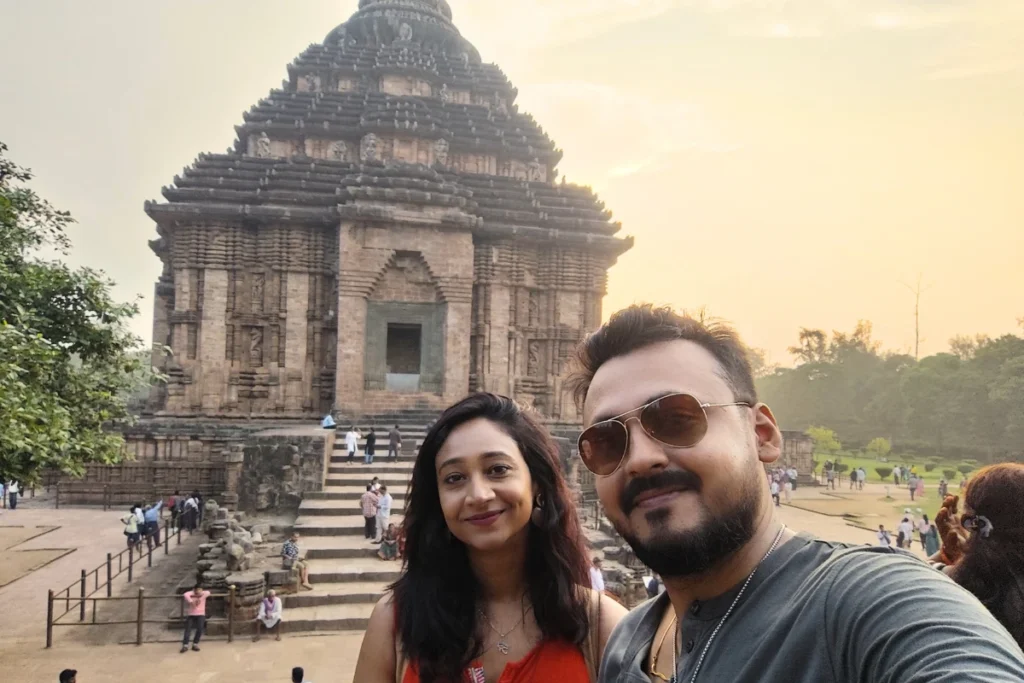
Day 1 — Bengaluru to Vijayawada (~475 km, 7–8 hours)
NH44 north from Bengaluru, then east through Andhra Pradesh toward the Krishna delta. The highway is well-maintained and fast. We drove at night, as we do for almost every road trip. Cleared most of the distance before the trucks reclaimed the road at dawn.
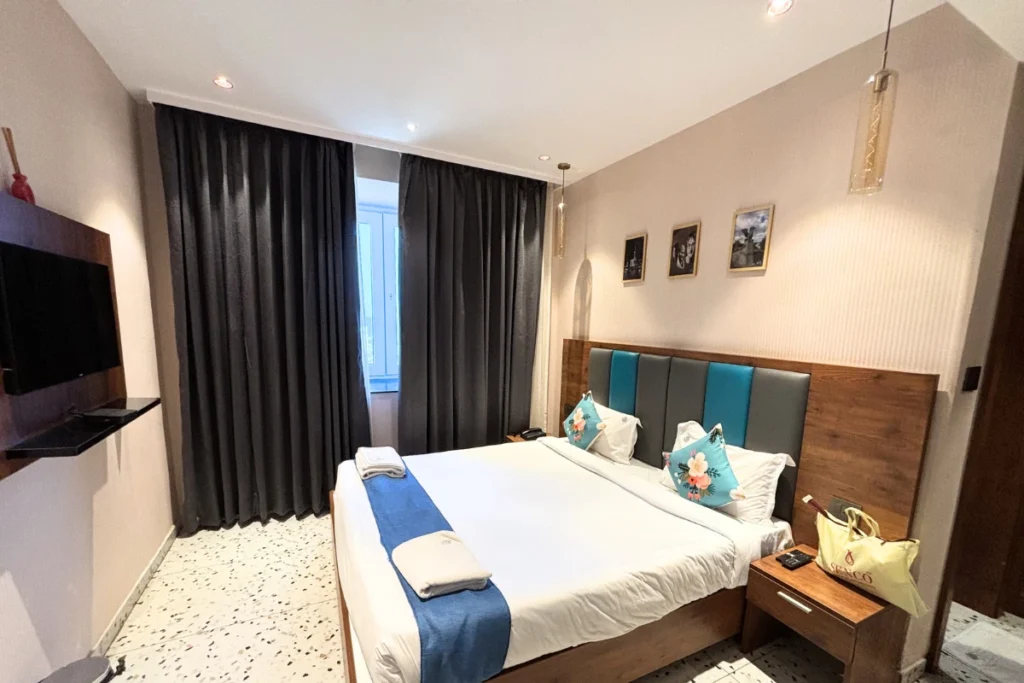
Accommodation: Hotel KVR Capitol Suites, Vijayawada. INR 2,750 per night. No restaurant on the premises…we ordered dinner through Zomato. Vijayawada was a transit stop, not a destination. The hotel did its job: adequate, clean, enough.
Day 2 — Vijayawada to Vizag (~350 km, 6–7 hours)
The landscape changes east of Vijayawada. The flat delta gives way to the Eastern Ghats, and the road begins to wind through green hills that feel nothing like the dry Deccan behind you. The approach to Visakhapatnam from the south…as the coastline appears and the hills frame the city…is one of the underrated views in Indian driving.
Accommodation: Hotel Winsar Park, Vizag. INR 6,190 total for two nights. The food at the hotel was overpriced. We could have made a better choice.
We spent two nights in Vizag. We were supposed to visit Ramakrishna Beach, Kailasagiri, and the naval museum, and feast on the local seafood. Ultimately, we did none of it. We were so exhausted from driving through the night on barely any sleep that we chose the comfort of a hotel bed instead. Vizag is a city that rewards unhurried time more than most people give it.
Day 3–4 Transition — Vizag to Puri (~490 km, 9–10 hours, overnight)
This is the longest single drive of the route, and the one that produced the moment we did not expect.
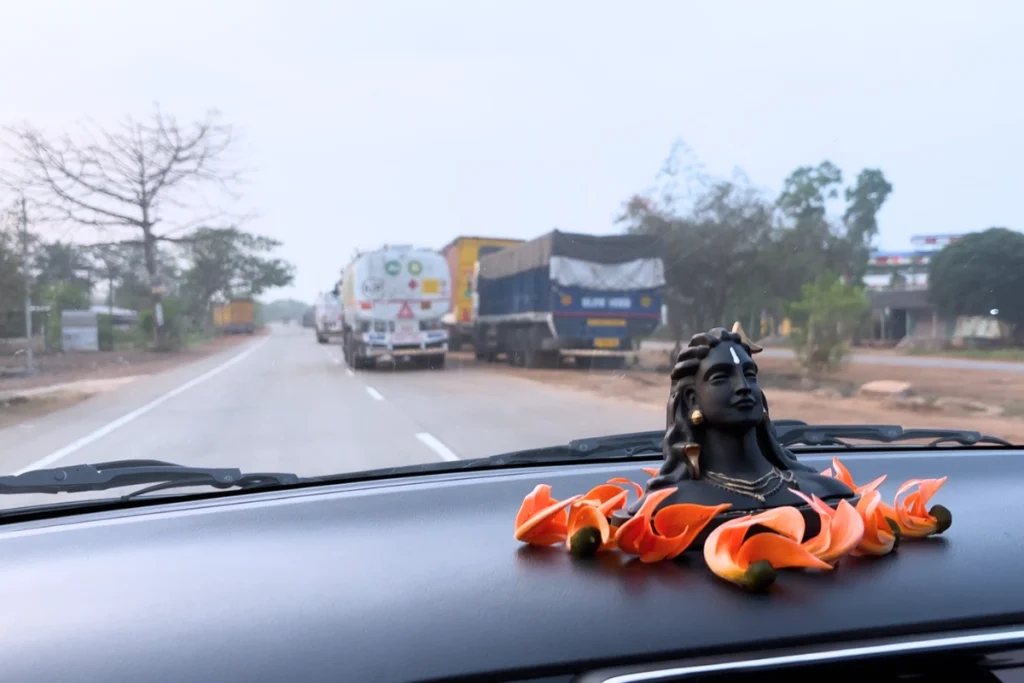
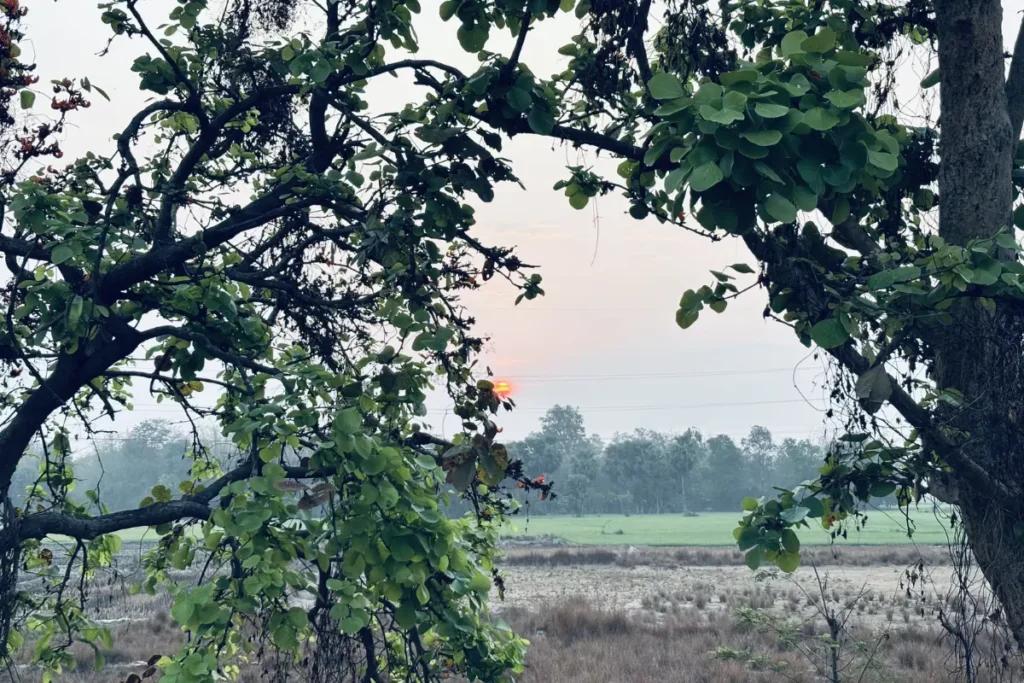
We drove through the night. The highway north of Vizag enters Odisha and follows the coast. At 4 AM, somewhere between Vizag and Puri, the traffic disappeared completely. The road was empty. The headlights cut through absolute darkness. The only sound was the engine and the occasional hum of a truck passing in the opposite direction.
Three hours of highway silence at 4 AM through coastal Odisha. No podcast. No music. Just the road and the dark and the knowledge that we were moving through a part of India that most travellers never see because they fly over it.
That silence was not planned. It is one of the things from this trip we talk about most often.
We reached Puri around 8 AM on October 21st. Checked into Shivani Hotel and Restaurant near the Puri Lighthouse. INR 2,500 per night. Bengali food on the menu. The first sign of home.
“Nobody flies to coastal Odisha at 4 AM. Nobody takes a train through it in the dark. The silence you find there exists precisely because everyone else chose the faster option. That silence belongs to you alone.”
Puri: Where the Trip Stopped Being a Drive
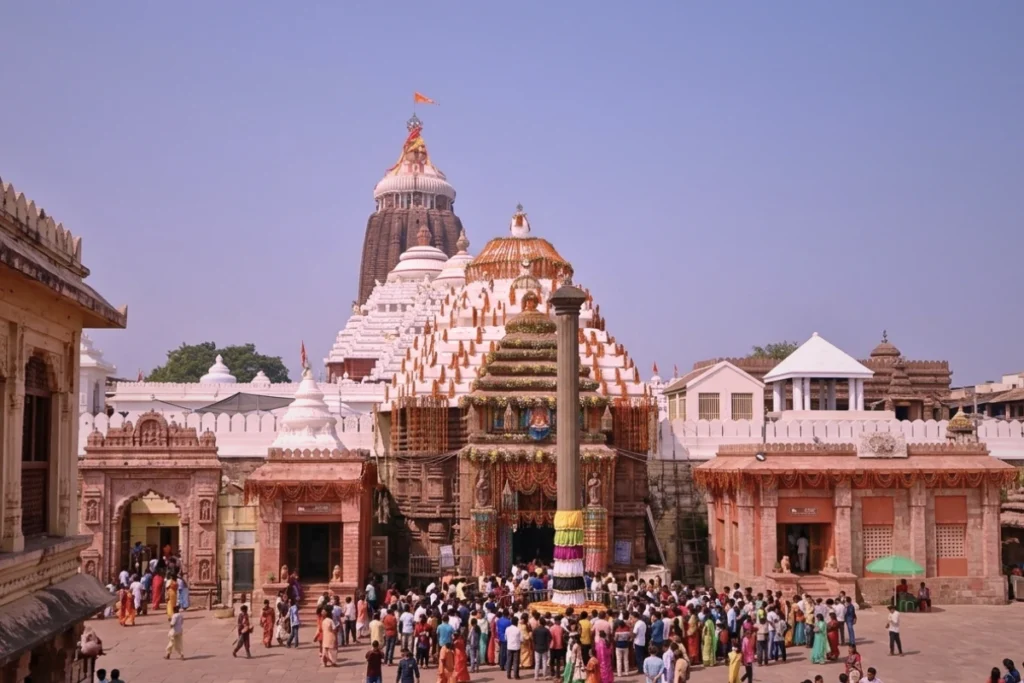
We stayed three nights. Both of us have visited Puri multiple times since childhood…separately, with our families. The Jagannath Temple. The beach. The sand. The sound of the evening aarti carrying across the town. Puri is not a destination we discovered. It is a place that was already inside us before we met. This was the first time we visited together.
Day 1 in Puri — October 21st
Arrived exhausted from the overnight drive. Breakfast at the hotel. Rest. In the evening, walked to the main market along the beach. Chaitanya Square, where the spiritual and commercial currents of the town meet. Dinner was at Mitra Café, a famous Kolkata restaurant that now has a branch in Puri. It serves the kind of food that does not need to be spectacular to be exactly right.
Day 2 in Puri — October 22nd
We took rest the entire day.
Most travel guides would not include a day where the travellers did nothing. We are including it because it was one of the best days of the trip. We walked to the main area for small errands. We ate. We sat. We looked at the sea. We did not photograph anything. We rested in a place that has known us since childhood, and the resting was the point.
Day 3 in Puri — October 23rd: The Darshan and Konark
The alarm was set for 4 AM.
Jagannath Temple darshan. The morning queue. The specific energy of a temple that has been drawing devotees for eight centuries. We reached in the pre-dawn dark and returned to the hotel by 7 AM. The darshan, for both of us, carried a weight that is difficult to communicate to someone who did not grow up with Jagannath as part of their spiritual landscape. It was not tourism. It was pilgrimage.
In the evening, we drove to Konark.
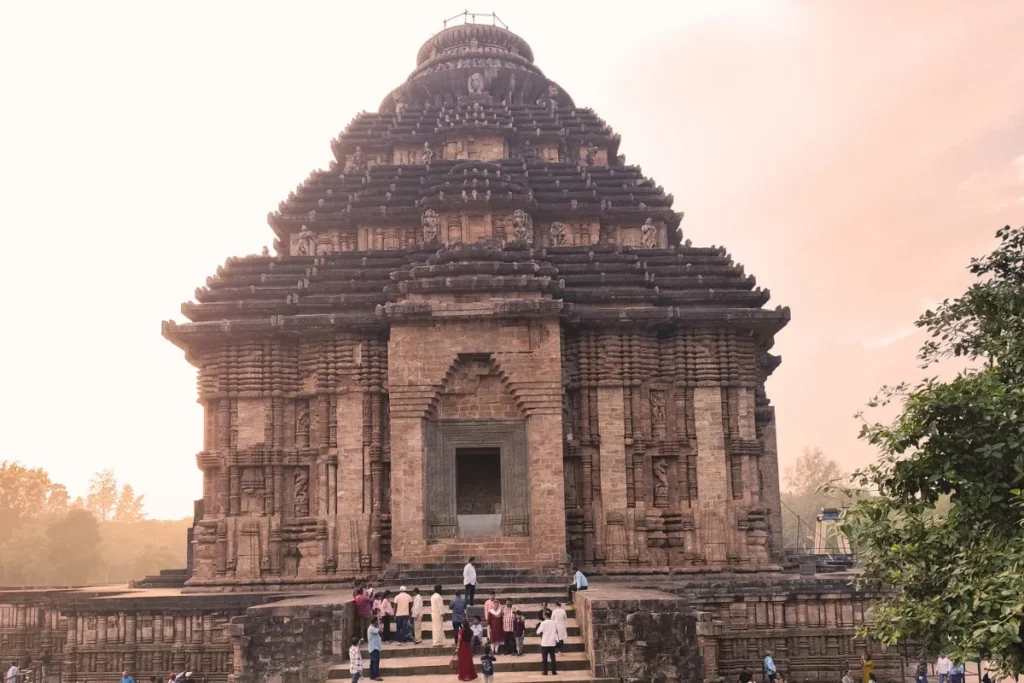
The Konark Sun Temple, 35 kilometres from Puri, is where the trip left the category of road trip and entered something harder to name.
Built in the 13th century as a massive stone chariot dedicated to the sun god Surya, the temple’s 24 carved stone wheels function as verified sundials. Engineers have confirmed that the wheel carvings accurately indicate time when used with the shadow of a central spoke. This level of astronomical precision, built into decorative stone wheels eight centuries ago, is not something the standard narrative of medieval Indian architecture comfortably accommodates.
Historical accounts describe a massive magnetic lodestone at the temple’s apex that disrupted compass needles on passing ships, pulling their navigation off course. Whether the lodestone existed, whether it was removed by Portuguese sailors to protect their shipping routes, and what it means that a 13th-century Indian temple may have deployed magnetism against colonial navigation…these are questions the temple asks. The sunset does not answer them.
We watched the sun go down from near the temple. The light on the carved stone. The questions in the air. The specific quality of standing in front of something built to track the sun, watching the sun do exactly what the builders intended.
“A 13th-century temple built to track the sun. Stone wheels that function as verified sundials. A lodestone that may have disrupted colonial ships. Konark asks questions that the sunset does not answer. You stand there anyway.”
Puri to Kolkata — Day 6
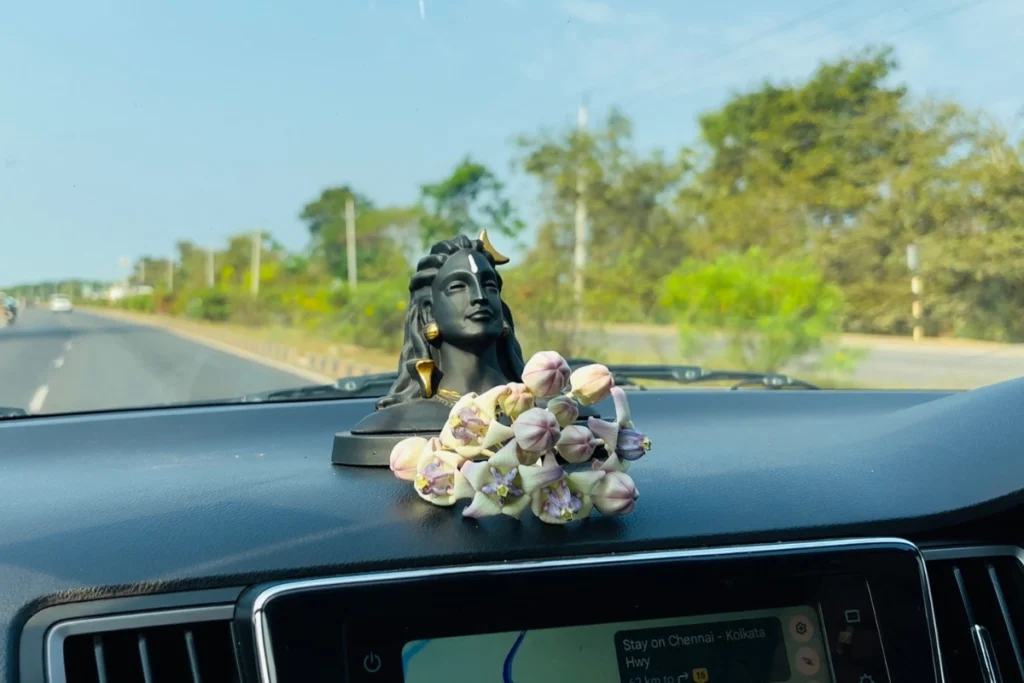
Distance: Approximately 500 km. Drive time: 9 to 10 hours. We left Puri at 9 AM on October 24th.
The drive from Puri to Kolkata passes through coastal Odisha and into West Bengal. The landscape shifts gradually…the Odisha coastline giving way to the Bengal river plain. The closer you get to Kolkata, the more the vegetation changes, the dialect on the radio shifts, the food at the highway dhabas starts tasting like home.
We arrived on October 24th. Six days after leaving Bengaluru. 1,800 kilometres through four states. The flight takes two and a half hours. The drive took six days and gave us three hours of silence on an empty road, a sunset at a temple that weaponised the sun, a day of rest that was its own kind of arrival, and the gradual sensation of returning to a place that shaped us before we knew it was doing so.
The Return Route: Kolkata to Bengaluru
Six months later, March 2026. A different route, faster pace, four days.
Day 1 — Kolkata to Bhubaneswar (~440 km, 7 hours)
Accommodation: Hotel SJ Pride, Bhubaneswar. INR 2,133. Room service available. Food was acceptable. A functional overnight between two longer driving days.
Day 2 — Bhubaneswar to Vizag (~350 km, 6 hours)
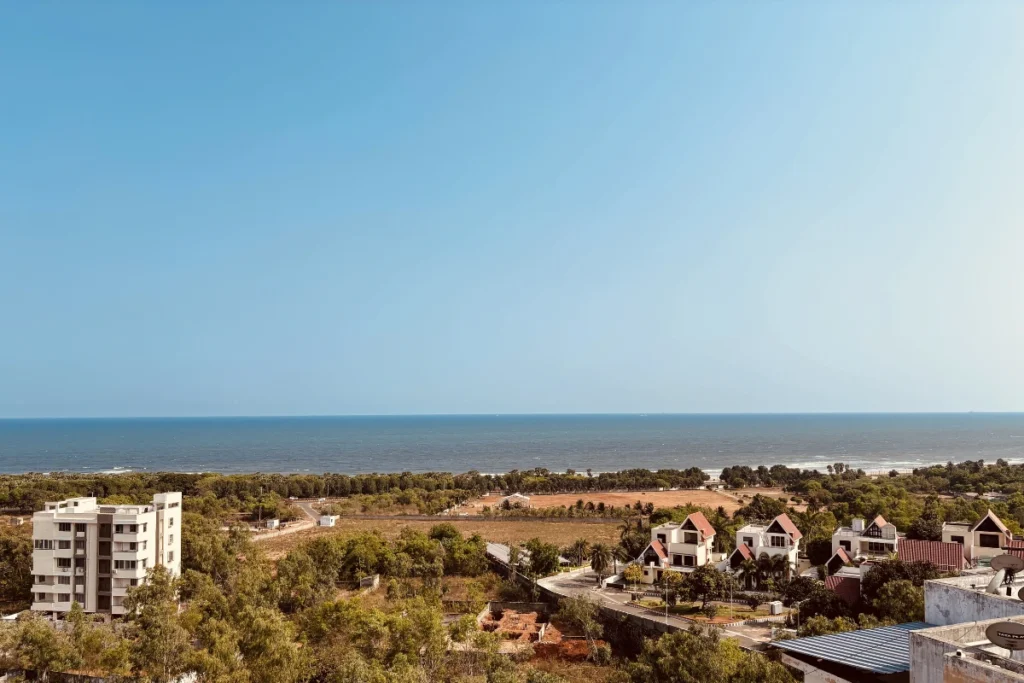
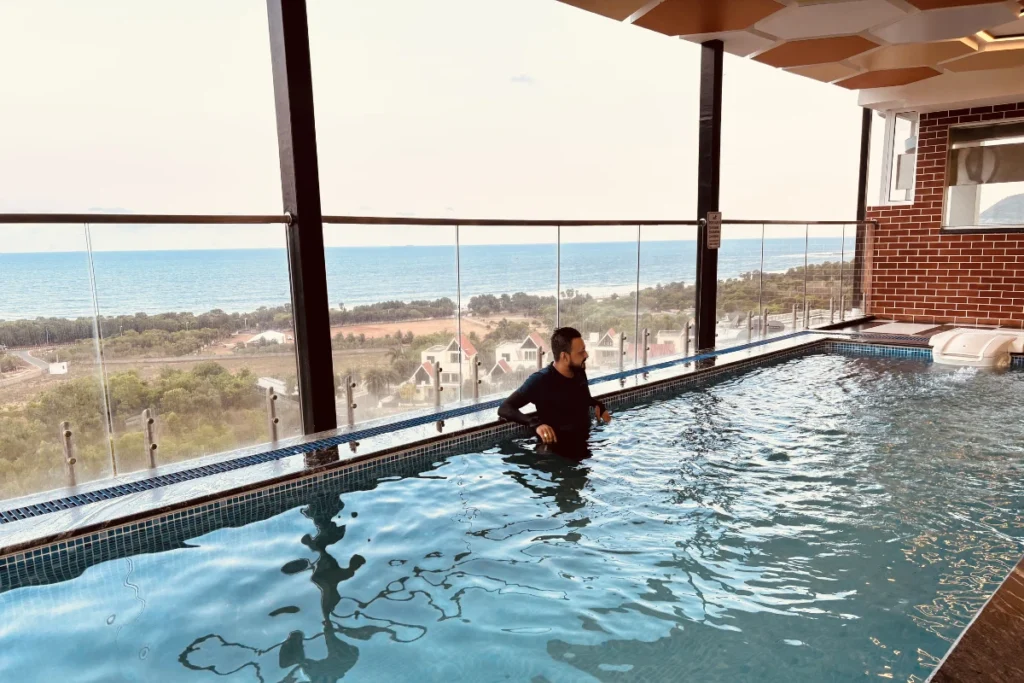
Accommodation: The Hive, Vizag. INR 3,800 per night. No restaurant on the premises…we ordered through Zomato. The Hive was the best hotel of both trips. Excellent rooms. A rooftop swimming pool with a sea view. Our room also had a sea view. Modern, clean, and worth every rupee. If we return to Vizag, we stay here again without researching alternatives.
Day 3 — Vizag to Nellore (~650 km, 10–11 hours)
The longest single drive of the return trip. South along the coast through Andhra Pradesh. We started early and pushed through. The route is flat, agricultural, and rhythmically consistent. Indian highways over long distances produce a meditative quality we have come to recognise and sometimes to need.
Accommodation: Hotel Kalpana Residency, Nellore. INR 2,658. Isolated. Fewer guests than the size of the hotel suggested was typical. Staff thinner than expected. The place had no warmth. Functional overnight. Not recommended for anything beyond rest.
Day 4 — Nellore to Bengaluru (~380 km, 6 hours)
Home by evening on March 21st. Four days. 1,820 km. The reverse of the journey we had taken five months earlier. The familiarity of Bengaluru’s traffic, after 1,800 km of coastal highway, felt both welcome and slightly wrong…the way home sometimes feels after you have been on the road long enough for the road to start feeling like the real place.
What It Costs
All figures from our October 2025 and March 2026 trips. Fuel prices and hotel rates fluctuate. Verify before you plan.
| Category | Outbound BLR→KOL (6 days) | Return KOL→BLR (4 days) |
| Fuel (approx.) | INR 8,000–10,000 | INR 8,000–10,000 |
| Highway tolls (approx.) | INR 2,000–3,000 | INR 2,000–3,000 |
| Accommodation (total) | INR 18,940 | INR 8,591 |
| Food (approx.) | INR 5,000–8,000 | INR 4,000–6,000 |
| Approximate total | INR 35,000–40,000 | INR 22,000–28,000 |
The east coast of India is extremely affordable. Accommodation in decent hotels ranges from INR 2,000 to 3,800 per night. Food at highway dhabas and local restaurants costs a fraction of city prices. Fuel is the primary variable. A comparable round-trip flight for two costs INR 8,000 to 12,000. The drive costs more. Whether it gives more depends on what you value.
What the East Coast Teaches You About Driving in India
- Start late at night, always. Indian highways between midnight and 5 AM are a different road. NH16 along the coast is well-maintained but heavily trucked during the day. Night driving clears the path and delivers you by morning.
- The Vizag-to-Puri stretch is the longest and most rewarding. 490 km, mostly coastal, mostly empty after midnight. The three hours of silence at 4 AM through coastal Odisha are not available on any other transport.
- Carry food for the long overnight drives. Highway dhabas exist but their hours are unpredictable. We relied on snacks and meals we could eat in the car.
- Odisha’s highways are among the best in India. Well-surfaced, well-marked, and less congested than Karnataka or Andhra Pradesh. The approach road to Puri is smooth.
- The return via Nellore is functional, not scenic. The Vizag-to-Nellore stretch is the least interesting driving of either route: flat, agricultural, long. Start early. Push through. Save attention for the section between Vizag and Bhubaneswar, which is significantly more rewarding.
- Hotel quality varies sharply. The Hive in Vizag (INR 3,800) was excellent. Kalpana Residency in Nellore (INR 2,658) was joyless. Read the most recent ten reviews before booking any stop on this route.
- The outbound route is the better one. Bengaluru to Kolkata via Vijayawada, Vizag, and Puri provides more variety, more interesting stops, and the emotional centre of Puri and Konark. The return via Bhubaneswar is faster but less memorable.
“Most people fly between Bengaluru and Kolkata. The flight takes two and a half hours and shows you the inside of two airports. The India Travel Guide links to every destination we have explored across the country. If you are from one Indian city and live in another, consider driving between them at least once. The road between where you are and where you are from holds the gradual transition…state by state, language by language, landscape by landscape…that the flight compresses into nothing.”